



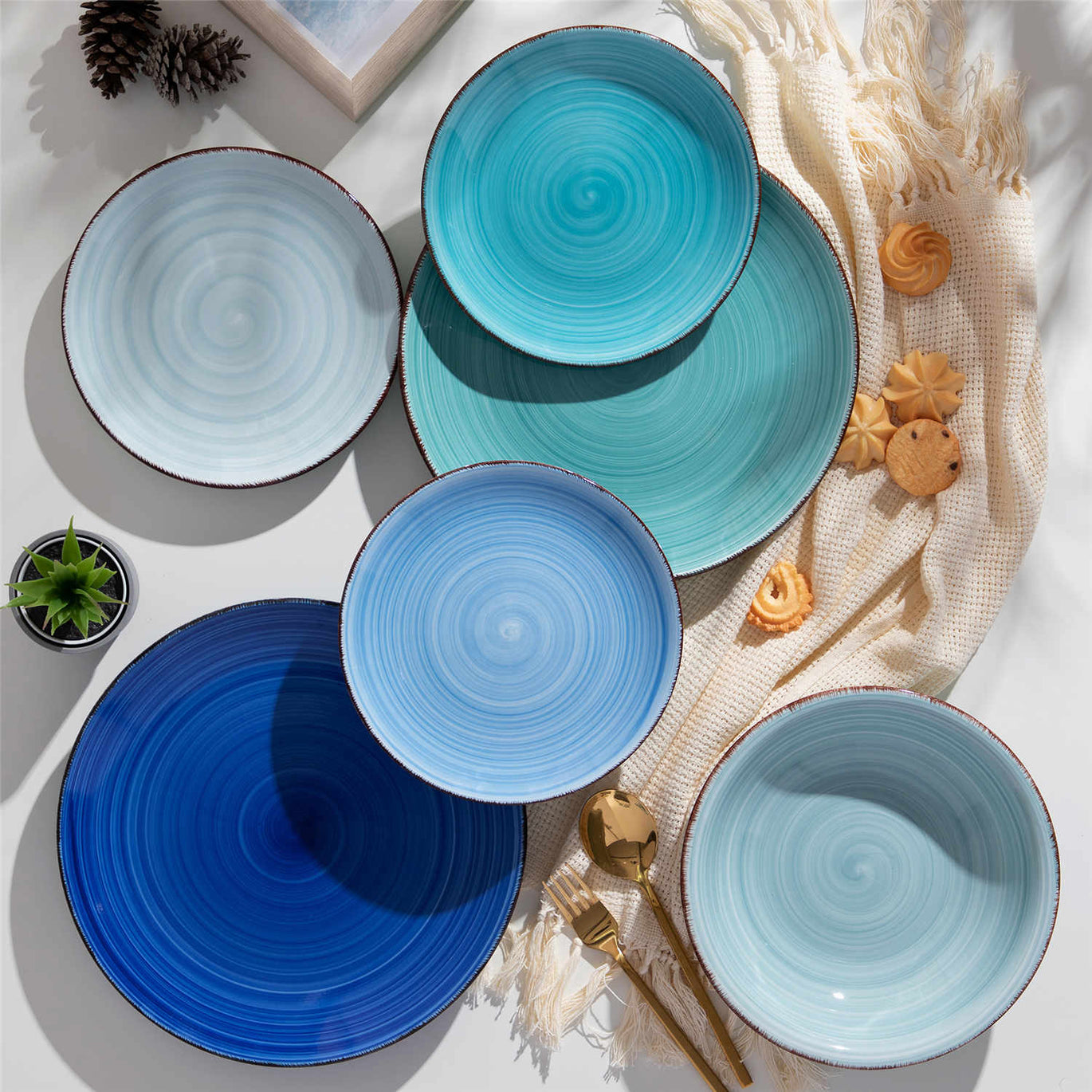


Color on a Budget: Ceramic Dinnerware Rationing During the Great Depression

Ceramic plates have always done double duty. They cradle dinner, of course, but they also carry stories about money, taste, health, and culture. Few eras reveal that mix more sharply than the Great Depression, when every ounce of food and every plate in the cupboard had to work harder. Today, when I style a “Depression-inspired” table in my studio, I am always struck by how joyful a carefully rationed, colorful ceramic setting can feel, even when the number of pieces is small.
In this article, we will zoom in on ceramic dinnerware rationing as both a historical mood and a modern design strategy. We will lean on museum history, collector knowledge, health and materials science, and modern tableware research to ask a playful but serious question: how do you create a vibrant, satisfying table when you intentionally limit your dishes?
A Colorful Table in a Lean Decade
The Great Depression was an era of economic pressure, but not a colorless one. In California, the American Museum of Ceramic Art has documented how firms like Gladding McBean helped define everyday tableware and artware from the 1930s through the 1950s. Their “Color Counts: Gladding McBean” exhibition framed commercial pottery as a nostalgic walk through mass-produced dinnerware that brightened millions of homes. Gladding McBean began in the 1870s making sewer pipes and building tiles, then evolved into a powerhouse of colorful ceramic artware and embossed, hand-decorated dinnerware that became a fixture in California households and beyond.
Another icon that emerged in the mid-1930s was Fiestaware, particularly its famous red glaze. According to technical summaries from radiation historians, that saturated red was achieved with uranium-based glazes, with the red glaze noticeably more radioactive than lighter colors. Red Fiestaware was produced with natural uranium from 1936 into the early 1940s, then later with depleted uranium in the postwar years, before the color was discontinued. It is a vivid reminder that even budget-conscious tableware could be technologically adventurous and intensely colorful.
Collectors who chase 1930s pottery today, from Australian Melrose vases to California dinnerware, often share their finds in online communities. The Accidental Collector blog, for example, describes how sharing photos in specialist groups and using references such as Carter’s Price Guide to Antiques allows people to correctly identify factory marks, shape numbers, and provenance for Depression-era pieces. That same culture of sharing reflects something Depression households also relied on: pooled knowledge about what to buy, what to repair, and what to keep using just a little longer.
What we do not have is a single official “dinnerware rationing rule book” from the 1930s. Instead, we see hints of a mindset: mass-market companies offering cheerful, durable ceramics; families stretching budgets and possessions; and, decades later, museums and collectors treating those very plates as cultural touchstones.

What “Ceramic Dinnerware Rationing” Really Means
In a strict wartime sense, rationing is controlled distribution of goods. At the table, I use “ceramic dinnerware rationing” in a more domestic, flexible way, grounded in three overlapping ideas.
First, there is ownership rationing. This is the decision to keep your dinnerware collection intentionally small, rather than overflowing with mismatched sets. Depression-era households often had no choice but to own fewer plates and bowls; today, we can choose that constraint on purpose.
Second, there is usage rationing. Each piece has multiple jobs. A stoneware bowl holds soup at dinner, then becomes a mixing bowl for dough or a catch-all at the entryway. Historically, ceramic tableware has always blurred the line between “kitchen tool” and “household object,” and modern brands highlight that versatility. HF Coors, for instance, emphasizes that their vitrified ceramic bowls can be used as mixing bowls, prep vessels, and general workhorses because they are strong, non-porous, and resistant to cracks and stains.
Third, there is portion rationing. Portions can be guided by plate size, shape, and color. Contemporary nutrition and psychology research has shown that the “platescape” influences how much we serve ourselves and how full we feel. A narrative review in Progress in Nutrition pulled together experiments on “tablescapes,” “platescapes,” and “foodscapes,” showing that larger plates and bowls often lead people to serve and eat more food, frequently without realizing that tableware is influencing them. Visual illusions like the Delboeuf illusion make the same amount of food look smaller on a larger plate, nudging us toward bigger servings.
So in a modern Great Depression–inspired kitchen, rationing your ceramic dinnerware might mean you own fewer pieces, use them more cleverly, and lean on plate design to support more mindful portions.

What Science Says About Plates, Portions, and Waste
If you are going to ration with ceramics, it helps to know what the evidence actually says.
The tableware-and-consumption review mentioned earlier highlights a consistent pattern: across many experiments, larger dishes and serving bowls encourage bigger self-served portions. In adults and children, larger plates and bowls have been associated with greater intake, particularly when people are serving themselves buffet-style. Studies have also looked at elongated glasses and found that tall, narrow shapes can trick people into misjudging volume, leading to over-pouring of drinks, including alcohol.
But more recent, tightly designed experiments have tested whether shrinking dish size truly reduces how much people eat over a day. A preregistered randomized controlled trial in adult women, published in a behavioral nutrition context, compared smaller versus larger breakfast plates and bowls. Participants could serve themselves freely and take seconds. The trial found no strong evidence that smaller breakfast dishes decreased breakfast energy intake or total daily intake, and socioeconomic position did not change this result. In other words, when people can simply go back for more, smaller plates are not a magic portion-control device.
A Cochrane review on portion, package, and tableware size concluded that smaller dishes and packages can help reduce intake, especially of high-energy foods, but the quality and consistency of studies vary. Some earlier experiments that reported dramatic effects on portions came from labs whose work has since been heavily questioned or retracted, indicating that effect sizes in older literature may be inflated.
Color adds another layer. Experiments summarized in that same Progress in Nutrition review show that plate color and contrast between food and plate can shift perceived taste and intensity. Other work has found that the color of a cup can change how people rate the flavor of a hot beverage, and that plate shape and rim design can influence perceived portion size. A study in Sustainability went so far as to model restaurant food waste across four cities by tracking plate color, restaurant décor color, and detailed measures of how much food was ordered and eaten per person. That study defined efficiency metrics such as the ratio of food eaten to food ordered, treating plate and environment color as part of a broader design puzzle around waste.
The takeaway for a Depression-informed tabletop is subtle. Smaller, thoughtfully designed ceramic pieces can act as gentle nudges, especially when you are plating food for guests rather than running a buffet. But research suggests that plate size alone will not overcome appetite, habit, or social context. Rationing your dinnerware therefore works best when it is paired with broader routines: cooking a fixed amount of food, serving in the kitchen instead of at the table, and leaning on color and presentation to make modest portions feel abundant.
Choosing a Ceramic Body for a Rationed Stack
If you are going to rely on fewer pieces, what those pieces are made of matters. A guide to limited-edition ceramic dishware from Malacasa breaks down four major ceramic bodies and their characteristics, which we can translate into a practical comparison for a small but hardworking set.
Ceramic body |
Character and feel |
Rationed-stack strengths |
Rationed-stack watchouts |
Earthenware |
Lower-fired, rustic, more porous and chip-prone; very sensitive to condition. |
Cozy, handmade vibe that echoes vintage Depression-era charm; great for casual, homestyle plating. |
Less durable for heavy daily use; chips and cracks can appear sooner and harbor bacteria if not retired. |
Stoneware |
High-fired, dense, durable “workhorse” body; ideal for design-led editions. |
Excellent for owning fewer pieces because it tolerates bumps, stacks well, and feels substantial in the hand. |
Heavier stacks may be harder to move for some users; colors can trend earthy rather than ultra-bright unless glazes are bold. |
Porcelain |
Very high-fired, white, often translucent; the classic collectible body. |
Smooth, refined canvas that makes simple meals look elevated; great for a tiny but “special” set. |
The formal look can make you hesitant to use pieces daily; visible chips can quickly spoil the aesthetic. |
Bone china |
Porcelain with a significant proportion of bone ash, giving a luminous ivory translucence; strong yet delicate-looking. |
Ideal when you want a small, heirloom-quality service that still handles regular use; light in the hand yet robust. |
More expensive; older pieces demand careful authenticity checks since bone china is a relatively modern innovation. |
If you want to live with a deliberately small stack that sees daily action, stoneware is often the sweet spot: dense, durable, and welcoming to bold glazes. Porcelain and bone china shine when you want a capsule collection that moves effortlessly from weeknight soup to celebratory holiday dinners. Earthenware can still join the party, especially for serving bowls and accent plates, as long as you stay vigilant about chips and glaze wear.

Durability and Safety When Every Plate Counts
Rationing your dinnerware means each piece carries more of the workload, so durability and safety are non-negotiable.
Modern makers emphasize this. HF Coors describes its wares as vitrified, non-porous, lead-free, and resistant to cracks and stains, tested to be safe in broilers, ovens, microwaves, dishwashers, and freezers. Convivial similarly notes that their porcelain and stoneware bodies use proprietary clay and glaze formulas that are independently tested for food safety, and confirmed to be lead- and cadmium-free. Brands like Joyye and Saje Rose highlight that high-quality ceramics made from clay and minerals do not contain problematic chemicals such as BPA or phthalates and do not leach substances into food, even when heated or used with acidic dishes.
The health angle goes beyond what is in the glaze to how the surface behaves. Glazed ceramics form a non-porous, chemically stable surface that resists absorbing liquids, which helps limit bacterial growth and makes cleaning easier. HF Coors and other manufacturers emphasize that their glazes do not absorb moisture or odors, which means a single set can rotate from curry to salad to dessert without lingering smells that might haunt your next meal.
Care habits matter, too. A ceramic care guide from Vareesha recommends handwashing plates with warm water, mild dish soap, and a soft sponge or cloth to preserve the glaze and color vibrancy. If you do use a dishwasher, the advice is to keep ceramic plates on the top rack and to avoid abrasive scrubbers or harsh chemical cleaners that can dull or scratch the surface. The same guide and several health-focused articles on ceramic dinnerware emphasize regular inspections: hairline cracks, rim chips, and thin or uneven glaze patches are early signals that a piece might harbor bacteria or be more prone to breakage. The healthiest move with heavily chipped or crazed pieces is to retire them from food use, even if they stay on as decorative objects.
Ceramic’s safety advantages are especially clear when compared with melamine tableware. Research in Environmental Science and Technology has shown that melamine tableware can be a significant source of daily melamine exposure, and that behavioral interventions which reduce use of melamine dishes can measurably lower exposure biomarkers. By contrast, ceramic dishes made with certified food-safe glazes do not leach comparable chemicals when heated.
From a sustainability standpoint, ceramics also align beautifully with a rationing mindset. Articles from Bzyoo, BosilunLife, and others note that ceramic tableware is made from natural materials and, when fired correctly, becomes a long-lasting object that resists warping, melting, or off-flavor reactions. Long lifespans mean fewer replacements and less waste, and ceramic shards eventually return to the earth rather than lingering like plastic.

Multi-Role Dishes: One Piece, Many Jobs
During the Depression, it was normal for objects to be multi-purpose: a pot might handle both cooking and washing, and a mug might migrate from breakfast to toolbox. Contemporary ceramic brands celebrate that same spirit, which is exactly what you want in a rationed dinnerware stack.
HF Coors suggests using sturdy ceramic bowls as both serving and mixing bowls, blurring the line between table and kitchen prep. Their mugs and cups can appear on desks as pen holders, while small bowls become jewelry dishes or bathroom organizers. Another brand, HF Coors again, highlights ceramic cups as indoor planters for herbs and succulents, making use of ceramic’s weight and tactile appeal to anchor greenery without plastic.
Saje Rose and Joyye both describe ceramic plates, bowls, and mugs as versatile across everyday meals and formal occasions, in part because the same set can present anything from simple sandwiches to elaborate multi-course dinners. When you ration your collection, this versatility is not a nice-to-have; it is the core design requirement. A small stack of stoneware dinner plates becomes your serving platter when you need to bring roasted vegetables to the table. A wide soup bowl doubles as a pasta bowl; a shallow cereal bowl becomes the stage for a composed salad.
This is where playful tabletop creativity kicks in. When I build a “two-bowl table” for a workshop, we let each guest choose one large bowl and one smaller companion bowl. Those two pieces handle starter, main, and dessert, plus snacks and coffee. The table feels abundant because the ceramics are beautiful and multi-role, not because the cupboard is overflowing.

Color as a Rationing Tool
If you cannot multiply plates, you can multiply color feelings.
The AMOCA exhibition underscores how California makers leaned into bright glazes in the 1930s and 1940s, and Joyye’s exploration of ceramic tableware and health notes that color, glaze, and texture can enhance visual appeal and support more mindful, pleasurable eating. Studies reviewed in Progress in Nutrition show that plate color and contrast with the food can change perceived intensity and flavor, and other sensory studies reveal that the color of a cup can shift how people experience a hot drink.
In my own styling practice, I often restrict a “Depression-inspired” table to two core glaze colors and one neutral, echoing how families might have owned a single pattern rather than a dozen. One color becomes the anchor for staple foods, while the accent glaze highlights treats or vegetables. For example, daily starches might land on calm, pale stoneware, while bright greens and fruits pop on saturated side plates. Guests’ eyes read those accent plates as special, even if the portion size is modest.
Research on restaurant food waste in four Chinese cities, published in Sustainability, shows that plate and décor colors can be treated as variables alongside price, dining occasion, and diner demographics when modeling how much food is ordered and how much is left uneaten. While that study focused on restaurants rather than homes, it reinforces a simple principle: the colors surrounding your meal are part of the environment that shapes how much food moves from kitchen to plate to leftover container.
Rationing, then, can be playful: limit your palette, spotlight what matters, and let color work as a quiet portion cue rather than adding more and more ceramic shapes to your cabinets.

Pros and Cons of Rationing Your Dinnerware
Committing to a smaller, harder-working ceramic collection has real advantages.
From a practical perspective, fewer pieces mean less storage, less washing, and a clearer sense of what you actually own. A single stack of durable stoneware plates and bowls, like the vitrified bodies described by HF Coors and Bzyoo, can cover breakfast, lunch, dinner, and entertaining. Because ceramics retain heat well, as Saje Rose notes, soups and casseroles stay warm longer and cold desserts stay cool, helping you stretch time at the table without rushing refills.
There is also an aesthetic benefit. When you curate a small set in a cohesive color story, your table looks intentionally designed rather than assembled from leftovers. Joyye points out that plate size, shape, and color can support more mindful eating; in a rationed stack, you can choose forms that naturally favor balanced, composed plating rather than giant mounds of food.
The emotional side matters, too. Saje Rose and HF Coors both talk about ceramic pieces as potential heirlooms. When you ration your collection, each plate and bowl gets more of your attention; over time, they accumulate the memories that make “just dishes” feel like part of your family story.
There are trade-offs. A small collection puts more wear on each piece, so chips and cracks may show up sooner if the body or glaze is not robust. Entertaining large groups can be trickier; you may need to mix in rental pieces or own a separate, simpler backup set. And because you rely so heavily on each item, safety and maintenance are critical: one badly crazed or lead-bearing piece can undermine the whole project.
Those trade-offs are not a sign you are doing it wrong; they are the honest boundaries of a rationed approach. The goal is not perfection; it is joyful sufficiency.
Sourcing and Caring for Vintage Depression-Era Ceramics
If you love the idea of literally eating from Depression-era plates, sourcing and care deserve extra attention.
Collectors’ accounts, like The Accidental Collector blog, suggest a few reliable pathways. Joining online groups dedicated to a specific type of pottery allows you to share photos of marks and shapes, crowdsource identifications, and learn which factories produced which pieces in the 1930s. Reference books on regional pottery and digital resources such as Carter’s Price Guide to Antiques provide images, historical information, and realized auction prices that help distinguish genuine Depression-era ware from later lookalikes. Auction house archives, like those used by the Accidental Collector to trace a “Roslyn” dish through a notable Australian collection, can add provenance and context.
Radiation-awareness resources add an important nuance for certain glazes. Technical evaluations of Fiestaware and related wares show that uranium-based glazes used in some deep red and orange dinnerware are measurably radioactive. Studies have documented external gamma and beta radiation at the surface of uranium-glazed plates and cups, and leaching tests have shown that uranium can migrate into acidic liquids left in contact with the glaze for extended periods. Regulatory analyses estimate that someone who used uranium-glazed dinnerware for all meals could ingest enough uranium in a year to receive an effective dose on the order of tens of millirem from ingestion alone, which is significant enough to measure but still within “unimportant quantity” thresholds defined by nuclear regulatory bodies for consumer products.
This does not mean you must banish every vintage red plate from your collection. It does mean you should treat strongly uranium-glazed Depression-era pieces with respect: consider using them as occasional serving or decorative items rather than everyday cereal bowls, avoid long soaks with acidic foods, and store them where they are not pressed directly against other ceramics that might be abraded by the glaze.
Beyond radiation, the usual ceramic care rules apply with extra force to older ware. Vareesha’s care guide recommends gentle handwashing, avoiding abrasives, stacking with soft separators, and inspecting for chips and thin glaze. When glaze wear exposes the underlying clay or crazing is extensive, it is safer to retire the piece from direct food contact. If a vintage plate’s design or sentimental value makes you reluctant to let it go, professional reglazing may be an option; reviews and examples of past work are crucial in choosing a restorer.
Finally, for everyday rationed use, many people mix vintage and modern. You can set a foundation of newly manufactured, third-party-tested, lead-free stoneware or porcelain from brands like HF Coors, Convivial, Joyye, Saje Rose, BosilunLife, or Bzyoo, then layer in a few Depression-era accent pieces that sit safely at the edges of the foodscape: bread plates, centerpieces, or display platters. That approach gives you the emotional and aesthetic warmth of history with the health confidence of contemporary materials science.
Limited Editions, Small Batches, and Depression-Era Mindset
One unexpectedly modern echo of Depression-era rationing is the rise of small-batch, limited-edition ceramic drops. Ceramamadinnerware defines a limited-edition drop as a small, time-bound release of new designs that helps retailers test trends with minimal risk. Malacasa’s investment guide notes that limited-edition dishware from reputable makers, especially in durable bodies like stoneware, can function as a mini art portfolio in your home.
In a way, Depression households lived with an involuntary version of this. They might have one or two cherished patterns because that was what the budget allowed. Today, you can recreate that by intentionally treating your dinnerware as a capsule wardrobe: a few core shapes, a couple of glazes, and, occasionally, a special limited-edition piece that comes in as a seasonal accent rather than a whole new service.
The business logic behind limited drops also applies at home. Retailers track which colors or motifs sell out quickly; you can track which pieces you reach for every day and which ones sit untouched. Instead of accumulating more, you can invest in replacing or upgrading the shapes that truly earn their place in your rationed stack.
FAQ: Rationing, Plates, and Safety
Does using smaller plates really help me eat less?
Evidence is mixed. A narrative review in Progress in Nutrition and a Cochrane review both report that smaller plates, bowls, and packages can nudge people toward serving and eating less, especially when portions are served once and not replenished. However, a more recent preregistered randomized controlled trial in adult women found no strong reduction in daily energy intake when smaller breakfast dishes were used but participants could freely take seconds. The safest conclusion is that smaller plates are helpful cues but not a stand-alone solution; pairing them with intentional portioning and cooking strategies will make them work better.
Is it safe to eat off Depression-era Fiestaware and similar uranium-glazed dishes?
Technical measurements summarized by radiation safety organizations show that uranium-glazed dinnerware, especially deep red and orange pieces, emits measurable gamma and beta radiation and can leach uranium into acidic foods under prolonged contact. Regulatory analyses have estimated annual effective doses on the order of tens of millirem for someone using such ware exclusively, which regulators classify as an “unimportant quantity” for consumer products but which is not zero. Many collectors choose to treat these pieces as occasional or decorative rather than daily-use dishes, avoid long soaks with acidic foods, and rely on modern lead-free, uranium-free ceramics for most meals.
How can I tell if a vintage plate is safe for daily food use?
There is no single visual test. Collector communities and resources like Carter’s Price Guide to Antiques and auction house archives can help identify makers, dates, and glaze types. Modern brands often advertise third-party safety testing and lead-free glazes; older pieces rarely come with that assurance. If a vintage ceramic is heavily chipped, crazed, or has uncertain glaze composition, it is more cautious to keep it for display and rely on newer, tested ceramics—such as the vitrified, lead-free wares highlighted by HF Coors, Convivial, Joyye, or Bzyoo—for daily dining.
Closing: Joyful Restraint at the Table
A rationed ceramic table is not about scarcity for its own sake. It is about letting a small number of well-chosen, well-loved plates and bowls carry both your meals and your memories. Depression-era households had to stretch every dish; we get to choose to. When you combine durable, safe ceramics, a bit of color-savvy plating, and a dash of historical imagination, you discover a delicious paradox: the fewer dishes you own, the more each one can glow.
References
- https://faculty.washington.edu/eeholmes/Files/Dish_Experiment.pdf
- https://www.amoca.org/past-exhibitions/color-counts-gladding-mcbean-california-commercial-pottery-1930-1950/
- https://www.orau.org/health-physics-museum/collection/consumer/ceramics/fiestaware.html
- https://www.thesprucecrafts.com/mid-century-dishware-guide-4126678
- https://ceramamadinnerware.com/Dinner_Plates/Why_Should_Ceramic_Retailers_Use_LimitedEdition_Drops_to_Test_Tableware_Market_Trends_happygodinnerw.html
- https://www.incollect.com/articles/when-pottery-became-art-1880-1930
- https://joyye.com/info-detail/how-ceramic-tableware-enhances-healthy-dining-experiences
- https://www.retrowaste.com/how-to-date-antique-vintage-dinnerware/
- https://www.bosilunlife.com/blogs/bosilunlife-decor-more-blog/healthy-eating-starts-with-the-right-plate-why-ceramics-matter?srsltid=AfmBOorwqStOTUN64mplenrLqXV5Y2fnomo_dZO_bIfylJemnYNgOD8K
- https://www.bzyoo.com/blogs/news/the-advantages-of-using-ceramic-dinnerware?srsltid=AfmBOooYFdIXHw-bnEnOPOctTrOEr1PT7GaNS-nvM-__W26fm5Epi6aw
Sie können auch mögen
Stern 16 Stück Geschirr Set
- €84,95
€96,95- €84,95
- Stückpreis
- per
-
Blue
-
Green
-
Red
-
Grey
Simi 24 Stück Geschirr Set
- €96,95
€129,95- €96,95
- Stückpreis
- per
Bonita 18-teiliges Geschirrset
- Von €60,95
€74,95- Von €60,95
- Stückpreis
- per
-
Blue
-
Multicolor
Starry 16-teiliges Geschirrset
- €84,95
€86,95- €84,95
- Stückpreis
- per
-
Blue
-
Green
-
Red
-
Gradient Green