





Impact of the Digital Revolution on the Traditional Ceramic Tableware Industry

Ceramic tableware has always been tactile, human, and gloriously analog. Clay, glaze, fire, and then that little gasp of joy when a new plate hits the table for the first time. Yet over the last decade, everything surrounding that plate has gone digital: how it is designed, manufactured, sold, photographed, shipped, and even washed and shared in circular systems. The result is a quiet but profound revolution reshaping the traditional ceramic tableware industry from kiln-side workshops to global hospitality chains.
As someone who spends their days color-curating tabletops for real homes, restaurants, and photo shoots, I see both the magic and the mess of this transformation. The digital wave has made it easier than ever to launch a small ceramic brand, to test reactive glazes and decal designs, to reach a buyer across an ocean. It has also intensified price pressure, copycat designs, and a constant demand for “newness” that can exhaust both makers and materials.
In this article, we will explore how the digital revolution is impacting traditional ceramic tableware, what the research says about market shifts, and how makers, retailers, and hospitality buyers can navigate this landscape in a way that stays true to craft, color, and the joy of a beautifully set table.
A Growing Market Meets a Digital Wave
Before we dive into pixels, it helps to anchor in clay and numbers. Multiple market-research firms agree that ceramic tableware is not a sleepy category; it is a growing global industry riding lifestyle upgrades, home-dining trends, hospitality expansion, and an appetite for aesthetic, durable pieces.
A report from Fortune Business Insights describes ceramic tableware as durable earthenware, porcelain, stoneware, and bone china used for serving and dining in household and commercial settings. The same source notes strong demand tied to rising incomes, the growth of hotels, restaurants, and catering, and the shift toward sustainable, customizable designs supported by e‑commerce.
Other analysts echo the growth story but arrive at different numeric estimates, partly because they define the market differently. MarketsandMarkets places the ceramic and porcelain tableware market at about $6.7 billion in 2023, projecting roughly $8.1 billion by 2028 at about 4 percent annual growth. By contrast, research from Credence Research and Data Bridge Market Research values the broader ceramic tableware category much higher, around $80.25 billion in 2024, with forecasts climbing well past $120 billion by the early 2030s.
The exact value matters less than the pattern: this is a sizable, expanding category, with growth concentrated in dinnerware and driven by both residential and commercial demand. Across sources, a few common themes appear again and again. Consumers want design-forward, durable tableware. Hospitality and foodservice are powerful demand engines. Sustainability is becoming a serious decision factor. And e‑commerce and digital tools are reshaping how all of this comes together.
That digital layer is where the real disturbance to tradition begins.
From Clay Sketches to Digital Design Studios
Traditional ceramics have always relied on careful design: shape, profile, balance in the hand. What has changed is the toolkit. Today, the design phase increasingly happens on screens before a prototype ever touches the wheel or the mold.
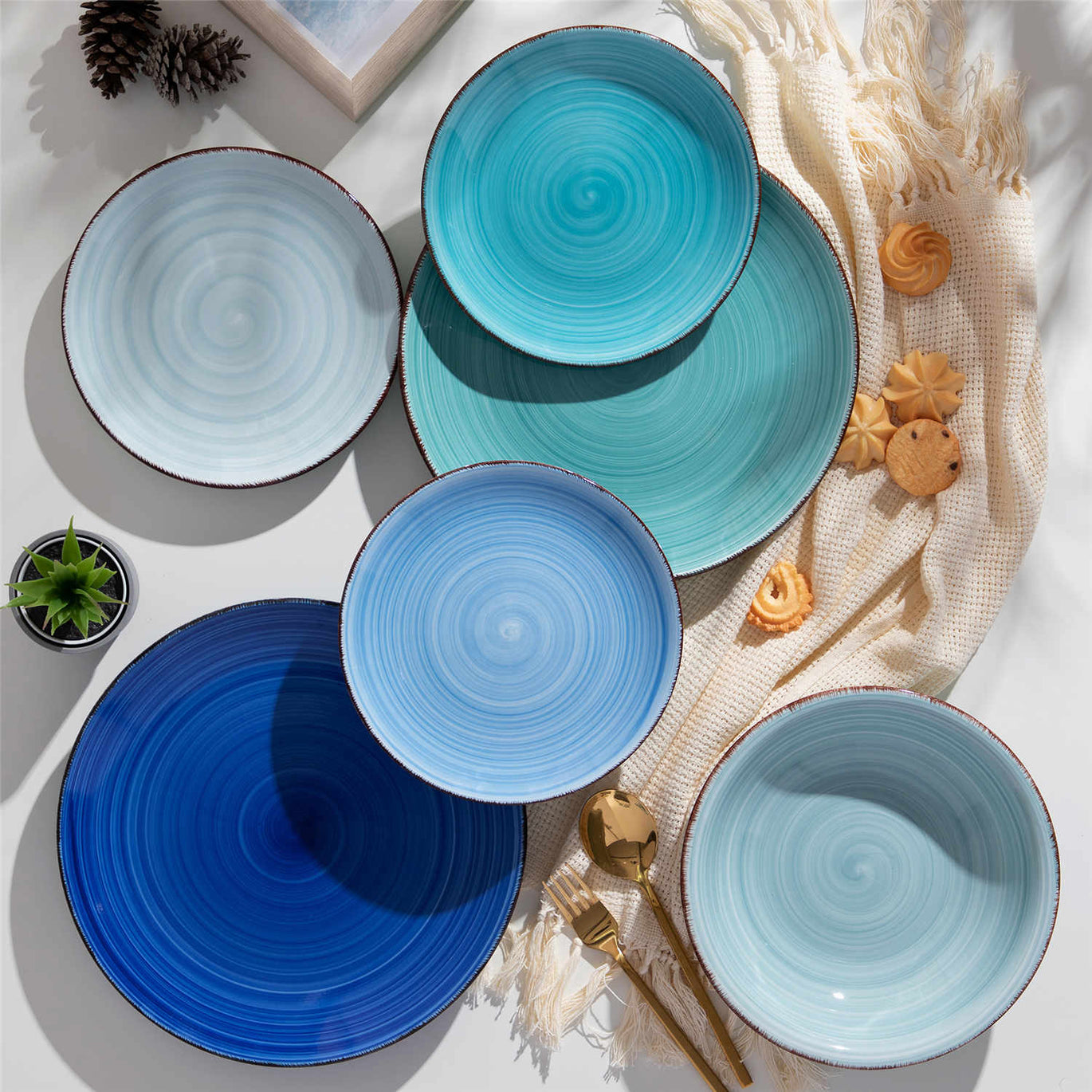
A page from Ceramama Dinnerware, showcasing reactive glaze stoneware dinner plates with decal decoration from CHANGSHA HAPPY GO DIN, offers a good snapshot. Reactive glazes create unique, one-of-a-kind color effects through chemical reactions in the kiln, while decals transfer detailed printed designs onto a glazed surface. Historically, those decals were analog; now the artwork behind them is often digital from the start.
At the industrial end, companies highlighted in sustainability discussions, such as those in the Techceramic and Ragnoworld articles, are pairing advanced materials and lower-temperature processes with innovations like inkjet digital printing on ceramic surfaces. Digital printing allows manufacturers to simulate stone, wood, textiles, abstract art, or branding visuals with high fidelity, while reducing the need for quarried stone or elaborate engraving. This is a digital revolution in surface design: infinite pattern libraries, quick switches between motifs, and the ability to produce limited runs without retooling entire production lines.
On the aesthetic side, trend analysis by Joyye points to a surge in organic silhouettes, asymmetrical forms, embossed textures, and reactive glazes. Social media platforms, called out explicitly in reports from Data Bridge and other analysts, have turned table settings into shareable scenes. Instagram and similar channels frame meals as visual experiences, pushing consumers to choose photogenic ceramic plates and bowls that echo interior decor and personal style. In my own tabletop styling work, I routinely see retailers brief designers with moodboards built from social feeds, not just from trade fairs or pattern books.
Digital design tools and inspiration streams are pushing traditional ceramic makers to think in terms of “Instagram moments” and “Pinterest-ready” color stories, which can be exhilarating but also relentless. A form that once stayed in a catalog for a decade may now feel “old” after one or two seasons of social trending.

Smart, Sustainable Manufacturing in a Connected World
The digital revolution is not just about pretty pictures; it is also transforming how kilns fire, waste is managed, and energy and water are used.
Articles from Techceramic and Crafty Clayworks describe eco-friendly ceramics as those made with practices and materials that reduce environmental harm across sourcing, production, and finishing. These include low-temperature sintering processes, the use of recycled inputs such as reclaimed ceramics and industrial by-products, and advanced wastewater treatment that allows water to be reused in production.
Ragnoworld’s overview of sustainable innovation in ceramics goes further, describing process changes such as single firing, reduced thickness, and full heat and water recycling. In one example, a company reports recovering 100 percent of water used in tile production and reaching an effective recycling rate of 120 percent by drawing on water previously used by other firms in the sector. Heat recovery from kilns is used to preheat spray dryers or warm factory spaces, dramatically cutting wasted energy.
While these articles focus on tiles and advanced ceramics, not only on tableware, they highlight a direction that dinnerware manufacturers are also following: sophisticated process control, often enabled by digital monitoring and automation, to reduce emissions, energy use, and waste. In my visits to larger tableware factories, real-time dashboards have replaced clipboards; kiln curves, glaze thickness, and quality checkpoints are monitored digitally to prevent defects and lower reject rates.
Parallel to this, environmental life-cycle analysis is entering even small ceramic studios. Ceramics Now reports on Ukrainian artist Yuliya Makliuk, who used life-cycle assessment to calculate that an average handmade stoneware mug can embody around 7.5 kilograms of carbon emissions across its lifetime, from raw material to shipping and dishwashing. By changing firing cycles, packaging, shipping modes, and customer washing practices, she demonstrates pathways to reduce that footprint dramatically, even to near-zero in ideal scenarios.
Digital tools make this kind of granular analysis and communication feasible. Carbon calculators, production tracking software, and simple spreadsheets let makers model the footprint of a plate or mug and tell that story to customers online. The digital revolution here is quiet but significant: data is entering a craft that used to be guided mainly by intuition, tradition, and visual inspection.
E‑Commerce and the New Tableware Supply Chain
If there is one arena where digital has visibly upended tradition, it is distribution. Several market analyses, including those from Zion Market Research, MarketsandMarkets, and BusinessWire, highlight the rise of e‑commerce and online platforms as the fastest-growing channel for ceramic tableware.
These reports consistently describe online distribution as the segment expected to post the highest growth rates among channels. They note that supermarkets and specialty stores still play a central role for affordable and mid-priced pieces, but online retailers and brand sites are gaining share quickly, especially for design-led, premium, and niche products.
On the ground, this means a few very concrete shifts.
First, the gatekeepers have multiplied. A generation ago, a tableware factory often relied on a limited set of buyers: big-box retailers, department stores, hotel purchasing managers. Today the same factory may also sell through its own site, an Amazon-like marketplace, design-focused platforms, or even direct-to-restaurant ordering portals. BusinessWire points out that in the United States, ceramic dinnerware is a robust category, with strong distribution networks and a boom in online retail creating new opportunities for suppliers.
Second, photography, storytelling, and digital merchandising now matter as much as a good glaze recipe. Joyye emphasizes that e‑commerce requires high-quality imagery, 360-degree views, augmented reality or virtual table-setting tools, and rich product data to help shoppers assess materials, care, and dimensions without touching the plate. Metastat Insight echoes this, noting that online platforms and virtual showrooms help consumers visualize complete table settings at home before purchase.
In my own collaborations with brands, we routinely build “digital place settings” before physical ones: mapping color palettes, stacking heights, and mix-and-match patterns in rendering tools so that an online shopper can imagine the exact feel of a brunch table or holiday spread.
Third, data now flows back upstream. The article on China’s domestic tableware trade describes merchants building product pages on digital platforms, analyzing traffic and conversion data, then adjusting assortments and pricing accordingly. Instead of walking a trade fair and guessing which shapes will sell, many producers can now watch in real time which dinner plate diameter or bowl depth performs best and tweak production runs accordingly.
This data feedback loop can be a powerful ally for traditional ceramic producers trying to innovate. It can also lead to a feedback trap: if sellers chase only what has already sold well, they risk flooding the market with lookalike products and discouraging true innovation.

Social Media, Aesthetics, and the Race to Differentiate
One of the clearest impacts of the digital revolution on ceramic tableware is aesthetic acceleration. Dining has become content, and tableware is the supporting cast that helps every home cook or barista tell a story.
Market reports from Data Bridge Market Research and Joyye describe how social media platforms such as Instagram and Pinterest are reframing meals as visual experiences. Consumers increasingly select plates, bowls, and mugs that photograph well, coordinate with interior design, and express identity and mood. Joyye’s trend overview for 2025 points to earthy, organic hues like terracotta, sage, and sandy neutrals, accented by bold cobalt and charcoal; forms that shift from traditional roundware to asymmetrical, stackable silhouettes; and textures such as reactive glazes, embossing, and hand-painted details that read beautifully in photos.
Digital channels amplify not only trends but also expectations. Market research from Zion and MarketsandMarkets notes a growing preference for artisanal, handcrafted, and sustainable ceramics, even when produced at scale. Consumers want visible variation, traceable materials, and credible eco-stories alongside durability and easy cleaning. E‑commerce platforms make it easy to compare designs, prices, brand narratives, and sustainability claims side by side.
At the same time, the Chinese tableware industry article highlights a major challenge: homogenization driven by weak innovation and rapid copying. Popular tableware designs are often imitated quickly, with minor pattern tweaks and lower quality, as non-original merchants rush to cash in on a successful style. This phenomenon is not unique to China; the digital marketplace rewards speed and low price nearly everywhere.
Combine that dynamic with algorithms that surface similar products and it is easy for a customer to scroll through dozens of lookalike plates differing only by a tiny tweak in floral pattern or border color. For traditional makers who care deeply about unique forms and glazes, this can be disheartening.

New Digital Business Models: Sharing, Pooling, and Circularity
The digital revolution is also enabling new ways of using ceramic tableware, not just buying it. The Vancasso article on shared tableware describes a spectrum of “sharing” models: peer-to-peer lending, community plate libraries, B2B pooling for restaurants and caterers, event rentals, and reusable takeout loops. All of these rely on an access-over-ownership mindset, supported by digital tracking and logistics.
The article notes that digital check-in and return systems, unique IDs or codes on pieces, simple reminders, and scorecards for damage and loss can make shared fleets manageable and trustworthy. These systems are essentially software sitting on top of very physical ceramic plates and bowls. They turn a static asset into part of a service.
Studies cited in that piece point out that the environmental advantage of reusable ceramic tableware over disposables depends heavily on high reuse counts and efficient washing. Shared fleets intensify this, because their environmental payoff relies on using each plate many times across events or customers. Centralized washing hubs, route optimization, and data-driven fleet management become key.
From a traditional industry perspective, these models are disruptive. A restaurant that participates in a pooling scheme may buy fewer plates outright, but in higher-performance, share-ready materials like vitrified porcelain or high-fired stoneware. This shifts the demand mix toward durable, stackable shapes with reinforced rims and satin or matte glazes that hide wear. It also opens the door to new types of contracts between manufacturers and service operators, with digital systems as the glue.

Digitalization: Pros and Cons for Traditional Ceramic Players
The digital revolution is not a simple win or loss for traditional ceramic tableware. It is a series of tradeoffs that different players experience differently. The table below summarizes some of the core levers and their impacts.
Digital lever |
Main upside for ceramic tableware |
Main tension or risk |
E‑commerce and online marketplaces |
Expands reach beyond local stores; enables niche and artisanal brands to find global audiences; allows direct-to-consumer storytelling and higher margins compared with some wholesale channels. |
Intensifies price competition and transparency; exposes brands to copycat competitors; raises expectations for constant discounts and fast delivery. |
Social media and visual platforms |
Elevates tableware from “background” to hero; drives demand for design-forward, photogenic pieces and encourages creative collaborations. |
Encourages short trend cycles and aesthetic churn; can push makers to prioritize looks over durability or authenticity; amplifies homogenization as popular styles get copied quickly. |
Digital design and printing |
Enables rapid prototyping, complex patterns, and small-batch or personalized runs; reduces tooling costs; supports integration of cultural motifs and brand identities. |
Can lead to overproduction of surface variations with limited true design innovation; may disconnect designers from material realities if screen decisions are not validated in clay. |
Data-driven merchandising |
Helps factories and brands refine assortments based on real demand; supports more precise forecasting, reducing waste and dead stock. |
Over-reliance on past sales data can discourage risky, original designs; encourages chasing incremental changes rather than leading with bold new ideas. |
Sustainability analytics and process control |
Makes energy, water, and waste impacts visible; supports investments in efficient kilns, recycling, and low-impact glazes; underpins credible eco-claims to consumers. |
Requires upfront digital infrastructure and expertise; can create marketing pressure to overstate sustainability gains if not handled transparently. |
Sharing platforms and digital tracking |
Increases lifetime use of each piece; favors durable, repairable, stackable designs; aligns with circular economy goals. |
May reduce overall unit sales in some segments; requires careful management of breakage, hygiene, and logistics; can marginalize delicate, artisanal pieces not suited to pooling. |
From my perspective as a “Colorful Tabletop Creative & Pragmatic Joy Curator,” the most successful ceramic brands and workshops are those that treat digital tools as a way to amplify their craft, not as a replacement for it. They use data, photography, and e‑commerce to tell richer stories about their glazes and shapes; they adopt sustainable process innovations where they genuinely fit; but they still let clay, not algorithms, set the rhythm of design.
Practical Guidance for Makers and Brands Navigating the Digital Shift
The research and on-the-ground experience suggest a set of practical moves that traditional ceramic players can make to ride the digital wave without wiping out their identity.
First, define your material and aesthetic lane clearly, then let digital amplify it. Reports from Data Bridge and Zion highlight how the market is segmented by material (bone china, porcelain, stoneware, earthenware) and by price tier. Decide where you sit in that map. Are you the rustic, high-fired stoneware that loves reactive glazes and earthy tones? The lightweight, luminous bone china for special occasions? Once that lane is clear, build digital content that reinforces it: close-up shots of glaze surfaces, videos of plates in use, behind-the-scenes kiln openings.
Second, treat sustainability as a design brief, not a bolt-on label. Crafty Clayworks, Handful Ceramics, and Ceramics Now all emphasize that eco-friendly ceramics require attention to raw materials, firing cycles, glazes, packaging, and even how pieces are washed in daily life. Use digital tools to track your process impacts and share meaningful numbers or actions rather than vague “green” claims. For example, if you shift to single firing or lower-temperature glazes, explain what that means in terms of energy savings or reduced carbon emissions, drawing inspiration from the detailed life-cycle work described in Makliuk’s research.
Third, be deliberate about how you show up online. Joyye urges retailers to invest in high-quality imagery, augmented reality tools, detailed product data, and robust reviews. Even a small workshop can follow the spirit of that advice. A simple but consistent photography style, clear size references, honest notes about variation and care, and a few well-chosen customer photos can make a huge difference in conversion without requiring a full-blown 3D configurator.
Fourth, resist the homogenization trap. The Chinese industry article is a cautionary tale: when a successful design appears, many merchants copy it with slight tweaks and lower quality, leading to a field of near-identical, less inspiring products. Digital channels make copying easier, but they also make originality more visible and rewarding over time. Instead of chasing every trend, build a recognizable design language. That can be a signature rim shape, a particular color story, or a distinctive approach to reactive glazes. Let your “library” of forms be stable even as surface patterns evolve.
Fifth, explore new models thoughtfully. If you produce durable, vitrified porcelain or stoneware, you might consider working with sharing programs, rental services, or hospitality fleets that prioritize circular use. The Vancasso article shows how share-ready ware benefits from rolled rims, stackable shapes, and matte or satin finishes. Digital tracking and fair deposit systems can make these business models sustainable for you financially and environmentally.
Finally, keep your hands in the clay and your eyes on the screen, in that order. Digital dashboards can tell you about reject rates and best sellers. Social media can tell you what color is trending this week. But only handling a prototype plate, stacking it, tapping it, and setting it beside real food will tell you whether it truly belongs on someone’s table for years.
What This Means for Buyers and Hosts
The digital revolution does not only affect makers and brands; it reshapes how home cooks, hosts, and hospitality buyers choose their pieces.
Market reports consistently highlight that households increasingly use ceramic tableware as part of home decor, not just as functional tools, while hotels, restaurants, and cafés rely on it to create premium dining experiences and express brand identity. Online platforms, from large marketplaces to niche design shops, make it easy to compare dozens of options in a few minutes.
If you are curating a home collection, that abundance can feel overwhelming. A practical, playful approach is to decide what moments you are shopping for first: everyday breakfasts, weekend brunches, holiday feasts, or a colorful snack zone for kids. Then filter by material and mood. Porcelain for luminous, slightly more formal tables; stoneware for cozy, earthy scenes; reactive glazes for lively, painterly vibes. Use every bit of digital information available: close-up photos, reviews that mention weight and feel, and, when available, AR previews that place a plate on your table through your cell phone.
If you are buying for a restaurant or hotel, the digital toolset expands. Virtual showrooms and sample ordering from online catalogs can save time, but the fundamentals stay stubbornly tactile. You still need to test how pieces stack in a dishwasher, how they handle frequent handling and high heat, and how they look under your actual lighting. Research from Zion and MarketsandMarkets underscores that the commercial segment values durability, chip resistance, and easy maintenance as much as aesthetics. Digital information can narrow the field; a hands-on session should still make the final call.
FAQ: Common Questions About Digital and Traditional Tableware
Is digital printing on ceramic tableware less “authentic” than hand-painted designs?
Authenticity lives in intention, not just technique. Research on digital printing by industrial ceramics companies, such as those described in Ragnoworld’s sustainability coverage, shows that inkjet technology can reduce reliance on quarried stone and enable intricate designs with less waste. Hand-painted pieces carry the artist’s gesture; digitally printed patterns can carry the designer’s imagination and complex brand narratives. Both can be meaningful if they are honestly presented and well executed.
Does buying ceramic plates online make them less sustainable because of shipping?
The environmental impact of shipping is real, especially for heavy items like ceramics. Life-cycle analysis from Ceramics Now, focused on handmade mugs, shows that long-distance air freight can significantly increase a piece’s carbon footprint. However, much of the impact in that analysis also came from energy used in dishwashing and production. In many cases, choosing durable pieces that you will use for many years can matter more than whether you bought them in a physical store or online, especially if shipping uses efficient modes. Digital tools can help you understand these tradeoffs when brands share their data openly.
Will digital and shared tableware models make delicate, artisanal pieces obsolete?
Unlikely. Shared fleets and pooling systems, as described in the Vancasso article, work best with robust, standardized shapes in vitrified porcelain or stoneware. Delicate, highly sculptural or experimental pieces thrive in different contexts: galleries, limited runs, special-occasion sets, or as accent pieces layered into more robust everyday collections. The digital revolution adds more channels and models; it does not erase the charm of a whimsical, fragile plate that appears only when you serve birthday cake.
Closing Thoughts: Keeping the Joy in a Digitized Tabletop
The digital revolution has wrapped the traditional ceramic tableware industry in a swirl of code, content, and data. Market reports chart growth curves; platforms algorithmically suggest the next dinner set; kilns hum under efficient firing schedules; AR apps float plates over your dining room in real time. Yet in the end, what matters most is still that moment when a plate meets food, light, and conversation.
For makers, retailers, and hosts, the sweet spot is where digital tools help you put more thoughtful, durable, and delightful ceramics onto real tables without flattening their soul. Use e‑commerce and social media to showcase the colors and textures that make your heart beat faster. Lean on sustainability analytics to fire smarter and waste less. Embrace new models like sharing and pooling where they truly fit. And then, when the screen closes, let your hands and your guests remind you why any of this matters: because a beautiful, well-used plate is still one of the most joyful canvases in everyday life.
References
- https://www.ceramicsnow.org/articles/how-yuliya-makliuk-tried-to-invent-the-worlds-most-sustainable-pottery-and-what-came-out-of-it/
- https://www.fortunebusinessinsights.com/ceramic-tableware-market-113079
- https://ceramamadinnerware.com/Dinner_Plates/20250108e56f9232.html
- https://www.credenceresearch.com/report/ceramic-tableware-market
- https://www.databridgemarketresearch.com/reports/global-ceramic-tableware-market?srsltid=AfmBOor_dqUuCJbxP3L0zDFZKhPSr8HLN5f2rdt0Fa0MHYA3D0MZAOyi
- https://www.futuremarketinsights.com/reports/ceramic-and-porcelain-tableware-market
- https://www.gminsights.com/industry-analysis/ceramic-tableware-market
- https://www.handfulceramics.com/post/sustainability-in-ceramics-something-to-think-about-as-a-ceramicist-in-todays-world
- https://www.joyye.com/info-detail/trends-in-ceramic-tableware-in-2025
- https://www.linkedin.com/pulse/uk-ceramic-tableware-market-challenges-analysis-owvxf
Sie können auch mögen
Stern 16 Stück Geschirr Set
- Von €72,95
€96,95- Von €72,95
- Stückpreis
- per
-
Blue
-
Green
-
Red
-
Grey
Bonita 18-teiliges Geschirrset
- Von €60,95
€74,95- Von €60,95
- Stückpreis
- per
-
Blue
-
Multicolor
Simi 24 Stück Geschirr Set
- €96,95
€129,95- €96,95
- Stückpreis
- per
Starry 16-teiliges Geschirrset
- €73,95
€86,95- €73,95
- Stückpreis
- per
-
Blue
-
Green
-
Red
-
Gradient Green