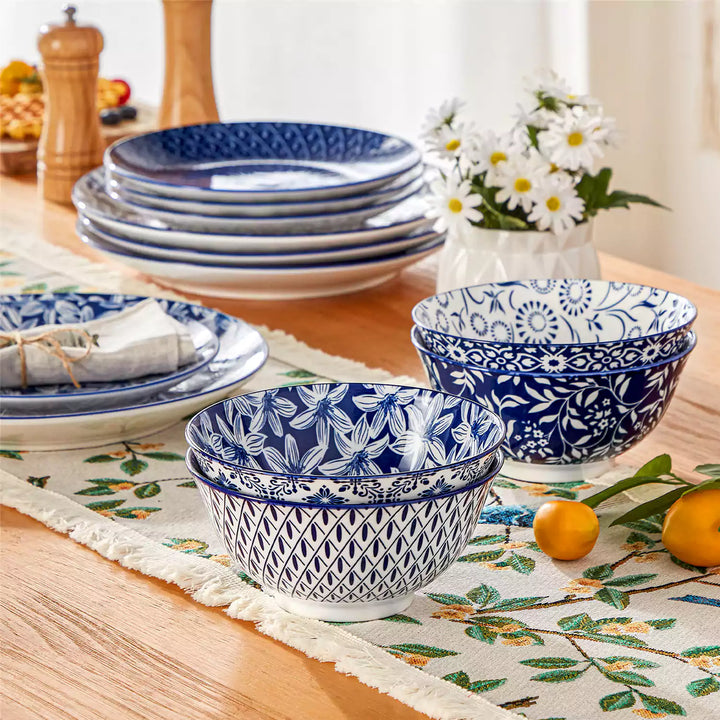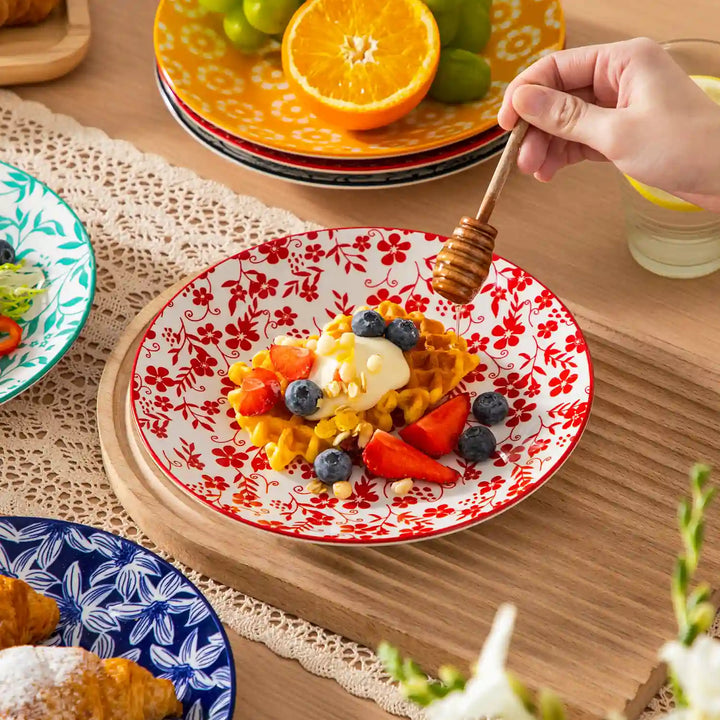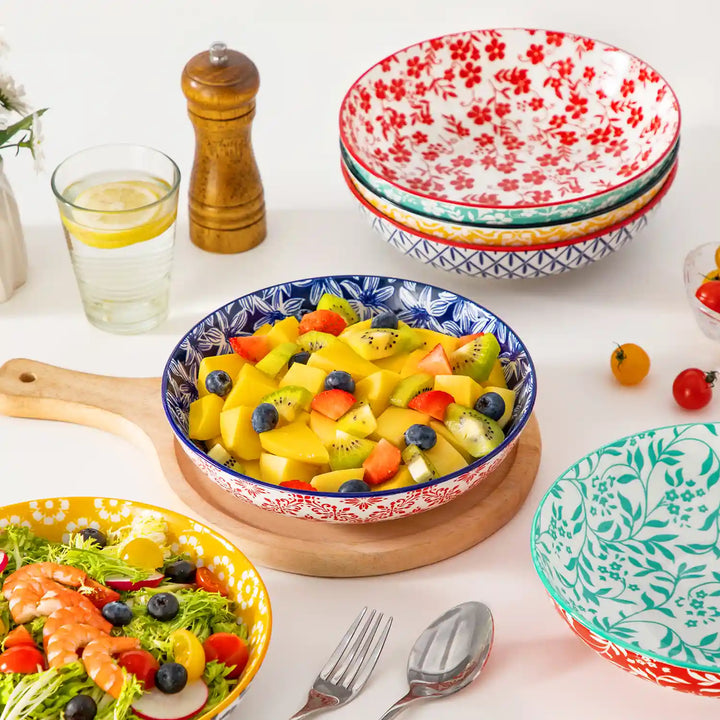


Key Takeaway: A 16-piece dinnerware set usually serves four people, often with dinner plates, salad plates, bowls, and mugs. An 18-piece set often serves six people without mugs, while a 24-piece dinner set may serve six or eight depending on the piece mix. The best choice depends on your household size, hosting habits, storage space, and whether you actually need matching drinkware.
Buying dinnerware sounds simple until the numbers start to blur. A 16-piece set, an 18-piece set, and a 24-piece set may all look "complete," but they do not always serve the same number of people.
One collection may include mugs. Another may skip them. One may serve four people with four pieces each, while another serves six people with only three pieces per setting. That is why choosing the right dinnerware set is not just about the total piece count. It is about what those pieces actually are.

How Dinnerware Pieces Translate to Place Settings
The easiest way to understand dinnerware sets is to divide the total piece count by the number of pieces included in each place setting.
Total pieces ÷ pieces per place setting = number of place settings
| Set Type | Common Pieces Included | Likely Place Settings |
|---|---|---|
| 16-piece set | Dinner plate, salad plate, bowl, mug | 4 |
| 18-piece set | Dinner plate, salad plate, bowl | 6 |
| 24-piece set | Dinner plate, salad plate, bowl, mug | 6 |
| 24-piece set | Dinner plate, salad plate, bowl | 8 |
In plain terms: 16 pieces often serves four, 18 pieces often serves six without mugs, and 24 pieces may serve six or eight depending on the piece mix.
This is why a 24-piece dinner set is not automatically the largest option in daily use. If it includes mugs, it may serve six. If it skips drinkware, it may serve eight.
Many newer dinnerware sets skip mugs because households already own favorite coffee cups, travel mugs, insulated tumblers, or specialty drinkware. For some homes, a mug-free dinnerware set is more practical because it gives you more plates and bowls instead of extra cups you may never use.
Before comparing prices, always check the actual piece list.
16-Piece vs. 18-Piece vs. 24-Piece Dinnerware Sets
A 16-piece dinnerware set is usually a compact 4-person set. The classic layout includes:
- 4 dinner plates
- 4 salad plates
- 4 bowls
- 4 mugs
This is a good starter choice for couples, small families, apartments, or dinnerware sets for 4. It gives each person a full place setting without taking over the cabinet.
An 18-piece dinnerware set often works as a mug-free 6-person set. A common layout is:
- 6 dinner plates
- 6 salad plates
- 6 bowls
This setup is useful if plates and bowls matter more to your household than matching mugs.
A 24-piece dinner set varies more. Some sets serve six people with four pieces each, while others serve eight people with three pieces each. Reading the breakdown matters more than trusting the number on the box.

| Piece Count | Usually Best For | Main Advantage |
|---|---|---|
| 16 pieces | 1–4 people | Compact, simple, often includes mugs |
| 18 pieces | 4–6 people | More plates and bowls, often no mugs |
| 24 pieces | 6–8 people | Better for guests, larger families, or hosting |
Pros and Cons of Each Dinnerware Set Size
Each size has a practical use. The right choice depends on your daily routine.
| Set Size | Pros | Cons |
|---|---|---|
| 16-piece set | Easy to store, good for small homes, often includes mugs | Can feel tight when guests visit or dishes are in the dishwasher |
| 18-piece set | Often serves six, strong plate-and-bowl coverage | May not include mugs |
| 24-piece set | More flexible for guests, holidays, and larger households | Needs more cabinet and dishwasher space |
The smaller set saves space, the mid-size set gives stronger plate-and-bowl coverage, and the larger collection gives more room for guests.
How to Choose the Right Set for Your Household
Start with how many people eat at home on a normal day.
For one or two people, a 16-piece dinner set can work well because it gives enough pieces without crowding storage. For a family of four, it may be fine if the dishwasher runs daily, but tight if plates and bowls are often used for snacks, leftovers, or breakfast.
For households of four to six people, an 18-piece set may be more practical. It usually gives six dinner plates, six salad plates, and six bowls, which means fewer moments of "where did all the clean bowls go?"
For frequent hosts, a 24-piece dinner set is usually the safer choice. It gives more room for guests, holidays, and casual entertaining.
Ask yourself:
- How many people eat at home daily?
- Do I want matching mugs, or do we already have enough drinkware?
- How often do guests come over?
- Do I run the dishwasher every day?
- Do bowls get used for cereal, soup, pasta, rice, or leftovers?
- Do I have cabinet space for a larger tableware collection?
If you rarely host, do not buy a large set just because it sounds complete. If you often run out of clean plates, do not buy the smallest set just because it fits the cabinet.
Beyond the Pieces: Material, Storage, and Everyday Use
Piece count matters, but material, shape, and storage matter too.
A dinnerware set that looks beautiful but stacks poorly can become frustrating. Wide bowls, oversized plates, and bulky mugs may take up more cabinet space than expected. They can also crowd the dishwasher, especially in busy households.

Before buying, check:
- Plate diameter
- Bowl depth and width
- Stackability
- Dishwasher-safe details
- Microwave-safe details
- Cabinet shelf height
- Whether mugs are included
- Whether replacement pieces are available
For everyday use, dishwasher-safe and microwave-safe dinnerware is not a minor detail. It affects cleanup, reheating, leftovers, and how often you reach for the set.
Replacement pieces also matter. If a plate chips or a bowl breaks, a dinnerware collection with available replacement pieces is easier to maintain over time.
Material affects the feel of the table. Porcelain often feels smooth, refined, and easy to pair with different styles. Stoneware usually feels heavier, warmer, and more casual. Both can work well, but the best choice depends on whether you prefer a lighter table setting or a more substantial everyday feel.
Aesthetics matter too. Neutral dinnerware is easier to use every day and easier to expand later. Colorful or patterned sets can be beautiful, but they should still fit your normal meals, not just a holiday table.
Final Thoughts on Finding Your Perfect Dinnerware Set
A dinnerware set is not only about how many pieces come in the box. It is about whether those pieces match how your home actually eats.
Choose a compact 16-piece set if you want a simple setup for one to four people and like having matching mugs. Choose an 18-piece set if you want more plates and bowls for four to six people and do not need drinkware included. Choose a 24-piece dinner set if guests, holidays, or larger household meals are part of your routine.
The best dinnerware set is the one that makes daily meals easier without creating storage problems.
FAQs
Q1: How Many People Does a 16-Piece Dinnerware Set Serve?
A: Usually four people. Most 16-piece sets include four dinner plates, four salad plates, four bowls, and four mugs.
Q2: How Many People Does an 18-Piece Dinnerware Set Serve?
A: Many 18-piece dinnerware sets serve six people with three pieces per setting: dinner plate, salad plate, and bowl.
Q3: Is a 24-Piece Dinner Set Better?
A: It is better if you have a larger household, host guests, or want extra plates and bowls. It may be too large if cabinet space is limited.
Q4: Why Do Some Dinnerware Sets Not Include Mugs?
A: Many modern sets skip mugs because people often prefer separate coffee mugs, travel cups, or specialty drinkware.

Q5: Should I Buy Dinnerware Sets for 4 or Dinnerware Sets for 6?
A: Choose dinnerware sets for 4 if you have a small household and limited storage. Choose dinnerware sets for 6 if you want extra pieces for guests, leftovers, or dishwasher gaps.
Q6: What Is Better, Porcelain or Stoneware Dinnerware?
A: Porcelain is usually smoother and more refined, while stoneware feels heavier and more casual. Both can work well if they are durable, stackable, and easy to clean.