

When the world shut its doors, something fascinating happened on the table. Restaurant plates went quiet, home kitchens roared to life, and handmade ceramic dinnerware suddenly became the supporting cast of sourdough starters, Zoom birthdays, and long, late-night dinners that blurred weekday and weekend. As a colorful tabletop obsessive, I have never seen bowls, plates, and mugs carry so much emotion, so much story, or so much economic weight.
This piece unpacks how pandemic lockdowns reshaped demand for handmade ceramic dinnerware, weaving together what makers, market analysts, and regional policy reports observed in real time. The story is not simple. Hospitality-focused studios saw orders evaporate overnight, while some home-focused and digitally savvy makers struggled to keep up with new demand. At the same time, long‑established craft regions fought for survival.
Let’s set the table properly before we dive into the details.
What “Handmade Ceramic Dinnerware” Really Means Now
Ceramic dinnerware is the broad family of dishes we eat and drink from. A European market study by CBI describes it as mugs, cups and saucers, plates and platters, bowls, jugs, and accessories such as cake stands and sauce boats, made from materials like earthenware, stoneware, porcelain, and bone china. These materials differ in toughness, translucence, and firing temperature, but they all share one thing: they are shaped from clay and fired until they become durable, non‑metallic, inorganic objects.
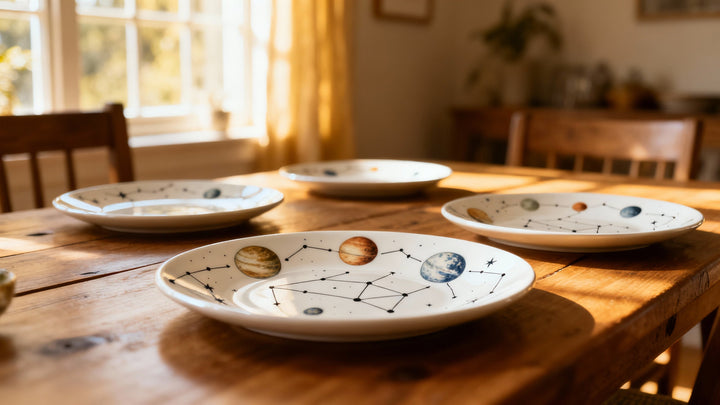
Handmade ceramic dinnerware is a more specific slice of that world. It might be a single potter throwing stoneware bowls for a neighborhood restaurant, a small studio hand‑painting plates, or a nonprofit like Detroit’s historic Pewabic Pottery pressing tiles and vessels by hand. A report from WDF Dinnerware frames hand‑painted ceramics as “functional art”: every brushstroke variation makes each piece one of a kind. This is where the magic lives for many home diners and collectors.
The pros of handmade dinnerware are easy to feel the minute you hold a piece. There is the tactile pleasure of a slightly irregular rim or a thumbprint nestled into a handle, the visual depth of reactive glazes that pool and break over edges, and the emotional power of knowing a person, not a machine, shaped your everyday bowl. Studies on consumer preferences, such as Joyye’s research on ceramic dinnerware styles and Vancasso Tableware’s work on feminine design, show that nearly three quarters of consumers now say appearance is a major factor when they buy tableware, up from roughly three fifths in 2020, and about three quarters of diners feel plate design changes how good a meal tastes. Handmade tableware fits that desire for aesthetics and feeling.
There are trade‑offs. Handmade pieces typically cost more than mass‑produced ware, production can be slower and vulnerable to supply or energy shocks, and consistency across large sets is harder to achieve. But during lockdowns, the emotional, sensory, and storytelling strengths of handmade ceramics suddenly mattered much more than their limitations.
Before Lockdowns: Restaurants Ruled the Handmade Plate
Before 2020, many studio potters built their businesses around chefs, hotels, and cafes. Business of Home profiled North Carolina–based brand Haand, which by 2019 had 14 employees and earned about 88 percent of its revenue from hospitality clients. That focus came after a huge restaurant order at a 2014 trade show dwarfed the returns from traditional gift‑market wholesale. New York–area studio Jono Pandolfi Designs supplied restaurants like Eleven Madison Park and sold almost exclusively to the hospitality world. In Milwaukee, Plate Collective produced custom ware for chef‑driven menus.
In these models, handmade ceramics were part of the restaurant experience first and a home product second. Restaurants ordered in the tens of thousands of dollars, concentrated in a relatively small number of clients. The same pattern appeared in Europe’s ceramic “clay regions,” described in an Interreg Europe CLAY project report, where many artistic ceramic SMEs explored tableware, tiles, and art objects but often depended on tourism, fairs, and corporate commissions.
In the background, global market reports already showed steady growth in ceramic tableware overall. A Technavio analysis projected that ceramic tableware would grow by about $3.64 billion between 2019 and 2023 at a compound annual growth rate above 5 percent, driven by online sales, rising household numbers, and strong manufacturer–retailer distribution. But demand was still anchored in a world where travel, dining out, and trade shows were normal.
Then lockdowns hit, and the table turned.

Lockdowns Flip the Script: From Restaurant Plate to Home Ritual
The Collapse of Hospitality Orders
As COVID‑19 closures spread in early 2020, restaurant dining stopped almost overnight. For studios tied to hospitality, that meant demand shock. Business of Home recounts how Haand, whose clients were mostly restaurants, had to close its North Carolina factory and suddenly had no clear idea when the next big hospitality order would land. A January “seconds” sale had just generated more than $130,000 in revenue, but that lucky timing did not change the structural risk of having nearly all business in one channel.
Bar & Restaurant tells a similar story from the chef‑ceramicist side. Bethany Kramer, who supplied plates to The Baker’s Table in Kentucky, saw wholesale orders vanish. Christie Goodfellow of CGCERAMICS in Ohio, whose pieces had graced restaurants from Chicago to Pennsylvania, also watched the hospitality pipeline shrink. Jono Pandolfi’s 16‑employee studio faced paused or canceled orders from high‑profile clients and had to shut down temporarily.
In Europe, data from the CLAY regions paints the same picture at a regional scale. In Romania’s South West Oltenia region, where ceramics are strongly tied to tourism and fairs, the largest folk pottery fair Cocosul de Hurez was cancelled for two consecutive years. The regional development agency reported that ceramic production fell by about 40 percent in 2020 and 2021, around 10 percent of workshops closed, and young jobs were particularly affected as potters sought other income sources. Italian representatives in the same project noted income drops of 20 to 30 percent for many ceramists during the worst phase of the pandemic.
Lockdowns did not just pause business; they exposed how fragile it is to build a handmade tableware studio around a single demand stream.
Home as Sanctuary and Stage
At the same time, kitchens and dining rooms turned into the main social stage. The Keraben Grupo trend report “Ceramic trends 21/22: life after COVID‑19” describes how people started to see home as a sanctuary: a place of safety, calm, and flexibility that had suddenly become office, school, gym, restaurant, and movie theater all at once. Soothing ceramics with soft shades, textured surfaces, natural stone looks, and warm beige and off‑white tones connected interiors to nature and made daily life feel more grounded.
On the making side, 137º Ceramic Art Studio Barcelona observed that practicing ceramics during lockdown had a measurable impact on wellbeing. Working with clay demanded concentration, reduced procrastination because clay dries if neglected, and cultivated resilience as students learned to accept breakages and “wobbly moments” as part of growth. Participants often felt that “time disappears” in the studio, and the moment of opening the kiln became a ritual of hope. These classes, conducted under COVID regulations, did not just produce pots; they introduced new people to clay and, by extension, to the idea of handmade ceramics as part of an emotionally healthier life.
On the using side, home cooking and social dining surged. CBI’s study on the European ceramic dinnerware market notes that Europe accounted for nearly 40 percent of global dinnerware imports and that imports grew from about €2.2 billion in 2017 to €2.7 billion in 2021. There was a clear dip in 2020, but imports bounced back strongly in 2021, and the report explicitly connects this rebound to people focusing more on home, cooking, and “home sweet home” trends that offset some of the negative economic effects.
Consumer‑side research from Joyye reinforces this shift. The company projects that the global ceramic dinnerware market will grow from about $12.4 billion in 2024 to roughly $22.2 billion by 2034, at an annual growth rate around 7 percent. That decade‑long forecast is built on patterns that took shape during the pandemic: more people cooking at home, more attention to table aesthetics in social media food culture, and a stronger desire for expressive, handcrafted dinnerware.
Vancasso Tableware’s analysis of design trends adds another layer. Nearly three quarters of consumers now say tableware aesthetics influence what they buy, up from around three fifths in 2020, and about three quarters of diners feel plate design affects perceived meal quality. In hospitality, upgrading tableware alone can raise guest satisfaction scores by roughly one third. Lockdowns gave people time and reason to internalize that logic at home. The plate is no longer a background object; it is an active part of the experience.
WDF Dinnerware reports that global demand for hand‑painted ceramic tableware rose about 20 percent year over year, with more than 7 billion ceramic tableware units sold worldwide in 2023 and more than half of new launches emphasizing unique, artisan‑crafted details. Put simply, lockdowns accelerated a shift that was already forming: people want dinnerware that looks and feels special and carries a story, not just something that survives the dishwasher.
Digital Pivots: From Studio Shelf to Smartphone Screen
With in‑person markets and fairs suspended, many handmade ceramic businesses had to reinvent how they reached customers. Business of Home describes how Haand’s founders quickly learned the language of e‑commerce, from digital ad campaigns to acquisition funnels, often by devouring audiobooks and advice from contacts they sometimes paid in pottery. They reengineered production for greater consistency so consumer orders would match Instagram photos, trimmed an overwhelming hospitality assortment of roughly 3,000 SKUs into a tighter retail‑friendly range, and leaned into direct‑to‑consumer sales that ultimately became a primary revenue stream.
Bar & Restaurant profiles several similar pivots. Kramer sold “seconds” at masked, outdoor studio events. Goodfellow hosted appointment‑only showings at her showroom. Plate Collective created a twice‑monthly “Dinner at Home” subscription that paired a custom bowl or plate with a chef‑prepared meal, giving customers both a beautiful object and an experience. Jono Pandolfi invested in a professional photo shoot, hired a marketing director, revamped its site for consumers, and ramped up activity on social platforms. By the time restaurants began returning, the studio had fully offset lost hospitality revenue through e‑commerce.
In New Zealand, a family pottery business featured by Stuff discovered Chooice, an online marketplace born from the wildly popular “New Zealand Made Products” Facebook group. Created by Sarah Colcord after her own events business was hammered by COVID restrictions, the group grew so fast that she spun Chooice into a structured platform connecting small local makers with buyers. The family pottery studio used it to rebuild sales that had vanished from in‑person markets.
Digital shifts also reshaped historic craft centers. A study titled “Long COVID for the craft industry: findings from China’s ‘Porcelain Capital’ pre and post COVID” analyzed Jingdezhen’s porcelain sector and documented a rapid pivot toward e‑commerce, livestreaming, and “screen‑based cultural consumption.” Makers who could master new platforms and cultivate online communities found ways to survive or even grow. Others, lacking resources or digital skills, fell behind. Of 26 practitioners interviewed in 2018, only 13 were still active in Jingdezhen by 2021, showing that COVID accelerated existing structural changes instead of simply causing a short‑term dip.
Long‑established institutions used the moment to expand digital offerings. DW’s feature on Pewabic Pottery in Detroit notes that the nonprofit studio used COVID‑19 shutdown time to strengthen its online shop and virtual history talks. By 2024, Pewabic had its best year on record, producing around 9,500 vessels, 40,000 architectural tiles, and nearly 33,000 art tiles, with store sales and architectural commissions bringing in about $3.38 million, a 42 percent increase over 2018.
WDF Dinnerware estimates that online channels already account for about 28 percent of global ceramic tableware sales and reports a 35 percent increase in searches for “hand‑painted dinner sets” on platforms like Etsy in 2024. The lockdown era did not just nudge handmade ceramics online; it effectively made digital presence mandatory for growth.
The Uneven Story: Who Benefited and Who Hurt?
Lockdowns did not treat all handmade ceramic dinnerware makers equally. Depending on geography, price point, and digital readiness, the same global crisis created both boom stories and near‑collapse.
Handmade Dinnerware as Luxury: When Demand Disappeared
Some ceramic hubs rely heavily on lower‑income consumers, export orders, or tourist traffic and have less access to online retail infrastructure. For them, handmade ceramics sit firmly in the “luxury” category, which is exactly the category consumers abandoned when incomes dropped.
NewsClick’s report on Khurja, a 500‑year‑old “ceramic city” in India’s Uttar Pradesh state, describes a severe crisis. The town hosts roughly 200 pottery units and more than 100,000 people work directly or indirectly in the ceramic business, across entrepreneurs, transporters, packaging workers, and others. According to data from the Central Glass and Ceramic Research Institute cited in the article, around 404 micro, small, and medium enterprises operate in the sector, with about 25,000 organized and unorganized workers. Khurja’s blue pottery industry typically generates between Rs 400 crore and Rs 500 crore in revenue per month.
Lockdowns shattered that flow. Two months of shutdown led to estimated losses of Rs 800 crore to Rs 1,000 crore. Migrant workers left in large numbers; roughly 60 percent reportedly departed during the first phase of lockdown, and another 10 to 15 percent left once train and bus services resumed. Those who stayed often received only about half of their usual salary. Fixed charges such as electricity, bank loan repayments, and other expenses remained, but sales almost stopped. Industry representatives estimate daily losses of about Rs 5 crore. Blue pottery, characterized as a luxury lifestyle product, was simply not where households wanted to spend precious cash in a crisis.
Tax policy amplified the pain. Handmade ceramics carry Goods and Services Tax rates that can reach 18 percent, making already expensive artisan products even less competitive. Producers explained that a single handmade piece can take almost two weeks to make, pushing labor costs up, and the added tax slice reduces affordability further. Many artisans told reporters they no longer expect their children to continue the craft.
Similar patterns surfaced across parts of Europe in the CLAY project’s interregional learning event. In Romania, production fell sharply and workshops closed. In Italy, representatives reported a 20 to 30 percent income drop for many ceramists, along with shop closures and uncertainty about the true cost of rising energy. In Portugal and France, individual ceramists struggled to access some of the funds that were more readily available to larger SMEs. In all these cases, handmade ceramic dinnerware and related artistic products faced the double blow of being non‑essential and energy‑intensive.
The Jingdezhen study mentioned earlier shows that pandemic pressures intersected with deeper structural issues such as urban redevelopment, gender imbalances, and uneven access to digital tools. COVID did not create those problems, but it made them harder to ignore.
Handmade Dinnerware as Daily Joy: Where Demand Surged
In other contexts, especially among middle‑ and high‑income consumers with stable jobs and the ability to work from home, spending shifted rather than shrank. People who could no longer splurge on travel or restaurant tasting menus redirected funds into home upgrades, from kitchen renovations to better plates and glasses.
Haand’s experience illustrates that shift. After the initial shock, direct‑to‑consumer sales provided crucial cash flow. An online sale of seconds in January 2020 generated over $130,000 in revenue, and as the company refined its D2C strategy and product line, consumer purchases eventually grew larger than hospitality revenue. Haand hired more staff than it had in 2019 and set a goal of reaching $1 million in direct consumer sales over the following year.
Bar & Restaurant chronicles how individuals sought out ceramicists whose work they had first encountered in restaurants. Former guests of The Baker’s Table hunted down Bethany Rose Pottery to buy the same plates and bowls they remembered. Customers of restaurants served by CGCERAMICS reached out to recreate special dinners at home, ordering handcrafted dinnerware that felt like a souvenir of a lost moment. Plate Collective’s subscription that paired a new handmade bowl or plate with a chef‑cooked meal turned the dining table into a stage for ongoing rituals.
New brands were born from pandemic disruption. Harper’s Bazaar Arabia profiles Sabrina Elaouad, a British‑Algerian designer in Dubai who lost her job as a visual merchandiser during COVID‑19. Having tried ceramics as a hobby just before the pandemic, she used lockdown time to deepen her practice, working from a home station and learning from online tutorials. Eventually she invested in her own kiln, set up in her garage, and launched Oum Ceramics at the end of 2023. Her line of handmade candle holders, incense burners, ashtrays, crockery, and vases, defined by fluid, imperfect forms and earthy textures, now taps into the same demand for organic, individualistic tabletop pieces that grew during lockdown.
In France’s ceramic regions, CLAY project reports note that distance selling grew by about 60 percent in 2020. Micro enterprises lost revenue but developed new products; SMEs leaned into luxury opportunities and saw growth in tableware and porcelain exports. In Detroit, Pewabic leveraged renewed interest in historic craft and local architecture, ultimately recording its best financial year in 2024.
WDF Dinnerware’s survey of more than 2,700 consumers found that 78 percent are willing to pay more for ceramics made with eco‑friendly processes such as lead‑free glazes and recycled clay. The same report notes that international shipments of hand‑painted pottery to the United Kingdom grew about 11 percent between October 2023 and September 2024 and that Vietnamese artisanal studios, which often use traditional low‑waste methods, are among the top global pottery exporters with several thousand shipments a year. When combined with Joyye’s forecast for sustainable ceramic tableware growing from about $102 billion in 2024 to roughly $145.5 billion by 2030, these numbers suggest that the appetite for handmade, sustainable dinnerware is not a short‑term lockdown fad.
Market Data: From Dip to Rebound
Stepping back to the big picture, pandemic lockdowns caused a distinct short‑term dip in the ceramic dinnerware trade, followed by a robust rebound shaped by new consumer behavior.
The CBI report shows that European ceramic dinnerware imports declined in 2020 but then bounced back in 2021 to about €2.7 billion, even exceeding 2017 levels. Europe’s share of global imports remained close to 40 percent, and around half of its imports continued to come directly from developing countries. Some of the 2021 imports may have been delayed shipments from 2020, but the data still shows renewed demand despite ongoing economic uncertainty.
In the United States, analyses from firms such as Mordor Intelligence and ResearchAndMarkets estimate that the ceramic tableware market was about $6.2 to $6.6 billion in the mid‑2020s and is projected to reach roughly $8.6 to $9.1 billion by the end of the decade, growing at around 6.7 percent annually. These reports explicitly note that COVID‑19 caused sluggish growth and losses in 2020 due to lockdowns and production halts, but that demand rebounded in 2021, driven especially by the recovery of commercial and hospitality sectors alongside ongoing home and kitchen renovation projects.
A broader study of the global ceramics market by Research Dive values the entire ceramics sector at about $242.1 billion in 2022, with a projection of approximately $403.4 billion by 2032 at around 5.5 percent annual growth. While much of that value lies in tiles, construction materials, and technical ceramics, the report points out that COVID initially hurt construction and interior projects but later boosted home renovation, interior ceramics, e‑commerce, and interest in antimicrobial ceramic products. Dinnerware, as part of the home décor and tabletop category, rode that same wave of home‑centric spending.
Taken together, these numbers show that lockdowns temporarily suppressed demand but also accelerated a structural shift. Handmade and handmade‑look ceramic dinnerware moved closer to the center of how people express themselves at home, cook, host, and even cope emotionally.

Pros and Cons of the Handmade Dinnerware Boom
From a joyful tabletop perspective, the upsides of this shift are obvious. Handmade ceramic dinnerware invites people to slow down and notice what is under their food. Studies from Vancasso and Joyye demonstrate that design seriously shapes perceived meal quality, and 137º Ceramic Art Studio’s observations suggest that engaging with clay as a maker supports mental wellbeing. Even if you only ever wield a fork, owning a plate with visible throwing lines or a glaze that changes in the light can become a tiny daily ritual of appreciation.
For makers and local economies, increased interest in handmade pieces can mean more opportunities. Haand’s successful pivot to direct sales, Pewabic’s record year, the rise of Oum Ceramics in Dubai, and the growth of distance selling in French ceramic regions all show that small studios can reach audiences far beyond their immediate neighborhoods when they lean into design, storytelling, and online channels. Some regional governments, such as Italy’s Umbria region through the CLAY pilot action, are testing triple‑helix support schemes that connect ceramic SMEs with universities to co‑develop product, process, and marketing innovations.
There are real downsides, however, and they often show up where the joyful story is thinnest. Rising energy and raw material costs, flagged in the CLAY project by Portugal’s Technological Center for Ceramics and Glass, hit ceramics particularly hard because firing kilns and transporting fragile goods are inherently resource‑intensive. Smaller workshops often lack bargaining power and financial buffers.
Digitalization is not a free gift either. The Jingdezhen study warns that the “digital pivot” can deepen inequality, benefiting already well‑connected or well‑resourced actors while leaving others marginalised. Managing e‑commerce, social media, and logistics demands skills and time that many artisans did not train for. In Khurja, government support such as India’s One District One Product program and pandemic measures felt distant from daily reality, and high tax rates made it harder for handmade ceramics to compete on price.
From a sustainability standpoint, quality handmade ceramics have a strong case because they are durable and can last for decades. Yet energy‑intensive kilns and long shipping distances complicate the picture. This is why WDF’s finding that the majority of surveyed consumers are willing to pay more for eco‑friendly ceramics is important: it creates room for studios to invest in energy‑efficient kilns, recycled clay, and non‑toxic glazes, and to communicate these choices clearly.
In short, lockdowns helped many people discover the beauty and comfort of handmade dinnerware, but they also exposed which makers and regions have the resilience, support, and tools to meet that demand.

Practical Advice for a Color‑Packed, Post‑Lockdown Table
If You Are Choosing Handmade Dinnerware for Home
Start with how you actually live. Research compiled by Joyye and CBI shows that modern consumers expect dinnerware to be microwave‑safe, dishwasher‑safe, and durable enough for daily use. If you reheat leftovers regularly or stack dishes in a tight cupboard, treat those needs as non‑negotiable when you evaluate handmade options. Ask makers whether their glazes are food‑safe and suitable for the microwave and dishwasher, and how they recommend caring for each piece.
Think in terms of small, flexible collections rather than one massive formal set. Joyye notes that many households now favor four‑ to eight‑place settings, open stock options, and mix‑and‑match possibilities instead of rigid twelve‑piece suites. That makes it much easier to build a personal “wardrobe” of dinnerware. You might choose a calm, neutral stoneware base for everyday plates and then layer in a few hand‑painted salad plates or dessert bowls with bolder colors or patterns that feel like jewelry for the table.
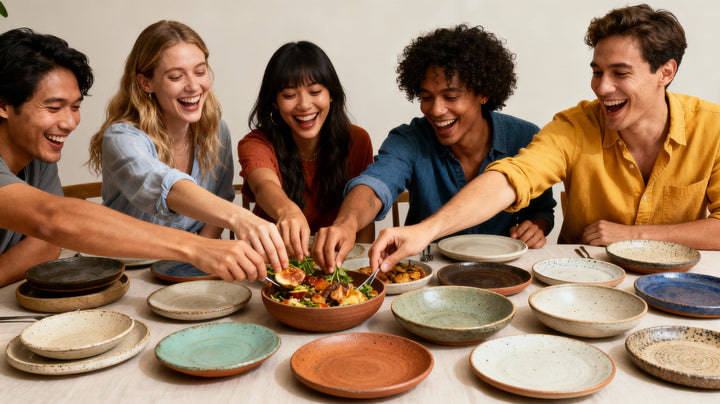
Color is your secret weapon. Bar & Restaurant’s coverage shows that when Jono Pandolfi shifted toward home consumers, the most popular colors were bright and eye‑catching shades like persimmon, yellow, turquoise, and sapphire blue, whereas restaurant chefs tended to prefer neutral tan and white palettes. Vancasso adds that neutrals such as ivory, taupe, and matte gray still account for nearly half of global tableware sales, but they increasingly appear alongside blush pinks, butter yellows, terracotta, sage greens, and dopamine‑bright reds and citrus tones. A practical approach is to anchor your set with a neutral and then add one or two expressive hues that make you happy every time you plate a dish.
Match materials to your lifestyle. Joyye’s definitions and consumer research distinguish between stoneware, porcelain, and bone china in ways that map nicely onto everyday needs. Stoneware is fired at high temperatures, non‑porous, often slightly heavy, and resistant to scratching. It is an excellent choice if you have kids, eat a lot of hearty, casual meals, or like a rustic look. Porcelain, fired even hotter, is lighter and more translucent, often with a bright white base that frames food beautifully, making it a smart cross‑over for both everyday and more formal meals. Bone china has bone ash in the clay body, which gives it exceptional strength despite its thinness and a warm, elegant translucence. It is ideal when you want something refined but still practical for regular use.
Pay attention to sustainability stories. Between WDF, Joyye, and Vancasso, a clear pattern emerges: there is growing demand for eco‑conscious dinnerware, and the sustainable ceramic tableware market is projected to rise from around $102 billion in 2024 to about $145.5 billion by 2030. Look for studios that talk openly about using lead‑free and cadmium‑free glazes, recycling clay scraps, managing kiln energy carefully, and choosing minimal or plastic‑free packaging. Many Vietnamese studios, for example, leverage traditional low‑waste production methods as a selling point. When you can, choose fewer, better pieces from makers who clearly care about their environmental footprint.
Finally, remember that you are investing in people as well as plates. Whether you buy a small batch of cups from a local studio, support a historic nonprofit like Pewabic, or order hand‑painted plates from an artisan whose story you discovered online, your dollars help determine which skills and traditions survive the next crisis.
If You Are a Maker or Small Brand
If lockdowns taught handmade ceramic businesses anything, it is the danger of relying too heavily on a single channel. Haand’s near‑total dependence on hospitality before 2020 made the initial shock brutal, while its later strength came from diversifying into direct‑to‑consumer. Bar & Restaurant’s profiles of Kramer, Goodfellow, Plate Collective, and Jono Pandolfi echo that lesson. As a maker, aim to balance wholesale restaurant orders, gallery placements, and retail partners with your own direct channels, whether that is a robust e‑commerce site, an online marketplace, or carefully curated in‑person sales.
Resist the temptation to offer every possible form and color. Haand’s move from a hospitality range of roughly 3,000 color‑and‑form combinations to a tighter, more consistent retail assortment is a useful example. Consumers shopping online want clarity and reliability. Choose a focused set of silhouettes and a thoughtful palette that photograph well and work together on a table. Joyye’s research on buying patterns suggests that people appreciate the ability to mix and match, so build your line like a modular system rather than an overwhelming catalog.
Tell the story of your work visually and emotionally. WDF’s positioning of hand‑painted ceramics as functional art and Vancasso’s findings about “visual storytelling” on platforms like Instagram and TikTok are powerful reminders that your process is part of the product. Short videos of trimming a bowl, close‑ups of glaze running over a carved rim, or a quick explanation of why you chose a particular clay body help customers feel connected. For restaurants or hospitality clients, emphasize how distinctive tableware acts as a “silent salesperson,” something Vancasso notes can raise perceived meal quality and guest satisfaction.
Lean into sustainability as both a value and a differentiator. WDF’s survey shows that more than three quarters of consumers are willing to pay a premium for ceramics made with eco‑friendly processes. If you are already reclaiming clay, using food‑safe, lead‑free glazes, or firing in energy‑efficient kilns, say so clearly. Consider exploring “organic dinnerware” territory as defined in Research Dive’s market analysis, where eco‑friendly materials and biodegradable or low‑impact options position products as safer and more sustainable than conventional ware.
Seek out support networks and policy tools. The CLAY project’s pilot action in Umbria offers one model: a “New support scheme to facilitate Ceramic SME access to innovation services” that links ceramic SMEs with the University of Perugia for design, material, and marketing expertise. Other regions used European Regional Development Fund money to mix grants and loans in programs like Umbria’s “Restart” project, or distributed tens of millions of euros in emergency and transition plans for SMEs, as in parts of France. Outside Europe, similar opportunities may exist through arts councils, small‑business grants, or creative‑industry initiatives. The key is to treat policy and partnership as part of your resilience strategy, not an afterthought.
Finally, plan for volatility. Reports from CLAY and the global ceramics market highlight ongoing challenges such as rising energy prices, CO₂ emissions constraints, and raw‑material scarcity. Where possible, invest in energy‑efficient kilns, flexible firing schedules, and local supply chains. Consider diversifying your product mix so that you have items at different price points, including seconds sales or limited edition collaborations that can quickly generate cash when needed.

FAQ: Handmade Dinnerware After Lockdowns
Did lockdowns ultimately increase or decrease demand for handmade ceramic dinnerware?
Both outcomes happened at once. In the short term, lockdowns devastated demand from restaurants, hotels, fairs, and tourism, as seen in the stories of Haand’s paused hospitality orders, Bar & Restaurant’s featured ceramicists, and the severe drops in production and income described in CLAY’s European region reports and NewsClick’s coverage of Khurja. However, at the same time, household demand rose as people cooked more at home, paid new attention to table aesthetics, and sought out handmade pieces online. The rebound in European dinnerware imports by 2021, the strong growth forecasts for ceramic dinnerware and sustainable tableware in studies from CBI and Joyye, and WDF’s data on a 20 percent rise in demand for hand‑painted tableware suggest that overall, the crisis shifted and ultimately expanded demand, with more of it flowing through digital and consumer channels.
Will interest in handmade plates fade now that restaurants are open again?
The evidence points toward a lasting shift rather than a temporary spike. Haand now makes more revenue from consumers than from hospitality and is investing further in direct‑to‑consumer growth. Goodfellow’s studio is reportedly booked with restaurant orders well into future seasons while still serving individual customers, indicating a hybrid model. Pewabic achieved record sales in 2024 after using the pandemic to strengthen online and educational offerings. Market analysts like Mordor Intelligence and ResearchAndMarkets project steady growth in the United States tableware market through 2030, and Joyye’s decade‑long forecast for global ceramic dinnerware growth suggests that home‑centered dining and expressive tableware are sticking around.
Are handmade ceramics actually a sustainable choice?
They can be, especially when made to last and produced responsibly. Research Dive’s overview of the ceramics market notes that ceramics in general have sustainability advantages over some materials due to durability and potential recyclability, even though firing is energy‑intensive. Joyye and WDF highlight a fast‑growing sustainable ceramic tableware segment and show that many consumers are willing to pay more for eco‑friendly production. The most sustainable handmade pieces are those made with non‑toxic glazes, reclaimed or responsibly sourced clay, energy‑efficient kilns, and packaging that avoids unnecessary plastic. They are also designs you will love and use for years. A bowl you reach for every day for a decade is far kinder to the planet than a cupboard full of unused plates.
A Joyful Closing Note
Lockdowns taught us that the plate under our pasta, the mug in our morning hand, and the bowl that holds our late‑night snacks can carry far more than food. They carry memory, ritual, craft, and community. As you build your own colorful tabletop in this post‑lockdown world, every handmade piece you choose is a tiny vote for the kind of dining culture you want: slower, more intentional, more joyful, and deeply human.
References
- https://community.ceramicartsdaily.org/topic/26254-qotw-what-effects-have-the-covid-and-the-supply-chain-failures-had-on-your-production-and-delivery-of-your-pottery/
- https://ceramics.org/wp-content/uploads/2020/06/CGM_JuneJuly-2020_Feature.pdf
- https://www.researchgate.net/publication/368975394_IMPACT_OF_PANDEMIC_COVID_19_ON_ECONOMIC_CONDITION_OF_CERAMIC_MSMEs
- https://www.newsclick.in/Khurja-Ceramic-Industry-Crisis-COVID-19-Lockdown
- https://5280.com/art-of-the-moment-pandemic-inspired-pottery/
- https://www.aeucc.eu/the-pandemic-impact-on-the-clay-regions-sharing-successful-experiences-and-best-practices/
- https://www.barandrestaurant.com/content/restaurant-ceramicists-spin-new-business-over-pandemic
- https://businessofhome.com/articles/haand-made-a-d2c-pivot-here-s-why
- https://www.joyye.com/info-detail/consumer-preferences-in-ceramic-dinnerware-styles?requestId=
- https://www.kerabengrupo.com/en/16183882561580710