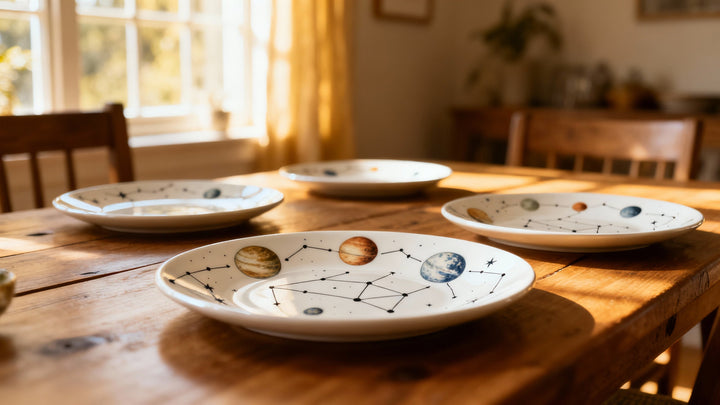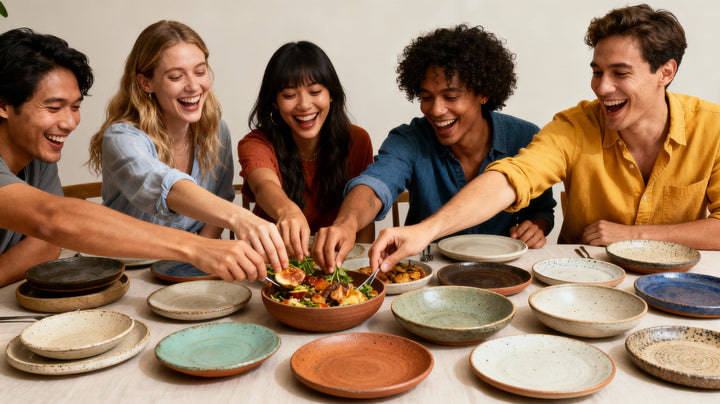


Color on the table is not decoration; it is direction. For kids, the hue of a plate can change what gets picked, how much looks like “enough,” and whether a new veggie gets a fair first taste. As a Colorful Tabletop Creative & Pragmatic Joy Curator, I love the art of joyful plating, but I also care deeply about what actually works at Tuesday dinner. Below, I translate what the research says into practical techniques you can try this week, with an eye for play, portion sense, and kid-friendly appeal.
The Visual Appetite: Why Color Matters More to Kids
Children read their plates with their eyes long before they become fluent eaters who combine sight, smell, taste, and touch effortlessly. Research summarized by neurogastronomy and perception scholars indicates that color sets expectations about taste and enjoyment, and younger children rely more on those visual cues than adults do. Evidence discussed by NIH-linked sources and Flavor Journal suggests the brain learns cross-sensory associations over time. Younger kids may not fully integrate visual and haptic information until around the late elementary years, so the first glance can be the deciding vote. A bright plate presentation is not just cute; it is a strategic first impression.

What Studies Say About Plate and Food Colors
Preferences for variety and color count
When researchers photographed plates with different numbers of foods and colors, children gravitated to the most colorful, varied plates. The Cornell Chronicle reports that kids preferred plates with about seven different items and roughly six different colors, a clear contrast to adult preferences for fewer items and fewer colors. The takeaway is simple: variety signals fun and abundance to children, and it increases aesthetic acceptance before a single bite.
The colors kids actually choose
Color preference shows up in the food itself. A study indexed by PubMed found children favored red, then green, then orange, then yellow when choosing among colored candies, regardless of age or sex. Other child-focused work on packaging shows that red packaging often outcompetes green when kids must choose one item, even after being told the contents are identical, as summarized by News‑Medical and studies in Food Quality and Preference. These findings do not mean red is universally best for every dish; they show that color is a persuasive cue for selection.
Plate color, fullness perception, and intake
Color can change how big a portion looks and how much a child expects to need. A PubMed Central study of adolescents presented identical portions on different plates and found that the red medium plate earned lower satiety-scale scores than white plates, a pattern consistent with perceiving less food needed to feel full. The effect was particularly pronounced among adolescents with higher BMI percentiles, and smaller plates influenced girls more than boys in that study. Not all contexts align, though. A randomized crossover trial with adult women showed higher energy intake when identical foods were served on red and black plates compared with white, with no differences in reported satiety over time. The adult buffet-style setting and food type differed, reminding us that the same color can nudge behavior in opposite directions depending on context, age, and menu.
Contrast and the classic portion illusion
The Delboeuf illusion explains why the same amount can look smaller on a larger dish. Low contrast between food and plate also makes edges harder to judge. Research summarized by Cornell-affiliated work has reported substantially larger self-served portions when the food color matches the plate color. In mealtime practice, that means pale foods on pale plates can lead to accidental over-serving, while high-contrast pairings make portions easier to see and judge. The idea of using plate–food contrast to improve visibility appears in guidance for seniors as well; better contrast helps everyone who benefits from clearer edges, kids included.
Packaging color and abundance bias
When children pick only one item from two sets, larger piles still pull their attention. Food Quality and Preference research shows a reliable “abundance bias” toward larger sets even with no personal gain in quantity. In the same research program, red packaging beat green, and the two effects combined when the red items were also the more abundant set. Younger children showed stronger set-size effects than older ones. For families, that translates to a simple rule of thumb for the grocery cart: abundant displays and bright warm packaging drive selection; use those levers thoughtfully.

Evidence Snapshot: What Each Cue Tends To Do
Cue or context |
What it tends to do with kids |
Where it shows up |
Source mention |
More items and more colors on the plate |
Increases visual appeal and willingness to choose |
Photo-based preference testing |
Cornell Chronicle, Acta Paediatrica study coverage |
Red, green, orange, yellow foods |
Higher likelihood of being chosen, with red often leading |
Choice among colored foods |
PubMed: color preference in children |
Red packaging vs green |
Red chosen more often despite identical contents |
One-item choice tasks |
Food Quality and Preference; News‑Medical coverage |
High plate–food color contrast |
Clarifies portion edges and can reduce over-serving |
Portion perception and plating |
Cornell-affiliated portion research; senior nutrition guidance |
Red plate in adolescents |
Lower perceived amount needed to feel full vs white plates |
Visual satiety scaling |
PubMed Central adolescent study |
Red/black plates in adult buffet |
Higher intake vs white plates, satiety unchanged |
Randomized crossover |
PubMed Central: plate color RCT |
Practical Design Principles For Family Tables
Think like a painter who is also a pragmatist. Start with natural, edible color on the plate—the greens of broccoli and kiwi, the reds of strawberries and tomatoes, the yellows of pineapple and corn, the blues and purples of berries and cabbage. Harvard Health and Intermountain Healthcare emphasize that colorful plant foods deliver varied phytonutrients, so a rainbow of produce builds nutrition while it boosts visual appeal.
Next, frame those colors with dishware that helps them stand out. For pale foods such as pasta, rice, and chicken, a navy or charcoal plate creates a crisp edge and makes a little look like plenty. For darker stews or sauces, a white or light plate restores balance and clarity. If you serve family style, present vegetables and proteins in separate, high-contrast vessels so each component can shine and be recognized easily.
Children respond well to layout decisions, not just color. The Cornell work noted a preference for entrées near the front of the plate and for playful arrangements. A simple face made from peas and a carrot ribbon can soften resistance to a new vegetable without turning dinner into a circus. Partitioned plates or bento-style boxes give foods their own “stage,” which adds visual variety while preventing flavors from merging prematurely.
Finally, match plate size to the diner. Smaller, simply rimmed plates can protect portions from creeping upward because the food fills more of the visible area and the rim does not distort the central canvas. If you want to promote independence, offer child-sized tongs or spoons for serving and narrate the choice: this green bowl is the crunchy broccoli, this red dish has sweet tomatoes, and your plate is the sky where they land.
When Color Helps—and When It Might Mislead
Color is a powerful cue for acceptance and perceived size, which can be wonderful for picky eaters when it supports trying new produce and recognizing a satisfying amount. There are tradeoffs to watch. Bright colors on packages do not guarantee wholesome content. A North Carolina grocery audit summarized in NIH-linked coverage found that 43.2% of 810 products contained artificial colors, and surveys cited by pediatric-focused sources indicate that more than 40% of products marketed to children contain synthetic dyes, with Red 40 consumed by a very large share of people over age two. Regulatory agencies approve color additives, yet ongoing discussion includes animal studies that raise concerns for long-term effects. The practical takeaway is to let fruits and vegetables supply most of the color, and to treat synthetic hues in packaged snacks as a marketing layer rather than a health halo.
Conflicting findings about plate color are not a problem to solve; they are a reminder to test in your kitchen. A red plate might nudge one child toward feeling satisfied with less pasta, while another child eats more dessert on a dark plate because it pops visually and feels extra special. Food type matters too. Studies have documented that spiciness expectations and perceived intensity can change with plate color, and desserts can be rated sweeter on white plates compared with black. For everyday meals, prioritizing high-contrast edges and natural produce color gives you the most consistent wins.
Age, Individual Differences, and Food Types
Younger children tend to rely more on surface cues such as color and size; older kids and teens bring more experience to the table, so learned associations and taste familiarity gain power. Several child studies report stronger set-size or color effects in younger groups, and visual–touch integration reaches adult-like performance later in childhood, as summarized in NIH research overviews. Sensitivity to color also varies by temperament, culture, and what is actually on the plate. A red cue may work as a stop signal for a sugary beverage in one context but read as exciting for strawberries in another. That is why visual strategies pair best with repeated exposure to the foods you want kids to love; research on developing healthy preferences in preschoolers consistently supports gentle, repeated tastes over time.
Buying and Care Tips For Colorful Kids’ Plates
Choose colors that create contrast with the foods your family eats most, and keep designs simple. Solid fields or minimal rims make edges easy to see and portions easier to gauge. Sectioned plates or bento boxes are practical for variety and reduce mixing that can trigger “no thanks” in cautious eaters. When you want portions to feel generous without overserving, use smaller plates and bowls sized for children; a modest mound looks abundant in a smaller well.
Materials matter for the daily grind. Non-slip bases help small hands, and smooth, durable glazes or finishes protect color while standing up to dishwashers. To preserve bright hues, avoid abrasive scrubbers and strong bleaches that can dull surfaces over time. If your family microwaves leftovers, check that the plate is safe for that use. Rotate a compact palette of two or three plate colors to keep novelty alive without creating storage chaos, and consider one darker dish for pale meals and one lighter dish for soups, stews, or dark sauces so you can maintain contrast day by day.

Sample Color Strategies You Can Try This Week
Start by leveraging foods kids already like. If your child loves pasta with a light sauce, try serving it on a navy or slate plate and place bright green broccoli and ruby cherry tomatoes in their own small dishes nearby. The contrast makes the pasta look ample, and the produce becomes colorful sidekicks rather than camouflage.
Breakfast is another easy win. Serve yogurt in a white bowl and surround it with a ring of blueberries, strawberries, and peaches so the fruit supplies the spectacle. Offer a small, high-contrast spoon and let your child decorate. When the fruit is the color star, no artificial additives are required to make the meal inviting.
For snack time, pour crunchy carrots and snap peas into a green plate to reinforce the “fresh and garden” theme, then place a dollop of hummus in a white ramekin inside that field. The lighter dip stands out, and the green plate frames the vegetables as the main event.
If you are experimenting with a new spicy family recipe, plate a child portion on a lighter dish so the brain’s expectations do not overshoot the spice level. Place a cooling side of cucumber or fruit in a clearly separate bowl and narrate the choice: try a bite, then a refreshing bite here. The visual separation supports self-regulation without pressure.
Food Color, Phytonutrients, and Why “Eating the Rainbow” Still Matters
Using plate color to guide behavior is not a substitute for the color of real food. Health guidance from Harvard Health and Intermountain Healthcare both point to the value of varied produce color groups. Reds often bring lycopene and other antioxidants linked to heart and brain health; oranges and yellows offer carotenoids that support eyes and immunity; greens carry compounds that support detoxification and digestion; blues and purples are rich in anthocyanins linked to healthy aging; whites and browns from onion family and mushrooms contribute protective compounds of their own. In practice, that means composing meals that look like nature’s paintbox and letting tableware serve the role of frame and contrast.

Pros, Cons, and the Balanced Way Forward
The upside of color-forward plating is clarity, curiosity, and choice. Children see what is there, feel that the plate is inviting, and can approach unfamiliar foods through playful presentation. The main risks come from mistaking bright packaging for nutritious content and from overgeneralizing a single color rule. A high-contrast setup reliably helps portions look like enough, but whether a red plate suppresses or amplifies intake depends on the dish, the diner, and the moment. Use color to support your goals, observe what your child does, and adjust course. In families, n-of‑1 experiments are the gold standard.
Mini Guide: Color of Food and Typical Benefits
Food color group |
Common examples |
Typical nutrient highlights |
Source mention |
Red |
Strawberries, tomatoes, red peppers |
Antioxidants linked to heart and brain support |
Harvard Health; Intermountain Healthcare |
Orange/yellow |
Carrots, sweet potatoes, oranges |
Carotenoids supporting eyes, skin, and immunity |
Harvard Health; Intermountain Healthcare |
Green |
Broccoli, spinach, kiwi |
Compounds that aid detoxification and digestion |
Harvard Health; Intermountain Healthcare |
Blue/purple |
Blueberries, blackberries, purple cabbage |
Anthocyanins linked to healthy aging and memory |
Harvard Health; Intermountain Healthcare |
White |
Cauliflower, mushrooms, onions |
Protective compounds and heart support |
Harvard Health; Intermountain Healthcare |

FAQ
Does a red plate make kids eat more or less?
Both outcomes appear in the literature, depending on age and setting. An adolescent study using pictures of identical portions found a red plate corresponded to feeling full with less compared with white plates, while an adult crossover trial found higher intake from red and black plates than from white in a buffet-style meal. For kids at home, focus on high-contrast edges and watch what happens with your specific child and foods.
Are blue plates appetite suppressing for children?
Evidence in children is not definitive. Much of the appetite-suppressing narrative for blue comes from adult contexts and general color psychology. Kids’ choices are strongly guided by bright, warm colors, but plate–food contrast and overall variety tend to matter more than any single hue. Test blue when you want a calmer, cooler frame, and keep the food itself colorful.
Should I avoid brightly colored packaged snacks?
Brightness on the box is not a nutrition guarantee. Surveys summarized by NIH-linked sources show widespread use of synthetic dyes in products marketed to children. Pair package design skepticism with a commitment to offering naturally colorful fruits and vegetables. Let produce supply the rainbow, and treat flashy packaging as marketing rather than a health signal.
Does plate size matter more than plate color?
Size and color interact. Larger plates can make the same portion appear smaller, and low plate–food contrast can make edges harder to judge, both of which can encourage overserving. Smaller, simply rimmed plates with good contrast typically make portions easier for kids to recognize and accept.
How many different foods and colors should be on a child’s plate?
Photo-based preference research suggests children enjoy plates with more items and more colors than adults do, with a striking preference for many elements and hues. In practice, offer a few small, distinct tastes in separate spaces and let produce bring the spectrum. Variety should feel playful, not overwhelming.
Are colored plates safe for daily use?
Choose well-made, food-safe tableware designed for dining. Look for smooth, durable finishes, non-slip bases for young eaters, and care instructions that match your routine. To protect color, use non-abrasive cleaning and store plates so rims do not rub excessively. When in doubt, pick trusted makers and maintain them gently.
Takeaway
Color is a child’s invitation to the table. Use the color of food to bring nutrition and joy, then use the color of plates to frame portions clearly and make new tastes feel friendly. High-contrast edges support portion sense, varied layouts cue curiosity, and simple, repeatable setups make the weeknight magic sustainable. Observe your child, notice what works with specific foods, and keep tweaking. In family dining, the most artful choice is the one your child happily eats.
References
Cornell Chronicle, Kids prefer lots of choices and colors on their plates.
Food Quality and Preference, Color and abundance: Influencing children’s food choices.
PubMed, Color preference and food choice among children.
PubMed Central, Effects of Food Plate Size and Color on Visual Perception of Satiety in Adolescents.
PubMed Central, Impact of three different plate colours on short-term satiety and energy intake: a randomized controlled trial.
Harvard Health, Phytonutrients: Paint your plate with the colors of the rainbow.
Intermountain Healthcare, Why You Should Eat a Colorful Plate.
Hiya Health, The Psychological Impact of the Colors of Food on Children’s Perception.
- https://www.health.harvard.edu/blog/phytonutrients-paint-your-plate-with-the-colors-of-the-rainbow-2019042516501
- https://pubmed.ncbi.nlm.nih.gov/2292777/
- https://news.cornell.edu/stories/2012/01/how-you-plate-food-kids-matters
- https://intermountainhealthcare.org/blogs/why-you-should-eat-a-colorful-plate
- https://www.michiganmedicine.org/health-lab/playing-short-order-cook-forcing-clean-plates-may-sabotage-healthy-eating-habits-kids
- https://www.myaccesshealth.org/news/national-nutrition-month-building-a-balanced-plate
- https://winnmed.org/news/the-importance-of-a-colorful-diet
- https://www.frontiersin.org/journals/psychology/articles/10.3389/fpsyg.2020.589826/full
- https://www.news-medical.net/news/20230615/Colorful-cravings-the-power-of-packaging-on-childrens-food-selections.aspx
- https://allamericanatwarwick.com/the-importance-of-colorful-plates-for-senior-nutrition/