

Glazed stoneware is a popular, durable, and stylish choice for modern dining, valued for its resistance to scratches and moisture. However, the use of colorful glazes, especially those with artistic, varied finishes like the trending reactive glaze, often raises a key concern: Is glazed stoneware truly safe and non-toxic for serving food every day?
The answer is a definitive YES: high-quality glazed stoneware, including reactive glaze dinnerware, is entirely safe and non-toxic when produced by reputable manufacturers. Its safety is rooted in the materials, the intensive firing process, and strict adherence to international safety standards. This guide will thoroughly explain these factors and provide practical tips, ensuring you can enjoy your tableware with complete confidence.
What Is Glazed Stoneware? Knowing the Materials
Glazed stoneware is a form of ceramic dinnerware produced using natural clay, which is fired at extremely high temperatures-typically between 1,100°C and 1,300°C. The high temperature fuses (solidifies and closes) the clay body, transforming it into a powerful, long-lasting substance that can be used in daily life.
Here's how it works:
- The Clay Body: Stoneware clay is made of natural minerals like kaolin, silica, feldspar, and other earthy elements.
- The Glaze Layer: A glaze is a blend of minerals such as quartz, feldspar and metal oxides that melt during firing and create a glass-like protective layer.
- High-Temperature Firing: After heating, the clay and glaze melt together to create one solid, non-porous piece of dinnerware.
Due to this vitrified structure, glazed stoneware is made strong, scratch-resistant, and inherently resistant to moisture absorption. This is the reason why stoneware dinnerware is common in homes and restaurants.

The Facts of Lead and Cadmium in Dinnerware
Among the most frequently raised issues regarding ceramic dinnerware is the issue of lead and cadmium, which were once used in bright glazes and decorative finishes. Modern stoneware is much safer today than older or imported unregulated ceramics due to safety standards.
Safety Standards You Can Count On
Qualified manufacturers adhere to high international standards, such as:
- FDA (Food and Drug Administration) regulations.
- California Proposition 65, which is among the most stringent chemical safety regulations in the world.
These regulations guarantee that dinnerware does not leech dangerous amounts of heavy metals into food- even when it is utilized in acidic meals such as tomato sauce or lemon-based recipes.
The Science of Safety
The secret of safety is high-temperature firing. Modern manufacturers use:
- Lead-free glazes.
- Cadmium-free colorants.
- Sealing vitrified clay bodies.
The glaze is a permanent, glass-like coating when fired at high temperatures and will not leech chemicals into your food.
That is why lead free dinnerware produced by well-known brands is regarded as absolutely safe.
Is Reactive Glaze Safe?
What Is Reactive Glaze?
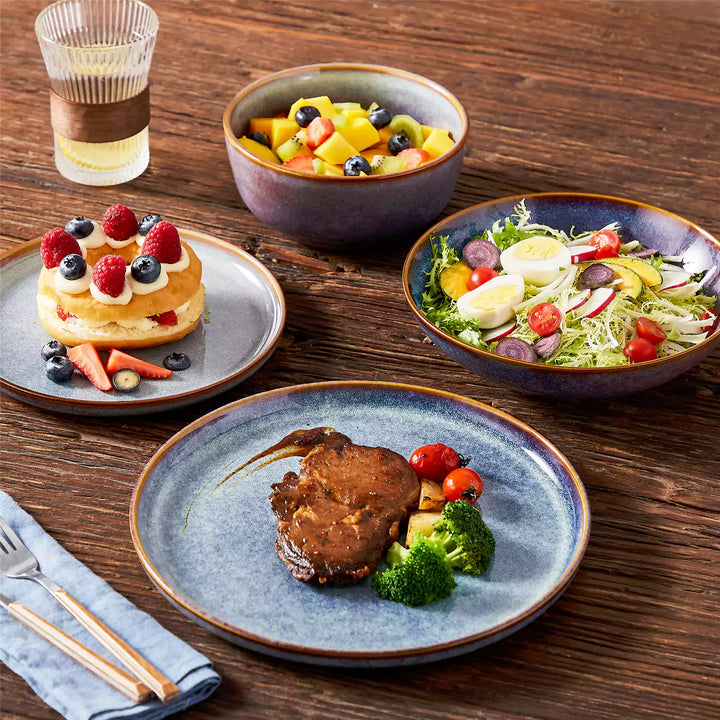
Chemical reactions between minerals in the glaze and high temperatures in the kiln give reactive glaze dinnerware its characteristic appearance. This process creates:
- Variations in color.
- Streaked or spotted designs.
- Multi-layered, hand-made effects.
- Distinct finishes, and there is not a single piece that looks like another.
In contrast to inexpensive painted ceramics, reactive glaze patterns are not painted on the surface, but formed inside the glaze.
Why Reactive Glaze Is Safe
Since reactive glazes need extremely high firing temperatures to form their intricate patterns, they are highly durable and completely vitrified.
This means:
- No flaking.
- No fading.
- No leaching.
- No toxic residues.
The notion that colorful dinnerware is unsafe is a myth. The artistic glaze is perfectly safe to use in everyday meals as long as it is labeled lead free, non-toxic and food safe.

Microwave, Oven, and Dishwasher Safety: A Practical Guide
The majority of contemporary stoneware dinnerware and reactive glaze dinnerware is designed to be microwave and dishwasher safe dinnerware, and is therefore ideal to use on a daily basis.
Here's what you should know:
Microwave Safety
Stoneware does not have any metal and therefore it will not spark or react in the microwave. It also bakes evenly due to its thick clay body.
Do not microwave:
- Gold rims.
- Metallic ornaments of silver.
- Foil-stamped details
The only exception to microwave safety is these metallic elements.
Dishwasher Friendly
The glaze on stoneware is glass-like, and this implies that it is resistant:
- Scratches.
- Stains.
- Fading.
- Dulling.
Despite the daily use of dishwasher, high-quality glazed stoneware can retain its beauty over years.

Thermal Shock Warning
Stoneware is hard, but it may crack when subjected to extreme temperature variations. To avoid thermal shock:
- Do not transfer stoneware out of the freezer to a hot oven.
- Do not pour boiling liquid into a cold stoneware bowl.
- Allow dishes to cool down and then wash them in cold water.
These are some of the basic measures that can be taken to increase the life of your dinnerware.
How to Find Good, Non-Toxic Stoneware
To be sure that you are purchasing non-toxic dinnerware, you should look at the following indicators:
- Cadmium-free and lead-free certification.
- FDA-approved food-safe labeling.
- Dishwasher, microwave, and oven-safe icons.
- Brand image and production openness.
- Glaze that is smooth and even without rough spots.
- Proper weight, not too light or brittle.
Stoneware of high quality is solid yet not too heavy and the glaze must not contain any bubbles, cracks or thin areas.

When to Change Your Dinnerware: Chips, Cracks, and Safety
Even the safest stoneware must be replaced if damaged. Look out for:
- Chipped edges- These may harbor bacteria.
- Cracks or crazing- Small cracks in the glaze permit the seepage of moisture.
- Deep scratches- They are uncommon with stoneware, but they weaken the glaze.
- Free floating glaze flakes- Signifies structural weakness.
When your dinnerware is damaged, it is advisable to change it to ensure hygiene and safety.
Conclusion: Why Stoneware is a Safe and Stylish Choice
Reactive glaze dinnerware is the best combination of safety, beauty, and long-term performance, which is why it is the best option in the modern household. Since it is prepared using natural clay, glazed using high-temperature glazes, and designed to comply with the highest safety standards in the world, it gives one hundred percent assurance when it comes to daily meals. The bright colors and hand-made patterns are not only attractive to the eye, but also the product of a long-lasting, vitrified glaze that is completely fused to the stoneware body, making it non-toxic, lead free, and food safe during its lifetime.
In addition to safety, stoneware is appropriate to the needs of the modern kitchen. It can easily transition between the microwave and the dinner table, survive daily dishwasher cycles, and add a sense of artisanal flair to both informal and formal environments. Stoneware dinnerware can be a great and fashionable investment in your home with proper care and temperature shock awareness, it can last many years.
In short, reactive glaze dinnerware is not only beautiful, but also reliable, strong, and designed with your health and daily convenience in mind. Glazed stoneware is one of the most reliable and appealing materials to use whether you are updating your tableware or selecting your first set.
FAQs
Q1: Can Reactive Glaze Dinnerware Be Used on a Daily Basis?
A: Yes. Reactive glaze dinnerware is perfectly safe as long as it is certified lead-free and food-safe.
Q2: Is It Possible to Use Stoneware in the Microwave and Dishwasher?
A: The majority of stoneware is microwave and dishwasher safe except when it contains metallic decorations.
Q3: Is Colorful Dinnerware Harmful?
A: Not when bought in reputable brands that comply with FDA and Prop 65 standards.
Q4: Is Glazed Stoneware Durable?
A: Yes. Its high firing temperature makes it hard, dense, and resistant to scratches.
Q5: Why Is Reactive Glaze Different in Color?
A: The dots and designs are natural products of mineral reactions in kiln firing.