

Dinnerware is not merely a container of your food, but a statement of your own taste, your way of life, and even the style of your house. When you are setting a warm family table or wowing your guests with a perfectly styled dinner table, the finish on your plates and bowls is an important part of the equation. When it comes to the matte vs. glossy glaze debate, both finishes have their tales to tell. Which one is most appropriate for you?
This blog will discuss the fundamental differences, advantages, and disadvantages of each finish, as well as provide professional advice on how to style your stoneware dinnerware sets with confidence.
What is a Dinnerware Glaze?
A dinnerware glaze is a smooth, frequently glass-like finish that is applied to ceramic and stoneware vs porcelain dinnerware in the final stages of manufacture. This glaze makes the surface non-porous, more durable, and food-safe. Glazes also provide dinnerware with its characteristic finish, matte or glossy, and may influence everything, including the way the plate feels in your hand, or the way food looks when it is plated.
Both finishes are enhanced by chemical reactions during firing in reactive glaze dinnerware, which produces distinctive patterns and color variations. However, in addition to beauty, the glaze also plays a major role in the performance of a piece in everyday use.

The Matte Glaze Allure: Subtle Sophistication
The Look: A Basis of Modern and Rustic Aesthetics
There is a reason why matte stoneware dinnerware has become so popular. The muted, soft surface emits a casual but sophisticated appeal, which is commonly preferred in contemporary minimalist, Scandinavian, or rustic farm-style table decor. Matte finishes do not reflect light but absorb it, which makes the visual experience calming and earthy, which is a good match with organic shapes and earthy colors.
Matte finishes range in color, from neutral grays to deep terracottas, and create a hand-crafted, artisanal feel that is perfect in casual and contemporary settings. Collections like the Rustic Vibe Dinnerware exemplify this artisanal aesthetic with their carefully crafted matte surfaces that embody the warmth of rustic dining.
The Feel: The Tactile Sense of a Matte Surface
The sense of touch is a massive part of our experience of dinnerware. Matte finishes provide a slightly textured or velvet surface that is warm and natural to the touch. This tactile quality is valued by many users because it gives a feeling of intimacy and authenticity. In addition, matte plates are non-slippery and thus suitable to be used in serving and passing around the table.
Advantages and Disadvantages of Matte Finishes in Everyday Life
Pros:
- Cover fingerprints and smudges: Matte finishes are excellent at concealing daily wear and tear, so they are ideal on high-contact dinnerware.
- Non-slippery surface: Plates and bowls can be held more easily, even when hands are wet or soapy.
- Design versatility: Complements wood, linen and other natural table accessories perfectly.

Cons:
- Susceptible to Metal Marking: One of the most frequent criticisms of matte stoneware dinnerware is that it is prone to scratches by forks or knives. These stains are not always real damage to the glaze, but metal deposits left by cutlery. They are typically removable with cleaners such as Bar Keepers Friend or a paste of baking soda.
- Staining Potential: Lighter matte glazes are more porous than glossy glazes and can absorb stains of bright foods such as tomato sauce, turmeric, or berries. They should be rinsed and cleaned immediately and carefully to preserve their appearance.
The Eternal Beauty of Glossy Glaze: A Traditional Shine
The Appearance: Bright, Traditional, and Sun-Seeking
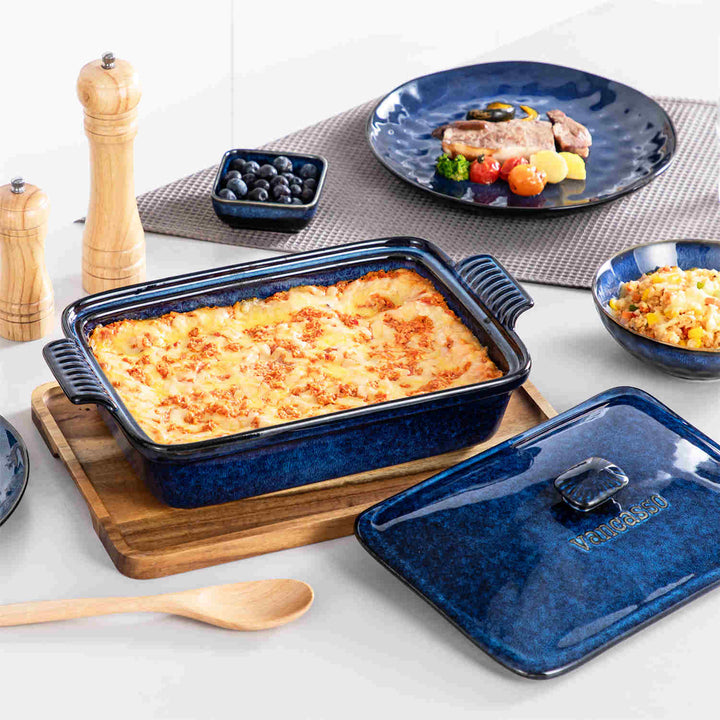
The glossy finishes are the preferred option of people who desire shine and brilliance on the table. These glazes are very reflective and plates and bowls appear fresh, vibrant and polished. Be it bright colors or pure whites, a glossy finish adds depth and richness of color and gives a smooth, luxurious touch.

This traditional appearance blends perfectly with traditional, formal, and eclectic tablescapes, and it never goes out of fashion.
The Feel: The Silky Slide of a Vitreous Surface
In contrast to the feel of matte finishes, glossy glazes provide a smooth, glassy surface that is smooth to the touch. Silverware slides easily over shiny dinnerware, and food presentation can be enhanced by the reflective background that creates contrast and colorful plating.
Advantages and Disadvantages of Glossy Finishes in Everyday Life
Pros:
- Better Durability and Scratch Resistance: Glossy finishes are generally less porous and provide a harder surface, which minimizes the chances of staining and cutlery marks.
- Easy to clean: The smooth surface does not allow food to stick, so it is easy to rinse and clean, even sticky or greasy food can be easily removed.
- Dishwasher safe: Glossy glaze is durable to repeated dishwasher use without fading or scratching.
Cons:
- Displays fingerprints and smudges: The same reflective surface that makes it shine also shows small blemishes such as water spots or oily fingerprints.
- More slippery: The smooth finish may make plates more slippery, particularly when stacked or when wet hands are used.
Matte vs. Glossy: A Comparison Head-to-Head
Comparing matte and glossy finishes, the differences are aesthetic and functional. Matte finishes are natural and earthy in terms of aesthetics and style. They are perfect to make a casual, contemporary, or rustic table. The muted, soft surface is a perfect match with organic materials such as wood, linen, and stone, providing a handmade and subtle appearance. Glossy finishes, on the other hand, provide a shiny, smooth, and sophisticated touch. They are highly reflective and are commonly applied to complement bright color schemes or formal dinner displays.

The two also vary in terms of durability and scratching. Although matte finishes are attractive, they tend to be more prone to metal marks and possible stains, especially when they are light in color. These surface marks are typically removable, but they need special cleaners and a bit of special attention. Glossy glazes are more non-porous and harder, providing a better resistance to scratches, cutlery marks, and food stains.
Matte stoneware might require additional care and maintenance on a daily basis. Some stains or marks might not be removed by simple washing and might require special cleaning agents such as Bar Keepers Friend. Glossy finishes, however, are easy to clean. They have smooth surfaces that do not allow food residue and are very appropriate to be used in dishwashers regularly.
Regarding practical application and environments, matte dinnerware is most suitable in intimate, natural tablescapes and informal dining. It suits casual or bohemian-style settings. Glossy glaze dinnerware is more appropriate in formal settings, celebratory meals, or when you need the food presentation to stand out with bright contrast and gloss.
Mixing and Matching Matte and Glossy Finishes Like a Designer
Not sure which one to choose? Good news: you do not need to pick only one. Combining matte and glossy glazes will give your tablescape depth, contrast, and dimension. The trick lies in the artful balance of the two finishes.
- Layering: Place matte dinner plates on the bottom and layer glossy salad plates or bowls on top.
- Color coordination: Select a cohesive color scheme, e.g., all neutrals or complementary tones, so the contrast in finishes feels deliberate.
- Experiment with shapes and textures: Allow a matte glaze to warm geometric dishes, and a glossy finish to lighten up round or traditional shapes.
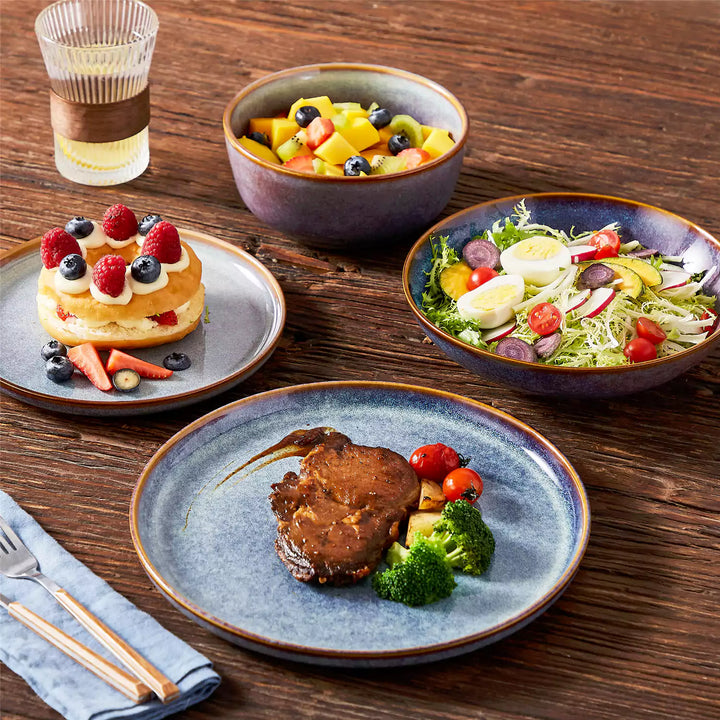
This mixed technique is especially useful in reactive glaze dinnerware, where shiny highlights and matte shadows are naturally present on the same object.
The Right Choice: What Finish Suits Your Lifestyle?
In deciding between matte and glossy, think about how you live, entertain, and clean. Glossy finishes might be more suitable to you, in case you are constantly on the move, you like low-maintenance meals, and you have a dishwasher.
Matte finishes may be your ideal choice in case you value aesthetic harmony, adore a rustic-modern style, and do not mind spending a bit more time on your dishes. Families with small children tend to prefer matte because of its sticky surface, whereas those who entertain regularly might prefer glossy because of its sparkly appearance.
The Verdict: Your Perfect Plate is a Personal Choice
The decision between matte and glossy glaze is not about which one is better, but what suits your lifestyle and personal style. Every finish has its own appeal, be it the subtle beauty of matte stoneware dinnerware or the radiant sheen of glossy porcelain.
Feel, touch and explore various stoneware dinnerware sets. You might discover that one finish appeals to you--or that a combination of the two makes your table seem complete.
FAQs about Matte and Glossy Glazed Dinnerware
Q1: Is it possible to wash matte stoneware dinnerware in the dishwasher?
Yes, but it is better to refer to manufacturer guidelines. Matte finishes may fade after repeated use in the dishwasher, and handwashing is usually suggested to maintain the appearance.
Q2: Do glossy finishes chip more easily?
No, not necessarily. The resistance of the chip is more a factor of the material (e.g., stoneware vs porcelain dinnerware) than the glaze. The shiny surface can however reveal chips more easily.
Q3: What can I do to get metal marks off matte plates?
A mild abrasive cleaner such as Bar Keepers Friend or a baking soda and water paste. Wipe with a soft cloth.
Q4: Do matte glazes influence the taste or temperature of food?
No, the glaze is food-safe and does not influence the taste. Nevertheless, others claim that matte glazes may be warmer or more comforting because of their texture.