





How to Get That Perfect Golden-Brown Top on Your Bakes
The golden-brown top is the mark of well-baked goods—it means crispness, taste, and that bakery-like finish we all desire. Whether you’re baking bread, pies, casseroles, or pastries, achieving that beautiful top isn’t about luck—it’s about understanding the science of browning, using the right techniques, and choosing the right bakeware. You can make your daily recipes look like pictures with the right know-how.
In this guide, we will discuss the science of browning, the use of glazes, the contribution of your bakeware set, and how to troubleshoot common problems.
Maillard Reaction and Caramelization Explained
It is worth knowing what is going on in your oven before getting into techniques. The golden-brown color is obtained by two principal processes:
- The Maillard Reaction: This is a reaction that takes place when proteins and sugars are combined in the presence of heat, resulting in a deep brown color and complex savory flavors. It is what makes bread crusts so good and seared meats so tasty.
- Caramelization: This occurs when sugars decompose in the presence of heat, producing sweet, nutty tastes and golden colors. Caramelization is significant in pastries, pies, and desserts that have sugar tops.
Knowing these two reactions will make you understand the importance of temperature, ingredients, and moisture control. A low temperature will not brown your bake; a high temperature will burn it before it cooks.

Creating a Golden Finish with Egg Wash and Sugar Glazes
Brushing your baked goods with a glaze before baking is one of the simplest methods of increasing browning. The following are the effects of various options:
- Egg Wash (Egg + Water or Milk): This is a glossy, golden crust that is ideal on breads, dinner rolls, and pastries. The finish is deepened and enriched with the addition of milk or cream.
- Egg + Sugar Wash: This is best used on pies and desserts when you want a glossy look and a slight sweetness.
- Milk or Cream Only: Gives a softer, matte golden appearance, ideal with scones and biscuits.
- Butter Brushing: Butter is used to add flavor and a slight shine, particularly to savory breads or rolls.
- Sugar Dusting: For sweet bakes, a light sprinkle of sugar before baking caramelizes beautifully, adding crunch and color.
To achieve the same effect, you should always use your wash evenly with a pastry brush and never allow it to accumulate at the edges because it can burn.
Does Your Baking Dish Matter?
Absolutely! The type of baking dishes you use may affect the distribution of heat, which subsequently affects browning. Not every bakeware is equal, and knowledge of materials is a significant difference.
- Metal Bakeware: Transfers heat rapidly and is a good browner. Excellent with cakes, cookies, and pastries.
- Glass Baking Dishes: Bake more slowly, but hold heat better, resulting in even cooking, but slower browning. They are perfect in casseroles and desserts such as cobblers.
- Stoneware Oven Safe Dishes: Stoneware is excellent for retaining heat, helping dishes develop a consistent golden crust that stays warm after leaving the oven. A stoneware oven safe dish can provide your lasagna or baked pasta with a golden crust that remains hot even after it comes out of the oven.
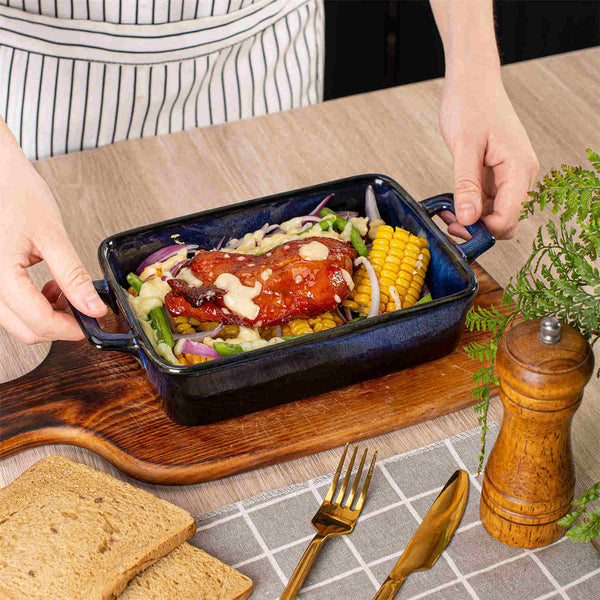
- Porcelain or Ceramic Dishes: Provide even baking and are beautifully presented, but can be slow to heat; therefore, patience is the key to browning.
An excellent bakeware set must have a combination of these materials to be able to match the dish to the recipe. For example, bread is better in a stoneware loaf pan and brownies usually come out best in metal pans to achieve that chewy, golden top.
How to Master Your Oven: Temperature, Rack Position, and the Broiler Trick
Oven management is essential even with the ideal glaze and bakeware. Here’s how to get it right:
- Temperature Control: Baking at a low temperature will not trigger browning. Most golden-brown finishes develop between 350–425°F (175–220°C).
- Rack Position: The middle rack is your friend for evenly browning. To achieve further top browning, place your dish a level higher than the heating element.
- The Broiler Trick: When your bake is completely cooked but pale on the top, switch on the broiler during the final 1-2 minutes. Watch it closely--browning may change to burning in a few seconds.
- Convection Ovens: Hot air in circulation accelerates browning. When convection is used, you should cut down on your baking time to avoid overbaking.
Troubleshooting: Why Your Top Isn't Browning
There are times when you do your best and your bake turns pale. The following are typical offenders:
- Low Temperature: The Maillard reaction will not initiate unless the oven is hot enough.
- Too Much Moisture: Covered dishes or recipes with excess steam cannot brown properly. Try uncovering them during the final 10–15 minutes of baking.
- Wrong Bakeware: Glass and porcelain do not always brown as well as metal or stoneware.
- Missing a Wash: Dough or pastry can remain flat. Always brush with an egg wash or glaze when required.
- Underbaking: Removing dishes too early results in an underdeveloped surface. Allow it a few more minutes to reach that golden finish.
5 Key Takeaways for a Perfect Golden-Brown Top
- Browning is science (Maillard reaction and caramelization) and technique (glazes, oven tricks, and the correct baking dishes).
- Glazes such as egg wash, milk, or butter are significant in sheen and color.
- The quality of your bakeware set is important: metal to give crisp edges, glass to maintain consistent heat, and stoneware oven safe dishes to provide long-term warmth and deep browning.
- Your last success tools are oven positioning and temperature adjustments.
- Diagnose pale tops by examining temperature, moisture, and glaze application.

Master the Perfect Golden-Brown Top
Achieving that perfect golden-brown top is less about luck and more about technique, science, and the right tools. From understanding the Maillard reaction to choosing the right glaze and bakeware, each step brings you closer to that bakery-style finish. A good bakeware set, good oven management, and a few tricks, such as the broiler, will ensure that you always make bakes that look as appetizing as they are.
FAQs about Golden-Brown Tops
Q1: Why Does My Bread Crust Remain Pale Despite Baking?
A: This is most likely due to a low oven temperature or skipping the egg wash. Try baking a little longer or brushing the dough with egg wash before baking for a golden crust.
Q2: Can I Replace Egg Wash with Olive Oil?
A: Yes, you can, but it will result in a softer, matte finish rather than a shiny golden crust. This works well for savory breads.
Q3: Which Rack Should I Use to Brown Casseroles?
A: The middle oven rack is ideal, though placing the dish higher during the last few minutes can enhance browning.
Q4: Do Darker Pans Brown Food Faster?
A: Yes, dark metal bakeware retains more heat, allowing food to brown more quickly than in light-colored pans.
Q5: Which Is Better for Browning, Stoneware or Metal?
A: It depends on the recipe. Stoneware retains heat well and is ideal for pound cake and bread, while metal pans work better for cookies, brownies,
You may also like
Stern 16 Piece Dinnerware Set
- €87,95
€99,95- €87,95
- Unit price
- per
-
Blue
-
Green
-
Red
-
Grey
Simi 24 Piece Dinnerware Set
- €99,95
€137,95- €99,95
- Unit price
- per
Bonita 18 Piece Dinnerware Set
- From €62,95
€77,95- From €62,95
- Unit price
- per
-
Blue
-
Multicolor
Simi 24 Piece Dinnerware Set with Double-Sided Bowls
- €104,95
€137,95- €104,95
- Unit price
- per