

You put leftovers in the microwave, press the start button, and anxiously await your food. However, when you draw it out, the food is lukewarm and the plate is hot as though it has just been taken out of a kiln. Frustrating, right? This is a typical kitchen puzzle that is not about your microwave not working but about the science of the interaction of microwaves with various materials. Knowing why certain plates get hot and the food remains cold can save you the burnt fingers and the unfulfilling meals.
In this blog, we will unravel the mystery of how microwaves work, why some dinnerware materials perform better than others, and what you can do to make sure your food heats evenly rather than your plate.
The Real Workings of Your Microwave: It’s All About the Water
Microwave ovens apply electromagnetic waves to energize water molecules in food. As those molecules begin vibrating, they produce heat, cooking or reheating your meal. This is why foods that have more water in them, such as soups or steamed vegetables, heat faster, whereas drier foods, such as bread, can heat unevenly.
However, there is a twist to this: microwaves do not just target food. When your dinnerware is wet, has minerals or metallic elements, it can also absorb energy. Rather than the heat being concentrated in your food, it becomes trapped in the plate, and your meal is frustratingly cold.

Why Some Ceramic Plates Steal the Heat
Not every ceramic is equal. Stoneware, porcelain, or other clays are used to make many plates, and their characteristics differ depending on the firing and glazing. The question of whether stoneware is microwave safe or not has always been a puzzle to many people, but the answer to this question is determined by the porosity of the stoneware and whether it has been moistened or not.
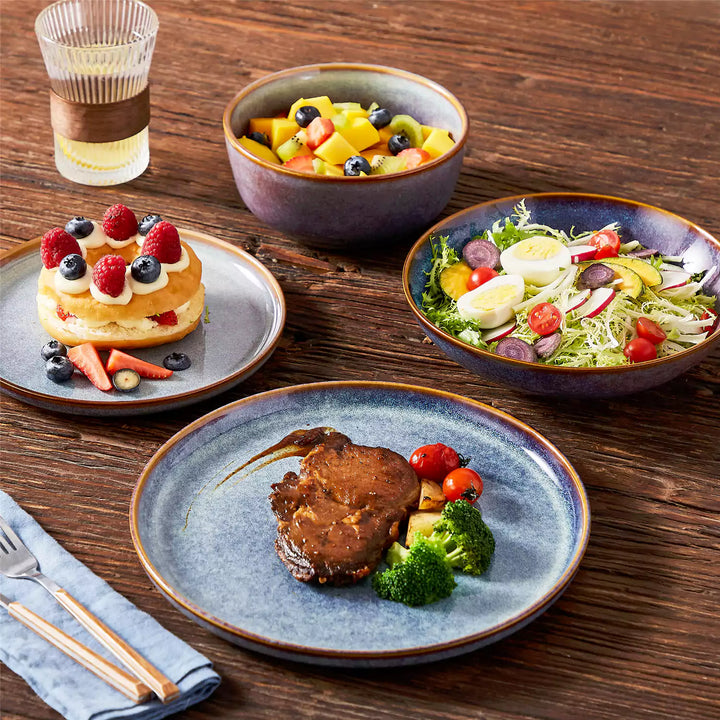
Stoneware usually has a little water in its tiny pores. This moisture absorbs energy when microwaved and heats the plate. Likewise, reactive glaze dinnerware, where special glazes are used to provide colorful, textured finishes, can contain metallic oxides that become hot when subjected to microwave energy. That is why one stoneware bowl can be just fine and another one of the same set can be a branding iron.
Porcelain, however, is usually fired at a higher temperature, which makes it denser and less porous. Porcelain is generally more microwave-compatible than stoneware due to its ability to resist the absorption of moisture. Nevertheless, even porcelain may become hot when it contains metallic trims, decorative decals, or some glazes.

Is Your Dinnerware Microwave-Safe or Microwave-Tolerant?
When you find the bottom of a plate stamped with microwave safe, it does not necessarily mean what you think. Most of the time, the label means that the dish will not crack, melt, or emit toxic substances — not that it will not become scorching hot. That is the distinction between microwave-safe dinnerware and what might be termed microwave-tolerant.
An actual microwave-safe plate must not absorb the microwave energy and must allow the food to heat evenly. Regrettably, a lot of plates labeled as safe can still become hot due to the fact that they are at minimum safety standards without ensuring comfort or convenience.
When your plate is always stealing heat from your food, it might not be dangerous, but it is definitely inconvenient. Glazes may also be weakened or even crack with time due to the repeated stress of rapid heating and cooling.
The Top Materials to Use in Microwave-Friendly Dinnerware
When you are sick of burning your hands on hot dishes, it is all about the right materials. Here's what works best:

- Porcelain: Thick, fine-grained and usually not water absorbent. The majority of porcelain dinnerware is microwave safe, but not that with metallic decorations.
- Glass: Glass is a very good microwave conductor and tends to be cooler than ceramics, whether clear or opaque.
- Some Plastics: Find BPA-free, microwave-safe plastics to reheat food. These remain fairly cool but might not suit every food.
- Stoneware: It depends. Non-porous stoneware of high quality is usually microwave safe, whereas cheaper or porous stoneware may absorb heat. Always test cautiously.
In the case of porcelain vs stoneware, porcelain is likely to be the winner in terms of microwave safety and consistency. Nevertheless, there are also high-quality stonewares that can be equally reliable. The trick is in the quality of manufacturing and the reactive or metallic glaze.
How to Reheat Food to Perfection?
Reheating food can be a challenge, even with the right microwave-safe plates. The following are some of the practical measures to ensure that the heat stays where it is supposed to be, in your food, not your dishes:
- Cover Your Food: Use a vented cover or a microwave-safe lid. This captures steam and assists in heating food evenly.
- Stir or Rotate Midway: Pause halfway and stir or rearrange the food. Microwaves do not necessarily spread the energy equally.
- Test Your Dinnerware: Microwave an empty plate for 30 seconds. When it comes out hot, it is taking in too much energy. When it remains cool, it is indeed microwave safe.
- Use Short Intervals: Heat in 30-60 second bursts rather than long cycles to avoid hot spots and plate overheating.
- Check Food Placement: This is done by placing food in a ring shape with an empty center to promote even heating.
Get the Heat in Your Food, Not in the Plate
Your microwave is not defective; it is merely obeying the laws of physics. When your plate is hotter than your food, then you know that your dinnerware is absorbing the microwave energy rather than letting your food do the work. With the selection of microwave-safe dinnerware such as porcelain or good-quality stoneware and some simple reheating guidelines, you can finally say goodbye to lukewarm leftovers and burned fingertips.

FAQs about Microwaving Dinnerware
Q1: Is Stoneware Microwave Safe?
A: Yes, but it depends on quality. Stoneware that is dense and well-fired is microwave safe, whereas porous or moisture-absorbing stoneware can overheat.
Q2: Why Do Certain Plates Indicate That They Are Microwave Safe Yet They Become Hot?
A: The label does not imply that the plate will not crack or leak chemicals, but it does not imply that it will not absorb microwave energy.
Q3: Is Reactive Glaze Dinnerware Microwavable?
A: Use caution. Reactive glazes usually have minerals that warm up fast, leaving the plate very hot.
Q4: Which Is Better in the Microwave, Porcelain or Stoneware?
A: Porcelain tends to be safer since it is less porous, but good-quality stoneware can be safe as well.
Q5: What Do I Do to Determine Whether My Dinnerware Is Really Microwave Safe?
A: Test it: microwave the empty plate for 30 seconds. If it stays cool, it's safe. When it becomes hot, use it carefully.