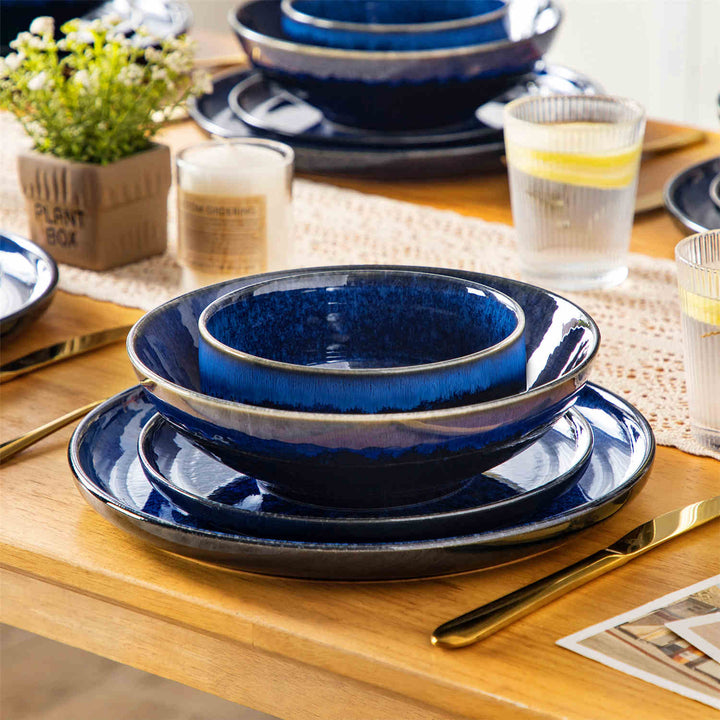


One of the most convenient ways to save cabinet space is to stack bowls, but sometimes a neat stack can be surprisingly hard to separate. Air pressure, moisture, or just a close fit between the shapes of ceramic bowls, stoneware bowls, porcelain bowls, and stoneware cereal bowls can cause them to become tightly nested.
The safest approach is to avoid force. Cracks, chips or even sudden breakage can occur when pulled, twisted, banged together or when a sharp object is inserted. Instead, proceed slowly, gradually, and improve the grip, add some gentle lubrication when needed, and use small temperature changes when necessary.
Why do Nested Bowls Sometimes Lock Together?
There are a number of reasons why stacked bowls can get stuck.
A common cause is an air seal. If one bowl is tightly nested in another, little air may be trapped between the bowls. Attempting to separate the bowls can cause suction to make it difficult to separate.
Moisture can make the problem worse. When smooth surfaces are used for nesting bowls, water can be left between them and act like a seal, especially if bowls are nested right after washing.
Shape also matters. When bowls have the same curve, they can form close nests, particularly if the smaller bowl is placed deep in the larger bowl. The fit is even tighter when the dinnerware is porcelain or ceramic with smooth, glazed surfaces.

If stoneware bowls are stacked slightly damp, they can also be difficult to separate. Two bowls can feel like they are glued together when they are wet, heavy, and snug.
Stop Before You Pry, Twist Hard, or Bang
The first rule is simple: do not force the bowls apart.
Do not use knives, screwdrivers, metal prying tools or other sharp objects. They can scratch the glaze, create pressure points, and cause the bowl to chip or crack.
Never hit the bowls on a counter or hit the bowls hard. While impact might appear to be an easy answer, it can cause harm to bowls and leave small cracks that are hard to see right away.
Avoid twisting one bowl violently while holding the other. Too much torque can cause pressure to build up around the rim.
Instead, set the jammed bowls on a stable, cushioned surface and take your time to slowly pull them apart.
Develop a Safe Grip and Add Gentle Lubrication
A non-slip grip can make a world of difference. Dry your hands and outside of larger bowl and use a rubberized kitchen glove or silicone grip for better control.
If the bowls still won't move, put a little of the gentle soap and water around the spot where the bowls are touching. Allow the liquid to trickle into the small space.
Never pour in large quantities of liquid. It is just to minimize friction and to facilitate breaking the seal.
Once the soapy water has been applied, gently rock the inner bowl from side to side. Avoid strong twisting movements, use small ones. If the bowl starts to move, move slowly until the seal releases.

Use Small Temperature Changes Without Thermal Shock
Sometimes, a slow temperature change can help to loosen the tightly nested bowls.
Fill the outer bowl with warm (not hot) water and the inner bowl with cooler water. The outer bowl might expand slightly, giving it a little more space between the two surfaces.
The temperature should be raised slowly and gradually. Never use boiling water.
Don't place a hot bowl under ice cold water or ice on a hot bowl. Thermal shock can occur when there is a sudden temperature change, causing the ceramic, porcelain or stoneware to crack.
If the bowls are cold, let them warm up to room temperature before trying to separate. Extreme temperature changes are not as safe as patience.
Gentle Separation Techniques in Order
Work through the following sequence from least aggressive to slightly more active:
- Dry the outside surfaces. Grasp the object so that your hands don't slip.
- Try gentle rocking. Grip the outer bowl and gently rock the inner bowl from side to side.
- Pour in some mild soapy water. Allow it to work into the seam between the bowls.
- Repeat with another gentle rocking. Avoid any sudden upward pull.
- Use a gradual temperature difference. Heat the outer bowl slightly, but not too hot, and the inner bowl slightly cooler.
- Stop if you see a crack or chip. Do not try to split a damaged bowl as the weak spot may crack.
Once the bowls separate, wash and dry them thoroughly before stacking them again.

How to Prevent Bowls from Sticking Again
Prevention is easier than dealing with a stuck stack!
Before nesting bowls, ensure that they are completely dry. Smooth surfaces can cause an air seal if moisture exists between them and can be difficult to separate.
Don't stack bowls that fit too tightly. When your stoneware cereal bowls or other dinnerware pieces fit snugly, leave a little space between them if you can.
Another practical solution is to use separators for storage. Placing thin protective liners, felt separators or specially designed dinnerware dividers between surfaces will prevent them from touching. They can also help to minimize scratches and make it easier to pick up a single bowl from a stack.
Lastly, arrange bowls in a similar size group, but don't push smaller bowls into the larger ones. It is better to not have to separate a little later if there is a little extra space in the cabinet.
FAQs about Separating Stuck Bowls
Q1: Why Do Ceramic Bowls Fit Into Each Other?
Ceramic bowls can be hard to separate due to an air seal, moisture, friction, and tight nesting. The effect can be enhanced by using smooth, glazed surfaces.
Q2: Is It Possible to Separate Stuck Bowls Using Hot Water?
Only use a small, slow temperature difference. Do not use boiling water, as it may cause thermal shock and break the ceramic, porcelain or stoneware.
Q3: Can I Use a Knife to Divide Two Bowls?
Do not use knives or metal prying tools as they can chip or crack the bowls and cause dangerous pressure points. Instead, use lubrication, better grip, slow rocking, and slow temperature changes.

Q4: Are Porcelain Bowls More Likely to Get Stuck?
Any smooth, closely fitted bowls can become stuck. Porcelain bowls, ceramic bowls, and stoneware bowls may all experience the problem when moisture and tight nesting create an air seal.
Q5: How Should I Store Stoneware Cereal Bowls?
Keep them dry and avoid forcing them deeply together. If the bowls nest tightly, use separators for storage to create a small buffer between pieces and make them easier to remove.
Q6: What Should I Do if the Bowl Starts Cracking?
Stop immediately and do not continue pulling or twisting. A cracked bowl may break unexpectedly and should be handled carefully and replaced if its structural integrity is compromised.