

Find out how to select the perfect size of the dinner plate to use at formal dinners, casual dinners, buffets, and for portion control. This comprehensive guide will go through the regular plate standards, the recommendations per meal, material, maintenance suggestions, and frequently asked questions to allow for the creation of versatile dinnerware sets.
Selecting a proper size of dinner plate is a seemingly modest choice: it influences the appearance of food on the table, the amount of food that people place on their plates, and how relaxed a meal becomes. The size of the plates presents in your perception of portions, ease in serving, aesthetic, storage, and the complete harmony of your table settings. Whether you are putting together a collection of traditional porcelain dinnerware sets to do entertaining, purchasing durable melamine to use outdoors, or just choosing plates that will help you eat more thoughtfully, knowing plate sizes and their relationship with the type of food, the occasion, and the material will save you money and prevent embarrassing moments during service.
The blog takes you through the current sizes and their best applications, effective decision rules in various situations, the differences between the type of meals that make you use either a plate or arrive at a different type, the comparisons between materials and the trade-offs between them, and storing and taking care of your plates to get them to last through a long time in good shape.

What Are the Standard Plate Sizes and Their Uses?
Plates used in dinner are produced in the expected range of sizes since each use is enhanced by some level of size.
The smallest plates generally used for serving bread-and-butter are usually five and seven inches in diameter. They are used daily to carry out rolls, pieces of butter, small courses, or to serve as mere utensil carriers between courses.
The salad plates would be a half-inch bigger, measuring seven to eight and a half inches. These plates are especially ideal when you want a separate course of greens or a plated starter.
Lunch plates are 8 1/ 2-9 inches in diameter. These plates are used between salad and dinner plates, and are widely used at casual restaurants or for light lunches.
The dinner plate is the workhorse of most dinnerware sets and typically between ten and twelve inches in diameter. The ten-inch plate can serve all but the largest meals as a versatile size, while a twelve-inch plate provides more space to plate elegantly with multiple sides.
Lastly, charger plates, or large decorative bases, are twelve- to fourteen-inch in size. These plates are placed in formal settings to surround the table and make the place settings well-organized.

How to Choose the Right Plate Size for Your Occasion?
Selecting the size of plates to use in an event is a matter of fulfilling expectations, functionality, and flow. In formal dinners where food arrives plated at various courses, include a charger, a salad or starter, and a dinner plate of 10 to 12 inches. The extra space will enable you to present the food beautifully, with garnishes, and the visual spacing that makes food look professional.
The size of a ten-inch dinner plate is easily found to be the most convenient and easiest as a daily family plate. It allows a good balance of control of the portion size and leaves adequate space to present the dish, and normally, both dishwashers and cabinets receive the plate comfortably.
Smaller lunch plates of about nine inches, in particular, are especially relevant in cases of buffets or other casual types of events where individuals are able to taste multiple meals. The smaller size of plates prevents careless waste and promotes the tasting of more than one dish.
You ought to strategically choose the dinner plate when you take eight-to-nine-inch ones to keep the food healthy and to achieve minimalism and portion-control motives.
Picnics and outdoor events require lightweight but durable plates, such as melamine in nine or ten-inch sizes. Ensure plates have room to fit in your cabinets, on your placemats, and into your dishwasher; and in the case of large-scale entertaining, acquire two compatible sizes like 10-inch dinner plates and 8.5-inch salad plates that can support multiple events.

The Type of Meal Affects Your Plate Choice
The design and density of food are supposed to mold the selection of the plates. Course-based or plated meals have the advantage of a gradation in plate size.
Big single-protein dishes such as steaks or a roasted chicken should be served on bigger plates at least twelve inches in size, which avoid crowding and enable sides to be placed invitingly.
Stews and pasta sauce are saucy foods that usually work well in a bowl or a wide, rimmed plate with a deeper well to contain liquid, as well as display the food on the rim.
The desserts preferably appear on small square plates of six to seven inches, as it makes the plating appear ample and targeted.
Communal or family-style menus alter the situation: you will be using big serving platters where the guests will take out their portion to individual 10-inch plates. Make sure that your personal dishes are big enough to allow you to take a representative serving, but small enough to handle.
Ethnic and regional cuisines may also indicate other forms such as deep bowls for curries and rice dishes, wide, narrow plates for tapas or mezze, and long platters for sushi or shared roasts.
Understanding Plate Materials: Which Is Best for You?
Material concludes lifetime, weight, appearance and the way a plate puts food.
Porcelain is the old-fashioned all-purpose material. The unglazed surface of a porcelain plate is smooth and elegant. Porcelain dinnerware items resist staining and look good in everything from formal to casual use. Porcelain dinnerware plates are usually standardized in size and go well with a wide range of linens on the dinner table.
Bone china is finer and lighter than porcelain but stronger than porcelain.
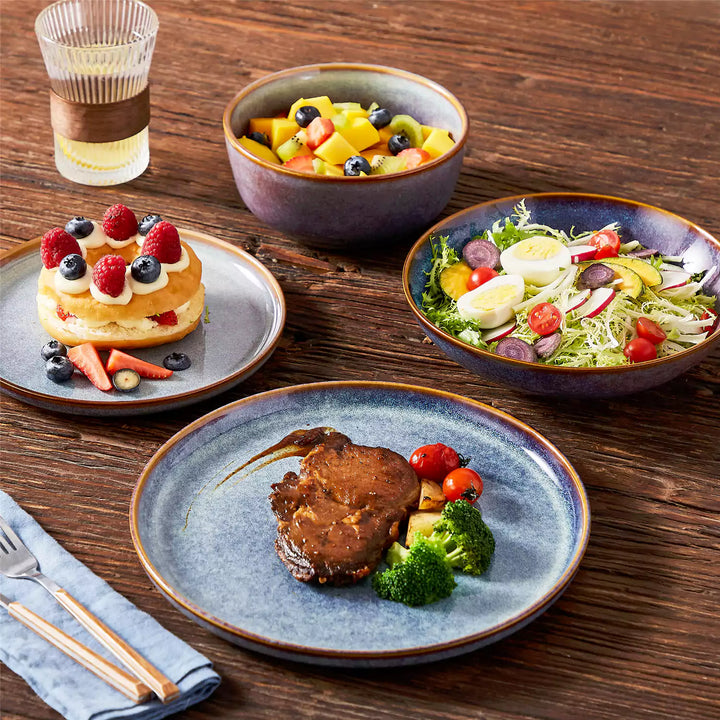
Stoneware and earthenware add a weightier, rustic essence to a table. These types of material may have textures to glazing or coloring, which make them more eye-catching.
Melamine and top-quality plastics are great for outdoors since they can survive being dropped without chipping and are still relatively lightweight. However, most plastic plates are not usually microwave-safe and may seem less elegant than melamine plates.
The modern and minimalist look is developed on glass and tempered glass plates that are likely to reveal smudges and may be heavy.

Pro Tips for Storing and Caring for Your Dinnerware
Your plates can be made to last and look better with good storage and care. Keep store plates in cabinets with proper vertical clearance and thin paper protectors so that when you have to pull them out, you do not chip rims.
Do not overload the dishwasher when placing plates in; make sure that they are not touching during the cycle, as this can damage the plates. Bone china and gilded rims are to be washed by hand.
Always consider thermal shock: plates should never be removed directly from a freezer and placed in an oven, or vice versa.
Lastly, rotate items in your complete set: plates in particular. Using the same plates often will wear them out faster, whereas rotating will help even out the wear and allow more usage as well as a longer lifespan of the entire set.
Conclusion
The appropriate size of the dinner plate enhances the appearance and the touch of any given dish. By taking the number of people you are feeding, the occasion, food type, and material into consideration in determining the size of the plate, your dinner plates literally serve to be the accompaniment of great food memories.
FAQs about Dinner Plate Sizes
Q1: What is the standard size of a dinner plate mostly used in dailies?
The standard, all-purpose dinner plate size that is most used every day is approximately ten inches, a size that will work with the majority of main dishes and still allow one to exercise proportions.
Q2: Can I fetch different materials and sizes on a single table?
Certainly, a combination of colors and alternating-sized pieces can make a pleasing, contemporary appearance.
Q3: Do charger plates come in handy in formal dining?
Charger plates are optional and can be helpful in raising the level of presentation and in shielding the cloth table linens.
Q4: What is the size of the plates when I do a buffet meal?
In case of buffet, the plates should be medium-sized (approximately nine inches) so that the guests are tempted to taste more dishes without the fear of having oversized portions.