



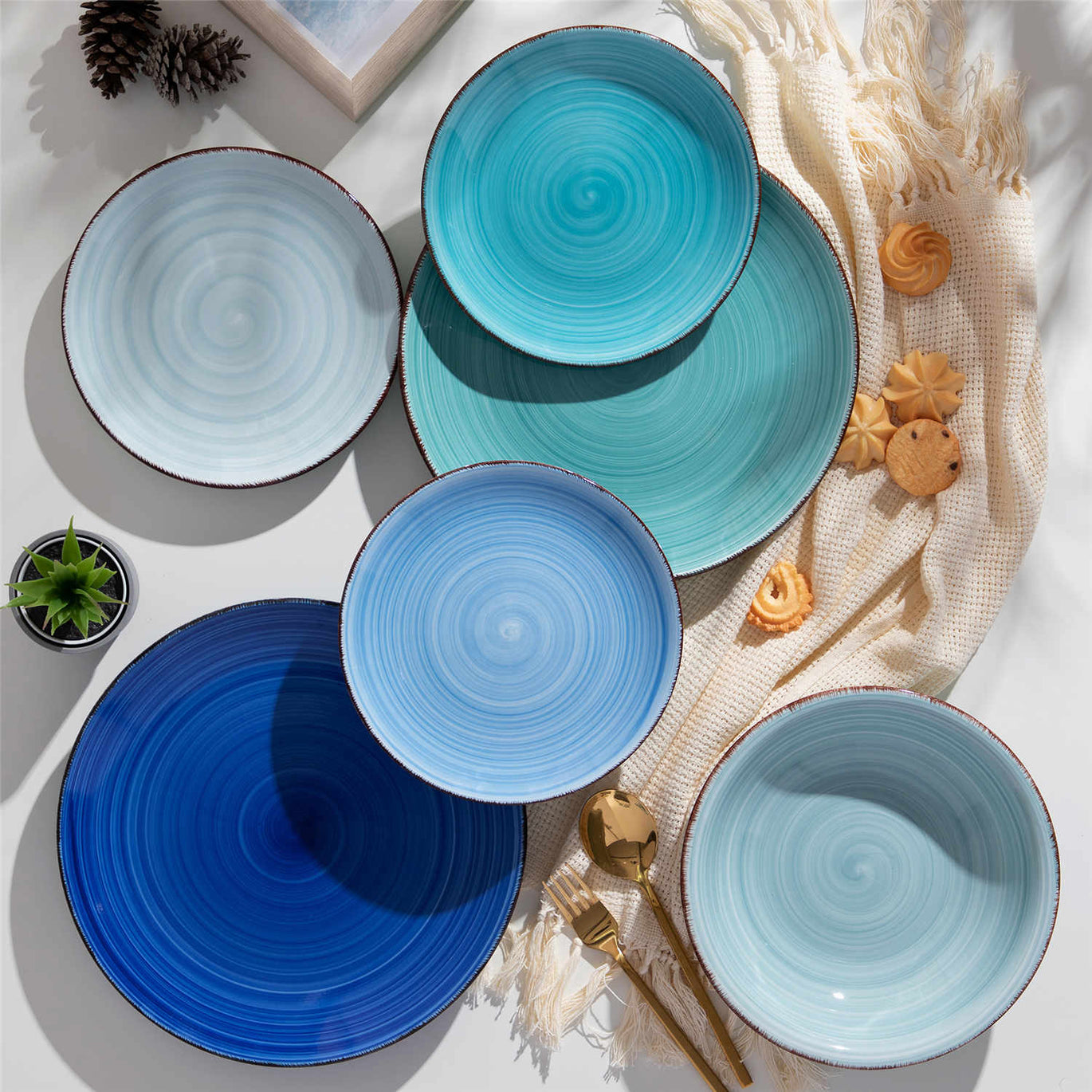


The Importance of Black Ceramic Plates in Salt Tasting

Salt tasting is one of my favorite small-scale rituals: tiny mounds of glistening crystals, a simple slice of bread or a juicy strawberry, and a chance to pay close attention to flavor. When you turn it into a mini tabletop experience, your choice of plate suddenly matters a lot. And if you love color, contrast, and a bit of drama, black ceramic plates are quietly powerful tools for tasting salt with more intention and more joy.
In this guide, I will walk you through why salt tasting is worth your time, what makes a good salt-tasting surface, why ceramic is such a salt-friendly material, and how a black ceramic plate, in particular, elevates both the aesthetics and the practicality of your salt sessions. Along the way, I will lean on insights from culinary educators, salt specialists, and ceramic experts, then layer in the first-hand tweaks I use when curating tasting tables.
Why Salt Tasting Deserves Its Own Ritual
Before we talk about plates, it helps to remember why salt itself deserves a spotlight.
Ceramic artists writing about table salt have pointed out that our bodies are roughly 0.4% salt, making it both an elemental necessity and a sensory amplifier. Nutrition sources such as Harvard’s Nutrition Source emphasize that salt, or sodium chloride, is essential for fluid balance and nerve function, but too much of it can raise blood pressure and increase the risk of cardiovascular disease. At the same time, organizations like Avera Health remind us that most of the sodium Americans eat does not actually come from the salt cellar at the table. It comes from processed foods, restaurant dishes, and all the hidden salt in breads, sauces, snacks, and cured meats.
This creates an interesting contradiction at the dinner table. On one hand, spending time on salt tasting might sound indulgent when everyone is talking about cutting sodium. On the other hand, salt experts and culinary teachers consistently show that when you use good salt thoughtfully, you can often use less of it and still get more flavor. North Mountain Pastures, for example, calls salt the single most impactful ingredient for flavor and encourages people to salt better, not necessarily more. Salt specialists at Salt Traders explain that using natural sea salts as finishing salts can reduce total usage because each crystal carries more flavor and texture.
Tasting salts on their own, or on simple carriers, is how you train your palate to do exactly that. Cookwell and similar education-focused groups teach cooks to experiment with different salt levels and salt types, tasting side by side to learn where “seasoned” ends and “too salty” begins. Serious Eats and Jungle Jim’s echo the same core idea: salt early, salt thoughtfully, keep tasting, and learn what different salts actually do to food rather than treating all salt as identical.
A salt tasting is where you feel those theories in real time. You are no longer just shaking something white over your food. You are comparing a delicate flake sea salt to a coarse grey sea salt or a dramatic black lava salt, noticing how each one crunches, dissolves, and interacts with sweetness, bitterness, and acidity in the food. Le Cordon Bleu’s perspective on flavor balance, with its five taste elements of sweetness, saltiness, sourness, bitterness, and umami, suddenly becomes tangible in each bite.
That is the context. Salt tasting is about flavor education, joy, and control. Once you approach it that way, the humble plate becomes a piece of sensory equipment, not just a prop.
What We Ask a Salt-Tasting Plate To Do
For salt tasting, a plate has a bigger job than it seems. It needs to do three things well.
First, it must respect the salt. Salt is hygroscopic, which means it tends to pull moisture from the air and from its surroundings. Santa Prisca & Co., in their guide to sea salt containers, emphasize that if you leave salt in porous or poorly sealed containers, it quickly clumps and picks up kitchen odors, losing its clean flavor and crisp texture. They recommend non-porous materials such as glass, glazed ceramic, marble, and stainless steel specifically because these surfaces do not absorb water or odors and keep salt crystals loose and pinchable.
Second, the plate should be chemically neutral. Ceramic specialists note that properly glazed ceramic is non-porous, stain resistant, and inert. Alibaba’s technical discussion of ceramic salt and pepper shakers explains that a good ceramic glaze resists corrosion, odors, and moisture better than plastic or metal. Similarly, manufacturers like Chinagama highlight that ceramic grinding burrs are chemically inert and highly corrosion-resistant, which is exactly why they pair so well with sea salt and Himalayan salt in grinders. All of that translates very nicely to the surface that you place your salt on for tasting. You want a plate that will not rust, will not react with trace minerals, and will not absorb aromas from last night’s garlic-heavy dinner.
Third, the plate should support how you interact with the salt. It needs enough space for several small mounds. It should be easy to wipe clean between tastings. Ideally, it feels stable and comfortable to hold as people pass it around. The ceramic shaker guidance again is helpful here: ceramic pieces tend to have pleasant weight, thermal stability, and a non-slippery feel, which makes them easier to control and less likely to tip near cooking areas.
All of this explains why ceramic in general is such a good partner for salt. Now let us talk about why a ceramic plate in a deep, inky black takes the experience several steps further.
Why Black Ceramic Is A Secret Superhero For Salt
Black ceramic plates are not magic wands, but when you look at what happens on them during salt tasting, their advantages become clear on both an aesthetic and a practical level.
Visual drama and crystal clarity
The first thing a black plate does is pure theater. Pale salts stand out in sharp relief on a dark background. Fleur de sel suddenly looks like tiny ice shards. Grey sea salt shows its smoky, mineral tones. Coral-toned Himalayan crystals glow almost neon against the black. If you include a black lava salt, its dark granules melt visually into the plate while the glossy reflections reveal their shape.
Salt Traders specifically recommends using three or four contrasting salts for a tasting, including a flake salt, a medium-grain sea salt, and a striking black or red salt, and tasting them in order from mildest to strongest on simple foods such as French bread with unsalted butter, cucumbers, cherry tomatoes, or strawberries. On a black ceramic plate, the contrasts they describe become instantly legible even before you taste. You can literally see the differences in crystal size, color, and structure, which helps your brain register that you are dealing with distinct ingredients, not just “salt.”
In my own tastings, I find that guests become more curious and more precise when the plate is black. People point out shapes and shades they would ignore on a pale plate. That curiosity is the doorway to better salting habits later, because once you notice that a moist grey sea salt behaves differently from a dry flake salt, you start salting your food in more tailored ways.
A neutral, salt-friendly material
Underneath the color, ceramic itself is doing important work. The research on ceramic salt shakers and containers is surprisingly clear:
- Properly glazed ceramic is non-porous and inert, so it does not absorb salt, odors, or color.
- It resists corrosion far better than many metals when exposed to salt and moisture.
- Its surface is smooth and easy to clean without harsh scrubbing, which protects the finish.
Santa Prisca & Co. put glazed ceramic in the same category as glass and stoneware for long-term salt storage because these materials keep out moisture and kitchen smells. That same quality is exactly what you want in a tasting plate. When you pour a mound of smoked salt or a vivid black salt onto a black ceramic plate, you want to be sure that the smoky aroma and pigment will not cling permanently to the surface.
Ceramic’s weight and thermal stability are also quietly helpful. The ceramic shaker article notes that ceramic’s heft improves user control and keeps pieces from becoming uncomfortably hot near the stove. On the table, that translates to a plate that sits firmly when people pinch crystals from it and stays pleasantly neutral in temperature, even if you have it near warm dishes.
A mood that matches the moment
There is one more “soft” advantage. Black sets a mood. It feels contemporary, a little bit edgy, and deeply restful at the same time. If you are tasting salts alongside a minimalist cheese board or a riot of colorful vegetables, a black ceramic plate acts like a stage. It does not compete with your food; it frames it. For a Colorful Tabletop Creative who still likes a clean visual anchor, that balance is perfect.
White plates are classic for a reason, but for salt tasting specifically, black ceramic offers contrast, calm, and a sense of occasion that makes the ritual feel special rather than clinical.

Black Ceramic Versus Other Salt-Tasting Surfaces
To see why black ceramic stands out, it helps to compare it with some other surfaces that show up in salt tasting and seasoning.
Surface |
How It Interacts With Salt |
Pros for Tasting |
Cons for Tasting |
Black glazed ceramic plate |
Non-porous, inert, resists moisture and odors; no added salinity |
Strong visual contrast, good stability, easy to clean, does not change salt flavor or strength |
Does not add any extra mineral notes; relies entirely on the salts you choose |
White glazed ceramic plate |
Same material benefits as black; bright, neutral color |
Clean, familiar look; easy to see darker salts |
Pale salts can visually blend into the surface, making subtler differences harder to see |
Himalayan salt block |
Made of mineral-rich rock salt; surface itself seasons food as it contacts it |
Adds gentle, natural salt; can be heated or chilled; visually dramatic, especially for cold presentations |
Salinity level is harder to control precisely; requires careful heating and cooling; limited life |
Wooden or bamboo board |
Often porous; tends to absorb moisture, aromas, and salt over time |
Warm, rustic aesthetic; familiar cutting-board feel |
Can pick up odors and humidity; not ideal for keeping loose crystals crisp and neutral |
Stainless or metal tray |
Non-porous and durable; can chill or warm easily |
Tough and practical; easy to sanitize; shields from light and odors |
Can feel clinical; glare may make crystals harder to inspect; some metals can corrode around salt |
The table reflects what salt specialists, ceramic experts, and kitchenware guides already tell us. Himalayan salt blocks, described in detail by sources such as Salt Traders, SeaSalt.com, and PA Eats, are phenomenal when you want the surface itself to season the food. You can chill a salt block for sushi, salads, ice cream, or sorbet, or heat it up to around 400–450°F for searing meats, seafood, and vegetables. These blocks contain dozens of trace elements and are naturally antimicrobial, but they require careful handling, cannot be soaked, and lose thickness over time until they eventually become grated finishing salt.
Wood and bamboo, by contrast, are the very materials that Santa Prisca & Co. warn against for long-term salt storage because they are porous and tend to take on humidity and odors. They can absolutely be part of a beautiful tasting table, but they are better suited for bread, cheese, or charcuterie than for the salt itself if your goal is precision.
Black glazed ceramic occupies a sweet spot. It is as neutral and non-porous as the best salt containers, but it adds no extra salinity and needs none of the careful temperature choreography of a salt block. That makes it ideal when the star of the show is not the plate, but the salts themselves.
How To Build A Salt Tasting On Black Ceramic
Now let us turn this into a practical, playful ritual you can actually host. Think of it as a tiny flavor lab, but with great lighting and pretty plates.
Choose a small cast of salts
Salt Traders suggests starting a home salt tasting with three or four contrasting salts. A classic mix might include a light flake sea salt, a fine or medium-grain grey sea salt, and one visually distinctive red or black salt such as a black lava salt. The goal is not to assemble a huge collection, but to make sure each salt brings something genuinely different to the table.
On a black ceramic plate, arrange small mounds of each salt in a gentle arc or line, leaving enough space between them that crystals do not mingle. If you are feeling organized, place tiny labels or a folded card nearby naming each salt and its origin. Because the background is dark, even very pale salts remain easy to distinguish from each other.
Add simple, neutral carriers
The most useful carriers for salt tasting are surprisingly humble. Salt Traders recommends French bread with unsalted butter or olive oil, crisp cucumber slices, cherry tomatoes, and even strawberries. The idea is that each one brings a simple base flavor and a different kind of texture and moisture. A juicy tomato will pull salt off your tongue differently than a chewy bread crust.
Lay your carriers on separate plates or boards and keep the black ceramic devoted to the salt itself. This keeps the visual focus clean and avoids turning your tasting plate into a snack pile.
Taste in order and pay attention to texture
Because some salts hit harder than others, it helps to taste from mildest to strongest. The Salt Traders guidance of starting with a delicate flake salt, moving to a grey or other medium-grain salt, then ending with a bold black or red salt works well here.
For each salt, try three tiny experiences. First, place a crystal or two directly on your tongue. Notice how crunchy or soft the crystals are, how quickly they dissolve, and whether they taste clean, mineral, or smoky. Second, sprinkle a little over a piece of bread with unsalted butter or olive oil, and see how the fat changes the perception. Third, try the same salt on something juicy, such as a cucumber or a strawberry, and pay attention to the way sweetness and acidity shift the balance.
Cookwell’s teaching on learning to salt by taste emphasizes separating what salt does from what spices do. Here, because you are tasting pure salt with very simple foods, you experience exactly that distinction. Le Cordon Bleu’s point about the five basic tastes becomes much more than theory. You actually feel how a pinch of salt can tame bitterness, enhance sweetness, or make the umami in a tomato or cheese seem more intense.
The black ceramic plate is quietly supporting you by making the crystals easy to see and distinguish. It is a visual reminder to slow down and take each salt on its own terms.
Translate tasting insights into everyday cooking
A salt tasting is not just a party trick. It feeds directly back into how you cook and season your food.
Writers at locations like Sunbasket and Serious Eats encourage salting early and in stages, tasting as you go instead of dumping salt on at the end. North Mountain Pastures describes salting as an iterative process where you adjust in small increments and use your senses as the guide. After a focused tasting session, you are better at that kind of micro-adjustment. You know, for example, that a few flakes of sea salt at the end can give you a satisfying crunch and a burst of salinity, so you might intentionally use slightly less salt in the cooking water or sauce.
That is the magic: by understanding your salts more intimately, you can cook with both more boldness and more restraint.
Joy Versus Health: Finding A Salt Sweet Spot
Any time we talk about celebrating salt, it is important to keep an eye on health in a grounded way. Harvard’s Nutrition Source and Avera Health both underline that public health guidelines in the United States generally encourage adults to keep their daily sodium intake moderate to reduce the risk of high blood pressure and heart disease. Avera points out that a single teaspoon of table salt contains roughly a full day’s recommended sodium for many people, which is a sobering thought if you casually heap salt onto food.
At the same time, these sources agree that most of the sodium burden comes from commercially prepared foods, not from a pinch at the table. Cooking more at home, choosing fresher ingredients, and paying attention to labels are some of the most effective ways to cut sodium without feeling deprived.
Salt tastings can actually help, rather than hurt, if you approach them as education rather than an excuse to salt everything heavily. Using natural sea salts as finishing salts, as Salt Traders explains, often means you use a smaller amount of salt but experience more pronounced flavor and texture. Cookwell’s experiments show that when you learn your own preferred saltiness level through side-by-side tasting, you gain the confidence to stop salting once a dish reaches that point instead of overshooting out of uncertainty.
In other words, an evening spent comparing salts on a black ceramic plate can be part of becoming a more health-conscious cook, not the opposite. You are training your palate to recognize “just enough,” the quanto basta that Italian cooks talk about, and you are doing it in a way that feels playful instead of restrictive.
Caring For Black Ceramic Plates In A Salt-Focused Kitchen
Once you fall in love with using black ceramic plates for salt, you will want to keep them looking and performing beautifully.
The maintenance advice for ceramic salt shakers and sea salt containers offers a solid roadmap. Ceramic pieces should be washed with warm water and mild detergent, then dried thoroughly before they go back into service. It is best to avoid abrasive cleaners or harsh scouring pads that can scratch the glaze, and to skip long soaks that might stress the material, especially if there are any hairline cracks. Users of ceramic shakers are also encouraged to avoid sudden temperature shocks, such as moving a piece straight from a hot environment into very cold water.
For salt-specific use, Santa Prisca & Co. recommend keeping salts in non-porous, airtight containers when not in use, because salt absorbs moisture from the air and clumps easily. On the tabletop, that translates into a simple habit. Use your black ceramic plate as a tasting and serving surface during the meal, then brush any remaining salt back into its storage container rather than leaving it on the plate for days. This keeps the salt fresher and protects your plate from any build-up.
When you are done with a tasting, gently wipe the plate with a damp cloth to remove residual crystals, oils, or crumbs. If you have served very aromatic foods alongside it, a quick wash with mild soap and thorough drying is wise, especially before you use the plate again for pure salts.
Handled with this kind of basic care, a black ceramic plate can be part of your salt rituals for many years, just as ceramic shakers and containers often last for decades.

FAQ: Black Ceramic Plates And Salt Tasting
Do I need a black ceramic plate just to taste salt?
You do not need one, but it genuinely helps if you care about both aesthetics and clarity. Any non-porous, inert plate will technically work. Black ceramic simply makes pale salts more visible, gives your tasting a sense of occasion, and offers all the salt-friendly benefits of ceramic as a material. Think of it as using a good wine glass. You can drink from anything, but the right vessel lets you notice more.
How is a black ceramic plate different from a Himalayan salt block?
A Himalayan salt block is made of compressed rock salt that seasons food directly and can be heated or chilled for cooking and serving. Sources like SeaSalt.com and PA Eats explain that salt blocks can be heated up to several hundred degrees Fahrenheit for searing, or chilled for sushi, fruit, and desserts. A black ceramic plate, by contrast, does not add any extra salt. It stays neutral while you compare different salts side by side. In a tasting context, the block is an ingredient; the black ceramic plate is a stage.
What finish should I look for in a black ceramic plate?
For salt tasting, a smooth, properly glazed finish is ideal. The ceramic shaker and salt container guidance emphasizes that a uniform glaze without pinholes or rough spots is less likely to absorb moisture or odors and is much easier to clean. Matte or satin glazes can reduce glare and feel sophisticated, while glossy glazes heighten reflections on the salt crystals. You can choose based on the mood of your table, knowing that the underlying ceramic properties will support your salt well either way.
A black ceramic plate will not change the chemistry of your salt, but it can absolutely change the way you experience it. It brings visual clarity, tactile comfort, and a quietly theatrical backdrop to one of the simplest yet most transformative ingredients in your kitchen. When you pair that with the thoughtful salting habits championed by culinary teachers and salt specialists, you turn a small, dark plate into a daily tool for creative, pragmatic, joyful flavor.

References
- https://www.cordonbleu.edu/news/how-to-balance-the-five-flavours/en
- https://www.ncbi.nlm.nih.gov/books/NBK50958/
- https://nutritionsource.hsph.harvard.edu/wp-content/uploads/2012/10/tasting-success-with-cutting-salt-042110.pdf
- https://ceramicartsnetwork.org/ceramics-monthly/ceramics-monthly-article/A-Monument-to-Table-Salt
- https://www.avera.org/balance/nutrition/salt-to-taste/
- https://www.paeats.org/news/2015/everything-you-need-to-know-about-cooking-with-a-salt-plate-plus-two-recipes/
- https://www.seriouseats.com/game-changing-salt-tips-11787499
- https://spice.alibaba.com/spice-basics/ceramic-salt-and-pepper-shakers
- https://junglejims.com/everything-you-need-to-know-about-salting-your-food/
- https://kilnfire.com/blog/salt-glaze-pottery
También te puede interesar
Stern Juego de vajilla de 16 piezas
- €81,95
€92,95- €81,95
- Precio unitario
- por
-
Blue
-
Green
-
Red
-
Grey
Simi Juego de vajilla de 24 piezas
- €92,95
€124,95- €92,95
- Precio unitario
- por
Bonita Juego de vajilla de 18 piezas
- Desde €58,95
€71,95- Desde €58,95
- Precio unitario
- por
-
Blue
-
Multicolor
Starry 16 Piece Juego de vajilla
- €81,95
€82,95- €81,95
- Precio unitario
- por
-
Blue
-
Green
-
Red
-
Gradient Green