



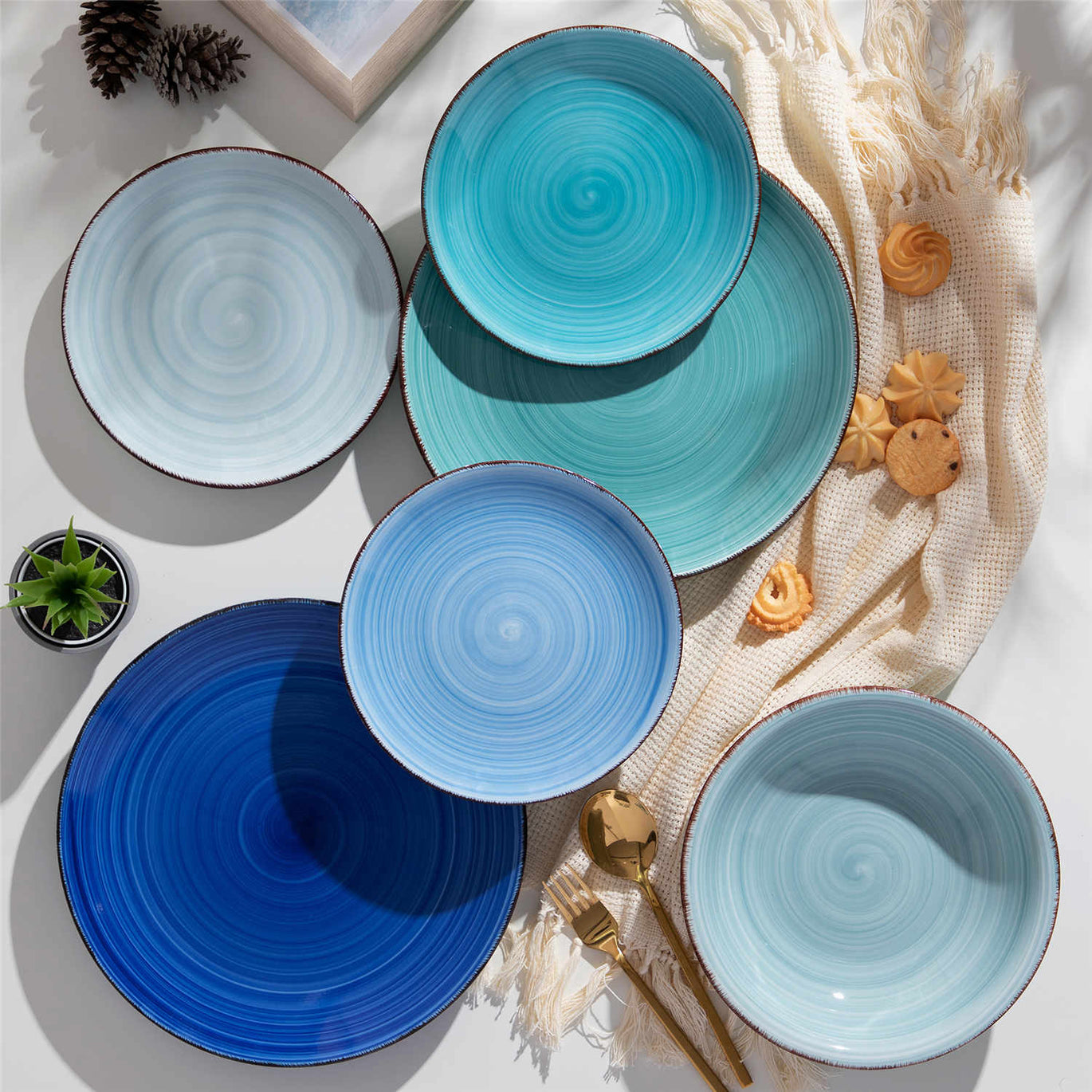


The Aesthetic Educational Value of Children’s Ceramics Dinnerware

Ceramics at a child’s place setting do something magical that bright plastic just cannot pull off. The weight of a real mug, the cool gloss of glaze, the tiny illustration in the bottom of a bowl that appears as the oatmeal disappears – these are not just cute design details. They are teaching tools.
As a colorful tabletop curator who spends as much time styling kids’ placesettings as I do watching them work with clay in studios, I see the same pattern again and again. When children handle real ceramic pieces, whether they made them or simply love the pictures on them, their table becomes a micro–art classroom, a science lab, a civics seminar, and a mindfulness studio all at once.
Research from art educators, potters, and child development specialists backs this up. Lakeside Pottery describes clay as a uniquely powerful medium for motor skills, spatial thinking, discipline, and pride. The Ceramic School highlights how pottery builds confidence, resilience, and problem-solving. A study published on Springer shows that decorated plates can spark rich parent–child conversations during ordinary meals. Even tableware brands like Joyye, Malacasa, and Wildini, along with health-focused analysis from Wellthya, help us connect the dots between material, design, safety, and everyday learning.
Let’s walk through how children’s ceramics dinnerware, thoughtfully chosen and used, becomes aesthetic education in action.
From Plastic Props to Real Tools
Why “Real” Dishes Matter More Than We Think
Many families default to plastic for understandable reasons. It is light, bright, and tough enough to survive being launched off a highchair. Joyye, Malacasa, and others point out that plastics and melamine have been popular largely because they are inexpensive and nearly unbreakable.
But “unbreakable” has a cost.
Wildini notes that even plastics marketed as BPA-free can still leach other endocrine-disrupting chemicals such as BPS when heated. Wellthya cites research showing that melamine plates can raise children’s urinary melamine levels by up to 8.6 times after a single hot or acidic meal, with potential kidney risks. Wellthya also reminds us that children’s dishes can touch food more than twenty times a day, so tiny exposures add up.
Ceramic dinnerware, when it is properly formulated and certified, behaves very differently. Malacasa emphasizes that porcelain is fired at very high temperatures into a dense, non-porous, non-toxic surface that does not absorb flavors or odors and stands up to daily washing. Sugarboo and Saje Rose describe ceramic glazes as smooth, non-porous, and easy to clean with simple soap and water, without the scratches that trap bacteria on worn plastic.
In other words, safe-certified ceramic is not just “pretty.” It is a stable, quiet background that lets food, conversation, and learning take center stage.
The Power of Authenticity: Not Just “Kid Versions”
There is another subtle shift when you replace cartooned plastic with ceramics that look and feel like the grown-up table.
The Curiosity Approach, an early childhood philosophy, talks about offering children “authentic resources.” Their comparison of plastic versus ceramic tea sets is telling. Plastic sets certainly allow color matching and imaginative play. But ceramic tea sets, even tiny ones for play, invite risk management, respect for resources, problem-solving, and deep concentration. Children feel honored and trusted when adults hand them the “real stuff,” not just unbreakable imitations.
Wildini makes a similar point with kids’ ceramic mugs. Appropriately sized, tested ceramic mugs help young children practice fine motor skills and careful handling. They are gently learning that some things truly can break and that their hands and attention matter.
That sense of authenticity is central to aesthetic education. When a child uses a real cup with a design they love, they are not only consuming; they are participating in culture.

What Clay Teaches Little Hands and Big Minds
Sensory and Motor Development
Before a ceramic plate ever hits the table, it begins as clay – and clay is a sensory playground.
Lakeside Pottery describes clay as cold, wet, heavy, squishy, and full of sound as tools scrape and fingers tap. The Ceramic School paints vivid scenes of children pinching, rolling, squishing, and even giggling at the smell and sound of clay. These sensations are not incidental. They are fuel for sensory integration and motor development.
Troomi and Lakeside Pottery both note that manipulating clay strengthens fine motor skills, hand–eye coordination, and tendon strength in the hands and fingers. Kids practice the same micro-movements they need for writing, tying shoes, and later, typing. Diana Ceramic in Melbourne emphasizes how pottery classes support bilateral hand use, grip strength, and endurance – all foundational for school tasks.
That motor learning continues when children handle ceramic dinnerware at home. Lifting a weighted mug, guiding a spoon around the curved wall of a bowl, or pouring water from a small ceramic pitcher demands more control than using ultra-light plastic. Joyye’s design recommendations for kids’ plates – higher rims, deeper walls, and easy-to-grip sides – actually scaffold this process, making real dishes usable while still challenging.
Planning, Problem-Solving, and Spatial Thinking
Clay is a three-dimensional puzzle. The Ceramic School, Lakeside Pottery, and Troomi all describe how children must think through questions like how wide a bowl can be before it flops, how tall a tree sculpture can grow before it tips, or how thick a wall should be to survive firing.
These questions are early physics and engineering lessons disguised as play.
Working with clay forces children to visualize the finished piece and plan backwards. Troomi notes that pottery requires kids to develop a plan rather than just reacting moment by moment. Lakeside Pottery’s concept of “slipping and scoring” – scratching surfaces and adding liquid clay to join pieces – teaches that there are invisible structural rules. Skip them, and the handle falls off in the kiln. Follow them, and you can drink hot cocoa from your own mug.
Hotkilns highlights how ceramics instruction activates cognitive, affective, and psychomotor domains at once. Children think through structure, feel invested in their ideas, and physically execute a design. This blend is powerful for learning.
Now imagine that same child sitting down to dinner with their own mug or bowl. They know exactly how thick that rim is, how heavy the base feels, because they made those decisions. Every use reinforces the planning and problem-solving that went into it.
Focus, Calm, and Emotional Regulation
Many adults find wheel-throwing or handbuilding calming. Children are no different.
The Ceramic School observes that even children who typically struggle to focus can become deeply absorbed in clay work. Lakeside Pottery runs two- and three-hour classes where highly active kids remain engaged and calm, which is not easy to achieve with worksheets. Hotkilns synthesizes multiple studies showing reductions in anxiety, depression, trauma symptoms, anger, and stress when people of different ages engage with clay.
Troomi describes pottery as meditative and therapeutic for children, helping them slow down, focus on a single task, and manage stress. Because clay is forgiving – you can patch a hole, reshape a wobbly wall, or start over – it creates a safe space to experience mistakes without the fear of “ruining” everything.
When that calming, resilient energy travels from the studio to the dinner table, ceramics dinnerware becomes part of a family’s emotional toolkit. A familiar handmade bowl or a favorite decorated plate can be a grounding object during an overstimulating day.

Ceramics Dinnerware as Everyday Learning Tools
Decorated Plates as Conversation Engines
One of the most compelling pieces of evidence for the educational value of children’s ceramics dinnerware comes from a study published on Springer. Researchers observed parent–child mealtime conversations in families using decorated plates as prompts. They found that the images on plates sparked a wide range of talk, from simple labeling to rich narratives and discussions about social issues.
They described a continuum. On one end, brief exchanges where a child simply names objects or colors on the plate. On the other, extended conversations where children tell stories about what they see, explain their thinking, argue for preferences, and explore concepts like the difference between tools or the contrast between real-world and fantasy colors.
The plates functioned in several roles. Sometimes they were objects of practical talk, leading to discussions about what things are for, how they are made, or who might own them. Sometimes they served as attitudinal prompts, eliciting likes, dislikes, and personal stances. Other times, they sparked language and concept exploration, with parents helping children refine vocabulary, understand distinctions, and play with jokes or sounds.
Most fascinating, the images also opened doors to social topics like gender stereotypes around toys and careers, ideas about bodies and beauty, and feelings about relationships. Parents often used these moments to gently challenge assumptions and invite more flexible thinking.
All of this came from something as simple as a picture on a plate.
When you choose children’s ceramics dinnerware with thoughtful imagery – not just branded characters but scenes, animals, patterns, or abstract designs – you are essentially placing a conversation starter at your child’s seat three times a day.
Aesthetics, Identity, and Taste
Malacasa emphasizes that visually appealing presentation encourages children to try new foods and enjoy mealtime. Colorful, well-shaped porcelain bowls and plates make even simple pasta or fruit salad feel special. Joyye echoes this, noting how plate design can support independent eating while also pleasing adults’ eyes.
Aesthetic education is not just about appreciating “pretty things.” It is about connecting form, function, and feeling. When a child learns that the wide rim makes it easier to push peas onto a fork, or that certain colors make food look more appetizing, they are learning design reasoning.
There is also identity at stake. Lakeside Pottery often sees parents tell stories about how the one childhood artwork that survived decades was a ceramic piece they made in school. Children treasure the experience of seeing their own mugs, bowls, or pencil holders used daily. Troomi describes the pride children feel when their functional ceramics are part of family life rather than tucked away.
Allowing children to choose their own dinnerware patterns, or to use pieces they helped make in class, says, “Your taste and effort belong at this table.” That is powerful aesthetic and emotional validation.
Practical Skills and Independence
While we talk about aesthetics and symbolism, children are also learning very concrete skills with ceramic dinnerware.
Joyye outlines plate design features that support independent eating: higher rims so food does not slide off, divided compartments that help picky eaters and visually cue balanced meals, and suction or non-slip bases that reduce spills for toddlers. These features can be found in ceramic, stainless steel, and silicone pieces; they are not limited to plastic.
Wildini points out that handling a real ceramic mug demands attention to grip and body posture. The Curiosity Approach notes that children slow down naturally when using breakable items. They learn to pour carefully, to carry with two hands, and to set things down gently. That full-body choreography is part of life skills education.
Through this lens, children’s ceramics dinnerware becomes a daily workshop in independence. Every meal is practice in coordination, self-care, and responsibility.

Safety, Materials, and Making Smart Choices
Understanding Ceramic Safety
Parents often worry, understandably, about whether ceramic is safe for children. The answer is that it can be very safe when you understand a few key points.
Wellthya explains that the primary risk with some ceramics is heavy metals like lead and cadmium in glazes and decorative paints. These substances can leach into food, especially acidic dishes, if the glaze formulation is unsafe or damaged. Children are particularly vulnerable to lead’s effects on brain development and behavior.
At the same time, Wellthya and Wildini both highlight that properly formulated, tested ceramic is non-toxic, non-porous, and stable at high temperatures. Brands that commit to food-safe standards often test against strict guidelines such as those used in California or by the Food and Drug Administration. Malacasa describes porcelain dinnerware that is microwave- and dishwasher-safe, chip-resistant, and free of harmful chemicals.
Practical implications for families are straightforward. Use only food-safe ceramic dinnerware from reputable makers. Avoid using old, chipped, or unknown-glaze pieces for children’s everyday food, especially for hot or acidic dishes. Reserve questionable thrift-store finds for decorative or dry uses.
For kids’ own pottery from school or studio, many programs – like those described by Lakeside Pottery – intentionally use food-safe stoneware and glazes and even teach children about why certain glass chips or decorative materials would make a cup unsafe for drinking. That lesson is itself part of their science and health education.
Comparing Materials for Learning-Focused Dinnerware
Ceramics are not the only material in the kids’ tableware conversation. Joyye and Wellthya compare ceramic with stainless steel, melamine, and plastic. Each has a different profile for safety, durability, and learning.
Here is a concise overview based on those sources:
Material |
Strengths for learning and aesthetics |
Key cautions for kids |
Certified ceramic (porcelain, stoneware) |
Pleasant weight and temperature, non-porous surface, supports authentic “real dish” experience, rich colors and designs that spark conversation, can be microwave- and dishwasher-safe |
Must be verified lead-safe, avoid chipped or cracked glazes, breakable so needs supervision and age-appropriate expectations |
Stainless steel |
Extremely durable, non-porous and non-reactive, proven biocompatibility, light enough for kids yet more substantial than plastic, good for learning to care for durable real-world objects |
Visuals tend to be less colorful, can feel less cozy than ceramic, noisy on contact with other dishes, surface stays very hot with some foods |
Silicone (high-quality, food-grade) |
Flexible and nearly unbreakable, good suction options for early toddlers, soft textures can feel approachable, often in cheerful colors |
Needs careful sourcing to avoid fillers, less “real object” feeling than ceramic or steel, can absorb some odors over time |
Melamine and generic plastic |
Light, inexpensive, easily themed with characters and bright colors, nearly unbreakable, familiar in many childcare settings |
Documented risk of melamine and chemical leaching when hot or acidic foods are used or plates degrade, scratches trap bacteria, reinforces idea that everything is indestructible |
From a purely health-safety standpoint, Wellthya argues strongly in favor of stainless steel for everyday plates in households that serve hot, oily, often acidic foods. From an aesthetic and educational standpoint, a blend often works best.
Ceramic pieces can carry artwork, color, and the “real dish” experience, while stainless steel can play a supporting role as an introduction to authentic, durable materials, especially for toddlers still flinging things off highchairs. That is exactly what The Curiosity Approach suggests: start with stainless steel as a bridge from plastic to ceramic.
Age-Appropriate Steps toward “Real” Dishes
Joyye offers age-based guidelines that align beautifully with aesthetic education. Infants and young toddlers benefit from dishes with suction bases and deep walls that help them scoop successfully. Toddlers can graduate to compartment plates and easy-grip edges that support independent serving. Preschoolers and early school-age children can begin using scaled-down versions of adult dishes, including child-sized porcelain plates and bowls.
Layer in lessons from The Curiosity Approach, and you get a simple progression. Early on, use break-resistant but “real-feeling” materials like stainless steel and high-quality silicone. Introduce a few supervised ceramic pieces in calm, small-group settings, with adults present to model and coach. As children show care and control, expand ceramic use to more meals.
The key is that the move toward ceramics is not just about durability. It is about gradually inviting children into a world where their actions have visible consequences and where they are treated as capable, responsible members of the household.

Turning Mealtimes into Mini Art Studios
Simple Rituals that Unlock Aesthetic Learning
You do not need an art degree or a pottery wheel in your dining room to tap the educational power of ceramics dinnerware. You only need small, consistent rituals.
One evening, you might invite your child to choose which plate everyone uses, then talk briefly about why they picked that one. Another night, you might ask what story might be happening in the picture on the plate. The Springer study on decorated plates shows that these little prompts can stretch from simple naming into rich storytelling, reasoning, and conversations about social themes if you follow your child’s lead with open-ended questions.
You can tie in their studio experiences too. If your child has made pottery in school or at a local studio such as those described by Lakeside Pottery or Diana Ceramic, use those pieces at the table and ask what they remember about making them. Let them explain slipping and scoring or how they kept a tall piece from tipping. Suddenly, dinnerware becomes a living portfolio and memory trigger.
Even very practical moments can become aesthetic lessons. Setting the table becomes an exercise in pattern and symmetry. Washing dishes becomes a chance to feel textures and notice how glaze color shifts when it is wet.
Partnering with Schools and Studios
The educational value of ceramics is too rich to be confined to home. Ceramics educators like those featured by Hotkilns and cgpartifact remind us that clay is naturally interdisciplinary. It connects art, history, science, and technology. Clay vessels show up in discussions of ancient civilizations, chemistry of glazes, and the material foundations of modern technologies like computer chips and fiber optics.
Hotkilns suggests a simple practice called “Pot of the Week,” where teachers briefly present a single ceramic piece, its origin, and context while children handle and observe it. Over time, students start echoing those influences in their own work.
Families can borrow the spirit of this idea. Rotate one special piece of ceramics dinnerware into your child’s place setting each week and talk about where it came from. Maybe it is a handmade bowl from a local studio, a souvenir from a family trip, or a cup made by an older sibling in school. That short conversation blends personal history, design appreciation, and cultural awareness.
Many studios, like Lakeside Pottery, actively help schools build clay programs, train teachers, and design curricula. Ask your child’s school whether children get to work with clay or ceramics. Share your experience of how ceramics dinnerware has supported learning at home, and explore ways to connect home and classroom experiences, such as sending in photos of children using their handmade pieces at dinner.

Frequently Asked Questions
Is ceramic dinnerware actually safe for young children?
Safe-certified ceramic dinnerware from reputable makers is considered food-safe, non-porous, and stable at typical cooking and serving temperatures, as tableware companies like Malacasa, Sugarboo, and Wildini emphasize. The main safety concerns come from uncertified or damaged glazes that may contain lead or other heavy metals, especially on imported or very old pieces. To keep children safe, use only clearly food-safe ceramic pieces, retire chipped or cracked dishes from everyday food use, and lean on stainless steel or silicone when you cannot verify a glaze’s safety.
What if I am worried about breakage?
Breakage cannot be completely avoided, and in a way, that is the point. The Curiosity Approach and Lakeside Pottery both frame breakability as a learning opportunity. Children learn to handle important objects with care and to respond calmly when something does break. The practical approach is to start small and supervised. Introduce ceramic pieces during calmer meals, stay present, and clearly explain what will happen if something breaks. As children demonstrate responsibility, expand ceramic use. Stainless steel can serve as an intermediate step when you want a “real” feeling without shards.
What if my child’s school does not offer ceramics or clay?
Many schools have had to cut art programs, including ceramics, due to budget constraints, as cgpartifact notes. If your child’s school does not offer clay, look for community studios, after-school programs, or summer camps like those described by Diana Ceramic and Lakeside Pottery. Even occasional workshops can give children the deep sensory and motor experiences that ceramics provide. At home, let your child use air-dry clay and simple tools, then make the connection by serving snacks on their creations when appropriate, or by pairing those creative sessions with conversations over decorated plates at dinner.
A Joyful Closing from the Colorful Tabletop
Every time you set a child’s place with a thoughtfully chosen ceramic piece, you are curating more than color and style. You are curating experiences: the gentle weight of responsibility in their hands, the spark of a story in a plate’s illustration, the quiet pride of sipping from a mug they helped design, the shared laughter over a conversation that blooms from a tiny drawing near the rim.
Children’s ceramics dinnerware, used with care and imagination, turns ordinary meals into an ongoing, joyful course in aesthetics, resilience, and real-world skills – one beautifully glazed bite at a time.

References
- https://spark.bethel.edu/cgi/viewcontent.cgi?article=1849&context=etd
- https://digitalcommons.lesley.edu/cgi/viewcontent.cgi?article=1054&context=expressive_theses
- https://openspaces.unk.edu/cgi/viewcontent.cgi?article=1039&context=grad-review
- https://www.researchgate.net/publication/384470795_Parent-Child_Mealtime_Conversations_Stimulated_with_Decorated_Tableware
- https://hotkilns.com/why-teach-ceramics
- https://ceramic.school/pottery-for-kids/
- https://www.dianaceramic.com.au/blog/can-kids-pottery-classes-improve-child-development
- https://creativehands.ae/how-pottery-benefits-parents-and-kids/
- https://joyye.com/info-detail/kid-friendly-tableware-that-parents-will-love-too
- https://www.lakesidepottery.com/Pages/The-Importance-of-Clay-in-Children's-Development.html
Tu pourrais aussi aimer
Stern Ensemble de vaisselle 16 pièces
- À partir de €69,95
€92,95- À partir de €69,95
- Unit price
- pour
-
Blue
-
Green
-
Red
-
Grey
Bonita Service de table 18 pièces
- À partir de €58,95
€71,95- À partir de €58,95
- Unit price
- pour
-
Blue
-
Multicolor
Simi Ensemble de vaisselle de 24 pièces
- €92,95
€124,95- €92,95
- Unit price
- pour
Service de vaisselle étoilé 16 pièces
- €70,95
€82,95- €70,95
- Unit price
- pour
-
Blue
-
Green
-
Red
-
Gradient Green