



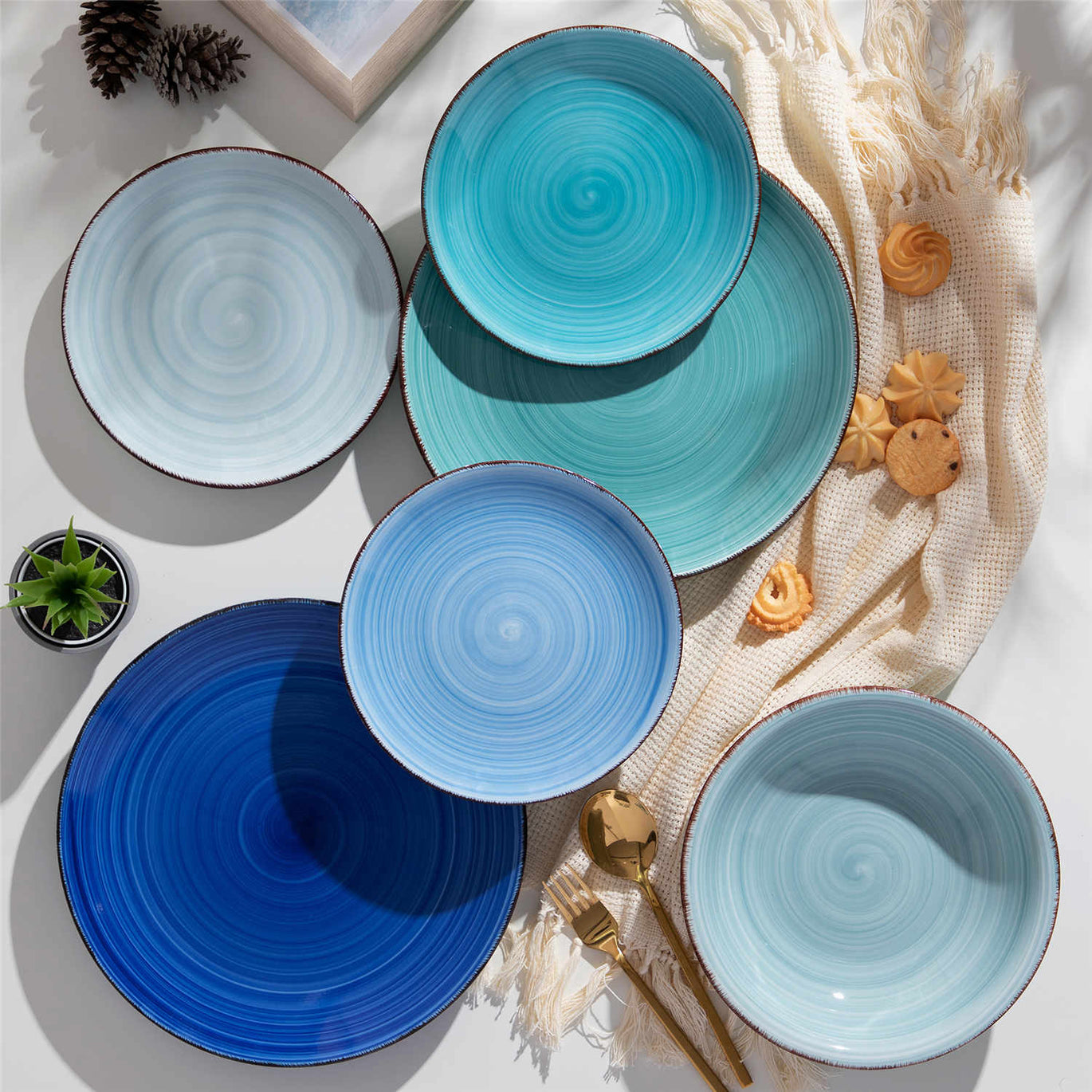


The Impact of Dishwashers on Hand‑Painted Ceramics

I live for a lively table: brushy florals that kiss the rim of a bowl, a candy‑bright saucer with a tiny hand‑drawn sun, a gold swoop that catches the candlelight. And I’m equally grateful for the sweet hum of a dishwasher after a joyful dinner. But when those two worlds collide, how do we protect the art we eat from while still enjoying modern convenience? This guide is my pragmatic, paint‑safe playbook: artful where it should be, technical where it must be, and grounded in reputable know‑how and studio‑tested care.
What “Dishwasher‑Safe” Actually Means
“Dishwasher‑safe” sounds absolute, yet it isn’t a lifetime guarantee. The phrase typically means a piece can tolerate standard cycles without immediate harm, not that its gloss, color, or overglaze detailing will look the same after countless washes. Brands such as Villeroy & Boch explain that the label indicates compatibility with machine cycles if the maker says so, and that fragile or decorative items still deserve hand washing. Care resources and studio guidance agree: dishwasher safety hinges on heat, water pressure, detergent chemistry, and how the piece is built and finished. On the consumer side, FennHome and Giraffyco echo the reality that high heat, strong jets, alkaline detergents, and rapid temperature changes can chip rims, dull glazes, or stress a ceramic body over time, especially if it’s more porous or decorated after glazing.
In practice, dishwasher‑safe is a starting point and not the final word. Your piece’s clay body, glaze maturity, and decoration type determine whether that label translates into years of carefree washing or a slow fade of color, gloss, and structural strength.

The Science Under the Glaze: Clay Bodies, Vitrification, and Crazing
At the heart of this conversation is vitrification: the high‑temperature firing process that makes a clay body dense and glass‑like. When a ceramic is well‑vitrified, it absorbs very little water and resists warping and cracking. Stoneware fired around 2,300°F and porcelain fired at similar high temperatures are the usual dishwasher winners because they are dense and low‑absorption. Mid‑fire stoneware at about 2,160°F and well‑matured cone 6 bodies around 2,200°F can perform well too if the glazes are well formulated and properly fired.
Earthenware and terracotta are the opposite story: lower firing temperatures mean higher porosity. A porous body can take up water during a wash, and that absorbed moisture expands with heat. Over many cycles this expansion‑contraction fatigue can yield internal cracks, weaker rims, or a telltale dullness. Several care sources emphasize this moisture‑plus‑heat dynamic as a key driver of long‑term damage.
Another star of the ceramics vocabulary is crazing. Crazing is a fine, spiderweb‑like network of cracks in the glaze caused by stress or a mismatch in thermal expansion between glaze and body. Dishwashers can accelerate that stress through rapid heat swings and high alkalinity. Once crazing appears, those microcracks can harbor stains and residues. Astialiisa recommends keeping crazed pieces out of food rotation for hygiene; they can be loved as decorative objects instead.

Decoration Placement Matters: Underglaze, Overglaze, and Lusters
Not all “hand‑painted” is the same. If a design is sealed under a strong, glassy glaze, it has better odds in a gentle cycle than a design applied on top after the main firing. Astialiisa draws a useful line between underglaze decoration, which feels uniformly glossy and is typically better protected, and overglaze techniques such as decals, hand‑painted detailing, and especially metallic lusters that sit on the surface and are far more vulnerable. The American Cleaning Institute’s guidance is unequivocal for special‑occasion and decorated pieces: hand wash to preserve finishes. Studio care pages align: Giraffyco and others advise that gilded rims, metallic accents, and delicate overglaze painting do not belong in the dishwasher.
My practice reflects this. If a piece has any metallic shimmer, if I can feel the design raised under my fingertip, or if the maker notes “overglaze,” it goes to the sink with a soft sponge and a smile.

Vintage, Imports, and Lead Safety
There’s a separate, critical conversation for anything vintage or of uncertain origin. The Center for Environmental Health summarizes a long history of lead use in ceramic glazes and paints, particularly before the Food and Drug Administration began enforcing leachable lead limits for ceramics in 1971. The current U.S. limit for leachable lead in ceramic foodware is 0.5 µg/mL when tested on new items, but wear over time and products from countries with weaker standards can still leach. There is no safe level of lead exposure, and risks are especially severe for children and during pregnancy.
The practical takeaway is not poetic but important. Do not use vintage or potentially leaded dishware for food or drink. Treat them as decorative, not dining. Avoid leaded crystal for serving or storage, especially for acidic or alcoholic beverages. Home swab kits can give clues but are unreliable on ceramics; certified lab testing is more accurate. State or local health departments and the National Lead Laboratory Accreditation Program can help you find a lab. When buying new, ask makers directly about lead‑free glazes and food‑safe certification.
What a Dishwasher Does to Hand‑Painted Ceramics
A dishwasher is a cocktail of energy. Mechanically, spray arms drive water with enough force to jostle plates so they bite each other’s rims, which leads to chipping over time. Thermally, the wash can swing from warm into hot and then into a drying phase; opening the door mid‑cycle to vent steam can add a sudden cool‑down. Chemically, detergents tend to be alkaline to slice through grease. That alkalinity can etch or dull reactive or under‑mature glazes and accelerate color fading in printed or painted designs. Finish and food writers such as Serious Eats call out similar effects on non‑ceramic categories, like aluminum dulling under alkaline detergents. The principle carries: stronger chemistry plus heat accelerates wear.
When you combine those forces with a less dense clay body or an overglaze decoration, long‑term machine washing becomes a trade of convenience for color, gloss, and structural integrity.
Dishwasher Stressors and Their Effects
Stressor |
What happens in a cycle |
Likely effect on hand‑painted ceramics |
Alkaline detergents |
High pH chemistry strips residues and interacts with glaze surfaces |
Loss of shine, roughness, and color fade on reactive or weak glazes; faster wear on printed or overglaze designs |
Heat swings |
Warm wash, hotter rinse, heat‑dry, and occasional cool air intrusion |
Thermal stress and possible crazing; expansion‑contraction fatigue in more porous bodies |
Water pressure and movement |
Jets bump items against each other and against rack tines |
Rim and handle chipping; micro‑nicks that grow into larger chips |
Prolonged moisture |
Steam and pooled water reach unglazed feet and porous sections |
Water uptake that expands with heat, leading to internal cracks over time |
These are not one‑and‑done disasters. They tend to show up gradually as a satin‑ish haze where you once had a glassy gloss, as a faded red where cherries used to pop, or as a faint crackle pattern that slowly darkens.

Which Ceramics Cope Better—and Which Don’t
Hand‑painted decoration can sit safely under a robust glaze or perch vulnerably on top, and the clay beneath can either resist water like a stone or sip it like a sponge. Those two realities decide dishwasher resilience more than any single label.
Porcelain and high‑fired stoneware generally hold up better. They are dense, low‑absorption, and often paired with durable glazes. Many commercial sets in these categories are designed with routine dishwasher use in mind, and care pages from brands and studios point to these materials as everyday workhorses. Mid‑fire pieces can do well when the glazes are fully matured and the design is underglaze.
Earthenware and terracotta are the sensitive souls. Lower firing temperatures leave a more porous body that absorbs water, swells with heat, and slowly weakens. Decorative overglaze, gold or platinum lusters, and hand‑painted details that sit on the surface compound the risk. Handmade pieces with uneven glaze thickness or exposed raw clay on the foot are particularly vulnerable because moisture routes are easier and local stresses rise.
Ceramic Types and Dishwasher Expectations
Type |
Typical firing |
Porosity/vitrification |
Decoration placement |
Dishwasher outlook |
Porcelain |
Around 2,300°F |
Highly vitrified, very low absorption |
Often underglaze or in‑glaze |
Generally tolerant on gentle cycles when the maker approves |
High‑fired stoneware |
Around 2,300°F |
Dense and low absorption |
Under‑ or in‑glaze common |
Often fine with care; avoid heat‑dry and collisions |
Mid‑fire stoneware |
Around 2,160°F |
Low to moderate absorption, depends on maturity |
Varies |
Can perform well if glaze is fully matured; use gentle settings |
Earthenware/terracotta |
Around 1,830°F |
Higher absorption |
Frequently overglaze decoration |
Best hand washed; high long‑term dishwasher risk |
Overglaze and metallic luster |
Applied after glaze firing |
Surface‑level decoration |
On top of finished glaze |
Hand wash only to preserve finish |
The firing temperatures noted above are drawn from studio guidance that describes cone 6 around 2,200°F, cone 5–6 around 2,160°F, and cone 9–10 around 2,300°F. As always, follow the maker’s specific instruction over general rules.

Practical Care Strategies That Actually Work
The path to long‑lived hand‑painted pieces is practical and pleasantly simple. For everyday cleaning, use warm water and a pH‑neutral, bleach‑ and ammonia‑free dish soap with a soft sponge or microfiber. Giraffyco recommends unscented, dye‑free soaps as gentlest and calls out white vinegar as a helpful assist on cloudy glass; for ceramics, a baking‑soda paste removes many stains, and a 1:1 white‑vinegar‑to‑warm‑water soak for 20 to 30 minutes can help with stubborn tea and mineral film. Skip steel wool or aggressive melamine erasers on decorative surfaces.
If a maker explicitly allows machine washing and your piece is porcelain or high‑fired stoneware with underglaze decoration, load it thoughtfully. The top rack is kinder, space pieces so they never clink, and select a gentle or china cycle. Highly alkaline formulas are tough on glazes, so a mild, phosphate‑free detergent is friendlier. Turn off the heat‑dry and open the door after the cycle to let steam escape; air‑drying reduces thermal stress. Do not pre‑soak dishes inside the steamy machine, because prolonged moisture will penetrate any unglazed foot and stress more porous bodies. Let the machine cool before unloading so hot pieces aren’t shocked by cool room air.
If your piece has metallic accents, overglaze decals, or any hand‑painted surface you can feel with your fingertip, hand wash only. The American Cleaning Institute groups these with special‑occasion items that should bypass the machine to preserve detailing. Studio guidance from multiple makers repeats this caution. When in doubt, pretend you’re washing a silk scarf: warm water, gentle soap, soft sponge, then a full dry before storage.
Dry completely before stacking. Moisture between plates is a glaze’s worst frenemy. Line stacks with felt or linen, stack heavy to light, and keep stacks modest in height. Giraffyco suggests roughly three to six per stack and recommends shelf liners such as cork or silicone to minimize hard contact. If you spot a chip, crack, or any crazing, retire the piece from food service to prevent stains and bacteria from settling in the cracks.

Maker Guidance and Smart Checks
The smartest first move is reading the bottom. Look for a dishwasher‑safe or hand‑wash icon. If the maker is an independent studio, ask directly which glazes were used and whether the design is underglaze or overglaze. Many brands maintain care pages; for example, Great Jones invites care questions and provides product‑specific guidance during customer support hours, while Villeroy & Boch defines dishwasher‑safe plainly and still recommends hand‑washing fragile pieces.
If you inherited a handmade piece without instructions, a few careful, maker‑agnostic checks can inform a decision. A droplet test on the unglazed foot is telling: if the water beads and sits, you likely have good vitrification; if it darkens the foot quickly, the body is more porous and deserves hand washing. A gentle scratch test in an inconspicuous spot with a spoon can reveal a tender glaze if the surface dulls or flakes. Some studio posts describe heat‑shock checks, but I don’t recommend home thermal trials for cherished pieces; you risk triggering the very crazing you’re trying to avoid. When any simple test raises a red flag, default to hand washing.

Pros and Cons of the Dishwasher for Hand‑Painted Pieces
There is no shame in loving convenience. For high‑fired, fully vitrified pieces with underglaze designs and a maker’s blessing, a gentle cycle can be a reasonable routine. The benefit is clear on a bustling weeknight: time saved, energy conserved, and a kitchen that resets itself while you relax. The tradeoff is incremental wear. Detergents and heat nudge glazes toward matte over years, printed reds mellow, and repeated thermal swings push glazes and bodies to microcrack faster than they might at the sink. For overglaze, metallic, vintage, or porous bodies, that trade is almost never worth it. Hand washing extends the life of both the art and the substrate and is the surest path for heirloom‑hopefuls.
Benefits and Tradeoffs at a Glance
Aspect |
Benefit |
Tradeoff |
Time and convenience |
Automates cleanup on busy days |
Incremental wear on glaze and decoration |
Hygiene |
High‑heat sanitize options for sturdy wares |
Thermal stress can accelerate crazing on sensitive pieces |
Consistency |
Predictable cycles on everyday porcelain/stoneware |
Less control over chemistry and collisions than hand washing |
A Safety Sidebar for Mixed Place Settings
Beautiful tables sometimes weave glass and metal in with ceramics. A quick table‑adjacent note helps keep the whole setting safe. The Center for Environmental Health and the FDA caution against using leaded crystal for infants and children and warn against storing acidic or alcoholic beverages in leaded crystal or potentially leaded vintage ceramics. For knives, nonstick pans, cast iron, and reactive metals, Serious Eats details why dishwashers are unkind: edges dull, finishes strip, and chemistry tarnishes. Keep those out of the machine. A mixed setting thrives when each material gets its best‑fit clean.

Decision Framework: Should Your Hand‑Painted Mug Go in the Dishwasher?
Stand at the sink, hold the mug, and answer four quick questions. Did the maker say it is dishwasher‑safe? Does the design feel smooth and sealed underglaze rather than raised or metallic on top? Does the unglazed foot resist water beading fast, suggesting a denser body? Is it a modern porcelain or stoneware piece rather than an older, unknown, or heirloom item? If the answers line up in favor and you still want the convenience, use the top rack, a gentle cycle, mild detergent, plenty of spacing, and no heat‑dry. If any answer turns into a maybe, the sink is the safest runway.

Troubleshooting and Gentle Fixes
If an everyday stoneware plate looks a little cloudy, try a paste of baking soda with a soft sponge, rinse, then a 20‑ to 30‑minute soak in a solution of equal parts white vinegar and warm water. Rinse thoroughly and towel dry. If a glaze has started to craze, cherish it as a decorative piece and keep it out of service; those fine lines can trap residues you do not want near food. If you find damage on a beloved mug—say a tiny chip at the rim—food‑safe ceramic adhesives exist for non‑contact areas, but for deep cracks, extensive crazing, or a compromised handle, repurpose it as a brush holder or a tiny planter and let it keep sparking joy off the table.

A Short FAQ
Can a hand‑painted mug go on the top rack if it is labeled dishwasher‑safe?
Yes, if the design is underglaze, the body is vitrified stoneware or porcelain, and the maker explicitly allows it. Use a gentle cycle, mild detergent, generous spacing, and skip heat‑dry. If the painting is overglaze or metallic, hand wash only.
Why did my favorite painted pattern fade over the last year?
Alkaline detergents and heat slowly erode color on printed and overglaze designs. Several care resources point to this chemistry‑plus‑heat effect as the reason glossy designs become dull or patchy over time.
Is “crazing” dangerous or just cosmetic?
Crazing is a network of tiny cracks in the glaze. It can trap oils, colorants, and residues, which is why collectors and dealers like Astialiisa advise keeping crazed pieces out of food service. Enjoy them decoratively.
Are vintage hand‑painted plates safe in the dishwasher if they look sturdy?
No. Vintage pieces can contain lead, and older glazes were not designed for modern detergents. The Center for Environmental Health and FDA guidance both support treating vintage and potentially leaded ware as decorative and avoiding food use altogether.
Credible Voices, Colorful Tables
This guidance synthesizes studio practices and brand care recommendations with household‑name resources. The Center for Environmental Health and FDA provide the public‑health context for vintage and lead, the American Cleaning Institute and Villeroy & Boch lay out what dishwasher‑safe means in practice, and maker and retailer care pages such as Giraffyco, FennHome, and Vancasso explain how heat, alkalinity, water pressure, and porosity affect ceramic finishes. Serious Eats adds kitchen‑common sense about what never belongs in a dishwasher. Layer that knowledge with your maker’s specific directions and you will have both vibrant ceramics and an easy cleanup routine.
Closing Sprinkle
Care is love made practical. Keep your colors joyful, your lusters luminous, and your dishwasher humming only when the clay and glaze are ready for it. Your table will thank you in every shade.
References
- https://ceh.org/yourhealth/vintage-dishware-lead/
- https://www.cleaninginstitute.org/cleaning-tips/dishes/wash-dishwasher-or-hand/serving-pieces
- https://www.mychemicalfreehouse.net/2024/08/food-safe-paint-for-plates-ceramics.html
- https://www.seriouseats.com/how-to-load-a-dishwasher
- https://www.deliacreates.com/dishwasher-safe-painted-dishes/
- https://fennhome.com/why-are-some-ceramic-mugs-not-dishwasher-safe/
- https://globalreachceramic.com/blog_details/are-ceramic-mugs-dishwasher-safe
- https://greatjonesgoods.com/pages/care-cleaning?srsltid=AfmBOooS1T6-n-XV5euORi2pWpwQFWAU-AOaRCsCTDUNyfSQ608C-vH6
- https://www.healthierhomes.com/post/what-is-the-safest-lead-free-dinnerware?srsltid=AfmBOorYik3mtFdWjGegclFHJTecNl1dxjopX51sDVcEZO0emAZCvpQt
- https://zeemceramic.com/blog/hand-painted-ceramic-products--cleaning-and-care-tips?srsltid=AfmBOorgjvMcuOAXYPjxgpQvUghFM7A2sSx_prJtMLNOHol5iyWS1Kic
Tu pourrais aussi aimer
Stern Ensemble de vaisselle 16 pièces
- €88,95
€101,95- €88,95
- Unit price
- pour
-
Blue
-
Green
-
Red
-
Grey
Simi Ensemble de vaisselle de 24 pièces
- €101,95
€140,95- €101,95
- Unit price
- pour
Bonita Service de table 18 pièces
- À partir de €63,95
€78,95- À partir de €63,95
- Unit price
- pour
-
Blue
-
Multicolor
Simi Service de table 24 pièces avec bols double face
- €107,95
€140,95- €107,95
- Unit price
- pour