



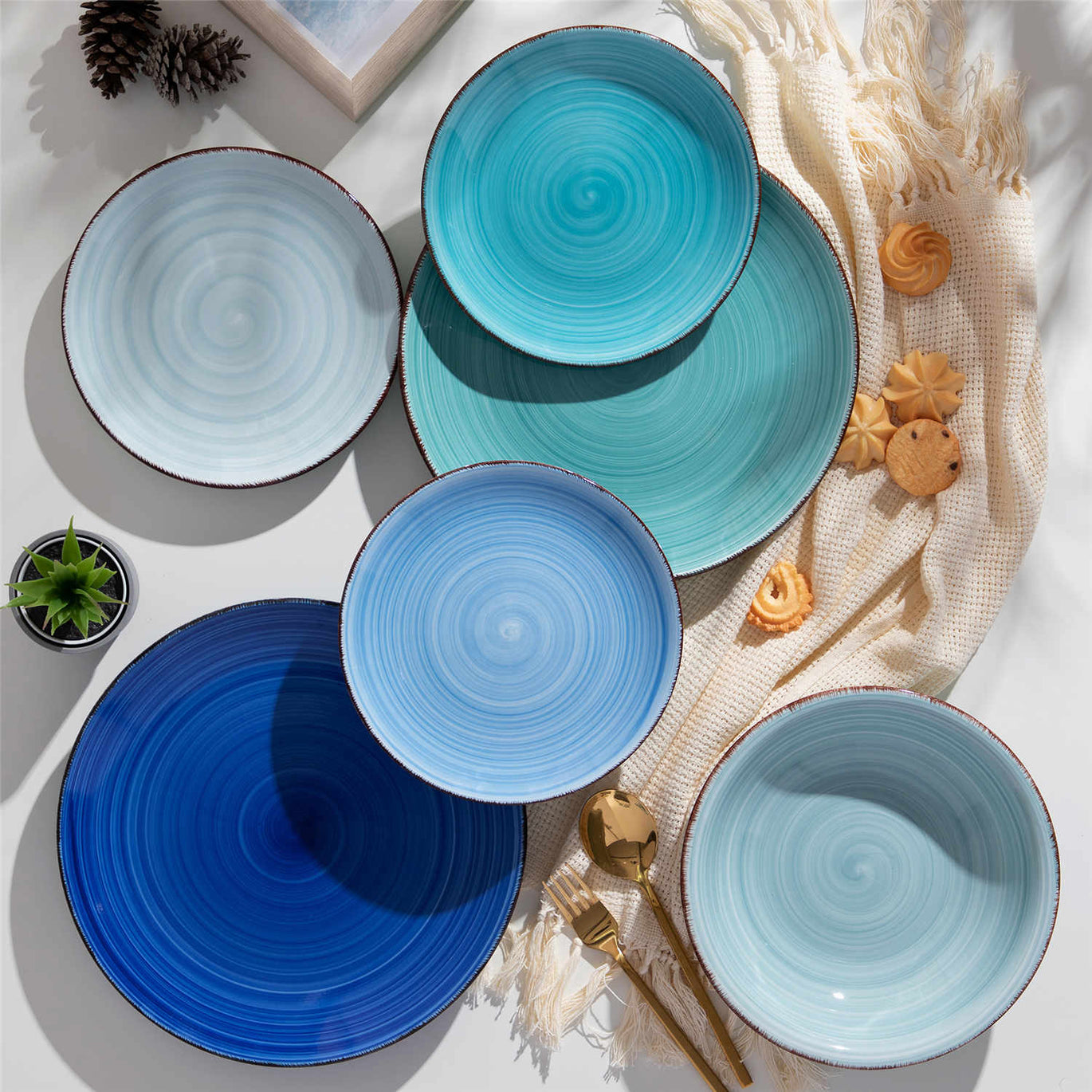


Enhancing Tactile Learning with Children’s Ceramic Dishware

Imagine a tiny hand cupping a warm, solid ceramic mug, tracing a glazed star with a fingertip while waiting for oatmeal to cool. That small, ordinary moment is actually a quiet sensory workout: touch, temperature, shape, weight, anticipation, and even self-control all wrapped into one. As a colorful tabletop obsessive and unapologetic joy curator, I have watched, plate after plate, how the right children’s dishware can turn everyday meals into powerful tactile learning experiences.
This article explores how children’s ceramic dishware can support tactile learning, what the research says about touch and clay, and how to design playful yet practical table moments that build real skills, not just cute photos.
The Power of Touch in Growing Brains
What tactile learning really is
Tactile learning is a hands-on learning style where children understand and remember information by touching, manipulating, and physically interacting with materials. Education writers at Funderstanding describe tactile (or kinesthetic) learning as using objects, textures, and movement so that multiple senses are activated together. Instead of simply hearing about something, children handle it, feel its texture, weight, and resistance, and connect ideas to those sensory experiences.
Structural Learning connects this idea to classic developmental theory. Maria Montessori’s famous line, “What the hand does the mind remembers,” and Jean Piaget’s work both emphasize that early thinking is rooted in sensory action. When children grasp, stack, pour, and press, they are not “just” playing; they are building neural pathways for spatial awareness, language, problem-solving, and memory.
Tactile learning is not limited to art class or science lab. It can happen while a child rolls dough, buttons a shirt, or lifts a small ceramic bowl to their lips. The key is active physical engagement with real objects in meaningful contexts.
What science says about touch
Touch is not a nice extra in development; it is foundational. A scientific review on the importance of touch in development, published in a journal hosted by the US National Library of Medicine, highlights how inadequate sensory stimulation in infancy—especially lack of touch—can lead to developmental delays, poor growth, and attachment challenges. Across species, from worms to rats to humans, mechanosensory input (the feel of touch and movement) turns out to be a critical requirement, not a luxury.
One striking preterm infant study summarized in that review used a structured touch protocol: fifteen minutes of gentle stroking and limb flexion, three times a day, for ten days. The babies who received this touch gained about forty-seven percent more weight per day and were discharged from the hospital an average of six days earlier than control infants, even though both groups received the same calories. Follow-ups at eight and twelve months showed higher developmental scores and fewer neurological soft signs for the babies who got that extra touch.
New Horizons Wellness Services, in their overview of tactile sensory activities, echoes this picture for older children. Repetitive hands-on actions like squeezing dough, pouring, or running fingers through textured materials help organize the tactile system, strengthen sensory–motor pathways, improve attention and problem-solving, and support self-regulation. When children calmly repeat tactile motions, they are often doing some of their most important developmental work.
A learning brief from My Teaching Cupboard, summarizing data from the National Training Laboratories, adds a complementary perspective. Learners may remember only about five percent of information from lectures but up to seventy-five percent of what they practice by doing and about ninety percent when they use or teach it immediately. While these numbers are approximations, they reinforce a theme found across Structural Learning and other sources: learning by doing is unusually sticky.
Taken together, the research suggests that when children eat, pour, and serve using real, touch-rich objects, those moments can help knit together sensory input, movement, and cognition in a powerful way.
From Squishy Clay to Solid Plate: Ceramics in Child Development
Clay as a tactile super-material
Before we talk about children’s ceramic dishware, it helps to understand clay itself.
Clay is literally refined earth. As Two Birds’ “Language of Clay” article puts it, it is a malleable mix of dirt and water, non-toxic and suitable from infancy through preschool. Compared with slime or playdough, clay reacts to human touch in a particularly satisfying way: it warms, softens, and smooths under the hands, giving immediate cause-and-effect feedback.
Lakeside Pottery in Connecticut describes children’s first reaction to clay as a sensory feast: cold, wet, squishy, sometimes heavy. Kids poke, pinch, twist, and roll it, experiencing not only touch, but also the sounds, smells, and visual shifts as forms change. This multi-sensory engagement is exactly what tactile learning advocates like Funderstanding and Structural Learning emphasize as the basis for strong neural connections.
Studies and practice-based reports across several ceramic education sources highlight converging benefits of clay work:
Developmental focus |
Clay-related benefit |
Source examples |
Fine and gross motor skills |
Strengthens small muscles in hands and fingers; develops larger muscles through wedging, pounding, pressing |
Lakeside Pottery; Porcelain by Antoinette |
Sensory integration |
Provides rich tactile input and supports children who avoid or crave sensory experiences |
Montessori-inspired clay modeling guides; Kidsguide Magazine |
Cognitive skills |
Builds planning, problem-solving, spatial awareness, cause-and-effect understanding |
Feelartistic Studio; Mud Hut Pottery; Skutt’s clay-in-STEAM discussion |
Emotional regulation |
Helps children settle, focus, and enter flow; reduces stress and anxiety in classroom observations and clinical art therapy contexts |
Montessori Art; HotKilns’ “Why Teach Ceramics” |
Self-esteem and identity |
Creates lasting, functional objects that children can use or gift, reinforcing competence and pride |
Lakeside Pottery; Feelartistic Studio |
Pottery studios and educators consistently report that even very active children often become calm and absorbed during clay work. Montessori Art’s concept of “active multi-sensory learning” describes this as a state where hand-based making activates touch, sight, sound, and even smell, leading to deep engagement and reduced stress.
From studio piece to breakfast bowl
Clay’s story does not stop at the studio door. When clay is shaped, dried, and fired, it becomes ceramic—stoneware mugs, bowls, plates, and pitchers that can live on your shelves and, importantly, in your child’s hands.
HotKilns’ defense of ceramics in K–12 education points out that these functional wares are more than art projects. Clay vessels historically helped expand human nutrition and supported wider cognitive development. Modern ceramics underpin technologies from computer chips to fiber optics, but at the child’s level, a simple handmade bowl can be a profound “I did that” object.
Lakeside Pottery describes how children often prioritize function when decorating: many choose food-safe finishes over flashy but unsafe embellishments because they want to eat from their bowls. That shift—from “pretty thing I made” to “tool I will use every day”—is a leap in practical thinking, responsibility, and identity.
Children’s ceramic dishware, whether made in a studio or purchased thoughtfully, can extend the benefits of clay into daily life. Every sip and bite becomes another micro-dose of tactile, functional interaction with a material that has already proven to be a powerhouse for development.

Children’s Ceramic Dishware as Everyday Tactile Tools
The tabletop as a sensory lab
Most research on tactile learning spotlights obvious learning environments: classrooms, therapy spaces, science labs. Yet the kitchen table might be one of the richest and most underused tactile environments we have.
New Horizons Wellness Services notes that you do not need specialized tools to support tactile development; many of the best materials hide in kitchen drawers. Ceramic plates, bowls, and cups easily belong on that list. They invite children to explore:
- Surface textures created by glaze, carved patterns, or relief.
- Temperature differences between hot soup, cool milk, and the room-temperature rim.
- Weight and balance while carrying, pouring, or stacking.
- Sound, from a gentle clink when setting a plate down to the tap of a spoon against the side of a mug.
Funderstanding’s overview of tactile learning emphasizes that these physical interactions build coordination, motor skills, and sensory integration. When a child experiments with how firmly they can tap a ceramic cup without spilling, they are practicing control, feedback, and cause-and-effect in a highly motivating context: food.
Fine motor skills and everyday independence
Fine motor development is a recurring theme across tactile learning and clay research. New Horizons Wellness Services and Funderstanding both note that grasping, pinching, pouring, and similar actions strengthen the small muscles of the hands and fingers, which support self-feeding, dressing, writing, and other daily tasks.
Ceramic dishware supports this work in subtle ways. Small handles require careful grip; rims call for controlled lifting; spoons and chopsticks tapping against ceramic surfaces give instant auditory feedback when motions are too big or too fast. Over time, repeated mealtime movements can support:
- Grip strength and finger control as children lift a heavier-feeling ceramic cup compared with ultra-light alternatives.
- Hand–eye coordination as they align a spoon with a relatively narrow bowl or slot a plate neatly onto a placemat.
- Bilateral coordination as one hand steadies a bowl while the other stirs, inspired by cooking-related tactile learning described by Sensory Assist and Funderstanding.
These are the same fine motor skills that pottery studios and clay curricula highlight as outcomes of clay work. By bringing ceramic objects into everyday meals, you extend that motor practice into dozens of small, meaningful repetitions each day.
Emotional regulation and mealtime mood
Montessori Art’s work on clay modeling and stress reduction describes how children often shift from stressed to calm during hand-based art activities. The combination of repetitive motion, deep tactile input, and focused attention can help them enter a flow state where anxiety recedes.
Ceramic dishware may play a similar supportive role at the table. The rhythm of lifting and setting down a plate, tracing a pattern on the rim, or gently tapping a spoon can provide calming sensory input, especially when adults keep the pace unhurried. New Horizons Wellness Services notes that these repetitive tactile motions can be inherently soothing, particularly for children who become easily overwhelmed.
The key, as both the tactile devices review summarized by the University of Illinois College of Education and the clay modeling article caution, is intentionality. Engagement alone does not guarantee learning or regulation. Adults need to frame the experience thoughtfully, observe children’s reactions, and, when stress is persistent or trauma-related, involve licensed professionals rather than relying solely on sensory strategies.

Pros and Cons of Ceramic Dishware for Tactile Learning
Ceramic dishware is not a magic solution for every family or classroom. It brings distinctive strengths and some real constraints, especially with younger children. Thinking like a design-minded educator—balancing beauty, function, and safety—helps you use it wisely.
Here is a concise comparison through a tactile-learning lens.
Aspect |
Ceramic children’s dishware |
Considerations |
Tactile richness |
Offers varied textures (glaze, relief, carved patterns), clear temperature feedback, and satisfying weight and sound. |
Can stimulate curious, exploratory touch but may be intense for very sensitive children. |
Motor challenge |
Encourages careful grip, controlled movement, and two-handed coordination, similar to clay work that builds fine and gross motor skills. |
Requires supervision and gradual introduction so children can succeed without constant fear of dropping items. |
Emotional meaning |
Functional, durable pieces can become cherished objects, reinforcing self-esteem and identity when children help make or choose them. |
Breakage can be disappointing; framing accidents as fixable errors, as clay teachers do, is important. |
Durability and sustainability |
Ceramic vessels, once fired appropriately, can last for years and are part of long ceramic traditions highlighted by institutions like the Museum of Ceramic Art – New York. |
They can chip or break if mishandled; replacements may not be as inexpensive as some alternatives. |
Accessibility |
Everyday ceramic bowls and cups are widely available, and many communities have pottery studios and classes for children. |
Some families may prefer to start with one or two special pieces rather than replacing a full set at once. |
Many pottery educators, from Lakeside Pottery to Feelartistic Studio, emphasize teaching children that mistakes in clay can be repaired and that breakage is not failure but feedback. Bringing that mindset to ceramic dishware at home or school prevents the tabletop from becoming a stress zone and keeps the focus on learning.
Designing a Tactile-Friendly Ceramic Table
Prepare the space like a studio
New Horizons Wellness Services offers practical guidelines for tactile activities that adapt beautifully to the dining room. Before you hand a child their own ceramic dish, set the environment up the way a thoughtful pottery instructor would.
Choose a space where a small spill or the occasional broken piece can be managed calmly. Place a soft placemat or tablecloth under dishes to soften sound and impact. Keep cleanup materials nearby so transitions after meals are smooth and predictable. When you treat the table like a creative studio rather than a pristine display, everyone relaxes.
Just as in clay modeling sessions, consider individual sensory sensitivities. If your child is nervous about heavy or hard objects, let them simply touch a cool ceramic plate with one finger at first. They might start by stirring yogurt in a ceramic ramekin while still eating from a lighter bowl. For children who crave intense tactile input, a textured mug or ridged plate can give them satisfying feedback without needing extra toys at the table.
Most importantly, set expectations. Briefly explain what you will be practicing together—carrying plates with two hands, listening for a gentle clink instead of a bang, or noticing how the bowl feels before and after warm soup. When children know the plan, their brains have more space for exploration.
Make mealtime a multi-sensory conversation
The most powerful tactile learning happens when touch is paired with language and reflection. Funderstanding and New Horizons Wellness Services both point out that describing sensations (squishy, bumpy, smooth) helps children connect body awareness with vocabulary and self-expression.
At the table, this might sound like:
- “How does your cup feel now that the tea has cooled a bit?”
- “Do you notice a difference between the smooth inside of the bowl and the patterned outside?”
- “What happens when you stir slowly versus quickly? What do you hear?”
These simple questions mirror the prompts clay educators use in studio settings and the open-ended curiosity encouraged by Sensory Assist and Structural Learning. They transform dishes from passive containers into active learning tools.
Cleaning up is part of this sensory conversation too. Porcelain by Antoinette notes that post-clay cleanup builds hygiene habits, discipline, and a sense of sequencing. At home, inviting children to carry their ceramic plate to the sink, rinse it, and feel the change as food and suds disappear adds another tactile chapter to the meal.

Tactile Tabletop Ideas by Age and Stage
The beauty of children’s ceramic dishware is that it can grow with a child from toddlerhood through the elementary years, evolving from a sensory object to a tool for more complex skills.
Toddlers: first touch, simple carrying
For toddlers, tactile learning is all about safe exploration and simple cause-and-effect. New Horizons Wellness Services advises starting small, letting sensory-sensitive children watch first or touch materials with a single finger.
At this stage, an adult might hold a small ceramic bowl while a toddler runs a finger around the rim, taps gently with a spoon, or watches milk swirl against the white interior. When the child is ready, they can help slide a plate across the table or carry a lightweight ceramic dish together with an adult, one hand on each side. These shared actions mirror early clay activities described in Two Birds’ work, where even infants are invited to push, poke, or lean on a large block of clay with adult support.
The goal is not independence yet; it is building trust in the material and strengthening basic motor patterns.
Preschoolers: pouring, sorting, and storytelling
By preschool, children are typically ready for more active involvement with their dishware. Many of the benefits described in Sensory Assist’s guidance for ages three to five—sensory bins, craft activities, gardening—translate naturally to the table.
A small ceramic pitcher and cup can become a pouring station for water at snack time. As children pour, they feel weight shift, practice wrist control, and see the immediate consequence of their motion levels rising and falling. These experiences echo the cause-and-effect discoveries described by New Horizons Wellness Services and Funderstanding as key to executive function growth.
You can also invite shape and pattern awareness by offering two different ceramic bowls and asking which one feels heavier, which has more bumps, or which holds more berries. The spatial reasoning that Terra and Ember associate with clay sculpting—thinking about size, symmetry, and volume—appears here in a more everyday form.
Storytelling brings in emotional and cultural layers. Inspired by HotKilns’ suggestion to “travel through time and space” with ceramic traditions and by resources like the Museum of Ceramic Art – New York, you might introduce a “bowl of the week.” Share a short story about where a patterned bowl’s design comes from or how a child’s own studio-made plate was formed and fired, then let children handle it gently. Over time, this practice can weave global awareness and personal meaning right into the dinner routine.
Early elementary: responsibility, design, and STEAM thinking
For children in the early grades, ceramics become prime territory for responsibility and cross-curricular learning, echoing the STEAM emphasis found in Skutt’s “Why Kids Need Clay.”
At home or school, children can be in charge of setting a ceramic place for each family member, matching plate sizes, choosing color combinations, and checking that everything is centered and aligned. These tasks tap into the planning, sequencing, and problem-solving that multiple pottery articles—such as those from Mud Hut Pottery and Porcelain by Antoinette—identify as core clay benefits.
If you have access to a pottery studio or school program like those described by Kidsguide Magazine and Feelartistic Studio, early elementary is a wonderful time for children to design and glaze their own dishware. The process itself is a tactile STEAM lesson: they manipulate shape (geometry), consider balance and stability (basic physics), observe how glazes change in the kiln (chemistry), and connect effort to visible results, as noted across several ceramics education sources.
Once that self-made plate comes home, every meal becomes a review session in “applied effort equals meaningful outcome.” This is exactly the type of personal, hands-on experience My Teaching Cupboard cites as crucial for moving learning from short-term to long-term memory.

Low-Tech Plates and High-Tech Haptics: Complement, Not Competition
A 2024 review in the journal Advanced Intelligent Systems, highlighted by the University of Illinois College of Education, analyzed a dozen studies on tactile and haptic devices for learners ages three through eighteen. These tools ranged from tablet-based systems that simulate pen-and-paper feel to force-feedback devices that help visually impaired children explore three-dimensional shapes.
The review found the strongest benefits in handwriting, where haptic feedback helped refine fine motor control and writing proficiency. Promising results also appeared in geometry and collaborative learning. At the same time, the authors noted important challenges: the high cost of custom devices, limited use outside experimental or specialized settings, and the difficulty of designing meaningful haptic cues for more abstract concepts as children grow older.
Crucially, one of the researchers, Robb Lindgren, cautioned that engagement alone is not enough; tactile experiences must be paired with rigorous measures of actual learning. In other words, feeling something interesting does not automatically mean deeper understanding.
Children’s ceramic dishware falls firmly on the low-tech side of the tactile spectrum. It does not vibrate, light up, or track data. But it is:
- Widely available.
- Inherently functional.
- Part of daily life for many families.
When adults bring the same intentionality to mealtimes that designers bring to haptic devices—setting goals, observing outcomes, adjusting experiences—ceramic dishware becomes a quiet ally. It will never replace specialized tools used in occupational therapy or visually impaired education, but it can weave tactile learning into hundreds of ordinary moments that otherwise might pass by untouched.
FAQ: Common Questions About Ceramics and Kids
Is ceramic dishware safe for young children?
Safety depends on the child’s age, motor control, and environment. Many families start ceramic dishware under close supervision, following the same principles clay educators use in studios: clear rules, appropriate tools, and a forgiving attitude toward mistakes. Lakeside Pottery notes that children handle real pottery tools responsibly when they are trusted and taught. Similarly, a small, sturdy ceramic bowl can be introduced alongside adult modeling of two-handed carrying and gentle placement.
If breakage risk feels too high, you can still use ceramic pieces for supervised tactile exploration—touching, tapping, pouring water—before shifting any responsibility for carrying or handling hot items.
What if my child has sensory sensitivities?
New Horizons Wellness Services suggests starting with observation and fingertip contact rather than full-hand exploration for sensory-sensitive children. You might place a cool ceramic plate on the table and invite a single touch, or let the child stir something in a ceramic bowl while keeping their hands on the spoon rather than the bowl itself.
For children who are tactile seekers, textured glazes or carved patterns may give them satisfying input. In all cases, do not force contact; gentle encouragement, choice, and respect for boundaries build confidence far more effectively than pressure.
Do I need custom handmade kid ceramics to get these benefits?
Handmade pieces from studios like those described by Feelartistic Studio, Lakeside Pottery, or Mud Hut Pottery can add powerful emotional meaning, especially when children help create them. However, research on tactile learning from Funderstanding, Structural Learning, and others emphasizes the importance of multi-sensory interaction, not designer labels.
Any well-made ceramic dish that feels interesting in the hand and fits your child’s size can support tactile learning when used intentionally. The magic is in the interactions, the conversations, and the daily repetitions—not in the brand.
A colorful, ceramic-rich table is more than a pretty scene. It is a stage for small hands to practice coordination, a canvas for sensory exploration, and a quiet training ground for patience, focus, and pride. When you place a thoughtfully chosen children’s bowl in front of a child, you are not just serving dinner; you are serving a tiny, powerful dose of touch-based learning that can echo through their development long after the dishes are done.
References
- https://www.canr.msu.edu/news/hands-on_learning_for_young_children
- https://www.goodwin.edu/enews/benefits-of-hands-on-learning/
- https://pmc.ncbi.nlm.nih.gov/articles/PMC2865952/
- https://education.illinois.edu/about/news-events/news/article/2024/05/23/how-tactile-devices-can-improve-children-s-learning
- https://www.genevamontessori.org/benefits-of-hands-on-learning-for-early-childhood
- https://feelartistic.org/2025/05/26/pottery-kids-classes-the-role-of-pottery-in-child-development/
- https://www.naeyc.org/resources/pubs/yc/summer2022/power-playful-learning
- https://www.onlinecprcertification.net/blog/unlocking-the-power-of-tactile-learning-style-a-comprehensive-guide/
- https://hotkilns.com/why-teach-ceramics
- https://kidsguidemagazine.com/5-reasons-kids-should-try-a-pottery-or-ceramics-class/
Tu pourrais aussi aimer
Stern Ensemble de vaisselle 16 pièces
- À partir de €72,95
€96,95- À partir de €72,95
- Unit price
- pour
-
Blue
-
Green
-
Red
-
Grey
Bonita Service de table 18 pièces
- À partir de €60,95
€74,95- À partir de €60,95
- Unit price
- pour
-
Blue
-
Multicolor
Simi Ensemble de vaisselle de 24 pièces
- €96,95
€129,95- €96,95
- Unit price
- pour
Service de vaisselle étoilé 16 pièces
- €73,95
€86,95- €73,95
- Unit price
- pour
-
Blue
-
Green
-
Red
-
Gradient Green