



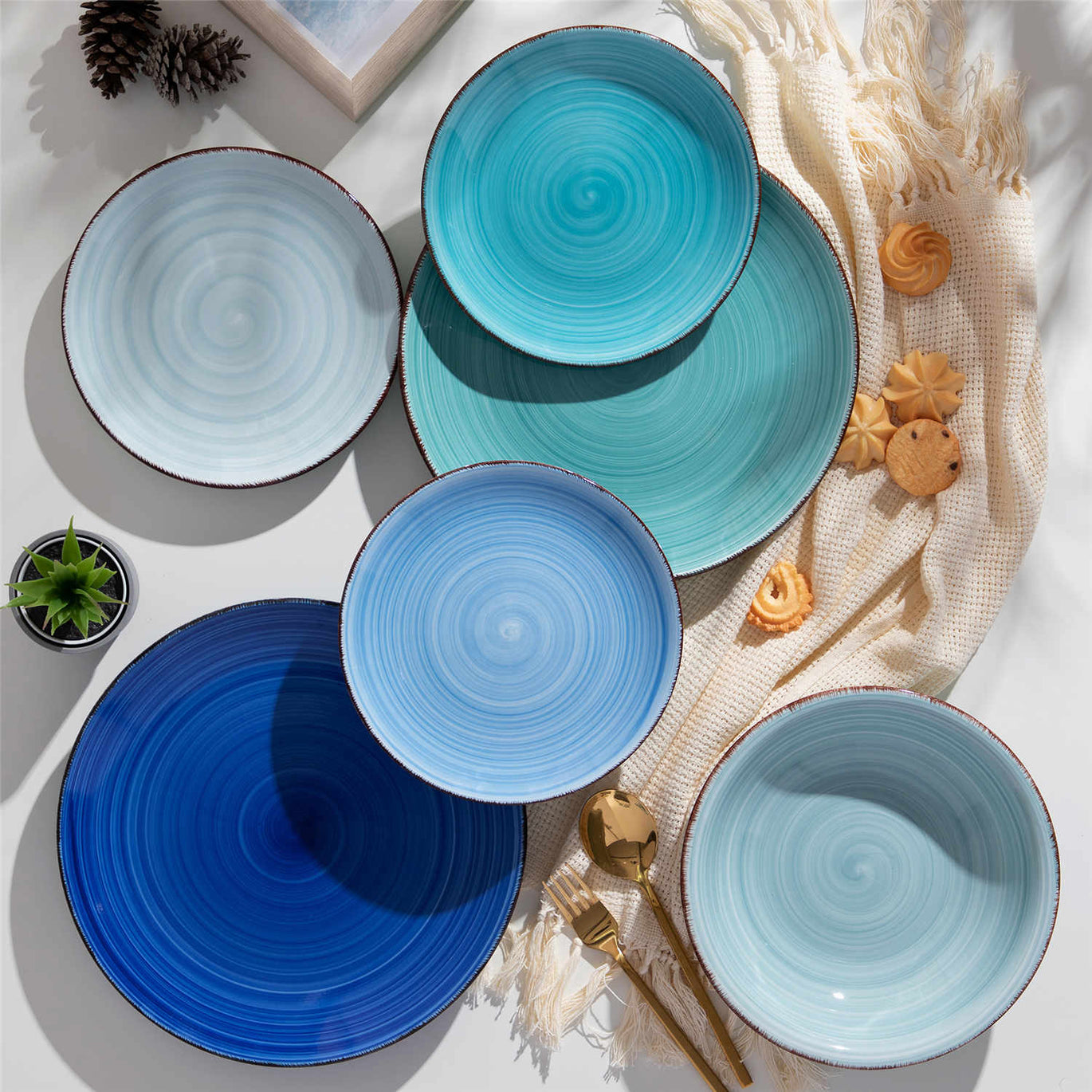


How Meteorologist-Inspired Cloud Patterns Transform Ceramic Dinnerware

The Moment Cloudware Floated Onto the Table
Look around today’s most joyful tablescapes and you will see it: plates that look like drifting cumulus, bowls marbled like storm fronts on a weather map, silhouettes shaped like cartoon clouds that seem to have floated straight down from the sky. Cloud-pattern dinnerware, often rooted in the same sky-watching that meteorologists live and breathe, has quietly become one of the most expressive trends in contemporary ceramics.
This is more than a cute motif. When I work with cloud-pattern plates in styling sessions or see them in use at real family tables, they change the mood in the room. Guests linger a little longer, food looks softer and more inviting, and everyday routines feel just a touch more cinematic, as if you are eating under your own private sky. At the same time, not every cloud glaze is practical for microwave use, not every sculpted silhouette stacks easily, and not every dreamy surface will survive steak knives.
In this guide, we will explore how meteorologist-inspired cloud patterns move from sky to kiln, which materials and glazes handle them best, what the pros and cons are in real kitchens, and how to style and care for them without losing that air of effortless whimsy. Along the way, we will draw on rigorously tested insights from sources like Serious Eats, Absolutely Magazines, Architectural Digest, and modern dinnerware experts, plus real products such as Haand’s Cloudware and Sur La Table’s Cloud Stoneware.
Think of this as your forecast for a brighter, cloudier table.

What “Meteorologist-Inspired” Cloud Patterns Really Mean
When we talk about meteorologist-inspired cloud patterns in ceramics, we are really talking about two intertwined ideas. The first is visual: patterns that echo the formations meteorologists track and photograph every day, from cottony cumulus to wispy cirrus and streaky rain bands. The second is emotional: that familiar, calming feeling of looking up at a big sky and watching the atmosphere do its slow, silent dance.
In ceramics, those ideas show up in several ways that are clearly documented in recent collections and editor-curated roundups. Modern dinnerware brands are leaning into abstract, sky-like surfaces and shapes rather than literal cloud cartoons. Examples include blue-and-white marbled glazes inspired by summer skies, layered whites that reveal warm tones beneath like sunlight on clouds, and soft-edge plates that feel like a horizon line rather than a strict circle.
Designers also treat the dinner plate a bit like a weather map. Reactive glazes, which fuse and separate during high-temperature firing, create swirling patterns that never repeat exactly. That unpredictability mirrors the way meteorologists read radar images and satellite loops that are always changing. EKA, a global ceramics manufacturer, notes that dual-tone reactive glazes and wavy-edged plates have become bestsellers for photogenic, handcrafted-style tableware, especially on visually driven platforms. On a cloudy plate, that same technology gives you a stormy, layered sky effect right under your fork.
At the more playful end of the spectrum, cloud-shaped plates turn the outline itself into a cartoon puff. Retailers like Arte House Studio and Inspecial Home offer sets of two cloud-shaped ceramic dinner plates positioned as whimsical and eclectic, handmade by artisans and marketed specifically as conversation-starting pieces for dreamy, al fresco tables. On large online marketplaces, you will even find cloud silhouettes in porcelain, glass, wood, bamboo, and biodegradable materials, each promising either heat resistance and elegance or easy-care casual fun.
So “meteorologist-inspired” does not necessarily mean a glaze copied from a storm satellite image. Instead, it is a palette of forms and finishes that borrow from the moods, textures, and movement that weather professionals spend their lives observing.

From Summer Skies to the Kiln: Real Cloud Collections
Haand’s Cloudware: A Sky Study in Blue and White
One of the clearest examples of cloud inspiration translated into dinnerware is Cloudware, a handcrafted porcelain collection from Haand. Designed by Mark Warren, each plate, bowl, mug, and cup features a blue-and-white marbleized glaze that Haand explicitly links to clouds in the North Carolina summer sky and to historic Wedgwood Jasperware. No two pieces are alike, which makes the set feel like a stack of tiny, functional sky paintings rather than a uniform grid of plates.
Cloudware is also a case study in how this aesthetic can align with serious sustainability. Haand positions the line within sustainable kitchen design, emphasizing that investing in durable, long-lasting objects beats constantly replacing cheaper tableware. The company uses high-efficiency kilns; in 2018 its entire glaze-firing output produced a carbon footprint comparable to a single average US household. Glazes are VOC-free and non-harmful, excess glaze is captured and reused, and about 20 percent of each Cloudware piece is recycled clay. Clay from any piece that fails initial quality checks is reconstituted and remixed until its first firing, essentially making the practice no-waste up to that point.
The effect is meteorological in more ways than one. Visually, the pieces feel like a snapshot of a partly cloudy day; emotionally, they bring the same “lightness in darker months” that designers at Haand say they are aiming for. Cloudware demonstrates how a sky-driven idea can be backed by craft, environmental intention, and heirloom-level durability.
Cloud Stoneware from Portugal: Everyday Cloud Cover
On the more accessible, everyday side, Sur La Table’s Cloud Stoneware Dinnerware Set is a 12-piece collection handcrafted in Portugal. It is described as stoneware with a reactive glaze, an organic design, and a soft white color. The reactive finish and subtly irregular shape push it toward that cloud aesthetic without shouting; think gentle overcast rather than dramatic thunderhead.
The set is positioned as both dishwasher- and microwave-safe, which matters enormously in everyday life. Dinnerware testers at Serious Eats remind us that a truly practical set needs to survive repeated cycles in the dishwasher, resist staining from spices or tomato sauce, and not overheat dangerously in the microwave. Stoneware in general, according to sources like Bon Appétit and multiple dinnerware testing panels, tends to be thicker and more forgiving than porcelain; that heft suits everyday “cloud cover” you do not have to baby.
Here, the cloud idea is less about sculpture and more about comfort: rounded edges, soft tone, and flowing glaze; cloud as mood, not motif.
Sculpted Cloud Plates: Whimsy on the Horizon
For tables that lean fully into play, sculpted cloud silhouettes are the show-stealers. Arte House Studio’s set of two cloud ceramic dinner plates is described as cute, whimsical, and eclectic, handmade by skilled artisans in high-quality ceramic. The plates are marketed as refreshing and distinctive, aimed at al fresco dining and outdoor gatherings. Inspecial Home sells a similar pair as a “cute, whimsical, eclectic dinnerware set,” clearly targeting buyers who want something that feels like a doodle brought to life.
These sculpted clouds invite practical questions that serious testing articles rarely cover directly: do they stack neatly, or do those dreamy edges chip if stored carelessly? Will the irregular outline make it harder to cut a steak or scoop the last bit of sauce? While we do not have lab-style data on those exact shapes, we can apply general guidance from durability tests by Serious Eats and the material breakdowns from Bon Appétit. Cloud shapes in stoneware or porcelain will inherit the underlying material’s strengths; stoneware is thicker and forgiving, porcelain is thinner and more scratch-resistant but can chip if dropped.
What the silhouette absolutely does is change the energy of the table. These plates set a playful tone even before the first appetizer arrives, which makes them ideal as accent pieces layered with calmer base sets.
Cloud Glaze Hosting Sets: Soft Sky, Serious Rules
On the more formal end, Iron Accents highlights a 24-piece cloud glazed ceramic dinnerware set with 12 dinner plates and 12 low bowls. The dimensions are generous, around 11 inches for plates and 9 inches for bowls, with a soft, cloud-like glaze that varies intentionally from piece to piece. This is the cloud effect as serene luxury: calming color, subtle uniqueness, and a coordinated fleet of plates ready for serious entertaining.
However, this particular set comes with a clear caveat baked into its care instructions. It is not safe for use in the microwave or oven due to risk of glaze cracking. That limitation is an important reminder that cloud-inspired glazes, especially if they are thick, layered, or include special decorative components, may not behave well under extreme temperature shifts. As decoration gets more expressive, practicality needs to be checked carefully.
If your household is heavily microwave-dependent, a cloud set like this is best reserved for room-temperature dishes and warm foods that are heated elsewhere and plated at the last moment.
Architectural Clouds on the Table
Cloud inspiration does not stop at the pattern level. Cloud Terre’s collaboration with Fortessa on Collection No. 2, for example, channels Mediterranean architecture rather than literal sky imagery, yet the effect is still quietly cloudlike. The pieces have a brushed surface that creates layered whites, revealing warm terra cotta tones beneath. The forms are sculptural and context-driven, designed by Amber Kendrick, whose background spans architecture, ceramics, and dance.
Fortessa presents this as high-performance tableware: sophisticated yet durable, and dishwasher-safe unless otherwise noted. The “cloud” here lives in the interplay of layers and light, much like sun on stucco or clouds passing behind a white façade. That kind of conceptual cloud is perfect for design-forward hosts who want atmosphere rather than literal motifs.

Materials, Glazes, and How Cloud Patterns Behave
Not all clouds are created equal, and not all cloud patterns behave the same over time. To choose wisely, you need to understand how different materials carry meteorological patterns and how glazes interact with daily use. Modern dinnerware guides from MD Maison, Bon Appétit, Serious Eats, and EKA offer a helpful snapshot.
Porcelain is made from refined clays fired at very high temperatures until vitrified, which essentially fuses the material into a thin, glasslike but strong surface. Bone china is porcelain blended with bone ash, making it even lighter and more chip-resistant, though it is not vegan. Stoneware uses coarser clay, fired at similar high temperatures, resulting in thicker, heavier, more forgiving pieces that are often the most durable option for daily abuse, as Bon Appétit notes in its comparison of stoneware versus porcelain sets.
In cloudware, reactive glazes are the magic ingredient. EKA highlights dual-tone reactive glaze plates as star performers on platforms like Etsy and Amazon, coveted for their layered color and photogenic impact. In the kiln, these glazes melt and move, pooling and separating to create one-of-a-kind swirls that resemble wisps of cloud or storm bands. That is exactly how Haand’s Cloudware achieves its marbleized sky pattern, and why many Sur La Table cloud pieces look so fluid.
However, testing from Serious Eats shows that textured and glazed surfaces can show utensil marks differently. Porcelain generally resists knife scratches better than some stoneware, which can pick up superficial gray marks under aggressive use. Those marks are often cosmetic and can sometimes be reduced with gentle cleaners, but if a flawless surface matters to you, consider how intense your steak knife usage is and whether you like the look of “lived-in” clouds.
Here is a quick comparison of how different materials carry cloud patterns.
Material |
Feel and Look |
Durability and Care |
Cloud Pattern Effect |
Stoneware |
Thick, weighty, often matte or softly glossy |
Very durable for daily use; generally dishwasher-safe |
Great for soft, painterly clouds and sculpted edges |
Porcelain |
Thin, refined, often bright white and glossy |
Scratch-resistant; can chip if dropped; usually dishwasher- and microwave-safe |
Ideal for crisp blue-and-white sky marbling |
Bone china |
Extra thin and light with a pearl tone |
More chip-resistant than porcelain; must be handled with care |
Elegant, delicate cloud patterns and fine line work |
Mixed or other (glass, bamboo, composites) |
Varies from transparent to natural and matte |
Lightweight; some not microwave-safe; good for outdoor use |
Cloud silhouettes or printed motifs rather than reactive glazes |
The right choice depends on whether you want “everyday weather report” sturdiness or “high-altitude” delicacy.

Styling Cloudware: Composing Your Own Forecast
Meteorologist-inspired cloud patterns become truly magical when you style them intentionally. Trend reports from Absolutely Magazines, Kim Seybert’s mixing-and-matching guides, and MD Maison’s modern dinner plate overview all emphasize the same idea: start with a clear palette, then layer textures and stories.
Begin with your base sky. If you already own a neutral set — perhaps white porcelain or pale stoneware from brands highlighted by Architectural Digest or MD Maison — think of it as clear air. Introduce cloud plates as moving systems across that backdrop. A pair of blue-and-white marbled bowls from a line like Haand’s Cloudware can become the visual focal point on an otherwise white table. A sculpted cloud salad plate perched atop a round dinner plate creates just enough disruption to feel playful but not chaotic.
Color is your temperature map. MD Maison notes that modern tables often combine warm nature-based tones like soil brown and leaf green with more saturated pigments, while Absolutely Magazines’ curated ceramic picks lean into bold pattern and nature-inspired florals. Cloud patterns usually skew cool — blues, whites, grays — so pairing them with warm-toned napkins, terracotta chargers, or gold-rimmed retro plates (the kind EKA associates with nostalgic rimmed styles) keeps the table from feeling chilly. Think of it like balancing warm and cold fronts.
Patterns are the wind. Kim Seybert’s advice for mixing dinnerware focuses on staying within a color family while varying motifs. Cloud patterns work beautifully with florals and stripes as long as you keep the palette cohesive. A cloud-marbled pasta bowl over a botanical side plate echoed by a floral napkin, like those featured in spring-summer collections from Absolutely Magazines and The Decor Kart, tells a story of sky and garden playing together.
For outdoor meals and casual gatherings, sculpted cloud plates from artisan makers or whimsical sets sold as “cute, eclectic dinnerware” come into their own. Arte House Studio positions its cloud-shaped plates specifically for dining al fresco and dreamy tablescapes. Their irregular outlines look fantastic against wood picnic tables or simple linen runners. If you need something more kid-proof or camping-friendly, testing from Bon Appétit and Serious Eats suggests looking at wheat straw or bamboo composites for their impact resistance and ease of care; pairing those materials with cloud silhouettes from large marketplaces gives you sky vibes without the stress of breakage.

Pros and Cons of Cloud Pattern Dinnerware
Every design choice brings trade-offs, and cloud patterns are no exception. On the plus side, these glazes and silhouettes are undeniably expressive. Curated edits from Absolutely Magazines emphasize color-forward statement plates and nature-inspired designs for injecting vibrancy and freshness into tablescapes. Cloud patterns fall squarely into that category: they turn simple meals into occasions and make even a solo bowl of pasta feel styled.
Cloud glazes can also be forgiving. Swirling blue-and-white marbleization or layered whites with soft variation tend to hide tiny stains and utensil marks better than flat, glossy solids. Testers at Serious Eats found that even when knife scratches appeared on stoneware, they were often minimal; on a patterned cloud surface, they tend to visually disappear faster than on a pure white, mirror-smooth plate.
There are downsides, though, especially on the practical front. Some cloud-focused glazes, like the dreamy set from Iron Accents, are explicitly not microwave- or oven-safe, limiting how you can use them in a busy kitchen. Reactive glazes can occasionally pool differently than you expect, so buyers who crave absolute uniformity might find the “no two alike” promise more anxiety-inducing than exciting.
Visually, cloud patterns can compete with the food if you choose pieces with extremely high contrast or very busy marbling. Modern styling guides recommend keeping at least part of the place setting calmer — perhaps a cloud dinner plate topped with solid white bowls, or vice versa — so the dish itself still reads clearly. If every layer is stormy, the eye has nowhere to rest.
Price is another consideration. Absolutely Magazines notes that editorially vetted ceramics can run from under ten dollars per piece up to high-end centerpieces in the hundreds of dollars. Haand’s Cloudware and collaboration lines like Fortessa’s Collection No. 2 sit in the premium but not unreachable zone, while sculpted cloud plates from independent makers and small lifestyle sites can vary widely. Some retailers, like Inspecial Home, encourage customers to scale up with tiered discounts that reward larger orders at around sixty, one hundred twenty, and two hundred dollars. That can be wonderful if you are building a full cloud fleet, but it also nudges you to buy more than you truly need.
In short, cloudware excels at mood, story, and individuality. The trade-offs live in microwave suitability, visual restraint, and budget.

Caring for Your Cloudy Collection
Once you have invited clouds onto your table, you want them to float there for a long time. Basic ceramic care principles apply, but cloud glazes deserve a little extra attention.
Maintenance tips from The Decor Kart and practical testing from Serious Eats offer a clear starting point. Many modern ceramic pieces are technically dishwasher-safe, especially well-fired stoneware and porcelain designed for everyday use. However, handwashing is often safer for delicate, hand-painted, or heavily reactive finishes. Always check the manufacturer’s instructions; Haand, Fortessa, Sur La Table, and other reputable brands outline whether their pieces can handle dishwashers, microwaves, and ovens.
Avoid sudden temperature shocks, especially with reactive or layered glazes. The Decor Kart warns against moving a dish directly from the fridge into a hot oven, and the caution applies equally to a cloud bowl. That kind of thermal whiplash can stress the clay body and crack the glaze. Sets like the Iron Accents cloud glaze collection explicitly forbid microwave and oven use because of this risk; treat that kind of guidance as non-negotiable.
Storage matters, too. To keep sculpted cloud edges and thinner porcelain rims intact, do not stack plates too high, and consider using felt or soft liners between pieces if they are particularly precious. Avoid hanging mugs solely by their handles if they are heavy; that advice from The Decor Kart helps prevent micro-cracks in ceramic.
As for stains and utensil marks, Serious Eats found that most modern glazes resist even aggressive testing with turmeric-oil paste and repeated knife scratching. When marks do appear on stoneware, they are often superficial gray lines from metal rubbing onto the glaze, not from the glaze itself being gouged. Gentle cleaners formulated for ceramic can help, but many cloud patterns simply camouflage minor wear by design.

Choosing the Right Cloud Pattern for Your Life
To choose the best meteorologist-inspired cloud dinnerware, think less about trends and more about your own “weather patterns” at home: how you cook, how you host, and how you clean.
If you are an everyday oatmeal-and-leftovers person who relies heavily on the microwave, a stoneware or porcelain cloud set that is clearly labeled microwave- and dishwasher-safe, like Sur La Table’s Cloud Stoneware, will give you the mood of the sky with minimal friction. Look for shapes that Serious Eats testers loved: plates with gently sloped walls to keep sauces contained, bowls that are deep enough for pastas and stews, and mugs that are comfortable to hold.
If you are a weekend entertainer who loves to set a dramatic table, cloud glazes with more contrast or sculpted silhouettes can shine. Pair a more formal cloud collection such as Iron Accents’ soft-glazed set or Fortessa’s layered white Collection No. 2 with bold linens, metallic flatware, and perhaps nature-inspired plates recommended by Absolutely Magazines, like floral or meadow motifs, for a sky-meets-garden narrative. Just accept that these may require handwashing and a bit more storage care.
For design collectors who think in terms of heirlooms and sustainability, Cloudware from Haand and high-end porcelain brands highlighted by Architectural Digest and MD Maison are compelling. Haand’s environmental practices, from VOC-free glazes to extensive clay recycling, show how cloud aesthetics can also reflect grounded ecological values. Luxury porcelain houses, meanwhile, offer long-term durability, classic blue-and-white schemes, and collaborations with artists and fashion designers that keep the patterns culturally relevant.
Budget-conscious table-setters should not assume cloud motifs are out of reach. Serious Eats found that even very affordable porcelain sets can perform admirably in durability tests. You might start with one or two special cloud serving pieces — a marbled platter, a set of cloud-shaped dessert plates, or an 8-inch decorative cloud plate that doubles as wall art and dessert dish — and mix them with simpler core plates. As Kim Seybert’s mixing guide shows, a few statement pieces layered into a foundational set can do more for your table than buying an entirely new service for twelve.
Here is a compact way to think through your options.
Your “Weather Pattern” |
Best Cloud Approach |
Example Directions |
Everyday, family-heavy use |
Durable stoneware clouds, microwave- and dishwasher-safe |
Cloud stoneware sets from mainstream retailers |
Design-forward, special hosting |
Layered cloud glazes and sculpted edges, handwash-friendly |
Iron Accents style hosting sets, Fortessa Collection No. 2 |
Sustainability and craft |
Handcrafted cloud porcelain with eco-conscious production |
Haand Cloudware and similar small-studio lines |
Budget and small spaces |
A few cloud accent pieces mixed into a simple core set |
Cloud dessert plates, marbled bowls, or a single cloud platter |
FAQ: Cloudy, With a Chance of Practical Questions
Do cloud-pattern plates clash with a classic white set? They do not have to. Mixing and matching guides from brands like Kim Seybert and editorial curators at Absolutely Magazines consistently recommend starting with a dominant color palette, then layering in patterns. If your base is white porcelain, adding blue-and-white cloud bowls or a single cloud-shaped salad plate at each setting brings motion without chaos. Staying within a simple palette, such as white, one shade of blue, and perhaps a touch of warm metallic, keeps everything cohesive.
Are cloud glazes just a trend that will look dated in a few years? While social media certainly amplifies the trendiness of anything photogenic, cloud motifs draw on a very long history of sky and weather imagery in ceramics, from classic blue-and-white landscapes to marbled glazes. Modern commentary from MD Maison and Architectural Digest suggests that nature-inspired forms and imperfect, hand-made looks are not going anywhere; they are part of a larger move toward individual, story-rich tableware. Blue-and-white schemes in particular have proven enduring, appearing again and again in high-end collections.
Are meteorologist-inspired cloud plates durable enough for real life? That depends more on the material and manufacture than on the motif. Stoneware cloud sets from reputable brands tend to be robust, as stoneware is generally the most forgiving ceramic for daily use. Porcelain and bone china, when well made, resist scratching and hold up beautifully, though they may chip if knocked against hard surfaces. Testing from Serious Eats shows that most quality sets, across a range of price points, perform “totally fine” under dishwasher, microwave, scratching, and staining trials. The key is to respect care instructions, especially around microwave use, and to choose shapes and materials that match how you actually eat and clean.

Closing Forecast
When you invite meteorologist-inspired cloud patterns onto your table, you are doing more than buying pretty plates. You are borrowing the drama and calm of the sky, the movement of weather maps, and the pleasure of lingering in that sobremesa moment after the meal. Paired with thoughtful materials, honest care, and a bit of playful styling, cloudware turns everyday dining into a small, recurring ritual of looking up — even while you are looking down at your plate.
If your dinner routine feels a little flat, maybe it is time to let the clouds roll in.
References
- https://www.fortessa.com/collection-no-2-dinnerware-sets-16pps.ct.2.wh
- https://www.seriouseats.com/best-dinnerware-sets-7376024
- https://absolutelymagazines.com/the-best-ceramics-of-2025/
- https://www.alibaba.com/showroom/cloud-shape-plates.html
- https://www.architecturaldigest.com/story/best-dinnerware-brands
- https://artehousestudio.com/products/set-of-2-cloud-ceramic-dinner-plates-cute-whimsical-eclectic-dinnerware-set?srsltid=AfmBOorxYaddprJgI6jE9nppObKRuIra2ToRk05Y4HaB4pC5doTU7M1-
- https://www.bonappetit.com/story/best-dinnerware-sets?srsltid=AfmBOoqzYWEG8tijOM7lVQnDvZ8suIENVWE66l5W-wA6h8z7FNsTjMpJ
- https://www.chicartiqueforthehome.com/products/cloud-ceramic-dinnerware?srsltid=AfmBOoq-56PlKAHRuWJACcMZgxpcYLKuuMaeqdVn9VPqe-mQOmNAzXrk
- https://ekaceramic.com/8-must-have-ceramic-dish-styles-for-modern-homes/
- https://www.etsy.com/market/ceramic_cloud
Tu pourrais aussi aimer
Stern Ensemble de vaisselle 16 pièces
- €87,95
€99,95- €87,95
- Unit price
- pour
-
Blue
-
Green
-
Red
-
Grey
Simi Ensemble de vaisselle de 24 pièces
- €99,95
€133,95- €99,95
- Unit price
- pour
Bonita Service de table 18 pièces
- À partir de €62,95
€77,95- À partir de €62,95
- Unit price
- pour
-
Blue
-
Multicolor
Simi Service de table 24 pièces avec bols double face
- €104,95
€133,95- €104,95
- Unit price
- pour