



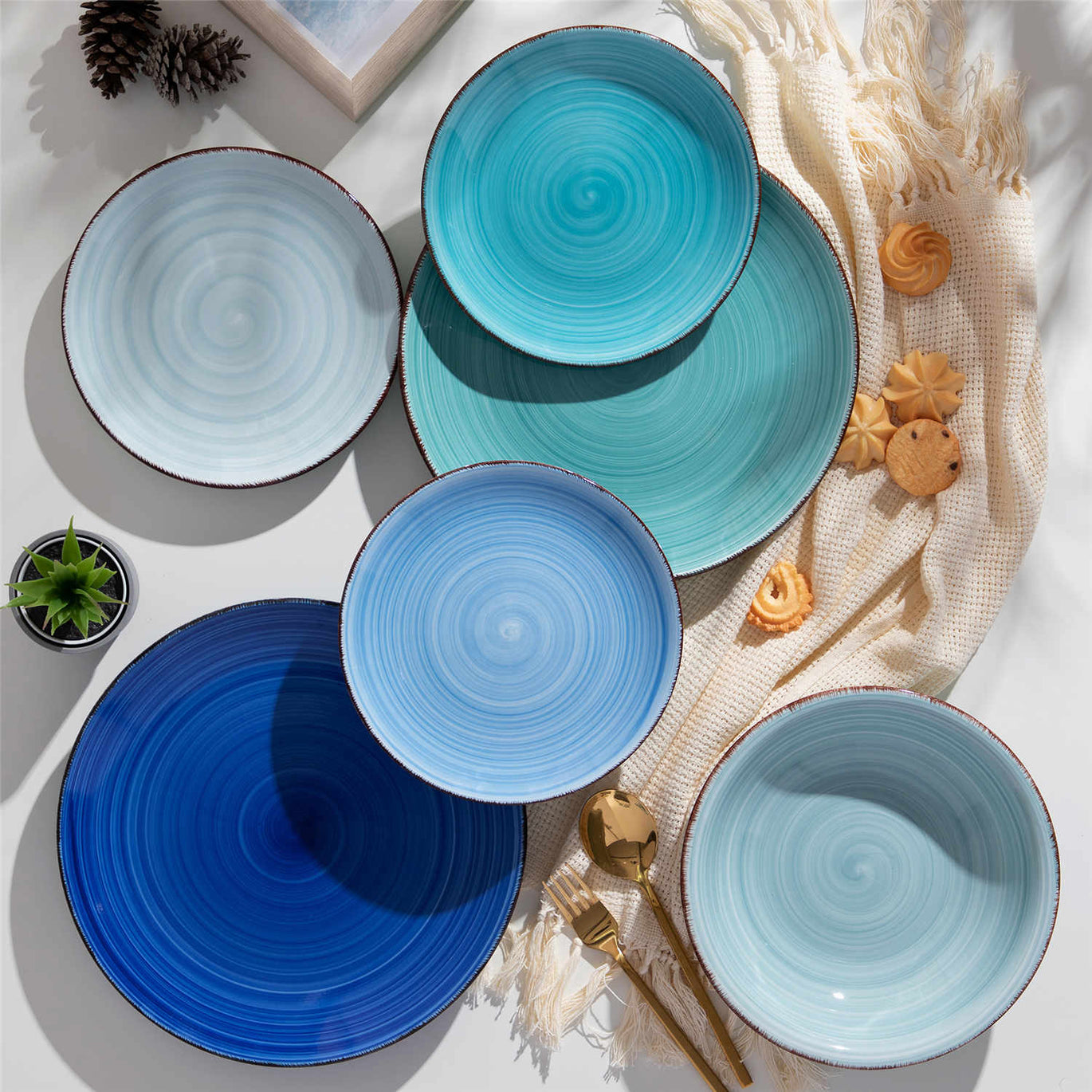


Beyond “His” and “Hers”: How Gender Labels on Ceramic Tableware Restrict Creative Expression

Walk into almost any home-goods aisle and the table starts talking in stereotypes. On one shelf, you see dainty floral bowls in blush and cream; on the next, thick navy plates and industrial-style mugs labeled for “him.” Gift sets come in tidy pairs: larger “his” mug, smaller “hers” cup. Even baby dishes get preassigned, marching out in pink bunnies and blue rockets.
As someone who lives with test plates stacked higher than my pantry snacks, I cannot help noticing how quickly these labels shrink the creative possibilities of a table. The clay itself is neutral. It will just as happily become a scalloped pastel coupe plate as a charcoal stoneware charger. It is our gender labels that fence in what that clay is “allowed” to become and who is “supposed” to use it.
In this article, we will explore how gender labels on ceramic tableware grew out of deeper histories, what current research actually says about gender and pottery, and—most importantly—how you can design a colorful, joyful, deeply personal table that leaves “his” and “hers” in the dust.
When Plates Start Picking Sides
Gendered tableware looks harmless at first glance. A slightly larger rice bowl for the husband, a delicate floral teacup for the wife, pink baby plates for girls, blue ones for boys. Yet each of those choices quietly says: this is how much you should eat, how you should move your body, what colors belong to you.
Contemporary design analyses from Vancasso and hospitality think pieces about “the genderless table” describe how this plays out in practice. Men’s pieces are often heavier, larger, and finished in muted blues, greens, black, or gray with simple motifs. Women’s pieces skew smaller, lighter, and decorated in florals, pinks, creams, or pastels. Even ceremonial sets for babies can be color coded, as Japanese okuizome lacquerware traditions show.
The result is a table that feels pre-sorted before anyone even sits down. Your appetite, your comfort, your creative eye all have to squeeze into one of two preprinted labels.
That is a loss for diners, but it is also a huge loss for creative expression. Clay is capable of telling far more interesting stories.

Ceramics, Gender, And Power: A Brief, Colorful History
To understand why gender labels are so limiting, it helps to remember that ceramics have always been about power, identity, and imagination—not just about serving soup.
Renaissance courts: power on a plate, not a pink plate
In late Renaissance Italy, noblewomen like Margherita Gonzaga and Isabella d’Este used ceramics as part of their political toolkit, not as gender-coded decor.
A plate from a larger service commemorating the marriage of Duke Alfonso II d’Este and Margherita Gonzaga, highlighted by the Gardiner Museum of Ceramic Art, was part of an expansive ceramic service that traveled with her when she left Ferrara. She reportedly moved with dozens of cart-loads of possessions, and the ceramics were portable symbols of status and alliance. Later, in Mantua, she founded the convent of Sant’Orsola and used it as a semi-private courtly space, receiving visitors and exerting real influence. Ceramics were not “ladies’ trifles”; they were part of how she staged power.
Isabella d’Este, studied by art historian Lisa Boutin, commissioned elaborate narrative-painted maiolica from Nicola da Urbino. These services, filled with stories from classical texts, were used in banquets attended by both men and women. Boutin argues that these wares were essentially gender-neutral within court culture: collected equally by male and female elites, valued for learned imagery and courtly generosity rather than for femininity. Interesting twist: in the twentieth century, Judy Chicago’s iconic installation “The Dinner Party” used faux-maiolica plates and porcelain as intentionally “feminine” media to honor historical women, including Isabella. That artistic move shows how strongly ceramics had come to be read as feminine—but the Renaissance plates themselves were not coded that way.
In other words, some of the most luxurious, artful ceramics in history were not “for her” or “for him.” They were for status, story, and spectacle.
Were pots ever “women’s work” by nature?
The story gets more tangled when we look at who actually made the pots.
Ceramic historian Moira Vincentelli, in her book “Women and Ceramics: Gendered Vessels,” assembled a treasury of cases showing women as makers, traders, teachers, patrons, and collectors over millennia. She even floated the idea that techniques emphasizing direct hand–clay contact might express a kind of visual écriture féminine, a “feminine writing” in clay that could subvert patriarchal norms.
A review in Ceramics in America praises the rich examples but criticizes the book’s tendency to treat some techniques as universally “women’s traditions.” Feminist archaeologists, the reviewer notes, generally reject that kind of essentialism. They argue that who makes pottery depends on specific cultural gender ideologies and economic conditions, not on biology or some timeless feminine psyche.
Recent research strongly backs that view. A Dartmouth Classics–highlighted study by Sarah Murray and colleagues suggests that in Early Iron Age Greece, women likely played a leading role in pottery production. The striking geometric patterns on vases like the Dipylon amphora echo textile motifs from women’s weaving, and funerary imagery aligns with women’s central role in mourning and burials. Burial evidence also shows more varied ceramics in women’s and children’s graves than in men’s.
A Smithsonian Magazine report on fingerprint analysis from Chaco Canyon pushes the story further. By measuring ridge breadths on fingerprints preserved in corrugated pottery, researchers found that around 47 percent of identifiable prints belonged to adult men and about 40 percent to women or juveniles, with the rest inconclusive. Earlier layers skewed more male; later ones moved toward a balanced mix. The takeaway: pottery production in that context involved people of different genders and changed over time.
LAGAVI’s historical overview adds that in industrializing Europe, women often took low-status or auxiliary roles in ceramic factories, treated as a “reserve army of labor” and frequently uncredited. The introduction of the potter’s wheel and the elevation of certain roles to “high art” helped cement a male-dominated narrative, even though women had been involved in making, decorating, and using ceramics all along.
So if archaeology and labor history tell us anything, it is this: clay has never belonged exclusively to women or to men. The people who worked it have changed with demographics, technology, and power structures—not with some natural pink-or-blue law of the universe.
When bowls come in “his” and “hers”: the Japanese example
If clay is neutral, gender labels are cultural. Traditional Japanese tableware illustrates this vividly.
Tsukushi Japan’s account of tableware history describes how, especially from the Edo period onward, ceramics were proportioned to bodies and social roles. Meoto jawan, or “husband and wife bowls,” are paired rice bowls where the husband’s bowl is noticeably larger—often more than one-third bigger—than the wife’s. Men’s bowls and teacups tend to be larger and sturdier in muted blues, greens, indigos, blacks, and grays. Women’s pieces are smaller, more delicate, and decorated in bright reds, pinks, whites, creams, and florals.
Even chopsticks have traditional length guidelines: roughly 9.1 inches for men and 8.3 inches for women, initially based on hand size. Ceremonial sets for babies’ first meals use different color schemes and motifs depending on the child’s gender, embedding expectations about future character and virtues.
At the same time, contemporary Japanese advice is shifting. Modern guides increasingly suggest choosing chopsticks and bowls by comfort, grip, and appetite rather than by gender rule. That evolution mirrors a bigger global move from rigid gender scripts toward embodied, personal fit.

What Gender Labels Do To Creativity Today
With all that history behind us, we arrive at the present table. Modern design and market studies—many synthesized in Vancasso’s writing on gender norms and gender-neutral tableware—show a ceramic sector that is booming, with projected global dinnerware growth from around $12.4 billion to more than $22 billion within about a decade and sustainable ceramic segments forecast to grow from roughly $102 billion to about $145.5 billion by 2030. Surveys suggest that about three-quarters of consumers say tableware design shapes how they perceive a meal.
In that context, treating tableware as a gendered product category has real consequences. To be fair, there are small upsides: it can make traditional households feel seen, and it simplifies some gift-buying. But the creative trade-offs are significant.
Here is how those dynamics look when we set them side by side.
Perspective |
Possible Upside of Gendered Tableware |
Creative Trade-Off |
Host or gift-giver |
Easy matching sets, familiar “his/hers” scripts, straightforward registry choices |
Narrow color and shape palette, pressure to buy two versions of everything, less room to mix unexpected pieces |
Guest or everyday user |
Some people feel validated by affirming traditional roles |
Others feel misgendered, boxed in, or forced to choose between two options that both feel wrong |
Designer or brand |
Simple marketing stories, clear target segments, visual shorthand |
Fewer experimental forms and palettes, typecasting women designers into “feminine” lines, missed queer and nonbinary narratives |
Culture at large |
Continuity with past rituals and imagery |
Reinforcement of stereotypes about appetite, strength, delicacy, and who deserves visual pleasure |
Instead of letting color, shape, and material dance together freely, gender labels tell them to stand in separate corners. Masculine plates over here, feminine bowls over there, and anything that does not fit the binary is quietly left out.

What The Research Actually Says About Gender And Clay
If we zoom out from marketing labels and look across scholarship, a few themes emerge.
Ceramics scholar Moira Vincentelli gathered evidence of women’s deep involvement in ceramics—from ancient production to modern teaching and collecting. She proposes that ceramics can act as visual “feminine writing,” especially when women use clay to explore female bodies, sexuality, and solidarity. Exhibitions like Northern Clay Center’s “Sexual Politics: Gender, Sexuality, and Queerness in Contemporary Ceramics” amplify that idea by showing how functional vessels, wall tiles, and sculpture can carry complex queer and gendered narratives using humor, tension, and irony.
Yet critics caution against turning that insight into a rule. The Chipstone review of Vincentelli’s book points out that she leans on outdated archaeological sources and sometimes overgeneralizes, implying universal “women’s ceramic traditions.” Feminist archaeologists counter that craft hierarchies and gender roles are historically specific. They warn against projecting modern assumptions backward, a point echoed by the Dartmouth article urging scholars to revisit “male by default” readings of Greek pottery.
The fingerprint study from Chaco Canyon, along with Murray’s work on Early Iron Age Greece and comparative research on labor and wear patterns, all support a more nuanced picture: pottery-making has involved different genders in different ratios across time and place, and those shifts often align with broader economic and political changes. When production becomes more specialized or more profitable, men often move into roles that had been coded as women’s work. When certain crafts are demoted to “mere domesticity,” women’s labor becomes invisible even as it remains indispensable.
Contemporary design writing takes this complexity into the present. Vancasso’s exploration of why women dominate ceramic tableware design notes that ceramics were long coded as feminine craft and domestic art, which both marginalized and opened doors for women designers. Historical episodes like the Bauhaus, where women were steered into ceramics while men headed to architecture and metalwork, show how institutions cemented those divides. Yet designers like Eva Zeisel used that positioning to reshape everyday visual culture, creating mass-market tableware with sculptural, emotionally resonant forms.
Queer and feminist artists today push this even further. Northern Clay Center’s 2015 “Sexual Politics” show and the LSU Museum of Art’s 2023 exhibition “The Shaping of Us” present ceramics as a medium for exploring sexuality, gender identity, and community. Artists such as Joseph Kraft and Heather Mae Erickson create installations that function as intimate narratives of queer experience and social pressure, while socially engaged projects like “Pride Pots: Community Conversations” use clay workshops to open difficult conversations around LGBTQ+ issues.
Taken together, the research and practice say something powerful: clay itself is not gendered. What is gendered are the stories, expectations, and power dynamics layered onto it. That is exactly why strict “men’s” and “women’s” bowls are so creatively limiting—they freeze a moving, diverse history into a rigid script.

Designing A Gender-Expansive Table In Practice
Theory is tasty, but let us plate the practical side. How do you, as a host, designer, or hospitality pro, move beyond gender labels without losing the joy, tradition, or coherence of your table?
Size and shape by appetite, not gender
The Japanese history of meoto jawan and chopstick lengths reminds us how powerfully size can signal expectation. When the larger bowl is always for the man, it quietly suggests that men deserve more food, more strength, or more space.
To loosen that script, start naming pieces by function and feeling instead of by gender. A deep bowl can be the “extra-comfort noodle bowl.” A smaller one can be the “light lunch bowl.” Platters might be labeled as “abundant family plate” or “snack board” rather than “masculine steak plate” versus “feminine dessert tray.”
Design writers focusing on gender-neutral tableware emphasize ergonomic contours and solid-but-not-bulky proportions. Pieces should feel good in many hands, from a teenager’s to a grandparent’s, not only in the hypothetical hand of a “standard man” or a “delicate lady.”
If you are arranging a buffet or casual dinner, imagine laying out a rainbow of bowl sizes and inviting guests to pick whatever feels right to them that evening. You will see choices made based on appetite, mood, and dish type, not gender.
Color by mood, not by pink-and-blue script
Color is where gender coding often shouts the loudest, but it is also where you can reclaim the most creative freedom.
The Vancasso guide to gender-neutral tableware and its analysis of gender norms suggest starting with flexible neutrals—ivory, cream, warm gray, sand, soft stone. These tones create a calm backbone that does not belong to any single gender. Industry research summarized by Vancasso and partners like Vita Joy indicates that such neutrals still make up a large share of global tableware sales, precisely because they flex across occasions.
From there, colors can be chosen for mood and symbolism rather than for gender. Work drawing on Feng Shui and color psychology reframes palettes this way. Earth tones like terracotta and brown ground the table and signal nourishment. Greens whisper freshness and growth. Reds and oranges turn up appetite and celebration. Blues and deep blacks soothe and calm.
Instead of reserving blush pink for women and charcoal for men, ask what atmosphere you want. A playful brunch can justify sage stripes, tomato red accents, and sunny yellow bowls. A grounded weeknight family dinner might call for sand-colored stoneware with deep forest-green cups. A quiet solo meal might feel just right on a single, slightly irregular ocean-blue plate.
The current stripe trend in tableware, described in style features like Ruhi Gilder’s piece on striped sets, is a perfect example of a pattern that sidesteps gender altogether. Stripes can be bold or subtle, candy-colored or monochrome, but they read as geometric and graphic rather than as inherently masculine or feminine. They invite both maximalists and minimalists to play without assigning anyone a gendered seat.
Build a gender-neutral core, then layer personality
One of the most practical, joyful strategies emerging from design guides like Vancasso’s “Guide to Gender-Neutral Ceramic Tableware” and the “genderless table” philosophy is this: build a versatile, gender-neutral core set, then layer more expressive pieces on top.
A core set might include medium-weight stoneware dinner plates in a warm off-white, deep bowls in charcoal or soft moss, and simple mugs in a slightly speckled glaze. High-fired stoneware and porcelain are recommended not just for aesthetics but also for durability; many restaurant-grade collections are vitrified, non-porous, lead-free, and safe for oven, microwave, and dishwasher use.
Once that foundation is in place, you can add more personality without locking anyone into a gender box. Think of scalloped blush dessert plates, reactive-glaze platters in ocean tones, or a couple of shell-inspired serving dishes. Feminine-leaning designs from trend reports like “The Rise of Soft Design”—soft colors, organic edges, delicate motifs—become options in your palette rather than assignments for a specific gender.
Because your core set is neutral and resilient, you can rotate these more expressive pieces as your mood, guest list, or seasonal produce changes, without re-sorting guests into “masculine” and “feminine” tableware lanes.
Let queer and feminist stories onto the table
Queer and feminist ceramic practices show just how rich the table becomes when it stops pretending that only two gender stories exist.
Northern Clay Center’s exhibition “Sexual Politics” and LSU Museum of Art’s “The Shaping of Us” both framed ceramics as catalysts for conversations about identity, power, and care. Artists in these shows combined functional forms, figurative sculpture, and wall pieces to talk about queerness, desire, and community with humor and vulnerability. Community projects like Heather Mae Erickson’s “Pride Pots: Community Conversations” use clay workshops as a safe space for difficult discussions around LGBTQ+ issues.
You do not need to host a museum exhibition in your kitchen, but you can let similar principles guide your tabletop.
Choose pieces that honor diverse bodies and stories, whether that means figurative cups with non-idealized forms, glazes inspired by pride colors, or simply a mix of motifs that refuse to split the world into “pretty for women” and “minimal for men.” Support designers whose biographies and collections make space for queer, feminist, or otherwise nonbinary perspectives.
Even a small act—like refusing to assign a floral plate to women guests and a plain plate to men—can make the table feel more hospitable for everyone.
A Quick Design Cheat Sheet (Without Bullets)
To pull these ideas together, it can help to see them as a few design moves and the freedoms they unlock.
Design Move |
What You Actually Do |
How It Frees Creative Expression |
Rename sizes by function |
Use labels like “comfort bowl,” “generous pasta plate,” “snack dish” instead of gendered tags |
Guests choose based on hunger and mood; designers can shape forms for real use rather than stereotypes |
Build a neutral core |
Invest in durable stoneware or porcelain in flexible neutrals for everyday pieces |
You get a stable canvas that works with any guest and any accent color or pattern |
Layer patterns and colors |
Rotate stripes, florals, geometrics, and bold hues seasonally or by event |
You can enjoy “feminine” or “masculine” aesthetics without assigning them to specific bodies |
Prioritize ergonomics |
Test weight, grip, and lip shape in different hands and ages |
Pieces feel welcoming to more people, including kids, elders, and those with disabilities |
Celebrate irregularity |
Choose wabi-sabi glazes, handmade textures, and slightly varied sets |
Each piece feels like a character, inviting attachment beyond gender coding |
Short FAQ: Real-World Questions From The Table
Is gendered tableware always harmful?
Not necessarily. Some people find real comfort and affirmation in traditional his-and-hers sets, especially when they are tied to family rituals or cultural heritage. The problem is not that those stories exist; it is that they have been treated as the default and sometimes as the only option. The goal of gender-expansive table design is not to erase tradition, but to make room for more stories, bodies, and identities at the same table.
Do I have to replace everything I own to make my table gender-neutral?
Absolutely not. Start small and playful. First, pay attention to how you assign pieces. If you already own floral plates and heavy stoneware, experiment with mixing them freely across guests instead of matching them to gender. Next, add one or two neutral foundations, such as plain stoneware dinner plates that work with both your existing sets. Over time, choose new pieces—whether a striped jug, a charcoal serving bowl, or a pastel coupe plate—based on mood, function, and personal joy, not on who they are “for.”
How can brands and restaurants shift without confusing customers?
Design research summarized in Vancasso’s writing suggests that diners increasingly respond to emotional atmosphere and perceived authenticity more than to gendered cues. Restaurants and brands can rename size options, highlight mood-based color stories, and curate gender-neutral core lines while still offering high-drama or soft-romantic pieces. Hospitality essays on the “genderless table” argue that neutral tones like sand, stone, moss, charcoal, and ivory, paired with organic forms and tactile glazes, feel quietly luxurious and inclusive. Clear storytelling around comfort, sustainability, and craft tends to resonate more with contemporary guests than pink-versus-blue ever did.
When we strip “his,” “hers,” “ladylike,” and “manly” off the rim of a plate, what is left is exactly what makes ceramics such a thrilling medium: touch, color, heat, story, memory. Clay becomes what it was always meant to be—a generous, endlessly adaptable collaborator in our daily rituals—rather than a tiny stage for old stereotypes.
Set the table tonight as if every guest, including you, deserves the full spectrum of shapes and shades. Let the bowls be bold, the plates be tender, the mugs be mischievous, and the story of who uses which be written by appetite, comfort, and joy instead of by a label on the box.

References
- https://www.academia.edu/876166/Isabella_d_Este_and_the_Gender_Neutrality_of_Renaissance_Ceramics
- https://pmc.ncbi.nlm.nih.gov/articles/PMC10311548/
- https://honors.libraries.psu.edu/files/final_submissions/3296
- https://www.ama.org/marketing-news/shattering-gendered-marketing/
- https://www.brooklynmuseum.org/collection/dinner-party-components/curatorial-overview
- https://chipstone.org/article.php/114/Ceramics-in-America-2002/Women-and-Ceramics:-Gendered-Vessels
- https://www.ijdesign.org/index.php/IJDesign/article/view/571/246
- https://www.opb.org/article/2024/03/01/university-of-oregon-study-reveals-influence-of-gender-stereotypes-on-kids-food-choices/
- https://www.shs-conferences.org/articles/shsconf/pdf/2025/11/shsconf_iclrc2025_01014.pdf
- https://www.researchgate.net/publication/221847076_Dish_influences_implicit_gender-based_food_stereotypes_among_young_Japanese_adults
Tu pourrais aussi aimer
Stern Ensemble de vaisselle 16 pièces
- À partir de €72,95
€96,95- À partir de €72,95
- Unit price
- pour
-
Blue
-
Green
-
Red
-
Grey
Bonita Service de table 18 pièces
- À partir de €60,95
€74,95- À partir de €60,95
- Unit price
- pour
-
Blue
-
Multicolor
Simi Ensemble de vaisselle de 24 pièces
- €96,95
€129,95- €96,95
- Unit price
- pour
Service de vaisselle étoilé 16 pièces
- €73,95
€86,95- €73,95
- Unit price
- pour
-
Blue
-
Green
-
Red
-
Gradient Green