



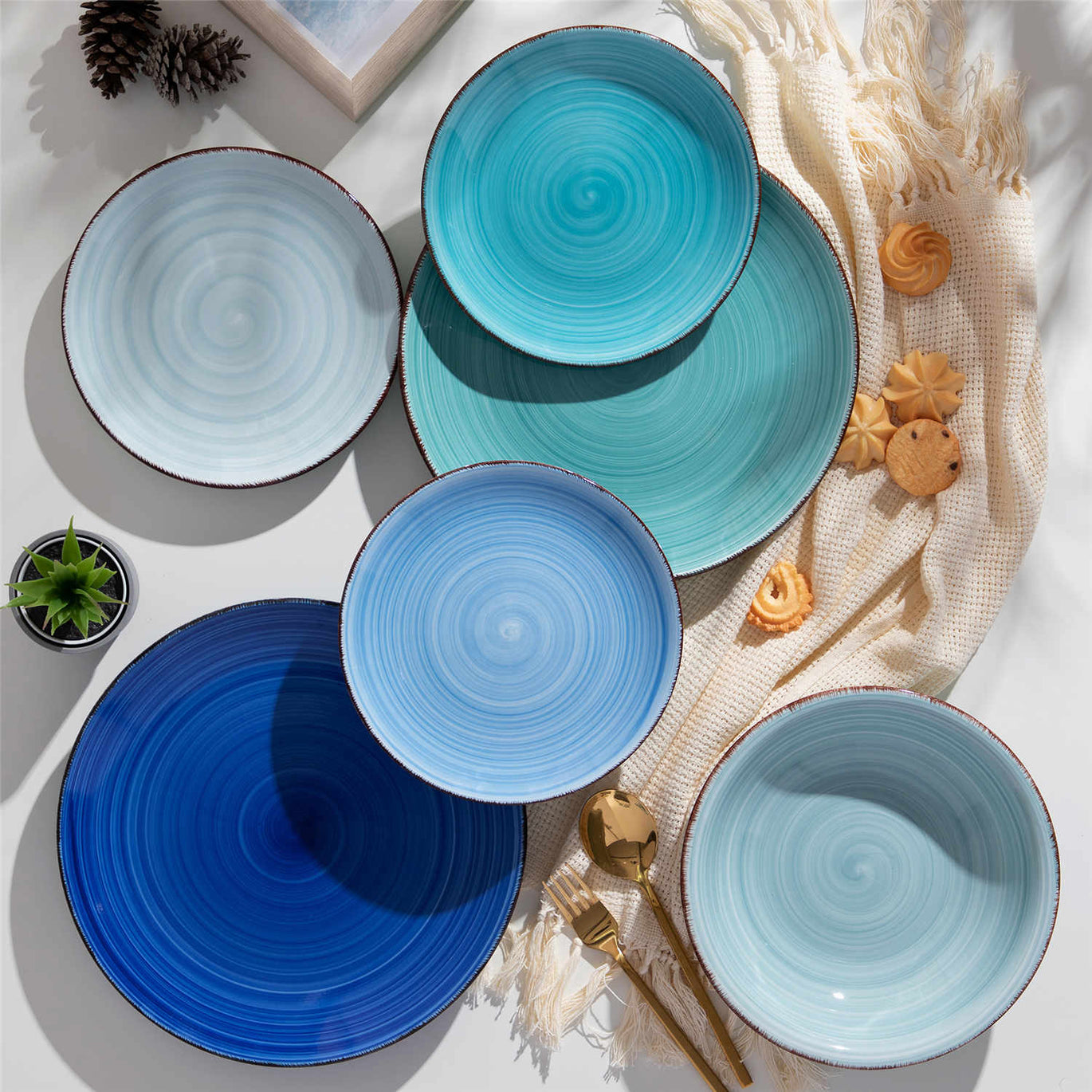


When Molecules Meet Clay: Ceramic Innovation for Molecular Mixology

The Moment Your Cocktail Meets the Table
Picture this: a gin-and-tonic–inspired highball arrives at your table. Instead of a clear glass, it’s served in a satin-matte ceramic cylinder, cool to the touch. A citrus foam floats on top, spherified lime “caviar” glows along the rim, and a ribbon of smoke escapes as you lift the piece. Before you even taste, you are already in a story.
That story is where molecular mixology and ceramic innovation collide. Molecular mixology, as described by publications like Lockhart Catering and Chilled Magazine, is the art of applying chemistry and molecular gastronomy to cocktails to manipulate texture, aroma, and presentation, creating multi-sensory drinking experiences. Once you start thinking in textures, temperatures, and transformations, the vessel stops being a passive container and becomes an active ingredient.
From my perspective as a colorful tabletop obsessive, the tabletop is a stage. Ceramics, especially, give us color, weight, and personality that glass and metal simply cannot. When we pair those qualities with tools like spherification, foams, gels, and smoke—documented in depth by Diageo Bar Academy, Chilled Magazine, and Lockhart Catering—the result is a radically new kind of cocktail choreography.
Let’s walk through what molecular mixology needs, what ceramics can uniquely offer, and how to design—and realistically maintain—ceramic pieces that make every drink feel like an artful little celebration.

Molecular Mixology 101: The Playful Science Behind the Drama
Molecular mixology takes classic drink-making and layers on physics and chemistry. European bartender training sources and drinks publications frame it as applied science at the bar: every shake, stir, foam, and sphere changes flavor, texture, dilution, temperature, and appearance.
Lockhart Catering describes molecular mixology as the application of chemistry, molecular gastronomy, and flavor pairing to cocktails, often using ingredients that share similar molecular compounds to create harmonious yet surprising combinations. The results often look like potions: color-changing layers, dramatic smoke, or cocktails that arrive as jellies and powders instead of simple liquids.
Chilled Magazine and Diageo Bar Academy highlight core techniques that matter for vessel design.
Spherification encapsulates flavored liquid inside a thin gel membrane, creating caviar-like or pearl-like spheres that burst in your mouth. Diageo Bar Academy explains that these spheres are formed through reactions between sodium alginate and calcium salts and that reverse spherification is especially useful for higher-calcium or alcoholic liquids. These spheres can act as floating garnishes, hidden “shots within a drink,” or bright flavor pops along the rim.
Foams and aires turn flavor into a light, airy topping. Chilled Magazine describes how bartenders blend juices or syrups with stabilizers like soy lecithin and then aerate with a hand blender or nitrous oxide whipping siphon. The result is an aromatic layer that sits on top of the cocktail without watering it down, such as a lemon foam crowning a gin and tonic.
Gelification transforms liquid into sliceable or spoonable textures using gelling agents like agar-agar, gelatin, or carrageenan. Chilled Magazine notes that gelified components can become structural layers—think tonic water set into a gel for a sculptural gin and tonic, or a whiskey sour with a concentrated citrus gel cap for controlled flavor release. Lockhart Catering adds that jellification can allow entire cocktails to be served as jelly cubes or jellied “dessert” cocktails.
Smoke and fog add spectacle and aroma. Chilled Magazine and Lockhart Catering describe how smoking guns and wood chips, or effects like dry ice fog, can infuse cocktails with smoke either directly in the glass or into ingredients beforehand. A smoked Old Fashioned is a classic example, where wood smoke adds complexity and a theatrical reveal.
Behind the bar, advanced tools push this further. Ascot Wholesale points out that tools such as rotary evaporators, cream whippers, and ultrasonic devices let bartenders distill flavors at low temperatures, whip intense emulsions, or speed up infusions. A Bar Above, for example, describes the rotary evaporator (rotovap) as a vacuum-sealed still that evaporates flavorful compounds at low temperatures, preserving delicate aromas that would be destroyed by heat—and notes that a new unit can cost around $12,000, making it a serious investment that even requires legal consultation in some jurisdictions.
All of this sets the stage for one big question: how do we design ceramic vessels that let these techniques shine while adding their own layer of sensory joy?

Why the Vessel Matters as Much as the Recipe
Molecular mixology is multi-sensory by definition. The vessel is the first thing guests see and touch, and it affects how aromas rise, how foams sit, how spheres move, and how long a drink stays at the right temperature.
Ascot Wholesale, in its breakdown of the science behind bar tools, emphasizes that material choice matters. Glass showcases the drink, stainless steel offers durability and non-reactivity, silicone is flexible, wood is classic and warm, plastic is lightweight and inexpensive, and ceramic is visually appealing and retains temperature. That last point is a game changer for molecular cocktails, where you may need a cool base and a stable foam layer or a warm aroma riding above a cooler liquid core.
In service, I see how people interact differently with different materials. Guests instinctively cradle ceramic cups and bowls, almost like they would a favorite coffee mug, whereas steel feels more utilitarian and glass more formal. That comfort matters when you are asking them to try something unfamiliar, like a cocktail served as pearls, clouds, or jelly. A familiar-feeling ceramic vessel can make adventurous textures feel far more approachable.
Ceramics also offer unmatched surface personality. Articles from DiamondCore Tools and Classpop highlight how pottery tools like fluting tools, impression stamps, sgraffito tools, and ribs let artists carve grooves, press patterns, and reveal contrasting layers of clay and slip. On a cocktail vessel, those same techniques create ridges that catch condensation, grooves that align garnishes, or patterns that interact with glaze and light.
The short version: the drink delivers the chemistry, but the vessel delivers the feeling. When you embrace ceramics, you get both performance and personality.
What Ceramic Vessels Bring to Molecular Mixology
Ceramic pieces are not automatically superior to glass or metal; each material has its own strengths. But ceramics contribute a particular combination of temperature behavior, tactility, and aesthetic flexibility that suits molecular cocktails especially well.
Here is a concise comparison based on points raised by Ascot Wholesale and other bar-tool guides.
Aspect |
Ceramic vessels for cocktails |
Stainless steel tools and tins |
Glassware for cocktails |
Visual character |
Visually appealing; surface, form, and color can be expressive |
Sleek and professional but visually uniform |
Fully showcases the liquid and layers |
Temperature behavior |
Retains temperature, supporting longer hot or cold holding |
Rapidly conducts and changes temperature while shaking |
Moderate temperature retention; thin walls vary |
Tactile feel |
Soft, hand-friendly, with comforting weight |
Cool, hard, and efficient |
Light and delicate; can feel fragile |
Display of liquid layers |
Partially hides contents; ideal for surprise reveals |
Mostly used behind the scenes for building and shaking |
Ideal for visibly layered or color-shift drinks |
Aesthetic maintenance |
Glaze and carving can hide minor wear |
Polished finishes can scratch or tarnish over time |
Shows every fingerprint and water spot |
Ceramic’s ability to retain temperature, as Ascot highlights, is especially helpful with molecular techniques. A cool ceramic cup can keep a chilled gel layer or spherified garnish comfortable for longer service times. A warm ceramic vessel can support aromatic, dessert-like drinks where you might use jellification or foams atop a comforting, heated base.
At the same time, ceramics offer a kind of visual “mystery.” Unlike glass, they do not show every millimeter of the drink, which makes them perfect for surprise reveals: smoke under a lid, hidden layers, or pearls that only appear when the guest takes the first sip. That sense of discovery is very aligned with how publications like Lockhart Catering and Chilled Magazine describe the theatrical side of molecular mixology.

Designing Ceramic Forms Around Molecular Techniques
To innovate in ceramic vessels for molecular mixology—what we might call 分子 mixology 的陶瓷器皿创新—it helps to design from the technique outward. Instead of starting with “this is a cup,” we start with “this is a sphere, a foam, a gel, or a cloud of smoke” and then shape the clay around that behavior.
Spherification: Cradling Flavor Pearls
Diageo Bar Academy explains that spherification encases liquid in delicate membranes, and that bartenders must respect factors like pH, calcium content, contact time in the bath, and service timing to keep the spheres from over-gelling or rupturing. Chilled Magazine points out that these pearls can be used to elevate classics, such as Cointreau pearls in a Margarita or mint syrup spheres in a Mojito.
For ceramics, that means we want forms that protect and spotlight tiny, fragile flavor bombs. Wide, shallow wells make an ideal stage for caviar-like spheres, allowing guests to see and spoon them without crowding. Slightly sloped sides can guide pearls toward the center, preventing them from hiding in corners.
Because spheres perform best when served soon after preparation, the vessel’s temperature behavior also matters. A chilled ceramic bowl can help keep the liquid beneath the pearls cool, giving the bartender slightly more margin before spheres soften or rupture. Diageo Bar Academy notes that spheres are highly photogenic and work beautifully in signature serves; pairing them with distinctive ceramic mini-dishes or inserts makes those photo moments even more memorable.
In practice, designing ceramic spherification pieces might involve small taster bowls that nest into larger cocktail vessels or ceramic “caviar spoons” with carved grooves to hold pearls in a neat trail. The key is to respect the chemistry that Diageo describes while adding tactile delight.
Foams and Aires: Giving Air a Home
Chilled Magazine describes foams and aires as light emulsions created by blending a flavored liquid with stabilizers and aerating it using a hand blender or whipping siphon. These foams sit on top of the drink, carrying aroma and flavor without diluting the base. Lockhart Catering notes that flavored foams are part of the broader “fizz, foam, and fog” toolbox that defines many theatrical molecular cocktails.
Foams need headspace. If you pour a foamy layer into a glass that is filled all the way to the brim, guests will either spill or never see the intended texture. Ceramic vessels can be shaped to create generous, controlled headroom.
One effective approach is to design cups with a subtle inward curve near the rim. That curve frames a foam cap, cradles it during transport, and keeps it from sliding off if guests tilt the vessel quickly. Slightly rougher glaze textures at the inner lip can also help foams “cling” a bit longer, similar to how a beer head behaves on a textured glass.
Because ceramic retains temperature well, you can pour a cold base into a pre-chilled cup, then add a foam without the sides instantly warming the drink. That can help preserve the clean contrast that Chilled Magazine praises in constructions like a zesty foam over a clear gin and tonic.
Gelified Layers and Jelly Cocktails: Sculpting Sips
Chilled Magazine discusses gelification as a way to convert liquids into gels that can be sliced, layered, or spooned. Lockhart Catering notes that jellification lets bartenders present entire cocktails as jellies or suspend fruits and flavor spheres in thickened layers.
Ceramic serves as a structural partner here. Imagine a shallow ceramic tray with a barely raised ridge, designed specifically to hold a thin gel layer. Guests could slide a spoon along the ridge to cut through tonic gel, releasing flavor while revealing a liquid gin base in a reservoir below. Or think of a ceramic cup with a built-in “shelf” halfway down, engineered to hold a firm gel insert that gradually dissolves as the guest drinks.
These forms are best created by potters who understand how clay shrinks and warps. DiamondCore Tools’ article on clay tools emphasizes the importance of knowing tool names and using them to refine shapes and edges. Tools like arc shavers, ribs, and trimming tools help ceramicists create precise ledges, smooth transitions, and consistent sizes—critical if you want the same gel insert to fit multiple identical cups. Shrink rulers, mentioned in that same guide, keep set sizes accurate from wet clay to fired ceramic, just as they do for lids and matching sets of cups. That kind of precision is exactly what a bar needs when building a repeatable cocktail program.
Smoke, Fog, and Aroma: Containing the Drama
Lockhart Catering describes fog and smoke effects as central to molecular mixology theater, often achieved with dry ice or smoking guns. Chilled Magazine details how smoking guns and wood chips can infuse a finished cocktail under a cloche or infuse ingredients beforehand.
Ceramics make excellent partners for smoke because they retain temperature and visually mask what is happening inside until the reveal. A lidded ceramic coupe or small handled pot can arrive at the table with smoke trapped inside. When the lid lifts, aroma spills out first, framing the first sip.
Because ceramic does not show condensation as dramatically as glass, you can focus more on silhouette and glaze color to communicate the drink’s mood: deep charcoal tones for smoky whiskey drinks, bright glosses for citrus-forward creations, or speckled glazes that echo the texture of infused botanicals.
Behind the bar, you still rely on the scientific insights Ascot Wholesale outlines: understanding how tools like shakers, muddlers, and strainers affect dilution and texture, and using smoking guns correctly. The ceramic shell simply becomes a deliberately designed stage for that science.

Food Safety and Care: The Unsexy but Essential Part
Beautiful vessels are useless if they are not safe or practical. This is where pottery knowledge and bar-tool hygiene knowledge merge.
Classpop, in its guide to pottery projects, clearly distinguishes between air-dry clay and real pottery clay. Air-dry clay is great for decorative pieces and beginner projects because it does not require a kiln, but anything that will touch food or drink should be made from proper pottery clay and fired in a kiln to ensure water safety. That is a non-negotiable starting point for any ceramic used in a bar program.
Once you have kiln-fired, food-contact pieces, think like a bar manager. Articles from Alambika, Bartools, Ascot Wholesale, Bare Barrel, and Wine-N-Gear all stress that tool care is about hygiene and performance, not just looks. Sugars, acids, oils, and alcohol residues can promote microbial growth, cause corrosion on metals, and create off-odors. While ceramics will not rust, they can still harbor residue, stains, and smells if they are not cleaned properly.
Professional bar care guides agree on a few core habits. Daily cleaning is non-negotiable: rinse tools immediately after use, wash with warm water and mild unscented detergent, avoid harsh abrasives, and dry thoroughly with microfiber or lint-free cloths. For delicate glassware, Bartools warns against rapid temperature changes, since sudden shifts can cause cracking or shattering. Ceramic is also vulnerable to thermal shock, so it is wise to avoid pouring boiling-hot liquids into a vessel that has just been chilled, or plunging a hot vessel into cold water.
Glass mixing vessels and delicate, plated tools are often hand-wash only. By analogy, it is sensible to treat your custom ceramic vessels as “delicates,” even if some might technically survive the dishwasher. High-heat dishwash cycles and aggressive detergents that Bare Barrel and Zenn Casa caution against for metal finishes can also dull glazes over time or weaken hairline flaws.
Storage matters as well. Bar care articles routinely recommend letting tools dry fully before storage, using vertical racks or organized drawers, and keeping different metals separated to avoid galvanic corrosion. For ceramics, give them full airflow to dry inside and out, and avoid stacking them while damp so moisture does not sit trapped between pieces.
Finally, quality control counts. Bare Barrel and Wine-N-Gear both emphasize retiring worn tools for safety and hygiene. For ceramics, that means removing any vessels with chipped rims, cracked bodies, or glaze defects from service, especially when the pieces are in constant contact with acidic ingredients like citrus.

Bringing Ceramic Innovation into a Real Bar Program
Designing clever ceramic pieces is the fun part. Integrating them into actual service requires a pragmatic workflow.
Multiple bar education sources—including MasterClass, Curacao Liqueur, Social Mix, and Zenn Casa—emphasize that solid fundamentals come first: a good shaker system (Cobbler or Boston), precise jiggers, proper strainers, bar spoons, muddlers, and citrus tools. Without this base, you cannot control dilution, temperature, and balance, no matter how beautiful your vessels are.
Once those essentials are in place, you can layer in molecular techniques that pair naturally with ceramics. Diageo Bar Academy points out that the basic toolkit for spherification is relatively low-cost: accurate scales, small baths, syringes or spoons, and food-grade additives. Starting with pearls and spheres is a smart step because they offer big visual and textural impact for a modest equipment investment. Designing a small collection of ceramic taster dishes or mini cups specifically for spherified garnishes gives you a distinctive “house signature” that is feasible even for a small bar.
Foams and aires can come next. Chilled Magazine notes that a hand blender or whipping siphon can turn flavored liquids into stable foams. Lockhart Catering lists whipping siphons among the specialist gear that underpin modern foams and fizz. Ceramics with generous headspace and carefully shaped lips make these foams easier to serve and to drink gracefully.
At the high end, you may consider equipment like a rotovap, as described by A Bar Above. It is a vacuum distillation device that separates components of a liquid at low temperatures, preserving delicate flavors. But with a price tag around $12,000 and potential regulatory questions because it functions like a still, it is an investment that only some programs will make. If you go there, ceramics become a natural showcase for ultra-delicate distillates that deserve an equally thoughtful stage.
The most successful ceramic-forward programs I see take an iterative approach: they add one or two molecular techniques, design vessels that support those specific experiences, test how they clean and hold up, and only then expand. It is not about filling the bar with pottery overnight; it is about building a coherent, sustainable ritual around clay, chemistry, and hospitality.

Pros and Cons of Ceramic-Forward Molecular Mixology
To make clear-eyed decisions, it helps to acknowledge both the strengths and the challenges of leaning into ceramic vessels for molecular cocktails.
Dimension |
Strengths of ceramic focus |
Challenges to manage |
Guest experience |
Warm, tactile, and visually distinctive; supports theatrical reveals and surprise textures |
Does not display every layer; some guests may miss visual cues after the first reveal |
Technical behavior |
Retains temperature and supports stable foams, gels, and spheres longer than some thinner glassware |
Heavier weight can affect speed of service and carrying multiple drinks |
Design flexibility |
Highly customizable through shape, carving, and glaze; tools like fluting and impression stamps add texture |
Custom design needs collaboration with skilled potters and careful testing |
Operations and care |
Durable against scratches and fingerprints; can hide minor marks in glaze and texture |
Requires mindful hand-washing, drying, and inspection to avoid chips and cracks |
All of these trade-offs are workable. The key is to align ceramic use with the drinks where its strengths matter most: surprise reveals, temperature-sensitive textures, and signature presentations where the vessel is part of the story.

Personal Studio Notes: What Actually Plays Well on the Table
When I test ceramic prototypes with molecular-style cocktails, a few patterns keep repeating. Guests tend to be more adventurous when the vessel feels familiar in their hands. A coupe-shaped ceramic, with a gentle curve and comfortable lip, gets fewer hesitant looks than an extreme, angular design. Familiar silhouettes with unexpected surfaces—speckled glazes, carved fluting, or sgraffito-inspired patterns—strike a balance between comfort and curiosity.
Spherified garnishes draw the most delight when they are visible at first glance or clearly explained. Diageo Bar Academy stresses guest education so people know that a garnish will burst in their mouth. In practice, that pairs beautifully with ceramics that leave the top surface open and framed, rather than hiding everything behind a lid or high wall. When guests can see the pearls nested in a ceramic well as the drink arrives, they are ready for the sensation.
Foams behave more politely in vessels with gently curved rims rather than sharp edges. Chilled Magazine describes foams as delicate layers that should sit on top of the drink; in real service, they are constantly at risk of sloshing. In my testing, even a small inward curve near the lip dramatically reduces foam spills during the walk from bar to table.
On the back bar, doubling up on key ceramic pieces makes a noticeable difference to workflow. Bar care guides from Alambika, Ascot Wholesale, and Wine-N-Gear all stress cleaning as you go, thorough drying, and organized storage. When you have twice as many ceramic vessels as you need for a single round of service, you can rotate them through cleaning and drying without rushing or sacrificing hygiene. That buffer is just as important as having spare shakers or jiggers.
Perhaps most importantly, teams tend to take better care of ceramics when they are clearly part of the brand’s identity rather than a one-off novelty. When a vessel is tied to a signature drink and the whole staff understands its role in the sensory story, they are more willing to hand-wash it, store it carefully, and champion it to guests.
A Colorful Closing Pour
Molecular mixology already feels like play: spheres that pop, foams that float, gels that wobble, smoke that curls. When you wrap all of that in thoughtfully designed ceramic vessels, the play extends all the way to your fingertips and the tabletop itself.
If you are dreaming up your next bar program—or your next at-home cocktail night—consider starting not with “What should I drink?” but with “What do I want this drink to feel like in someone’s hands?” From there, let the chemistry, the clay, and a little joyful experimentation guide you to a table full of tiny, colorful experiences.
References
- https://www.barschool.net/blog/molecular-cocktail-still-trend
- https://abarabove.com/mixology-equipment/
- https://www.classpop.com/magazine/pottery-tools
- https://www.lockhart.co.uk/Lockhart-Catering-Blog/What-is-Molecular-Mixology-Plus-5-Ways-it-Could-Shake-Up-Your-Cocktails~ba~blog-molecular-mixology-140617?srsltid=AfmBOorqdLHWC_bqO0mQhFxxvX5OYZILmLwGVV-XlNtAp9tsmKzhkFy-
- https://cocktailceremony.com/collections/molecular-tools?srsltid=AfmBOorPLMmOMJV3zasPrz1jejnH6lfjq9_g2qF798HVKDJmulVhSdGV
- https://www.curacaoliqueur.com/articles/essential-tools-aspiring-mixologists
- https://www.masterclass.com/articles/essential-mixology-tools-for-home-bartending
- https://100x100chef.com/shop/en/286-molecular-cocktails
- https://alambika.ca/blogs/articles/cleaning-and-caring-for-your-bar-tools-a-professional-guide?srsltid=AfmBOoq8MqtdMaegOrafzEcE1PeWD9wmogw4Z2GfmSUjlURm61d5fbQA
- https://www.barebarrel.com/blogs/the-bare-barrel-blog/essential-care-tips-for-bartending-tools?srsltid=AfmBOop0xdj-WMdQSJ2yN8VWSYT2pFcc6nJpN9R421PjB2nxylf25Mae
Potrebbe piacerti anche
Stern Set di stoviglie da 16 pezzi
- Da €72,95
€96,95- Da €72,95
- Prezzo unitario
- per
-
Blue
-
Green
-
Red
-
Grey
Bonita Set di stoviglie da 18 pezzi
- Da €60,95
€74,95- Da €60,95
- Prezzo unitario
- per
-
Blue
-
Multicolor
Simi Set di stoviglie 24 pezzi
- €96,95
€129,95- €96,95
- Prezzo unitario
- per
Set di stoviglie stellate da 16 pezzi
- €73,95
€86,95- €73,95
- Prezzo unitario
- per
-
Blue
-
Green
-
Red
-
Gradient Green