

From Trench Dust to Dinner Glow
Picture two scenes side by side.
In the first, an archaeologist leans over a table covered in pottery sherds, each fragment tagged, mapped, and treated like a tiny, fragile time capsule. Conservators around them are debating which adhesive will stay clear for decades, which fill material will not crush a salt–weakened body, and how to make every modern addition reversible if future experts find something better.
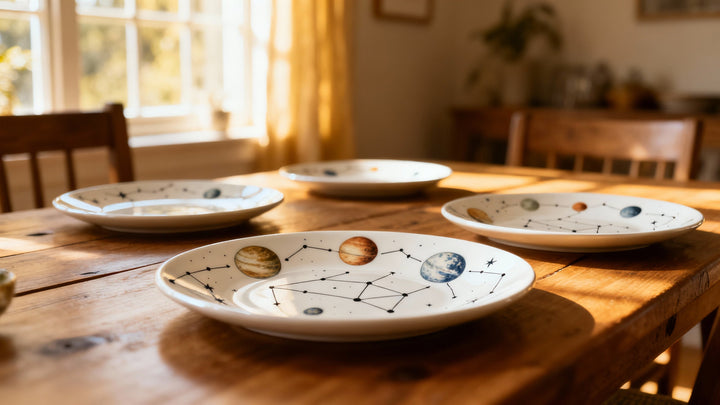
In the second, you are in your kitchen with a chipped favorite bowl, a colorful set of plates, maybe a vintage serving dish with a hairline crack. You have dish soap, maybe a little epoxy from a DIY kit, and a big desire for a gorgeous, welcoming table.
As a Colorful Tabletop Creative & Pragmatic Joy Curator, I live in that second scene, but I aim to borrow the wisdom of the first. Archaeological ceramics conservation is stricter, slower, and more technical than anything most home cooks will ever need. Yet the tools, materials, and ethics from dig-site labs offer surprisingly practical lessons for anyone who loves vibrant tableware and wants it to last.
This article explores how archaeologists restore ceramics and how their tools compare to the kits and tricks aimed at everyday dishes and decorative pieces. Along the way, we will talk about what belongs in a museum lab, what belongs in a craft corner, and what absolutely does not belong anywhere near your dinner.

What Archaeological Ceramic Restoration Really Is
Archaeological ceramics are rarely found as pretty, intact bowls. As the Trasimeno Archaeology Field School describes, most pottery emerges from the ground as bags of broken sherds, often heavily fragmented. Rebuilding a vessel so it can stand, be studied, and be displayed is a specialized process called ceramic conservation and reconstruction.
The goals are different from most home repairs. Conservators, following principles summarized by the Australian Institute for the Conservation of Cultural Material and by studies on ancient Greek pottery conservation, are trying to:
Protect the original material for the very long term. That means stabilizing fragile clay bodies and glazes that may be weakened by salts, poor firing, or burial conditions.
Allow scholars and visitors to read the vessel. Museums know that nearly complete vessels give non-specialists a better sense of shape and use than piles of sherds, so reconstructions support education and interpretation.
Remain honest and reversible. Modern additions should be clearly distinguishable from the original, at least on closer inspection, and theoretically removable if better techniques appear. This ethics framework is echoed in studies of visible restoration of ceramics and in practice at institutions like the Field Museum and the Florida Museum’s Ceramic Technology Lab.
All of this takes specialized tools, materials, and discipline. That toolkit looks very different from a typical “ceramic crack repair” kit sold online or a bottle of quick-setting adhesive in a kitchen drawer.
Inside the Archaeologist’s Ceramic Toolkit
Gentle Cleaning, Not Scrubbing
Archaeological ceramics are often low‑fired or porous, the very types that the Australian Institute for the Conservation of Cultural Material warns are prone to absorbing salts and flaking glazes. Manuals from museums in Western Australia and technical reviews such as the MDPI survey on cleaning archaeological ceramics all stress the same principle: begin with the gentlest methods.
Conservators typically start with soft brushes and low‑suction vacuuming to lift loose dirt. Wooden sticks help tease off stubborn accretions without scratching. For porous, unglazed ceramics, they may use poultices made from mashed acid‑free blotting paper and distilled water to coax dirt and salts out slowly, rather than flooding the object.
Crucially, they avoid fully immersing fragile, salt‑contaminated, or low‑fired ceramics in water. The same Western Australian guidelines warn that water seeping through hairline cracks in glaze can carry salts deeper or cause more cracking. Wet cleaning, when used, is localized with rolled cotton swabs and very dilute non‑ionic detergents, always tested in an inconspicuous area.
Contrast that with the temptation at home to drop every stained mug into a sinkful of hot water and strong detergent. Archaeologists do the opposite: they test, observe, and proceed in tiny, controlled steps.
Diagnostic Tools and Science Gear
Professional conservators rarely work by eye alone. The Journal of the American Institute for Conservation describes how examining old fills and adhesives often involves visual and microscopic study in normal and UV light, spot chemical tests, and solvent‑solubility testing. Studies of ancient Greek pottery conservation add X‑radiography to reveal hidden breaks, ancient metal staples, and dense old fills.
This diagnostic step is essential because many vessels have undergone multiple restoration campaigns. A pot may hide bitumen from antiquity, animal glue and rivets from the 19th century, and cellulose nitrate or early synthetic putties from the 20th century. Each behaves differently when exposed to water, solvents, or new adhesives.
In a home dining setting, we rarely have UV lamps and conductivity meters. But the mindset transfers: assume a vintage plate or bowl may have old repairs and delicate surfaces, and avoid aggressive cleaning or random solvent experiments.
Conservation-Grade Adhesives and Fills
Modern archaeological restorers choose materials for stability, reversibility, and visual honesty. Several sources, including the Western Australian manual, the Field Museum, and technical overviews, highlight key adhesives and fill strategies:
Paraloid B‑72. This acrylic copolymer is widely used as a reversible adhesive and barrier layer. It can be diluted in solvents such as acetone and is valued for aging well without significant yellowing.
Polyvinyl ester and related adhesives. UHU All Purpose Adhesive, a polyvinyl ester, is sometimes used when it meets criteria for removability and stability.
Cellulose‑modified gypsum fillers. For low‑fired archaeological pottery, the Field Museum notes that cellulose‑modified gypsum fillers such as Polyfilla can be used to fill losses, as long as pottery edges are first isolated with a Paraloid B‑72 coating.
Thermoplastic mesh supports. The Field Museum describes using Varaform, a cotton mesh impregnated with polycaprolactone resin, to build a lightweight structural core behind large losses. The mesh becomes flexible and tacky in warm water around 140°F, then hardens as it cools, helping support fragile vessels without permanently invading the ceramic fabric.
The ethics are as important as the chemistry. Fills are shaped so every sherd is supported along at least two edges, and modern materials should be visually distinct from the original on close inspection and in x‑rays. The aim is “visually integrated but still honest,” not a fake “as new” object.
Time, Patience, and No Heat Guns
Archaeological workflows are slow by design. The Trasimeno Field School notes that conservators plan joining sequences carefully, practice dry assembly with tape, remove obsolete repairs, and then join fragments with stable adhesives. They specifically advise never using heat on ceramic artifacts.
In practical terms, that means letting adhesives cure at room temperature, supporting joins in sand trays or custom mounts, and accepting that a single complex vessel may take many hours over many days to clean, desalinate, reassemble, fill, and retouch.
All of this is almost the opposite of a “five‑minute fix” mindset.

The DIY and Hobbyist Toolkits
Back at your kitchen table or studio bench, the landscape changes. Instead of solvent-based acrylics and UV lamps, you are more likely to encounter hobby-level restoration kits and craft supplies. Several sources highlight what these look like and what they can and cannot do.
A detailed hobby guide on Arrowheads.com walks through reconstructing “sack pots” – bags of broken ancient earthenware sold to collectors. The author’s preferred toolkit is surprisingly accessible: Durham’s Rock Hard Water Putty, flat earth‑tone acrylic paints, an X‑acto knife, sandpaper, masking tape, soft brushes, and a water‑soluble white glue such as a school glue.
Pieces are gently washed in a large container of water, edges cleaned with a soft toothbrush, and then dry‑fitted with masking tape into a 3D jigsaw puzzle. Once the configuration is clear, the restorer applies thin glue lines, rocks the sherds into place, and lets them dry. Cracks and holes are filled with water putty mixed to a pancake‑batter consistency, which stiffens in minutes and reaches full hardness in roughly eight to ten hours.
The same guide emphasizes texturing and painting as creative steps: carving the fill to match corrugations, poking fine pits into the putty to mimic gritty surfaces, and layering diluted acrylics to blend color and firecloud effects. It is delightfully playful and imaginative. Yet the author is clear that this is about visual appeal and display, not about food safety or structural demands like repeated heating and washing.
On another DIY front, a popular Instructables tutorial for repairing chipped pottery or figurines recommends a clear, two‑part epoxy and simple household supports such as rice or sand to hold objects steady. Chips are degreased with alcohol, filled with epoxy, then shaved and shaped with a razor blade. The author explicitly warns that most ceramic restoration materials used this way are not food safe, not liquid‑proof, and not heat‑proof above about 190°F, and stresses that repaired items should be for display rather than for serving food or drink.
Commercial kits, such as a 10‑piece ceramic “mending nail” set described on an Amazon-like marketplace, lean heavily into simplicity: small mechanical elements to pin ceramics together, marketed as easy to use. What those listings rarely emphasize is reversibility, long‑term aging, or compatibility with museum conservation standards.
At the hobby level, then, the focus is:
Make the broken piece look complete and attractive.
Get results with easily available materials.
Accept that the object will likely be decorative only.
If your goal is a beautiful shelf display or a styled tablescape where the plate never meets food, these toolkits can absolutely deliver satisfying results, especially if you lean into visible, creative repair.

Everyday Tableware Care: The Third Category
Now we arrive at the third universe: the dishes that touch your food, go in and out of sinks and dishwashers, and get stacked in cupboards. Here, the priorities shift again. Preventive conservation sources such as guidance from the Canadian Conservation Institute and care guides for antique ceramics remind us that everyday tableware has its own chemistry and risks.
Most modern, fully glazed stoneware and porcelain dishes are mechanically robust and relatively chemically stable. Their enemies are primarily mechanical damage and thermal shock. That is why museum guides recommend handling plates and bowls by supporting the base with two hands, not by handles or rims, and avoiding stacking fragile pieces tightly.
Low‑fired, porous, or archaeological ceramics are another story. Care and preservation manuals highlight that some low‑fired wares should never be washed, because the clay can soften or soluble salts can migrate and cause spalling. For antique or archaeological dishes, cleaning methods mirror those used by conservators: soft dusting first, then cautious use of mild dish soap and water only if the ceramic is sound and well glazed. Porous earthenware or pieces with gilding, overglaze decoration, or flaking finishes may need very localized cleaning with cotton wool moistened in mild solutions.
Stain removal is delicate ground. Museum manuals describe using oxygen‑releasing detergent powders or carefully applied hydrogen peroxide solutions, sometimes with a small amount of ammonia, to lift stubborn stains from porcelain. These treatments require testing on inconspicuous areas, protective gloves and eye protection, and generous rinse times in distilled water. Chlorine bleach is explicitly discouraged.
Another concern is lead and other toxins. A care and preservation guide for antique ceramics notes that older glazes and stoneware can leach lead, especially when damaged, heavily worn, or exposed to acidic foods. For collectible or vintage tableware, that guide recommends testing and erring on the side of using high‑risk items for display rather than serving.
Everyday tableware care, unlike archaeological conservation or hobby restoration, is about safety, function, and long‑term durability under repeated kitchen conditions: detergents, water, temperature swings, and direct food contact. That makes some popular DIY repair tricks a poor fit when dinner is involved.

Comparing the Three Worlds
To bring these differences into focus, it helps to set them side by side.
Goal / Context |
Typical Tools and Materials |
Big Advantages |
Serious Tradeoffs |
Best Use Case |
Archaeological conservation and museum restoration |
Soft brushes, wooden tools, poultices, diagnostic tests, conservation-grade adhesives like Paraloid B‑72, reversible fillers such as cellulose‑modified gypsum, thermoplastic meshes like polycaprolactone, careful mounts |
Long-term stability, reversibility, ethical clarity, strong structural support for fragile vessels, integration with research and imaging |
Slow, requires training and lab conditions, solvent handling, not designed for food contact or routine kitchen use |
Archaeological and historic ceramics in museums, research collections, and very high-value private pieces |
Hobby and collector display restoration |
Durham’s Rock Hard Water Putty, acrylic paints, water‑soluble white glue, clear hardware-store epoxies, craft knives, sandpaper, masking tape, simple supports |
Visually dramatic transformations, accessible materials, playful texturing and color matching, satisfying for decorative collections |
Often not food safe, not heat or water proof, not necessarily reversible, may age poorly or yellow, difficult to undo |
Display-only artifacts, collector pots, decorative bowls that never touch food or frequent water |
Everyday tableware in active use |
Mild dish soap, soft cloths and brushes, distilled water, occasional use of oxygen‑based cleaners or dilute hydrogen peroxide for stains, padded storage, professional conservator input for antiques |
Prioritizes safety and durability, respects potential lead and adhesion risks, supports long-term use and value, easier routines |
Less visually dramatic “repair,” sometimes you keep a crack or retire a piece from food use, professional help can be costly |
Plates, bowls, mugs, serving dishes that are used with food and washed regularly, especially antiques or sentimental pieces |
The table makes one point very clear: the same mug, bowl, or platter can move from one category to another depending on your intent. If you decide that a chipped heirloom platter will become a wall piece only, a carefully executed decorative repair is an option. If you want to keep serving Thanksgiving stuffing on it, the bar jumps much higher.

What Archaeologists Would Tell You About Your Plates
Sometimes, the Safest Treatment Is Doing Less
Archaeological processing manuals from professional societies stress that “not cleaning” can be the safest choice for fragile artifacts, because cleaning is irreversible and can destroy residues and surfaces that future research might value.
For your tableware, that translates into a surprisingly similar idea: you do not have to erase every stain or chip. A craze pattern in an antique teacup, a slight discoloration in an old casserole, or a small chip on the underside of a plate can be part of its story. Chasing a perfectly white interior with harsh cleaners or abrasives may cost you more in damage than you gain in appearance.
Know When to Call a Conservator
More than one professional voice in the research notes, including a museum staff member writing in a Native American artifacts group and the Blockapps preservation guide, urges owners of valuable pieces not to attempt their own repairs. Instead, they recommend consulting a professional conservator.
If you have a rare marked porcelain, a culturally significant vessel, or a family heirloom whose monetary or emotional value is high, archaeological practice offers a simple decision rule: treat it more like a museum object than a craft project. A conservator can stabilize cracks with reversible methods, address old, yellowed repairs, and advise about safe use, lead risks, and display.
If You DIY, Be Honest With Yourself and Your Objects
If you decide to repair a chipped everyday dish on your own, bring an archaeologist’s honesty and a home cook’s practicality to the table.
First, be clear about function. If you are using a hardware‑store epoxy or acrylic paints, follow the Instructables warning: assume the restored area is not food safe, not liquid‑proof, and not heat‑proof above about 190°F. That means avoiding direct food contact on the repair, avoiding boiling‑hot liquids, and ideally using the piece for display only.
Second, borrow the slow, careful prep steps from both museum manuals and hobby guides. Clean gently with mild soap and water, support the piece securely, and practice fitting chips or sherds together with tape before committing to adhesive. Use thin glue lines and avoid gluing segments that will trap smaller pieces you still need to fit.
Third, do not chase invisible perfection. The literature on visible restoration of ceramics and the Florida Museum’s case study on re‑treating old overpainted fills both criticize “dangerous perfection” where repairs are painted so seamlessly that viewers cannot tell what is original. For home tableware, a slightly lighter patch, a gentle color shift, or even a deliberately visible repair line can be both safer and more stylish.
Clean Like a Conservator, Store Like a Stylist
Daily care routines for colorful tableware can borrow heavily from conservation without losing an ounce of joy.
Handle ceramics from the base, especially large platters and teapots, rather than by delicate rims, handles, or spouts. Avoid stacking heavy pieces on top of fragile or steep‑rimmed plates. Use padded shelves or liners in cupboards for your favorites.
For cleaning, think “gentle first.” Dust with soft cloths or brushes when possible. For washing, use mild dish soap and warm water, not scouring powders or aggressive acids. For antique or delicate decoration, consider washing by hand rather than relying on hot, high‑pressure dishwashers. For persistent stains in glazed porcelain, a carefully monitored soak in an oxygen‑releasing cleaner or dilute hydrogen peroxide, as described in museum manuals, is better than bleach. Always test a tiny area first and rinse very thoroughly.
If you live somewhere humid or near the sea and you love archaeological or low‑fired ceramics, micro‑climate tricks from archaeological storage can even inspire your display. Some conservation guides describe using sealed containers with silica gel and humidity indicator strips to keep sensitive materials dry, with silica gel regenerated by heating it around 230°F. For a home version, you might reserve a closed glass-front cabinet for particularly vulnerable pieces, perhaps with discreet desiccant packs tucked safely away from curious hands and pets.

A Short FAQ for Colorful Tableware Lovers
Is it safe to eat off a glued plate or mug?
DIY restoration guides emphasize that common materials such as general-purpose epoxies, fillers, and craft paints are not food safe and not heat‑stable above about 190°F. Professional care guides for antique ceramics also warn about lead and other toxins from damaged glazes and stoneware. If a repair touches an area that will be in contact with food or hot liquid, the safest approach is to retire the piece to decorative use or consult a professional conservator about a food‑contact‑safe solution.
Can I use museum adhesives like Paraloid B‑72 at home for tableware repairs?
Conservation-grade adhesives such as Paraloid B‑72 are chosen for reversibility and aging behavior, not for food-contact safety. They are dissolved in organic solvents like acetone, which require good ventilation and careful handling. While some advanced hobbyists do use them, they are still not intended to make a repaired plate safe for serving food. It is better to think of these as tools for preserving objects, not for returning damaged tableware to full culinary duty.
Are visible repairs acceptable on a beautiful table?
From the perspective of both archaeological ethics and modern conservation literature, visible but well-executed repairs are not only acceptable but often preferred. They signal honesty about the object’s history and avoid misleading anyone into thinking a heavily restored piece is pristine. On a colorful, personality-filled table, a gracefully visible repair line or a slightly off-tone patch can become part of the charm rather than a flaw to hide.

Closing: Bring Dig-Site Wisdom to Dinner
You do not need a lab bench, UV lamp, or Paraloid stock solution to let archaeological wisdom shape your table. All you need is the mindset: respect the material, choose gentler methods, keep safety and honesty ahead of perfection, and know when to call in a pro.
Do that, and every chip, crack, and carefully chosen repair stops being a disaster and starts becoming part of a living, colorful story on your dinner table.
References
- https://www.westdean.ac.uk/blog/archaeology-ceramics-conservation
- https://www.academia.edu/25794023/A_Study_of_Approaches_to_the_Visible_Restoration_of_Ceramics
- https://en.wikipedia.org/wiki/Conservation_and_restoration_of_ancient_Greek_pottery
- http://rla.unc.edu/lessons/PDF/L208.pdf
- https://www.nps.gov/subjects/museums/upload/08-03_508.pdf
- https://www.floridamuseum.ufl.edu/ceramiclab/blog/a-glow-up-for-old-pottery-restorations/
- http://sha.org/initial-processing-of-archaeological-materials/
- https://cool.culturalheritage.org/jaic/articles/jaic37-01-005.html
- https://www.fieldmuseum.org/science/research/area/conserving-our-collections/treatment/restoring-pottery
- https://blockapps.net/blog/care-and-preservation-of-antique-ceramics/