



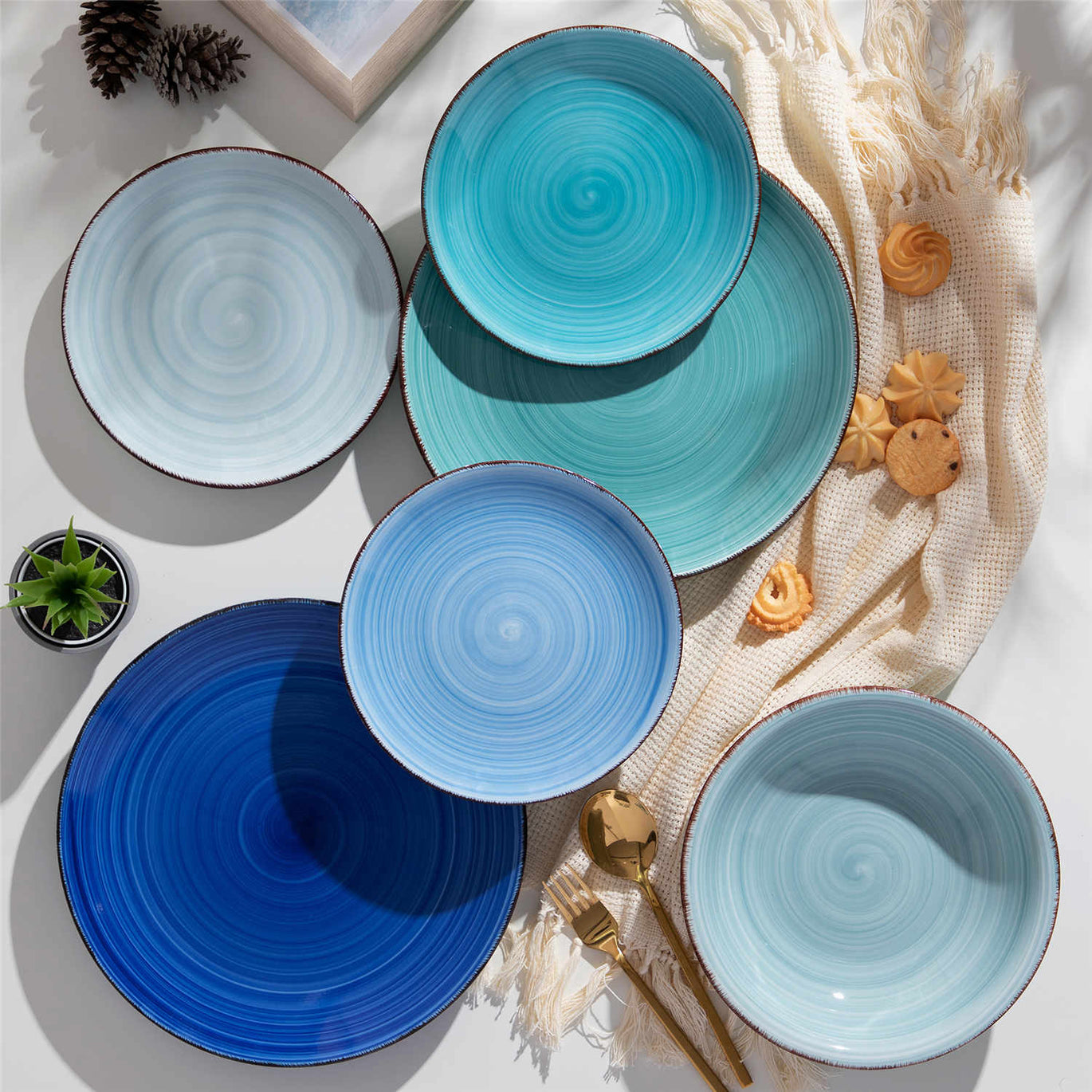


Understanding Ceramic Plate Light Reflection Standards for Honey Tasters

Ceramic plates remember things. They remember every drizzle and ribbon of honey, every tasting flight where someone leaned in, squinted at a sample, and said, “Is this really that dark, or is it just the plate?”
If you care about honey the way sommeliers care about wine, you cannot treat your plate and lighting as background props. They are active collaborators. Ceramics “negotiate” with light, as one design editor put it in an editorial for ADORNO DESIGN, and that negotiation decides how clearly you see color, crystals, and clarity in your honey.
In my own work styling tasting tables and photographing honey on ceramic surfaces, I have watched the same honey look warm gold on one plate and murky amber on another. I have seen a perfect crystalline sample vanish into glare, and I have watched quiet matte plates make subtle differences between two spring honeys suddenly obvious. That is why this article treats “light reflection standards” not as dry lab specifications, but as practical, joyful guidelines for anyone who wants to judge honey with precision and delight.
We will bounce between materials science, ceramic lighting design, and sensory ergonomics. Research from materials educators, ceramic artists, and lighting specialists has a lot to say about how ceramic surfaces reflect, scatter, and color light. By the end, you will know exactly what to look for in a plate, a glaze, and a lighting setup when the star of the show is honey.
How Ceramics Really Handle Light
Before setting standards for honey-tasting plates, it helps to understand how ceramics actually behave with light. Ceramics are not just “white and shiny.” They can be bright, moody, translucent, velvety, or mirror-like, depending on what is happening inside the material and on its surface.
Reflection, diffusion, and translucence in everyday language
Materials science teaching resources on ceramics describe three big optical behaviors that matter at the table.
First, specular reflection is mirror-like. Light bounces off as a sharp highlight, like a bright streak across a glossy glaze. That streak can either help you read the smoothness of a honey surface or completely blow out detail, depending on where it lands.
Second, diffuse reflection is soft. Instead of bouncing in a single direction, light scatters from microscopic features: grain boundaries, pores, and roughness in the clay or glaze. This is what gives matte glazes their gentle, chalky look and makes them kinder to cameras and human eyes. Educational materials on ceramics emphasize that internal microstructure, not just colorant, drives how strongly a ceramic scatters light.
Third, transmission gives us translucence. In thin porcelain, some light travels through the ceramic body, then scatters, creating a soft inner glow. Ceramic lighting designers love this. In the ADORNO DESIGN editorial on ceramic lighting, makers describe chasing porcelain thinness precisely to get that warm, lantern-like translucence, while stoneware and terracotta emphasize density and sculptural shadow instead.
For honey tasting, you are mostly working with reflection and diffusion at the surface, but translucence matters too, because it can subtly lift brightness or introduce a halo that tints how you perceive hue.
Glaze finish: matte, satin, and glossy under tasting-room light
Vancasso’s in-depth comparison of matte versus glossy dinnerware, based on long-term testing in busy kitchens and under studio lights, aligns closely with what I see in honey tastings.
Matte glazes absorb more light at the surface. They look sculptural, calm, and editorial. Photographers love them because they largely eliminate glare, which matches what food stylists and brands like Catalonia Plates and Epicurious observe in their own testing. The trade-off, documented by Vancasso and Carthage, is that matte glazes tend to reveal utensil marks and oils more readily. They age into a patina, which can be lovely but may be distracting on judging plates if not maintained.
Glossy glazes are fired to a harder, glassy finish. Carthage notes that high-quality glossy pieces often show little visible wear even after about a decade of daily use. They deepen color saturation and reflect highlights with high contrast. That shiny behavior is a blessing in candlelight and a curse under harsh overheads if a specular hotspot lands directly across your honey sample.
For honey tasters, this leads to a pragmatic rule of thumb. Matte or satin-matte plates are generally ideal for critical evaluation, especially where photography or scoring sheets are involved. Gloss can work beautifully if you control the lighting angle so the inevitable highlight does not slice through your sample.
Color and pattern: when plates start tinting your honey
Tableware brands like Vancasso and Malacasa point out that plate color and pattern strongly shape how we see food, and that matches decades of restaurant practice. Dark matte plates frame food dramatically, while creamy whites feel neutral and flexible.
Malacasa’s research on luminous and bioluminescent-inspired tableware adds another twist: plates with glow pigments, iridescent finishes, or saturated hues can create theatrical, “moonlit” effects, but they clearly influence how we read color. Glow-in-the-dark rims, tinted glazes, and pearlescent effects throw extra wavelengths back into the scene, especially in dim rooms. That is great for kids afraid of the dark or for whimsical dessert plates; it is not what you want when you are trying to decide whether a honey leans more straw-gold or deep copper.
When you are evaluating color honestly, your plate needs to be as close to visually neutral as possible. That is why competition judges, museum conservators, and scientific imaging labs gravitate toward white or very light, neutral backgrounds. Hyperspectral imaging work on ancient polychrome pottery, published in Nature, begins by correcting for lighting and using white and black standards so reflectance curves truly belong to the artifact, not the setup. You do not need laboratory gear at the tasting table, but you are chasing the same principle.
Practical Light Reflection Standards for Honey Flights
Let us translate all that ceramic and lighting science into clear, honey-centric standards. These are not regulatory rules; they are working standards I use when I design tasting experiences and shoot honey on ceramic plates, backed by research from ceramic artists, materials scientists, and lighting specialists.
Keep color-neutral reflections for honest hue
If color grading matters, your first standard is color fidelity. That means plates that neither tint nor overly brighten your samples.
White or soft cream plates with minimal patterning are the safest choice. Vancasso’s work on dinnerware psychology shows that neutral plates foreground the food rather than themselves. On a neutral white ceramic, the dominant wavelengths bouncing into your eyes come from the honey and the light source, not the glaze pigment.
Avoid strong plate colors, iridescent finishes, and heavy decorative imagery when you are judging hue. Joyye’s catalog of expressive plate collections makes a compelling case for mushrooms, marble effects, pumpkins, and dramatic gradients as functional art. Those are fantastic for themed honey brunches or retail displays, but they add too many visual variables in a formal tasting.
If you want to be more intentional, borrow a trick from the hyperspectral imaging of Han Dynasty pottery lids. That team discarded the noisy, unreliable parts of the spectrum and concentrated analysis on bands where the camera was trustworthy. For honey tasters, this translates to being picky about light sources. Choose bulbs that are marketed for high color rendering (even without quoting specific indices) and avoid colored LEDs that skew warm or cool too dramatically.
Keep glare off the spoon and surface
The second standard is glare control. You cannot eliminate reflections on glossy surfaces, as an experienced ceramic photographer pointed out in a widely cited discussion on Photo StackExchange. You can only decide what gets reflected, where it lands, and how strong it is.
Ceramicists and photographers manage glare through angle. On-camera flash aimed straight at a shiny glaze produces a brutal white hotspot. Move the light off-axis, or bounce it off a ceiling or wall, and the reflection slides away from the camera’s line of sight and softens.
For honey plates, position your main light so that the strongest reflection ends up just outside the area you will actually judge, often near the rim instead of the center. With glossy glazes, that might mean raising the light and nudging it slightly behind the taster, or to the side at a shallow angle. Lighting tutorials for ceramic vases recommend placing light sources roughly a foot to a foot and a half from the object as a starting distance, then adjusting angle and height to avoid washout. The same geometry works beautifully with plates.
If glare is still harsh, a matte or satin glaze creates built-in diffusion. Vancasso’s comparisons show how soft, non-reflective surfaces simply do not generate the same sharp highlights in the first place. That is why a satin white stoneware plate under a single soft light can feel effortlessly controlled, while a high-gloss porcelain plate under the same fixture needs deliberate positioning.
Reveal texture, crystals, and viscosity
Honey is not only about color; it is also about texture. Crystallized honeys, creamed honeys, and viscous liquid honeys all tell stories through the way light rakes across their surfaces.
Ceramic lighting experiments, such as the double-walled lanterns documented by Ceramic Arts Network, demonstrate how a change in geometry and wall thickness can dramatically shape the pattern of light and shadow. When light grazes incised or cut surfaces, every ridge and aperture becomes visible. Lighting tutorials for vases and wall pieces echo this: side lighting with a narrower beam pulls out texture and relief in a way flat overhead lighting never can.
At the tasting table, you can harness the same effect. Instead of blasting the plate from directly above, introduce a secondary light at a low angle to skim across the honey. On a neutral, lightly textured ceramic, that grazing light catches even tiny crystals, air bubbles, or ripples from stirring. This helps judges see granulation, smoothness, and flow without needing to poke and prod repeatedly.
The key is balance. Too much raking light on a high-gloss plate can create striped highlights that obscure the honey instead of describing it. That is another reason I prefer satin or softly matte glazes for critical texture evaluation: they take side light gracefully, yielding informative shadows rather than chaotic reflections.
Protect eyes and mood over a long session
Honey flights can last. Taste panelists and students may be leaning over plates for an hour or more. Your light reflection standards must include humans, not just optics.
Malacasa’s exploration of luminous and glow-in-the-dark tableware points out that people spend the vast majority of their time indoors and that light profoundly affects circadian rhythms, mood, and visual comfort. They argue for using gentle, indirect light from tableware itself to reduce dependence on harsh overheads. Bioluminescent-inspired rims and subtle glow pigments are one playful way to do that, but even without glow materials, ceramic can help you soften the room.
Dark, matte ceramics act as light sinks, absorbing glare and framing glow in a cozy way. That is one reason Scandinavian-inspired winter tables lean heavily on matte stoneware and candlelight. However, too many dark plates in a low-light room make it harder to judge honey color accurately. In a tasting context, I like to anchor the honey itself on light, neutral plates and reserve darker ceramics for supporting pieces: bread plates, water carafes, and serving boards.
The overarching standard is this: the lighting and plate reflections should be bright enough for nuance, soft enough for comfort, and stable across the entire tasting. Flicker, extreme contrast, and heavy glare at one seat but not another will tire people and skew judgment.

Choosing the Right Ceramic Plate Body
Once you know how you want light to behave, you can pick the right ceramic body and glaze combination. Educational resources from materials science and brand research from companies like Vancasso, Malacasa, and Joyye converge on a few practical categories: earthenware, stoneware, and porcelain.
Porcelain, stoneware, and earthenware in light
Porcelain is fired at very high temperatures to a dense, fine-grained body. Thin porcelain plates can be slightly translucent, as ceramic lighting designers love to demonstrate when they turn plates into glowing shades. This translucence lifts brightness around the edges of the honey sample. Paired with a glossy glaze, porcelain gives that classic, sharp, almost jewel-like rendering of food. Paired with a satin glaze, it offers a beautiful balance of clarity and reduced glare.
Stoneware is more opaque and often thicker. It feels earthy and weighty, which Vancasso and The Spruce Eats both highlight as a reason people reach for it in everyday dining. In lighting terms, stoneware typically reflects more diffusely, especially when finished with matte or satin glazes. That makes it forgiving under almost any light, an excellent choice for training sessions, educational tastings, or situations where lighting control is imperfect.
Earthenware is more porous and generally less durable, but its rustic charm and lower firing temperatures give glazes a different character. In honey tasting I treat earthenware as an accent rather than a workhorse. Because some earthenware bodies are more absorbent, they can be more vulnerable to staining from deeply pigmented honeys and cleaning agents, and they may not hold up as predictably to repeated washing.
Special effects: reactive glazes, glow pigments, sculptural rims
Reactive glazes, which Joyye and other brands showcase in amber flows, marble veining, and gradient textures, are created by chemical interactions during firing that produce unpredictable patterns. They are mesmerizing, and they scatter light in complex ways because the surface literally contains multiple micro-surfaces. For tasting, that can either add subtle visual richness or become distracting visual noise.
Bioluminescent-inspired tableware described by Malacasa uses photoluminescent pigments in glazes or overprinted inks that charge under light and then glow in the dark. The article likens them to “rechargeable candles,” outlining plates during dim dinners. For honey, this is delightful for night tastings, pairings with cheeses, or children’s events, but you should not rely on glow-based light to judge color or clarity. Use it as atmosphere, not as a primary evaluation source.
Sculptural rims and carved textures, which appear in everything from wabi-sabi-inspired stoneware lamps to double-walled lanterns, can throw appealing shadows and highlights around the edge of your plate. They also, however, can cast unpredictable reflections into your honey if the light is low and grazing. If you love sculpted ceramic edges, keep the central tasting area relatively flat and neutral so the honey has a calm stage.
Comparing plate styles for honey tasting
Here is a practical comparison of common plate styles in a honey-tasting context.
Plate style |
How it handles light |
Honey-tasting strengths |
Potential drawbacks |
Glossy white porcelain |
Strong specular highlights, high color saturation |
Extremely clear color reading under controlled lighting |
Hotspots and glare if light placement is sloppy |
Satin or matte white stoneware |
Soft, diffuse reflection, gentle contrast |
Minimal glare, comfortable for long sessions, camera-friendly |
Slightly lower “sparkle”; can show stains or utensil marks if neglected |
Dark matte stoneware |
High absorption, dramatic framing of brighter elements |
Great for ambiance pieces, backgrounds, or supporting dishes |
Can distort perceived brightness and hue when used directly under samples |
Reactive or patterned glazes |
Complex, mixed specular and diffuse reflections, high texture |
Adds personality to casual tastings or retail displays |
Visual noise and color competition in formal evaluation |
Glow-pigment or luminous finishes |
Low-level emission after charging, theatrical glows |
Magical for night events, helps soften room lighting |
Alters color perception; unsuitable as the only light for judging samples |

Setting Up a Honey-Friendly Lighting Scene
You have the plates. Now you need the light. Research on ceramics and light from Stony Brook, Penn State, and countless photographers all agree on one thing: angle is everything.
Positioning lights around glossy ceramics
A project at Stony Brook University examining how intense, focused light interacts with materials used a custom goniometer to measure how ceramics scatter laser light at different angles. A bright white diffuse surface followed a cosine law: most light bounced near the normal and less toward oblique angles. In other words, where you stand and where your light comes from dramatically alters what you see.
On Photo StackExchange, photographers working with shiny glazed ceramics share pragmatic advice that fits beautifully in a honey-tasting room. You will not get rid of reflections, so treat them as design elements.
Start by turning off any on-camera flash or direct spotlight pointed straight down at the plate. Use a single main light slightly above and in front of the taster, angled so the reflection glances off toward the far side rather than back into their eyes. Bouncing that light off a ceiling or a pale wall effectively enlarges the light source, softening reflections and shadows.
If you need more modeling, add a weaker fill light on the opposite side to lift shadows without removing them entirely. Lighting specialists often add a gentle backlight or rim light to separate objects from the background. At a tasting table, a low-level backlight can make glassware and plate rims glow without interfering with the honey itself.
Testing is simple. Place a dry, empty plate where the honey will be. Move your lights until any bright reflections are either out at the rim or somewhere you can live with them. Only then bring in the honey.
What camera lovers should watch for
If you photograph your tastings for records or education, your standards tighten. Vancasso and Catalonia Plates both note that matte glazes are a secret weapon on camera, precisely because they do not flash back into the lens.
Food photography advice echoes the same points raised in the ceramic lighting editorial from ADORNO DESIGN and the vase-lighting guide from DHgate’s creative lighting tips. Place your key light off to the side or back, let it skim across the honey to carve texture, and use a reflector on the opposite side to prevent the shadow from going inky. If glossy highlights are still distracting, try shifting the light slightly higher or closer to the camera axis so the highlight falls outside your frame.
Remember that reflective objects do not only show light sources; they also mirror whatever is around them. Photo StackExchange contributors demonstrate that adding dark cards to the sides of a glass or glossy object can create elegant dark edge reflections that define form. With honey on glossy plates, a narrow dark strip just outside the rim can subtly outline the pool of honey, improving readability without touching the sample.

Tiny Experiments to Dial In Your Own Standards
One of the most joyful parts of refining honey-tasting standards is experimenting. You do not need lab equipment; you need a curious eye, a few plates, and a willingness to play.
Begin with two or three candidate plates, ideally a glossy white porcelain, a satin white stoneware, and something darker or more reactive for contrast. Pour a consistent ribbon of the same honey onto each. Under your existing lighting, walk around them. Notice where reflections land, how easy it is to judge color, and how clearly you can see surface texture.
Then, change only one variable at a time. Move the light. Dim it slightly. Replace a cool bulb with a warmer one. If you have access to glow-pigment tableware, charge it and turn off the overheads, then see how your perception of the honey shifts. This is effectively a small-scale version of the reflectance-correction experiments done in hyperspectral imaging labs, minus the math. You are feeling for the combination where your brain trusts what it sees.
Keep notes the way researchers at Penn State did when building their nonlinear optical framework: not just what looked pretty, but what made material information clear and repeatable. Your personal standards will emerge from those observations, and they will be grounded in your own space and tools, not abstract rules from elsewhere.

FAQ: Honey, Light, and Plates
Do I really need special plates for honey tasting?
You do not need plates that are marketed as “honey plates,” but you do benefit from plates that behave predictably with light. Research compiled by dinnerware brands and materials educators shows that neutral, light-colored ceramics with either glossy or satin finishes give the most reliable canvas for food. For honey, that means choosing plates that do not add strong color, that control glare, and that are easy to clean between samples. If you already own simple white porcelain or stoneware dinner plates, you may be closer to ideal than you think.
Are glow-in-the-dark or “bioluminescent” plates a bad idea?
They are not bad; they just serve a different purpose. The Malacasa guide to luminous tableware explains that most so-called bioluminescent pieces rely on photoluminescent pigments that charge under light and then glow softly afterward. They make late-night settings feel magical and can reduce your dependence on harsh overhead lighting, which has real mood and comfort benefits. However, that same glow also adds tinted light into the scene. Use luminous pieces for ambiance, for children’s events, or for relaxed tastings where precision is not critical. When you are grading color or clarity, switch back to neutral plates under well-controlled, non-glowing light.
How can I photograph honey on glossy plates without a light tent?
Photographers who regularly shoot glazed ceramics report that you rarely need a full light tent if you control angles and reflections. Start by turning off direct flash. Position a single bright light to the side or above and slightly behind the plate, then bounce it off a ceiling or white card to soften it. Watch where the highlight lands in the honey and adjust until it sits near the rim or outside the main area of interest. If reflections from the room appear in the glaze, simplify what the plate “sees” by surrounding it with large, plain surfaces: a white foam board on one side, a darker board on another to define edges. This approach, borrowed from both Photo StackExchange discussions and ceramic-vase lighting tutorials, keeps your setup mobile and affordable while still delivering polished images.
Ceramic plates, light, and honey make a surprisingly technical trio, but the goal is simple: give every jar the fairest, most beautiful chance to show what it is. When you treat your plates as optical tools as well as pretty objects, you turn tasting into a tiny act of design. Choose a neutral, well-behaved ceramic, aim your light with intention, and let your honey shine. That is colorful tabletop pragmatism at its sweetest.
References
- https://www.academia.edu/127410609/Laser_material_interaction_using_pulsed_lasers_on_structural_ceramic_Si3N4
- https://matse1.matse.illinois.edu/ceramics/prin.html
- https://www.mri.psu.edu/news/news/shedding-light-materials-physical-biological-sciences
- https://www.stonybrook.edu/laser/_thomas/abstract.html
- https://dspace.mit.edu/bitstream/handle/1721.1/16625/55871896-MIT.pdf?sequence=2&isAllowed=y
- https://pdfs.semanticscholar.org/6782/53ccde2688d543c677d1e7e6e5c556284db7.pdf
- https://ceramicartsnetwork.org/pottery-making-illustrated/pottery-making-illustrated-article/creating-the-light-within
- https://www.researchgate.net/publication/313090430_Illuminating_Through_Ceramics
- https://ceramamadinnerware.com/Dinner_Plates/Why_Does_Lighting_Matter_When_Displaying_Ceramic_Dinnerware_in_Gift_Shops_happygodinnerwarecom_17540.html
- https://smart.dhgate.com/creative-tips-for-presenting-western-food-beautifully-on-ceramic-plates/
Sie können auch mögen
Stern 16 Stück Geschirr Set
- Von €72,95
€96,95- Von €72,95
- Stückpreis
- per
-
Blue
-
Green
-
Red
-
Grey
Simi 24 Stück Geschirr Set
- €96,95
€129,95- €96,95
- Stückpreis
- per
Bonita 18-teiliges Geschirrset
- Von €60,95
€74,95- Von €60,95
- Stückpreis
- per
-
Blue
-
Multicolor
Starry 16-teiliges Geschirrset
- €73,95
€86,95- €73,95
- Stückpreis
- per
-
Blue
-
Green
-
Red
-
Gradient Green