



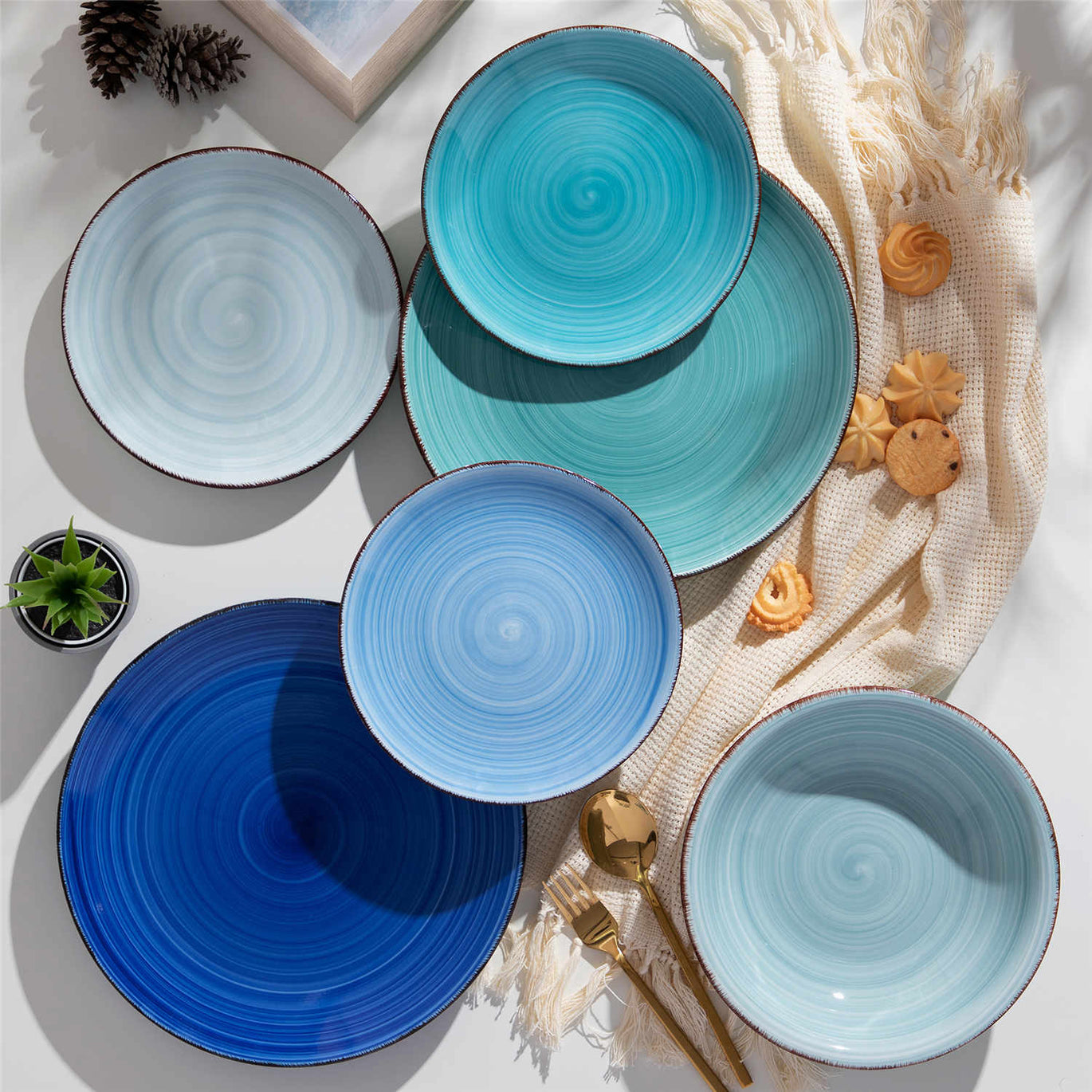


Architects' Fascination with Geometric Ceramic Tableware Explained

Geometry, but make it dinner
Architects are famous for obsessing over plans, sections, and façades. What often surprises people is how many of them obsess over plates and bowls with the same intensity. When you watch an architect choose tableware, you see them quietly checking proportions, tracing curves with a fingertip, weighing a bowl the way they weigh a model in the studio. Geometry stops being abstract and turns into something you sip soup from.
In my own tabletop styling work with design-minded clients, the pattern is clear. Give an architect a stack of perfectly round plates and a stack of sharply squared, asymmetrical, or patterned geometric pieces, and nine times out of ten they reach for the geometry. They are not being fussy for the sake of it. They are simply following the same instincts that guide a building façade, compressed into a twelve‑inch canvas.
To understand this fascination, it helps to look at how architects are trained to see shape and structure, how geometric ceramic tableware pulls from deep cultural and mathematical traditions, and how all of that translates into very practical pros and cons on your dining table.
How architects think about shape and structure
Architectural thinking starts with form and function working together. A functional ceramics studio like Erra Ceramica describes everyday pottery as “useful beauty,” where cups, plates, bowls, and teapots are engineered for repeated gestures: lifting, drinking, serving, washing. They emphasize ergonomics—weight, balance, rim thickness, handle grip, and base stability—so that a mug or bowl almost disappears into your hand and movement.
Architects resonate with this. They live in the tension between structure and experience. A wall is not just a wall; it is light control, thermal performance, rhythm, and mood. A plate is not just a flat disc; it is a micro‑structure that frames food, directs sauces, and signals how a meal wants to be eaten.
At Créamik, symmetry is treated as the training ground: perfectly centered clay, evenly balanced forms, consistent series of bowls and vases. Asymmetry is then introduced deliberately to create movement and narrative, often by deforming a wheel-thrown form, adding an off‑center handle, or glazing one side differently. This is strikingly similar to architectural practice, where a rigorously ordered grid might be disturbed by an intentional shift, cut, or curve to create energy.
When Norman Foster describes his geometric stainless steel and porcelain tableware for Danish brand Stelton, he talks about “the power of a curve, the power of a line” being the same whether it shapes a building, a bridge, or a vessel. That is an architect explaining, almost word for word, why a carafe is as absorbing to design as a skyline.

From tessellations to tabletops
Geometric tableware is not just about “modern” plates with corners. It is plugged into centuries of pattern and mathematics that architects know and love.
Art and design publication Artsper defines tessellation as tiling a surface with one or more shapes so that there are no gaps or overlaps. They explain the idea of a fundamental region (the repeated tile), edges, vertices, and prototiles, and point out that there are exactly seventeen symmetry classes for repeating two‑dimensional patterns, the famous wallpaper groups formalized in the late nineteenth and early twentieth centuries. This is the math behind so many architectural façades and also behind countless plate borders and bowl interiors.
Islamic geometric art, described by Modern Wall Art, shows how circles, squares, triangles, and eight‑pointed stars can become spiritual language. Circles stand in for unity and infinity, squares and rectangles for the physical world and its balance with the spiritual, triangles for stability and divine order, and stars for light and guidance. When these motifs move from mosque walls onto ceramic tableware, they bring that same sense of order, repetition, and contemplation to very small scales.
A research paper on geometric patterns in tableware design, summarized on ResearchGate, notes that simple shapes like octagons, triangles, and quadrangles generate visual beauty through their arrangements and align with restrained, rational, modern design. Applying these patterns systematically to tableware lets designers enhance perceived quality and create high‑value products in the ceramics industry.
Architects are already comfortable with all of this: tessellation, symmetry groups, spiritual geometry, modular pattern systems. A geometric dinner plate is simply another tiled surface, another façade, another place to test those ideas—only this façade goes in the dishwasher.

Why geometric ceramics feel so “architectural”
When you look at geometric ceramic tableware through an architect’s lens, a few themes immediately explain the attraction.
First, these pieces behave like scaled‑down buildings. Joyye, a ceramic manufacturer that analyzes bowl shapes in detail, breaks a bowl into rim, lip, wall, base, and foot. Change the angle of the walls, and you change capacity, spill‑resistance, and visual style. Widen the foot, and you gain stability but lose some of the floating lightness. That is structural thinking, exactly the same logic used for a column, a plinth, or a cornice.
Second, geometric tableware plays with clear typologies. Articles from Bontii, Catalonia Plates, Malacasa, and Joyye collectively map out a family of forms:
Round plates and bowls are the classic “central plan” of tableware. They feel harmonious, familiar, and forgiving. They cradle stews, curries, and pasta well, and their continuous edge is durable and stackable.
Square plates bring the crisp discipline of a plan drawing. Bontii and Catalonia Plates both describe them as modern, structured, and bold, with corners that become natural staging zones for different components of a dish. They are favorites in contemporary restaurants and fusion cuisine.
Rectangular plates act like elongated galleries or corridors. They provide a sleek canvas for kebabs, sashimi, sushi rolls, sliders, and charcuterie, celebrating repetition and linear sequences, a very architectural way of thinking about composition.
Oval plates sit somewhere between round and rectangular. They create visual flow and are perfect for elongated foods like fish fillets or asparagus, offering a soft, space‑efficient footprint on the table.
Triangular and asymmetrical plates feel like deconstructed elevations. Catalonia Plates notes that asymmetrical shapes with irregular curves and angles add movement and built‑in focal points, ideal for contemporary, “plated along a path” dishes.
Bowl‑plate hybrids, often called coupes, are shallow vessels with a broad surface and a continuous curve rather than a pronounced rim. They are praised across multiple sources as ideal for saucy pastas, curries, salads with dressing, and grain bowls, because they showcase color while keeping liquids contained.
There is also a strong overlap with the “imperfectly perfect” or wabi‑sabi aesthetic described in a 2025 tableware trends article from Materials of Love. Here, organic shapes, irregular rims, and slightly uneven silhouettes celebrate handcraft and individuality. For architects who admire Japanese influences and the Aesthetic Movement—where asymmetry, nature motifs, and geometric borders all infiltrated ceramics—this is familiar territory.
To crystallize some of these architectural feelings, it can help to place shapes side by side.
Shape or profile |
Emotional tone |
Food and plating sweet spot |
Practical watch‑outs |
Round |
Classic, calm, adaptable |
Soups, stews, pasta, everyday meals |
So familiar it can feel generic if everything is round |
Square |
Intentional, modern, graphic |
Composed mains, sushi, tasting plates |
Corners chip more easily and can hog cabinet or dishwasher space |
Rectangular |
Minimalist, linear, gallery‑like |
Sushi lines, kebabs, sliders, shared platters |
Long platters need larger tables and storage |
Oval |
Flowing, elegant, soft |
Whole fish, roast vegetables, family‑style mains |
Slightly trickier to stack than round |
Triangular / asymmetrical |
Dynamic, edgy, artistic |
Appetizers, small plates, deconstructed dishes |
Easy to overdo, and can become visually chaotic without a plan |
Coupe bowl‑plates |
Generous, contemporary, comforting |
Pastas, risottos, grain bowls, saucy salads |
Take up more horizontal space and sometimes feel less formal than rimmed plates |
Architects tend to enjoy this clarity. Each geometry has a function, a mood, and a set of structural consequences. Choosing tableware becomes a design exercise rather than an afterthought.

Patterns with meaning: when plates become tiny façades
Shape is only half the story; architects also love what happens on the surface.
Japanese ceramic patterns, as detailed by EKA, turn tableware into storytelling. The seigaiha “blue ocean wave” motif suggests calm and stability and commonly appears on sushi plates and ramen bowls. The asanoha hemp leaf geometry stands for resilience and growth and is popular on bowls and gift sets, especially for families and newlyweds. The shippō interlocking circles, known as “seven treasures,” speak to harmony and human connection and often appear on compartment plates and saucers so the symbolism can repeat across a collection.
These motifs are geometrically simple at the tile level yet emotionally rich in their associations, a combination architects deeply appreciate. They also echo the modular, repeated geometric language that the ResearchGate study emphasizes as key for raising the perceived quality and competitiveness of tableware products.
Islamic geometric decor, according to Modern Wall Art, uses circles, squares, triangles, and star forms to embody spiritual concepts like infinite divinity, unity, and guidance. When you see a bowl or plate with an eight‑pointed star or a dense interlaced pattern, you are looking at compressed architecture: a miniature version of a mosque dome or tiled courtyard now carrying soup or salad.
European ceramic history adds more layers. Writing on the Aesthetic Movement and transferware, Nancy’s Daily Dish points out how late nineteenth‑century British potteries embraced Asian‑influenced asymmetry and bold geometric borders, especially around scenic vignettes. Sunflowers and peacock feathers in flat, graphic styles became icons of this “art for art’s sake” era, wrapping narrative and geometry around everyday plates.
Contemporary glass and tableware series like Orrefors’ Geometry line, designed by architect‑led studio Claesson Koivisto Rune, distill this love of pattern and structure into pared‑back, sculptural forms. Orrefors describes Geometry as a carefully balanced blend of minimalism, precision, and elegance, with an upright stance and distinct geometric shapes that feel iconic and timeless. For an architect, this is a direct translation of architectural identity into tabletop scale.
Put simply, every geometric plate or bowl is an opportunity to practice façade design in miniature: managing pattern density, balancing positive and negative space, and deciding how much symbolism to weave into everyday rituals.

Symmetry, asymmetry, and the quiet drama of form
Architects learn very quickly that perfect symmetry can soothe—and sometimes bore—while asymmetry injects energy but can also create tension. Ceramic designers wrestle with the same balance.
Créamik describes symmetry in pottery as a demanding discipline: centered clay, evenly thick walls, matched series of forms. It offers stability and a tranquil visual rhythm that suits functional ware, and many artisans treat the process as almost meditative. Asymmetry, on the other hand, is valued when it is intentional. Deformed rims, tilted vases, shell‑like openings, or asymmetrical glazing are used to convey movement, life, and surprise.
A small series of “Paris White” vases described by their maker on social media illustrates the extreme end of this approach. The artist issues the surface in a neutral white earthenware, adds only a clear gloss glaze, and focuses everything on a single, flowing curve. Light and shade do the rest, creating a quiet tension that they describe as a form of wordless mindfulness. The tallest piece, about 10 inches high, becomes a study in how little you need—just one curve—to hold attention.
Vase trend analysis from Hale Planter shows how consumers respond strongly to both texture and unconventional shape. Matte finishes, embossed patterns, rough or raw surfaces, and reactive glazes give tactile depth, while bolder geometric silhouettes and stacked, modular forms turn vases into sculptural objects. Regional preferences vary, but asymmetry and organic, nature‑inspired shapes have strong pull in many markets.
Architects see these objects as cousins to their buildings. A matte, asymmetrical vase with a faceted geometric silhouette is essentially a tiny, testable massing model you can put flowers in. A perfectly symmetrical white bowl with an asymmetrical, flowing glaze is the equivalent of a calm floor plate with a playful atrium cut through it.

Pros and cons of the geometric obsession
The architect’s heart might say, “Give me all the angles,” but the pragmatic side of the brain—and the person doing the dishes—needs a reality check. The research notes point to some clear advantages and trade‑offs.
Visually, geometric tableware can dramatically improve first impressions. Catalonia Plates reminds us that diners judge with their eyes long before the first bite, and geometric shapes influence perceived quality and appetite. Sharper lines and intentional negative space can make a modest portion feel like a carefully curated experience rather than a small serving.
Functionally, shapes must match cuisine. Bontii and several other sources agree that round plates remain the most forgiving for saucy, cut‑at‑the‑table dishes, while rectangular plates excel at foods that naturally line up: sushi, skewers, tasting flights. Bowl‑plate hybrids shine when you have both solids and liquids to manage, such as richly dressed salads or curries.
There are real downsides. Square and rectangular plates tend to chip at the corners more readily than round plates, and angular or heavily scalloped rims can wobble or consume more cabinet space. Large rectangular or highly irregular pieces also occupy more table and dishwasher space, so entertainers in smaller apartments often find them charming but impractical in large sets.
From an ergonomics standpoint, deep bowls and steep sides work well for soup and noodles, reducing spills and retaining heat, but they make artistic, spread‑out plating difficult. Shallow, wide bowls are gorgeous for showcasing ingredients but can feel risky with brothy dishes. Joyye’s discussion of rimmed versus coupe profiles adds another layer: wide rims provide a safe handling zone and help prevent overflow, while coupe forms maximize interior space and create a clean, minimalist look but rely more on careful carrying and storage.
Safety and durability also matter. Joyye highlights that reputable manufacturers conform to strict international standards limiting lead and cadmium release in food‑contact surfaces, such as ISO 6486‑1 and major regional regulations. EKA notes that most modern Japanese ceramic ware is microwave‑safe, but metallic decorations like kintsugi‑inspired gold lines or radiant gold detailing generally should not go in the microwave. HF Coors emphasizes vitrified, lead‑free ceramic that resists moisture absorption and is safe for oven, broiler, microwave, dishwasher, and freezer use. Royalware underscores both design and performance for their custom‑shaped porcelain plates, citing not just aesthetics but robust packaging and resistance to a wide temperature range, suitable for both cold storage and hot service.
The upshot: geometric tableware gives huge expressive power, but it rewards thoughtful selection. Architects tend to be good at this trade‑off calculus, which is why they so often reach for pieces that are striking yet structurally and functionally sensible.
How to choose geometric tableware like an architect
If you want to channel that architect’s fascination into your own home or studio, the trick is to borrow the mindset, not just the look.
Start from daily rituals rather than from Instagram. Erra Ceramica’s view of functional objects as partners in repeated gestures is key. Think through what you actually cook and serve. If your weeknight staples are soups and big salads, a family of coupe bowls and deep, round soup bowls with generous rims might be more valuable than a stack of dramatic rectangular plates. If you host sushi nights or minimalist tasting menus, then invest in rectangles, squares, and small asymmetrical accent plates.
Next, choose a small “vocabulary” of shapes. Materials of Love and HF Coors both encourage mix‑and‑match, but with a unifying element. Architects do this constantly: they might limit a building to a couple of primary volumes, then permute them. On the table, that could mean committing to round and rectangular pieces only, or pairing round dinner plates with square side plates and triangular appetizer dishes, all in the same color family.
Patterns and colors should serve the food, not fight it. The ResearchGate study argues that geometric patterns gain power from their simplicity and rationality. EKA’s overview of Japanese motifs shows how repeating a single pattern family across many items creates cohesion. To put this into practice, you might choose one primary pattern—say, a wave, circle, or hemp‑leaf geometry—and let it appear on a few statement bowls or platters, while keeping the rest of the pieces in solid, complementary tones.
Surface texture is another tool. Hale Planter’s analysis of vase trends shows consumers gravitating toward matte finishes, embossed geometry, raw textures, and reactive glazes. On the table, a matte, angular coupe paired with a glossy, round bowl can create a delightful tension. Just remember that heavily textured surfaces can trap food and be harder to clean, so use them where they make sense: serving platters, dessert plates, or decorative accent bowls.
Finally, insist on quality and safety. Follow Joyye and Erra Ceramica’s cues and look for clear statements about food‑safe, non‑toxic glazes, and, where relevant, adherence to recognized standards. Check whether metallic details exclude microwave use, as EKA notes for kintsugi and radiant gold styles. If you buy from brands like HF Coors or Royalware that advertise vitrified, lead‑free, durable ceramic designed for oven, microwave, dishwasher, and freezer, you are aligning with the way architects think about performance in buildings: not just how it looks on opening night, but how it behaves years later.
Mini case studies: when architects design the plates
Two real‑world examples neatly showcase why architects fall for geometric ceramic tableware.
World Architecture Community reports on Norman Foster’s collaboration with Stelton, where his studio Foster+Partners created a series of stainless steel and porcelain pieces: wine goblets, carafes, bowls, espresso cups, sugar bowls, thermos jugs, and water carafes. The language is all about rounded details, soft geometry, and sculptural simplicity. Foster talks about curves and lines that apply equally to bridges and vessels, and about the importance of workmanship, texture, and finish at the scale of objects we touch daily. There is even a clear zoning in materiality: more formal, understated stainless steel pieces for evening, and more informal porcelain and glass pieces for everyday coffee and water.
Orrefors describes its Geometry series by Claesson Koivisto Rune as an instantly recognizable blend of minimalism, precision, and elegance, with an upright, confident stance. The geometric forms are not fussy; they are carefully weighted and intended to be both timeless and strongly tied to the Orrefors identity. For an architect, this is irresistible: a disciplined, branded geometry that can live on a dining table or shelf yet still read as “design,” not mere decoration.
Japanese manufacturers noted by EKA—such as Noritake with its Colorwave line, Arita Plus, and Kihara—show another path. They use geometric patterns and high‑whiteness porcelain to create collections that are both practical and deeply symbolic. Their motifs carry meanings like calm, growth, harmony, or healing, and the patterns are carefully mapped to specific product types, from sushi plates to matcha bowls. Here the architect sees not just shape, but a system, a kit of parts that can be deployed like components in a building.
All of these cases underline the same point: once you think like an architect, a plate is never just a plate. It is an interface between geometry, material, and everyday life.
Short FAQ on geometric tableware and design‑minded living
Do geometric plates actually change how food feels and tastes?
They do not change flavor chemically, but they absolutely change perception. Sources like Catalonia Plates and Malacasa emphasize that plate shape guides where the eye lands, how generous a portion appears, and whether a dish feels casual, comforting, minimal, or luxurious. A large square plate with intentional empty space can make a small, artful portion feel refined rather than stingy, while a smaller round plate can make the same portion feel abundant and cozy.
Are square and rectangular plates practical in small kitchens?
They can be, with moderation. Bontii and others warn that corners chip more easily and that non‑round shapes can demand more storage and dishwasher space. In compact kitchens, it often works best to treat them as accents: keep round plates as your main stack, and add a modest set of rectangular platters or square salad plates for special dishes. Think of them the way architects think of a bold bay window or a projecting volume: powerful when used sparingly.
How do I mix different geometric shapes without creating visual chaos?
Both HF Coors and Materials of Love recommend choosing a unifying element—a color palette, a repeating pattern, or a consistent finish—to tie varied shapes together. For example, you might combine round dinner plates, rectangular platters, and asymmetrical bowls, but keep everything in a restrained palette of warm whites, sand, and deep ocean blue. Or you might limit patterns to a single motif, such as a wave or interlocking circle, repeated across different shapes so the table reads as a deliberate composition rather than a random assortment.
A closing note from your Colorful Tabletop Joy Curator
Architects fall for geometric ceramic tableware because it lets them keep doing what they love: shaping space, tracing lines, balancing structure and emotion—only now it happens at the scale of a bowl in your hands. When you choose your own plates and cups with that same curiosity about form, pattern, and function, every meal becomes a tiny design project and every table a chance to live inside your favorite geometry.
References
- https://repository.rit.edu/cgi/viewcontent.cgi?article=11754&context=theses
- https://worldarchitecture.org/architecture-news/cmhhf/norman-foster-designs-tableware-set-with-soft-geometry-and-sculptural-form-for-stelton.html
- https://www.researchgate.net/publication/272940608_A_Study_on_the_Tableware_Design_using_Geometric_Pattern
- https://www.28ceramics.com/a-modern-elegance-exploring-contemporary-porcelain-dinnerware-trends.html
- https://www.orrefors.com/geometry-design-claesson-koivisto-rune
- https://www.ambowls.com/news/shape-and-structural-design-of-ceramic-tablewa-73198604.html
- https://creamik.com/design-ceramics/?lang=en
- https://ekaceramic.com/10-patterns-that-define-japanese-ceramic-tableware/
- https://haleplanter.com/how-texture-and-shape-are-defining-the-latest-ceramic-vase-trends/
- https://www.joyye.com/info-detail/types-of-bowl-shapes
Sie können auch mögen
Stern 16 Stück Geschirr Set
- £68.00
£77.00- £68.00
- Stückpreis
- per
-
Blue
-
Green
-
Red
-
Grey
Simi 24 Stück Geschirr Set
- £77.00
£104.00- £77.00
- Stückpreis
- per
Bonita 18-teiliges Geschirrset
- Von £49.00
£61.00- Von £49.00
- Stückpreis
- per
-
Blue
-
Multicolor
Starry 16-teiliges Geschirrset
- £68.00
£70.00- £68.00
- Stückpreis
- per
-
Blue
-
Green
-
Red
-
Gradient Green