



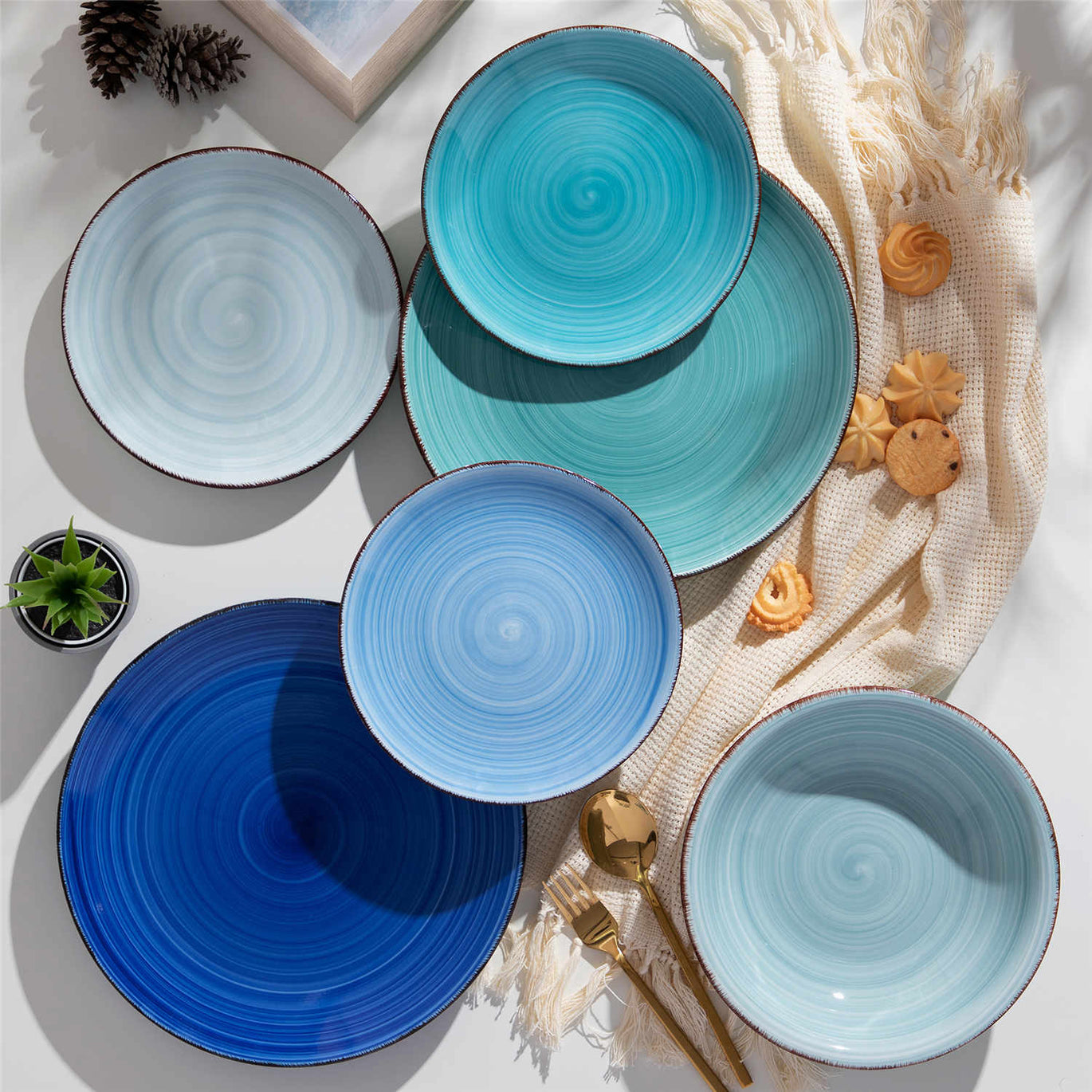


Understanding Gender Bias in Choosing Ceramic Dinnerware Gifts

If you have ever stood in front of a wall of plates wondering whether the blush‑pink floral set is “for her” and the charcoal stoneware is “for him,” you have already felt gender bias tugging at your gift-shopping hand.
As a Colorful Tabletop Creative & Pragmatic Joy Curator, I spend an absurd amount of time thinking about how plates, bowls, and serving platters shape the mood around a meal. Again and again, I watch generous gift‑givers fall into the same trap: instead of asking what will delight this specific person at their table, they ask what a man or a woman is “supposed” to like.
The good news is that you can absolutely give ceramic dinnerware that feels personal, playful, and beautiful without reinforcing tired “his and hers” clichés. To do that, it helps to understand where those clichés come from, what the research says about gendered food and dishes, and how those patterns sneak into your shopping cart.
Let’s set the table with some science, a bit of history, and a lot of practical gift‑picking strategy.
Why Gender Even Shows Up In a Stack of Plates
Gender bias in ceramic dinnerware gifting is not really about clay and glaze. It is about the stories we have learned to attach to food and to the objects that carry it.
Researchers studying “gender-based food stereotypes” have shown that foods themselves are coded along a femininity–masculinity spectrum. Work with young adults in Japan and Western countries has found that lighter, lower‑fat foods and sweets such as salad, fruit, and cake are routinely described as feminine, while meat‑heavy, high‑fat dishes like steak, pork cutlets, and big breakfasts are seen as masculine. Small portions and “eating lightly” are associated with femininity, while hearty, visibly large portions are coded masculine.
That coding does not stay inside the food. A study of young Japanese adults, archived on PubMed, used photos of food plated on different dishes and a clever reaction‑time task. The same food was shown on dishes that had been pre‑rated as visually feminine or masculine. When participants had just seen a food on a feminine dish, they were faster to recognize feminine names and slower to recognize masculine names, and the pattern reversed for masculine dishes. In other words, the gender impression of the dish changed the gender impression of the food.
Another article reviewing this work, available through ScienceDirect, notes that visual features such as color, pattern, and texture are themselves gender-coded in many cultures. Think of baby clothes: pink and frills for girls, blue and bold shapes for boys. When those codes move onto tableware, we get floral, pastel plates framed as feminine and heavy, dark, minimalist dishes framed as masculine.
Once you see this, it becomes obvious why plate choices feel gendered. When you automatically reach for a delicate, scalloped bowl “for her” and a thick, slate‑gray mug “for him,” you are not just choosing objects; you are replaying a set of learned associations about what femininity and masculinity are supposed to look like at the table.

How Gendered Food Norms Shape Our Sense of the “Right” Dish
Food is not only nourishment; it is a way we perform who we are. Several lines of research show that people adjust their food choices to line up with gendered expectations, especially in social situations.
A peer‑reviewed study of 162 heterosexual adults in the United States, archived on PubMed Central, asked people to imagine eating either on a romantic date or with friends. They were shown photos of restaurant dishes that had previously been rated as very feminine, neutral, or very masculine. Across the board, women tended to prefer more feminine dishes and men more masculine ones. Context mattered too. Women in the imagined date scenario showed a particularly strong preference for feminine foods, often lighter, elegantly presented options. With friends, that preference was weaker. Men, interestingly, showed the most masculine choices when imagining eating with friends, not on dates, which the authors interpret as a possible shift toward a “new masculinity” with romantic partners that values mindfulness and health rather than only meat and size.
In childhood, similar patterns pop up. A University of Oregon project with eight‑ to ten‑year‑olds offered kids a generous buffet and measured what they actually ate. Researchers also measured “social desirability bias,” meaning the child’s tendency to present themselves in an overly virtuous, socially acceptable way. Among boys, higher social desirability was linked to eating fewer fruits and vegetables. The authors suggest that some boys may already see colorful produce as “girl foods” and avoid them to dodge teasing, while at the same time, children who wanted to look good overall also ate fewer stereotypically “junk” snacks.
A long historical view adds more layers. Writing for BroadAgenda, a journalist drew on historian Paul Freedman’s work on American cuisine to show that, by the late nineteenth century, women were associated with “dainty” foods such as salads, jellies, ice cream, and tiny sandwiches, while men were linked to meat, hearty dishes, and spicy foods. Women‑only restaurants in the United States began serving lighter meals and elaborate desserts, reinforcing the idea that proper femininity meant eating delicately. Advertisers in the twentieth century leaned hard into this, depicting women who failed to please husbands with their cooking as bad wives, and promoting “easy” products that promised slimness and marital harmony at once.
Modern interviews in that same article reveal how persistent these norms are. Women described being judged for ordering rare steak on dates, feeling pressure to choose salad instead of burgers, avoiding second helpings at work events to escape “greedy” labels, and watching men at shared tables take more food while everyone split the check. Diet culture, especially for women, is still a powerful expression of gender expectation.
All of this matters when you give someone a ceramic dinnerware gift. If a woman has spent her life being told to eat lightly and daintily, a gift of extremely small, ultra‑delicate plates paired with messaging about “watching your figure” is not neutral. If a man has been teased for enjoying “feminine” foods or drinks, handing him a playful floral bowl with a joke about it being “girly” can sting.
The plate is never just a plate.

Tableware Traditions: When Bowls and Cups Were Officially “His” or “Hers”
Some gender coding in dinnerware is not subtle at all; it is built into the object.
In Japanese tableware tradition, as described in Tsukushi Japan’s writing on men’s and women’s tableware choices, rice bowls, soup bowls, and chopsticks have historically been differentiated by gender. Men’s bowls are typically larger, often more than one‑third bigger than women’s, to match the idea that men eat more. Meoto jawan, or “husband‑and‑wife bowls,” are sold as paired sets where the husband’s bowl is noticeably larger and the wife’s smaller, symbolizing their union at the table. Chopsticks follow a similar logic: about 9.1 inches for men and 8.3 inches for women, originally based on hand size.
Color and pattern carry gender meaning as well. Men’s bowls and cups commonly use subdued blues, greens, black, gray, and simple or nature‑inspired patterns meant to convey calmness and dignity. Women’s bowls lean toward red, pink, white, cream, and pastel tones, often with floral or botanical motifs that suggest softness and glamour. Gendered lacquerware for infants appears in the Okuizome “first meal” ceremony, with different motifs and finishes for boys and girls.
Crucially, the same Japanese sources emphasize that social distinctions have flattened in recent decades. Younger people increasingly prioritize comfort, function, and personal taste over strict male–female tableware rules. Recommendations now focus on hand fit, capacity, weight, and grip, with gendered motifs used more for symbolic or nostalgic reasons than as everyday rules.
On the other side of the world, archaeology and social history give us another picture. Research on Victorian‑era Aotearoa New Zealand dining rooms, published by The City Remains, describes how the dining room was framed as a semi‑public, masculine space where the male head of household displayed success and respectability. Matching dinner sets, sometimes with popular patterns like Asiatic Pheasants, expressed middle‑class ideals of order and regularity, even as women’s largely invisible labor made that display possible. Households were expected to own a wide range of specialized vessels—multiple platters, soup plates, muffin plates, tureens, pitchers, gravy boats—which visually unified the table and reinforced class and gender roles.
When you buy “his and hers” bowls or a floral “for her” cup and a plain “for him” mug, you are tapping into these longer stories of who is supposed to eat what, how much, and in which room. That does not mean such gifts are automatically wrong. It does mean you get to choose whether you are honoring a tradition that the recipients actually value, or unconsciously re‑staging a script they might be trying to leave behind.

Modern Marketing: From “Gifts for Her” to Gender-Neutral Plates
Even if you personally do not believe plates have a gender, today’s marketplaces often talk to you as if you do.
The American Marketing Association has highlighted how gendered marketing intensified across the twentieth century. A sociology analysis cited in their piece notes that in 1975, fewer than two percent of toys in a major catalog were explicitly labeled for boys or girls. By 1995, about half of the toys were gendered. That pink‑and‑blue divide was profitable, but it also cemented the idea that products, from toy cars to craft kits, should be sorted by gender first and function second.
Gendered marketing has real costs. A New York City Department of Consumer Affairs study found that girls’ toys and accessories cost about seven percent more than boys’ equivalents, and girls’ clothing about four percent more, despite being similar products. This so‑called “pink tax” is one way that women and girls end up paying more for essentially the same thing.
Meanwhile, consumer attitudes have shifted. Research from J. Walter Thompson’s intelligence unit reported that a large majority of Gen Z respondents believe gender defines a person far less than it used to, and nearly sixty percent think official forms should include more than just “man” or “woman.” The American Psychological Association has summarized evidence that gender has little to no bearing on personality, cognition, or leadership ability. In other words, your favorite plate shape says more about you than your gender category does.
And yet, Kantar’s “Getting Gender Right” report shows a striking gap in perception. Forty‑five percent of consumers say marketers portray women in outdated ways, while ninety‑two percent of marketing professionals believe they are avoiding stereotypes and doing just fine. About ninety‑eight percent of baby, laundry, and household cleaner ads are still targeted at women, even though buying decisions are often shared. More than seventy percent of both women and men say portrayals of gender in advertising are “completely out of touch.”
In response, some brands are actively moving away from gendered labels. The advocacy group Let Toys Be Toys has convinced fifteen major UK retailers to stop labeling toys “for boys” or “for girls” and instead organize them by type, such as science, games, or arts and crafts. Parents, according to surveys from Havas and Our Watch in Australia, increasingly want to raise children in as gender‑neutral an environment as possible to shield them from restrictive stereotypes. Retailers like Target have removed pink and blue toy aisles and launched gender‑neutral kids’ product lines.
On the other hand, we still see explicitly gendered gift curation in tableware. Wedgwood’s “gifts for her” selections emphasize delicate, hand‑drawn botanical patterns like the Wild Strawberry collection, with gold details and romantic English‑garden imagery. The same products could, of course, delight any floral‑loving, tea‑drinking human, but the category name steers you toward buying them only for women.
Other retailers, such as Uncommon Goods, position their dinnerware gifts more around values—independent makers, cruelty‑free materials, generous return policies—than around the recipient’s gender. Several large department stores and review outlets, from Bloomingdale’s to Forbes and Wirecutter, sort dinnerware by material, style, and occasion rather than by “his” and “hers,” focusing on durability, dishwasher safety, and aesthetic range.
The takeaway: the market is split. Some parts still nudge you toward gendered choices; others invite you to think about function, style, and values. Gifting ceramics without bias means consciously choosing the latter lens, even when the website sidebar is shouting “for her” in script font.
Where Bias Creeps In When You Choose Ceramic Dinnerware Gifts
Now we can bring this closer to the practical moment where you are hovering over “add to cart.” Gender bias tends to sneak into ceramic dinnerware gifting along a few predictable lines: color and motif, size and weight, social role assumptions, and even how we shop for kids.
Color, Pattern, and the Stories We Tell
Traditional Japanese guidelines described in Tsukushi’s writing link men to blue, green, black, and simple patterns, and women to reds, pinks, creams, and florals. Wedgwood’s “gifts for her” lean into hand‑painted strawberries and blossoms with gold accents. Many Western brands still style neutral stoneware in charcoal, sand, or indigo as “classic” and floral pastels as “feminine.”
The bias shows up when you assume those palettes belong to specific genders rather than to specific people. A man who loves gardening may be more thrilled by a wildly botanical dinner plate than by a plain gray one. A woman who lives in a minimalist loft might feel deeply seen by a stack of matte, slate‑colored bowls. When I guide clients, I ask them to describe the recipient’s home, favorite outfits, and art, not their gender, before we even look at colors.
Size, Weight, and Portion Expectations
Historically, meoto jawan sets literally embodied the assumption that men eat more and women less. Men’s bowls were larger, women’s smaller, baked into ceramic form. Diet culture has added further pressure for women to appear as light eaters, as BroadAgenda’s interviews so vividly illustrate.
Modern dinnerware experts look at size for different reasons. Testing by Good Housekeeping and reviewers at Forbes and Wirecutter emphasizes how dish diameter and rim shape affect portioning, stacking, and how easily plates fit into dishwashers and cabinets. Wide, flat rims are easy to grip but reduce food area. Straight‑walled rims maximize usable space but can create tall stacks. Low, bowl‑plate hybrids—often called “blates”—are beloved for one‑bowl meals.
Bias creeps in when you automatically choose petite plates for women and oversize ones for men, rather than considering who actually loves a brimming pasta bowl or whose wrist might struggle with a heavy stoneware stack. Remember that in many households, dishwashing and storage are shared tasks. A family story published on Lemon8 describes a home where all members, including children, participate in post‑meal cleanup and where disposable dishes are avoided on principle. In that kind of household, overly heavy or awkward plates punish everyone, regardless of gender.
Context: Date Night, Family Dinner, and Friends
The impression‑management study from PubMed Central shows that people adjust their food choices depending on whether they picture a date or a meal with friends. Women on imagined dates gravitated strongly toward feminine dishes; men’s most masculine choices showed up in the “friends” scenario.
Translate that to dinnerware. A recipient might use your gift in very different contexts: romantic dinners, chaotic pasta nights with toddlers, or game nights with friends. Rather than thinking, “She is a woman, so she will want delicate dessert plates for date nights,” think, “They host casual family meals and occasional fancy evenings; what pieces can flex across both?” Versatile stoneware pasta bowls that can cradle a salad or a stew are one example. Testing by Forbes, Wirecutter, and others consistently highlights such multipurpose shapes as the workhorses of a set.
Here is one way to reframe common patterns:
Bias pattern |
How it shows up in ceramic gifts |
Inclusive pivot |
Pink florals equal “for her,” navy or black equals “for him.” |
You automatically pick floral teacups for women and matte charcoal mugs for men, echoing both Japanese and Western marketing tropes. |
Start from the recipient’s actual color and decor preferences. If he loves wildflowers or she collects black stoneware, shop accordingly. |
Bigger bowls for men, smaller saucers for women. |
You buy meoto‑style sets where “his” bowl is large and “hers” is dainty, regardless of appetite or use. |
Choose a mix of sizes based on how they eat and cook. Avoid labeling sizes by gender; let everyone reach for the bowl that suits their hunger. |
Hostess gifts that assume women do the domestic work. |
You bring serving platters or dish sets framed as appreciation for “the hostess,” even when the male partner cooks or everyone shares chores. |
Aim gifts at the actual cook or at the household as a team. A beautiful ceramic platter can be gifted “for your table” rather than “for you as the hostess.” |
Kids’ tableware tied to gender norms. |
You pick soft, pastel ceramic plates with vegetables for girls and bold, meat‑themed designs for boys, reinforcing ideas from the University of Oregon study that fruits and vegetables are “girl foods.” |
Use playful but non‑gendered themes. Celebrate bravery in trying vegetables with rockets, dinosaurs, or abstract patterns that any child can love. |
Once you see these patterns, it gets much easier to subvert them in a joyful way.

A Practical Framework for Gender-Savvy, Joyful Gifting
Let’s turn all this into a clear, usable approach so you can actually check out your cart with confidence.
Begin with the person, not the category. Before you look at a single product page, picture where and how this person eats. Do they live in a tiny apartment where storage is precious, or in a house with a big open kitchen? Do they cook most nights or mostly order in? A writer chronicling her wedding‑registry dinnerware search in New York Magazine eventually chose plates with raised edges and light colors because they worked best for her partner’s cooking habits and their kosher kitchen, not because of either partner’s gender.
Next, decide whether you are building their everyday canvas or a special‑occasion moment. Gift guides from brands like Coton Colors and department store editors emphasize that everyday sets need to blend durability, dishwasher safety, and neutral styling, while special‑occasion pieces can be more decorative and delicate. For everyday ceramic dinnerware gifts, reviewers at Forbes and Wirecutter look for chip resistance, dishwasher and microwave performance, and a balance between heft and comfort in the hand. Those criteria apply to everyone.
Then, layer in color and pattern based on their real aesthetic. Look around their social media, recall their favorite sweater, or think about their existing mugs. If they already own a lot of white and wood, a pure white ruffled edge platter from a brand like Coton Colors or a simple bone china set from a heritage maker might be a graceful extension. If their home is all saturated jewel tones, maybe a hand‑glazed teal stoneware dinner plate is the secret star.
Ergonomics matter more than stereotypes. Wirecutter’s coverage of handmade stoneware highlights how heavy some artisanal plates can be. Heath Ceramics’ Rim Line, for example, produces dinner plates that are both beautiful and quite heavy. That weight can feel deliciously substantial on the table, but a full stack of four or eight is not trivial to carry. If your recipient has wrist issues, small children, or a lot of stairs between kitchen and dining room, a slightly lighter porcelain set tested by Forbes or a compact everyday porcelain set like those sold by major online retailers might be a better gift, regardless of how “masculine” or “feminine” it looks.
Finally, add meaning without pinning it to gender. Monograms of shared initials, glazes chosen to echo a couple’s wedding flowers or a beloved landscape, or a curated bundle that pairs a versatile platter with a handwritten recipe create intimacy without resorting to “for him” or “for her” labels. Gift writers at Coton Colors talk about using trays as both serveware and home decor, or vases that double as utensil holders, leaning into multifunctionality rather than roles.
Here is one more way to think about your options:
Approach |
Pros |
Watch‑outs |
Best fit for… |
Strictly gender‑neutral, minimalist set |
Easy to mix with anything, avoids stereotypes, often timeless. |
Can feel impersonal if the recipient loves color or pattern. |
Someone building a first home, or a couple with very different tastes. |
Boldly personalized but not gendered |
Feels deeply “them,” celebrates quirks, supports independent makers. |
Requires good knowledge of their taste; riskier if you guess. |
Close friends or family whose style you know well. |
Tradition‑infused “his and hers” elements (like meoto jawan) |
Honors cultural heritage and symbolism, can be romantic when chosen intentionally. |
Can reinforce unequal portion and role expectations if not discussed; may feel dated to some. |
Couples who actively request or cherish these traditions. |
Mix‑and‑match pieces instead of a rigid set |
Encourages self‑expression and flexibility, lets recipients curate their own combinations. |
Slightly less formal; may not suit someone who values strict uniformity. |
Creative recipients who love eclectic, colorful tables. |
Notice that none of these rows require you to know the person’s gender first. They require you to know the person.

FAQ: Common Questions About Gender and Dinnerware Gifts
Q: Is it wrong to buy a floral ceramic dinnerware gift for a woman?
A: Not at all. What matters is whether she actually loves that style. The issue is assumption, not flowers. If you are choosing florals because she adores English gardens or already collects botanical mugs, you are honoring her taste. If you are choosing them only because a “gifts for her” page told you women like flowers, you are leaning on stereotype. Research summarized by the American Marketing Association reminds us that individuals differ more from one another than genders do, so interests and aesthetics are a better guide than gender labels.
Q: How should I handle gifting dinnerware to a couple?
A: Treat the household as a collaboration. Marketing research cited by Kantar shows that most domestic buying decisions are now made jointly, even though almost all cleaner and baby‑product ads still target women. Instead of splitting gifts into “her pretty set” and “his grilling plates,” think in terms of their shared rituals. Maybe they do pizza Fridays, host big potlucks, or cherish slow Sunday brunches. Choose ceramic pieces that support those scenes and, when appropriate, include both names in engravings or notes.
Q: What if the recipient explicitly wants very gendered designs?
A: Autonomy matters. The goal is not to police what people enjoy, but to keep you from pushing them into roles they did not choose. If a man delights in having a huge, heavy stoneware mug he jokingly calls his “king’s cup,” or a woman collects dainty rose‑patterned dessert plates, gifting into that preference is affirming. It only becomes problematic when people feel they must choose certain aesthetics or portion sizes to avoid judgment, which is exactly what many of the food and gender studies highlight. When in doubt, ask.
Ceramic Gifts That Celebrate People, Not Stereotypes
Ceramic dinnerware is one of my favorite gift categories because it quietly becomes part of the everyday theater of someone’s life. A ruffled white platter that reappears every Thanksgiving, a deep bowl that holds countless weeknight pastas, a bright little plate that makes snack time feel like a ceremony—these are the pieces that carry stories.
Understanding how gender bias has shaped our ideas about food and tableware does not mean you have to ban pink plates or forbid big bowls. It simply means you gain the freedom to choose on purpose. When you look past “for him” and “for her” and toward who they actually are, your ceramic gifts become less about performing gender and more about curating color, comfort, and joy at the table. That is where the real magic—and the most memorable meals—live.
References
- https://pubmed.ncbi.nlm.nih.gov/22349777/
- https://www.ama.org/marketing-news/shattering-gendered-marketing/
- https://thecityremains.org/tag/tableware/
- https://www.opb.org/article/2024/03/01/university-of-oregon-study-reveals-influence-of-gender-stereotypes-on-kids-food-choices/
- https://www.researchgate.net/publication/221847076_Dish_influences_implicit_gender-based_food_stereotypes_among_young_Japanese_adults
- https://www.etsy.com/market/unique_dinnerware_sets
- https://www.lemon8-app.com/nkaebabie/7441152955224736312?region=us
- https://www.uncommongoods.com/kitchen-bar/by-dinnerware?srsltid=AfmBOookcw5insoQIPLJJxUfxyZpeUkCnXfCZvCzjSgik1t40ecaC_pn
- https://www.amazon.ca/Differences-Equality-Decorative-Porcelain-Tableware/dp/B08P4N3M51
- https://www.bloomingdales.com/shop/home/dinnerware?id=1000231
Sie können auch mögen
Stern 16 Stück Geschirr Set
- Von £58.00
£77.00- Von £58.00
- Stückpreis
- per
-
Blue
-
Green
-
Red
-
Grey
Bonita 18-teiliges Geschirrset
- Von £49.00
£61.00- Von £49.00
- Stückpreis
- per
-
Blue
-
Multicolor
Simi 24 Stück Geschirr Set
- £77.00
£104.00- £77.00
- Stückpreis
- per
Starry 16-teiliges Geschirrset
- £60.00
£70.00- £60.00
- Stückpreis
- per
-
Blue
-
Green
-
Red
-
Gradient Green