



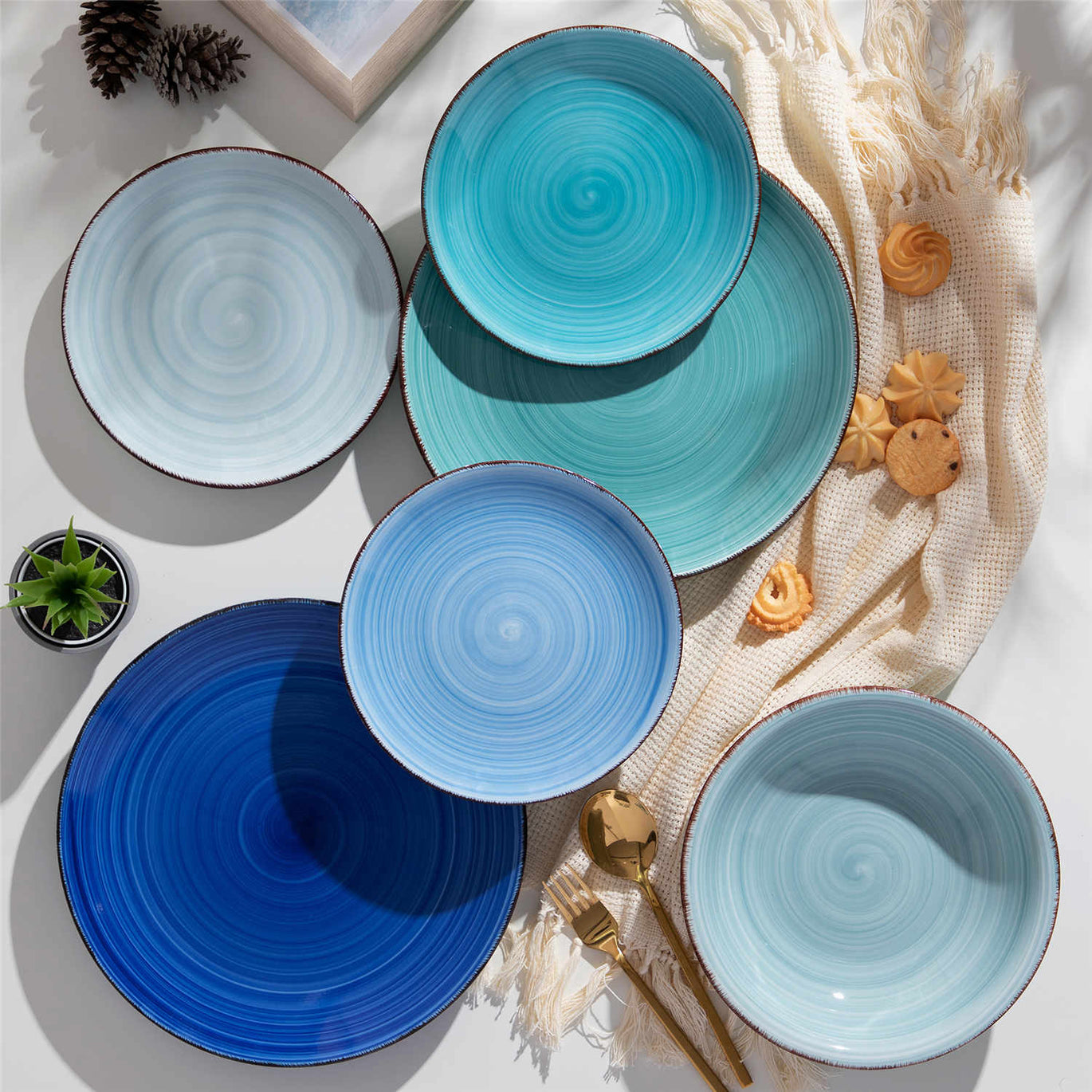


Marine Biologist-Inspired Ceramic Plates: How a Colorful Table Becomes an Ocean Classroom

Imagine a dinner plate that acts like a tide pool. Kids lean in, fingers hovering over painted plankton swirls, coral branches, and tiny fish names written on the back. The table suddenly feels less like a place you rush through and more like a dock over a living sea.
That is the magic of marine biologist-inspired ceramic plates. They are not just cute sea-shell patterns; when they are grounded in real ocean science, they can turn every snack, birthday party, and family dinner into a playful, powerful lesson in marine biology, ecology, and design.
As a Colorful Tabletop Creative and Pragmatic Joy Curator, I live in that sweet spot where art and science share the same plate. In studios, classrooms, and at my own kitchen table, I have watched kids remember a species name months later simply because they saw it every morning under their oatmeal. When the imagery is rooted in real marine research and thoughtful ceramic practice, these plates become miniature field trips you can stack in a cupboard.
Let’s dive into how that works.
What Does “Marine Biologist-Inspired” Really Mean?
Marine biologist-inspired ceramic plates are tableware designed using real concepts, methods, or organisms from ocean science, not just generic beach icons.
Sometimes this inspiration is direct. Coral reef scientists deploy ceramic settlement plates on reefs to measure how many coral larvae settle and grow. Coral Digest describes these plates as man-made tiles, often simple unfinished ceramic squares, that mimic natural reef rock so scientists can count coral “spat,” or baby corals, under a microscope later. Studies published in Marine Ecology Progress Series and the Journal of Experimental Marine Biology and Ecology have compared different plate types and recorded how many tiny polyps grow on each.
Sometimes the inspiration is ecological engineering. Aquarium experts at Bulk Reef Supply and AlgaeBarn describe MarinePure ceramic plates and blocks as ultra-porous reef-safe media with roughly 150,000 square feet of surface area per cubic foot and thousands of square feet of surface area in a single 8 by 8 inch plate. These plates act like artificial live rock so beneficial bacteria, sponges, and copepods can build thriving miniature ecosystems.
Sometimes the inspiration is artistic collaboration with scientists. Sydney-based artist Araceli Adams, whose Casa Adams porcelain platters were featured by the art and design magazine Colossal, paints specific marine species across crisp white porcelain and writes the species names on the back after consulting with an ichthyologist and taxonomist. Every plate is both a serving piece and a conversation starter about biodiversity.
And sometimes the inspiration is historical. The Sea Creatures Clayart survey shows that potters from Minoan Crete to Bernard Palissy’s French majolica, from Christian fish symbolism to Japanese seaside cultures, have been wrapping sea life around pots and plates for millennia, reflecting deep relationships with the ocean.
Marine biologist-inspired plates sit at the intersection of those worlds. They borrow the rigor of scientific tools, the emotional charge of conservation, and the long, playful history of sea creatures in clay to bring real ocean literacy to the table.

From Research Plate to Dinner Plate: Real Ocean Science in Clay
Settlement Plates: The Original Scientific “Sea Plates”
If you want to understand marine biologist-inspired dinnerware, it helps to start on the reef.
Coral settlement plates are simple, powerful tools described in detail by Coral Digest and research such as Green and Edmunds’ work in the Journal of Experimental Marine Biology and Ecology. Scientists bolt ceramic tiles or similar plates onto dead reef rock at specific depths, leave them through a coral spawning season, then bring them back to the lab. By bleaching the tiles and counting how many coral larvae have settled and grown a few polyps, they get a snapshot of reef health.
Coral Digest notes that ceramic tiles are ideal because they are inexpensive, easy to replicate, and chemically similar to the calcium carbonate surfaces corals naturally colonize. Studies comparing different substrates, summarized in Marine Ecology Progress Series, show that glazed tiles, slices of stony coral, and other materials can produce different polyp counts per colony. One set of data reports that acroporid recruits on glazed tiles averaged roughly two and a half polyps per colony, while those on certain coral slices averaged under two. Pocilloporid recruits often formed more polyps than acroporids on the same surface.
In the US Virgin Islands, researchers placed tiles along about six miles of shoreline and replaced them every six months for more than two years. They found about four coral spat per tile on the western side of St. John and only about one on the eastern side, linking recruitment differences to how larvae drift and are filtered by currents rather than temperature or flow alone.
Elsewhere, a study in Helgoland Marine Research at La Azufrada reef off Colombia used ceramic and terracotta plates and recorded nearly 37,000 invertebrate individuals from twenty-four taxa in one year, dominated by a barnacle that reached densities of more than a thousand individuals per plate. Corals did not show up at all, highlighting how fast-growing early colonizers can monopolize surfaces and suppress coral recruitment.
All of this research rests on a very simple object: a flat ceramic plate. When you bring that concept to the dining table, you are essentially inviting kids to think like reef scientists: what settles, where, and why?
Biofilter Plates: Miniature Reef Labs in the Aquarium
MarinePure ceramic media plates, as described by aquarium educators at Bulk Reef Supply and AlgaeBarn, take the plate-as-habitat idea into home aquariums. These plates and blocks are made from aragonite-based ceramic with an open structure exceeding eighty percent porosity. A single 8 by 8 by 1 inch plate can offer around 5,750 square feet of surface area for bacteria and microfauna, while a thicker 8 by 8 by 4 inch block climbs to about 23,000 square feet.
In practical terms, that means fish waste, microscopic food, and water flow through the plate, feeding communities of nitrifying bacteria and copepods that stabilize the system. They are engineered to be chemically stable, reef-safe, and similar to natural reef rock, but they are not harvested from the wild.
Educationally, that matters. A MarinePure plate in a sump or refugium is a tangible demonstration that flat ceramic objects can host entire hidden worlds. When kids use dinner plates decorated with coral, plankton, or mangrove roots at the same time they care for a reef tank, it becomes much easier to explain that every hard surface in the ocean is potential real estate for life.
Artists Who Work Like Field Scientists
Artists are already acting like marine biologists in the studio.
Bernadette Tuite, profiled by Ceramic Arts Network, hand-builds marbled clay vessels inspired by the eroded coastline of County Cork. She uses heavily grogged white clay marbled with black bodies, tears and layers slabs about one third of an inch thick, and embeds sands and tiny pebbles that she has collected, washed, calcined, and refired. The finished surfaces echo rock strata and sea caves, and she even uses bright primary colors to allude to plastic pollution in the water.
Araceli Adams’ Casa Adams platters, described by Colossal, trace specific crustaceans, mollusks, and fish across porcelain. Species names are written on the back, and she collaborates with an ichthyologist so the anatomy and labeling are accurate. She teaches classes in underglaze painting where students learn both decorative technique and the biological stories behind each animal.
At the Diriyah Biennale Foundation, the Tabaa’ initiative led by Sara Al Abdali has used the sgraffito technique—scratching through colored slip to reveal a contrasting layer—to create marine-inspired plates rooted in Islamic and Arab art traditions. These workshops connect female artisans, heritage patterns, and ocean imagery while exploring how contemporary motifs can refresh traditional crafts.
When we design plates for kids inspired by these practices, we are not just decorating; we are modeling how to observe, research, and interpret the sea in clay.
A Long History of Sea Creatures in Ceramics
The Sea Creatures Clayart survey reminds us that this marine obsession is not new. Minoan potters covered jars with octopuses and fish more than three thousand years ago. Christian communities used fish-decorated pottery as symbols of faith. French Palissy ware piled crustaceans and reptiles along highly textured surfaces. Across these cultures, sea creatures symbolized protection, abundance, rebirth, or spiritual meaning.
Bringing that history into modern plates lets you talk about cultural as well as biological diversity. A whale platter can lead to a conversation about both baleen feeding and ancient myths. A fish motif can become a springboard into Christian symbolism, Egyptian amulets, or Peruvian coastal deities.
Educational Benefits at Home, in Classrooms, and in Studios
Storytelling and Language Development Around the Plate
When a plate shows a generic cartoon fish, the conversation often stops at “cute.” When it shows a labeled parrotfish scraping algae off coral, or a barnacle-covered rock edge inspired by real settlement plates, the language level at the table jumps.
I have watched kids trace tentacles or fins with their fingers while they ask, “What is this one called again?” If the scientific name is on the back, as in Casa Adams’ practice, turning the plate over becomes a ritual. You get repetition: the same species names, colors, and shapes appear day after day, which is exactly how vocabulary sticks.
This effect is amplified when adults weave mini-stories based on reputable sources. NOAA’s kid-friendly resources about sea life, or the salmon-focused curricula described by NOAA Fisheries, offer simple narratives about migration, food webs, and threats. A single sentence about how corals spawn or how pteropods swim through the water column, paired with an image on a plate, can be enough to hook curiosity.
Sneaky STEM Literacy With Every Bite
Educational researchers talk about connecting classroom concepts to everyday life, and ocean science organizations are doing this at large scale. The Schmidt Ocean Institute’s education portal emphasizes how robotics and engineering, like the ROV SuBastian, allow scientists to explore deep sea environments that were unreachable not long ago. NOAA curates at-home lessons, data-driven activities, and live webinars that bring ocean science into living rooms.
Marine biologist-inspired plates can act as anchors for those digital resources. When a child joins a REEF “Fishinar” to learn fish identification or uses the REEF Educator Resources’ virtual field trip to pretend to be a marine scientist, they can later spot similar species or habitats on their plates and recall the webinar, the graph, or the story.
This is STEM literacy via repetition and association. You do not have to deliver a lecture at dinner. You simply ask, “Remember that barnacle that covered those experimental plates in that study off Colombia? See how this rock edge on your plate is crowded too?” The numbers stick as well: nearly 37,000 invertebrates on a set of plates in one year, or about four coral spat per tile on one side of an island versus one on the other, become concrete facts instead of abstract statistics.
Art Skills Plus Ecological Empathy
Programs that intentionally blend marine biology and ceramics give us a clear view of how powerful this combination can be.
Evergreen State College’s program “Shaped by the Sea, Shaped by the Hand” weaves marine biology with 3D art and ceramics over multiple quarters. Students study how physical, chemical, and geological processes shape estuaries, tidal flats, and deep sea habitats, then design ceramic objects inspired by these forms. Along the way they learn about clay bodies, glazes, and firing, and they use scientific research articles as direct inspiration for sculptural and functional works.
At Falmouth High School, an art teacher partnered with Woods Hole Oceanographic Institution to create a similar project. Students learned about plankton, coral reefs, pteropods, and seafloor animals from WHOI scientists, then returned to their studio to throw, sculpt, glaze, and fire pieces based on those organisms. The finished works, including a vividly colored brain coral sculpture, were exhibited at a WHOI laboratory.
The educational benefits in both cases are clear. Students practice critical thinking as they translate scientific diagrams into clay forms. They gain respect for marine life because they spend hours noticing details: the pattern of a pteropod shell, the way coral polyps cluster, or how plankton shapes repeat. A plate or bowl that emerges from this process is not only a vessel; it is a memory trace of research, sketching, and making.
When families or teachers bring similar principles to everyday tableware—choosing plates that tell real ecological stories or even hosting simple plate-painting sessions using sgraffito or underglaze—they inherit some of that same power at a more accessible scale.
Sensory Learning and Focus
Clay, glaze, and porcelain are inherently tactile. The marbled surfaces Bernadette Tuite describes, or the textured sea-creature reliefs cataloged in Sea Creatures Clayart, invite palms as much as eyes. Even smooth porcelain can be warmed under water and polished, as Tuite does after firing, to give a silky surface that is irresistible to touch.
This sensory dimension matters for learning, especially for kids who respond better to hands-on experiences. When they run their fingers across carved sgraffito lines that outline a fish, or explore the raised texture of barnacles on a rim inspired by a rocky reef, they are building mental models with their skin as well as their eyes.
The key is to use this tactility intentionally. Encouraging kids to trace a migration route, follow a current line, or count rays on a starfish while they wait for food can focus their attention in a way that feels like play, not homework.

Design Principles for Truly Educational Marine Plates
Accuracy That Sparks Curiosity, Not Perfectionism
Absolute scientific accuracy is not always necessary, but grounding the imagery in reputable references pays off. Casa Adams’ partnership with an ichthyologist ensures that fins, scales, and colors correspond to real species, and the written species names invite guests to look them up later. Coral settlement plate research shows that coral recruits actually do cluster into small colonies, not evenly across surfaces, so depicting dense patches rather than evenly scattered polyps can reflect that reality.
However, a plate also has to be joyful. The “Fungi” bowl series from studio Nendo shows how stylized biological references can still communicate growth, layering, and habitat without literal realism. For kids, a stylized but labeled reef scene can balance clarity and delight.
The trick is to aim for what I think of as “honest shorthand”: simplified forms that still convey correct relationships between animals and habitats, sizes, or behaviors, and that can be backed up with real-world resources from NOAA, REEF, or educational programs when kids start asking for more detail.
Textures, Layers, and Materials That Mirror the Sea
Material choices can quietly teach geology and ecology.
Tuite’s marbled clay echoes layered rock, and her embedded shoreline sands demonstrate that local materials carry local stories. Studies of colonization on artificial plates at Gorgona Island show that plate orientation and microhabitat often matter more than whether the plate is terracotta or ceramic. You can translate that into plate design by layering glazes to suggest deeper and shallower water, or by using a textured rim to hint at the high-energy wave zone and a smoother interior for calmer depths.
Biofilter plates like MarinePure offer a striking statistic: a block that fits in two hands can host the surface area of a small house. Glaze designs that reveal “hidden” micro-habitats, like crevices, cave mouths, or sponge-like pores, can pair with that fact to help kids imagine the invisible spaces where bacteria, larvae, and tiny invertebrates live.
Labels and Back-of-Plate Surprises
Writing species names, reef zones, or short facts on the back of plates is a simple, powerful move. Casa Adams uses the back to label species; you might add a note like “Inspired by coral settlement plates used to measure reef recovery” or “Barnacles and bryozoans compete for space on new surfaces just like this rim.”
The back of the plate becomes an invitation. Guests flip it over, discover that the sea-turtle illustration references a real nesting beach or that the coral sketches echo data from a particular study, and conversations bloom.

How to Use Marine Biology Plates With Different Ages
For toddlers and preschoolers, focus on joyful, bold shapes and a few key words. A whale plate used for daily snacks becomes an anchor for words like “tail,” “blowhole,” and “ocean.” You can still choose designs that are grounded in real species, but you keep the conversation light and sensory: splashing, colors, big versus small.
In early elementary years, plates can support simple science concepts. A reef scene with corals, fish, and a sea star becomes a picture of a habitat. You might point out that corals are animals, not plants, echoing explanations from NOAA’s coral education materials. You can also introduce time by mentioning how coral settlement plates are left in the water for months or a year before scientists count the new corals.
By upper elementary and middle school, plates can carry more explicit references to research. You might talk about how one study in the US Virgin Islands found more baby corals on the island’s western side than the eastern side, or how artificial plates deployed after a tsunami in the Phi Phi Islands showed similar coral recruitment on damaged and undamaged reefs a few years later. The plate becomes a graph in disguise, prompting questions about why those patterns occur.
For teens and adults, marine biologist-inspired plates open doors to discussions about climate change, habitat restoration, and material innovation. The Volvo Living Seawall project, for example, uses modular tiles shaped to mimic mangrove roots in Sydney Harbor; even though debates continue over exact materials, the idea of a seawall that doubles as habitat is a powerful case study in design. A set of plates with mangrove imagery and notes about root structures or nursery habitats can anchor conversations about coastal defense, urban design, and conservation careers.

Pros and Cons of Marine Biologist-Inspired Plates
A joyful, honest blog has to admit that even the most magical plates are not a silver bullet. It helps to look at both sides.
Aspect |
Educational Pros |
Potential Cons or Challenges |
Science accuracy |
Reinforces real species, habitats, and research concepts drawn from sources like Coral Digest, Helgoland Marine Research, and college programs that pair marine biology with ceramics. |
If designs are too stylized or inaccurate and not clearly framed as imaginative, they can cement misconceptions about anatomy, scale, or ecosystems. |
Everyday repetition |
Builds long-term memory by revisiting species names, reef processes, and ecological stories at every meal without needing extra screen time. |
Overuse without fresh stories or updated plates can lead to “background wallpaper” that kids stop noticing. |
Cross-curricular learning |
Bridges art, design, and science, echoing integrated programs at Evergreen State College and Falmouth High School with WHOI, and modeling creative scientific thinking. |
Requires adults who are willing to learn a bit themselves; without that, the plates risk becoming pure decor. |
Emotional connection |
Encourages empathy for marine life and interest in citizen science programs from organizations like REEF or virtual explorations from Schmidt Ocean Institute and NOAA. |
Conversations about threats such as coral bleaching or marine debris must be age-appropriate; too much doom too early can feel overwhelming. |
Safety and durability |
Ceramic plates can be long-lived, easy to clean, and free from PFAS used in many traditional nonstick coatings, as highlighted by ceramic cookware guides on Organic Authority. |
Poorly made ceramics or glazes that are not food-safe can pose risks; cheaper mass-produced items may chip, craze, or carry heavy metals if not properly certified. |
Used thoughtfully, the benefits overwhelmingly outweigh the drawbacks. The key is intention: choose designs linked to credible science, refresh the stories you tell, and pay attention to quality.
A Short FAQ for Curious Hosts and Educators
Do the plates have to be scientifically perfect to be educational?
They do not. Plates need to be honest, not clinical. A plate inspired by coral settlement research might show simplified patches of polyps rather than exact counts, or an octopus might be stylized for dramatic flair. What matters is that the relationships are correct and that you are willing to say, “This is a simplified version; in real studies, scientists count tiny polyps on ceramic tiles to understand how healthy a reef is.”
How can I make sure the plates are safe for everyday use?
Look for evidence of food-safe glazes and materials, and when possible, choose ceramics from makers or brands that clearly state their products are intended for serving food, not just decoration. Articles reviewing modern ceramic cookware note that many ceramic-coated products are free from PFAS chemicals used in older nonstick pans. While those reviews focus on pots and pans, the same principle applies: favor pieces designed for food contact over purely ornamental items.
How do I keep the experience joyful instead of scary when talking about threats to the ocean?
Pair every mention of a problem with a concrete action or hopeful example. If you talk about how barnacles and algae can outcompete corals on new substrates, also mention restoration projects that use settlement plates to monitor recovery. If a plate shows plastic debris, echo approaches like Bernadette Tuite’s subtle reference to pollution and follow with a family habit, such as choosing reusable bottles or participating in a beach cleanup. The goal is to raise awareness while reinforcing agency and wonder.
A Colorful Tabletop Creative & Pragmatic Joy Curator loves nothing more than those small, bright moments when a child looks down at a plate, pauses, and asks an unexpectedly deep question about the sea. Marine biologist-inspired ceramic plates turn those moments from occasional surprises into a daily rhythm of curiosity. With the right mix of science grounding, artistic play, and practical care, your table can quietly become one of the most engaging ocean classrooms in your life.

References
- https://www.fisheries.noaa.gov/feature-story/10-ocean-science-educational-resources-check-out-home
- https://www.evergreen.edu/catalog/offering/shaped-by-the-sea-shaped-by-the-hand-marine-biology-and-ceramic-art-43486
- https://www.whoi.edu/oceanus/feature/fhs-ceramics-class/
- https://www.reef.org/reef-educator-resources
- https://cfileonline.org/design-digest-aprils-top-picks-sydneys-sea-life-habitat-mushroom-bowls-red-mud-mutina-tiles-and-more/
- https://ceramicartsnetwork.org/pottery-making-illustrated/pottery-making-illustrated-article/sculpted-by-the-sea
- https://www.coraldigest.org/management/settlementplates/index.html
- https://schmidtocean.org/education/ocean-education-resources/
- https://www.researchgate.net/publication/250214322_A_comparison_of_settlement_plate_types_for_experiments_on_the_recruitment_of_scleractinian_corals
- https://www.bulkreefsupply.com/marinepure-ceramic-biomedia-plate.html?srsltid=AfmBOop9xxFEPQdfHRpHMhAVfgFn9Ti579CUlDVjAgBMlXLmqF9HVtr6
Sie können auch mögen
Stern 16 Stück Geschirr Set
- Von £58.00
£77.00- Von £58.00
- Stückpreis
- per
-
Blue
-
Green
-
Red
-
Grey
Bonita 18-teiliges Geschirrset
- Von £49.00
£61.00- Von £49.00
- Stückpreis
- per
-
Blue
-
Multicolor
Simi 24 Stück Geschirr Set
- £77.00
£104.00- £77.00
- Stückpreis
- per
Starry 16-teiliges Geschirrset
- £60.00
£70.00- £60.00
- Stückpreis
- per
-
Blue
-
Green
-
Red
-
Gradient Green