



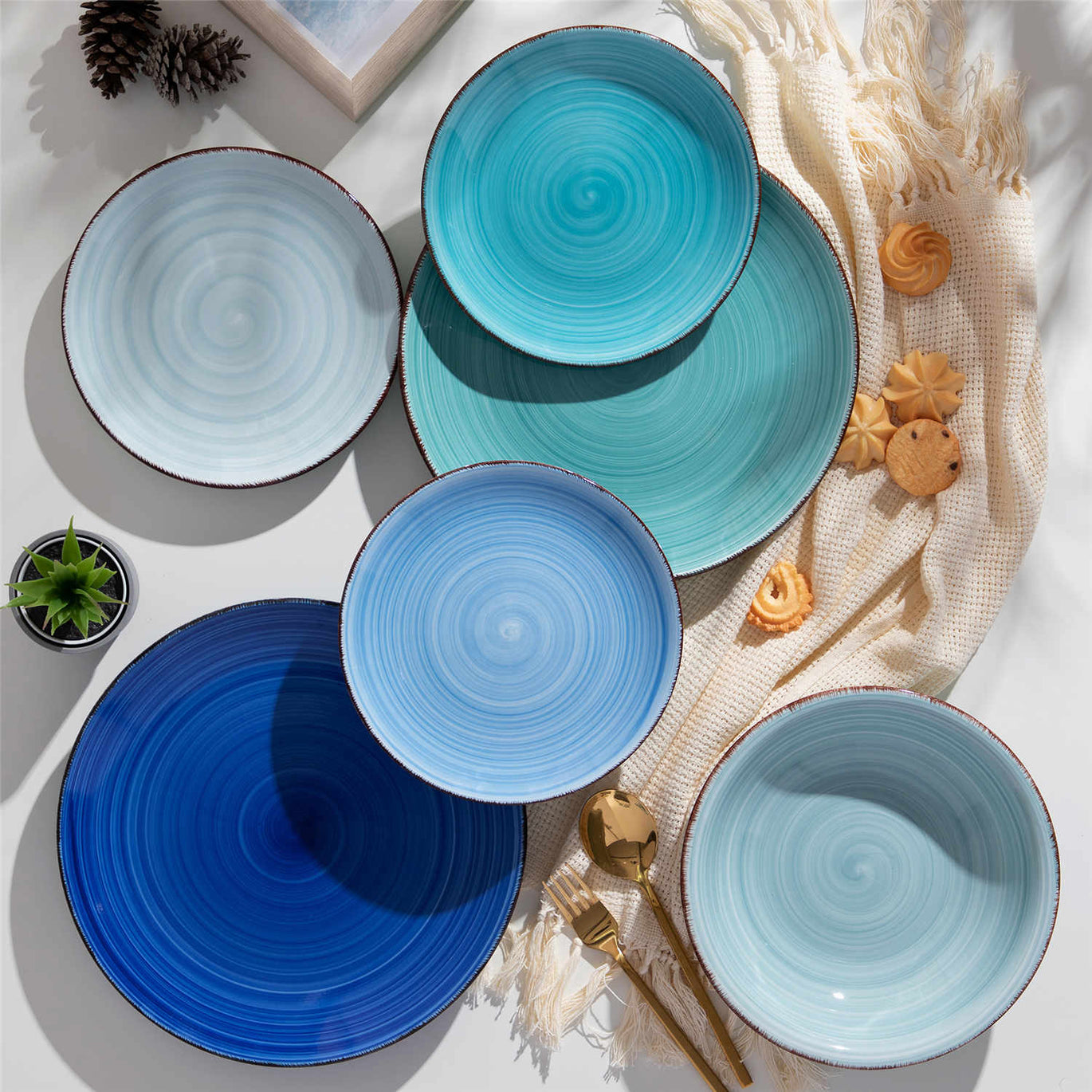


Understanding the Variety of Victorian Era Ceramics and Their Impact

Victorian ceramics are the original “more is more” backdrop for beautiful dining. Think of them as the playlist behind a dinner party: you may not notice every piece, but together they set the mood, signal taste, and quietly tell stories about class, empire, and everyday joy. As a colorful tabletop obsessive, I love how a single Victorian tile or majolica berry plate can electrify a modern table without feeling fussy—if you understand what you are working with.
This guide dives into the main types of Victorian ceramics, how they were made, what they meant, and how you can use them today in a way that is both romantic and practical. The goal is to help you see your plates, tiles, and serving pieces through a Victorian “period eye” while styling a table that feels very now.
Victorian Ceramics in Context: Maximalism, Industry, and Everyday Life
Victorian decorative arts, roughly spanning Queen Victoria’s reign from 1837 to 1901, were gloriously eclectic. According to overviews of Victorian decorative arts and interior design from museums and design historians, this was a moment of lavish ornament, revived historical styles, and a strong mix of European, Asian, and Middle Eastern influences. Bare rooms were considered bad taste. Sideboards were theatrical stages for ceramics; dining rooms were second only to parlors as display zones.
Behind the scenes, industry was booming. Research from the Bard Graduate Center on nineteenth‑century European ceramics describes an unprecedented alliance of science, industry, and art after about 1820. Factories experimented with new bodies and glazes. Applied arts schools and teaching museums pushed historic revivals and, later, flowing Art Nouveau forms. Ceramics were no longer just elite luxuries; they were also mass‑produced, affordable, and endlessly varied.
The result at the table was a riot of forms: white porcelain teacups, robust ironstone platters, vivid majolica servers shaped like leaves or shells, and tiled floors underfoot leading to the dining room. A recent book on Victorian ceramics argues that these objects carried real cultural meaning, acting as metaphors in novels and paintings and helping Victorians negotiate questions of taste, class, gender, and empire. Ceramics had agency; they shaped how people felt and behaved at the table, not just how the table looked.

Ceramic Basics: Bodies and Why They Matter
If you want to curate Victorian pieces for a modern table, it helps to understand the main ceramic bodies in play. A guide to antique ceramics and porcelain from House & Garden, together with technical entries from the Victoria and Albert Museum, sketch out the landscape.
Earthenware is the oldest pottery type. It is fired to a point where it becomes hard and vitreous, but it does not reliably hold water without a glaze. Stoneware is fired at higher temperatures, so it becomes dense enough to hold water even unglazed. Ironstone is a tough form of stoneware developed in nineteenth‑century Staffordshire as a cheaper alternative to porcelain. Porcelain itself, described by the Victoria and Albert Museum as a strong, non‑porous, translucent ceramic made from kaolin and other minerals fired at very high temperatures, was the glamorous benchmark. British factories added bone ash to develop bone china, a variant refined by makers such as Spode in the 1790s.
Here is a quick, research‑grounded snapshot of those bodies and how they play at the table today.
Body / Type |
Core traits (from museum and collector sources) |
Victorian role |
How it feels on a modern table |
Key considerations |
Earthenware |
Vitreous but not fully water‑tight unless glazed |
Everyday pottery, figures, slipware, many tablewares |
Relaxed, approachable, great for casual, colorful spreads |
Needs sound glaze; more prone to visible wear than porcelain or stoneware |
Stoneware |
Fired hotter, holds water even unglazed |
Utilitarian jugs, storage, later artistic stoneware |
Earthy and solid, nice counterpoint to delicate china |
Heavier in hand; some glazes historically involved salt‑glazing and pollution concerns |
Ironstone |
Robust nineteenth‑century stoneware alternative to porcelain |
Workhorse dinner services, hotel and domestic ware |
Perfect “hostess workhorse” platters and plates |
Often visually similar to porcelain; learn to read weight and feel |
Porcelain / bone china |
Strong, resonant, translucent white body |
High‑status tea and dinner services, figurines |
Bright, crisp canvases for patterned table settings |
Historically relied on global resource extraction and harsh factory conditions |
One charming paradox, as House & Garden notes, is that ceramics are both incredibly durable and instantly breakable. A Victorian plate might survive a century and still be used for everyday dining, yet shatter in one clumsy moment. That tension—fragility wrapped in toughness—is part of their emotional pull and a reason to handle them with care.

Majolica Mania: Lead‑Glazed Color and Theatrical Tableware
If Victorian ceramics had a breakout star on Instagram, it would be majolica. The term is famously confusing, and museum curators have spent real effort untangling it.
Research from the Victoria and Albert Museum and scholarly work on Victorian majolica clarify that nineteenth‑century “Victorian majolica” properly covers two related earthenwares. One is colored lead‑glazed ware, often called Palissy ware, where translucent colored lead glazes are applied directly to an unglazed biscuit body and fired so the glazes fuse. The other is tin‑glazed ware coated with an opaque white lead‑and‑tin glaze, then painted with colored oxides, echoing Italian Renaissance maiolica. Minton & Co. showed both types at major exhibitions in London and Paris in the mid‑nineteenth century, winning royal and critical praise.
Archaeological guidance from the Maryland Historical Trust describes Victorian majolica, especially in North American contexts, as refined white earthenware decorated with brilliantly colored lead glazes and elaborate relief molding. Motifs ran from shells and seaweed to insects, plants, and animals. Interiors of hollow vessels were often glazed in a different color than the outside, a useful identification clue when you are peering at a chipped rim in a shop.
What Victorians Served on Majolica
Majolica did not aim to be invisible. It specialized in expressive, occasionally whimsical forms that turned serving into performance. The Maryland research notes a focus on specialized tablewares rather than plain everyday plates. Butter dishes with sculpted cows, cruet stands, dessert and berry sets, cheese domes, salad plates, and a whole category of seafood pieces—oyster plates, sardine boxes, fish dishes, lobster tureens, seafood platters—were shaped and glazed to dramatize the food they presented.
Beyond the dining table, majolica spilled into toiletry sets, trinket boxes, ash trays, match holders, and garden wares such as jardinières and garden seats. Tiles, low‑relief architectural plaques, and colorful outdoor pieces were part of the same aesthetic wave.
Stylistically, Victorian majolica was gloriously mixed. The diagnostic sources trace influences from Romantic nature to Gothic and Medieval revivals, French sixteenth‑century Palissy ware, neoclassicism, the Aesthetic Movement, and East Asian art, especially Japanese designs that surged in popularity in the 1870s. A later variant known as Argenta ware, developed after Wedgwood sensed shifting fashion, used a softer cream‑colored body with painted low‑relief motifs such as bamboo, blossoms, birds, and fans.
The Rise and Fall of a Colorful Craze
Chronologically, Victorian majolica burst into public view at the Great Exhibition in London in 1851. It became widely fashionable by the 1860s, with a peak in the 1870s and early 1880s. By that time, according to the Maryland study and ceramic history surveys, almost every major British pottery was making majolica, and more than 130 British firms were involved, many of them small and short‑lived.
In the United States, the craze took off after the 1876 Centennial Exposition in Philadelphia. A Staffordshire trade report from early 1878 cited great American demand, with peak popularity in the 1880s.
But the very success of majolica sowed the seeds of its decline. As demand soared, small factories rushed in, quality dropped, and the ware became less of a specialty indulgence for affluent and middle‑class buyers and more of a mass commodity for lower‑income markets. Economic depression in the mid‑1880s compounded the problem. By the turn of the twentieth century, majolica had largely fallen out of favor in Britain and America, and American production had ceased by World War I.
Majolica on Today’s Table: Delight and Caution
On a modern table, Victorian majolica is best treated as a vivid accent. Because both colored lead‑glazed majolica and tin‑glazed maiolica rely on lead oxide in the glaze, and nineteenth‑century factories did not follow today’s safety standards, collectors and curators routinely advise caution with food use. The Maryland archaeological guidance underscores the heavy lead‑glaze aspect; labor histories of porcelain and pottery production emphasize workers’ exposure to toxic materials such as lead.
In practice, I like to style majolica as a visual highlight rather than a contact surface for hot or acidic foods. A shell‑shaped sardine dish is wonderful for holding wrapped chocolates, napkins, or floral centerpieces. A berry server can become a dramatic base for a clear glass bowl that actually holds the food. This way, you preserve the playful Victorian spirit without asking a nineteenth‑century glaze to meet twenty‑first‑century health expectations.
The upside is huge: rich color, sculptural silhouettes, and a direct connection to the Victorian love of theatrical serving. The trade‑off is that you treat these pieces as stage set rather than workhorse cookware.

Tiles, Floors, and Walls: Pattern Around the Table
Victorian ceramic tiles are another key piece of the story, especially in halls and corridors that lead to dining rooms and in the fireplaces that anchor many dining spaces.
Modern tile companies and heritage specialists such as Hyperion Tiles, Granada Tile, Olde English Tiles, and Porcelanosa describe Victorian tiles as nineteenth‑century decorative floor and wall tiles that combine intricate design with serious durability. Their roots lie in medieval encaustic tiles used in monasteries and palaces, but industrial advances and Gothic Revival taste in the nineteenth century turned them into accessible symbols of respectability for the middle class.
Encaustic and Geometric Victorian Tiles
Victorian tiles came in several key types. Encaustic tiles are made by inlaying different colored clays into the tile body before firing so the pattern runs through the thickness. This makes floral and heraldic motifs that remain visible even as surfaces wear, and period examples were often used for medallions, borders, and floor “rugs” in halls and churches.
Geometric tiles use small shapes—squares, rectangles, diamonds, octagons, triangles—laid in mathematical patterns. Black‑and‑white checkerboard schemes were common, but so were Harlequin arrangements in rich blues, burgundies, and creams. Contemporary explainers emphasize how Victorian designers used strict symmetry, borders, and central medallions to create floors that read almost like textiles.
There were also glazed tiles intended for kitchens and bathrooms, valued for ease of cleaning, and quarry tiles, dense unglazed tiles in red or red‑and‑blue‑black, used for very high‑traffic floors. Modern technical guides note that Victorian tiled floors are hard‑wearing, water‑ and dirt‑resistant, and compatible with underfloor heating systems, which is why so many original installations still perform well after more than a century.
If you are dreaming of a patterned entry that leads toward a dining room, this is your inspiration lineage. Tiles at the threshold acted as a preview of the table’s refinement.
Arts and Crafts Color: William De Morgan’s Tiles
Late in the Victorian period, the Arts and Crafts movement put its own spin on ceramic tiles. The Victoria and Albert Museum’s research on William De Morgan describes him as a leading artist‑potter whose vividly colored tiles and vessels, produced in the later nineteenth century, became design icons. A friend and collaborator of William Morris, De Morgan rejected bland industrial uniformity and pursued hand‑painted beauty that could live comfortably in everyday homes.
Early on, De Morgan decorated blanks in Chelsea with floral ornaments and stylized animals; best‑selling patterns stayed in production for decades and were sold with cast‑iron fireplaces. Influenced by Middle Eastern and Islamic ceramics seen at the South Kensington Museum, he developed a signature “Persian” style of stylized leaves and flowers in blues, greens, and turquoise. A famous commission is his tile contribution to the Arab Hall at Leighton House in London, where tiles and architecture merge into a single, immersive environment.
As production moved to Merton Abbey and then Fulham, De Morgan expanded into complex vessels and lustre glazes. He even supplied tile schemes for ocean liners and royal yachts, tying Victorian ceramics directly to the era’s fascination with global travel and exotic luxury.
Bringing De Morgan‑inspired tiles into a contemporary dining space—whether as a fireplace surround, a wall panel, or a backsplash—instantly gives you that Arts and Crafts depth of color and pattern. It also honors a historic pushback against disposable design.
Lettering and Architectural Tiles
Not every Victorian tile aimed for abstract pattern. A research brief on Victorian ceramic tile lettering in Torquay, Devon, highlights blue‑and‑white letter tiles used as permanent architectural signage, some of them dating from the 1870s. These tiles spelled out house names or shop fronts, turning type into architecture.
A leading ceramic factory, Mintons of Staffordshire, was long credited informally with such tiles, but archival searches have not found orders associated with the Torquay examples. That suggests local production, a reminder that Victorian ceramic culture included both major factories and smaller regional makers.
For the modern tabletop, that matters because tiles with lettering can frame a dining area or bar with personal messages—house names, family mottos, or even playful phrases—while nodding to Victorian precedents.
Using Victorian‑Style Tiles Today: Practical Considerations
The same qualities that made Victorian tiles enduring also make them demanding. Contemporary installation guides from tile specialists stress that complex geometric and encaustic patterns require careful planning, scale drawings, and often professional installation. Buying extra tiles for cuts and breakages is standard advice.
Maintenance matters too. Preservation‑focused guidance recommends warm water and pH‑neutral cleaners formulated for historic tiles, and warns against acids, including vinegar, as well as abrasive powders, steam cleaners, and high‑pressure washing that can erode surfaces or force water deep into the tile body. Protective strategies include periodic sealing for certain tile types, using runners in heavy‑traffic hallways, and placing felt pads under movable furniture.
If your dining room opens directly from a tiled hall, a simple ritual of daily sweeping and regular gentle mopping goes a long way toward preserving both the pattern and the invitation it extends to guests.

Porcelain, Stoneware, and Everyday Victorian Dining
While majolica and patterned tiles grabbed attention, most Victorian meals were served on less theatrical but no less meaningful ceramics.
Porcelain, Bone China, and the Quest for Whiteness
Porcelain, as technical summaries remind us, is made primarily from kaolin clay, fired at very high temperatures to achieve a hard, white, translucent body prized for its ability to take fine decoration. In Victorian Britain, bone china—porcelain strengthened and modified with bone ash, first experimented with at Bow in the 1740s and refined by Spode—became a distinctive national specialty. In popular language, “china” often meant any fine teaware, but in industry it referred specifically to this bone‑ash‑containing body.
During the Victorian era, porcelain and bone china moved from being rare luxuries to more widely available markers of refinement as industrial manufacturing scaled up. A House & Garden guide notes that collectors today might happily use an entire eighteenth‑century Wedgwood service for everyday dining, showing how durable these wares can be. At the same time, the article stresses that porcelain and other ceramics remain breakable, and part of their allure lies in that tension.
A research overview on Victorian porcelain also points to the darker side of the story. The consumer boom in porcelain depended on imperial trade networks and raw material extraction from colonized or economically dependent regions. In industrial centers like Stoke‑on‑Trent, working conditions involved long hours, dust, and exposure to toxic materials including lead glazes, with child and female labor widely used. Designs often borrowed or stereotyped Asian motifs while obscuring the power imbalances and labor behind them.
On the table today, porcelain and bone china still read as polished and luminous. As a colorful tabletop curator, I like to combine a slender ring of Victorian porcelain—say, dessert plates with delicate floral borders—with more grounded stoneware or ironstone serving pieces so the table feels layered rather than precious. But I also find it important to remember the human and environmental histories packed into that satisfying chime when plates stack.
Earthenware, Stoneware, Ironstone: Workhorses with Character
Earthenware, stoneware, and ironstone formed the backbone of everyday Victorian dining and kitchen life. House & Garden emphasizes that earthenware is the oldest category and needs a glaze to hold water, while stoneware can hold water even unglazed thanks to its higher firing temperature. Ironstone emerged in nineteenth‑century Stoke‑on‑Trent as a tough, economical alternative to porcelain, intended for heavy‑use contexts.
The Bard Graduate Center’s survey of European ceramics highlights how English firms such as Doulton in Lambeth pioneered artistic stoneware by collaborating with art schools, reviving historic salt‑glazed forms, and employing hundreds of art potters by around 1890. At the same time, utilitarian production of storage jars, pipes, and sanitary wares continued. QAGOMA’s study of Doulton points out that the company started with domestic stoneware containers, then expanded into glazed sewer pipes in response to mid‑nineteenth‑century public health reforms, before becoming celebrated for decorative wares and porcelain admired by Queen Victoria herself.
For a modern host, ironstone and stoneware are invaluable. They have a visual weight that can anchor a table full of more delicate Victorian porcelain and majolica. A big white ironstone platter piled with roasted vegetables or a stoneware jug of flowers reads as honest and inviting. Because glazing practices and compositions varied historically, it is still wise to avoid putting highly acidic or very hot foods on visibly damaged vintage surfaces, but in general these workhorses are what most Victorian ceramics collectors actually use for everyday serving.

Ceramics as Symbols: Class, Gender, and Empire
Victorian ceramics were never just neutral containers. The book “Ceramics in the Victorian Era: Meanings and Metaphors in Painting and Literature” positions them as key symbolic carriers within national, imperial, design‑reform, and domestic debates. By tracing specific ceramic forms through literature and painting, the author shows that pots, jugs, and tableware patterns helped Victorians talk about taste, morality, gender roles, and empire.
The concept of the “period eye” is central here: once you train yourself to see ceramics as a Victorian viewer did, you notice that certain patterns and forms repeat around scenes of respectability, domestic harmony, or anxiety. A carefully laid table with porcelain teacups might signal middle‑class aspiration; a cracked mug in a painting of rural poverty might stand in for precarious survival.
Museum essays on Victorian art amplify this point. QAGOMA’s overview of Victorian aesthetics notes that artworks of the period often carried strong narrative and sentimental content, and decorative arts such as ceramics were deeply involved. Doulton’s decorative stoneware became a vehicle for artistic expression, employing many women artists and shifting ceramic creativity from conservative Staffordshire toward more experimental London studios. Staffordshire “images,” the inexpensive earthenware figures described by the Victoria and Albert Museum, depicted popular heroes and celebrities; they were produced in huge numbers by poorly paid workers, some of them children making hundreds of small figures a day.
In this sense, the Victorian table is a stage on which social dramas quietly played out. Who had porcelain versus earthenware. Whether majolica seafood services suggested adventurous tastes. Whether tile floors in hallways proclaimed middle‑class respectability or modest aspiration. When you curate Victorian ceramics now, you are not only choosing colors and patterns, you are also choosing which of those historic stories to echo, complicate, or subvert.

Collecting and Styling Victorian Ceramics with Confidence
Because Victorian ceramics are so varied, even seasoned collectors can find the terminology confusing. The House & Garden article encourages buyers to learn correct descriptive terms while still allowing for love‑at‑first‑sight purchases. The Victoria and Albert Museum’s A–Z of ceramics reinforces this with detailed entries on terms such as delftware, maiolica, majolica, lustre, biscuit, and bone china, including how misattributions arose and how curators gradually corrected them.
For instance, “maiolica” originally referred to certain Spanish and Italian tin‑glazed wares, but in nineteenth‑century Britain, the word “majolica” wandered across multiple meanings, from Italian Renaissance pottery to Minton’s colorful lead‑glazed Palissy‑style wares. By the 1870s, curators at what is now the Victoria and Albert Museum recommended reserving “maiolica” (with an i) for Italian tin‑glazed work and using “majolica” for the Victorian colored‑glaze tradition. That distinction remains useful when you are reading auction listings or catalogues.
Similarly, understanding that “encaustic tiles” in a Victorian context refer to inlaid colored clays, not surface paints, helps you evaluate floors and reproductions. Knowing that ironstone is a form of stoneware, not porcelain, clarifies why a piece feels heavy in the hand.
From a practical, joyful‑table perspective, I find a few research‑based habits helpful.
I like to mix bodies on the same table, inspired by the Victorian love of abundance but edited for clarity. A patterned Victorian‑style tile trivet or centerpiece pad can anchor the middle of the table, echoing historic tiled halls, while white ironstone serving pieces and a ring of porcelain dessert plates provide calm structure. A single majolica server becomes the exclamation point.
I try to respect physical limits. For floor tiles and tiled hearths near dining areas, I follow historic‑tile care advice: sweeping regularly, using pH‑neutral cleaners, and avoiding vinegar or abrasive powders that can damage glazes. For older glazed wares, especially those known to involve lead, I keep them away from prolonged contact with hot, oily, or acidic foods and use them instead for wrapped items, bread, or purely decorative roles.
Most of all, I treat Victorian ceramics as collaborators. They bring their own stories and energy; my job as a Colorful Tabletop Creative & Pragmatic Joy Curator is to invite them into a conversation with contemporary glassware, linen, and food rather than re‑create a museum vignette.

A Few Common Questions
Q: Are Victorian ceramics safe to eat from today? Victorian ceramic bodies such as stoneware, ironstone, and porcelain are, in many cases, still used by collectors as everyday tableware, and sources like House & Garden note that entire historic services can function in modern dining. However, some Victorian glazes, particularly brightly colored lead glazes on majolica and related wares, were produced long before current safety standards. Because detailed testing lies beyond the scope of this guide, a cautious approach is to use visibly sound porcelain, ironstone, and stoneware for direct food contact and to keep highly colored, heavily glazed, or damaged pieces for serving wrapped or dry foods, or as purely decorative accents.
Q: How can I tell Victorian majolica from other green‑glazed wares? Archaeological identification notes from the Maryland Historical Trust point out that some Victorian majolica appears in solid dark green and can be confused with eighteenth‑century green‑glazed creamware. Majolica sherds often have different colored glazes on interior and exterior surfaces, and the body is usually refined white earthenware. Using those clues, together with context and consultation of specialist references, helps avoid misclassification.
Q: Is it worth investing in Victorian‑style tiles instead of originals? Modern tile makers emphasize that authentic Victorian floors are extremely durable and repairable, but installing new patterned floors is complex. Current Victorian‑style tiles, including fully vitrified geometric and encaustic‑effect options, offer the visual drama with better slip ratings and easier sourcing of replacement pieces. For many homes, a mix of preserved original tiles where they exist and carefully chosen reproductions is the most practical, sustainable path.
A Color‑Saturated Closing
Victorian ceramics prove that the objects under our elbows and feet carry far more meaning than mere function. They are stories in clay and glaze: of industrial daring, artistic experimentation, global entanglements, and everyday pleasure. When you set a table today with a bright majolica server, a sturdy ironstone platter, a shimmering porcelain cup, or a patterned tile trivet, you are not just decorating; you are collaborating with a whole era’s imagination. Curate boldly, clean gently, and let those Victorian surfaces turn every meal into a little piece of living history.
References
- https://www.vam.ac.uk/articles/a-z-of-ceramics?srsltid=AfmBOopPvJoYjrw-4zorryZbJzmSVm02tiRtegyIxNx4qe9gDJzN3Rj1
- https://en.wikipedia.org/wiki/Victorian_decorative_arts
- https://www.bgc.bard.edu/research-forum/articles/10/european-ceramics-in-the-age
- https://apps.jefpat.maryland.gov/diagnostic/Post-Colonial%20Ceramics/Less%20Commonly%20Found/VictorianMajolica/index-victorianmajolica.html
- https://www.architecturaldigest.com/story/victorian-interior-design-101
- https://www.houseandgarden.co.uk/article/antique-ceramics-and-porcelain
- https://www.dwell.com/article/behind-the-victorian-era-obsession-with-porcelain-theres-a-fraught-history-of-exploitation-e16e2513
- https://williammorristile.com/articles/victorian_era_tiles.html
- https://www.amazon.com/Ceramics-Victorian-Era-Metaphors-Literature/dp/1350354848
- https://www.antiquesandteacups.info/2019/06/victoriana-pt-2-era-i-love.html
Sie können auch mögen
Stern 16 Stück Geschirr Set
- Von €72,95
€96,95- Von €72,95
- Stückpreis
- per
-
Blue
-
Green
-
Red
-
Grey
Simi 24 Stück Geschirr Set
- €96,95
€129,95- €96,95
- Stückpreis
- per
Bonita 18-teiliges Geschirrset
- Von €60,95
€74,95- Von €60,95
- Stückpreis
- per
-
Blue
-
Multicolor
Starry 16-teiliges Geschirrset
- €73,95
€86,95- €73,95
- Stückpreis
- per
-
Blue
-
Green
-
Red
-
Gradient Green