



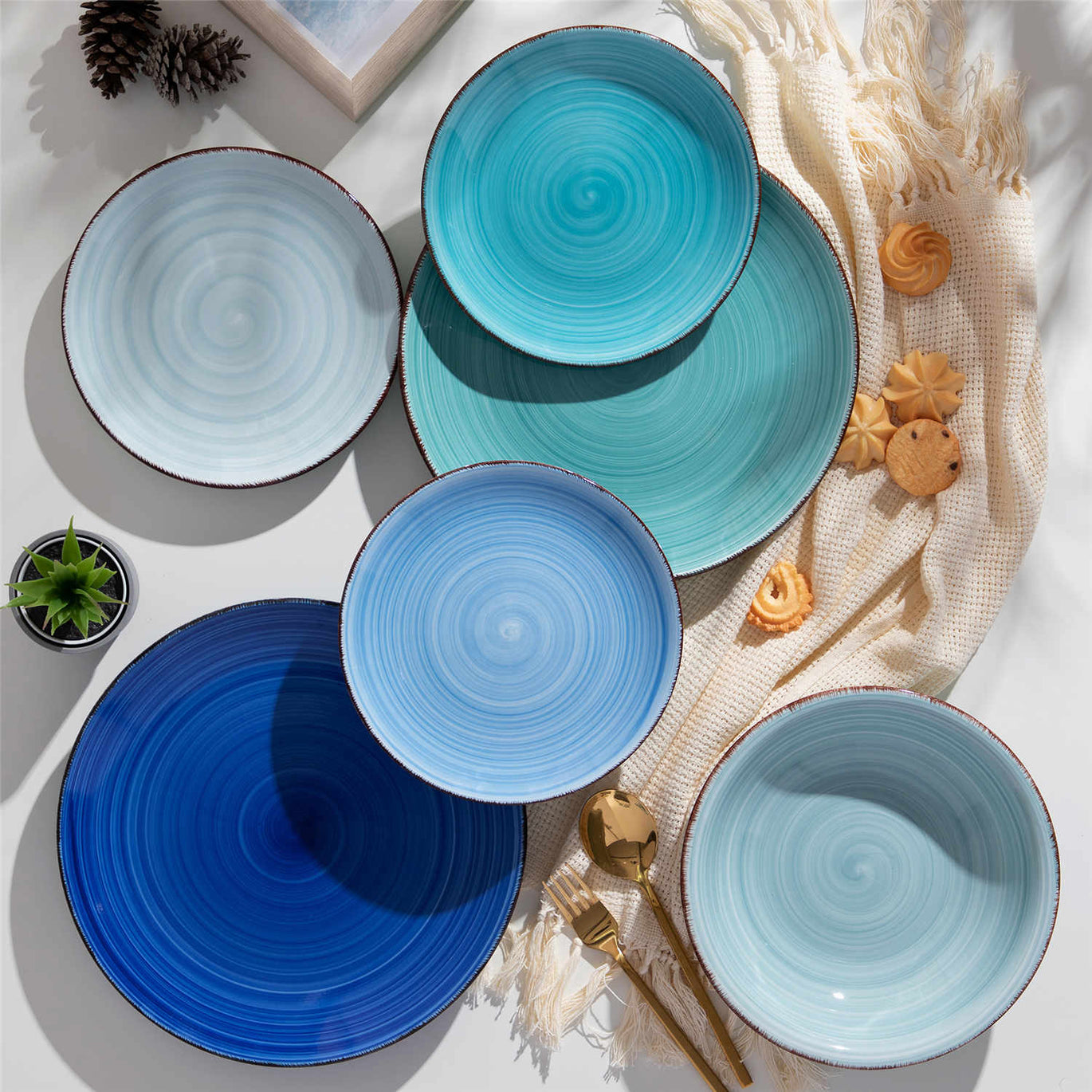


Innovative Ceramic Tableware Design for Space Tourism Dining

From Space Rations to Space Rituals
Picture this: you glide past a panoramic window, Earth glowing below, and someone sets down a shimmering, galaxy-speckled bowl that actually behaves itself in zero gravity. No rogue droplets, no flying crumbs, just a calm, colorful little universe holding your dinner in place.
That is the promise of space tourism dining at its best. It sits right at the intersection of aerospace engineering, materials science, and joyful tabletop design. For now, professional astronauts still rely mostly on pouches and semi-solid meals, but designers are already sketching the next chapter.
Latvian designer Klinta Locmele’s speculative “Zero” microgravity tableware, presented in her graduating project and profiled by design publications like Dezeen and Yanko Design, is a powerful proof of concept. Her grooved plates, spiked food anchors, silicone bowls with suction bases, and alien-like ceramic teapot are engineered around capillary action rather than gravity. The goal is simple and radical at once: make eating in space feel more like a comforting ritual than a sterile refueling stop.
For a Colorful Tabletop Creative & Pragmatic Joy Curator, this is irresistible territory. Instead of asking only “Will this plate survive launch?” the question becomes “How can ceramics, glazes, and joyful shapes behave beautifully in microgravity, protect the cabin, and still delight a honeymooning couple in orbit?”
To answer that, it helps to understand why space stations have largely kept ceramic dinnerware on the ground.
Why Space Stations Avoid Traditional Ceramic Dinnerware
A recent editorial from tableware brand Vancasso, written from a curator’s point of view, lays out the case with unusual clarity: in orbit, the table is part of the spacecraft. Everything on it is judged by mass, failure mode, outgassing, and how it behaves when you take gravity away.
On Earth, the heft of a hand-glazed plate feels luxurious. In orbit, every ounce is part of a launch bill. Industry analyses cited in that editorial describe a launch marketplace where payload cost is tracked by weight, at roughly 9,070 per pound of payload. That figure is not just for exotic instruments; it flows right down to “small” items like plates and cups. Aerospace engineering notes referenced in the piece emphasize that reducing material density is often three to five times more effective for structural efficiency than simply boosting strength. In other words, a lighter material that is strong enough almost always wins over a heavier one that is overbuilt.
Mass is only the start of the problem. Space stations are closed habitats with extremely sensitive air handling. Any material that chips, abrades, or sheds can produce floating particles that irritate eyes and lungs, clog filters, scratch optics, and interfere with equipment. Vancasso’s editorial points to aerospace coatings research from companies such as Keronite, where plasma electrolytic oxidation on light alloys is valued partly because of its excellent adhesion and low particle generation. That mindset colors everything: brittle items that can fracture into sharp shards simply do not belong in a microgravity cabin.
Traditional ceramic dinnerware has two strikes here. It is relatively heavy for its function, and when it fails, it tends to fail abruptly and brittlely. A chipped stoneware bowl in your kitchen gives you a nuisance. The same chip in a station creates hard fragments that never fall to the floor.
Then there is outgassing and surface chemistry. Earth kitchens rarely think about volatile condensable materials; space hardware teams obsess over them. Aerospace materials are tested for total mass loss and condensable volatiles in vacuum, with some missions pushing total mass loss requirements below a tenth of a percent. High-adhesion coatings and carefully formulated polymers are qualified for this; everyday ceramic glazes and rustic textured finishes are not. Unknown glazes, crumbly textures, and surfaces that might flake under thermal cycling add variables a spacecraft would rather avoid.
So classic ceramic dinner plates lose the audition. Yet ceramics themselves are absolutely central to space technology. The key is not “ceramic or not” but which ceramics, in what structures, and for which jobs.
What Advanced Ceramics Already Do in Space
Materials specialists at Goodfellow describe ceramics as inorganic, non-metallic materials made by firing selected raw ingredients—often clays and silicon- or aluminum-based compounds—into rigid solids whose properties depend heavily on composition and processing. In aerospace, they shine where metals begin to sweat.
Ceramics can tolerate temperatures above about 3,600°F, which makes them ideal for components exposed to brutal thermal loads, such as heat shields for atmospheric re-entry. Goodfellow highlights multi-layer structures where an outer ceramic layer faces the fire while inner fibrous-ceramic layers spread and dissipate heat before it reaches interior structures. The result is a protective skin that is strong, stable, and significantly lighter than an equivalent metallic solution.
Beyond heat shields, ceramics show up in rocket engine components, thermal insulation panels, and lightweight, durable antennas. Their chemical stability is a quiet superpower, helping them resist corrosion and degradation in vacuum and other harsh environments. Ceramic insulators also protect sensitive spacecraft electronics by resisting electrical currents and preventing short circuits. Researchers are actively developing strong, lightweight ceramics for hydrogen tanks and improved radiation shielding, with an eye toward long-duration missions.
On the research frontier, a UCLA-led team reported a ceramic aerogel in Science that is almost dreamlike in its properties. This material is more than ninety-nine percent air by volume, yet it is highly durable and elastic. Thin layers of boron nitride form hexagonal “chicken wire” patterns with double-pane wall structures that slash weight while boosting insulating power. Unlike most ceramics, this aerogel contracts when heated and contracts perpendicular to compression, which improves flexibility and damage tolerance. It can be compressed to about five percent of its original volume and fully recover. Thermal cycling tests showed it surviving hundreds of rapid jumps between extreme cold and heat, on the order of roughly −324°F to 1,652°F, without fracturing. After a week near 2,552°F, it lost less than one percent of its mechanical strength. It is not a dinner plate material, but it proves that ceramic architectures can be tuned for astonishing resilience.
Meanwhile, a detailed analysis in a materials journal on a circular economy for the Moon argues that engineered ceramics will be essential infrastructure materials for lunar settlements. The authors describe lunar regolith as a glass-rich layer dominated by silicate minerals such as anorthite, pyroxene, and olivine. They outline a “geomimetic” processing route where anorthite is leached with hydrochloric acid to produce calcium chloride, silica, and hydrated alumina. The alumina can be converted into high-purity aluminum via molten-salt electrolysis at lower temperatures than full molten-regolith processing, while the co-produced alumina and silica form key technical ceramics with strong wear, corrosion, and thermal resistance. The same work highlights magnesium aluminate spinel as a high-value lunar ceramic, with very high melting point, low thermal expansion, wide optical transparency, and high hardness—at the cost of brittleness and machining difficulty. They also point out a crucial bottleneck: advanced ceramics often depend on polymers as binders and reinforcements, yet polymers are hard to produce from scarce lunar volatiles.
Another European research initiative framed as “Porous ceramics: light in weight but heavy in energy” underscores how porous ceramic structures can be dramatically lightweight while still delivering serious energy-related performance. Even without plate-specific experiments, the message for tableware design is clear: ceramic is not one monolithic material; it is a whole universe of architectures.
Taken together, these sources tell us that ceramics in space are already high-performance, purpose-engineered, and often ultra-light. The challenge is translating that spirit into joyful, safe, practical tableware for space tourism.

The Microgravity Dining Challenge
To design such tableware, you have to fall a little bit in love with microgravity. The ISS National Lab describes microgravity as the condition of perceived weightlessness that occurs when an object is in free fall, such as in orbit. In this environment, everyday behaviors of fluids and materials change dramatically. Gravity-driven convection, buoyancy, and sedimentation are suppressed. Instead, surface tension, viscous forces, and molecular interactions step into the spotlight.
For scientists, that is thrilling. The ISS has become a laboratory for studying combustion, complex fluids, soft matter, and hard materials without gravity’s usual interference. Experiments there reveal new details about fluid dynamics, phase separation, and internal structures, which in turn inform formulation chemistry and the design of advanced materials. These insights feed into technologies like nanofluidics, where fluids are guided through tiny channels for sensing, filtration, or lab-on-a-chip devices, and into better water and energy conservation systems on Earth.
For diners, microgravity mainly means this: food does not sit nicely where you put it. Liquids bead up and float. Crumbs drift. Traditional plates and cutlery simply do not work the way they do in your kitchen.
That is why projects like Klinta Locmele’s “Zero” collection feel so important. As covered by design writers, Zero includes a spiked plate whose grooves guide sauces using capillary action and whose spikes hold bite-sized pieces in place so you can still cut and spear them. A silicone bowl with a narrow bottom gathers liquid foods into a small area and anchors itself with a suction cup to whatever surface stands in for a table. The spoon has a deep well and an angular shoulder that keeps soup from sliding up the handle. A ceramic teapot, inspired by astronaut Donald Pettit’s capillary cup, uses interior contours and a straw-like spout to manage hot beverages without pouches. It is all about letting astronauts and future tourists sip and bite in ways that feel familiar and pleasurable, while quietly enlisting physics to keep food contained.
The psychological dimension matters as much as the engineering. Locmele’s design work, informed by interviews with experts and astronauts, emphasizes that existing space-station facilities often lack human-centered design and can undermine mental health on longer missions. Mealtime, framed as a comforting ritual with Earth-like cues, becomes a stabilizing moment. For future space hotels, that ritual will be part of the experience guests are paying for.
Ceramic tableware for space tourism has to respond to all of this: the altered behavior of food, the strict safety and cleanliness rules, and the very human need for color, narrative, and comfort.

Design Principles for Ceramic Tableware in Space Tourism
Use Geometry, Not Gravity, to Control Food
In microgravity, gravity is not available to keep soup in a bowl or sauce on the bottom of a plate. Capillary action becomes one of the main controllable forces for liquids. This is the tendency of liquids to climb or cling within narrow spaces because of molecular attraction between the liquid and surrounding surfaces.
Zero’s grooved plates and spiked surfaces are essentially capillary landscapes. They give liquids continuous paths to follow, so sauces can be pinned in channels instead of forming free-floating globules. Spikes provide mechanical capture for solids, keeping them from sliding off with a gentle bump.
For ceramic tableware aimed at space tourism, geometry should be treated as an active fluid-management system. Bowls can taper to narrow bottoms, concentrating stews or porridges where utensils reach naturally. Interior ribs, shallow channels, and ridges can be sculpted into the ceramic body or glaze pattern, creating micro-valleys that encourage liquids to stay attached. Cup interiors can incorporate smooth, continuous contours that usher beverages toward a mouthpiece or straw-like element, mimicking the logic of Pettit’s capillary cups and Locmele’s teapot.
Every groove and contour also has a visual character. As a tabletop curator, it is natural to think in both physics and aesthetics: a milky glaze pooling in a carved channel, a galaxy speckle that just happens to mark the deepest parts of a bowl where liquids gather. Function and flourish can share the same line.
Engineer Safer Ceramic Bodies and Hybrids
The Vancasso editorial and aerospace literature are blunt about brittle fracture: sudden, shard-generating failure is unacceptable in orbit. That does not mean ceramics are off the table entirely; it means the ceramic portion of any plate or cup must be designed as a benign failure partner.
Research on ceramic-composite armor, for instance, shows that in light-weight bi-element targets made of a ceramic tile backed by a composite layer, most of a projectile’s kinetic energy is absorbed in the ceramic. The projectile’s rigid length shortens intensely as it plows through the ceramic, and the backing composite mainly provides structural support and additional energy absorption rather than affecting erosion directly. The design implication in that context is to optimize ceramic properties and thickness.
While space-tourism dinner plates do not need to survive high-speed projectiles, they do need to cope with impacts, drops, and thermal cycles. The armor research is a reminder that ceramics can be tuned to absorb energy—through cracking and fragmentation—while a backing layer keeps the overall assembly intact. For tableware, one promising route is hybrid construction: a light metal or high-performance polymer core with thin ceramic faces or inlays. If the ceramic chips, it is held by the backing structure, and any fragments are small and captive.
Another route is to use porous or lightweight ceramic bodies. Porous ceramics studied in energy applications and the lightweight ceramic aggregates explored for polymer concretes both point to ways of reducing density while maintaining structural function. Pores can also blunt crack tips, changing how fractures propagate. Combined with a compliant backing or rim, a slightly porous ceramic could fail more gently and weigh less, which the launch budget will appreciate.
Pair Ceramics with Qualified Coatings and Clean Surfaces
Space materials research described by Goodfellow and in the Vancasso editorial highlights how much effort goes into surface treatment. Coated aluminum alloys, particularly those treated with plasma electrolytic oxidation, gain hard, adherent, low-shedding surfaces that resist wear, help control heat through tailored reflectivity, and demonstrate excellent behavior in outgassing tests across wide temperature ranges, roughly from −301°F to 842°F, as reported in coatings summaries.
Translating that into dining, light metal substrates with ceramic-like coatings are powerful candidates. The coatings provide the tactile hardness and scratch resistance diners expect from ceramic plates while maintaining low mass and stable behavior under cleaning and thermal cycling. They are also easier to qualify for low outgassing and low particle generation than thick, unknown glazes.
For ceramic-forward tableware, it may make sense to keep the ceramic component as a decorative or localized element—say, a patterned insert or a small, thick-walled vessel nested into a coated metal frame—while letting qualified coatings or polymers shoulder the cabin-facing reliability demands. In every case, surfaces should be as smooth and closed as possible so that food residues do not hide and particles do not flake.
Design for In-Space and Off-World Manufacturing
Logistics data reported in the ceramic stereolithography research emphasize how heavy the spare-parts burden is for the ISS: several thousand kilograms of spares must be launched and stored just to keep the station running. This is one of the reasons agencies are investing in in-space additive manufacturing. Plastic parts have already been 3D printed in microgravity using fused deposition modeling. Metal parts have been fabricated using direct energy deposition and selective laser melting during parabolic flights, though with surface roughness and powder-handling challenges.
For ceramics, a team documented a breakthrough process using digital light processing combined with a specially formulated ceramic paste. Conventional low-viscosity slurries misbehave in microgravity, climbing container walls and refusing to form stable layers. The new paste behaves as a Bingham plastic: solid-like under low shear, but flowing when stress exceeds a threshold. This allows the paste to hold its shape between layers yet spread when needed. During parabolic flight tests, the researchers printed alumina parts with a solid loading of fifty percent by volume. After sintering, the parts reached approximately ninety-nine percent relative density, with microstructure quality assessed by X-ray computed tomography.
This kind of process is a gift to designers. Complex, double-walled ceramic forms with internal channels, ribs, or structural lattices could be printed near where they will be used—in orbit or on a lunar outpost—rather than launched in final form. The microstructures that give UCLA’s aerogel its flexibility, or the internal pathways needed for capillary food control, become geometric games for the printer rather than manufacturing nightmares.
Extrusion research in high-gravity fields reinforces how sensitive additive processes are to gravity. Experiments with polylactic acid extruded through a nozzle at different gravity levels from 1G up to 32G showed that higher gravity thinned and stretched the extruded strands, shrinking line widths by nearly eighty percent while greatly increasing the extrudate weight. Surface tension always tried to pull the molten material into a cylinder, but gravity changed the balance, altering geometry and flow. Microgravity sits at the opposite end of that spectrum, so it is reasonable to expect that deposition processes will behave very differently again. Tableware designers who embrace additive manufacturing will need to collaborate closely with process engineers to ensure that the stunning shape imagined on Earth actually prints cleanly in orbit.
On the Moon, the circular-economy study mentioned earlier suggests that alumina and silica ceramics derived from regolith could eventually supply much of the infrastructure. In that context, simple, robust ceramic vessels and liners produced locally might serve lunar hotels and research stations. The same paper warns that many advanced ceramic systems depend on polymers, which will be precious in that environment, so tableware concepts that minimize polymer content and make clever use of all-ceramic or ceramic–metal composites will be more sustainable.
Honor Story, Color, and Ritual
So far, this has all been about physics and logistics. Space tourism will live or die on emotion.
Contemporary ceramics already show how dinnerware can tell stories of exploration and industry. Diesel Living’s “Cosmic Dinner” line, developed with Seletti and documented by ceramics media, prints planets and moons onto porcelain plates, pairs them with glasses blown to resemble meteors, and spices the table with rocket-shaped salt and pepper shakers and a spaceman vase with a gold visor. A companion collection called “MACHINE” mimics gears, cogs, and pistons in white porcelain, transforming heavy industrial parts into delicate table objects. Together, they stage a speculative narrative: Cosmic Dinner is the destination, MACHINE is the human-made hardware that gets you there.
The emotional lesson for space-tourism dining is that plate and bowl surfaces are prime storytelling real estate. They can carry planetary imagery, abstracted orbital paths, or softer references to Earth and home. They can evoke rocket engines or lunar regolith without ever feeling gimmicky. They can be cohesive sets or deliberately mismatched, like a DJ mix for the table.
Travel-inspired tableware brands such as Cataloniaplates show how to do this with place-based aesthetics. Their editorial on curating a travel-inspired table describes Japanese wabi-sabi ceramics with asymmetrical forms and neutral palettes as quiet backdrops, Mediterranean pieces in terracotta and deep blue glazes that echo sea and cliff, Moroccan mosaic patterns and jewel tones that turn the table into a celebration, Nordic pieces with clean lines and soft muted tones, and Latin American vibrance that feels like a “party on your table”. They advise choosing a single hero piece to anchor the setting, balancing bold elements with neutrals, layering textures, and translating the feeling of a place rather than literally recreating it.
Space tourism tableware can borrow that playbook. A single, sculptural “hero” serving bowl with a cratered glaze inspired by lunar landscapes could ground a whole orbiting dining room. Plates for everyday service might stay mostly neutral but flash cosmic imagery at the rim. Textures can pair matte ceramic with slick, low-shedding polymer edges to engage touch and keep safety in mind.
Consumer brands already exploring travel and sustainability give further cues. Pottery For The Planet and Output Envy present ceramic travel bowls and cups as stylish, reusable companions for takeout and adventures, with colors like Lavender, Raspberry Beret, and Rainforest Jasper and messaging that ties them to a sustainable, low-disposable lifestyle. Earth + Element’s hand-made Petal Travel Cup positions itself as part of “everyday rituals” and links each purchase to mangrove tree planting in Kenya through reforestation partners, turning a morning beverage into a mini climate action.
For future space hotels, ceramics that embed similar stories—perhaps funding Earth conservation projects or habitat restoration—can help guests feel their splurge has a purpose. Even if the pieces themselves are hybrid ceramic–metal objects designed for safety, the narrative content can tap into the same emotional channels.
Airline tableware already hints at this convergence. A supplier focused on in-flight products and eco-friendly tableware markets reusable ceramic plates as an upgrade over disposables for onboard meals, blending sustainability and a premium feel in a high-constraint transportation environment. Space tourism dining will inherit that ambition and multiply it.

Practical Design Ideas for Space-Tourism Ceramic Collections
If you are sketching a colorful, ceramic-forward tableware line for orbital or lunar hospitality, start by treating every piece as part technical hardware, part emotional artifact.
Keep weight low wherever possible. Thin-walled ceramics, porous bodies, hybrid constructions with coated aluminum or engineered polymers, and tightly nested forms all help. Stackability is not just a storage perk; it is a sign that you are respecting limited cabin volume and mass budgets.
Design food-contact geometry for capillarity. Ask where liquids should want to go. Carve or mold gently descending paths into plate surfaces, almost like terraced landscapes, and let glazes accentuate those flows. Build spoon and fork heads that feel familiar but subtly deeper or more cupped, as in Locmele’s deep-well spoon, so that soups and sauces stay captured.
Avoid rough, friable textures on high-contact surfaces. If you love rustic, use that language on low-risk outer surfaces or on Earth-only editions, and keep cabin pieces smooth and tightly sealed. Let your craving for texture express itself through sculpted forms, color gradients, and gloss–matte contrasts that do not shed.
Imagine additive-manufacturing workflows from day one. Could a signature teacup be printed in a ceramic paste DLP system on a station, then finished with a thin in-situ glaze or coating? Could replacement inserts for hybrid plates be fabricated in microgravity when needed, instead of overstocking spares? ISS National Lab materials research and the ceramic paste demonstrations suggest that such scenarios are plausible in the long term.
Finally, build in story. Space tourists will remember not just what they saw out the window, but what they held in their hands. A colorful rim that tracks an orbit, a small inscription about reforestation projects supported by their dinnerware, or a pattern inspired by Martian canyon imagery studied for future ceramics manufacturing will all make the table feel like part of the journey.
Pros and Cons of Ceramic-Based Space Tableware
Here is a concise comparison of ceramic-forward designs versus more conventional space cabin materials, drawing only on the research discussed above.
Aspect |
Ceramic-Forward Design Benefits |
Main Risks or Tradeoffs |
Thermal performance |
Excellent heat tolerance, informed by aerospace ceramics and advanced aerogels that shrug off extreme swings, keeping hot dishes and drinks stable and insulated. |
High thermal resilience is often overkill for shirt-sleeve cabins and does not compensate for brittle fracture risks if not paired with smart architecture. |
Mass and efficiency |
Porous and lightweight ceramic architectures and thin-walled pieces can reduce mass while preserving function; hybrid designs can keep the ceramic layer thin. |
Traditional dinnerware ceramics are heavier than coated metals or engineered polymers for the same function, and launch economics heavily penalize unnecessary weight. |
Hygiene and surfaces |
Smooth glazes are easy to clean and can resist stains and corrosion, echoing ceramic insulators’ stability in harsh environments. |
Everyday glazes and rustic textures are not qualified for low outgassing or low particle shedding; flaking or crazing under thermal cycling is a concern. |
Durability in microgravity |
Ceramics can be engineered into composites or supported on backing layers that absorb energy, limiting catastrophic failure; prints with high density and controlled microstructure can be robust. |
Intrinsic brittleness makes shard formation a persistent risk; chips do not fall away but float, challenging cabin safety protocols. |
Storytelling and aesthetics |
Ceramics carry rich visual and tactile narratives, from planetary imagery and industrial forms to travel-inspired textures, anchoring space tourism experiences emotionally. |
Safety-driven simplifications can tempt designers to strip away all ornament, risking a sterile look unless story and color are thoughtfully reintegrated in safe ways. |
Sustainability and sourcing |
Lunar and planetary ceramics made from in situ regolith could one day reduce dependence on Earth-launched tableware; Earth-based brands already tie ceramics to sustainability narratives like reforestation and reuse. |
Advanced ceramic systems often require polymers and dopants that are scarce or must be imported and perfectly recycled in off-world environments, limiting complexity. |

Short FAQ
Will classic porcelain plates ever be used on space stations?
Current station practice, as described by brands and engineers who study the environment, strongly favors lightweight, non-brittle, low-shedding materials. Traditional porcelain plates are heavy and tend to chip into sharp fragments, so they are unlikely to become everyday workhorses in orbit. However, selected ceramic elements could appear in hybrid designs where the ceramic is protected and the overall assembly has been tested for particle generation and outgassing.
What makes tableware “space-ready” from a materials perspective?
Space-ready pieces prioritize low mass, controlled failure modes, minimal particle shedding, and low outgassing. They are often built from coated light alloys, engineered polymers, or carefully engineered ceramics and composites whose surfaces and structures have been validated under vacuum, radiation, and thermal cycling. Designs such as the Zero microgravity tableware demonstrate that geometry tuned for capillary action is just as crucial as material choice.
Can space-inspired ceramic tableware improve dining on Earth?
Absolutely. Travel-inspired collections, eco-conscious travel bowls and cups, and concept-driven lines like Cosmic Dinner and MACHINE show that narrative-rich ceramics elevate everyday meals. Borrowing microgravity-friendly geometries, lightweight constructions, and hybrid materials can make Earth tables more comfortable, resilient, and sustainable while still delivering that playful, colorful, cosmic spark.
Closing
Space tourism dining is not about copying your favorite restaurant and bolting it to a rocket. It is about distilling the joy of a beautifully set table into forms and materials that behave gracefully when gravity lets go. When ceramics, coatings, and capillary-friendly shapes come together with color and story, you get more than a plate; you get a tiny, orbiting stage for delight. That is the kind of resilient, radiant tabletop future worth curating—whether the view outside is a backyard or the blue glow of Earth itself.
References
- https://pmc.ncbi.nlm.nih.gov/articles/PMC10469200/
- https://www.chemistry.ucla.edu/news/ucla-researchers-create-ultra-lightweight-ceramic-material-can-better-withstand-extreme/
- https://dspace.lib.cranfield.ac.uk/bitstream/handle/1826/18717/fatigue_life_performance_of_ceramic_materials-2022.pdf?sequence=1
- https://cfileonline.org/diesel-living-dinner-contemporary-ceramics/
- https://bulletin.ceramics.org/article/star-power-how-glass-and-ceramics-push-us-deeper-into-space/
- https://issnationallab.org/research-and-science/space-research-overview/research-areas/in-space-production-applications/advanced-manufacturing-and-materials/
- https://www.researchgate.net/publication/355211670_Impact_of_CeramicComposite_Light-Weight_Targets_by_High-Speed_Projectiles
- https://www.aviopack.com/collections/airline-ceramic-plates
- https://www.earthandelement.com/shopceramics/petal-travel-cup?srsltid=AfmBOop547s3Fh-qszGFP-AZxRLbqbhzKwPTDK3yGkFYcRT9FaRkuzW5
- https://www.etsy.com/market/astronaut_plates?ref=pagination&page=4
Sie können auch mögen
Stern 16 Stück Geschirr Set
- Von $75.00
$100.00- Von $75.00
- Stückpreis
- per
-
Blue
-
Green
-
Red
-
Grey
Bonita 18-teiliges Geschirrset
- Von $63.00
$78.00- Von $63.00
- Stückpreis
- per
-
Blue
-
Multicolor
Simi 24 Stück Geschirr Set
- $100.00
$135.00- $100.00
- Stückpreis
- per
Starry 16-teiliges Geschirrset
- $77.00
$90.00- $77.00
- Stückpreis
- per
-
Blue
-
Green
-
Red
-
Gradient Green