



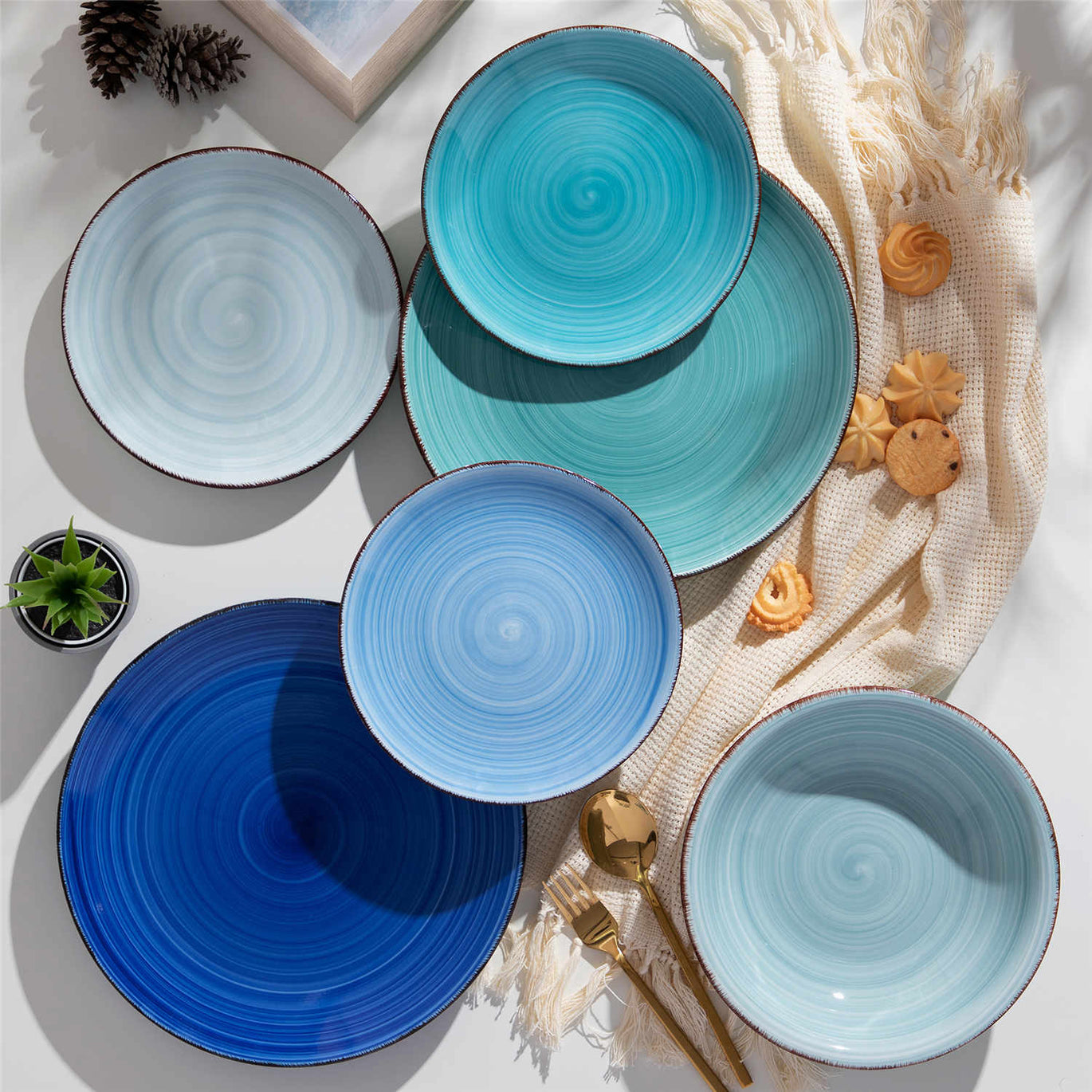


The Challenges of AI Replicating Handcrafted Ceramics

Handcrafted ceramics invite us to the table with a promise you can feel before you ever sip: a living edge on a rim, a swirl of glaze pooling at a foot, a handle that settles into the hand like a secret handshake. As AI surges into studios and factories alike, many ask a spirited question with practical stakes for makers, collectors, and everyday diners: can algorithms truly replicate the depth, warmth, and individuality of handmade clay?
From my vantage point curating colorful tabletop experiences and spending time in working studios, I see extraordinary promise in AI as a collaborator—and very real limits when it tries to imitate human craft outright. In the next sections, I’ll map where AI shines, where it stumbles, and how thoughtful buyers, chefs, and home hosts can navigate this fast-evolving landscape without losing the soulful spark that makes a mug or bowl feel like a companion.
Why Handmade Ceramic Pieces Feel “Alive”
There is a sturdy body of behavioral science explaining why handmade goods exert an outsized pull. Kellogg Insight reports that people value objects more when they witness human effort, even if waiting takes longer; in a field experiment, diners who watched workers prepare sandwiches enjoyed their meals more despite significantly longer waits. This “effort heuristic” plays squarely into ceramics, where visible throwing lines, subtle glaze variations, and an artist’s signature telegraph sweat, skill, and intention.
The same reporting describes how intention itself amplifies perceived value. When people sense a mindful maker shaping an outcome, experiences and objects gain meaning, particularly for symbolic goods like tableware used in rituals of hospitality. Research summarized by Kellogg Insight shows that people value symbolic artifacts more when a maker’s agency is evident, and a separate case involving the “handmade” label underscores strong consumer expectations around human touch. Seen through this lens, the appeal of a slightly irregular cup is not a bug to be corrected; it is the point, and intention is the signal.
Definitions That Matter When Clay Meets Code
AI in handmade art, as described by Awesome Pattern Studio, refers to using machine learning tools to ideate, prototype, and support craft while human makers retain authorship and execute the final piece. In production-oriented ceramics, several technical measures frequently appear in studies. PubMed Central describes the plasticity coefficient, which reflects how moldable a clay body is without cracking; mass loss at the critical point during drying, which tracks the delicate transition where defects can escalate; and shaping moisture, which helps dial in workable consistency. A Nature study on the firing stage uses water absorption as a proxy for porosity and bending strength as a mechanical performance measure. Sintering is the high-temperature step that consolidates ceramic powders into dense solids; University of Maryland engineers report an ultrafast method that completes sintering in under ten seconds at temperatures up to about 5,430°F, dramatically compressing a step that historically required hours.
These definitions mark the dividing line between two realities. In industry, AI can model, predict, and optimize such parameters with impressive accuracy. In craft, the goal is not only performance but personality, and that is where imitation gets complicated.

What AI Already Does Well in Ceramics
Across creative and technical workflows, AI functions like an energetic studio assistant with excellent memory and a knack for pattern recognition. Ceramic Review outlines practical uses that many artists already embrace: brainstorming forms and motifs with text-based tools, using image generators to visualize patterns and textures, and leaning on color palette tools for glaze planning. Awesome Pattern Studio encourages a hybrid workflow in which AI supports moodboards, variations, and rapid iteration while the maker curates, edits, and executes.
Industrial research shows strong gains in prediction and control. PubMed Central reports that gradient boosting models predicted shaping and drying properties of ceramic tiles with R² around 0.99 and error metrics low enough to inform process control. That same study highlights practical thresholds, such as minimal impact on plasticity below certain alumina levels and sharper changes above higher thresholds, along with critical iron ranges and acceptable silica percentages. Nature reports that advanced models, including CatBoost and XGBoost, explained over ninety-five percent of variance in firing-stage properties, with partial-dependence insights around temperature sweet spots. In practical terms, such models can help set firing schedules around approximately 2,156°F when compositions demand it, then adjust carefully rather than overshooting past roughly 2,192°F where benefits diminish or risks rise.
Ceramics 4.0 coverage points to real-world efficiency upside. Industry reports cited there associate AI-driven systems with meaningful cost reductions and throughput gains, and they describe AI kiln control, predictive maintenance, and waste reduction. On the design side, ACerS Bulletin covers how materials informatics and learning algorithms are already shaping the discovery of new glass compositions, which is conceptually adjacent to glaze R&D. DigitalDefynd profiles how AI assists artisans with trend analysis, customized previews, and client co-design cycles in sectors that include pottery, while still preserving human oversight.
Where predictive models are strongest—measurable properties, resource scheduling, and defect detection—AI is an excellent ally. Where judgment calls dominate—what feels good in the hand, what a dining room calls for on a holiday table—human curation remains critical.

The Replication Gap: Why Human Touch Outruns Data
AI can be trained on surface images, kiln logs, and material compositions, yet it falters when the target is a felt experience rather than a measurable metric. Consider tactile micro-geometry. Wheel-thrown throwing rings are not simply textures; they reflect pressure shifts, momentum, and breath. Surface feel changes with trimming decisions at the foot and edge, and these details carry an artist’s signature the way handwriting does. Intention matters too. Kellogg Insight’s synthesis of studies on intention and symbolism shows that people assign more meaning to objects when creators’ choices are evident. Even an algorithm that captures a maker’s visual style cannot encode the social and ethical intention behind that style.
Glaze chemistry demonstrates another crux. Models can predict certain firing outcomes, and predictive analytics can optimize schedules. PubMed Central and Nature both provide strong evidence of explainable thresholds, from alumina effects to temperature curves. Still, micro-bubble formation, atmospheric variability in gas firing, and the sheer texture of certain matte surfaces elude complete capture. Studio potters talk about how glazes sing differently on two shelves in the same kiln, and even with uniform conditions in electric kilns, subtle differences in heating and cooling can shift color breaks and pooling. These subtleties are not merely noise to be averaged out; they are aesthetic vocabulary.
Intentional authorship presents a final challenge. Awesome Pattern Studio emphasizes dataset ethics, licensing, and disclosure. If AI trains on community motifs without consent, the replication may look convincing while missing the moral grounding that gives craft its cultural shape. Buyers increasingly care how a piece was made, not just how it looks. In other words, replication without provenance is imitation without trust.
A Hybrid Path: AI as a Studio Collaborator, Not a Replacement
The most productive way forward is not to pit AI against artisans but to weave it into practice where it heightens quality, speeds learning, and supports sustainability. A sensible studio flow starts with AI-driven ideation for form and pattern exploration, then moves swiftly into human curation, material tests, and hand finishing. This approach mirrors Awesome Pattern Studio’s guidance to make final aesthetic decisions manually and keep the artist’s style central. It aligns with Ceramic Review’s practical tool list for color and composition planning. It also leverages industrial insights without losing craft identity: use PubMed Central’s style of modeling to predict when a clay body may crack during drying, use Nature’s firing-stage predictions to sketch safer kiln profiles around targeted temperatures, and keep human eyes on the glaze to decide whether the gentle blue bloom on a rim is worth holding.
Transparency undergirds the hybrid path. Disclose when algorithms assist design. Keep process logs that capture prompts, iterations, and material trials. Treat datasets with care, respecting consent and cultural integrity. In short, let AI expand possibility while human judgment anchors authenticity.
A Clear-Eyed Look at Benefits and Risks
AI brings meaningful benefits to the ceramics ecosystem. Designs can be prototyped faster, defects can be caught earlier with vision systems, and waste can be trimmed using predictive models. Ceramics 4.0 coverage associates AI with strong reductions in material waste and significant operational gains, while University of Maryland’s ultrafast sintering research shows how scientific advances can remove time bottlenecks so data-driven discovery loops move faster. For buyers, this often means more consistent dinnerware lines alongside richer limited editions.
Risks cluster around homogenization, opacity, and overreach. Styles can converge when too many artists sample from similar models trained on similar data. If training sets contain biases or unlicensed motifs, outputs can feel derivative or ethically compromised. Overreliance on simulation can dull the risk-taking that pushes craft forward. Awesome Pattern Studio advises guardrails that preserve authorship: keep human curation in the loop, test material feasibility, and record process choices. Those are pragmatic steps that maintain distinct voices in a world awash in plausible images.
The Market Context: Demand for Handmade Remains Strong
Rural Handmade reports a global ceramics market measured in the hundreds of billions of dollars and projects healthy growth for handmade segments in the years ahead, with North American and UK demand representing a substantial share. These figures align with the broader behavioral story presented by Kellogg Insight: even in an automated age, people lean toward objects that show effort and intention. That appetite does not disappear because algorithms become more capable; if anything, it makes the provenance and personality of handmade ceramics more valuable.
Research Snapshots That Inform Practice
Several recent studies offer practical insights for makers and buyers. PubMed Central describes how extreme gradient boosting accurately predicted shaping and drying behavior using datasets that included clay grain sizes, oxides, and mineralogy. The reported performance metrics, including an R² near 0.99 with low error, suggest that studios working with tile bodies or slip-cast wares can use similar approaches to anticipate problems before they harden into cracks.
Nature shows that firing-stage models reached high accuracy in predicting water absorption and bending strength, with a recommended temperature window centered around about 2,156°F for many compositions and diminishing returns beyond roughly 2,192°F. These insights translate to practical kiln management that conserves energy while hitting performance targets, particularly relevant for small-batch production lines.
University of Maryland engineers featured in Science outline ultrafast high-temperature sintering that reaches intense heat levels in seconds. Faster cycles mean more rapid iteration for glaze and body tests, which dovetails neatly with AI’s appetite for feedback data. ACerS Bulletin demonstrates how materials informatics in glass design can accelerate composition discovery, a signal that glaze research can benefit from similar approaches. DigitalDefynd’s cross-sector review describes how artisans already use AI for market analysis, customization, and concept generation, while Ceramic Review grounds the conversation in studio-ready tools for ideation and color work. Taken together, these sources point toward a pragmatic future: let AI compress time, reduce waste, and improve reliability, and let human makers lead the dance on meaning and style.
Practical Buying and Care Tips for the Colorful Table
When you shop for handcrafted ceramics in a world where AI-generated designs are increasingly present, prioritize provenance and process. Ask who made the piece and how it was finished. Maker marks, studio stamps, and clear artist statements help ensure you are supporting human craft and not simply a machine-polished facsimile. Look for evidence of handwork that aligns with the maker’s story, from gentle throwing lines to the way a foot is trimmed. These cues should harmonize, not feel pasted on.
For daily care, treat your colorful tableware like the lively companions they are. Handwashing preserves delicate glazes and hand-painted surfaces, particularly those with metallic accents or soft matte textures. Avoid sudden temperature shocks, such as moving a chilled plate straight to a very hot oven, as ceramics handle gradual changes better than abrupt swings of hundreds of degrees Fahrenheit. Use felt pads beneath centerpiece vessels on wood tables to prevent micro-scratches. If a piece is labeled dishwasher-safe, stack it with space between the forms to prevent edge chipping from vibration. For serving and reheating, err on the side of respect for the maker’s finish and consult the artist’s guidance when in doubt.
When AI-Assisted and Handmade Coexist at the Table
It helps to think in comparative terms. The table below frames the current state with honesty and optimism, grounded in the research and studio practice discussed above.
Domain |
What AI Does Well |
Where It Struggles |
Practical Studio Approach |
Design and Ideation |
Generates variants fast, explores patterns, proposes color harmonies; helps visualize forms |
Capturing tactile intent and embodied gestures; avoiding homogenized looks |
Use AI for moodboards and sketches, then hand-draw or throw; maintain a clear authorial throughline |
Clay and Glaze Development |
Predicts drying, shaping, and firing behaviors with high accuracy; flags risky zones |
Modeling micro-bubble texture, atmospheric effects, and shelf-to-shelf nuance |
Start with model-informed parameters; run small tests; let the kiln and eye make final calls |
Production and Quality |
Improves scheduling, reduces waste, detects defects via vision; optimizes kiln profiles |
Distinguishing soulful variation from defect; interpreting context-sensitive quality |
Adopt AI for consistency and yield; reserve hand-finishing and final QC for feel and look |
Marketing and Personalization |
Analyzes trends, creates previews, supports client co-design |
Overfitting to trends; diluting studio identity |
Offer previews responsibly; limit personalization to options that respect the maker’s style |
Authorship and Ethics |
Documents prompts and iterations; supports traceability |
Ensuring consented datasets; preserving cultural motifs’ integrity |
Disclose AI assistance; use licensed data; keep process logs and clear provenance |
The Takeaway
AI is already excellent at predicting, optimizing, and proposing. It is not yet, and may never be, a satisfying author of ceramic soul. Studies summarized by PubMed Central and Nature show that machine learning can guide shaping, drying, and firing with impressive precision. University of Maryland’s ultrafast sintering on the Science cover removes time barriers so iteration gets faster. ACerS Bulletin signals how materials discovery accelerates with data, and Ceramic Review plus Awesome Pattern Studio offer practical studio playbooks for ethical, effective use. At the same time, the psychological research discussed by Kellogg Insight reminds us that intention and visible human effort are central to the value we place on handmade ceramics.
The path forward is hybrid. Let AI help where numbers rule; let humans lead where meaning lives. On your table, that translates into dinnerware that is durable, reliable, and still gloriously personal.
FAQ
Q: Can AI fully replicate the look and feel of a handmade ceramic mug?
A: AI can imitate visual style and even predict how a body and glaze will behave in the kiln, but studies summarized by Kellogg Insight suggest that human intention and visible effort shape perceived value. Texture and feel arise from hand pressure, tool choice, and lived habits at the wheel, which are difficult to encode and even harder to make genuinely meaningful without the maker’s authorship.
Q: Where is AI most useful for ceramic studios right now?
A: Evidence from PubMed Central and Nature shows strong performance in predicting shaping, drying, and firing outcomes, which helps studios avoid defects and save energy. Ceramic Review outlines studio-friendly tools for ideation and color planning. The sweet spot is reducing waste and compressing iteration cycles while keeping final aesthetic decisions in human hands.
Q: How should artists disclose AI use without undermining their craft?
A: Awesome Pattern Studio recommends transparency and authorship guardrails. An artist can describe AI as a collaborator for concept variants or glazing scenarios, then emphasize that form development, surface finishing, and firing decisions were manual. Maintaining process logs and licensed datasets supports trust and provenance.
Q: Are AI-optimized ceramics more durable?
A: AI-guided firing schedules and body formulations can improve consistency and target mechanical properties like bending strength, as the Nature study indicates. Durability also depends on design choices, glaze fit, and how pieces are used and cared for. AI can assist optimization; craftsmanship ensures the final balance.
Q: What should collectors ask when buying in a world of AI-assisted design?
A: Ask who conceived the form, who executed it, and how. Clarify whether AI supported ideation or previews and what steps were handmade. Matching story to surface is key: signatures, studio stamps, and consistent finishing details help confirm authorship.
Q: Will AI reduce prices for artisan ceramics?
A: AI can trim waste and speed learning, which supports sustainable pricing and availability. However, the premium on handmade work often reflects intention, authorship, and limited-scale production—factors that remain valuable even as predictive tools improve. Market analyses summarized by DigitalDefynd and demand patterns discussed in Kellogg Insight suggest ongoing appetite for the human-made.
Closing Note on Care and Use
Bring your colorful pieces into everyday life. Handwash delicate or hand-painted surfaces, avoid abrupt temperature swings, and store with small spacers so rims do not tap and chip. If a piece is labeled dishwasher-safe, give it room to breathe. The best maintenance is curiosity: follow the maker’s guidance, respect the material’s lively nature, and enjoy the dance between joyful utility and artful expression every time you set the table.
References
- https://www.academia.edu/68754634/Crafting_Ceramics_through_the_Use_of_Virtual_Reality
- https://insight.kellogg.northwestern.edu/article/appeal-handmade-automation-power-human
- https://pmc.ncbi.nlm.nih.gov/articles/PMC12126631/
- https://me.umd.edu/news/story/new-superfast-method-for-ceramic-manufacturing-could-open-door-to-aidriven-materials-discovery
- https://theartofeducation.edu/2025/07/july-hot-topics-technology-revolutions-that-shaped-the-art-world/
- https://news.syr.edu/2025/08/12/how-artists-are-embracing-artificial-intelligence-to-create-works-of-art/
- https://do-server1.sfs.uwm.edu/find/@U4539X5057/play/U3850X1/digital+handmade+craftsmanship+and+the+new+industrial+revolution.pdf
- https://dl.acm.org/doi/10.1145/3745238.3745515
- https://community.ceramicartsdaily.org/topic/42903-about-that-ai-business%E2%80%A6/
- https://bulletin.ceramics.org/article/harnessing-artificial-intelligence-and-machine-learning-to-design-new-glasses/
You may also like
Stern 16 Piece Dinnerware Set
- From €69,95
€92,95- From €69,95
- Unit price
- per
-
Blue
-
Green
-
Red
-
Grey
Simi 24 Piece Dinnerware Set
- €92,95
€124,95- €92,95
- Unit price
- per
Bonita 18 Piece Dinnerware Set
- From €58,95
€71,95- From €58,95
- Unit price
- per
-
Blue
-
Multicolor
Starry 16 Piece Dinnerware Set
- €70,95
€82,95- €70,95
- Unit price
- per
-
Blue
-
Green
-
Red
-
Gradient Green