



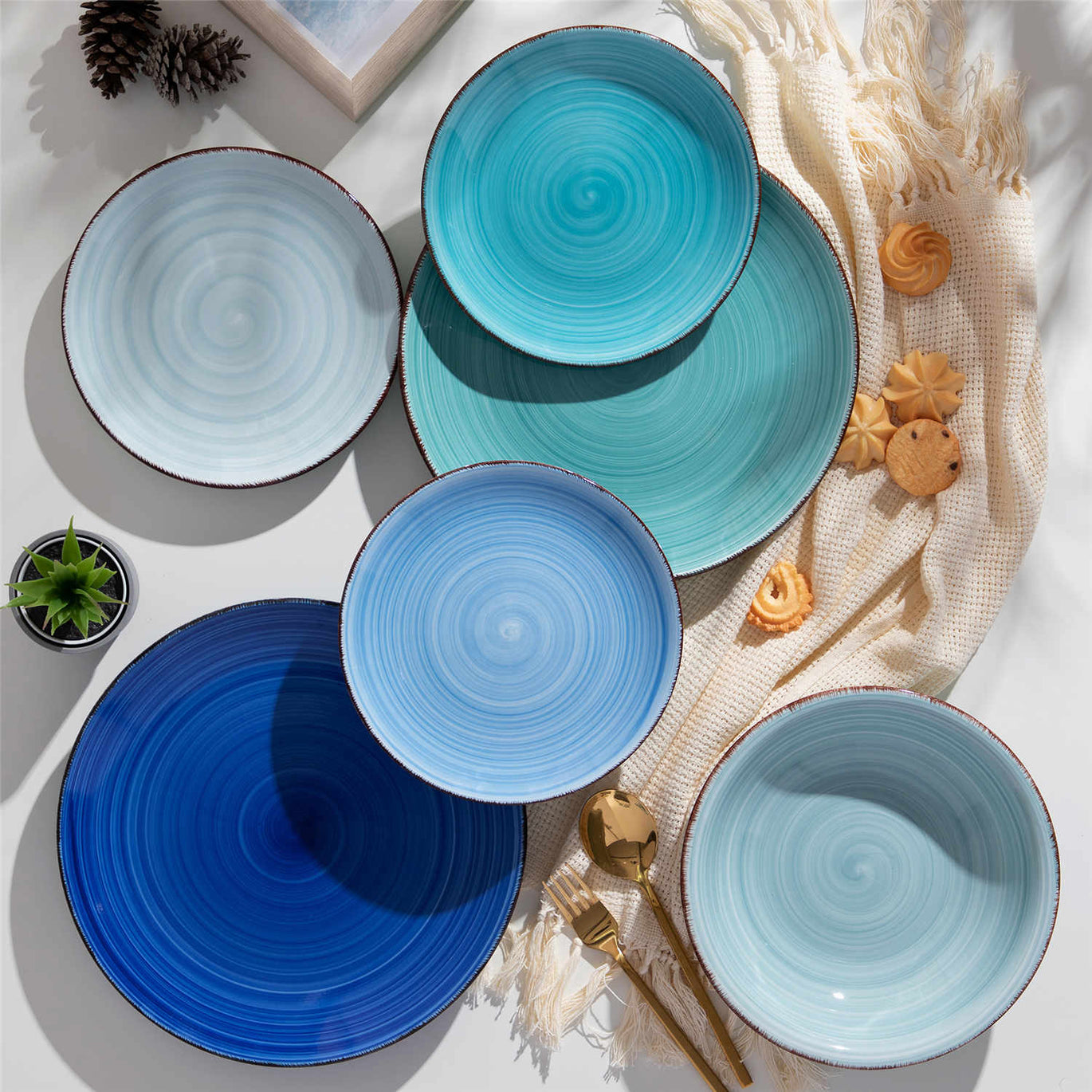


Couples, Ceramic Tableware, and the Gender Stereotypes Hiding at the Sink

Why Dishes Matter More Than We Think
Picture this: dinner is over, candles are just a little puddle of wax, and the plates that held your gorgeous pasta now sit in a crusty stack by the sink. One partner starts rinsing while the other scrolls a cell phone or wanders off to “finish something real quick.” You can almost hear the mood drop with every splash of greasy water.
This scene is not just domestic drama. Research summarized by outlets like ABC7 Chicago, HuffPost, Fox 9, and The Independent, drawing on a report from the Council on Contemporary Families, finds that dishwashing is the single chore most likely to damage relationship satisfaction for women in heterosexual couples. Women who report doing most of the dishes tend to describe more conflict, less overall satisfaction, and lower sexual satisfaction than women whose partners share the task.
That is wild when you think about it. Out of all the household tasks, the one most strongly tied to relationship strain is not cleaning the bathroom, not doing taxes, not even folding laundry. It is that stack of plates and bowls.
Researchers frame this pattern inside the broader idea of the gendered division of labor. That term describes a situation where unpaid domestic and caregiving work is split along gender lines, often leaving women with more daily, repetitive, and undervalued tasks. Dishwashing is a perfect example because it is messy, happens when everyone is tired after eating, and is easy to ignore until it piles up. When one partner, usually the woman, quietly becomes “the dish person,” the sink turns into a scoreboard of unequal care.
By the mid‑2000s, the sharing of chores had improved compared with the 1990s. The Council on Contemporary Families report notes that couples who split cleaning, laundry, cooking, and especially dishwashing more evenly were becoming more common. Shared cleaning roughly doubled, shared laundry and cooking rose, and shared dishwashing climbed from around the mid‑teens to just under a third of couples. Yet the same research shows that when arrangements feel unfair, sexual satisfaction drops for both partners, and other studies cited in Social Forces and the Journal of Marriage and Family link perceived fairness in housework to higher desire and attraction.
In other words, the sink is not just about grime. It is a barometer of respect, reciprocity, and how much both partners feel like they are on the same team.

Culinary Gender Roles: Who Is Expected to Cook, Who Is Allowed to Shine
Before we even get to the tableware, we have to talk about the stories wrapped around the kitchen itself. An energy and sustainability explainer on culinary gender roles describes them as socially constructed expectations about how men and women should participate in cooking and food activities, including who is seen as skilled, creative, or authoritative.
Historically, women have been associated with unpaid domestic cooking and caregiving at home, while men have been more visible in prestigious professional chef roles or in “masculine” cooking zones like outdoor grilling. There is no biological reason for this split, but it has very real effects. Women often face discrimination, microaggressions, and slower career advancement in professional kitchens, while men can be boxed into narrow ideas of what “manly cooking” looks like.
A study of culinary work in Turkey’s tourism sector, published in a medical and social science database, found that gender inequality in professional kitchens is driven by managers’ attitudes, demanding hours, and biased promotion paths. Students with work experience described a good head chef as someone who treats their staff equally and fairly. Yet women reported lower pay, fewer promotions, and worse conditions. The study notes that in tourism and services, women are heavily represented in lower‑paid roles and still earn about 10 to 15 percent less than men in similar positions.
Meanwhile, feminist scholarship on modern energy cooking technologies, such as electric pressure cookers, points out that women globally still do the majority of household cooking. In some regions, women prepare several more meals per week than men, even as they also shoulder other unpaid care work. A feminist “devaluation perspective” argues that cooking and care work are marginalised precisely because they are associated with women and the private sphere, so they often fall outside big conversations about infrastructure, energy, and economic value.
The Lecker “Meal Machine” podcast episode on kitchens adds another layer: the invisible mental load. Host Lucy Dearlove describes realizing that she had become the person who notices what needs doing, plans meals, and coordinates cleaning. A guest points out that even in queer households, someone can slide into a matriarch‑like role, monitoring cleanliness and organization while others treat that labor as background. UK statistics cited in the episode show women doing around 60 percent more unpaid domestic work than men in recent years, underscoring that this is not just about who holds the spatula; it is about planning, worrying, and managing.
So, when couples choose tableware and decide how to use it, they are not starting from an equal blank slate. They are stepping into a room already filled with centuries of assumptions: that women nourish, men provide; that women tidy, men “help”; that a man grilling is a weekend event but a woman cooking every night is just life.

The Kitchen: Burden, Power, and Bread
One of the trickiest truths about the kitchen is that it has always held both oppression and power at the same time.
A feminist analysis of clean cooking technologies frames the kitchen as a site of unpaid, sometimes exhausting care work that can trap women in difficult conditions. Yet the same piece stresses that when women gain access to modern cooking tools and the ability to shape kitchen norms, the space can also become empowering. It can enable safer working conditions, more time for education or paid work, and a platform for cultural expression.
A reflective essay titled “The Shame of the Kitchen: A Short History of a Woman’s Place” traces how the industrial revolution began to pay wages to “provider” work, often done by men, while “nourisher” work, often done by women in kitchens and nurseries, remained unpaid and undervalued. The author uses bread and the warm family kitchen as symbols of deep emotional and spiritual nourishment, arguing that much of our resilience and sense of meaning is baked in that space. She critiques cultural trends that ridicule domestic work or treat motherhood as a lesser calling, and she suggests that the kitchen is the “soul of the home” where children are fed, heartbreak is processed, and values are quietly taught.
These tensions matter for couples. For some, the kitchen is still a place of pressure, shame, or inequality. For others, it is the coziest room in the home, filled with ceramic bowls, shared soups, and late‑night cereal. Often it is both.
Ceramic tableware sits at that crossroads. It can either silently support old gender roles or become a tool for rewriting them.

Ceramic Tableware Is Not Neutral
Ceramic plates and bowls may look like simple objects, but the research notes and community conversations show that they carry heat, emotion, memory, and politics.
A Saje Rose feature on ceramic tableware celebrates the tactile delight of ceramic: the weight in your hand, the way a bowl holds heat, and the feeling of sturdiness compared with thin glass or disposable plastic. Ceramic’s thermodynamic properties help keep hot food warm and cold dishes cool for longer, which subtly changes how you eat. You slow down with a bowl of soup that stays hot, rather than rushing through before it goes lukewarm.
Ceramic pieces are often microwave‑safe, non‑toxic, and non‑porous once fired and glazed. That means they rarely warp, melt, or leach chemicals, and they distribute heat more evenly when you reheat leftovers. A blog from HF Coors emphasizes the durability of vitrified ceramic, its resistance to cracks and stains, and the fact that some American‑made lines are lead‑free, oven‑safe, dishwasher‑safe, and backed by chipping guarantees under normal use.
Ceramic is also framed as eco‑friendlier than disposable or low‑quality alternatives. Saje Rose points out that ceramic is made from natural materials such as clay, water, and minerals, and a single set can serve a household for decades. HF Coors notes that their products are designed for long life and are made entirely in the United States by a veteran‑owned small business, highlighting both sustainability and local production.
Beyond function, ceramic is emotional. Saje Rose describes ceramic tableware as a keeper of family traditions, with heirloom pieces passed down across generations. Tiny chips and hairline cracks become stories. A community question in the Ceramic Arts Daily forum invites people to describe their personal relationship with the ceramic objects in their homes, underlining that many of us treat certain mugs and bowls almost like characters in our life story.
Art takes this even further. An interview in AnOther Magazine profiles Emma Hart’s installation “Mamma Mia!,” a forest of upside‑down ceramic heads lit from within and connected by red cables. Each head carries a different pattern representing mental states such as jealousy or grief, and the lights cast speech bubbles and shadows that echo the loops of family conversations. Hart draws on family psychology and the history of ceramic wedding plates that once cemented alliances between powerful families. In her hands, ceramic becomes a three‑dimensional family tree, showing how relationships and emotions flow between people.
All of this matters for couples because you are not just buying plates. You are choosing what kind of emotional and symbolic landscape you will eat from every day.

Sharing a Bowl, Sharing Power
One of the most explicitly “couples‑focused” ceramic rituals in the research notes is the idea of sharing a bowl. A relationship piece from Malacasa frames “sharing a bowl” as a mindset more than a strict rule. It can mean literally eating from a single large bowl, or serving from a generous central bowl into individual bowls. The heart of the practice is carving out device‑free moments of togetherness around food.
This article stitches together findings from several sources, including Utah State University Extension, the American Academy of Pediatrics, Project EAT, and the World Happiness Report. Across different datasets, regular shared meals correlate with better diet quality, stronger family functioning, healthier development for young people, higher self‑esteem, and lower depressive symptoms and stress. The World Happiness Report’s meal module, which uses Gallup data from over a hundred countries, finds that people who share meals more frequently tend to report higher life satisfaction and more positive emotions. Heavy smartphone use can weaken these benefits by splintering attention.
Surveys echo this pattern in everyday adult life. A Gozney survey of just over a thousand adults in the United States, cited by Malacasa, found that about eighty‑two percent regularly share meals. Close to two thirds felt that sharing food deepened emotional connection, and partners were the main sharing companions. On average, people reported around four and a half shared meals per week with their significant other, and nearly a third shared a meal daily.
Anthropological ideas of commensality, or eating together from shared food, help explain why one bowl can feel so intimate. Malacasa notes that a single bowl encourages turn‑taking, eye contact, and a common rhythm of eating, especially when phones are off the table. The article offers practical tweaks so that this ritual feels fair and comfortable rather than cramped or unsanitary, such as adding a side dish for the hungrier partner, serving sauces and spicy elements on the side, and using serving utensils or long chopsticks when people are anxious about germs.
There is a gender dimension here. When one partner always shops, cooks, serves, and then clears the shared bowl, the ritual can become yet another performance of unequal care work, no matter how cozy the photos look. But when both partners prepare, share, and clean up, the bowl becomes a symbol of mutual support.
Tableware Choices and Gender: A Quick Comparison
Here is one way to think about how ceramic practices can either reinforce or challenge stereotypes.
Everyday choice |
How it can echo old gender roles |
How you can flip the script with ceramics |
One person “owns” the good dishes and worries about every chip |
The person already carrying the mental load, often the woman, ends up policing everyone’s use and doing most of the handling. |
Choose the set together, agree that wear is part of its story, and share responsibility for laying, clearing, and storing it. |
Neutral stoneware for him, floral porcelain “saved for guests” |
Sends a quiet signal that beauty and gentleness belong to women or special occasions, while everyday life is coded masculine. |
Mix shapes and colors so both partners see themselves in the everyday set, not just in a “his” or “hers” corner. |
One partner always scrapes and washes dishes after shared meals |
Reinforces the idea that nurturing, cleaning, and caretaking are one person’s job, regardless of who worked that day. |
Treat the sink as part of the meal ritual. Trade roles, wash together, or tie dish duty to whoever cooked less that day. |
Only one partner chooses new ceramic pieces |
Implies that aesthetics are “her hobby” or “his splurge,” and practical decisions may follow the same pattern. |
Turn ceramic shopping into a joint date, discuss color and feel, and consider how each piece supports shared rituals. |
These are not hard rules. They are invitations to notice which small habits echo the larger gender patterns described in the research and which ones help you create a more equal, playful, colorful table.
Designing a Gender‑Equal Table with Ceramics
So how do you actually do this in real life, beyond nodding along while the dishes soak in the sink?
Co‑design Your Everyday Set
Ceramic blogs and manufacturers agree on one thing: ceramic tableware is incredibly versatile. It can look at home on a fancy holiday table or at a quick lunch on the couch, simply by how you combine pieces. That versatility is your best friend when you are trying to design a table that does not fall into stale gender scripts.
Instead of one person ordering a full set in secret, treat your everyday plates and bowls as a shared creative project. Talk about what you both associate with comfort and celebration. Maybe one of you loves saturated peacock blues and heavy stoneware; the other gravitates to soft cream glazes and delicate speckles. Ceramics from places like Saje Rose or HF Coors come in a broad range of colors and shapes, from clean restaurant‑style rounds to hand‑painted motifs. Combining those preferences into a single everyday set sends a subtle but powerful message: this home belongs to both of us, in full color.
Because ceramic retains heat and cold well, shape and thickness matter too. When you choose bowls together, you are also choosing how you will eat soups, curries, and salads together for years. Notice how the weight feels in both hands, not just in the hands of the partner who usually plates and carries food. That small act pushes back against the expectation that only one body needs to be comfortable and capable in the kitchen.
Rewrite the Dishwashing Script
The dishwashing research is crystal clear on one point: when women in heterosexual couples do most of the dishes, they are more likely to feel resentful and dissatisfied. Those feelings are not only about soap and sponges; they are about what the task symbolizes.
Several reports, including those covered by HuffPost, Fox 9, and The Independent, highlight that couples who share dishwashing more equally tend to report higher relationship satisfaction. The Council on Contemporary Families report notes that as sharing becomes more common in society, the emotional cost of not sharing rises, because people compare their situation to friends and peers.
For your own kitchen, that means the sink deserves an explicit conversation, not just assumptions. Talk about who is currently doing what, and how it feels. Notice whether new ceramic purchases silently increase one person’s workload, such as adding dishes that are hand‑wash only without consulting the person who usually washes.
Then experiment with patterns that make fairness visible. You might swap roles for a month, wash together while you debrief your day, or tie dish duty to non‑kitchen work, such as whoever had the lighter workday taking the heavier share. The point is not perfection; it is intentionality. Even a slightly more balanced split can make your beautiful bowl collection feel like a shared joy instead of a shared burden for just one person.
Share the Mental Load Around the Bowl
Feminist energy research on modern cooking technologies emphasizes that simply dropping a new appliance into a patriarchal household does not automatically transform gender relations. The same is true for gorgeous ceramicware. Buying two artisanal pasta bowls does not redistribute the mental load by itself.
The Lecker podcast episode shows how easily one person becomes the “meal machine,” planning menus, shopping, checking pantry stock, and coordinating cleanup. To avoid repeating that pattern, pair your ceramics with shared planning. If you are excited about a big salad served in your new serving bowl, decide together who will shop, who will chop, and who will clean.
You can even treat your favorite platter as a weekly planning board. On a quiet night, bring it to the coffee table with a marker and a stack of sticky notes. Write down meal ideas and who is responsible for each part, then stick them to the platter for the week. It is playful, tactile, and visible, which helps prevent one person from carrying the whole plan silently in their head.
Bring Play Back with Clay
If you want to go even deeper, step behind the table and onto the wheel. Several studio blogs, including Mud Hut Pottery Studio and Diana Ceramic, describe how couples pottery classes become powerful relationship experiences. In these classes, partners learn to center clay, shape bowls, and rescue collapsing cylinders.
Pottery requires a mix of patience, collaboration, and nonverbal coordination. You might guide your partner’s hands on the wheel, laugh together when a bowl slumps, or celebrate the moment a cup finally holds its shape. These studios describe how such classes intentionally build teamwork and communication, while giving couples a relaxed, low‑pressure environment away from screens.
The end result is not only a set of handmade mugs or bowls, but also concrete memories of supporting each other through a small creative challenge. Each finished piece is a keepsake that embodies those moments. When you later eat from that lopsided bowl or drink from that slightly uneven mug, you are literally holding a story of shared effort.
Workshops described by Diana Ceramic and similar studios often run a couple of hours and are designed for beginners, making them accessible even if one partner is nervous about not being “artistic.” The emphasis is on the process, the laughter, and the ritual of making something together. That ethos aligns beautifully with the idea that relationships are shaped, trimmed, and fired over time, not magically perfect from day one.

Pros and Cons: How Couple Ceramics Interact with Gender Norms
Ceramic rituals are not inherently liberating or oppressive. Their impact depends on who carries the work and who gets the joy.
On the plus side, ceramic tableware’s durability and versatility, highlighted by brands such as HF Coors and Saje Rose, make it ideal for building long‑term rituals. A single sturdy set can move with you through apartments, jobs, and seasons of life. Shared bowls and regular meals, as described in the Malacasa article and supported by family and happiness research, are associated with better emotional wellbeing and stronger relationships, especially when phones are off the table and the focus is on conversation.
Ceramic heirlooms and handmade pieces add depth and continuity, echoing reflections from Philosophy of Motherhood and the Ceramic Arts Daily community. They can anchor a sense of home even when everything else is in flux. Pottery classes and creative workshops give couples chances to practice communication and teamwork in a playful way, and the finished ceramics carry those lessons forward into daily life.
On the minus side, all of these beautiful rituals can backfire if they rest on a one‑sided foundation. If new bowls simply increase the number of dishes one partner washes, or if sentimental language about bread and nurture is used to pressure women into doing more unpaid work, the objects themselves become props in a familiar script of inequality. Feminist critiques of care work and clean cooking transitions warn against assuming that aesthetics or technology alone can transform deep‑rooted gender norms.
Professional culinary research reminds us that talent and passion are not enough to even the playing field when structural bias persists. Women and marginalized groups in professional kitchens still face wage gaps, unsafe environments, and slow promotion tracks. If home kitchens mirror those hierarchies, even subtly, then the most gorgeous handmade dish set will not change the underlying story.
The opportunity is to use ceramics consciously: as tools to make fairness visible, to invite everyone into cooking and cleanup, and to turn daily routines into shared art rather than silent obligation.
FAQ
Q: Does sharing a bowl automatically make our relationship more equal?
A: Not by itself. Research summarized in family and happiness reports connects shared meals with better wellbeing and relationship quality, but those effects ride on the broader context. If one partner is doing all the planning, cooking, and cleaning around that bowl, the practice may feel cozy on the surface while reinforcing an unequal division of labor. The bowl becomes a powerful symbol of equality only when both partners participate in the work that makes the meal possible.
Q: Are ceramics really better than other materials for couples trying to build rituals?
A: The notes from Saje Rose and HF Coors emphasize that ceramic is durable, non‑toxic, and thermally stable, and it can be used for everything from weeknight reheats to special occasions. That combination makes it easier to build routines that actually last. Long‑lived dishes also carry memories in a way that disposable items do not. That said, the emotional impact comes less from the material itself and more from the intention and fairness with which you use it.
Q: How can we start small if our budget or cabinet space is limited?
A: Research on shared meals and pottery classes suggests that the depth of connection does not depend on how many pieces you own. You might start with one shared serving bowl you both love, or even a pair of mugs you make together in a beginners’ class. Focus on attaching a deliberate ritual to those items, such as a weekly device‑free soup night or a standing coffee chat, and negotiate the surrounding chores explicitly so both partners feel that the ritual is a gift, not a hidden workload.
A Color‑Splashed Closing
Ceramic tableware is never just “plates and bowls.” It is heat, memory, gender, power, and play, all stacked quietly beside the sink. When couples choose, use, and wash their ceramics with intention, they can turn everyday meals into joyful, egalitarian rituals rather than invisible labor.
So the next time you cup a warm bowl in your hands, ask not only what you are serving, but also whose story you are serving. Then, together, rewrite it in clay, color, and shared suds.
References
- https://scholarworks.utep.edu/cgi/viewcontent.cgi?article=1044&context=open_etd
- https://pmc.ncbi.nlm.nih.gov/articles/PMC10900228/
- https://libres.uncg.edu/ir/asu/f/Pierce,%20Stella_2010_Thesis.pdf
- https://community.ceramicartsdaily.org/topic/42211-qotw-how-would-you-explain-the-personal-relationship-you-have-with-the-ceramic-objects-that-you-have-in-your-home%C2%A0-%C2%A0/
- https://www.researchgate.net/publication/365690179_Marriage_and_Mobility_Traditions_and_the_Dynamics_of_the_Pottery_System_in_Twentieth_Century_East_Crete
- https://www.dianaceramic.com.au/blog/how-can-a-couples-pottery-class-create-a-memorable-date
- https://www.fox9.com/news/dishwashing-duties-can-affect-the-quality-of-a-relationship
- https://www.leckerpodcast.com/episodes/mealmachine
- https://www.linkedin.com/pulse/stirring-pot-bold-transformation-gender-roles-culinary-jordan-reid-
- https://www.mudhutpotterystudio.com/blog1/how-making-pottery-together-strengthens-relationships-1
You may also like
Stern 16 Piece Dinnerware Set
- From €69,95
€92,95- From €69,95
- Unit price
- per
-
Blue
-
Green
-
Red
-
Grey
Bonita 18 Piece Dinnerware Set
- From €58,95
€71,95- From €58,95
- Unit price
- per
-
Blue
-
Multicolor
Simi 24 Piece Dinnerware Set
- €92,95
€124,95- €92,95
- Unit price
- per
Starry 16 Piece Dinnerware Set
- €70,95
€82,95- €70,95
- Unit price
- per
-
Blue
-
Green
-
Red
-
Gradient Green