

Self-heating ceramic bowls sound like magic at the table, but they’re really a smart blend of materials science, heat transfer, and thoughtful product design. Whether you’re savoring soup slowly, plating for a lingering dinner, or keeping sides warm while guests arrive late, these bowls promise a steady, cozy temperature without sprinting back to the kitchen. In this guide, we’ll unpack how self-heating ceramics work, where graphene fits in, how the heat moves, and what to look for if you’re considering one for everyday dining. The tone is joyful and colorful because the tabletop is where life happens—but the information is grounded in real physics and published know-how from ceramic makers, heater engineers, and temperature-control experts.
What “Self‑Heating” Actually Means
At the table, “self-heating” can mean three different things. One approach is active temperature control, where an electric heater maintains a set temperature, similar to what premium temperature-control mugs achieve by regulating heat so each sip lands at a comfortable level. Another approach is single-use or staged chemical heating that warms food through an exothermic reaction—no plug needed; this is common in self-heating packaging concepts. A third approach is rechargeable or reusable heat sources integrated into crockery or paired bases that keep a plate or bowl warm for a window of time. Ceramic’s natural low thermal conductivity helps by slowing heat loss, so the warmth you add tends to linger instead of racing away through the sidewalls. Ceramic manufacturers emphasize that vitrified, non-porous, lead-free bodies and glazes are both food-safe and heat-ready when used as directed, and many oven-safe ceramics tolerate about 400–500°F. The phrase “self-heating ceramic bowl with graphene” simply adds a modern twist: it points to a conductive pathway inside or beneath a ceramic surface that produces heat when electrical current flows, just like other resistive heaters, while the ceramic above stays food-safe and comforting in hand.
Heat Transfer 101, in Tabletop Terms
Heat leaves a hot bowl in four ways. Conduction is heat slipping through the bowl material into your hands or the air. Convection is warm fluid moving—both inside the soup and in the air outside the bowl—as it circulates and cools. Radiation is infrared energy the hot surface emits to the room. Evaporation is energy lost as vapor slips off the surface, which is why a lid or cover slows cooling dramatically. For everyday drinking and dining, that top surface is often the main exit door for heat. Covering a vessel between sips or bites, even briefly, reduces convective and evaporative losses and can make as big a difference as the wall material itself. This is why lidded temperature-control mugs aim at a Goldilocks zone around 135°F for flavor and comfort, and why lids or narrow openings help bowls hold the line on heat.
Joule Heating: The Engine Behind Electric Self‑Heating
Electric self-heating relies on Joule heating. When a current runs through a resistive path, it releases heat as P = I²R. Engineers tune that path’s resistance so it rises to target temperatures quickly and then stabilizes. In many consumer heaters, positive temperature coefficient, or PTC, ceramics add a self-regulating effect; as they grow warmer, their resistance increases, which naturally limits current and curbs overshoot. Heat then spreads by conduction through the ceramic structure, radiates outward, and warms food by direct contact and convection. Whether the resistive path is a metal trace, a PTC ceramic plate, or a carbon-based network, the physics is the same. The bowl’s design matters as much as the heater: heavier walls store more heat, smooth interfaces reduce hot spots, and insulating layers protect fingers while keeping warmth aimed toward the food.
Where Graphene Fits
Graphene is often discussed in the context of conductive ceramic composites because it forms ultra-thin, highly conductive networks. In a self-heating dinner bowl, such a network can act like a uniform, flexible heating path embedded beneath a food-safe glaze or paired with a detachable base. The ceramic remains the surface you see and touch, while the conductive layer does the invisible work when power is applied. The practical considerations mirror those of any electric heater integrated with cookware: consistent heating, robust insulation from food and hands, safe connectors, and reliable control that lands at comfortable dining temperatures. Even when a product does not name graphene specifically, the design goals are similar: create an even, stable heating footprint and allow ceramic’s thermal mass to smooth out peaks and keep temperature pleasing over time.
Other Ways Bowls Heat Themselves
Self-heating can also mean chemistry rather than electricity. One widely cited patent describes a staged quicklime and water reaction inside a package that warms an inner food container while controlling steam release for safety. Inventors have explored reusable crockery that warms to about 140°F and stays warm for roughly 30 minutes, with a reaction triggered at the touch of a button and recharged by washing in hot water or a dishwasher cycle. Portable plate systems have paired a ceramic top with a rechargeable warming base offering modes from roughly 122°F to 176°F, running for up to about three hours per charge. For pets, thermostatic ceramic bowls designed for gentle warmth provide about 77–86°F, keeping water appealing in cooler rooms. In all these cases—chemical, rechargeable base, or gentle thermostatic pads—ceramic’s insulating nature helps hold warmth at the surface where it matters.
Why Ceramic Holds Heat So Comfortably
Ceramic’s low thermal conductivity and often greater wall thickness slow heat loss compared to metal. In hands-on comparisons from retailer tests, ceramic surfaces stayed warmer over the first 20 minutes and held heat on average longer across reheats than comparable metal bowls. Ceramic dinnerware makers emphasize that vitrified, non-porous bodies distribute heat evenly and keep food warm longer—think oven-to-table casseroles or soup bowls that feel cozy without turning scorching hot the moment they meet heat. The trade-off is that rapid temperature shocks can stress ceramic; moving a cold bowl straight into a very hot oven or rinsing a hot one under cold water can create cracks. The fix is simple: preheat gradually and let items cool before washing.
How Microwaves Interact with Ceramic
Microwave-safe means the piece is expected to stay structurally sound under microwave energy and not leach harmful substances; it does not promise the bowl will remain cool. Moisture trapped in a ceramic body or certain glaze chemistries can couple with microwave energy, heating the bowl itself and not just the food. Dark or metallic decorative finishes may amplify these effects and produce localized hot spots. Shorter bursts of heating with stirring or rotation, a brief rest between cycles, and mitts or pads for handling all help. Avoid thermal shock by not taking a steaming-hot bowl to a chilly sink, and remember that ceramics conduct heat slowly, so surfaces can stay hot after the microwave stops.
Temperature Targets That Taste Good
For sipping drinks, independent testing has shown that around 135°F tends to be the sweet spot for flavor and comfort, and temperature-control devices frequently target that range. At the table, a bowl that lands food near that zone feels relaxed and satisfying. Rechargeable plate-and-base systems with settings spanning roughly 122–176°F exhibit how designers think about “hot holding” versus “too hot to enjoy.” In reusable crockery demonstrations, a warm-hold near 140°F for about 30 minutes creates a practical window for slow eaters or multi-course service. In chemical self-heating packaging demonstrations, liquids like coffee have been warmed to the 140–145°F neighborhood within several minutes, emphasizing quick ramp-up with passive holding afterward.

Mechanisms at a Glance
Mechanism |
Heat source and control |
Typical surface/food temps |
Typical hold/behavior |
Noted positives |
Noted cautions |
Representative examples |
Resistive electric in or under ceramic (including carbon-based conductive layers) |
Joule heating with tuned resistance; may use PTC behavior and thermostats |
Often designed around 130–175°F depending on the product intent |
Stable, repeatable warmth; ceramic mass smooths peaks |
Even heating, repeatable control, no consumables |
Requires electrical safety and proper insulation |
Industrial heater guidance from IQS Directory; temperature-control philosophies echoed by Ember and independent mug testing |
Rechargeable warming base paired with ceramic |
Battery-powered base with selectable modes |
Approximately 122–176°F depending on mode |
Up to about 180 minutes per charge reported by a plate system |
Cordless table service, easy cleaning when base is removed |
Must remove base for washing; battery life varies |
Yougan plate descriptions emphasize these ranges and runtimes |
Chemical exothermic systems in a vessel |
Exothermic reactions (e.g., lime and water) staged for safety |
Coffee and similar liquids warmed near 140–145°F in demonstrations |
Rapid heat-up in minutes; passive holding afterward |
Off-grid and fast; no plug required |
Single-use consumables; careful venting and water staging required |
A U.S. patent describes staged quicklime hydration to manage steam and safety |
Reusable self-warming crockery |
Triggered heat with recharge by hot wash |
Warm surface near 140°F for about 30 minutes reported |
Simple, repeatable, no cords at table |
No external heater at service; visually engaging |
Requires proper recharge; temperature is modest by design |
Mark Champkins reported such behavior with prototype crockery |
Gentle thermostatic pet bowl |
Low-power heater keeps water slightly warm |
Roughly 77–86°F |
Maintains palatable water warmth |
Encourages drinking in cool rooms |
Needs continuous power; keep cords tidy |
Retail product descriptions emphasize quiet, even warming |
Pros, Cons, and Real-World Fit
Resistive electric designs, including those that might use graphene-like conductive networks, excel when you want steady, predictable warmth and easy control. They shine for daily dinners and host-friendly pacing because you can dial in comfort and hold a plateau without fuss. Rechargeable base systems clear clutter from the table and keep cleanup easy since the ceramic top can go to the dishwasher after the base is removed. Chemical systems are unbeatable off-grid or when plugging in is impractical, and modern staged-release concepts aim to keep them safer and more even than older quick-dump designs. Reusable self-warming crockery that holds near 140°F for a half hour feels just right for slow eaters, plated desserts, or special-occasion pacing. Pet bowls that hover around body-adjacent warmth are gentle by design and use-case specific. Ceramic’s innate heat retention makes each of these approaches feel warmer-in-hand than metal, and that tactile coziness is a big part of the table-side appeal.
Safety and Care, Without the Drama
Start by checking for vitrified, lead-free, food-safe glazes from reputable makers. Manufacturers such as HF Coors underscore that vitrified dinnerware is non-porous and durable across oven, microwave, dishwasher, and even broiler when used as directed. Replace chipped or cracked pieces to avoid microbial harborage and further damage. If the bowl heats itself electrically, confirm there is clear insulation between any conductive layer and the food surface, look for certifications, and verify automatic shutoff or self-regulating logic that resists runaway heat. Avoid thermal shock by not dropping a cold bowl into a very hot oven or rinsing a hot bowl under cold water; preheat gradually and let hot ware cool before washing. In the microwave, assume the ceramic might heat along with the food; take shorter intervals, stir, let the bowl rest a moment, and handle with mitts. Decorative metallic or very dark glazes can interact more with microwaves; choose pieces designed and labeled for the use you intend.
How to Choose: A Practical Buying Guide
Selecting a self-heating ceramic bowl begins by clarifying the heating mechanism that suits your routine. If you value precise and repeatable temperature for a leisurely meal, gravitate toward resistive designs or paired warming bases with clear mode ranges; devices inspired by temperature-control drinkware prioritize a narrow comfort band around about 130–140°F. If you need portability without plugs, scan for chemical or phase-change systems that demonstrate safe venting and even heating; staged designs outlined in patents aim to prevent steam eruptions and improve consistency. If you want a gentle boost rather than hot-holding, look to low-power bowls with a thermostatic target in the 77–86°F range. Across all categories, verify materials safety claims such as lead-free glazes, check whether the ceramic is vitrified, and look for independent reviews and warranty terms. Consider whether components separate for washing and if the ceramic portion is dishwasher-safe. For oven use, confirm that the specific ceramic body and glaze are rated for your typical temperatures; many kitchen ceramics are comfortable up to about 400–500°F, but check the maker’s guidance and avoid stressful temperature swings.
Aesthetics That Earn Their Place on the Table
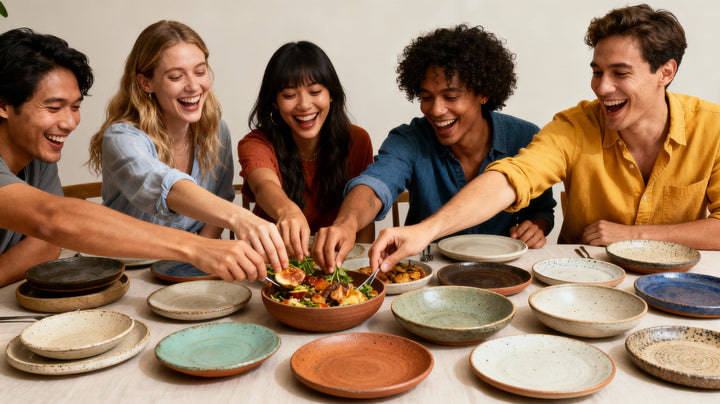
Function meets feel on a colorful tabletop. Handmade or rustic glazes offer tactile warmth and pair beautifully with modern warming bases hidden beneath, while clean, minimalist forms make high-tech dinnerware feel effortless and at home beside everyday stoneware. Using open shelving to showcase a few self-heating pieces can turn them into conversation starters, and layering ceramics with wood, stone, or woven elements softens the look while helping with heat management under hot dishes. Ceramic’s natural visual warmth is half the charm; the technical cleverness disappears beneath the ease of serving food that stays exactly how you want it—inviting, not rushed.

Common Questions
Is graphene safe for food-contact bowls?
A self-heating bowl that mentions graphene is pointing to a conductive pathway; food safety comes down to the final construction. As with any electric dinnerware, the conductive layer must be isolated under a food-safe glaze or embedded away from the food surface. Look for lead-free, vitrified ceramics and relevant safety certifications, and follow the maker’s washing and use instructions.
How hot should a self-heating bowl get for comfortable dining?
Many temperature-control tests converge around about 135°F as a comfortable drinking and eating zone. Systems intended for hot holding in dining scenarios often target roughly 130–175°F depending on the dish and mode. Reusable crockery demonstrations have shown warm-holds near about 140°F for roughly 30 minutes, which feels practical for unhurried meals.
Can I put a self-heating ceramic bowl in the microwave or oven?
This depends on the mechanism. Pure ceramic bowls labeled microwave- and oven-safe generally handle typical kitchen temperatures, often up to about 400–500°F, with care to avoid thermal shock. Electric or battery-integrated components should never go into the microwave or oven; remove detachable bases and follow the manufacturer’s guidance.
Why does my microwave-safe ceramic bowl get very hot in the microwave?
Microwave-safe refers to structural safety and chemical stability, not a promise of a cool surface. Moisture in the ceramic or certain glaze chemistries can absorb microwave energy, so the vessel can heat alongside the food. Use shorter bursts, stir, let it rest, and handle with mitts.
What’s the difference between a temperature-control bowl and a simple warming plate?
A temperature-control device actively regulates heat to stay near a target setpoint, similar in spirit to premium temperature-control mugs. A warming plate or base simply provides heat at a selected level, relying on the ceramic’s mass to smooth fluctuations. Both can work well; the control philosophy differs.
How does ceramic compare to metal for keeping food hot?
Ceramic generally retains heat longer because it conducts heat more slowly and is often thicker, so the warmth you add does not rush out through the sidewalls as quickly. Independent comparisons note that ceramic surfaces can stay noticeably warmer over the first stretch of time than similar metal bowls, which heat and cool faster.
Takeaway
Self-heating ceramic bowls succeed because the physics is sound and the material feels right. Joule heating through a tuned resistive path—whether a PTC plate, a metallic trace, or a carbon-based network such as a graphene-like layer—converts a little electrical energy into the right kind of warmth, then ceramic slows the exit of that heat so your food stays friendly. Chemical and phase-change systems, as well as rechargeable warming bases, offer alternative paths to the same outcome when plugs or permanence are not the priority. Across mechanisms, ceramic’s vitrified, non-porous, lead-free surface remains the hero for food safety, easy cleaning, and familiar comfort. If you want a colorful table that invites conversation yet performs with quiet precision, look for clear temperature ranges, honest materials disclosures, and designs that balance heat with handling. Aim near about 135°F for comfort, mind thermal shock, and let the bowl do the work while you enjoy the meal. Reputable sources, from industrial heater overviews to temperature-control testing and ceramic dinnerware makers, converge on the same lesson: steady, well-managed heat turns unhurried dining into a practical pleasure.
References
- https://strobe.colorado.edu/wp-content/uploads/yang-et-al-2025-self-heating-conductive-ceramic-composites-for-high-temperature-thermal-energy-storage.pdf
- https://ember.com/
- https://www.seriouseats.com/best-temperature-control-mugs-5498744
- https://www.alibaba.com/showroom/self-heating-bowl.html
- https://smart.dhgate.com/are-ceramic-soup-bowls-actually-better-than-metal-ones-for-keeping-soup-hot/
- https://www.fareastcookware.com/blog/what-are-the-advantages-of-using-a-ceramic-bowl-791311.html
- https://www.fruugo.us/pet-heating-bowl-usb-ceramic-water-bowl-warm-feeding-selfheating-design-for-cats-dogs-white/p-398360258-849028923?language=en
- https://globalreachceramic.com/blog_details/Unveiling-the-Multifaceted-Roles-of-Ceramic-Bowls
- https://www.isellpackaging.com/self-heating-packaging-enjoy-the-convenience-of-warm-meal-anywhere/
- https://www.joyye.com/info-detail/benefits-of-using-ceramic-bakeware