



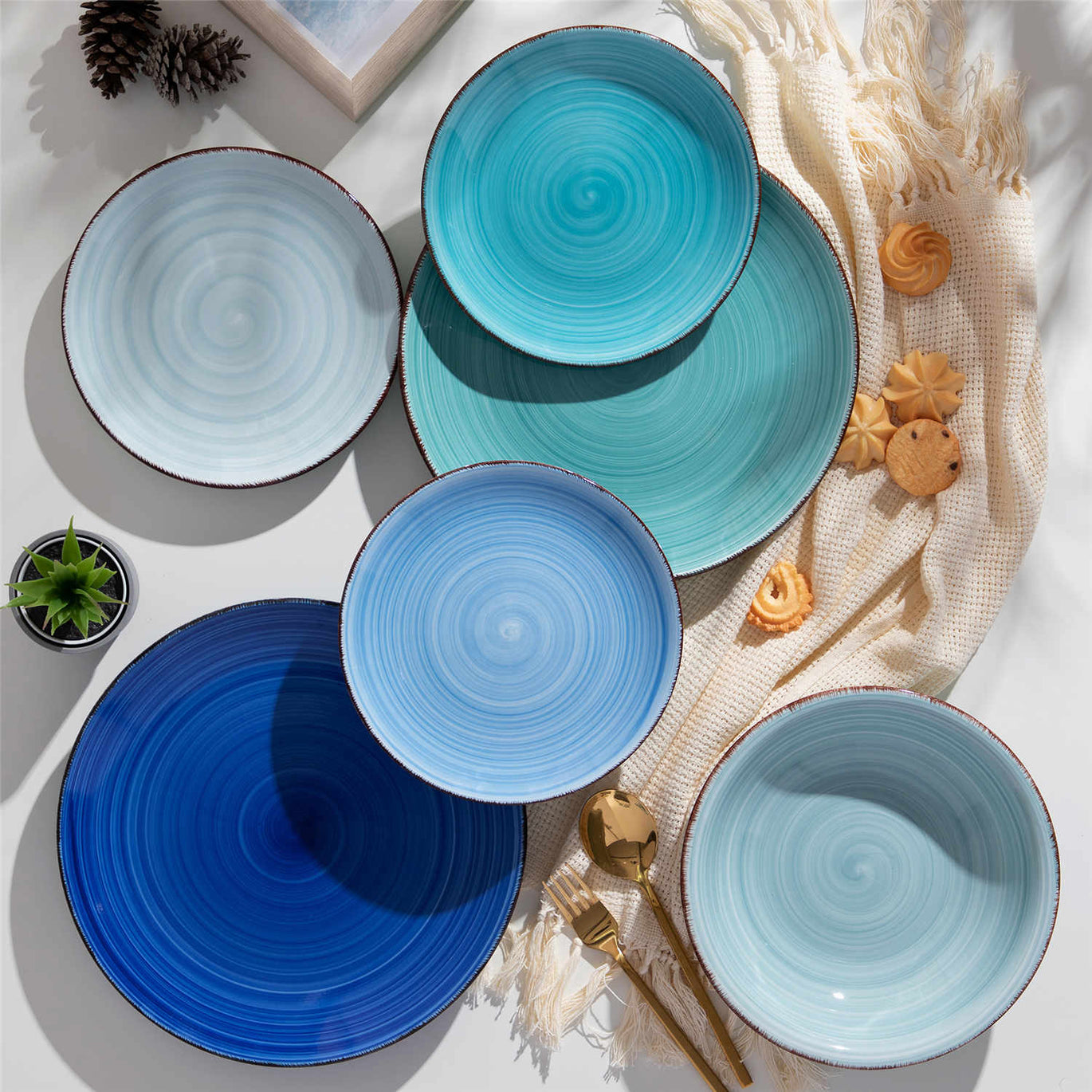


How to Match Stoneware Dinnerware with Kitchen Cabinets and Countertops
The best way to match stoneware dinnerware with kitchen cabinets and countertops is to look at three things together: undertone, texture, and light. In most kitchens, dinnerware feels most cohesive when it either echoes the warmth or coolness of surrounding surfaces or creates a deliberate, balanced contrast.
When people think about kitchen design, they usually focus on cabinets, countertops, flooring, and lighting first. That makes sense. But I think dinnerware is one of the most overlooked parts of a kitchen’s overall look, especially in homes where plates, bowls, and mugs are visible on open shelves, counters, or glass-front cabinets.
In practice, stoneware dinnerware does more than serve food. It adds color, texture, and personality to the room. If the tones and finishes work with your cabinets and countertops, the kitchen feels more cohesive. If they do not, even beautiful pieces can look disconnected. That is why matching stoneware well is less about following strict decorating rules and more about understanding the visual language of the space.
Why Dinnerware Should Be Treated as Part of Kitchen Design
The kitchen rarely feels finished because of a single large element. More often, it feels complete because the smaller details support the larger ones.
Dinnerware plays that role surprisingly well. Plates, bowls, and mugs bring repeated shapes, surfaces, and colors into everyday view. In open kitchens especially, they function almost like soft styling elements: part utility, part decor.
Personally, I think this is why stoneware is such a strong choice in modern kitchens. It has a grounded, tactile quality that feels lived-in rather than overly formal. That makes it easier to integrate into everyday spaces, especially kitchens that aim to feel warm, calm, and usable rather than overly styled.

Start With Undertones, Not Just Color Names
One of the most useful ways to match stoneware with cabinets and countertops is to stop thinking only in broad color categories like white, gray, or beige. What matters more is the undertone.
For example:
- a white kitchen can lean warm, creamy, or cool
- gray cabinets can read soft and earthy or crisp and modern
- wood countertops can feel honey-toned, neutral, or reddish
- stone surfaces can carry warm veining, cool veining, or mixed movement
In my experience, stoneware looks most natural when its undertones align with the undertones already present in the kitchen. Warm stoneware tends to sit comfortably with warm woods, creamy cabinets, and beige or taupe surfaces. Cooler stoneware often works better with charcoal, crisp white quartz, blue-gray cabinetry, or black accents.
That does not mean everything has to match exactly. Contrast can work beautifully. But it usually works best when it feels intentional.
How to Match Stoneware With Butcher Block Countertops
Butcher block countertops bring warmth, softness, and an organic feel to the kitchen. Because of that, they tend to pair best with stoneware that feels similarly grounded.
Some of the most reliable options include:
- warm gray stoneware
- taupe or greige tones
- sage green
- terracotta
- speckled matte finishes
- softly irregular handmade-style forms
I would generally avoid pairing butcher block with stoneware that is very glossy, very icy in tone, or highly saturated in a synthetic-looking way. In most cases, the most harmonious result comes from pieces that echo the natural warmth and texture of the wood rather than trying to overpower it.

How to Match Stoneware With Quartz Countertops
Light Quartz
White or pale quartz gives you room to choose either subtle or expressive stoneware. If the countertop is clean and minimal, reactive glaze dinnerware can add movement and depth. If the countertop already has strong veining, simpler matte stoneware often creates a calmer result.
Dark Quartz
Charcoal, black, or deep-toned quartz usually benefits from contrast. Lighter stoneware, soft neutrals, muted blue-grays, or warm off-whites can help the tableware stand out without feeling harsh. I think this is especially important in kitchens where dark surfaces already carry a lot of visual weight.
Marble-Look Quartz
With marble-look quartz, I would pay close attention to the veining. If the veining reads warm, choose stoneware with warm undertones. If it reads cool, look for cooler grays, blues, or mineral-inspired glazes. This usually creates a more natural relationship between the surfaces.
Matching Stoneware to Neutral Cabinets
White Cabinets
White cabinets can handle contrast well. Deep reactive glazes, earthy tones, or soft speckled finishes all tend to show up clearly against them. In my opinion, white cabinetry is one of the best settings for stoneware because it lets the dinnerware feel intentional without asking the whole kitchen to change around it.
Gray Cabinets
Gray cabinets can go in many directions. With warmer grays, earthy greens, rust tones, mushroom shades, and matte finishes usually feel more settled. With cooler grays, denim blues, charcoal, and cooler reactive glazes often look cleaner and more architectural.
Beige or Greige Cabinets
These kitchens usually respond well to natural-looking stoneware. Soft cream, sand, muted olive, warm gray, and speckled surfaces tend to feel easy and cohesive here.
Navy Cabinets
Navy creates a strong backdrop, so I usually prefer stoneware that brings lightness or warmth against it. Warm whites, golden-speckled finishes, muted clay tones, and soft glazes can keep the space from feeling too heavy.

How Texture Changes the Match
Color matters, but texture often determines whether a pairing feels flat or layered.
Stoneware is especially useful because it features natural variation: matte surfaces, speckling, slight irregularities, reactive movement, and thicker rims. These qualities can beautifully support a kitchen when they relate to the surrounding materials.
For example:
- matte stoneware pairs well with brushed wood, linen-like textiles, and softer finishes
- reactive glaze works well when the kitchen needs movement or visual depth
- smoother, simpler stoneware fits kitchens with sharper lines and a more modern feel
- speckled stoneware often helps bridge rustic and contemporary elements
I think texture is often the missing piece when people say a kitchen looks “almost right” but not fully cohesive. The colors may work, but the surfaces may not be speaking the same language.
Why Lighting Matters More Than People Expect
Lighting can completely change how stoneware reads in a kitchen, especially matte and reactive-glaze pieces.
Natural daylight usually reveals the truest version of a glaze. Warm evening lighting tends to make browns, clay tones, creams, and warm grays feel richer and softer. Cooler artificial lighting can sharpen blues, grays, greens, and black accents.
Because of that, I always think dinnerware should be judged in the kind of light it will actually live in. A plate that looks subtle and balanced in daylight may feel cooler or flatter at night, while a warm matte glaze may become especially inviting under softer evening light.
In practical terms, that means it is worth looking at stoneware under more than one light source before deciding whether it really fits your kitchen.
Creating Harmony in an Open-Concept Kitchen
In an open-concept space, dinnerware is not limited to the kitchen. It also relates to the nearby dining and living areas.
That means it helps to think beyond cabinets and counters. Repeated accent colors, similar textures, and a shared mood across the space can make everything feel more connected.
A few easy ways to do this:
- echo one accent color from a rug, pillow, or artwork
- repeat matte or tactile finishes if nearby textiles feel soft and natural
- keep dinnerware simpler if surrounding patterns are already busy
- let reactive glaze or speckling add interest if the room is minimal
Personally, I think the goal is not perfect matching. It is a sense of continuity. The kitchen should feel like it belongs to the rest of the home, and dinnerware can help create that link.

FAQs
Q: How to Match Stoneware Dinnerware With White Cabinets?
A: White cabinets are flexible, so you can either create contrast or keep things soft. Reactive glazes, earthy tones, and speckled neutrals usually work especially well because they stand out without overwhelming the space.
Q: What Color Stoneware Goes With Butcher Block Countertops?
A: Stoneware with warm, earthy undertones usually feels most natural with butcher block. Sage, taupe, terracotta, greige, and matte speckled finishes are especially reliable choices.
Q: Does Matte Stoneware Work With Quartz Countertops?
A: Yes. Matte stoneware often works beautifully with quartz, especially when you want to soften a clean or engineered-looking surface. The best result depends on whether the quartz reads warm, cool, light, or dark.
Q: Can I Mix Reactive Glaze and Solid Stoneware?
A: Yes, as long as they share something in common, such as undertone, saturation level, or overall mood. Mixing can make a kitchen feel more layered and collected rather than too uniform.
Q: How Should I Display Stoneware in the Kitchen?
A: Open shelves, plate racks, and glass-front cabinets work well for showing off stoneware. I would keep visible pieces limited to a few cohesive place settings or favorite items so the display feels intentional rather than crowded.
Conclusion
Matching stoneware dinnerware with kitchen cabinets and countertops is less about strict rules and more about visual balance. When color undertones, texture, and lighting work together, the whole kitchen feels more considered.
That is what makes stoneware so appealing in the first place. It is practical enough for daily life, but expressive enough to shape the atmosphere of a room. And when it is chosen with the surrounding kitchen in mind, it becomes more than tableware—it becomes part of the home’s design language.

About the Author
Clara Vance is a Pacific Northwest-based home curator and writer. Focusing on "practical aesthetics," she explores the intersection of functional design and intentional daily rituals. With a background in design, Clara advocates for a home where every object, from a stoneware bowl to a simple mug, is chosen with purpose and care.
You may also like
Stern 16 Piece Dinnerware Set
- €96,95
€110,95- €96,95
- Unit price
- per
-
Blue
-
Green
-
Red
-
Grey
Simi 24 Piece Dinnerware Set
- €105,95
€145,95- €105,95
- Unit price
- per
Bonita 18 Piece Dinnerware Set
- From €66,95
€81,95- From €66,95
- Unit price
- per
-
Blue
-
Multicolor
Simi 24 Piece Dinnerware Set with Double-Sided Bowls
- €111,95
€145,95- €111,95
- Unit price
- per