

Food photography is no longer reserved for professionals with studio setups—it has become an essential skill for home bakers, bloggers, and content creators. However, there is one common problem that many creators face: their photos are flat, lifeless, and do not reflect the tasty nature of their baked goods. The truth is, lighting alone isn’t the solution. The props you employ, particularly your bakeware, are a defining factor in the way your food will be viewed on screen.
This guide discusses how to make your food photography look different with purposeful prop selections, particularly stoneware bakeware, stoneware ramekins, and carefully chosen baking dishes. To make your content memorable and turn viewers into followers (or customers), it is necessary to master these visual tools.
Why Your Food Photos Are Still Flat (Even With Good Lighting)
Your food photos may still be dull even with natural light coming in, unless the elements around it are deep and contrasting. The surface and bakeware on which the shot was taken is one of the most neglected culprits.
Flat images are usually caused by too reflective or homogeneous materials. Glare is produced when light bounces off glossy metal trays or glass dishes, removing texture. This makes baked goods less appealing to the eye and less appetizing.
Textured surfaces, such as those of stoneware bakeware sets, on the other hand, absorb and diffuse light more naturally. This produces gentle shadows and highlights that bring out the lines of your cakes, pastries, and breads. The subtle imperfections and handcrafted feel of stoneware also introduce visual character, making your images feel more authentic and engaging.

How the Wrong Baking Sets and Bakeware Unintentionally Dull Your Visual Presence
Not every bakeware is equal in terms of photography. A typical bakeware set that is created with a functional purpose might not be aesthetically pleasing. Glossy finishes, excessively dark colors, or excessively bright artificial colors may conflict with your food and make it less appealing to the eye.
For example, a metallic baking tray can be too reflective, whereas plastic or excessively polished ceramic can appear unnatural in natural light. These details are a distraction to the primary subject, which is the food.
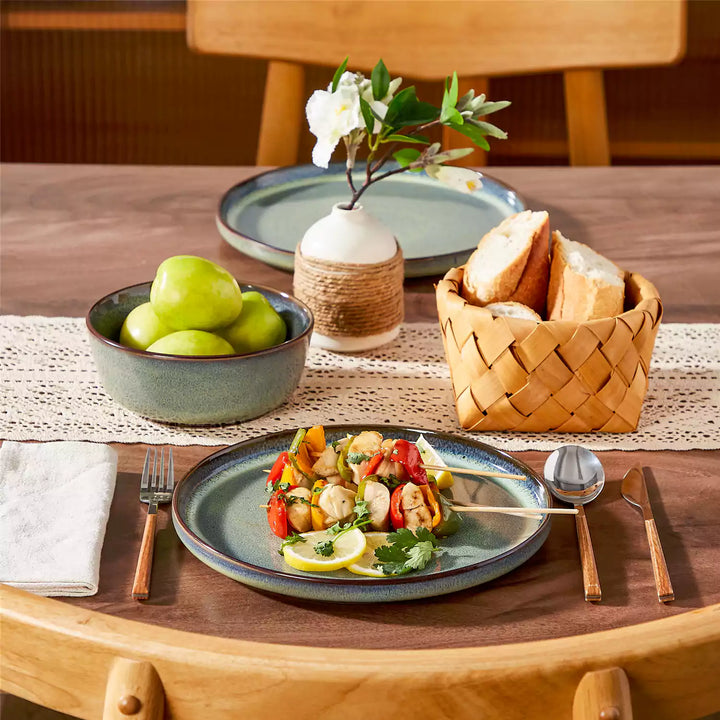
Replacing bakeware with stoneware immediately upgrades your presentation. Its matte finish reduces glare, and its organic textures provide depth. Moreover, the quality of baking dishes in neutral or earthy colors serves as a complementary canvas instead of competing with each other.
Selecting matching stoneware bakeware collections also contributes to a consistent visual identity throughout your blog or social feed. This uniformity creates brand awareness and provides your content with a professional appearance.
Color Theory Fundamentals: Pairing Glaze Colors with Baked Goods
One of the most effective tools in food styling is color, but it is not used to its full potential. The simplest color theory can make a huge difference in how your baked goods pop in photographs.
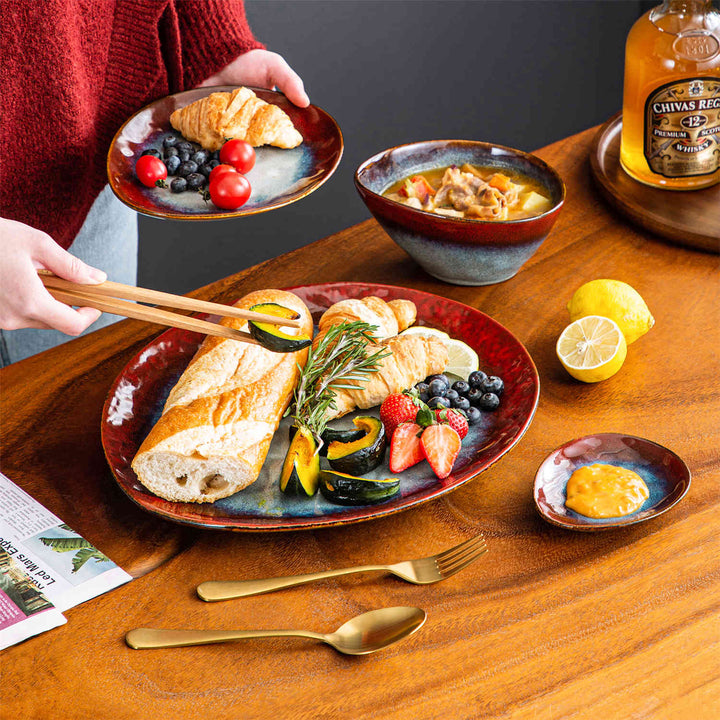
Foods with warm tones, such as golden croissants, caramel cakes, or cinnamon rolls, are better served on cooler backgrounds. Your stoneware casserole dish is glazed in a soft blue or muted green, which makes a great visual balance and attracts attention to the food.
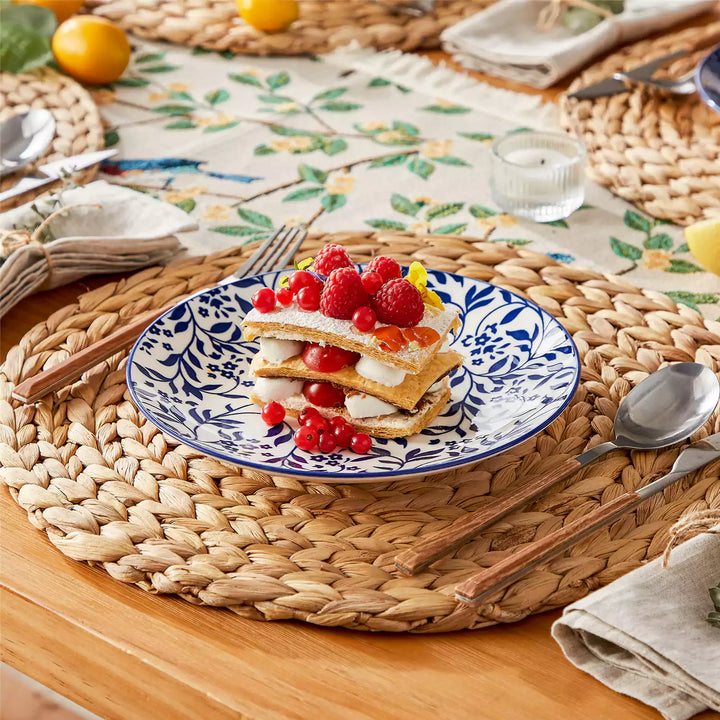
On the other hand, desserts that are cooler in color, like berry tarts or chocolate cakes, are well matched with warm, earthy colors like terracotta, cream, or beige in most stoneware bakeware collections.
Even monochromatic styling can be effective when properly done. The combination of similar tones and different textures, such as a beige cake in a slightly darker neutral dish, gives a high-end, editorial appearance.
The trick is purposefulness. Your baking dishes must add color to your food, not blend with it or overwhelm it.

Adding Texture and Depth with a Rustic Stoneware Casserole Dish
A stoneware casserole dish is one of the most influential props in food photography. Its rough, matte texture is an ideal contrast to the smooth, shiny textures of baked goods.
Stoneware, unlike glass or metal, minimizes harsh reflections, so your food is the center of attention. This is especially necessary when capturing food such as baked pasta, cobblers, or bread, where texture is all.
The slightly irregular, handmade finish of a stoneware casserole dish adds depth to your composition. It adds a light layer of visuals that make your photos look more dynamic and less artificial.
To achieve optimal results, place your casserole dish slightly off-center and leave natural shadows to develop around it. The method improves dimensionality without involving complicated arrangements.
High-End Macro Photography with Classic Stoneware Ramekins
When it comes to close-up shots, scale and detail are everything. Stoneware ramekins shine here.
These are small, multi-purpose dishes that are ideal for capturing individual portions—consider molten lava cakes, soufflés, or custards. Their small size enables you to capture close shots that emphasize complex textures, such as a cracked crust or a sticky interior.
The thick walls and matte finish of stoneware ramekins help control light, preventing overexposure in macro photography. They also provide a touch of artisanship that makes even the most basic desserts special.

Repetition and rhythm can be achieved by using several ramekins in one frame, and this helps the viewer to move through the picture. Alternatively, one ramekin can be used as a center of attention, with minimalism and elegance.
To bloggers and content creators, adding stoneware ramekins to your photography arsenal is an easy but effective method of creating a high-end, editorial appearance.
The Use of Natural Light and Shadows to Highlight Handcrafted Ceramics
The best friend of food photography is natural light, and the way it plays with your props is what makes the difference. Stoneware, with its matte and slightly textured surface, is a good match with directional light.
Install your system close to a window and have the light strike the dish on one side. This produces gentle shadows that emphasize the lines of the food and the stoneware bakeware.
Do not use overhead lighting, which will flatten your composition. Rather, adopt side lighting or backlighting to add depth. The minor flaws of stoneware bakeware sets reflect the light in different ways, which gives your photos a personality and genuineness.
Shadows are not to be feared—they are necessary to the production of dimension. They can be used deliberately to turn a mere image into a story that is visually appealing.
Conclusion
Food photography is not just about taking a picture of what is on the plate, but a visual story. The correct props, particularly carefully selected stoneware bakeware, can turn your pictures from two-dimensional and uninteresting to three-dimensional and captivating.
Knowing the contrast in textures, the basics of color theory, and using versatile objects such as stoneware ramekins and a stoneware casserole dish, you will be able to create images that are not only beautiful but also appealing to your audience.
To home bakers and bloggers who want to take their content to the next level, the first step is purposeful styling, and the key to it all is the right bakeware.

FAQs
Q: What Is the Advantage of Stoneware Over Glass or Metal in Food Photography?
A: Stoneware has a matte finish that minimizes glare and increases texture. It does not reflect light like glass or metal, so your food will appear more natural and attractive.
Q: What Is the Correct Bakeware Set to Use in Photography?
A: Seek neutral colors, matte finishes, and soft textures. A unified bakeware collection in stoneware will provide uniformity and enhance your overall aesthetic.
Q: Can Stoneware Ramekins Be Used with Desserts Only?
A: Not at all. Although they are ideal in desserts, stoneware ramekins can also serve dips, sauces, or small savory meals, which can be a nice addition to your photography.
Q: What Are the Best Colors to Use in Baking Dishes in Photos?
A: Warm colors, gentle blues, and dull greens are very versatile. These colors do not overwhelm baked goods but complement them.
Q: Do I Need Expensive Props to Improve My Food Photography?
A: Not necessarily. A small budget can be used to invest in a few quality items, such as a stoneware casserole dish and stoneware bakeware sets.