

If you're thinking about upgrading your tableware this year, salad plates are a great place to start. They sit on the table at almost every meal, and the right design can genuinely change how your dining setup looks and feels. In 2026, the options are better than ever — from eco-friendly stoneware to artisan reactive glaze finishes. This guide covers what's trending, what actually matters when buying, and how to pick the right plate for your lifestyle.
What Are the Biggest Salad Plate Trends in 2026?
Salad plate design in 2026 isn't just about looks — it reflects how people want to live and eat. Three forces are shaping the market right now:
From Functional to Design-Forward
Consumers no longer treat salad plates as an afterthought. More people are investing in plates that double as a visual part of the meal — plates that make a bowl of greens or a grain dish feel intentional and well-presented.
Consumer Values Are Reshaping the Market
Sustainability, individuality, and practicality are the three values driving purchasing decisions in 2026. Buyers want plates that are made responsibly, reflect personal style, and work in smaller living spaces. These aren't niche preferences — they're now mainstream expectations.
The 7 Trends Defining 2026
Here's a quick map of what's trending this year (each covered in detail below):
- Sustainable materials — stoneware and recycled ceramics
- Bold, vibrant colors — jewel tones and deep saturated hues
- Minimalist Scandinavian styles — soft matte, pastel, clean lines
- Handcrafted and textured finishes — reactive glaze, embossed details
- Irregular and geometric shapes — oval, hexagonal, wavy-edged
- Dual-tone glazes — contrasting interior/exterior color schemes
- Stackable and space-saving designs — built for smaller kitchens
Why Sustainable Salad Plates Are Leading the Market Right Now
Eco-conscious buying is no longer a niche trend — it's become a baseline expectation for a growing segment of shoppers. When it comes to salad plates, that shift is showing up in material choices.
What Counts as a Sustainable Salad Plate Material
The most common sustainable options in 2026 are:
- Natural stoneware — dense, long-lasting, and made from natural clay without synthetic coatings
- Recycled ceramics — uses reclaimed ceramic material to reduce production waste
- Biodegradable composites — newer category, though less common in premium tableware
Why Stoneware Is the Top Eco Pick
Stoneware hits a practical sweet spot. It's fired at high temperatures, which makes it chip-resistant and very durable — meaning you replace it less often. It also has a natural, organic surface texture that requires no artificial finishing. For everyday use, stoneware salad plates hold up better than most alternatives.
How to Spot Greenwashing
If a brand marketed a plate as "eco-friendly" without specifics, here's what to check:
- Look for mentions of specific materials (not just vague terms like "natural")
- Check if the brand discloses its production or firing process
- Avoid plates with heavy synthetic glazes marketed as sustainable — the glaze chemistry often negates the eco claim
What Salad Plate Styles Are Trending in 2026?
Style preferences in 2026 fall into a few clear camps. Here's how they compare:
| Style | Color Palette | Finish | Best For |
|---|---|---|---|
| Bold & Vibrant | Deep blue, terracotta, emerald, burnt orange | Glossy or hand-glazed | Statement dining, entertaining |
| Minimalist / Scandinavian | Soft white, warm grey, pale blush | Matte | Everyday use, modern kitchens |
| Dual-Tone Glaze | Contrasting interior + exterior (e.g., cream inside, sage outside) | Matte or semi-matte | Subtle elegance, neutral tables |
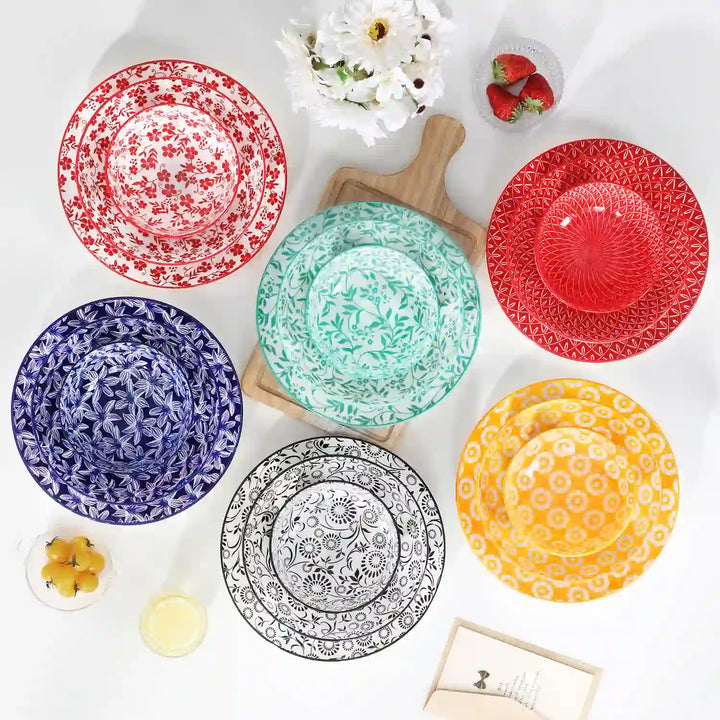
Bold colors create visual energy — they make a simple salad look composed and intentional. Minimalist styles do the opposite: they let the food take center stage. Dual-tone glazes sit somewhere in between, adding depth without drawing too much attention.

Which style should you pick? If you entertain frequently, bold tones photograph well and create a memorable table. If you use salad plates daily for casual meals, a matte neutral is more forgiving and easier to style with other pieces. For those who lean toward the bold end, the Bonita 18 Piece Dinnerware Set offers handmade spiral stoneware in a rich blue gloss finish — the 7.5-inch salad plates are included in an 18-piece set that serves six, making it a practical choice for households that entertain regularly.
Why Handcrafted and Textured Salad Plates Are So Popular Right Now
There's been a clear move toward plates that feel made by hand — even when they're produced at scale. Consumers want tableware that looks like it has some character to it.
What Makes Handcrafted Plates Different
The key features are:
- Embossed patterns — raised surface details created during the forming process
- Hand-glazed finishes — where brushwork or dipping creates variation across the surface
- Reactive glaze effects — a glaze that responds to kiln heat in unpredictable ways, creating unique patterns on every piece
Reactive Glaze and Watercolor Effects
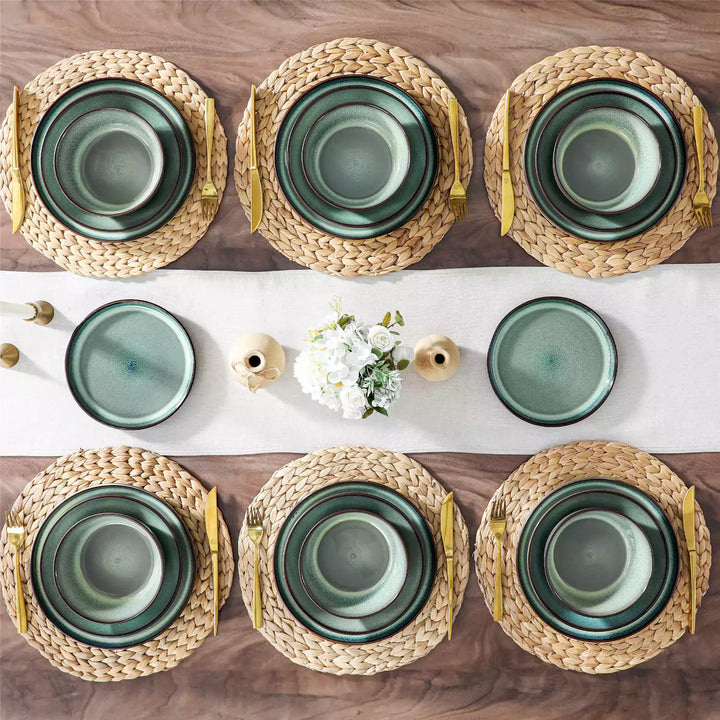
Reactive glazes are one of the most distinctive looks of 2026. Because the glaze interacts with heat differently each time, no two plates come out exactly the same. The result is a surface that can look like brushed watercolor, ocean movement, or abstract stone — without any two pieces being identical. This appeals to buyers who want tableware that feels curated rather than mass-produced.

Who Should Buy Artisan-Style Plates (and Who Shouldn't)
Artisan plates are a great fit if you care about aesthetics and are comfortable with slight variation between pieces. They're less ideal if you need a perfectly uniform set for a commercial kitchen or formal event catering, where consistency matters more than character. The Stern 16 Piece Dinnerware Set is a good example of this style done well — premium stoneware with a reactive glaze finish available in blue, green, and red, where each piece carries its own subtle variation. The 7.5-inch salad plates sit within the standard size range and work well for everyday meals or casual entertaining.
Are Non-Round Salad Plates Actually Worth It?
In 2026, oval, hexagonal, and wavy-edged plates are getting more shelf space — but they come with real trade-offs.
The Case for Irregular Shapes
Non-round plates change how food is arranged. An oval plate naturally directs the eye along a horizontal line, which suits composed salads and plated dishes. Hexagonal and wavy-edged plates add visual interest to a table without needing any decorative accessories.
The Practical Reality
Here's what to consider before buying:
- Stackability — irregular shapes often stack less cleanly, which matters in small cabinets
- Dishwasher fit — some wavy-edged or hexagonal plates don't fit standard dishwasher racks as efficiently as round ones
- Versatility — unusual shapes can be harder to mix with existing round dinnerware
If you're building a full set from scratch, non-round plates work well. If you're adding to an existing collection, make sure the shapes are compatible before buying.
Why Stackable Salad Plates Matter for Small Kitchens
Compact urban living has pushed stackable design from a nice-to-have into a practical requirement for a lot of buyers.
Features That Actually Matter for Stacking
- A flat, stable base so plates don't rock when stacked
- Consistent rim width so plates sit flush rather than at an angle
- Lightweight material — porcelain stacks well without adding significant weight
Porcelain vs. Stoneware for Stacking
Porcelain is typically thinner and lighter, making it better suited for tall stacks. Stoneware is heavier and thicker — it stacks fine in small numbers but gets unwieldy if you need to store eight or more plates in a single column.

How to Mix and Match Salad Plates Without It Looking Random
Mix-and-match table settings have become genuinely mainstream in 2026, but doing it well takes a bit of intention.
The Core Rule: Anchor + Accent
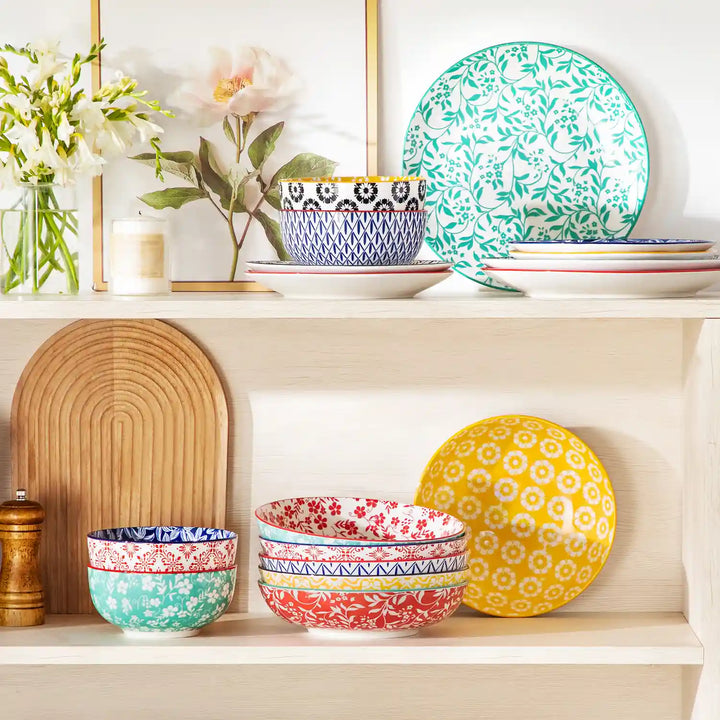
Start with one plate as your anchor — usually a neutral or solid color. Then add one or two accent plates in a complementary tone, texture, or pattern. The anchor keeps things cohesive; the accents add the visual interest.
Combinations That Work
- Matte neutral + reactive glaze in a similar color family
- Solid color + embossed pattern in the same tone
- Minimalist white + one bold jewel tone as an accent
Common Mistakes to Avoid
- Mixing too many competing patterns at once — it reads as cluttered, not curated
- Combining very different size plates — visual inconsistency is distracting at the table
- Ignoring finish — a high-gloss plate next to a very matte plate in the same color can look accidental rather than intentional
How to Choose the Best Salad Plate for Your Needs
If you're wondering where to start, here's a practical breakdown.
Size Guide
Standard salad plates typically measure 7 to 8.5 inches in diameter. Smaller plates (around 7 inches) work for side salads or appetizers. Larger plates (8–8.5 inches) are better for main-course salads or grain bowls where you need more surface area.
Material Comparison
| Material | Durability | Weight | Best Use |
|---|---|---|---|
| Porcelain | High | Light | Everyday + entertaining |
| Stoneware | Very High | Medium-Heavy | Everyday, casual dining |
| Ceramic | Medium | Medium | Casual, decorative use |
Style vs. Practicality
- If you entertain often: prioritize aesthetics — bold colors, reactive glaze, interesting shapes
- If you use plates daily: prioritize durability and dishwasher safety — stoneware or porcelain with a stable glaze finish
- If you have limited storage: prioritize stackable design and lightweight materials
Budget Breakdown
- Under $30 for a set: Expect basic ceramic, limited finish options, less durability
- $30–$70: Good stoneware and porcelain options, more design variety
- $70+: Handcrafted finishes, reactive glaze, artisan collections with more uniqueness per piece
Find Your Next Salad Plate and Upgrade Your Table in 2026
The right salad plate makes a real difference — not just in how your table looks, but in how much you enjoy using it. Start by identifying your priorities: sustainability, style, space, or budget. From there, the 2026 market has strong options across every category. Consider material first, then narrow down by style and size to find something that genuinely fits how you eat and live.

Salad Plate FAQs: Common Questions Answered
Q1: What Size Should a Salad Plate Be?
Standard salad plates are 7 to 8.5 inches in diameter. A 7-inch plate works well for side salads or light starters. If you use salad plates as a main dish — for grain bowls, composed salads, or larger portions — go with 8 to 8.5 inches for the extra surface area. Size also affects how food is plated, so consider your serving style before buying.
Q2: What Is the Best Material for Salad Plates — Ceramic, Stoneware, or Porcelain?
It depends on how you use them. Stoneware is the most durable and chip-resistant, making it ideal for everyday use. Porcelain is lighter and more refined-looking, which suits both daily meals and dinner parties. Standard ceramic is more affordable but less durable long-term. For most people, stoneware or porcelain offers the best balance of quality and longevity.
Q3: Are Reactive Glaze Salad Plates Dishwasher and Microwave Safe?
Not always. Reactive glaze plates are generally dishwasher safe, but always check the manufacturer's label. Some handcrafted pieces use glaze formulations or metallic accents that degrade in high-heat dishwasher cycles. For microwave safety, the same rule applies — confirm with the brand. Most quality stoneware and porcelain reactive glaze plates are microwave safe, but it varies by product.
Q4: Can I Mix Salad Plates From Different Sets Without It Looking Mismatched?
Yes, as long as you follow a simple rule: pick one unifying element — either color family, finish type, or material — and stick to it across all the plates. Mixing a matte neutral with a reactive glaze plate in the same color tone works well. Where mix-and-match fails is when there's no visual thread connecting the pieces, so the table looks assembled randomly rather than intentionally.