



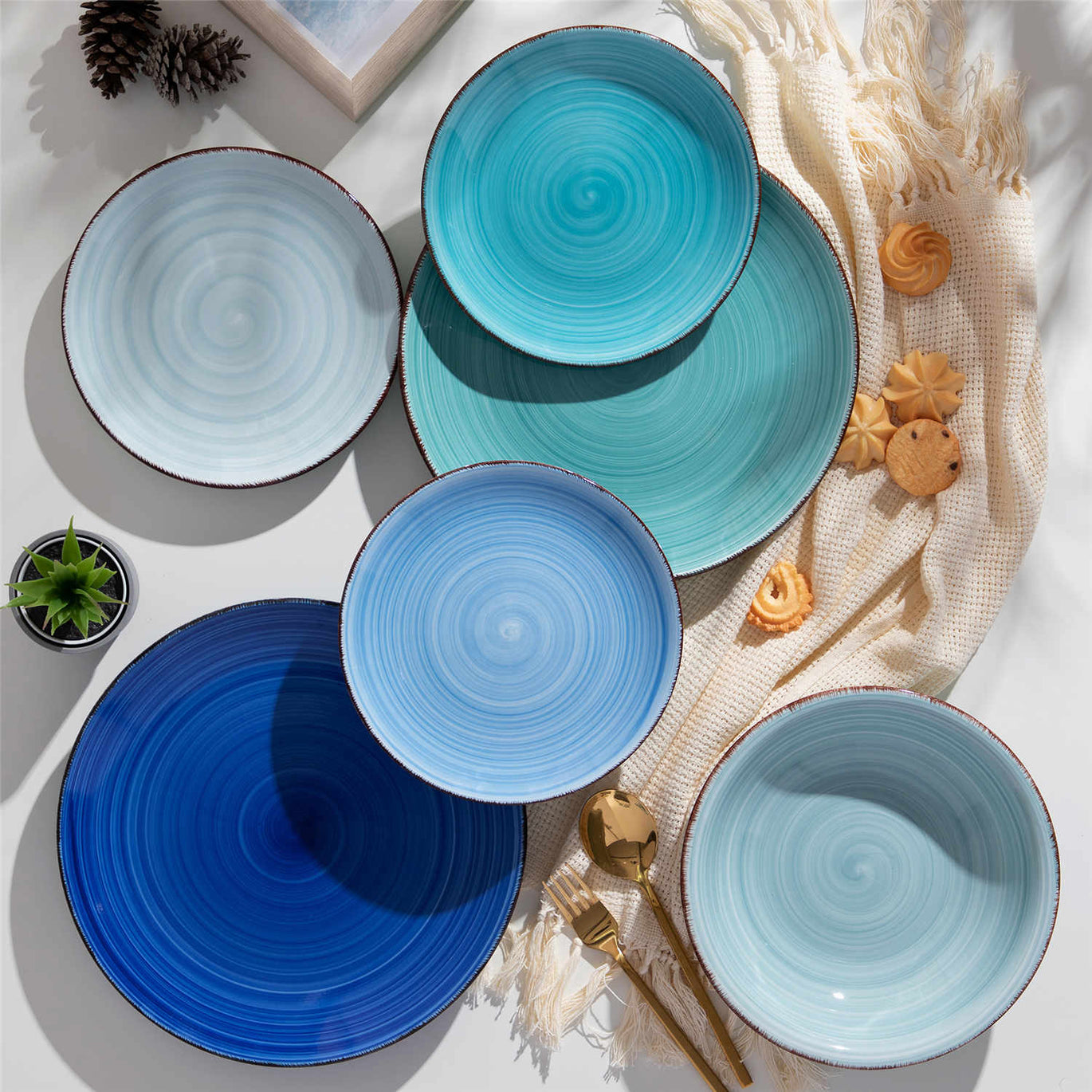


From “His and Hers” Plates to Gender‑Fluid Tables: Challenging Gender Norms in Ceramic Dinnerware

Why Talk About Gender At The Dinner Table At All?
Pull up a chair for a moment.
If you open most kitchen cupboards, you can read a quiet script of gender expectations. Oversized matte‑black “grill master” plates and chunky mugs that feel like dumbbells. Tiny pastel bowls decorated with roses, sold as “ladies’ tea sets.” Wedding gifts labeled “his” and “hers,” where “his” is literally bigger.
As a Colorful Tabletop Creative and Pragmatic Joy Curator, I live inside this world of plates, bowls, and cups. I test how a mug feels in different hands, watch who reaches for which plate at a party, and see how color and weight change not just a table setting, but the way people behave around it. I’ve also seen how easily dinnerware becomes a stage for sexism, sometimes loudly, often in a whisper.
Design research backs up what many of us feel intuitively. Scholars of material culture show that objects like clothing, furniture, and ceramics are not neutral; they help construct gender and sexuality over time. In work on the Georgian and Regency eras, for example, literary historians note that heavy dining furniture, heraldic dinner services, and the dining room itself were coded as masculine, while delicate tea sets and the drawing room were coded as feminine, tied to women’s sociability and domestic performance.
A Japanese tableware history from Tsukushi traces a similar story in a different context: “husband and wife” rice bowls, where the husband’s bowl is more than a third bigger and decorated in more muted colors, while the wife’s is smaller, lighter, often floral. Chopsticks are traditionally longer for men and shorter for women, justified by hand size but wrapped in assumptions about appetite and demeanor.
Across cultures, ceramic dinnerware has quietly reinforced the idea that men should take up more space, eat more, drink more, claim the “serious” domain of the dining room, while women should pour the tea, arrange the flowers, and keep everything pretty and contained.
If we care about colorful tableware as an art form and about shared meals as moments of connection, it is time to challenge that script.

A Short History Of Gendered Tableware
To understand how radical a gender‑inclusive plate can be, it helps to look backward.
In late‑Georgian and Regency Britain, historians of Jane Austen’s world describe a stark division of spaces and objects. The dining room or dining parlor functioned as a masculine domain. It was meant to feel “large” and “august,” furnished with a substantial dining table, heavy chairs, decanters, wine coasters, and even tobacco jars and chamber pots that underlined male sociability and bodily license. Men of the household chose and financed heraldic dinner services as status symbols, linking family name, land, and power.
After the meal, women withdrew to the drawing room, understood as a feminine space that should “concentrate the elegance of the whole house.” There, the female head of household controlled the tea service, using specialized silver and ceramic equipage and even a locked tea caddy. Fiction and letters from the period are full of women fussing over tea trays, coffee cups, and tiny dishes for cakes and sweetmeats, demonstrating taste, refinement, and marriageability in this feminized, decorative zone.
Ceramics were part of daughters’ marriage portions and widows’ bequests. Men ordered entire dinner services; women often selected breakfast and tea sets or individual replacement pieces. Shopping and collecting ceramics became feminized activities, praised when they stayed modest but mocked as frivolous when they became too visible.
Fast‑forward to modern Japan and you find a different but equally gendered pattern. Tsukushi explains how, from the Edo period onward, tableware started to track gender in size and ornament. Larger, sturdier bowls and cups signaled samurai appetites and male robustness. Smaller, more delicate bowls and lacquerware signaled feminine refinement. The “meoto jawan” or “husband and wife bowls” embody this: a visibly larger “husband” rice bowl paired with a smaller “wife” bowl, often gifted to newlyweds.
Color and motif joined in. Adult men’s bowls often lean toward blue, green, black, or gray with simple or nature‑inspired patterns that suggest calm dignity, while women’s bowls are brighter or softer in reds, pinks, creams, and florals. Even the Okuizome “first meal” ceremony for infants historically used color‑coded lacquerware: auspicious motifs and colors differentiated boys’ sets from girls’ sets in subtle but powerful ways.
Across these examples, the pattern is similar. Heavy, substantial, heraldic, or muted objects attach to masculinity and authority; delicate, decorative, colorful, and smaller items attach to femininity and domesticity. Ceramic dinnerware is not just a neutral container for soup. It is a script for who is supposed to serve, who is supposed to savor, and who is supposed to be seen.

The Modern Echo: From “Shrink It And Pink It” To “For Her” Mugs
Today, we flatter ourselves that we have moved past the days when dining rooms were for men and drawing rooms for women. Yet contemporary design and marketing show that dinnerware is still often gendered, just in glossier packaging.
Design researchers writing about gendered packaging describe a pattern they call “shrink it and pink it.” Instead of designing products from the ground up for diverse bodies and identities, companies take an item optimized for a presumed male default, then make it smaller and turn it pastel for women. A Harvard analysis of gender bias in product design shows how dangerous this can be in safety gear: women are significantly more likely to be injured in car accidents and on the job because equipment, vehicles, and protective gear are built to male anatomical data and only superficially adjusted.
The same mindset shows up in consumer goods and toiletries. A design critique of gendered shower products, for example, finds that the formulations for “men’s” and “women’s” items are often not dramatically different; the big difference is the branding. Women’s bottles lean on cursive fonts, soft shapes, and floral or dessert scents. Men’s packaging turns up dark colors, bold fonts, sharper geometry, and woody or “wilderness” scents. A New York City Department of Consumer Affairs study even found that toys marketed to girls cost, on average, 2 to 13 percent more than equivalent toys for boys, illustrating the so‑called Pink Tax.
Once you see this product language, you start seeing it on ceramics too. Oversized matte‑black plates marketed for steak, barbeque, or “man cave” dining. Tiny floral plates labeled “dessert plates for her.” Couples’ sets where the only difference between the two mugs is that one is bigger and plain, the other smaller and densely decorated, priced and boxed together as if those roles were inevitable.
In parallel, branding and interior imagery still encode the table itself as gendered. An article from a home interiors publisher notes that spare rooms and “bonus rooms” in homes often default to male‑coded spaces such as studies, gaming rooms, or “man caves,” while women are still associated with the kitchen. A glossy, dark dining room shot with leather chairs and a looming bar cart is presented as aspirational for men; an airy breakfast nook with pastel ceramics and flowers as aspirational for women.
Even restaurant culture echoes this. A survey conducted by Ifop for the restaurant‑tech company Zenchef found that in France, around two‑thirds of respondents believed the man should pay on a first restaurant date, and a clear majority expected men to book the restaurant and choose the wine. These expectations are soft, but they shape how we experience the dinner table as a gendered stage.
Ceramic dinnerware, in other words, is still a part of a design and social system that often defaults to “masculine” seriousness and “feminine” decoration. The question is what we want to do with that knowledge.

What Social Science Around The Table Teaches Us
Challenging gender norms in dinnerware is not just an aesthetic question. It intersects with how power and care circulate in families and communities.
Psychological research from Marquette University, summarized in a feature on sexism and body esteem, distinguishes between hostile sexism and benevolent sexism. Hostile sexism is the overt discrimination that is easier to call out. Benevolent sexism is trickier: it shows up as seemingly loving or chivalrous behavior that nonetheless reinforces women’s dependence and traditional roles. In their study of 86 first‑year college women and their parents, psychologists Stephen Franzoi and Debra Oswald found that women with higher body esteem were more likely to have fathers who practiced benevolent sexism, such as treating daughters as “special little princesses” and providing disproportionate financial support. The positive feelings can mask the restrictions.
At the table, benevolent sexism can sound like, “Let me choose the wine, sweetie, you just enjoy,” or “You focus on making everything beautiful; I’ll handle the serious part.” The dishes themselves become props in that dynamic: dainty plates for her, substantial ones for him; a special china set that only women are expected to maintain; “for her” mugs as gifts that reward conforming to a certain image.
In a very different context, a public health study in rural Malawi on improved cookstoves carries another important lesson. The intervention gave households more efficient stoves that cooked quickly and produced less smoke. Men and boys were intrigued by the technology and sometimes used the stoves in hidden ways, but the day‑to‑day responsibility for cooking remained overwhelmingly with women and girls. Time saved by faster cooking did not magically turn into new economic opportunities. Women mostly used that time for other domestic tasks, childcare, or a bit of much‑needed rest. The authors emphasize that technology alone cannot transform gender relations; it must be paired with explicit engagement on norms and labor.
At the restaurant level, the Ifop study shows slow movement toward equality. Over the past decade, fewer men reported always paying for the first date, and more women reported sharing the bill. Yet the majority still see the man as the default financial host. When the check arrives, servers often still hand it to the man by habit. Tiny ceramic cups for espresso or digestifs, large or small wine glasses, and even who is offered a dessert plate can all subtly echo those roles.
Taken together, these studies send a clear message. If we want ceramic dinnerware to support equity rather than soften inequality with a pretty glaze, we need to address both the objects and the behaviors around them.

What Gender‑Inclusive Design Looks Like For Ceramic Dinnerware
Designers, marketers, and hosts now have a robust vocabulary for thinking beyond binary gender. A research brief on gender‑inclusive design defines it as designing offers, branding, and visuals that reflect and respect diverse gender identities and expressions, moving beyond the narrow masculine–feminine split toward fluidity and individuality.
Within that, gender‑neutral design aims not to align with any particular gender. It favors balanced color palettes, universal symbols, and neutral language so a wide range of people can feel at home. Gender‑fluid design intentionally blends and subverts gendered aesthetics: pairing bold forms with soft colors, or delicate lines with robust textures, and avoiding default gender roles in how people are shown using the product.
A participatory study on digital health wearables emphasizes human‑centered design: instead of starting from technology or a stereotyped “user,” it begins by understanding real people’s needs, contexts, and emotions. It also talks about “product language,” the way color, shape, material, and detail tell us who a product is “for” and how it should be used. Historically, that product language has been saturated with gender stereotypes.
If we apply those insights to ceramic dinnerware, the design questions become wonderfully concrete.
How does the weight of a mug feel in different hands, regardless of gender? Is the handle comfortable for a wide range of finger sizes and grips, or is it a tiny loop that only works for people with small, nimble hands usually assumed to be women’s? Georg Simmel’s famous essay on handles railed against handles that sit flat against the vessel as “discordant,” yet early American crocks with pressed‑in handles have their own loyal fans. The point is not that there is one correct handle, but that we should ask who this handle works for and who it excludes.
How do colors and finishes affect not just aesthetics, but the actual eating experience? Food psychologist Charles Spence’s work, cited in a review of Linda Bloomfield and Sue Pryke’s book on contemporary tableware, reports studies where popcorn tastes saltier when served in a blue bowl than in a white one. If color can tilt salt perception, it can also tilt mood. Why reserve bright, joyful glazes only for “feminine” pieces and sober tones only for “masculine” ones when both kinds of moods belong to all of us?
What about naming and labeling? A non‑binary designer writing about gender‑inclusive branding points out how common it still is to see “for him” and “for her” labels, blue versus pink color coding, and stereotyped imagery in product photography. On ceramics, that can look like mug sets literally stamped “Mr.” and “Mrs.,” or packaging that only ever shows women serving and men carving meat. Neutral language like “large mug” and “small mug,” “deep plate” and “shallow plate,” combined with diverse models using them, tells a more expansive story.
And then there is the question of who is doing the designing. A Harvard analysis of gender bias in product design notes that women remain a minority among industrial designers and architects, especially in leadership roles, even though they make up a large share of design students and drive a very high share of purchasing decisions. That underrepresentation contributes to gear, vehicles, and environments that literally do not fit women’s bodies. In the ceramics world, books like Bloomfield and Pryke’s, feminist art such as Judy Chicago’s monumental installation “The Dinner Party,” and the work of female furniture designers highlighted by design retailers show how powerful it is when women and other underrepresented genders lead design conversations around domestic objects.
In other words, gender‑inclusive ceramic dinnerware is not about making everything beige and unmarked. It is about designing with a wide spectrum of bodies and identities in mind, and about freeing color, motif, and form from the job of policing who belongs where.

Comparing Gendered And Gender‑Fluid Dinnerware At A Glance
Here is a compact way to think about the difference in design approach.
Feature |
Traditional gendered dinnerware |
Gender‑inclusive or gender‑fluid dinnerware |
Palette |
Dark, muted, heavy for men; light, pastel, floral for women |
Wide range of colors available to everyone; palettes mixed at the table |
Size and capacity |
Larger bowls and plates for men, smaller ones for women |
Sizes chosen for appetite and comfort, not presumed gender |
Motifs and imagery |
Heraldic crests, geometrics, “serious” motifs for men; flowers and sweets for women |
Motifs drawn from varied cultures, plants, abstract forms, and humor without assigning gender |
Naming |
“His and hers,” “ladies’ tea set,” “man‑size mug” |
Descriptive names such as “tall mug,” “espresso cup,” or collection names without gender tags |
Marketing visuals |
Men shown carving, pouring wine; women shown serving, pouring tea |
Diverse people of different genders doing all kinds of tasks at the table |
The table is not a scolding device. It is a prompt. Once you see where your favorite pieces fall, you can decide what you want to keep for tradition’s sake, what you want to remix, and where you might want to buy or design differently next time.
Pros And Cons Of Gendered Dinnerware Traditions
To challenge gender norms with any integrity, we also need to acknowledge why gendered dinnerware persists and what people value in it.
On the “pro” side, gendered sets like Japanese meoto jawan bowls carry deep cultural meaning for many couples and families. The size contrast and paired designs can symbolize partnership, complementarity, and a shared life. In some households, particular cups or bowls tied to gender roles also carry memories of grandparents, of holidays, of rituals of respect. For some, the “ladies’ tea set” is a treasured heirloom, not a prison.
Gendered aesthetics can also feel safe and familiar. If you grew up with floral plates as a sign of your mother’s care, you might find comfort in continuing that pattern, even as you critique it. A design book reviewer who loved early American crocks with handles pressed against the sides disagreed with a theorist’s denunciation of such handles, yet respected his opinion for clarifying her own.
On the “con” side, these same traditions can reinforce unequal expectations. When only women are trained to care for delicate china and only men are brought into the decisions around “serious” dinnerware, you preserve a division of authority along gender lines. When couples’ sets always assume a bigger bowl for the man and a smaller one for the woman, they can quietly stigmatize women with large appetites or men who prefer lighter meals.
From a usability standpoint, gendered design can also fail real bodies. Smaller handles and thinner cups intended to appear delicate may be harder for older hands or larger fingers to grasp securely. Heavy, oversized mugs meant to feel “robust” can cause strain for people with joint issues. Combining “feminine” delicacy with poorer ergonomics and “masculine” strength with unnecessary bulk is not just stereotyped; it is inefficient.
Finally, gendered dinnerware can send exclusionary messages to non‑binary people, queer couples, and anyone who does not fit the assumed man–woman pairing. A “his and hers” set offered to a lesbian couple or a non‑binary host is not just awkward; it is a reminder of who the object imagines as its rightful owner.
The point is not to erase all tradition, but to become conscious of what is being traded off and to make intentional choices rather than inherited ones.
How I Set A Gender‑Inclusive Table In Real Life
Let’s get practical and a little playful.
In my own studio and home, I think about three axes when I am choosing or designing ceramic dinnerware: sensation, story, and social script.
Sensation is the first handshake. When I pick up a mug prototype, I do not ask, “Does this feel feminine or masculine?” I ask, “Can my ten‑year‑old nephew hold this comfortably? Can my seventy‑year‑old aunt with arthritis? How does the rim feel on the mouth if you sip with lipstick, or with a mustache?” That sounds whimsical, but it is grounded in human‑centered design: understanding varied bodies. I keep a range of hand sizes in mind when test‑holding handles and bowls. If a piece only feels good in one kind of hand, I redesign.
Story is where color and motif dance. Inspired by Bloomfield’s observations about seasonal Japanese tableware and Spence’s work on color and flavor, I love changing glazes with the seasons without coding them by gender. In spring, I might set the table with pale green plates and bowls brushed with loose blossoms, inviting everyone, not just women, into that softness. In winter, I might pull out deep cobalt bowls with starry speckles and pair them with cinnamon‑colored side plates, then deliberately hand the “moody” pieces to the friend who usually reaches for pastels and vice versa. The goal is to let people choose pieces that match their mood, not their gender.
Social script is where I watch how the table invites behavior. For mixed‑gender dinners, I do not automatically place the largest plates at the “head” of the table or in front of men. I put large, medium, and smaller plates into the stack and invite guests to take what feels right. It is quietly fascinating to watch who breaks from the old script when the tableware itself does not push them. In couples, I sometimes propose a playful swap if I see a petite woman automatically reaching for the smaller bowl and her partner for the larger. “Tonight the person who cooked gets the big bowl,” I say, which suddenly makes a labor norm visible too.
When I work with restaurants or hosts, I often suggest a small ceremony with the check to counter the Ifop‑documented expectations. That can be as simple as training servers to place the bill in the center of the table rather than in front of a man, and designing a neutral, beautifully glazed check tray that feels like an invitation to shared decision‑making rather than a cue for one person to perform generosity.
None of these moves alone dismantle centuries of gendered dining culture. But like the cookstove study in Malawi reminds us, nothing changes if we do not deliberately connect new objects to new norms. A gender‑fluid plate needs a gender‑curious host.
Quick FAQ: Everyday Questions About Degendering Your Dinnerware
Is it wrong to own “his and hers” mugs or gendered bowls?
No one is coming to confiscate your wedding gifts. If a pair of mugs labeled “his” and “hers” or a set of larger and smaller bowls carries real sentimental weight, you can absolutely keep them. The invitation is to notice the stories they tell and decide whether you want to reinforce those stories at every meal. You might reserve them for certain occasions, playfully swap who uses which, or complement them with new pieces that are not coded by gender so guests and family members have more options.
How can small ceramic brands design inclusively without huge research budgets?
The good news from gender‑inclusive design research is that the basics are more about attention than about cost. Start by auditing your existing line: color choices, size ranges, naming, and photography. If you see a pattern where dark, large, minimal pieces are always framed with men and small, floral, pastel pieces always with women, deliberately mix that imagery. Offer multiple sizes of key forms and describe them by function rather than gender. Invite feedback from people of different genders and body types about comfort and feeling, not just about looks. Finally, avoid “for him” and “for her” language; let your ceramics be invitations rather than assignments.
What if my culture has gendered tableware traditions that I respect?
Many traditions, from Japanese meoto jawan sets to seasonal children’s lacquerware, are about more than gender; they encode blessings, ancestry, and aesthetics. Challenging gender norms does not mean rejecting your culture. It means asking how to honor the underlying values—care, continuity, beauty—without freezing gender roles. You might, for instance, keep the symbolic pairing of bowls but let any partner use either; or keep seasonal motifs while decoupling colors from assumptions about boys and girls. Cultural objects evolve all the time; your table can be a thoughtful part of that evolution.
Closing The Circle
Ceramic dinnerware has always been more than clay and glaze. It is a language of bodies, appetites, and power, spoken every time we set the table. The good news is that languages can change. When we learn from feminist art that reclaims china painting, from social science that exposes benevolent sexism, from design research that critiques “shrink it and pink it,” and from younger diners who love sustainable, gender‑neutral, culturally diverse tableware, we get a vivid toolkit for rewriting the script.
Plate by plate, glaze by glaze, conversation by conversation, we can turn the table into a place where everyone—whatever their gender, appetite, or role—gets to feel fully at home. That, to me, is the most joyful kind of colorful table: one that welcomes all.
References
- https://www.sir.advancedleadership.harvard.edu/articles/shrink-it-and-pink-it-gender-bias-product-design
- https://pmc.ncbi.nlm.nih.gov/articles/PMC8667901/
- https://dspace.mit.edu/bitstream/handle/1721.1/123421/1135054558-MIT.pdf?sequence=3&isAllowed=y
- https://journals.openedition.org/cliowgh/716
- https://www.brooklynmuseum.org/collection/dinner-party-components/curatorial-overview
- https://jasna.org/publications-2/persuasions-online/volume-43-no-1/zohn/
- https://uxdesign.cc/sexist-design-how-gendered-packaging-reinforces-gender-stereotypes-and-toxic-masculinity-d00d3f03eaef
- https://www.delightfullynotedblog.com/pink-for-her-blue-for-him-do-gender-norms-belong-in-kitchen-design/
- https://www.itsnicethat.com/articles/seetal-solanki-ma-tt-er-crossing-the-gender-divide-international-womens-day-080317?curator=FashionREDEF
- https://www.lemon8-app.com/nkaebabie/7441152955224736312?region=us
You may also like
Stern 16 Piece Dinnerware Set
- From €67,95
€90,95- From €67,95
- Unit price
- per
-
Blue
-
Green
-
Red
-
Grey
Bonita 18 Piece Dinnerware Set
- From €56,95
€70,95- From €56,95
- Unit price
- per
-
Blue
-
Multicolor
Simi 24 Piece Dinnerware Set
- €90,95
€121,95- €90,95
- Unit price
- per
Starry 16 Piece Dinnerware Set
- €69,95
€81,95- €69,95
- Unit price
- per
-
Blue
-
Green
-
Red
-
Gradient Green