



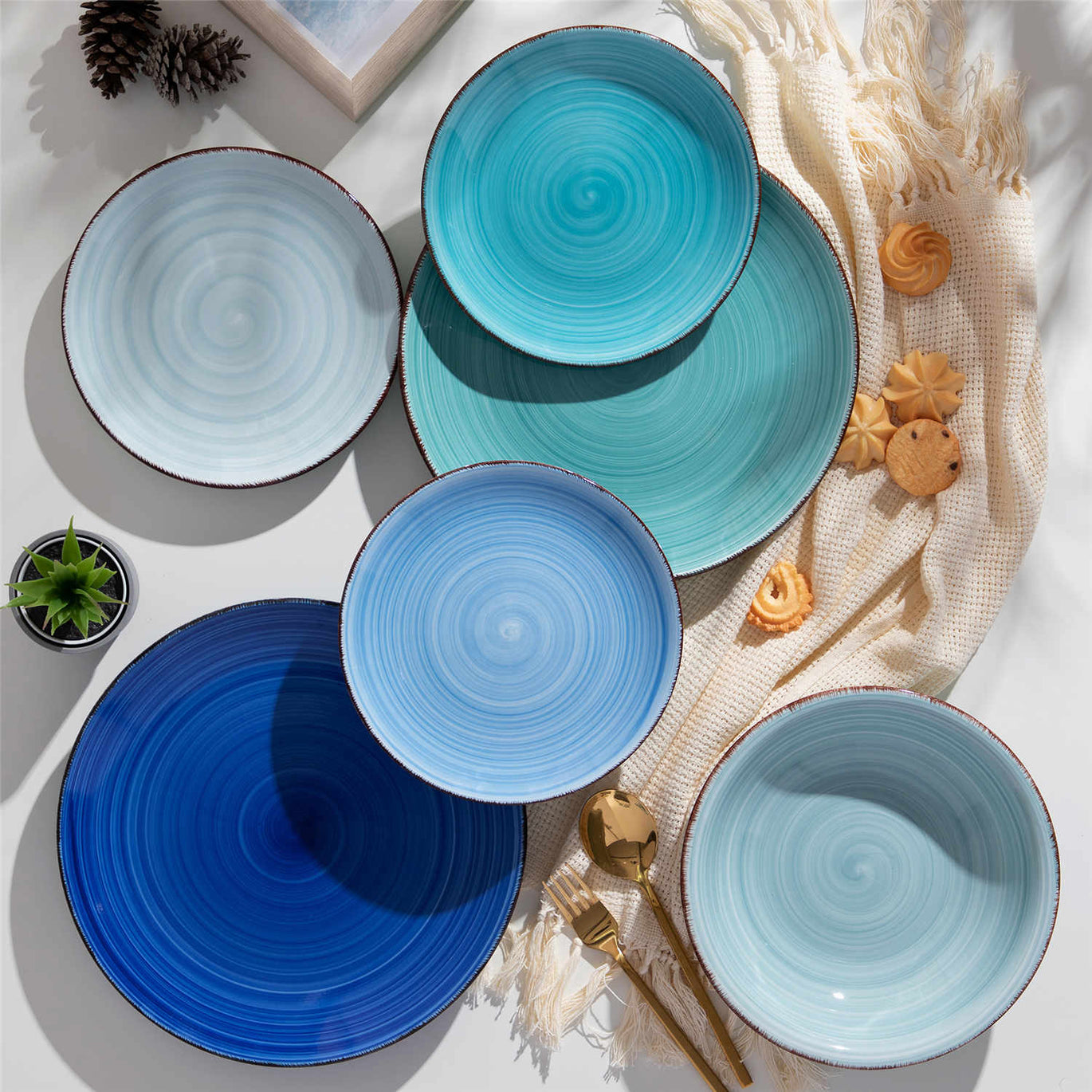


Sustainable Innovations in Ceramic Dinnerware Production Techniques

Ceramic dinnerware looks so effortless on the table that it is easy to forget how much geology, chemistry, energy, and design sit behind every plate. Yet the way we make those plates is changing fast. Sustainability has moved from a side project to a design brief, a brand value, and increasingly a competitive advantage.
As a Colorful Tabletop Creative & Pragmatic Joy Curator, I care about three things equally: how your plate performs, how it looks in a riot of joyful color, and what it took to bring it from clay pit to kitchen cabinet. Let’s walk the production line together and explore how innovative makers are reimagining ceramic dinnerware so it can carry beauty, flavor, and a lighter footprint all at once.
From Natural Clay to Engineered Plate
Technical analyses from industrial researchers such as Sicer describe ceramics as a hybrid material. The raw ingredients for tableware bodies are absolutely natural: clay, feldspar, quartz, and kaolin formed in the earth over thousands of years. In nature those minerals exist as rocks and soils; in factories they are crushed, milled to carefully controlled particle sizes, mixed with water and small additives, pressed, dried, and finally fired at roughly 1,800–2,280°F (about 1,000–1,250°C) depending on the recipe.
During firing, clays lose structural water, some components melt into glass, and new crystals such as mullite form. Porosity can drop from more than ten percent in the raw body to less than one percent in dense technical stoneware, and flexural strength climbs into the thousands of pounds per square inch. After this thermal metamorphosis, the plate is no longer “just clay”; it is an engineered, microcrystalline material that behaves differently from any of its starting minerals.
That hybrid nature matters for sustainability. On one hand, ceramics inherit the advantages of natural mineral materials: they are generally inert, corrosion resistant, and non-toxic in use, as outlined in eco-profiles from technical sources such as GGSCeramic. On the other hand, the industrial processing is energy intensive, and extracting mineral raw materials can disrupt landscapes. Sustainable innovation is about keeping the benefits while shrinking the impacts at each stage of this journey.

Smarter Bodies: Less Virgin Clay, More Circularity
Closing the loop on clay waste
The most immediate sustainability win is also one of the least glamorous: stop throwing away good clay. Studio and factory recycling, when done well, conserves resources, lowers costs, and keeps material out of landfills.
Guides from producers such as Valentine Clays define clay recycling as collecting, cleaning, rehydrating, and reprocessing waste clay so it can be reintroduced into production. In a dinnerware factory that can include trimmings, rejected greenware (unfired pieces), dried slurries from casting, and controlled amounts of fired scrap ground into grog. Environmentally, the benefits are straightforward: less demand for fresh clay extraction, smaller waste streams, and lower energy use than processing only virgin material. Economically, recycled clay cuts raw material purchases and disposal fees while raising yield.
On the industrial scale, Ceramic Arts Network reported that European ceramic tile manufacturing generates on the order of one and a half million tons of waste each year. Around sixty‑five percent of that has been traditionally recycled into new products, while roughly thirty‑five percent still ended up as landfill or low-value filler. The Lifeceram project set out to push those numbers toward zero waste by creating outdoor tiles made with more than eighty percent mixed ceramic manufacturing waste. By using dry milling and granulation, they successfully produced tiles that met mechanical and slip-resistance requirements using existing presses, glazing lines, and kilns. The pilot products were estimated to cost about twenty percent less than comparable porcelain tiles and forecast environmental gains of about twenty percent less waste disposal, sixty‑five percent water savings, and around thirty percent reductions in both carbon emissions and process energy.
Although Lifeceram’s tiles are not dinner plates, the message for dinnerware makers is clear: with thoughtful formulation and process tweaks, high percentages of reclaimed ceramic material can be engineered into bodies that meet demanding performance criteria.
Tapping industrial by-products instead of virgin minerals
Eco-analyses summarized by Ceramics.org and GGSCeramic show another promising route: substituting industrial by-products for some portion of mined minerals. Examples include polishing waste from tile finishing lines, ornamental rock waste in extruded clays, brewery sludge and bone meal ash in lightweight aggregate bodies, and frit and glass wastes in glass-ceramic foams.
Several of these studies report that firing temperatures can be cut significantly. Lightweight ceramic aggregates made from waste blends were successfully fired around 1,830°F instead of roughly 2,370°F for comparable commercial products, reducing the energy demand and cutting the carbon footprint by about twenty percent in one optimized recipe. A Turkish glass-ceramic foam project estimated that lowering firing temperatures by around 450°F (about 250°C) and optimizing waste glass formulations could reduce gas use by roughly thirty‑seven percent and save hundreds of thousands of euros per month in operating costs.
Dinnerware will always have stricter food-contact and mechanical requirements than structural aggregates or foams, but the principle stands: carefully characterized waste streams and by-products can supplement or partially replace virgin feldspar, silica, and clay without sacrificing performance. The trade-off is complexity. Waste-derived raw materials require rigorous quality control and sometimes new infrastructure, such as dry milling and granulation plants, in sectors long optimized around wet milling and spray drying.
Studio and small-brand circularity
On the studio side, movements like Green Ceramics, described by Crafty-Clayworks, and eco-product-line guides from Homey Ceramic emphasize locally sourced clay, reclaimed trimmings, and crushed fired scrap as grog for new bodies. The goal is a closed material loop where nearly every pound of clay that enters the studio eventually leaves as a durable object, not a slop bucket.
These small-batch practices mirror industrial circularity and bring it closer to the dinner table. When a brand tells you they reclaim all production trimmings, grind fired defects into grog, and purchase clay from nearby deposits rather than shipping it halfway across the world, that is circular economy thinking applied directly to dinnerware.
Firing Smarter, Not Just Hotter
Why the kiln dominates the footprint
Firing is the drum solo of ceramic production: intense, loud on the energy meter, and absolutely essential. Lifecycle discussions in WLLW’s Healthy Materials Series highlight that firing accounts for about fifty‑five percent of the thermal energy used in ceramic manufacturing. Technical references from Hosen Home note that traditional firing temperatures for dense tableware bodies sit around 2,190–2,460°F (roughly 1,200–1,350°C). Pushing tons of ware to those temperatures, holding them, and cooling them in a controlled way is inherently energy hungry.
A life‑cycle assessment carried out by Ukrainian artist and environmental consultant Yuliya Makliuk, and reported in Ceramics Now, quantified this intuition. She found that an average handmade stoneware mug carried a total carbon footprint of about 7.5 kg of carbon dioxide over its lifespan, roughly 16.5 lb. Studio production accounted for about 1.9 kg of that, and around 1.4 kg came directly from firing. The rest came from packaging, air freight from Europe to the United States, hot water dishwashing, and detergent production. In other words, the kiln is a major but not exclusive player in the mug’s climate story.
Lower-temperature glazes and redesigned firing curves
One of the most direct innovations is simply to fire lower, less often, or both. The Green Ceramics movement, described by Crafty-Clayworks, encourages low-fire glazes that mature at lower temperatures, cutting energy demand while still producing durable, attractive finishes. Guides for eco-friendly product lines from Homey Ceramic similarly recommend lower-temperature or low-energy kilns wherever product requirements allow.
Academic and industrial case studies summarized by Ceramics.org reinforce how powerful this lever can be. In one study on lightweight aggregates, all samples were successfully fired at about 1,830°F instead of the roughly 2,370°F used for comparable commercial products. In another example focused on glass-ceramic foams, optimizing waste-glass formulations allowed a factory to reduce firing temperatures by about 450°F, slashing natural gas consumption by around thirty‑seven percent.
These lower-temperature strategies are not always plug-and-play for dinnerware. Glaze aesthetics, body maturation, and functional properties such as cutlery mark resistance and thermal shock tolerance place real constraints on firing schedules. Still, reformulating glazes and bodies to mature at the coolest possible safe temperature, or combining previously separate bisque and glaze firings into a single optimized cycle, can yield substantial energy and carbon savings.
Electric and microwave kilns as decarbonization tools
Heat source matters as much as temperature. Research described by Ceramics.org compared mugs fired in electric and microwave kilns with those from traditional gas tunnel kilns and found that microwave firing could achieve comparable strength and color at temperatures at least 90°F (about 50°C) lower. Because electric energy can be generated from renewable sources or low-carbon grids, shifting away from direct gas combustion toward electric or hybrid systems offers a structural path to lower greenhouse gas emissions.
Hosen Home’s sustainability roadmap illustrates how factories are pairing kiln innovation with smarter controls. Gas-recirculating kilns, zonal temperature control, optimized tunnel kiln design, and reuse of waste heat in dryers or facility heating all widen the efficiency envelope. Ragnoworld profiled a tile producer that recovers essentially all water used in production and reuses heat from kilns across the plant, demonstrating how energy and water loops can be tightened simultaneously.
From a Colorful Tabletop perspective, these changes do not alter the feel of your plate or the way colors sing on the table. They simply change the carbon story behind that color.

Glazes, Inks, and Surfaces: Beauty Without Toxic Baggage
From heavy metals to truly food-safe color
Ceramic surfaces live where beauty, chemistry, and safety collide. WLLW’s health-focused overview notes that high-fired ceramics such as stoneware and porcelain are inherently non-porous and free of volatile organic compounds, making them excellent for indoor air quality. The trouble historically has been in some glazes, especially older or low-quality ones containing lead or cadmium. Those heavy metals can leach into food and drink, contributing to neurological damage, kidney issues, and higher cancer risks over long exposures.
Modern dinnerware brands are pushing in the opposite direction. Euro Ceramica emphasizes that all its glazes are food-safe, lead-free, and compliant with California Proposition 65, which is designed to reduce consumer exposure to harmful chemicals. HF Coors describes vitrified, non-porous ceramic bodies with lead-free glazes that are broiler-, oven-, microwave-, dishwasher-, and freezer-safe, and backs that with a two-year chip guarantee under normal use. Technical suppliers such as Hosen Home test glazes to European LFGB and United States Food and Drug Administration standards and align with broader regulations such as REACH and RoHS.
It is worth noting that consumer-facing articles sometimes describe ceramics as biodegradable, while technical sources like GGSCeramic point out that glazed ceramics can take thousands of years to break down and are not meaningfully compostable. In practice that means sustainability strategies should lean on durability, reuse, and recycling rather than expecting plates to disappear in the backyard compost bin.
Digital decoration that lowers emissions
Modern glazes and decoration systems do more than make color. They are also an emissions lever. Sicer, a leading glaze and frit producer, highlights how industrial glazes are built from carefully formulated frits: glass-forming oxides melted around 2,370–2,730°F (about 1,300–1,500°C), quenched, and ground into glassy granules. Over this foundation, digital ceramic inks have largely replaced older screen and roller-print methods, enabling highly detailed patterns and textures.
Sicer’s LOW EMISSION eco-solvent ink line reports certified reductions of volatile organic compounds, aldehydes, and total organic carbon of up to seventy percent compared with the best competing eco-inks, while maintaining high color performance and broad printhead compatibility. Water-based inks currently in advanced development aim to push environmental compatibility even further, and water-based digital glues allow precise application of grits and relief textures with minimal emissions.
Although these technologies are most widely used on tiles today, the same principles apply to digitally decorated dinnerware. Stable, high-temperature underglaze decorations that fuse under a clear glaze combine long-term aesthetic durability with reduced solvent emissions during printing, especially when paired with low‑VOC or water-based ink systems.
Coating buzzwords to treat with skepticism
WLLW flags a set of marketing terms that should trigger questions from anyone shopping for sustainable dinnerware. “Antimicrobial” often signals coatings built on chemical agents such as triclosan, which has been linked to serious health issues including reproductive harm. “Stain-resistant” or “non-stick” can indicate synthetic surface treatments that may contain per- and polyfluoroalkyl substances, better known as PFAS, which persist in the environment and accumulate in living organisms.
Pieces labeled “decorative use only” frequently rely on glazes or paints unsuitable for food contact, and low-fired ceramics, while affordable and charmingly rustic, are more porous and more prone to harboring bacteria. From both a health and sustainability perspective, it is usually better to choose simply glazed, high-fired stoneware or porcelain tested for food safety than to chase extreme performance claims rooted in complex chemical coatings.

Designing Dinnerware That Lasts
Long-lived plates are the unsung heroes of sustainable dining. Every year that a dish stays in service is a year that new material does not need to be mined, fired, glazed, packed, shipped, and washed.
Earthenware, stoneware, porcelain: which body is the greenest canvas?
Euro Ceramica and Hosen Home offer a useful material map for dinnerware bodies.
Material |
Typical firing range (approx) |
Structure and performance |
Sustainability highlights |
Trade-offs |
Earthenware |
Around 1,945°F (about 1,060°C) and below stoneware levels |
Lower-fired, more porous unless heavily glazed, warm and rustic aesthetics |
Easy and relatively low energy to fire; historically widespread |
More prone to chipping, breaking, and moisture absorption; shorter service life unless carefully used |
Stoneware |
About 2,150–2,330°F (roughly 1,175–1,275°C) |
Dense, non-porous, highly durable, with a “stone-like” feel |
Long lifecycle, crack- and chip-resistant, suitable for daily eco-conscious dinnerware |
Requires higher firing temperatures than earthenware, so kilns must be energy-efficient to balance the footprint |
Porcelain |
Roughly 2,190–2,640°F (about 1,200–1,450°C) |
Extremely hard and durable, often translucent, strong even at thin sections |
Professional-grade performance and longevity; excellent for frequent-use plates and bowls |
High firing temperatures and careful processing needed; thin, elegant pieces can chip if abused |
Stoneware emerges as a sweet spot for many sustainable dinnerware collections: dense, fully vitrified, and robust, but not quite as fussy to process as fine porcelain. Euro Ceramica even frames its shift from earthenware to stoneware glazes and bodies as a core sustainable business choice, precisely because stoneware needs replacement far less often.
Porcelain, when designed for daily use rather than ultra-thin showpieces, also scores well on durability. Earthenware remains valuable for decorative and occasional-use pieces and for makers prioritizing lower firing energy, but its higher porosity and chip-prone behavior make it a tougher sell as a primary eco-dinnerware body unless users are extremely gentle.
Durability as a sustainability superpower
Technical writers from GGSCeramic to HF Coors agree that durability is one of ceramic’s biggest environmental advantages compared with materials like plastic. Durable, vitrified dinnerware does not warp, melt, or leach chemicals at typical kitchen temperatures and can last for decades with modest care. Brands such as HF Coors and Euro Ceramica lean into this by designing oven-, microwave-, and dishwasher-safe plates that resist staining, scratching, and crazing, while eco-design guidance from Hosen and Homey Ceramic encourages stackable forms, multi-use shapes, and timeless aesthetics so pieces remain relevant and attractive for many years.
For a lively dinner table, durability is not about blandness. It is about confidence. When you can slide a vibrantly glazed plate under the broiler or stack it in the dishwasher without a second thought, you are more likely to use it daily instead of stashing it “for best,” and that everyday service is exactly where its environmental value shines.

Circular Factories and Smart Production Lines
Toward zero-waste dinnerware plants
The circular economy is not a buzzword in ceramics; it is already a set of working technologies. The Lifeceram project on recycled tiles demonstrates that bodies made from more than eighty percent ceramic waste can match the mechanical and environmental performance of conventional products while costing less to produce. Ceramics.org profiles factories using frit and glass waste to make lightweight glass-ceramic foams, as well as research that blends brewery sludge and bone ash into clays to reduce firing temperatures and carbon footprints.
Dinnerware factories can borrow these strategies. Mixed ceramic sludges, off-spec plates, and broken ware can be transformed into controlled grogs or secondary raw materials. With proper testing, external by-products such as rock cutting waste or certain sludges can join the recipe, reducing demand for virgin minerals. The key, again, is rigorous quality control and collaboration with materials scientists.
Ragnoworld’s look at a tile manufacturer that recovers all process water and even recycles water from other firms, achieving an industrial water reuse rate of about one hundred twenty percent, gives a taste of how far resource loops can be closed. Similar closed-loop systems for glaze wastewater and clay slurries are already in place at some tableware factories and are a clear sustainability win.
Automation that saves more than labor
Losses in ceramic tableware production are not only expensive; they are wasteful. Yutai Machinery’s analysis of production lines shows how inaccuracies in batching, uneven wall thickness in manual forming, uncontrolled drying, unstable kiln temperatures, misaligned printing, and rough bottom grinding all contribute to scrap rates and breakage.
Their proposed answer is a fully automatic tableware production line that integrates clay-making, forming, drying, glazing, firing, printing, grinding, and packaging. Automated proportioning and mixing stabilize clay bodies, automatic formers control size and thickness, advanced dryers and kilns maintain consistent conditions, and precision printers and grinders reduce surface defects. The sustainability upside is straightforward: every plate rescued from the scrap pile by better process control represents saved raw material, saved energy, and avoided waste.
Automation does come with capital costs and can reduce certain kinds of handcraft, so brands need to balance efficiency with design intent and labor practices. But for high-volume, everyday dinnerware, smoother, more precise lines generally mean both higher quality and a lighter footprint.
Water, packaging, and logistics
The unglamorous parts of production often hide surprisingly big levers. Hosen Home points out that ceramic factories can consume thousands of liters of water per day; best practice is to filter and reuse glaze wastewater, implement closed loops for clay slurries, and properly separate heavy materials for safe disposal. Water management is not just an environmental issue but a cost and regulatory one.
Packaging and shipping are similar. Homey Ceramic and Joyye advocate for cardboard, kraft paper, molded pulp, and reusable fabric wraps instead of foam and conventional plastics. Hosen adds water-based printing inks, compostable inner wraps, and options for carbon-neutral logistics, freight consolidation, and CO₂ reporting per container. Yuliya Makliuk’s mug life-cycle assessment underscores why this matters: plastic packaging and air freight made significant contributions to the mug’s climate footprint, and switching to reused paperboard and slower, lower-carbon transport modes sharply reduced those impacts.
Life-Cycle Thinking: Beyond the Factory Gate
A mug’s carbon story in everyday language
Yuliya Makliuk’s life-cycle assessment is one of the few detailed, publicly discussed LCA snapshots for studio ceramics, and it offers a surprisingly hopeful picture when translated into daily choices.
Starting from an average handmade stoneware mug at roughly 7.5 kg of carbon dioxide over its life, she identifies firing, packaging, air shipping, and hot water dishwashing as the main culprits. Studio-stage changes such as switching from two firings to a single combined firing and reusing cardboard reduce the footprint by about 1.1 kg. Redesigning the use phase—washing with solar-heated water, using baking soda instead of conventional detergent, and composting paper packaging—brings the total down to roughly 4.1 kg. Going further with rooftop solar electricity for firing, restricting sales to one continent with train-based shipping, and encouraging cold-water washing shrinks the mug’s footprint to around 0.5 kg, about a pound of CO₂ equivalent.
Scaled to a studio producing one thousand mugs per year, implementing these measures could save around 7,500 kg of CO₂, more than sixteen thousand pounds, roughly equivalent to an average person’s annual lifestyle emissions. The takeaway applies just as well to dinner plates and bowls: design decisions in the factory and care routines in the kitchen both matter, and neither is trivial.
What makers and users can influence
Makers can reduce impacts by lowering firing temperatures where technically possible, choosing energy-efficient kilns, reclaiming materials, switching to reused or recycled packaging, avoiding air freight when realistic, and educating customers about care. Green Ceramics advocates low-fire glazes and alternative energy sources for kilns, while Homey Ceramic documents brands that have lowered their carbon footprint by pairing lower-energy firing with renewable electricity.
Users are not powerless either. Choosing durable, high-fired stoneware or porcelain from brands transparent about their sourcing and testing means your dishes are more likely to last for decades. Running dishwashers full, selecting energy-saving cycles, and avoiding boiling-hot handwashing when unnecessary reduce impacts from the use phase. Participating in take-back programs, having chipped pieces repaired when possible, and repurposing broken ceramics as garden drainage or mosaic materials extend material life even further.
How to Choose Truly Sustainable Ceramic Dinnerware
Sustainable innovation in the factory only reaches its full potential if buyers and diners know how to spot it. Fortunately, you do not need a materials science degree to make smart choices; you need a few targeted questions and a willingness to look past pretty photography.
Start with the body and firing. For everyday plates and bowls, look for high-fired stoneware or porcelain. Brands such as Euro Ceramica, HF Coors, and Hosen Home explicitly name their bodies and firing performance. If labels describe earthenware, assume it is more porous and prone to chipping unless the brand provides clear mechanical performance and care guidance.
Next, read glaze and safety information. Seek phrases like “lead-free” and “food-safe,” and look for mention of third-party testing or compliance with standards such as California Proposition 65, the United States Food and Drug Administration rules for food-contact materials, and European frameworks such as LFGB, REACH, and RoHS. WLLW recommends looking for ISO 14001 certification to signal environmentally responsible manufacturing, while Hosen Home references social auditing frameworks such as BSCI and SEDEX alongside technical compliance.
Pay attention to what brands avoid as well as what they boast about. If a line leans heavily on “antimicrobial,” “stain-resistant,” or “non-stick” marketing without specifying the chemistry or testing, treat that as a prompt to ask follow-up questions about PFAS, triclosan, and long-term safety. If pieces are labeled “decorative use only,” keep them out of the kitchen, however beautiful they look.
Then, zoom out to the production story. Homey Ceramic encourages buyers to ask suppliers about clay sourcing distances, recycled content, water and wastewater handling, kiln energy sources, and packaging materials. Joyye highlights brands that use recycled clay, lead-free glazes, and plastic-free packaging, and that share clear information about their workshops. Articles from HF Coors and Euro Ceramica frame handmade or small-batch production in local facilities, with long-term craftspeople and durable glazes, as both an environmental and social sustainability choice.
Finally, consider design longevity. Ragnoworld and Joyye both stress that high-performance and eco-conscious products do not need to chase each season’s trend. Neutral tones, simple forms, and versatile shapes stay in rotation longer, reducing the urge to replace dinnerware for style reasons alone. From the joy curator’s seat, timeless does not mean boring. It means pieces that play well with the changing flowers on your table and the evolving recipes in your kitchen, season after season.

FAQ: Sustainable Ceramic Dinnerware, Decoded
Is ceramic dinnerware actually more sustainable than plastic plates?
Eco-analyses from GGSCeramic and several tableware brands argue that, when well made, ceramic plates are significantly more sustainable than plastic. Ceramics are created from abundant mineral clays and, once fired, form inert, non-toxic surfaces that resist heat and chemicals. Plastics, by contrast, derive from non-renewable fossil feedstocks, can release microplastics and additives into food and the environment, and generally have shorter service lives under heat and mechanical stress.
The trade-off is production energy. Ceramics require high-temperature firing, while many plastics melt at much lower temperatures. However, when plates are used for many years, especially in combination with energy-efficient kilns and lower-temperature glazes, that initial energy investment is amortized over a long life. Studies like Yuliya Makliuk’s mug life-cycle assessment show that dishwashing and shipping can rival or exceed production emissions, so comparing a durable ceramic plate used thousands of times with a stack of single-use plastic plates tilts the balance strongly toward ceramic.
Which material is best for sustainable everyday plates: earthenware, stoneware, or porcelain?
From a sustainability and practicality standpoint, high-fired stoneware and robust porcelain are typically better choices than earthenware for everyday dinnerware. Stoneware, fired around 2,150–2,330°F, offers a dense, non-porous body that resists chipping and cracking under normal use. Euro Ceramica and Hosen highlight its long lifecycle and low porosity as core sustainability assets.
Porcelain, fired even hotter, can be extremely hard and durable, especially in restaurant-grade designs that avoid ultra-thin edges. Brands such as HF Coors rely on vitrified porcelain and stoneware bodies specifically because they survive heavy commercial use.
Earthenware’s lower firing temperatures mean less energy per firing, but its higher porosity and greater tendency to chip or craze often shorten its service life. Unless a maker provides detailed performance data and care instructions and the user is very gentle, earthenware is usually better reserved for occasional pieces rather than daily plates in an eco-conscious home.
How worried should I be about lead and cadmium in dinnerware?
WLLW, HF Coors, Euro Ceramica, and consumer safety educators all agree that modern, reputable brands operating in the United States and Europe under frameworks such as Proposition 65, FDA rules, and LFGB are generally safe. Their glazes are formulated and tested to ensure that any lead, cadmium, or other heavy metals are either absent or bound at levels far below regulatory limits, even under repeated use with acidic foods.
Risk rises with older, imported, or unlabeled pieces, especially those labeled “decorative use only.” WLLW points out that low-quality or antique glazes may leach dangerous amounts of lead or cadmium, especially when used with acidic dishes like tomato sauces or citrus. Makliuk’s sources note that the United States Food and Drug Administration logged around 1,200 complaints in a recent year related to heavy metals in ceramic tableware, a reminder that compliance cannot be assumed for every product on the market.
As a practical rule, use modern, clearly labeled dinnerware from trusted brands for daily eating and drinking. Keep thrifted or heirloom pieces with unknown glazes for display unless they have been professionally tested. When in doubt, ask manufacturers for test reports; genuinely sustainable brands are usually proud to share them.

A Colorful Closing
Sustainable ceramic dinnerware is not about beige austerity; it is about plates and bowls that carry stories of smarter kilns, reclaimed clay, thoughtful glazes, and long, joyful service at the table. When you choose a vitrified stoneware plate decorated with low‑emission inks from a maker who recycles clay, reuses water, and packs with cardboard instead of foam, you are not just curating a look. You are voting for a production system that lets color, craft, and carbon-consciousness sit down to dinner together.
References
- https://sustainability.tufts.edu/wp-content/uploads/LifeCycleAnalysisPlasticPlatevsCeramic.pdf
- https://ceramicartsnetwork.org/ceramics-monthly/ceramics-monthly-article/Clay-Culture-Zero-Waste
- https://ceramics.org/ceramic-tech-today/reduce-reuse-recycle-how-the-ceramics-industry-is-growing-greener/
- https://www.ceramicsnow.org/articles/how-yuliya-makliuk-tried-to-invent-the-worlds-most-sustainable-pottery-and-what-came-out-of-it/
- https://ggsceramic.com/news-item/ceramic-materials-and-pollution-explore-how-eco-friendly-are-they
- https://homeyceramic.com/how-to-create-an-eco-friendly-ceramic-product-line/
- https://hosen28.com/sustainable-ceramics/
- https://www.imerys.com/news/redefining-ceramic-sanitaryware-production-4-solutions-make-it-more-sustainable
- https://joyye.com/info-detail/eco-friendly-ceramic-tableware-and-vases
- https://blog.sicerceramicsurfaces.com/ceramics-natural-or-artificial-material-complete-analysis-of-characteristics/
You may also like
Stern 16 Piece Dinnerware Set
- €79,95
€90,95- €79,95
- Unit price
- per
-
Blue
-
Green
-
Red
-
Grey
Simi 24 Piece Dinnerware Set
- €90,95
€121,95- €90,95
- Unit price
- per
Bonita 18 Piece Dinnerware Set
- From €56,95
€70,95- From €56,95
- Unit price
- per
-
Blue
-
Multicolor
Starry 16 Piece Dinnerware Set
- €79,95
€81,95- €79,95
- Unit price
- per
-
Blue
-
Green
-
Red
-
Gradient Green