

Spring means more time at the table — Easter brunch, Mother's Day lunch, backyard dinners with friends. If your dinnerware hasn't been updated in a while, this is the right time to do it. This guide covers the top spring color trends, patterns, and textures in stoneware dinnerware, plus a practical buying guide so you can pick the right set without second-guessing yourself.
What Is Stoneware Dinnerware, and Why Is It Great for Spring?
If you're shopping for dinnerware and keep seeing the word "stoneware," here's what it actually means — and why it's a solid choice for spring.
How Stoneware Differs from Porcelain and Ceramic
Stoneware is fired at higher temperatures than regular earthenware, which makes it denser, heavier, and more durable. Compared to porcelain, it has a thicker, more rustic feel and a slightly coarser surface. It's less refined-looking than fine china, but that's exactly why people love it — it has character.
Key Properties Worth Knowing
- Durability: Stoneware is chip-resistant and holds up well to daily use.
- Heat retention: It keeps food warm longer than thinner materials.
- Oven safe and microwave safe: Most stoneware sets can handle oven temperatures up to 500°F, making them practical for both cooking and serving.
- Dishwasher safe: Most sets are dishwasher-friendly, which matters for easy cleanup after spring gatherings.
Why Stoneware Works Well for Spring Dining
Spring dining tends to mix casual and semi-formal occasions — think outdoor brunches, garden parties, and holiday meals. Stoneware handles that range well. It looks great on a styled Easter table, but it's also sturdy enough to take outside for a backyard dinner. The natural, earthy texture also pairs well with seasonal table decor like linen napkins, fresh flowers, and wooden serving boards.
What Are the Top Spring Color Trends in Stoneware Dinnerware?
Color is one of the first things people think about when refreshing their table for spring. Here's what's trending this season.
Pastel Tones
Soft, fresh tones — macaron-inspired hues of red, green, blue, and turquoise — are a natural fit for spring. They're subtle enough to work with most tablecloths and centerpieces, and they add a calm, fresh energy to the table without being overpowering. Pastel stoneware also mixes well if you like the mismatched look — pairing a cream plate with a teal bowl, for example, is a popular styling choice.

Bold and Solid Colors
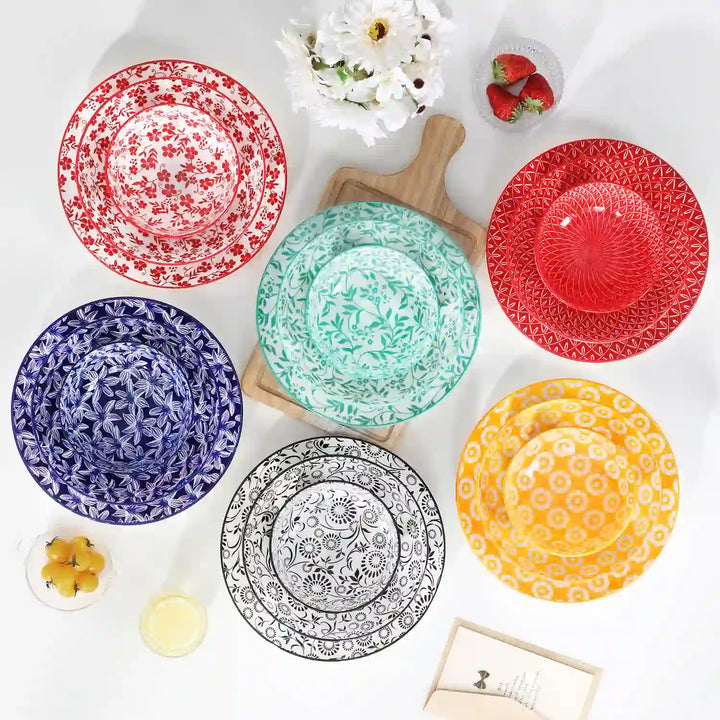
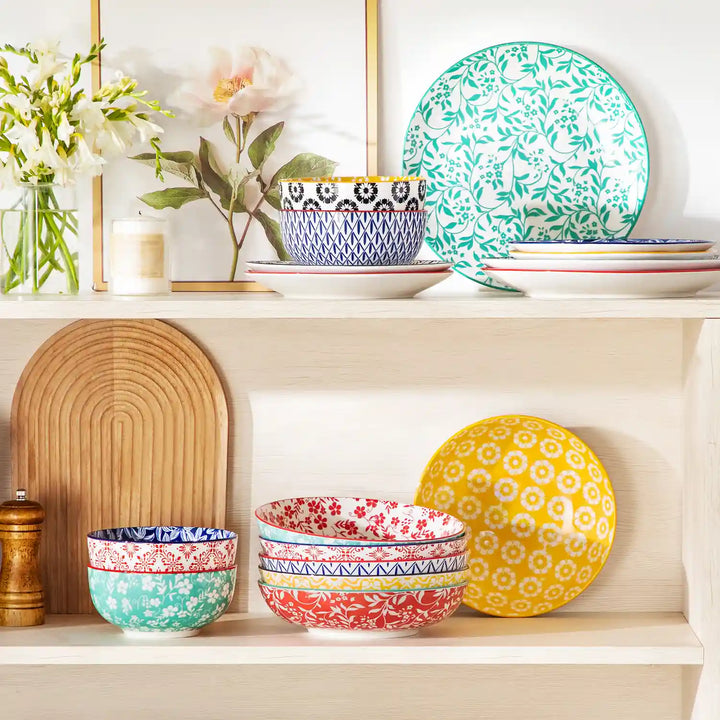
If pastels feel too safe, go the other direction. Bold, saturated solids with vivid shades including water blue, yellow, red, dark green, dark blue, and orange are big this spring. These colors make a statement and give your table a more modern, intentional look. Bold-colored stoneware is also practical — solid glazes tend to be more forgiving with scratches and wear over time. The Nymph 16-Piece Dinnerware Set is a strong option here — a colored glaze set with bold Bohemian-inspired patterns in rich blue, yellow, green, and orange hues, sized for four, and includes dinner plates, salad plates, soup plates, and cereal bowls.
Vintage & Reactive Glaze
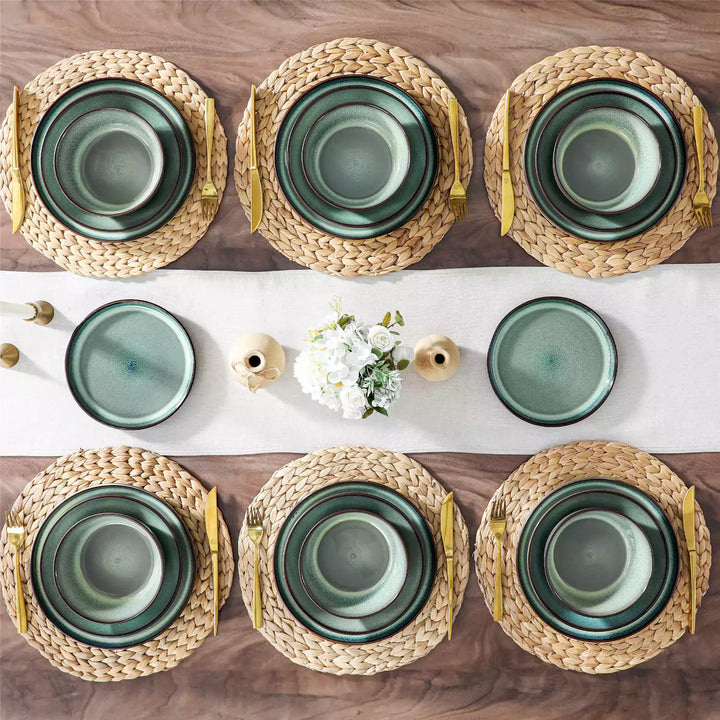
For a more refined, vintage-inspired look, unique reactive glaze in serene blue, vibrant green, gradient green, and rustic red bring an artisan quality to spring tables. The hand-applied glaze creates subtle variation across each piece, making every table setting feel unique.
Mixing and Matching Colors
One of the easiest ways to get a fresh spring table is to mix two complementary colors. A few combinations that work well:
- Cream + Light Grey
- Teal + White
- Navy Blue + Cream
- Turquoise + Beige
- Jade + Terracotta
- Deep Indigo + Light Grey
You don't need to buy two full sets. Start with a neutral base set and add a few accent pieces in a seasonal color.

Which Spring Patterns Work Best for Stoneware Dinnerware?
Beyond color, pattern is the other big design decision. Here's a quick breakdown of what's popular and when each style makes sense.
Nature-Inspired Motifs
Florals, botanicals, leaf prints, and branch patterns are the most on-trend for spring. They feel intentional without being over-designed. These work especially well for Easter tables and spring brunches where you want the decor to feel cohesive with the season.
Minimalist Solid Colors
The "quiet table" aesthetic — solid-color stoneware with clean lines and no pattern — is gaining a lot of traction. It looks great on social media, but more importantly, it's versatile. A solid beige or grey can go from casual breakfast to a styled dinner table without much effort.
Polka Dots and Geometric Prints
For more casual spring meals — weekend lunches, kids' birthday parties, picnic-style outdoor setups — polka dot and geometric patterns bring a fun, relaxed energy. These aren't ideal for formal occasions, but they're great for everyday spring use.
Choosing by Occasion
| Pattern Type | Best For |
|---|---|
| Botanical / floral | Easter brunch, Mother's Day, spring holidays |
| Solid colors | Everyday use, minimalist styling, any occasion |
| Polka dot / geometric | Casual meals, outdoor dining, kids' tables |
| Vintage & reactive glaze | Formal dinners, special occasions |
How Do Textures Affect Your Spring Stoneware Dinnerware?
Color and pattern get most of the attention, but texture is what makes stoneware feel different in your hands — and look different on the table.
Embossed Stoneware
Embossed sets have raised patterns pressed into the surface of the clay before firing. The result is a tactile, decorative finish that catches light in a subtle way. These sets tend to look more elegant and work well for semi-formal spring dinners or holiday table settings.

Reactive Glaze Finishes
Reactive glazing is a process where the glaze interacts with the clay during firing, creating slightly different patterns on each piece. No two plates look exactly alike. This gives the set an artisan, handmade quality that fits well with spring's natural aesthetic. It's also a great conversation starter when guests notice the variation. If you want a ready-made example, the Loire 18-Piece Dinnerware Set fits this description well — a rustic speckled glaze set in sea blue, gradient green, and turquoise, designed for six, with dinner plates, salad plates, and cereal bowls included.
Combining Both
Some sets incorporate both embossed texture and reactive glaze, which gives you the best of both — visual uniqueness and surface detail. If you want a spring tablescape that looks layered and intentional, this type of set is worth considering.
How to Choose the Right Spring Stoneware Dinnerware Set
Here's where a lot of people get stuck. There are a lot of options out there, so it helps to narrow things down with a few practical questions.
Start with Your Use Case
Ask yourself: Is this set for everyday meals, seasonal entertaining, or both? If it's mainly for spring gatherings, you can prioritize style. If it's for daily use, durability and easy care matter more.
Indoor vs. Outdoor Use
If you plan to use your stoneware outside — on a patio, deck, or at a picnic table — choose a set with a matte or low-gloss finish. High-gloss glazes can show scratches more easily on rough outdoor surfaces. Also make sure the set is rated for temperature changes, since outdoor settings can expose dishes to more variation.
Piece Count Guide
| Household Size | Recommended Set Size |
|---|---|
| 4 people | 12-piece set |
| 4–6 people | 16–18 piece set |
| 6 people | 24-piece set |
| 8 people or frequent entertaining | 32-piece set |
What to Check Before You Buy
- Dishwasher safe: Saves time, especially after large gatherings.
- Microwave safe: Important if you reheat food directly on the plate.
- Oven safe: Useful if you cook and serve in the same dish.
- Chip-resistant glaze: Look for this especially if you have kids or entertain often.
- What's included: Some sets include bowls; others are plates only. Confirm what's in the set before purchasing.
Mistakes to Avoid When Buying Spring Stoneware Dinnerware
A few things that are easy to overlook:
- Buying multiple sets for different occasions — One versatile, neutral-toned stoneware set can handle most spring events. A beige or grey set with a textured finish works well whether you're hosting a formal Easter dinner or a casual backyard brunch.
- Choosing style over practicality — A beautiful reactive glaze set that's hand-wash only becomes a burden if you're using it for family dinners. Always check care instructions first.
- Ignoring set size — A 12-piece set isn't going to work if you regularly host 8 people. Think about your typical guest count before you buy.
- Overlooking how the set photographs — If you like to share table setups on social media, matte finishes and earthy tones tend to photograph better than high-gloss, bright colors.
How to Style a Spring Table with Stoneware Dinnerware
You don't need to redesign your whole dining room to get a great spring table. A few simple moves go a long way.
1. Pair with Natural Linens
- Linen or cotton napkins in white, beige, or cream tones work with almost any stoneware color.
- No tablecloth? A simple linen table runner down the center adds warmth without covering the whole table.
- Avoid plastic or synthetic covers — they look out of place next to stoneware's natural texture.

2. Add a Simple Centerpiece
- A few sprigs from your garden, a potted herb from the kitchen windowsill, or a wooden board with fruit all work well.
- No need to buy flowers — simple and natural always fits stoneware.
- Keep it low — under 12 inches — so guests can see each other across the table.
3. Layer What You Own
Place a woven placemat or folded dish towel under each plate to add visual interest. For a more formal setting like Mother's Day or Easter, a simple charger plate underneath elevates the look instantly. The combination of a textured placemat, stoneware plate, and linen napkin is all you need for a well-styled table.
4. Match the Occasion Without Overthinking It
- For casual spring meals, neutral stoneware on a bare table with folded napkins is plenty.
- For holiday settings, add one seasonal element — a candle, a small flower arrangement, or a colored napkin.
You don't need to coordinate every detail; the natural finish of stoneware ties the table together on its own.
Find Your Perfect Spring Stoneware Dinnerware Set
Spring is a good reason to upgrade your table — and the right stoneware set makes it easy without buying into multiple collections. Focus on versatility, check the practical details (oven-safe, dishwasher-safe, right piece count), and choose a color or texture that fits how you actually use your table. Browse a full spring stoneware collection to find the set that works for your home and your gatherings this season.
Spring Stoneware Dinnerware FAQs
Q1. Is Stoneware Dinnerware Safe to Use in the Microwave and Oven?
Yes. Most stoneware dinnerware is both microwave and oven safe, typically up to 500°F. However, always check the specific product listing before use, since some sets with metallic glazes or decorative elements may have lower heat limits. Avoid sudden temperature changes — don't move a cold stoneware dish directly into a hot oven, as thermal shock can cause cracking over time.
Q2. What's the Difference Between Reactive Glaze and Embossed Stoneware?
Reactive glaze is a firing technique where the glaze interacts with the clay, producing slightly different color patterns on each piece — no two look exactly the same. Embossed stoneware has raised surface designs pressed into the clay before firing. Reactive glaze gives an artisan, one-of-a-kind look; embossed stoneware has a more structured, decorative surface. Some sets combine both techniques for a layered effect.
Q3. Can I Mix and Match Different Stoneware Colors in One Table Setting?
Absolutely. Mixing complementary colors — like cream and grey, or teal and brown — is a widely used styling approach. The key is keeping one element consistent, such as the finish (all matte) or the silhouette (same shape across pieces). This creates a cohesive look even when the colors vary across the table.
Q4. How Many Pieces Do I Need in a Stoneware Dinnerware Set for Spring Entertaining?
It depends on your typical guest count. For everyday meals for four, a 12-piece set works well. For households of six or semi-formal spring gatherings, an 18 or 24-piece set gives you more flexibility. If you regularly host eight or more, a 32-piece set ensures everyone is covered without mixing in mismatched pieces.
Q5. Is Stoneware Durable Enough for Outdoor Spring Dining?
Yes. Stoneware is one of the better choices for outdoor use because of its thickness and chip resistance. It holds up well on rough surfaces like wooden picnic tables or stone patios. For outdoor settings, matte or satin finishes are more practical than high-gloss glazes, which tend to show surface marks and minor scratches more easily under direct sunlight.
Q6. How Do I Care for Stoneware Dinnerware to Keep It in Good Condition?
Most stoneware is dishwasher safe, but hand washing extends the life of the glaze — especially for reactive or embossed finishes. Avoid abrasive scouring pads, and don't stack heavy items directly on top of stoneware pieces. For oven-safe sets, let the dish cool naturally before washing rather than running cold water over it immediately after taking it out of the oven.
Q7. What's the Best Stoneware Color for a Versatile Spring Table?
It depends on your style, but neutral tones — ivory white, beige, or cool gray — are the most flexible. They work equally well for casual spring brunches and more formal holiday dinners, and they pair with almost any linen or centerpiece. If you want a bit more personality while staying versatile, blush pink or cool gray both read as seasonal without locking you into one occasion or aesthetic.