



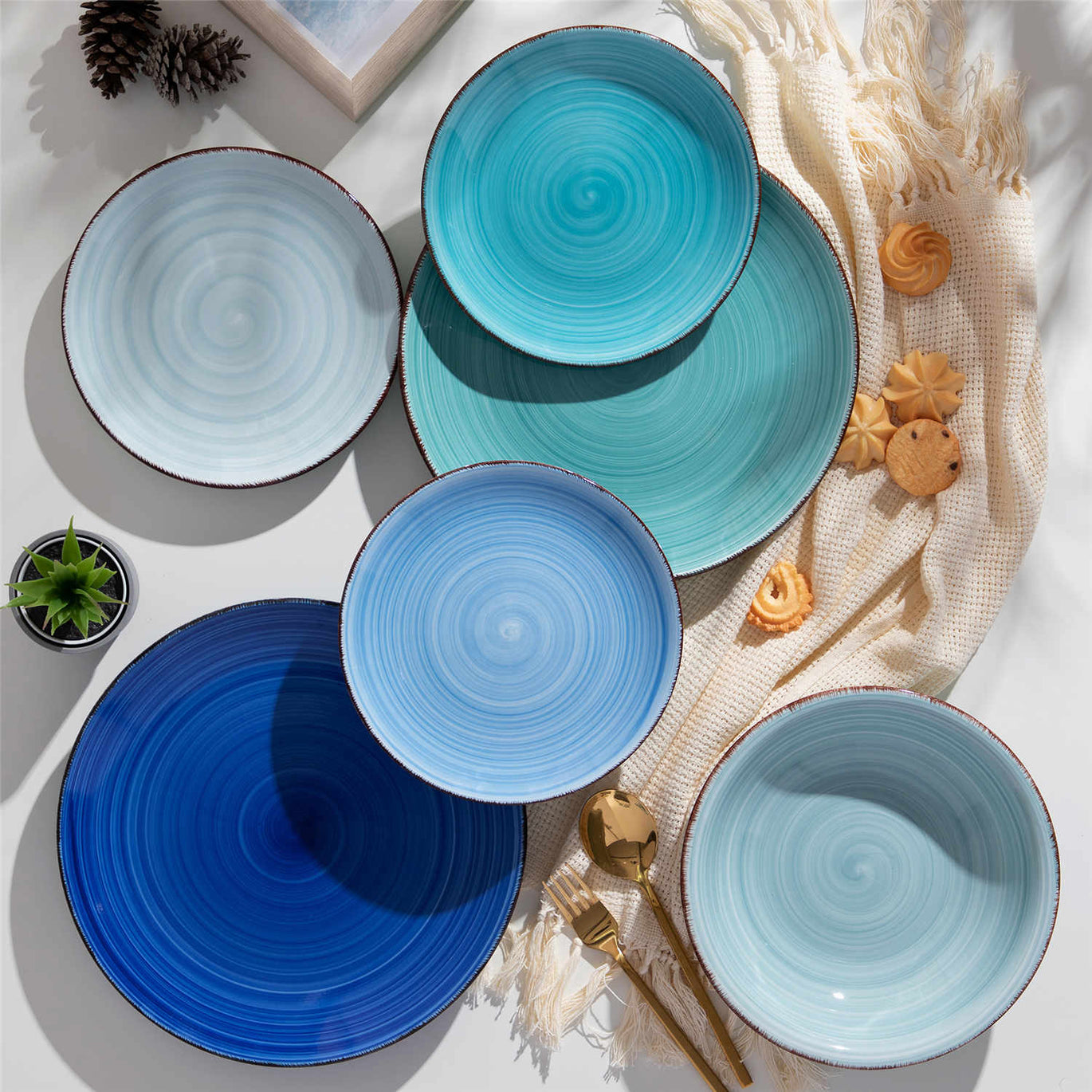


How to Identify the Different Types of Dinnerware
Choosing dinnerware isn't just about picking something that looks good on the table. The material your dishes are made from affects how durable they are, how easy they are to clean, and whether they can actually handle your daily routine. If you've ever cracked a plate in the dishwasher or bought a set that felt too "precious" to use, you already know this matters.
What Are the Main Types of Dinnerware Materials?
Before diving into each material, it helps to know what you're actually comparing. The five most common types of dinnerware materials are stoneware, porcelain, bone china, earthenware, and melamine. Each one is made differently, performs differently, and suits different lifestyles.
A Quick Overview of the 5 Most Common Materials
- Stoneware is a dense, high-fired ceramic known for durability and a casual, handcrafted look.
- Porcelain is a fine, smooth ceramic fired at high temperatures — elegant but also practical.
- Bone china is a premium form of porcelain made with bone ash, giving it strength and a distinctive translucency.
- Earthenware is a lower-fired, more porous ceramic with a rustic, artisan feel.
- Melamine is a hard plastic material that mimics the look of ceramic — lightweight and shatterproof.
What to Look for Before You Buy
Here's what to check before committing to any set:
- Durability: Can it handle daily use without chipping?
- Weight: Does it feel comfortable to carry and stack?
- Safety ratings: Is it microwave-safe and dishwasher-safe?
- Style: Does the look fit how you actually set your table?
- Price range: Is it within budget, and does it offer long-term value?
Stoneware Dinnerware — The Best Choice for Everyday Use
Stoneware is one of the most popular dinnerware materials for good reason. It's tough, practical, and comes in a wide range of styles that work for everything from a casual breakfast to a relaxed dinner party.
What Makes Stoneware Different from Other Ceramics
Stoneware is fired at higher temperatures than earthenware, which makes it non-porous and significantly more durable. It's thicker and heavier than porcelain, and it often has a matte, speckled, or reactive glaze finish that gives it that handcrafted, artisanal quality.
Pros and Cons of Stoneware Dinnerware Sets
Pros:
- Highly chip-resistant and built to handle daily use.
- Retains heat well, so food stays warm longer on the plate.
- Comes in a wide variety of modern finishes — matte, speckled, and glazed.
Cons:
- Heavier than porcelain or bone china, which can be noticeable when carrying a full set.
- Thicker walls mean it takes up more cabinet space.
- Not all stoneware is dishwasher-safe — always check the label.
Who Should Buy Stoneware
Stoneware is ideal for busy households, families with kids, and anyone who wants durable dinnerware that still looks good. If you're running dishes through the dishwasher multiple times a week, stoneware is a reliable choice. The Bubble 16-Piece Dinnerware Set is a good example — it pairs a reactive glaze finish with a matte black exterior, giving it real visual character while still being microwave, oven, and dishwasher safe for everyday use.

Is Stoneware Dishwasher and Microwave Safe?
Most modern stoneware dinnerware sets are labeled as dishwasher-safe and microwave-safe. That said, hand washing is recommended if you want to preserve the glaze finish longer. Avoid sudden temperature changes — like going from the freezer directly to the oven — as this can cause cracking.
When shopping for a stoneware set, look for one with a speckled glaze or matte finish that reflects that handcrafted quality. A set that serves six gives you enough coverage for family meals or casual entertaining — the Bonbon Double-Sided 24-Piece Dinnerware Set is one option worth considering, featuring hand-painted dual spiral and speckled patterns in beige, blue, green, and red, with dinner plates, dessert plates, soup plates, and bowls all included.
Porcelain Dinnerware — Versatile, Elegant, and Easy to Maintain
If you want one dinnerware set that works for both Tuesday night pasta and Thanksgiving dinner, porcelain is probably your best option.
How Porcelain Is Made and Why It Looks So Refined
Porcelain is made from fine kaolin clay and fired at very high temperatures — higher than stoneware. The result is a smooth, dense material with a bright, glossy surface. It's thinner and lighter than stoneware, but it's not fragile. Modern porcelain is engineered to hold up well in everyday settings.
Pros and Cons of Porcelain Dinnerware Sets
Pros:
- Stain and odor resistant, making it easy to clean.
- Lightweight and comfortable to handle.
- Works for both casual meals and formal entertaining.
Cons:
- Can chip at the edges if dropped, especially on hard floors.
- Porcelain with metallic accents (gold or silver trim) is not microwave-safe.
- Mid-range to premium pricing depending on the brand.

Stoneware vs. Porcelain: Side-by-Side Comparison
| Feature | Stoneware | Porcelain |
|---|---|---|
| Weight | Heavier | Lighter |
| Durability | Very durable | Durable |
| Heat Retention | Better | Moderate |
| Appearance | Rustic, matte, earthy | Smooth, glossy, refined |
| Dishwasher Safe | Usually yes | Usually yes |
| Microwave Safe | Usually yes | Yes (no metallic trim) |
| Best For | Everyday casual use | Casual and formal dining |
| Price Range | Budget to mid-range | Mid-range to premium |
If you want something warmer in look and feel, go with stoneware. If you want something that transitions easily between daily use and dinner parties, porcelain is the stronger all-rounder.
When evaluating a porcelain set, look for practical design details like a reinforced rim, stackable bases, and a complete piece count — dinner plates, salad plates, and bowls at minimum. Confirm it's microwave and dishwasher safe, and check that it's certified free of lead, cadmium, and BPA for peace of mind.
Bone China Dinnerware — Surprisingly Tough, Undeniably Beautiful
Bone china looks like it should be kept in a display cabinet. But pick one up and use it for a week, and you'll understand why so many people make it their everyday set. It's thin, it's light, and it holds up better than it looks like it should. If you want dinnerware that feels special every time you set the table, bone china is worth a serious look.
What Is Bone China and Why Is It Different from Regular Porcelain
Bone china is made from kaolin clay mixed with bone ash — historically sourced from cattle bones. That combination is what sets it apart: the finished piece comes out thinner and lighter than standard porcelain, without feeling fragile. Hold one up to the light and you'll see a soft, warm glow — that translucency is unique to bone china, and it's a big part of what gives it that refined, high-end look.
It's worth knowing where bone china actually fits among other ceramics. Stoneware is thicker and handles daily knocks better. Porcelain is denser and harder. Bone china sits in its own category — remarkably resilient for how thin and light it is. It's not the toughest ceramic across the board, but for something this fine, it holds up surprisingly well.
Pros and Cons of Bone China
Pros:
- Holds up better than you'd expect for something so thin and light.
- Lighter than stoneware or standard porcelain, and noticeably more elegant.
- That warm, translucent quality gives it a look no other material really matches.
Cons:
- Costs more than stoneware or regular porcelain.
- Pieces with gold or platinum trim can't go in the microwave.
- People often treat it like it's too precious to use daily — it isn't.
Can You Use Bone China Every Day?
Absolutely — and plenty of people do. The delicate look is a little misleading. Bone china handles regular meals just fine, not just holidays and dinner parties. Plain sets or lightly decorated ones without metallic trim are usually fine in the dishwasher on a gentle cycle. Hand washing will keep the finish looking its best for longer, but it's not something you have to do every time.
Earthenware Dinnerware — Rustic Charm with Real Limitations
Earthenware is one of the oldest ceramic traditions in the world, and it shows in its warm, handmade aesthetic. But before you fall for the look, it's worth knowing what you're getting into.
What Earthenware Is and How It Compares to Stoneware
Earthenware is fired at lower temperatures than stoneware, which leaves it more porous and less dense. It's heavier and more prone to chipping and cracking than either stoneware or porcelain. The glaze on earthenware is what makes it waterproof — without it, liquids can seep into the clay.
When Earthenware Makes Sense
- If you're decorating a table and want that hand-thrown, artisan look.
- If you're buying occasional-use serving pieces rather than daily plates.
- If you appreciate the traditional craftsmanship and are willing to handle it carefully.
Earthenware is not recommended as your primary everyday dinnerware, especially in households where dishes get heavy use or go through the dishwasher regularly.
Melamine Dinnerware — The Practical Pick for Outdoor and Family Use
Melamine isn't ceramic at all — it's a hard, durable plastic resin that's molded to look like ceramic or porcelain. And for certain situations, it genuinely can't be beat.
Pros and Cons of Melamine Dinnerware
Pros:
- Virtually shatterproof — great for kids, outdoor dining, and camping.
- Lightweight and easy to transport.
- Available in a huge range of designs that mimic ceramic aesthetics.
Cons:
- Not microwave-safe — heat can cause the material to break down.
- Not safe for use with very high-heat foods (such as soup straight from the stovetop).
- Doesn't have the same feel or weight as real ceramic.
Is Melamine Dinnerware Safe?
Melamine dinnerware is FDA-approved for use with food under normal conditions. However, it should not be used in the microwave or with acidic foods at high temperatures, as this can cause the material to leach chemicals. For cold or room-temperature foods, it's considered safe for everyday use.
Dinnerware Materials Compared: Full Comparison Table
| Material | Durability | Weight | Microwave Safe | Dishwasher Safe | Best For |
|---|---|---|---|---|---|
| Stoneware | Very high | Heavy | Usually yes | Usually yes | Everyday casual use |
| Porcelain | High | Light-medium | Yes (no metallic trim) | Yes | Casual and formal dining |
| Bone China | Highest | Very light | Yes (no metallic trim) | Gentle cycle | Formal and everyday luxury |
| Earthenware | Low | Heavy | Sometimes | Sometimes | Decorative/occasional use |
| Melamine | Very high | Very light | No | Yes | Outdoor/kids/travel |
Which Dinnerware Material Lasts the Longest?
Bone china is technically the most chip-resistant ceramic material. For non-ceramic options, melamine is the hardest to break. For everyday durability that balances cost and performance, stoneware is the most practical long-term investment.
Which Dinnerware Material Is the Easiest to Care For?
Porcelain is generally the easiest to maintain — it's stain-resistant, odor-resistant, and dishwasher-friendly. Melamine is also low-maintenance, though it can't go in the microwave.
How to Choose the Right Dinnerware Material for Your Lifestyle
Not every home needs the same thing. Here's a straightforward way to match dinnerware material to your actual situation.
1. For Busy Families with Kids
Stoneware is a good default for family households. It goes in the dishwasher, holds up to daily use, and doesn't look worn out after a few months. If you have younger kids or meals regularly happen outside, keep a set of melamine around too — it won't break if it gets dropped, and it's light enough for kids to carry themselves. Many families end up using both depending on the situation.
2. For Everyday Home Cooking
Porcelain is probably the easiest material to live with day-to-day. It doesn't hold onto stains or smells, cleans up quickly after messy meals, and looks presentable whether you're eating alone on a Tuesday or having a few people over. Most sets go straight in the dishwasher and microwave, so there's not much to think about.
3. For Entertaining and Formal Dinners
Bone china looks more expensive than it is to maintain. It's actually the strongest ceramic material, so regular use won't wear it down the way people expect. The thin, slightly translucent finish gives the table a noticeably nicer look without requiring a full formal setup around it. Most plain sets are fine in the dishwasher on a gentle cycle.
4. For Outdoor, Camping, or Picnic Use
Melamine is the practical answer here. It won't crack or shatter if it gets knocked over, it's easy to clean, and it's light enough to pack without much hassle. There are plenty of options that look close enough to ceramic that guests won't notice the difference. The one thing to remember: no microwave, and avoid pouring very hot food directly onto it.
Find the Right Dinnerware Material for Your Home
Each material has a clear role: stoneware for tough, everyday use; porcelain for flexible style; bone china for long-term elegance; earthenware for decorative charm; and melamine for outdoor practicality. Match the material to how you actually live, not just how the table looks in a photo. Once you know what you need, shopping becomes a lot simpler — and you're far less likely to end up with a set that sits unused in the cabinet.

FAQ About Dinnerware Materials
Q1: Which Dinnerware Materials Are Microwave and Dishwasher Safe?
Stoneware and plain porcelain are generally both microwave-safe and dishwasher-safe. Bone china is usually dishwasher-safe on a gentle cycle and microwave-safe if it has no metallic trim. Earthenware varies by brand — always check the label. Melamine is dishwasher-safe but should never go in the microwave, as heat can cause the material to degrade.
Q2: Is Bone China Safe for Everyday Use?
Yes. Bone china is actually the strongest ceramic dinnerware material, so daily use is completely fine. Many people assume it's too fragile, but that's a common misconception. Plain or lightly decorated bone china is typically dishwasher-safe on a gentle cycle. Just avoid pieces with metallic trim in the microwave, and hand wash decorated sets to protect the finish over time.
Q3: What Is the Best Dinnerware Material for Families With Young Children?
It depends on the situation. For indoor everyday use, stoneware is a solid choice — it's durable enough to handle drops and dishwasher cycles. For outdoor meals, picnics, or when kids are very young, melamine is the safer bet since it's completely shatterproof and lightweight. Avoid earthenware or fine porcelain sets in households where breakage is a regular concern.
Q4: Is Melamine Dinnerware Safe to Use for Hot Food?
Not always. Melamine is safe for food under normal, room-temperature conditions, but it should not be used in the microwave or with very hot foods like soups or stews served directly from the stove. High heat can cause the material to break down. For hot meals at the table, ceramic options like stoneware or porcelain are safer and more appropriate choices.
Q5: Which Type of Dinnerware Material Offers the Best Value for Money?
Stoneware offers the best overall value — it's affordable, widely available, durable enough for daily use, and comes in a huge variety of styles. Porcelain is a close second if you want something that doubles as both everyday and formal dinnerware. Bone china costs more upfront but lasts for decades with proper care, making it a solid long-term investment for households that entertain regularly.
You may also like
Stern 16 Piece Dinnerware Set
- $92.00
$105.00- $92.00
- Unit price
- per
-
Blue
-
Green
-
Red
-
Grey
Simi 24 Piece Dinnerware Set
- $100.00
$139.00- $100.00
- Unit price
- per
Bonita 18 Piece Dinnerware Set
- From $63.00
$78.00- From $63.00
- Unit price
- per
-
Blue
-
Multicolor
Simi 24 Piece Dinnerware Set with Double-Sided Bowls
- $106.00
$139.00- $106.00
- Unit price
- per