



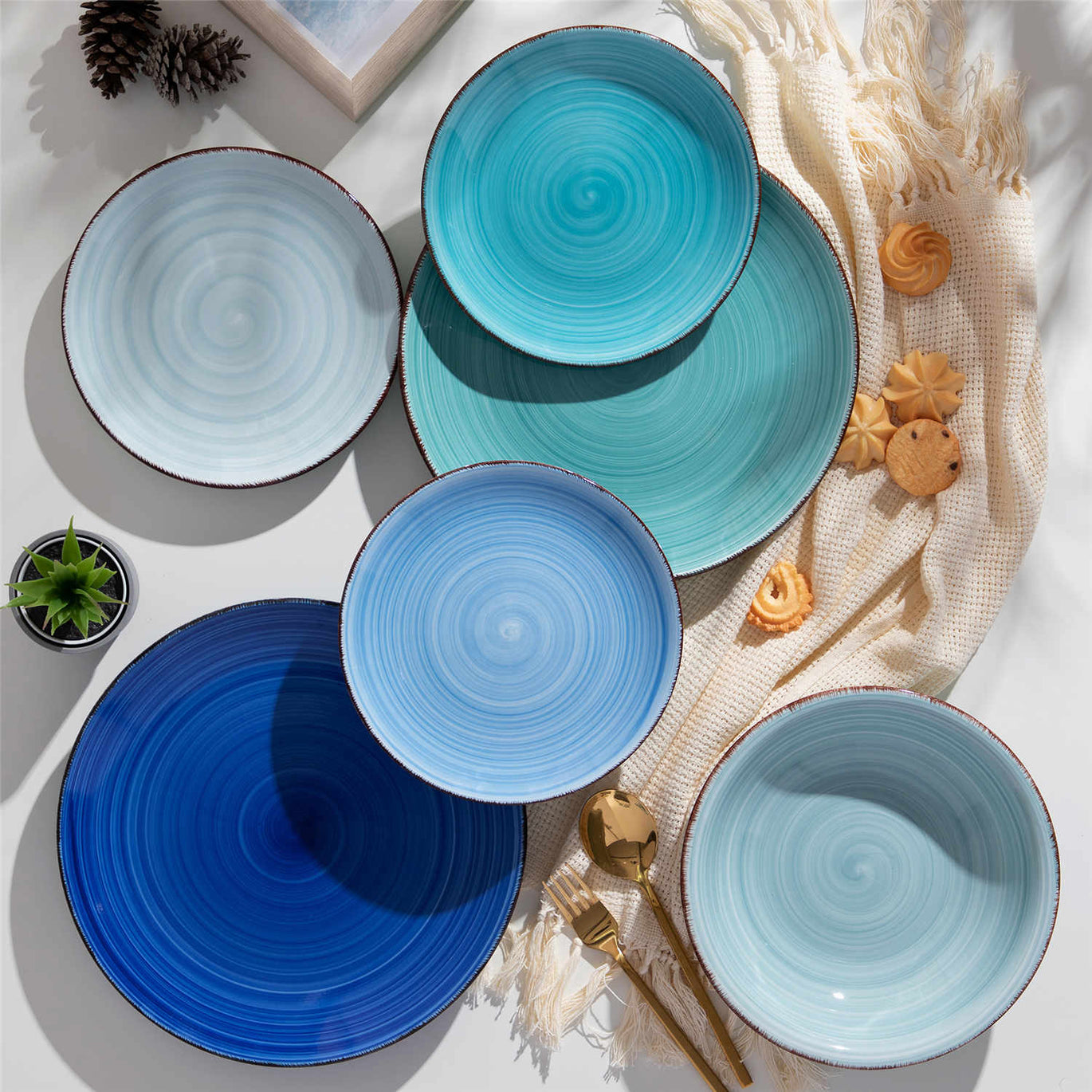


The Evolution of Shockproof Design in Train Dining Ceramic Tableware

Train dining has always been a ballet of movement and grace: plates meeting cutlery on a swaying table, hot soups rolling into cool salads between stations, stewards stacking towers of cups in tight galleys while the whistle sings. To make that dance seamless, railroad operators demanded tableware that looked elegant yet behaved like a workhorse. Shockproof design—resistance to chips and cracks under impact and resilience to quick temperature swings—became the quiet hero behind every served meal. This article traces how that resilience was engineered into railroad china, why it mattered, and how you can choose and care for truly “train-tough” pieces today.
What “Shockproof” Really Means for Train China
Shockproof in the rail-dining world blends two kinds of toughness. Mechanical shock resistance is the ability to survive bumps, knocks, and stacking without chipping, a constant risk in narrow cars and speed-tight service windows. Thermal shock resistance is the ability to handle rapid changes between hot and cold without forming fine cracks or shattering, a hazard whenever a hot bowl meets a cold countertop or a chilled dessert dish returns to a steamy dishroom. Materials scientists describe ceramics as hard and chemically stable but also prone to brittle failure and thermal shock if designed or handled poorly; put simply, strength is not enough if sudden temperature deltas open hairline pathways for failure. Sources like ExplainThatStuff and Penn State’s materials science program emphasize that dense, well-fired bodies and engineered glazes mitigate those risks, while a hospitality-focused view from Luzerne explains how thermal shock resistance also helps reduce fine lines that can harbor bacteria, making ware safer and longer-lasting in service.
Early Lessons: From Commemorative Blue to Dining-Car Workhorse (1827–1930s)
Railroad china grew out of tradition and technology moving in lockstep. A century after the Baltimore & Ohio Railroad’s 1827 founding, the railroad prepared a deep-blue, American-made commemorative set for dining cars that was documented in detail in a company booklet preserved by Railroadiana. The production notes read like a blueprint for toughness: three high-temperature firings, the use of individual saggers to keep pieces from touching, and painstaking glaze control on a cobalt blue notorious for “running” at heat. The set’s engravings were extraordinary—about 2,600 dots per square inch and roughly 90,000 dots in the dinner-plate center panel alone—but the real engineering story was durability in service. The booklet contrasts this robust ware with older soft earthenware fired at much lower temperatures, which chipped too easily for dining cars. In other words, railroad operators were measuring beauty by survival metrics as much as by borders and scenes.
Union Pacific’s “Winged Streamliner” pattern introduced in 1936, displayed by the Dinnerware Museum’s Travel Dining exhibition, illustrates another facet of the same lesson. Multiple makers, including Homer Laughlin and Syracuse, produced the pattern, and it remains in use on UP’s private passenger fleet. Branding was bold, but the material platform had to be quietly strong; the ware needed to move with the train without failing.
Branded Beauty, Operational Toughness: The Golden Age (1930s–1960s)
Mary Colter’s 1937 Mimbreño pattern for the Santa Fe Railway, noted by Linda Reeder’s historical account, carried Southwestern motifs into a dining program that ran until 1971. The art is rightly celebrated, but its longevity also signals an engineered resilience. Similarly, the Central Florida Railroad Museum records a Syracuse-made New York Central Mercury dinner plate dated November 1951, part of a pattern introduced in 1936 that remained in service until about 1967. Multi-decade service is not an accident; it is a property decision.
The Dinnerware Museum makes the operational stakes clear: each passenger train carried thousands of china items, many back-stamped for provenance, and railroads treated tableware as a brand signature. When thousands of branded pieces must be stacked, transported, and washed at speed, the line between graphic design and mechanical design gets thin. Shockproof thinking—dense vitrified bodies, proven glazes, and shapes that nest and rest without biting each other—becomes brand protection as much as it is breakage reduction.
Standardization and Vitrification for a National System (1970s–1980s)
When Amtrak unified routes, it also unified table-top aesthetics and performance. The white-with-blue-banding “National” pattern appeared circa 1973–1980; the Dinnerware Museum notes Hall China and Homer Laughlin as principal producers, with Mayer making plates, cups, and bowls in 1973–1974. Small but telling details, like Mayer’s tapered cups versus Homer Laughlin’s low, straight-sided cups, reveal how form affects function—how a profile stacks, how a rim meets a lip, how a foot sits in a rack. A first-hand account by Chuck The Writer, who purchased multiple “National” pieces, highlights both everyday usability and the real-world risk of shipping breakage; one plate arrived broken despite careful packing, a reminder that shockproof design must be paired with shock-aware logistics.
As fine dining returned, a red-lined “Craydor” pattern manufactured by Corelle signaled another design chapter, with materials and form factors tuned for modern operations. The point was not novelty alone. It was about nationwide consistency and durability that survived long treks and fast turns.
Replicas, New Materials, and a Broader Design Palette
The Los Angeles Times covered the California State Railroad Museum Foundation’s replicas of Santa Fe’s “California Poppy,” produced by Buffalo China, noting that the modern ware is microwave-safe and dishwasher-safe. Replicas make classic patterns accessible for daily use while leveraging modern compatibility.
In hospitality and rail-adjacent service, material choice is deeply practical. Royal Ware’s hotel-dinnerware overview frames porcelain and bone china as chip-resistant, stackable, and capable of handling rapid temperature change, while tempered glass shows strong thermal-shock resistance with examples like Duralex tolerating about −4°F to 212°F. Melamine offers break and chip resistance and excels poolside and on buffets, but it is not microwave-safe and often sees replacement rates around 10 to 20 percent annually in busy dining rooms. Luzerne’s discussion of thermal shock underscores the hygiene and safety wins from fewer fine lines; fewer micro-cracks mean fewer places for residue to hide.
Advanced ceramics—those engineered for engines and turbines with very low thermal expansion, described by AZoM—improve performance where temperatures soar. Train tableware does not need rocket science, but the principle transfers: control expansion and processing, and you control stress and failure. Penn State’s materials science program draws a useful distinction between traditional ceramics, such as the porcelain and stoneware of tableware, and advanced ceramics for high-heat components; the names differ, but the design mindset of aligning composition, processing, and properties is the same.
How Shockproof Tableware Gets Made, in Practice
Railroad china’s production details tell you why it survived. Railroadiana’s archival text on B&O’s blue ware explains the three-step firing arc. Bodies were fired to a bisque state, then decorated, then glazed and fired again, each cycle at high temperature and with enough time to creep toward maximum density and glaze fit. Pieces sat in saggers so they never touched, preventing rough spots or fused edges that would become failure points under stack pressure. Deep cobalt glaze required careful control because it tends to blur under heat, and the aim was a surface that would not craze easily in service. This level of process rigor is exactly the difference between a plate that chips on the first bounce and one that can circle a train route for years.
The broader materials science view aligns. Traditional earthenware fires at approximately 1,472 to 2,102°F, stoneware typically at around 2,102 to 2,372°F, and porcelain above about 2,372°F. Higher peak temperatures and longer soaks raise density and reduce open porosity, which helps resist both mechanical chipping and thermal shock. That is the quiet chemistry behind a plate that shrugs off a bit of track roughness.
Choosing Train‑Tough Tableware Today
If you love the rail aesthetic or you manage service in a space that behaves like a moving car—tight aisles, quick turns, constant stacking—buy choices matter. The Dinnerware Museum advises documenting back-stamps to authenticate railroad china and notes maker variations, such as Mayer’s tapered cups and Homer Laughlin’s straighter profiles in Amtrak’s “National” pattern. That attention to detail helps you verify provenance and also hints at how form influences durability.
For new ware, think like a dining-car steward. Specify vitrified porcelain or dense stoneware for hot-line resilience; confirm thermal-shock resistance with the manufacturer when oven-to-table or cold-to-hot transitions are routine; and check safety certifications such as FDA CFR 21 for heavy-metal limits, LFGB for broad chemical and sensory tests, and California Proposition 65 disclosures when relevant, as outlined by Royal Ware’s hotel-focused guide. If outdoor or poolside service is in the mix, melamine can prevent dramatic breakage, but it should not enter a microwave, and it may require more frequent replacement in volume operations. Tempered glass can bridge buffet and refined service with a sleek aesthetic and documented thermal range.
Real-world handling matters as much as lab data. Chuck The Writer’s experience with a broken shipment is a reminder to request robust packaging, especially for vintage pieces. Once home, organize for gentle stacking and stable racks, and retire any chipped items promptly so small flaws do not propagate.

Care That Extends Shockproof Performance
Care practices are the daily side of engineering. Luzerne stresses avoiding abrupt hot-to-cold or cold-to-hot transitions that induce thermal stress. Joyye’s guidance complements this with practical steps: use soft sponges, store vertically or with padding, and spot-treat stains with a mild paste. Most modern ceramics are microwave and dishwasher safe, but decorative metallic edges and fragile glazes deserve gentle cycles or hand-washing. Tempered glass tolerates a broader temperature range, yet even robust pieces benefit from a brief rest between extremes. These small habits preserve the dense microstructure you paid for and the glossy surface that resists micro-cracking.
Pros and Cons by Material for Rail‑Style Service
Material |
Thermal-Shock Behavior |
Chip/Impact Behavior |
Microwave Compatibility |
Where It Shines |
What To Watch |
Porcelain (vitrified) |
Stable under rapid change when well fired |
Naturally chip-resistant in hospitality grades |
Often compatible unless metallic decoration is present |
Fine to everyday service with stackability and gloss |
Verify glaze fit and decoration before microwave cycles |
Bone china |
High strength-to-weight and smooth finish |
Resilient with refined look |
Often compatible; confirm for metallic rims |
Luxury dining with brand customization |
Cost; handle decoration with care |
Stoneware (dense) |
Retains heat well; generally tolerant when fully vitrified |
Sturdy for daily use |
Usually compatible; confirm manufacturer guidance |
Casual service that needs warmth and heft |
Some rustic glazes prefer gentle cycles |
Tempered glass |
Noted for strong thermal-shock resistance; about −4°F to 212°F cited for Duralex ranges |
Good impact behavior for glass |
Generally compatible; confirm brand specs |
Oven-to-table transitions and buffets |
Scratching under harsh abrasives |
Melamine |
Not for high heat; avoid microwaves and heat lamps |
Excellent break and chip resistance |
Not microwave-safe |
Poolside, patio, high-traffic family dining |
Replacement cadence in busy rooms, often 10–20% yearly |
The matrix above synthesizes hotel and vendor guidance, including Royal Ware’s material notes and tempered glass ranges, alongside care and durability themes from Luzerne and Joyye.
Snapshots in the Shockproof Timeline
Era |
Railroad/Pattern |
Maker(s) |
Durability and Design Notes |
1827 centenary celebrated in 1927 and reprinted context in 1933 |
B&O “Centenary” Blue |
U.S. production documented by the railroad |
Three firings, sagger use, and glaze control created strong ware tuned for dining-car service, per Railroadiana’s booklet |
1936 onward |
Union Pacific “Winged Streamliner” |
Homer Laughlin, Syracuse, Sterling, Trenton |
Branded pattern designed for service and identity; still used on UP’s private passenger fleet, per Dinnerware Museum |
1937–1971 |
Santa Fe “Mimbreño” |
Designed under Mary Colter; production partners of the era |
Artistic heritage with long service life; originals marked for dining-car service; modern reproductions clearly labeled, per Linda Reeder |
1936–1967 (example plate dated November 1951) |
New York Central “Mercury” |
Syracuse |
Multi-decade use aligns with chip‑ and service‑resistant design, per Central Florida Railroad Museum |
Circa 1973–1980 |
Amtrak “National” |
Hall China, Homer Laughlin; Mayer in 1973–1974 |
White with blue banding; maker details visible in cup profiles and back-stamps; high-volume national use, per Dinnerware Museum |
Mid‑1980s and later |
Amtrak “Craydor” |
Corelle |
Red-lined refresh as fine dining returned, per Chuck The Writer |
Modern reproductions |
“California Poppy” |
Buffalo China |
Designed with microwave and dishwasher compatibility; strong consumer demand, per Los Angeles Times |
Practical Buying Guidance: Authenticity, Fit, and Logistics
Authenticity on vintage pieces begins with the back-stamp. The Dinnerware Museum’s note that patterns were often back-stamped provides the most reliable starting point. Maker differences within the same pattern, such as Mayer’s 1973–1974 entries versus Homer Laughlin’s forms in Amtrak’s “National,” can help you triangulate dates and manufacturing runs. For new ware, request detailed specifications on firing, vitrification, thermal shock testing, and safety certifications; hotel suppliers, including those profiled by Royal Ware, routinely provide this documentation. Treat shipping as part of your care strategy by asking sellers to double-box and suspend plates in padding. Chuck The Writer’s broken plate story underscores that even rugged ware needs smart packaging.

How Design Meets Psychology Without Compromising Strength
The Dinnerware Museum and historians remind us that railroad china doubled as storytelling. Streamliner wings, Southwestern motifs, and patriotic blues were not decorative fluff; they were part of the travel experience. Research covered by dining-psychology writers, including sources like Medium and Vancasso, suggests that plate shape, color, and weight influence how we perceive taste and quality. Train-dining programs married that sensory influence with durability. The goal was to elevate the meal, even as the ware endured thousands of handling cycles per train.
Care and Use: Small Habits That Protect Big Investments
Good habits extend shockproof performance. Avoid plunging hot bowls onto icy counters or moving freezer-cold plates into hot service without a brief acclimation. Use non-abrasive detergents and tools so you preserve the glaze that resists microcracking, a cleanliness point echoed by Luzerne. Store vertically with separators if space is tight, and rotate stock so minor wear distributes evenly. Joyye’s pragmatic advice to inspect for chips and address them promptly is equally at home in a collector’s kitchen and a busy café.
FAQ
What does “vitrified” mean, and why does it matter for railroad china?
Vitrification is the process of firing ceramic bodies to a high density so open pores are minimized, creating a glass-like, non-porous matrix. ExplainThatStuff and Penn State’s materials science perspective emphasize that dense, well-fired bodies resist both moisture ingress and crack initiation. For train service, vitrification reduces chip risk during stacking and improves tolerance of temperature swings.
How can I tell who made my Amtrak “National” cup?
Back-stamps offer the first clue. The Dinnerware Museum notes that Mayer entered the pattern in 1973–1974 and that its cups tend to be more tapered, while Homer Laughlin’s cups in this pattern are often low and straight-sided. Hall China and Homer Laughlin produced much of the line in the 1970s and 1980s, and maker marks usually align with these form cues.
Is vintage railroad china microwave-safe?
Do not assume that. Much vintage ware predates microwaves, and metallic decorations complicate matters. The Los Angeles Times reported that modern museum reproductions of Santa Fe’s “California Poppy” are microwave- and dishwasher-safe, but that is the benefit of contemporary production. For vintage, verify with the seller or use gentler warming methods.
Which materials are the most shockproof for train‑like service?
For ceramic tradition, vitrified porcelain and dense stoneware balance chip resistance with thermal tolerance. Tempered glass offers particularly strong thermal-shock resistance in the range cited by brands such as Duralex. Melamine resists breakage during rough handling but is not microwave-safe and tends to have higher replacement cadence in busy operations. Royal Ware’s hotel-dinnerware guidance maps those tradeoffs clearly.
Why do some deep blue glazes “run” or blur at high heat?
Cobalt-rich blues can become mobile during firing, which is why the B&O’s commemorative ware described by Railroadiana required meticulous engraving and controlled firing cycles. Skilled control of glaze chemistry and firing schedules stabilizes the surface so it resists both blur during production and microcracking in service.
How many pieces did trains typically carry, and what does that imply for durability?
The Dinnerware Museum notes that each passenger train carried thousands of pieces. That scale demands ware that stacks securely, resists chipping under repeated contact, and cleans without harboring microcracks. In essence, operational volume is the strictest durability test.
Takeaway
Railroad china became shockproof by design, not by accident. From the B&O’s multi-stage firings and sagger discipline to Amtrak’s standardized “National” service ware, makers pursued dense bodies and dependable glazes that could survive the thrum of travel. Museum archives and hospitality guides converge on the same principles: choose materials that marry density with stability, demand proof of safety and thermal performance, and back your choices with day-to-day care that prevents the small shocks from becoming big failures. Whether you are curating a vintage collection with back-stamped stories or outfitting a modern dining room with rail-tough practicality, the best pieces deliver beauty you can trust—on a table that never stops moving.
References
- https://www.matse.psu.edu/ceramics
- https://www.cfrhs.org/dining-car-collection
- https://www.railroadiana.org/china/pgChina_Centenary.php
- https://dinnerwaremuseum.org/main/travel-dining/
- https://nap.nationalacademies.org/read/10436/chapter/4
- https://www.restaurantfurniture.net/resources/articles/why-classic-diners-look-like-trains
- https://www.azom.com/article.aspx?ArticleID=16875
- https://www.explainthatstuff.com/ceramics.html
- https://ekaceramic.com/5-ways-ceramic-dinnerware-is-shaping-global-food-presentation-trends/
- https://www.happygodinnerware.com/Dinner_Plates/How_Can_Ceramic_Tableware_Help_Improve_the_Dining_Experience_for_Chain_Restaurants_happygodinnerware.html
You may also like
Stern 16 Piece Dinnerware Set
- £68.00
£77.00- £68.00
- Unit price
- per
-
Blue
-
Green
-
Red
-
Grey
Simi 24 Piece Dinnerware Set
- £77.00
£104.00- £77.00
- Unit price
- per
Bonita 18 Piece Dinnerware Set
- From £49.00
£61.00- From £49.00
- Unit price
- per
-
Blue
-
Multicolor
Starry 16 Piece Dinnerware Set
- £68.00
£70.00- £68.00
- Unit price
- per
-
Blue
-
Green
-
Red
-
Gradient Green