



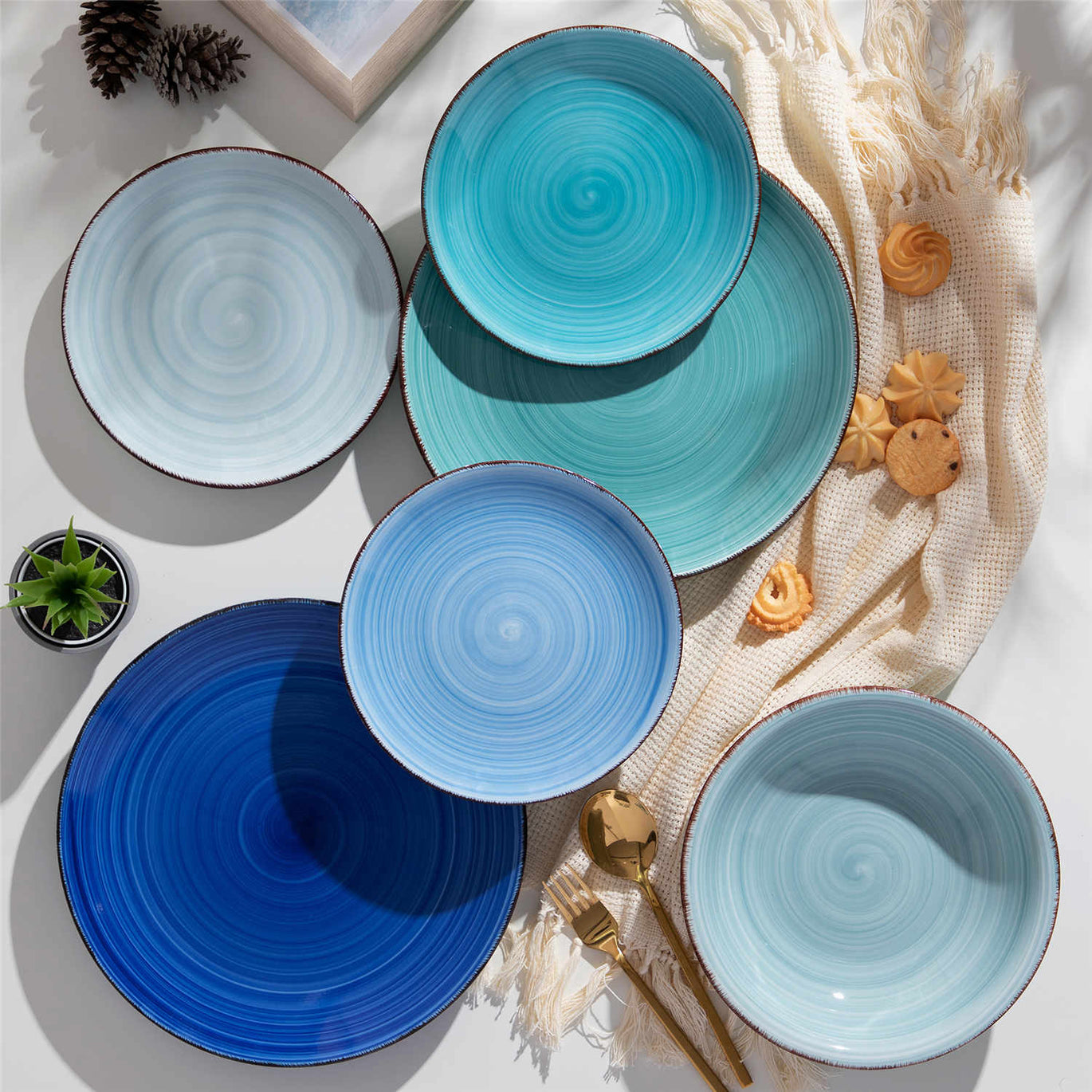


The Counterproductive Effects of Gender Marketing for Ceramic Tableware

When Your Dinner Plate Comes With a Gender
Picture this: you’re styling a Saturday brunch. On one side of the table, there is a “Ladies’ Blossom Set” stacked in blush pink and gold script. On the other, a “Grill Master Plate” in heavy matte black, branded as rugged “for him.” The food is gorgeous, the lighting is perfect, but the table suddenly feels less like a celebration and more like a casting call for stereotypes.
As a Colorful Tabletop Creative & Pragmatic Joy Curator, I spend my days pairing glazes, shapes, and patterns with real people’s lives. The more homes, restaurants, and studios I work with, the clearer it becomes: gender marketing is one of the most counterproductive habits in the ceramic tableware world. It shrinks your audience, flattens your creativity, and quietly works against what today’s diners actually want—joyful, expressive, inclusive tables that feel like them, not like a gender box.
Let’s unpack why that is, drawing on current marketing and consumer research, and then pivot to how you can design tableware that sells beautifully without painting everything pink or calling it “man-sized.”

What Is Gender Marketing in Ceramic Tableware?
Gender marketing means designing and promoting products as explicitly “for men” or “for women” based on socially constructed roles and expectations. As Centipede Digital explains, it grew out of the assumption that women run the home and manage shopping, while men are independent providers. Marketing campaigns then leaned hard into those roles: nurturing, domestic women; powerful, self-reliant men.
In ceramic tableware, gender marketing shows up in several ways:
It appears in color choices that signal “for her” with soft pastels, florals, and delicate scalloped shapes, while “for him” is coded with dark, heavy, angular designs. It is embedded in product naming such as “Bachelor Set,” “Mom’s Everyday Plates,” or “Man Cave Beer Mugs.” It lives in packaging that uses girlish or macho cues, and in lifestyle photography that shows only women washing dishes or only men manning the grill.
Here is how those cues often play out in this category, and what a more inclusive approach can look like.
Aspect of marketing |
Gendered ceramic example |
Inclusive ceramic alternative |
Product naming |
“Ladies’ Tea Set,” “Bachelor Dinnerware Collection” |
“Small Kitchen Brunch Set,” “Studio Loft Dinnerware,” “Family Feast Collection” |
Color and motif palette |
Pink florals labeled “for her,” dark slate and steel “for him” |
Earthy neutrals, bold accents, and patterns grouped by style or mood, not gender |
Packaging and labels |
Pink boxes with cursive “for women,” bold block fonts “for men” |
Neutral, modern labeling focused on use, quality, and materials |
Lifestyle photography |
Women serving and cleaning, men grilling and carving |
Mixed-gender, diverse hosts sharing cooking, serving, and cleaning |
Merchandising and signage |
“Gifts for Him/Her” shelves in tabletop aisles |
“Color Stories,” “Everyday Essentials,” “Mix-and-Match” or “Entertaining” zones |
None of these tactics is inherently evil. The problem is what they ignore about how people actually buy and use tableware today—and how quickly attitudes about gender, identity, and daily life have shifted.

How We Got Here: From Dish Soap Ads to Pink Dinnerware
Gendered marketing did not appear out of nowhere. For decades, household products were sold almost exclusively to women, who were framed as managers of cleaning, cooking, and child care. Centipede Digital notes that many home-related goods, including cleaning products and even cigarettes, were targeted to women because they were seen as domestic decision-makers, even when they did not have independent income.
The American Marketing Association has documented how stereotypes hardened over time. Midcentury ads showed women buried under dishes, promised that buying a certain soap would “get her out of the kitchen sooner,” and framed car purchases as the man’s job. The toy world followed: according to historical analysis cited in that same AMA article, less than two percent of toys in a 1975 Sears catalog were marketed by gender, but by 1995 roughly half of them were labeled for boys or girls.
Once marketers started doubling everything—blue toy cars for boys, pink ones for girls—the pattern spread. That same “pink and blue divide” helped create what New York City’s Department of Consumer Affairs later documented as a “pink tax,” where nearly identical products cost more in the version aimed at women. Their 2015 report found that girls’ toys and accessories cost about seven percent more than boys’ equivalents and girls’ clothing about four percent more.
If you’ve ever seen a pastel “For Her” pen priced above the standard version, you have seen gender marketing overplay its hand. When that pen was released, consumer backlash and ridicule were intense enough that the brand had to rethink its approach and eventually launch a gender-inclusive grooming line instead.
Ceramic tableware stands at the same crossroads. The instinct to carve out “his” and “hers” plates might feel safe, but it quietly drags a midcentury script into a world that has moved on.
Why Gender Marketing Backfires in Tableware Today
It Misreads the Real Decision Makers
In practice, who actually buys the plates? Research summarized by Popsters shows that women make the vast majority of consumer purchases overall and that in roughly half of those cases they are buying products traditionally labeled “for men.” If you stamp “for men” all over a line of matte charcoal dinnerware, you may think you are talking to male grill enthusiasts; in reality, you are often talking to the women, partners, or friends who pick and pay for those plates.
The American Marketing Association highlights that in categories like baby products, laundry, and household cleaners, ninety-eight percent of ads are still targeted at women, even though later research from Kantar shows most domestic buying decisions are now made jointly by men and women. When brands cling to gendered assumptions, they simply fail to see half of the people making the choice.
The kitchen is changing too. Architectural Digest has explored how kitchenware brands are going gender neutral, with designers like Rhuigi Villaseñor explicitly creating tools and appliances “for everyone regardless of gender.” Chef and influencer Woldy Reyes notes that the old stigma about men not belonging in the kitchen has “long gone.” During the pandemic, plenty of men rediscovered domestic rituals like cooking and table-setting, not as a threat to masculinity but as a grown-up pleasure.
When your packaging and naming still imply that only women care about plates and only men care about grills, you are behind your own customers. That disconnect shows up at the shelf as confusion, irritation, or a quiet pivot to a brand that feels less stuck in the past.
It Reinforces Stereotypes Many Shoppers Are Actively Rejecting
Younger diners in particular are tired of being told who they are by a label. A J. Walter Thompson Intelligence report, cited by the American Marketing Association, found that eighty-one percent of Gen Z believe gender does not define a person as much as it did in the past. Nearly sixty percent believe forms should include options beyond “man” or “woman.”
The American Psychological Association’s research, also referenced by the AMA piece, finds that a person’s gender has little to no bearing on traits like personality, cognition, or leadership ability. Developmental psychologist Christia Spears Brown puts it starkly: there are more differences between individuals than there are between genders. If you use gender as your main lens, you simply miss what people are actually interested in.
Parents are consciously resisting stereotypes too. The AMA article notes a Havas Group survey where a majority of mothers and nearly half of fathers wanted to raise children in as gender-neutral an environment as possible to shield them from limiting expectations. In an Australian survey from Our Watch, seventy-nine percent of parents of very young children wanted to actively push back against traditional gender roles in how they raised their kids.
That pressure has already reshaped toys. The Let Toys Be Toys campaign persuaded major retailers to drop “for boys” and “for girls” labeling, and big-box chains shifted to organizing by category instead of gender. Those shifts did not sink sales; in fact, brands that responded positively to consumer concerns earned loyalty and praise.
Now imagine a child whose parents are intentionally raising them in a gender-neutral way sitting down to a family dinner set labeled “Princess Plates” for girls and “Racer Plates” for boys. The table itself is teaching the opposite message the parents are trying to send. That is not just aesthetically awkward; it is a reputational risk for the brand stamped on the bottom of the dish.
Kantar’s “Getting Gender Right” report, cited in the AMA article, underlines the gap between what marketers think they are doing and how consumers experience it. Forty-five percent of consumers say marketers portray women in outdated ways, while ninety-two percent of marketing professionals believe they are successfully avoiding stereotypes. Most women and most men in that study felt that portrayals of gender in advertising are “completely out of touch.”
If you launch a “manly meat platter” and a “skinny salad bowl,” odds are high that a big slice of your audience will roll their eyes and quietly choose a competitor. That is the opposite of what you want when you have spent months perfecting a glaze recipe.
It Narrows Your Design Palette in a World That Craves Personal Style
The most exciting energy in ceramic tableware right now has nothing to do with gender and everything to do with self-expression. EKA Ceramic’s analysis of the North American market shows that millennials, now the largest adult generation, treat tableware as an extension of personal style and home decor rather than just utility.
Their preferred looks range from minimalist Scandinavian lines to handcrafted, organic shapes, vintage-inspired glazes, and colorful statement pieces. Color loves include earthy neutrals like beige, sage, and terracotta, muted pastels, and a few bold accents that photograph beautifully for social media. These shoppers actively mix and match sets to build a table that feels unique to them.
Global market research from Transparency Market Research reinforces the same trend: demand is growing for handmade, hand-painted, nature-inspired dinnerware and bright yet simple color schemes that support a multi-sensory dining experience. The market is expected to grow strongly through 2031, driven by home dining, sustainability, and personalization.
Gender marketing tends to flatten that creative landscape. If you decide that pastel equals “feminine” and charcoal equals “masculine,” you put your own studio on a design leash. You end up pushing floral plates mainly to women and stripped-back plates mainly to men, even when your actual customers are couples, roommates, and families who want to mix both on the same table.
Research covered in the California Management Review also suggests that sustainable products are often stereotyped as feminine, which can deter some male consumers who fear that using them might threaten a masculine image. If your eco-friendly tableware is only ever shown with soft, “girly” styling, some men may feel the collection is not “for them,” even if they care deeply about the planet.
By contrast, when you position sustainability, craftsmanship, and design as shared values rather than feminine ones, you unlock much richer palettes and stories. A speckled sage bowl can feel calm and grounded on one table, bold and graphic on another, without ever having to be labeled “she” or “he.”
It Leaves Gender-Diverse Consumers Out of the Story
Gender is no longer a simple binary for a significant share of your potential audience. The Williams Institute estimates that more than one million people in the United States identify as nonbinary, and Gallup data show a substantial rise in Americans who identify as LGBTQ+ over the last decade. A study cited in the marketing research firm Seek’s overview of gender identity reports that half of Gen Z and more than half of millennials see traditional gender roles and labels as outdated.
The American Marketing Association warns that brands which treat gender as a primary driver of purchasing decisions risk alienating people who do not fit those categories and miss deeper motivations. Seek highlights brands like Odele that deliberately avoid hyper-feminine packaging and position products around hair type and ingredient quality instead of gender, age, or stereotypes.
When an everyday object like a mug or cereal bowl is stamped with “for women” or “for men,” people who are nonbinary or who simply dislike gendered branding receive a subtle but constant message: “We did not have you in mind.” That is not a feeling that builds loyalty.
Ceramic tableware is something many people live with every single day. It is the last place they want to be reminded that a brand cannot see them as anything other than a gender slot.
It Can Quietly Suppress Sales
Gender signaling does not just hurt feelings; it can change what people are willing to buy in surprisingly direct ways. Research on glassware design published in an academic hospitality journal shows that certain vessel shapes carry strong gender associations. Stemmed glasses with delicate balance are often perceived as feminine, while chunkier stemless forms can read as more neutral or masculine. Men, especially in public settings like bars, sometimes avoid glassware they read as feminine in order to protect a masculine image.
The same logic can apply to the plates and bowls you design. If your only “special occasion” line is a highly frilled, ultra-delicate pattern positioned as feminine, some consumers—particularly men who are wary of signaling the “wrong” thing in front of others—may resist choosing it as a gift or registry item, even if they secretly love the aesthetic.
On the digital side, a fashion study reported in the Journal of Consumer Psychology (summarized by California Management Review) found that women show higher purchase intentions and willingness to pay when products are displayed in rich, contextual imagery—on bodies, in real environments—rather than on plain white backgrounds. Men did not respond as strongly to extra context. Translating that insight to tableware, photographing your pieces in vibrant, mixed-gender tablescapes can tap into the emotional value many women feel around hosting and home while still feeling open to everyone.
The lesson is not “remove all stems and context.” It is that visual cues and labels matter, so using them carelessly to signal gender can lead customers to self-censor what they buy. Inclusive styling and naming avoid that trap while still letting you play with shape and drama.

Are Gender Differences in Taste Useless, Then? Not Quite
None of this means that men and women are identical or that insights about gender identity have no place in marketing. The California Management Review highlights research suggesting that men tend to prefer bold, simple, clean designs that require less cognitive effort, while women often respond to harmonious, visually rich scenes that align with their self-identity. Women in that research also show a higher average desire for reflective, meaningful experiences and are more willing to choose surprise offerings, while men often prefer control and predictability.
The problem is not paying attention to those patterns. The problem is turning them into rigid rules and plastering “for men” or “for women” on your boxes instead of translating them into design options that anybody can choose.
Here is what using those insights responsibly in tableware can look like.
Research insight |
Inclusive application for tableware |
Some shoppers enjoy simple, low-effort visual design |
Offer a clean, minimal line branded around calm, focus, or modern kitchens, not male identity |
Others enjoy layered, aesthetically rich visuals that reflect their self-identity |
Create richly glazed, patterned collections positioned as expressive or artisanal, not “girly” |
Many women value emotionally meaningful, contextual experiences |
Show your collections in inviting, real-life tablescapes with friends of all genders |
Sustainable products are often coded as feminine, which can deter some male buyers |
Emphasize performance, durability, and craftsmanship alongside eco-benefits, in neutral styling |
The shift is subtle but powerful: you move from “pink plates for women, black plates for men” to “a spectrum of design experiences anyone can choose based on their style, values, and the story they want their table to tell.”
Designing Gender-Inclusive Tableware That Actually Performs
Now for the fun part: turning all of this into ceramic collections and campaigns that are both inclusive and commercially sharp.
Anchor Design in Use and Context, Not Gender
Industry reports from Credence Research and Transparency Market Research both emphasize that ceramic tableware demand is being driven by clear functional and situational needs: dinnerware versus beverageware, residential versus restaurant use, compact urban homes versus spacious entertaining spaces, and technologies such as oven-safe glazes or specific casting methods.
EKA Ceramic notes that many millennials live in smaller apartments and want pieces that stack neatly, move from oven to table, and handle the microwave and dishwasher with ease. When you design around those use-cases, you naturally ask questions like: How many plates fit in a narrow cabinet? Can one bowl comfortably handle ramen, salad, and cereal? Does this mug feel good in the hand for long workdays at home?
None of those questions require you to decide whether the user is male or female. They invite you to understand lifestyles instead of stereotypes.
Build Collections Around Aesthetic Worlds, Not Gender Boxes
In my own studio work, the collections that perform best are not “his” and “hers” sets. They are color stories and mood boards. Think “Sunset Orchard” for a warm, terracotta-and-apricot dinnerware family, or “Tidepool Studio” for layered blues, speckles, and shells.
EKA Ceramic’s research aligns with this: millennials crave visually distinctive, “Instagram-ready” designs, from minimalist Scandinavian palettes to handcrafted rustic finishes and bold, colorful statements. They love to mix and match, pulling one plate from here, one bowl from there, to create a personal narrative on the table.
If you name a line “Girls’ Night In Plates,” you have automatically restricted when people feel allowed to use it. If you call that same aesthetic “Glow Hour” and show it under candlelight with a mix of friends at the table, anyone who resonates with the vibe can claim it.
Let Sustainability Feel Shared and Strong
Eco-consciousness is now a baseline expectation in tableware. EKA Ceramic highlights demand for lead-free glazes, responsibly sourced clay, and durable pieces that reduce disposables. Transparency Market Research similarly notes that health, safety, and sustainability are key purchase criteria and that the market is heavily influenced by consumers seeking handmade, eco-friendly, durable products.
Research summarized in California Management Review shows that sustainable products are often stereotyped as feminine, which can make some men hesitant to buy them if they feel it undermines a masculine image. That is another case where gender marketing gets in its own way.
Instead of treating eco-friendly lines as “for women who care about wellness,” position them as high-performance, long-lasting, and smart investments. Talk about impact resistance, thermal shock tests, and the longevity of glazes alongside the environmental story. Photograph them in settings that include men cooking, kids helping, and guests of all genders gathered. Sustainability then reads as a shared, modern value rather than a soft add-on.
Rework Packaging, Merchandising, and Imagery
The label and box are often your first—and only—chance to communicate what a collection stands for. Inovar Packaging’s work on gender-neutral packaging underscores that simply swapping pink for gray is not enough; brands need to remove gendered language and symbols and anchor their message in benefit and values. Their examples, such as Bare + Bloom and Vermont Soap, show how minimalist labels focused on ingredients and problem-solving can feel modern, premium, and inclusive.
Apply that thinking directly to tableware. Instead of “Ladies’ Latte Mug,” write “Stackable Stoneware Latte Mug, 14 fl oz, dishwasher-safe.” Instead of a gift section labeled “For Him/For Her,” merchandise by themes like “Color Pop,” “Earth Tones,” “Chef’s Favorites,” or “Small Space Heroes.”
On the imagery side, the Architectural Digest piece on gender-neutral kitchenware illustrates how brands like Rhude and Tekla deliberately frame the kitchen and table as social, creative spaces for everyone. Following that lead, show a broad mix of people cooking, plating, and cleaning with your products. Rotate who is at the stove, who pours the wine, who scrubs the casserole dish. That alone signals that your brand sees domestic life as shared.
You can also put the contextual imagery insights from online fashion research to work. Since women often respond strongly to rich, situational product photography, build table scenes that tell a story—a weeknight pasta night, a Sunday brunch, a solo afternoon tea. Those images invite shoppers to imagine themselves at the table, regardless of gender.
Use Research and Data, But Ask Better Questions
Traditional market research often forces consumers into binary gender boxes and then looks for differences between “male” and “female” responses. Seek’s critique of this approach shows how it leaves nonbinary and gender-diverse consumers out of the sample and encourages brands to overindex on gender instead of deeper drivers like values, aesthetics, and roles.
Update your research instruments. Include options beyond male and female for gender identity. Ask about hosting frequency, space constraints, color preferences, sustainability priorities, social media habits, and cooking confidence. Combine those insights with sales data from your direct-to-consumer channels and e-commerce partners to see which patterns actually correlate with purchases.
The American Marketing Association urges brands to listen carefully to consumer feedback about stereotypes and to audit their creative for “out of touch” portrayals. For tableware, that might mean reading reviews and comments about packaging or product names, tracking social media reactions to campaigns, and being ready to retire gendered language when customers tell you it feels wrong.
The goal is not to erase complexity. It is to move away from “What should we sell to women?” and toward “What experiences and aesthetics resonate with the people who love cooking, hosting, and eating at home?”

A Sketch from the Studio: The “Brunch for Everyone” Line
To make this concrete, imagine you are developing a new ceramic collection designed around weekend brunch. A gendered approach might lead you to create a pink, delicate “Ladies’ Brunch” line with small plates and a separate, heavy, dark “Guys’ Grill Brunch” collection. You would double your SKUs, divide your shelf, and still miss the reality of how groups actually brunch together.
A gender-inclusive approach, the one I advocate in my own work, starts from a different moodboard. You look at EKA Ceramic’s notes on what millennials want: stackable pieces that move from oven to table, glazes that photograph beautifully, a blend of earthy neutrals and bold accents, clear microwave and dishwasher guidelines. You combine that with market research showing that consumers across genders want sustainable, durable, handcrafted-feeling wares.
You might land on a palette of warm cream, soft sage, and one electric accent color. Shapes stay robust enough for everyday use but have a refined lip and a subtle curve that flatters everything from waffles to shakshuka. You name the line “Brunch for Everyone” or “Open-Table Mornings,” emphasize the oven-to-table function and stackability, and photograph it with a mix of friends cooking together—men whisking, women pouring coffee, nonbinary hosts plating pastries.
In the product descriptions, you talk about how many pieces fit in a standard cabinet, what temperature they can handle, how they were fired, and what story the glaze tells. No one has to ask themselves whether they are “allowed” to buy it. The only question is whether the line fits the life and look they are building.
That is what it means to move from gendered marketing to joyful, inclusive, performance-driven design.

FAQ: Gender, Glaze, and Real-World Decisions
Does gender-neutral tableware mean everything has to be plain or beige?
Not at all. Gender-neutral does not mean personality-neutral. The research shows people love expressive, handcrafted, colorful pieces; they simply do not want those pieces pre-assigned to a gender. You can create wild fuchsia glazes, intricate florals, or graphic black-and-white patterns as long as you frame them around style, mood, and use rather than “for women” or “for men.”
Can I still design ultra-floral or ultra-rugged collections without alienating people?
Yes, if you keep the door open. Give those collections names and stories that celebrate their aesthetic—lush botanicals, rugged stone textures, industrial chic—without saying who they are for. Show a variety of people using each line. Let a bearded home baker fall in love with the floral breakfast plates and a fashion-forward woman choose the brutalist charcoal platter. When the branding does not police them, customers will self-select what truly fits.
What if my brand already has gendered lines in market?
You do not have to smash every mold overnight. Start where the friction is highest. Review names, packaging, and photography. Phase out the most stereotyped language first and introduce new, inclusive collections that embody the direction you want to move in. Use ongoing research and customer feedback to guide how quickly to retire older positioning. The key is to show that you are listening and evolving rather than doubling down on a script your buyers have outgrown.

Closing: Set the Table for Everyone
Ceramic tableware lives at the intersection of the everyday and the intimate. It holds your Tuesday leftovers and your holiday feasts, your solo ramen nights and your defiantly extra brunches. When we load it up with outdated gender cues, we shrink that magic.
When we strip those labels away and design for real lives—rich in color, varied in shape, fluid in identity—we gain something much better: tables where anyone can sit down, see themselves in the setting, and feel invited to stay. That is the kind of colorful, pragmatic joy I want every plate, bowl, and mug to carry into the world.
References
- https://honors.libraries.psu.edu/files/final_submissions/3296
- https://eprints.whiterose.ac.uk/id/eprint/144884/
- https://cmr.berkeley.edu/2025/01/master-gender-identity-in-consumer-behavior-boost-your-marketing-connection/
- https://www.ama.org/marketing-news/shattering-gendered-marketing/
- http://www.aasmr.org/liss/Vol.11/No.8/Vol.11.No.8.22.pdf
- https://www.researchgate.net/publication/235250296_Colour_and_product_choice_A_study_of_gender_roles
- https://www.kitchenbathdesign.com/gender-differences-impact-marketing-strategies
- https://www.architecturaldigest.com/story/gender-neutral-kitchenware
- https://centipededigital.com/the-history-of-gendered-marketing-why-were-many-consumer-goods-marketed-to-women/
- https://www.credenceresearch.com/report/ceramic-and-porcelain-tableware-market
You may also like
Stern 16 Piece Dinnerware Set
- From £58.00
£77.00- From £58.00
- Unit price
- per
-
Blue
-
Green
-
Red
-
Grey
Bonita 18 Piece Dinnerware Set
- From £49.00
£61.00- From £49.00
- Unit price
- per
-
Blue
-
Multicolor
Simi 24 Piece Dinnerware Set
- £77.00
£104.00- £77.00
- Unit price
- per
Starry 16 Piece Dinnerware Set
- £60.00
£70.00- £60.00
- Unit price
- per
-
Blue
-
Green
-
Red
-
Gradient Green