

When the Brightest Bowl on the Table Goes Unnamed
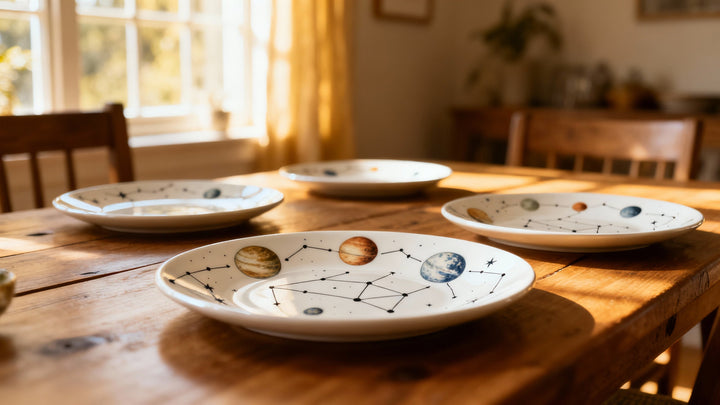
Picture a brunch table that looks like a color parade: a speckled turquoise serving bowl overflowing with citrus, an inky cobalt coffee cup that fits your hand like it was made just for you, a sunny yellow plate that makes even toast look celebratory. In many studios and markets, that vibrant work is disproportionately being made by women. Yet when you zoom out from your dining table to the global art market, their names, prices, and museum labels often lag far behind their male peers.
Research across art history, feminist ceramics, and market analytics all point in the same direction. Women have long been central to ceramic production and innovation, but they have been sidelined in official histories, collector habits, and institutional acquisitions. When you narrow the frame further to female ceramic artists, you see a layered problem: gender bias in the art world, the persistent devaluing of craft, and a deep association of clay with “feminine” and domestic labor all stack together.
As someone who lives for the magic moment when a finished table setting becomes a tiny curated exhibition, I am less interested in abstract outrage and more interested in understanding how this gap actually works so we can close it. Let us unpack what “market recognition” really means in clay, why the disparity persists, and how collectors, curators, and makers can shift the balance while keeping the joy and color at the center of the story.

What “Market Recognition” Really Means for Clay
Before we can decode the gap, we need a clear definition. Market recognition is not just about price tags; it is about how consistently an artist’s work is seen, valued, and supported across the ecosystem that turns raw clay into cultural capital.
In ceramics, market recognition usually shows up across several intertwined arenas. First comes representation and visibility: who gets shown in galleries and design stores, who gets solo exhibitions, who is featured in magazines, and who ends up in museum collections rather than only on Instagram. Second is financial valuation: what collectors actually pay, whether works resell on the secondary market, and whether an artist can rely on their craft income instead of treating it as a side hustle. Third is narrative authority: who art historians, critics, and curators write about; whose work is used to define movements; who is treated as an influence rather than as a follower.
Because ceramics straddles functional design, craft, and fine art, recognition can also split. A woman might be wildly respected among studio potters and beloved in people’s kitchens while still being nearly invisible in auction data or major museum holdings. That split is a key reason the disparity for female ceramic artists can be harder to see at first glance, even as it shapes their lives behind the scenes.
A simple way to hold these dimensions in view is to think of them as a table service. Representation is which piece even makes it onto the table. Valuation is how guests treat it: disposable paper plate or treasured heirloom? Narrative authority is whether anyone remembers and repeats the maker’s name after dessert.
Dimension |
How it is measured in art markets |
Ceramics-specific twist |
Representation |
Gallery rosters, exhibitions, art fair booths |
Often filtered through “craft” categories or design stores |
Financial valuation |
Prices, resale, auction records |
Functional ware rarely tracked; sculpture sometimes is |
Narrative authority |
Critical writing, syllabi, museum wall labels |
Potters often described as “decorative” or “domestic” innovators |
Understanding these layers matters, because female ceramic artists tend to be under-recognized in all three at once.
A Gendered History Baked into the Clay
Ceramics has a long, gendered backstory that quietly shapes today’s markets. The historian Moira Vincentelli, in her book Women and Ceramics: Gendered Vessels from Manchester University Press, argues that women have historically been both primary producers and consumers of ceramics, yet their contributions have been systematically marginalized in art history and technological histories. Archaeological and ethnographic evidence suggests women were central to early clay work in many cultures, but as pottery professionalized and industrialized, their names and technical authority faded from view.
A contemporary summary of the historical record in “The Saga of Women in Pottery” notes that women have been involved in ceramics since at least ancient Egypt, often as makers, printers, and decorators. By the mid eighteenth century and through the era of major European factories, however, ownership and management were firmly dominated by men. Women were pushed toward auxiliary roles or excluded altogether. Across the nineteenth and twentieth centuries, women’s labor in ceramics factories and studios was frequently treated as a “reserve army” of workers: called in when needed, quietly dismissed when not, and rarely credited on finished work.
Meanwhile, ceramics was framed as a genteel hobby for wealthy women, while “serious” potters and studio leaders were mostly men. Reviews of Vincentelli’s book point out that women’s ceramic work has often been coded as less important because it is associated with hand-building, burnishing, and domestic vessels, all read as feminine and pre-modern. Feminist ceramic scholars such as Courtney Lee Weida emphasize how this creates a peculiar tension: women are symbolically linked to clay as earth mothers and guardians of the home, yet individual women ceramicists are left out of canons and leadership roles.
This long history leaves a residue. When you pick up a handbuilt mug with a luscious glaze today, you are touching a medium that has been culturally feminized, economically exploited, and intellectually downgraded for centuries, even as women have quietly held the skills.
What the Numbers Reveal About Women and the Art Market
Zooming out to the broader art market shows just how systemic the gender gap is. A large empirical study by Artnet Analytics and Maastricht University examined 2.7 million auction results for Western artists between 2000 and 2017, along with the rosters of 1,000 galleries representing 4,750 living artists. The findings are blunt: men overwhelmingly dominate the fine art market, and women encounter four distinct “glass ceilings” as their careers advance.
The first ceiling appears right after school. Elite art programs often have gender parity; for example, research cited in the Artnet study notes that the Yale School of Art has had roughly equal male and female enrollment since the early 1980s. Yet when the authors looked at gallery representation, only 13.7 percent of living artists represented by galleries in Europe and North America were women. Galleries act as crucial gatekeepers for both visibility and pricing, and they are opening the door to men far more often.
The second ceiling arises between the primary market and the secondary market. Among gallery-represented artists in the Artnet and Maastricht analysis, 96.9 percent of 4,180 men saw their work resold at auction, compared with 93 percent of 574 women. That may sound close, but it translates into a 15 percent proportional drop in women as you move from galleries to auction houses. In other words, women are more likely to disappear from the resale market entirely.
The third ceiling is about how financial rewards are distributed. The same study found that women who do reach the secondary market often outperform men on average: collectors paid a price premium of about six percent for their work, with median auction prices of roughly $4,138 for women versus $3,648 for men. However, this is partly because the women who make it that far have passed through more filters and are therefore exceptionally strong. At the same time, the market for women’s art is extremely concentrated. Just 143 female artists, about 2.6 percent of the women in the sample, accounted for 91 percent of all auction sales of works by women between 2000 and 2017. For men, profits are more evenly spread across a broader group.
When researchers controlled for this superstar effect, art by women sold at an average discount of around eight percent compared with art by men. Experimental work by Luxembourg University, summarized alongside the Artnet findings, suggests that affluent male buyers tend to rate works by women lower than comparable works by men, revealing a bias that directly affects prices.
The fourth ceiling is at the very top of the market. The Artnet study identifies Joan Mitchell as the highest-grossing woman, with about $390 million in auction sales between 2000 and 2017, followed by Georgia O’Keeffe at $247.2 million. Yet Mitchell ranks only forty-seventh overall. In the same period, Picasso generated about $6.2 billion and Andy Warhol about $4.9 billion in sales. Each man individually outsold all 5,612 women artists combined in the database. There are no women at all in the top 0.03 percent of artists who capture more than 41 percent of overall profits.
Other research confirms the depth of the problem. A 2019 study highlighted in a Museum of Modern Art of Africa editorial on the “representation problem” notes that from 2008 to 2019, only about two percent of global auction sales were works by women. In the United States, major museums acquired work by women at only about 11 percent of total acquisitions between 2008 and 2020, and one survey of 18 museums found that roughly 87 percent of collection holdings are by men. The same article estimates about $2.4 billion in sales for male artists versus $49 million for female artists in a given period, a roughly 49 to 1 ratio.
The Burns Halperin Report, discussed in an Art Basel feature, adds an intersectional lens. Across 31 US museums, only 11 percent of acquisitions were works by female-identifying artists, and Black American women, who make up about 6.6 percent of the population, accounted for only 0.5 percent of museum acquisitions.
Ceramics is folded inside this broader ecosystem. While there are no large-scale statistics that isolate female ceramic artists, they face the same gendered bottlenecks plus a devaluing of their medium, which compounds the recognition gap.
How These Patterns Shape the Careers of Female Ceramic Artists
Art versus Craft: When Clay Is Treated as “Lesser”
The hierarchy between art and craft is a major structural reason why female ceramic artists are under-recognized. Vincentelli’s Women and Ceramics: Gendered Vessels argues that ceramics has often been relegated to the craft side of this hierarchy and that women’s roles as ceramic producers, collectors, and patrons have been written out of mainstream art stories. She introduces the idea of a “visual écriture féminine,” suggesting that ceramics made and used by women can encode meanings of solidarity or subversion through form, technique, and imagery. Yet those meanings are easily dismissed when the medium itself is treated as decorative or secondary.
A review of Vincentelli’s book in Ceramics in America praises the breadth of her case studies and the way she surfaces little-known women artisans and collectors. At the same time, feminist archaeologists caution that gender and ceramics are highly context dependent; they object to any universal claim that certain techniques are inherently female. That debate itself underscores how contested and understudied the field has been, and how often women’s global roles in ceramics have been flattened into stereotypes.
Courtney Lee Weida’s qualitative work on fifteen contemporary women ceramic artists further shows how the art versus craft divide is felt at the studio level. Through interviews and visual analysis, she uses the concept of “ambivalence” to describe how these artists navigate being associated with a feminized material while struggling against gendered exclusions from technology, profit, and recognition. The artists describe being taken less seriously than male ceramicists, even while insisting in some moments that their gender should not matter, revealing a constant negotiation between identity and legitimacy.
When curators and collectors see clay first as craft, they often look at functional work as “design” rather than as part of fine art discourse. Since women are heavily represented in pottery and tableware, the devaluation of ceramics becomes a shortcut for devaluing their work. The market then compounds this by tracking and celebrating painting and sculpture far more closely than functional ceramics.
The “Feminine” Label and Its Price
Gendered expectations around aesthetics and subject matter add another layer. In an ethnographic study of self-employed craftswomen in Jingdezhen, published in the International Journal of Business Anthropology, Ruoxi Liu found that female ceramic workers experience both empowerment and instability. Many of her interlocutors described the satisfaction of self-realization through craft and the freedom of self-employment, but also chronic economic precarity and creative self-doubt.
Crucially, Liu documents how critiques of these women’s work often frame it as overly domestic, cute, or sentimental. Their pieces are generalized as “feminine” and thus treated as less serious, regardless of the actual technical skill or conceptual depth involved. She argues that this generalization not only reduces individual women to a narrow style but also marginalizes femininity itself within ceramic culture and production. Feminine aesthetics become a negative filter.
Similar patterns show up in broader feminist ceramics. Weida’s research notes that women ceramicists often grapple with how to use symbols such as goddesses, bodies, and domestic objects. Some reclaim these motifs directly, like artists who sculpt pillow forms in hard clay or incorporate sewing imagery, playing with tensions between softness and hardness, utility and sculpture. Others avoid feminine imagery altogether to sidestep being pigeonholed.
In both cases, the market often reads work through gendered assumptions first, and only then through technique, innovation, or conceptual rigor. The result is that a playful pastel glaze or a vessel referencing the body can be underestimated on the pedestal even as it steals the show on your dinner table.
Work, Life, and Invisible Ecologies Around the Kiln
Market recognition depends on more than talent; it is built on time, networks, and stamina. Here, gendered expectations around work and care become very concrete.
Liu’s study of Jingdezhen craftswomen highlights how pressures from family and social expectations shape women’s craft careers. She argues that the familiar phrase “work–life balance” often obscures the compromises and sacrifices these women make, from unstable income to long hours that are rarely recognized as professional labor. Gendered power relations persist in everyday interactions in workshops and studios, where women face disrespect and marginalization in a male-dominated industrial context.
At the mid-career level, an Artsy feature on women artists and stagnation describes this stage as a kind of “no man’s land.” Women who have worked for a decade or more often find themselves undervalued compared with both young emerging artists and older canonized names. Collector Valeria Napoleone notes that women in their fifties with long exhibition histories are sometimes priced on par with very young graduates, underscoring how mature women’s practices are discounted.
Motherhood and caregiving responsibilities intensify these pressures. A 2011 survey by Axisweb, cited in the same Artsy piece, found that about half of 138 artists said childcare responsibilities hindered their careers, and the majority of those respondents were women. Women artists report being warned that having children will derail their careers or hearing that their work has declined since becoming parents, while male artists more easily conceal or downplay caregiving duties.
The emotional and psychological consequences are real. Ceramics Monthly’s profile of Mac McCusker, a ceramic artist who is trans and non-binary, describes how discriminatory legislation, harassment, and social hostility fueled both their work and their fear for personal safety. The article notes that approximately 41 percent of trans-identifying people have attempted suicide, a statistic that illustrates how life-threatening discrimination can be. For LGBTQ+ ceramic artists, visibility can be both empowering and risky, making it harder to sustain a consistent public presence in markets that often reward palatable narratives over challenging truths.
Add workplace harassment and unequal treatment, issues raised in a Johnson Tiles panel on women in ceramics, and you get what some scholars have called “invisible ecologies” around the kiln: networks of unpaid labor, caregiving, mental health strain, and hostile environments that drag on women’s careers but rarely show up in a price database.
Intersectional Blind Spots
Gender never operates alone. The Burns Halperin Report’s finding that Black American women accounted for only 0.5 percent of US museum acquisitions, despite being 6.6 percent of the population, reveals how race and gender intersect to shrink recognition further. Exhibitions such as “Body Vessel Clay: Black Women, Ceramics and Contemporary Art” at Two Temple Place, and its associated “Conversations in Clay” program led by Bisila Noha and Deen Atger, explicitly try to counter this erasure by centering Black women’s ceramic practices in public discourse.
Similarly, the “Sexual Politics: Gender, Sexuality, and Queerness in Contemporary Ceramics” exhibition at Northern Clay Center brought together artists addressing sexuality and queer identity through clay. The exhibition and its reference list, which includes texts such as Confrontational Ceramics, Sex Pots: Eroticism in Ceramics, and Vincentelli’s Women and Ceramics, position ceramics as a potent site for feminist and queer inquiry. Yet such shows are still exceptions, and their experimental or politically charged content can make some collectors hesitant.
Beyond the United States and Europe, female artists in the Middle East and North Africa interviewed in a Carnegie Endowment feature on women and art describe navigating state and social censorship, especially around politics, religion, and sexuality. Many rely on symbolism and metaphor to express dissent without triggering repression. When those artists work in ceramics, they face not only gender bias and craft bias but also legal and cultural constraints that limit visibility.
Taken together, these intersecting factors suggest that the “average” female ceramic artist battling for recognition on the market is a fiction. The reality is a spectrum of experiences shaped by race, sexuality, geography, and class, all filtered through a medium that has been historically feminized and economically downgraded.

Why Ceramics Often Lags Behind Other Media
Even as women artists gain ground in headline-grabbing painting and installation sales, female ceramic artists tend to benefit more slowly. Articles in arts publications like Artsper Magazine and FairArt highlight a growing collector interest in women artists, noting record-breaking sales for figures such as Yayoi Kusama, Jenny Saville, and Georgia O’Keeffe. A SayArt editorial argues that high-profile auction records for women signal a revaluation based on quality rather than gender alone, though the price gap with male superstars remains large.
Ceramics, however, is underrepresented in many of these narratives. The very structures that produce art-market rankings favor works that are large, easily tradable, and historically central to the canon, such as painting. Functional ceramics often circulate through craft fairs, design boutiques, and direct studio sales, which are less likely to be tracked in auction databases. That means ceramic artists, especially those focused on tableware and vessels, are systematically undercounted in the very metrics used to define “market leaders.”
Moreover, long-standing hierarchies treat sculpture in clay as more collectible than functional ware. Books and guides on contemporary women in ceramics, such as resources compiled by Indiana University, emphasize that their featured artists span everything from functional pottery to sculptural work. Yet in many gallery programs, it is the sculptural, concept-heavy ceramics that get prime pedestal space and critical reviews, while the cups and plates that physically enter people’s lives are treated as retail items.
When you combine gender bias with medium bias, a pattern emerges. Male artists working in ceramics may be more easily framed as “breaking boundaries” between art and craft, especially if they present large-scale, conceptually explicit work. Women working in the same medium, particularly when they embrace color, pattern, and domestic references, are more likely to be framed as decorative artisans. Both can be brilliant, but one is far more likely to end up in the auction catalog.
Practical Moves to Close the Recognition Gap
Awareness alone does not pay studio rent or glaze bills. So how do we move from diagnosis to action while keeping our love for colorful tabletops fully intact?
For Collectors and Tabletop Lovers
One powerful step is to consciously diversify the ceramic voices in your home. When you are drawn to a new mug, platter, or sculptural vessel, pause and ask whose story you are bringing into your kitchen or dining room. The articles from Artsper and FairArt show that women artists’ works are not only culturally important but also increasingly valued by the market. Treat your purchases as both aesthetic choices and small equity investments in a more balanced art world.
Do some gentle homework. When you visit galleries, fairs, or online platforms, pay attention to how many women ceramic artists are represented and how their prices compare with male counterparts of similar skill and career stage. If you see clear discrepancies, ask honest, curious questions. Dealers are more likely to re-examine imbalances when collectors signal that fairness and diversity matter.
Avoid the reflex to bargain down small ceramic works made by women, especially when you would not negotiate as hard with a male “name.” Several market studies note that women already face underpricing and fewer opportunities; squeezing their margins at the checkout counter only deepens that gap. Pay fairly, keep records of what you purchase, and share artists’ names in conversation and on social media so their reputations travel farther than your kitchen.
Finally, remember that functional ware can be a gateway to deeper recognition. When you turn your dining table into a rotating exhibition of works by women ceramicists, you are training your eye and your guests’ eyes to see their artistry as central rather than peripheral.
For Curators, Galleries, and Design Shops
Institutions and gatekeepers have outsized power. Research summarized by organizations such as Artnet, MOMAA, and the authors of the Burns Halperin Report repeatedly shows that museums, galleries, and auction houses construct the very idea of artistic merit through their choices. For ceramics, this means asking tough questions about how you categorize and promote clay.
One practical move is to audit collections and programs with specific attention to gender and medium. How many women ceramic artists do you show in mixed-media exhibitions? How often are women potters featured in design-oriented presentations compared with male sculptors in fine art shows? Align these answers with your public statements about diversity and equity, and be honest about gaps.
All-women exhibitions can be incredibly energizing and corrective. The Artnet analysis of such shows suggests that they give women crucial visibility and can boost prices. At the same time, critics and researchers warn that if women appear only in isolated, theme-focused exhibitions, their work risks being ghettoized. For ceramics, where women already dominate many classrooms and community studios but not boardroom conversations, it is essential to integrate female ceramic artists into general exhibitions, permanent collections, and high-profile booths, not only into “women in clay” showcases.
For design shops and concept stores, the responsibility is just as real. When you stock women’s work primarily as colorful tableware while highlighting men’s ceramics as collectible art objects, you are reproducing the hierarchy on a smaller scale. Consider labeling, display, and storytelling as tools: give women ceramicists the same depth of biography and conceptual framing as you give male artists, and present functional ware as a serious part of their practice rather than a side line.
For Artists and Studio Communities
Female ceramic artists did not create these structural inequities, but they continually invent ways to survive and subvert them. Interviews with mid-career women in Artsy and qualitative studies like Weida’s show a pattern: persistence combined with strategic community building often makes the difference between quiet burnout and sustained practice.
Peer networks are crucial. Sharing information about pricing, contracts, and opportunities counters the secrecy that often benefits gatekeepers more than artists. Women-focused residencies, collectives, and critique groups can also help offset isolation and mid-career stagnation, especially for artists balancing caregiving and studio work.
At the same time, many women artists credit specific curators and dealers, often women themselves, as “gate-openers” who believed in their work early and advocated for them in institutional contexts. Seeking out collaborators who understand the particularities of ceramics and who are committed to equity can align your practice with people who will fight for your visibility.
Digital presence is not a cure-all, but it can soften some of the structural edges. Maintaining an online portfolio, documenting works with clear captions and pricing, and sharing the conceptual backbone of your practice can make it easier for collectors and curators to see your work as more than decorative. As the trans ceramicist Mac McCusker describes in Ceramics Monthly, visibility can be emotionally risky, especially for artists at the intersections of gender and sexuality. Balancing self-protection with strategic openness is a deeply personal calculus, and studio communities can help each other navigate it.
Comparing Common Strategies to Boost Visibility
Different strategies for closing the recognition gap come with distinct advantages and pitfalls. Thinking about them clearly can help you choose and combine approaches that actually shift the field for female ceramic artists.
Approach |
Benefits |
Risks if used alone |
Women-only or women-in-ceramics exhibitions |
Fast visibility boost; corrective historical narratives; media attention |
Risk of ghettoization; may stay separate from “main” programs |
Women-focused market platforms and initiatives |
Directs collector attention; signals clear values; builds new markets |
Can be dismissed as niche or trendy; needs long-term follow-through |
Craft- and ceramics-centered shows and clusters |
Elevate clay as a serious medium; highlight technique and innovation |
If not gender-aware, can reproduce male dominance within ceramics |
Data-driven advocacy (reports, activist groups) |
Makes structural bias visible; pressures institutions to change |
Without purchasing and program changes, can become symbolic rather than real |
Everyday collecting and tabletop curation |
Broadens base of support; spreads artists’ names into daily life |
Impact is slower without institutional backing and fair pricing structures |
Market recognition disparities are sticky precisely because they operate across all these levels at once. Combining them—say, a museum exhibition of women ceramicists tied to a long-term collecting strategy, fair pricing practices, and public programs like “Conversations in Clay”—is far more powerful than any single intervention.
Brief FAQ on Gender and Ceramic Market Gaps
Are collectors the only ones responsible for fixing this?
Collectors play a huge role, but they are one part of an ecosystem that includes art schools, galleries, critics, museums, auction houses, and funding bodies. Studies highlighted by platforms such as MOMAA and Artnet stress that these actors function as interconnected gatekeepers. If galleries undervalue women’s work, museums overlook it, and critics write more about male artists, even enthusiastic collectors will find fewer women ceramicists to discover. Responsibility is shared.
Do female ceramic artists just need better marketing?
Framing the issue as a marketing problem suggests that women’s work is already on an equal playing field and simply needs louder promotion. The research does not support that view. The Artnet and Maastricht study, the Burns Halperin Report, and feminist ceramics scholarship all document structural filters that exclude women at every stage, from gallery representation to top-tier auction slots. Better branding can help individual artists, but without changes in institutional practices and cultural assumptions about clay and gender, it will not close the gap on its own.
Why focus on gender when the art market is tough for everyone?
It is true that many artists struggle, regardless of gender. The point of focusing on women, and especially on women in ceramics, is that their difficulties are not randomly distributed. When you see patterns like only about two percent of auction sales going to women, collections that are around 87 percent male, and Black women artists representing 0.5 percent of museum acquisitions, it becomes clear that gender and race are powerful organizing forces in who gets seen and paid. Addressing those patterns does not deny the hardship of others; it refines our understanding of who is carrying extra weight.

A Color-Soaked Closing Note
Every plate, cup, and vessel on your table is a tiny stage where value is performed. When that stage is filled with the work of female ceramic artists whose names you know and share, you are quietly rewriting the story that market data tells. The joy of a riotously glazed bowl and the seriousness of structural change are not opposites; they belong at the same table. If we let our tabletops, studios, and institutions reflect the full spectrum of women working in clay, the market will eventually have no choice but to catch up with the color.
References
- https://www.academia.edu/1089793/Artistic_Ambivalences_in_Clay_Portraits_of_Pottery_Ceramics_and_Gender
- https://guides.libraries.indiana.edu/artgender/ceramics
- https://momaa.org/the-representation-problem-why-female-artists-still-struggle-in-the-art-market/?srsltid=AfmBOoq7-X0XJVO0lVRcYptUCrv7d8veLw-S2O7aQRXc61zT_cBMNlxw
- https://ceramicartsnetwork.org/ceramics-monthly/ceramics-monthly-article/Spotlight-Telling-My-Own-Story-255437
- https://carnegieendowment.org/sada/2022/03/women-and-art-creating-spaces-for-identity-and-freedom?lang=en
- https://chipstone.org/article.php/114/Ceramics-in-America-2002/Women-and-Ceramics:-Gendered-Vessels
- https://northernclaycenter.org/2015/03/13/sexual-politics-gender-sexuality-and-queerness-in-contemporary-ceramics/
- https://www.artsy.net/article/artsy-editorial-8-women-artists-ceramics-subvert-art-traditions
- https://www.researchgate.net/publication/366563685_Gendered_Obstacles_in_Contemporary_Art_The_Art_Market_Motherhood_and_Invisible_Ecologies
- https://sayart.net/news/view/1065667805907222