



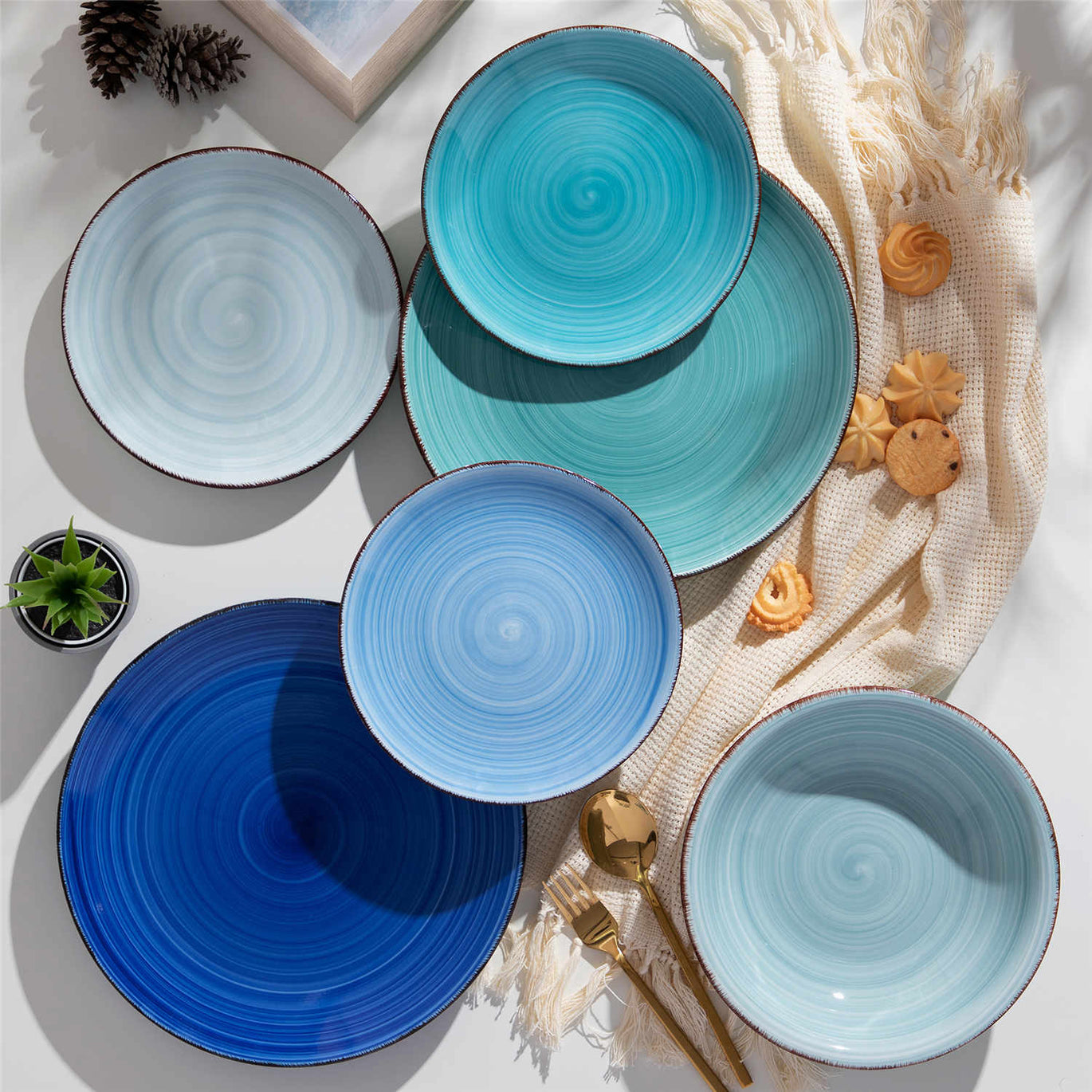


Enhancing Ceramics Diversity Through Inclusive Design Principles

Pull up a chair for a second. Imagine a table where every plate, every mug, every little dipping bowl is quietly saying, “You belong here.” That is the heartbeat of inclusive ceramic design. It is not just about having more colors or shapes in the cupboard; it is about building a tabletop ecosystem where different bodies, senses, cultures, genders, and futures are thoughtfully welcomed.
As a colorful tabletop obsessive who has spent years pairing reactive glazes with real-life diners, I have learned that the most joyful tables are rarely the most “perfect.” They are the ones where a low-vision guest can serve themselves confidently, where no one is stuck with a “tiny pink bowl” because of an outdated gender rule, where portion sizes feel kind, and where the ceramics themselves age well instead of heading to the trash.
This article weaves together research from design, hospitality, neuroscience, feminist ceramics, and inclusive tableware experiments to show how inclusive design principles can dramatically enhance ceramics diversity, both at home and in professional settings.
Why Diverse Ceramics Matter Now
Ceramic tableware may look quiet, but it carries serious cultural and commercial weight. Trend reports cited by Vancasso describe plates and bowls as mood-shifters and identity markers, not just neutral containers. A global dinnerware forecast referenced by Yongjian Ceramics notes that about 76% of consumers say tableware design directly affects how they perceive a meal, and one survey suggests that upgrading tableware in hotels and catering venues can raise customer satisfaction by roughly one-third. Another manufacturer forecast cited by Vancasso expects the global ceramic tableware market to grow from around $102 billion in 2024 to about $145.5 billion by 2030. Those numbers tell us one thing clearly: clay is not just craft; it is infrastructure.
At the same time, research summarized by Malacasa and Joyye emphasizes that ceramic, when well made, is non-toxic, lead-free, and non-reactive, making it a safer, more stable companion for hot, acidic, or fatty foods than many plastics or low-quality metals. Long-lived stoneware and porcelain can reduce the churn of disposable tableware and the microplastics that come with it, as highlighted in sustainability analyses in the journal Sustainability and brand reviews of plastic additives summarized by sources like OlivoAmigo.
In other words, when we get ceramics right, we are not just buying pretty plates. We are influencing health, sustainability, emotional well-being, and brand storytelling. Inclusive design is how we make sure those benefits are not reserved for a narrow, idealized diner, but extended to the full messy, beautiful diversity of real people.
What Inclusive Design Means at the Table
Inclusive design at the table means designing from the assumption that people’s senses, bodies, identities, and circumstances vary widely, and that this variation is normal, not an edge case. It overlaps with universal design and accessibility, but it also includes emotional and cultural inclusion: whose stories are told, whose labor is acknowledged, whose comfort is prioritized, and who feels stereotyped or erased when they pick up a plate.
One useful lens comes from quality function deployment (QFD), a methodology referenced in research on “emotional ceramic tableware.” QFD is about translating user needs into design specifications: if diners say they want calm, comfortable meals and an easy grip, that might become a target plate weight, rim height, and glaze texture in the design brief. When you pair QFD-style thinking with inclusive design, you ask a richer question: whose needs did we listen to? Women who have historically done most of the dishwashing and serving? Low-vision diners? Queer and trans communities? Hospitality staff who carry stacks of plates all night?
The rest of this piece breaks inclusive design down into tangible dimensions: health and comfort, sensory and emotional experience, ability, gender and identity, culture and heritage, sustainability, and long-term emotional connection.
Health and Comfort: Ceramics as a Safe Starting Point
Clay is one of humanity’s oldest food companions. Today, health-focused brands emphasize that properly fired, glazed ceramics offer a stable, non-toxic surface for dining.
Material safety as a non-negotiable
Joyye and Malacasa both stress that high-quality ceramic tableware is made from mineral-based clays and fired at very high temperatures, often around 2,200°F for stoneware and up to about 2,650°F for porcelain. Before glazing, some pieces are bisque fired around the equivalent of roughly 1,470–1,830°F to harden the body. Modern, reputable brands use lead-free, cadmium-free glazes and vitrified bodies that become non-porous, so liquids and bacteria are less likely to seep in.
Compared to plastics, research summarized by OlivoAmigo and discussed in Malacasa’s sustainability guide points out concerns about BPA, phthalates, and other additives that can leach into food, especially when heated. Ceramic, when it meets standards like California Proposition 65, sidesteps many of those worries. Compared with certain metals, ceramic is non-reactive with acidic foods such as tomato sauces and citrus, and it does not impart metallic flavors. It also does not get scorching hot as quickly as some thin metal tableware, which is helpful for children and anyone with sensitive hands.
The inclusive principle here is simple: prioritize vitrified, food-safe ceramics so diners with greater sensitivity, allergies, or long-term health concerns are not left wondering whether their dinner plate is quietly undoing their good choices.
There are trade-offs. Ceramic is heavier and breakable. Hospitality experience compiled by Malacasa shows that commercial-grade stoneware and porcelain can last for decades, but only if staff training, storage, and stacking are thoughtfully handled. Inclusive design does not pretend fragility does not exist; it balances durability and weight so both servers and diners can use the pieces comfortably.
Nudging pace and portions without tricking people
Ceramic’s surface is also a behavioral interface. Malacasa’s digital detox experiments frame tableware as an “evidence-informed nudge system.” A 2013 study in Flavour found that identical cheesecake was rated sweeter and more intensely flavored on round white plates than on black or square ones, suggesting that plate color and shape can alter perceived taste. Delboeuf illusion research summarized by 137 Degrees, cited in Malacasa’s article, notes that people served themselves about 9.9% more soup in larger bowls and 8.2% less in smaller bowls.
Similarly, a study summarized in a PubMed Central article on the aesthetics of plate patterns (“Tasting More Than Just Food”) found that more “beautiful” plate patterns, especially highly rated expressive or classical designs, led diners to judge the same food as tastier and healthier. Less-beautiful expressive patterns, by contrast, dragged ratings down. Beauty, it turns out, can create a halo effect.
As a tabletop curator, I lean into these findings carefully. Slightly smaller dinner plates can help people who want to eat more mindfully without feeling deprived. Warm, earthy glazes can make a family-style meal feel cozy, while very dark, angular pieces might energize a late-night dessert service. But inclusive design asks one extra question: does this plate respect my guest’s agency? If you use portion illusions or extreme visual tricks, you risk making some people feel manipulated instead of supported, particularly those with histories of disordered eating.
The sweet spot is to use tableware to slow the meal to a more human tempo, reduce waste, and soften digital distractions, while keeping portions honest and plate aesthetics soothing, not overwhelming.

Different Bodies, Different Abilities: Accessibility without Stigma
One of the most inspiring inclusive tableware projects comes from Aurore Brard’s See-Eat-Through collection, developed at Design Academy Eindhoven for people with visual impairments. Her work offers a blueprint for how to make diversity in ceramics genuinely practical.
Visual accessibility in the design, not as an add-on
In See-Eat-Through, ceramic plates and bowls feature bold, colored bands that contrast sharply with pale ceramic surfaces, marking plate edges and serving zones. A jug and drinking glasses have colored strips that become more visible as clear liquids rise, using light refraction so users can see fill levels without touching the liquid. Cutlery includes tactile markings along the handles so each utensil can be distinguished by touch.
Crucially, Brard did not tack these cues onto otherwise ordinary pieces as medical-looking gadgets. She observed real users at Visio, a center for blind and low-vision people in Eindhoven, and noticed that many existing tools, like beeping electrodes that clip to glasses and shriek when liquid reaches a certain height, are functional but stigmatizing. Her response was to embed accessibility into the aesthetics so the tableware looks appealing to everyone, not just to those with vision loss.
Inclusive design principles derived from this work include using strong color contrast between plate and food or between plate and table, marking rims or functional zones with distinct bands, and adding subtle tactile cues near edges or handles. These features help people with less than about 30% vision, aging eyes, or even guests in dim romantic lighting, while still fitting elegantly into a broader collection.
The practical downside is that high-contrast bands and bold colors can clash with certain minimalist interiors if used clumsily. The art is to choose a palette that harmonizes with the overall space while still offering enough contrast and tactile information for independence.
Weight, shape, and grip across the spectrum
Ceramic weight is another quiet accessibility issue. Malacasa’s digital detox article notes that ceramic’s heft and soft “clink” can slow eating pace and make the table feel grounded. The emotional durability case study in the International Journal of Design also highlights comfort in the hand and pleasing proportions as key to long-term attachment to mugs and cups.
But if everything on the table is super-thick stoneware, some diners including children, elders, and people with limited strength may struggle to carry and manipulate plates. Inclusive collections tend to offer a spectrum: slightly heavier, chip-resistant stoneware for everyday use, and lighter, thinner porcelain pieces for occasions when ease of lifting matters more.
Handle design is part of this puzzle. Mugs with generous, rounded handles that allow two or three fingers, and bowls with subtle lips or undersides that are easy to pinch, serve a wider range of hands than super-slim handles or perfectly smooth, handleless cups. Even if a designer did not run a clinical trial on handle ergonomics, the research on emotional attachment to comfortable mugs suggests that people notice and reward these small choices.

Gender, Identity, and Culture at the Table
Ceramics are not only physical tools. They are also visual shorthand for gender and power, often in ways we barely notice until we deliberately look.
Moving beyond “his and hers”
Vancasso’s deep dive into gender norms in tableware traces how binary habits have shaped bowls and chopsticks in Japan and party plates in the West. Traditional Japanese “meoto jawan,” or husband-and-wife rice bowls, typically pair a visibly larger bowl for the man with a smaller one for the woman. Chopsticks are often about 9.1 inches for men and 8.3 inches for women. Colors and motifs historically follow suit: muted blues, greens, and grays for men; brighter or pastel reds, pinks, and florals for women. Even infant ceremonial lacquerware has been color-coded by the child’s assigned sex.
In Western contexts, gender reveal and baby-shower tableware have reinforced pink-for-girls and blue-for-boys binaries, plastering plates and cups with stereotyped phrases and motifs. The same Vancasso research notes, however, that retailers increasingly maintain full gender-neutral categories featuring woodland animals, celestial themes, storybook art, geometric patterns, rainbows, and eco-nature motifs in earth tones, muted pastels, and neutrals.
Inclusive design takes that shift seriously. Instead of labeling bowls “men’s” and “women’s,” designers can specify sizes by use-case and appetite, such as a large noodle bowl or small rice bowl. Chopsticks can be offered in multiple lengths described by hand size or preferred grip, not gender. Paired bowls that once signaled a specific couple role can be reframed as “paired bowls celebrating difference,” which keeps the romance without dictating who gets more food.
Vancasso’s guide to gender-neutral tableware suggests balanced proportions, grounded colors, and subtle detailing as the baseline. A neutral base set in white, cream, or warm gray can be layered with accent pieces in bold but universally appealing tones, like deep cobalt, charcoal, or terracotta. The point is not to strip joy or color from the table, but to remove the assumption that color or size belongs to a particular gender.
Feminist and queer ceramics: who gets to write in clay?
Scholars like Moira Vincentelli remind us in works such as “Women and Ceramics: Gendered Vessels” that women have long been primary producers and key consumers of ceramics, even while being sidelined in official histories. Vincentelli uses the idea of ceramics as a form of visual “écriture féminine,” where techniques such as coiling, hand building, burnishing, and low-firing become ways women inscribe embodied experience into clay. Feminist archaeologists like Rita P. Wright caution against assuming that any technique is inherently female, insisting that gendered practices must be understood in specific cultural and temporal contexts rather than as universal rules.
Contemporary feminist and queer ceramicists put these questions right onto the table. Vancasso’s feminist ceramics guide highlights artists who use bodily forms, explicit sexuality, humor, and everyday tableware to center a female gaze and critique hierarchies that treat “decorative” wares as second-class art. Projects like “The Shaping of Us: Queerness in Ceramics” at university museums and Heather Mae Erickson’s Pride Pots frame cups and bowls as tools for LGBTQ+ storytelling rather than neutral domestic props. Jen Dwyer’s pastel, Rococo-inspired porcelain, for example, uses candy colors and fairy-tale imagery to interrogate why feminine-coded aesthetics have been dismissed as frivolous.
Inclusive design in this domain does not mean removing politics from plates; it means being honest about them. Brands and buyers can ask whose stories are embedded in a motif, whether patterns borrow from specific communities with proper permission, and how collections represent women, queer makers, and artisans from different cultural backgrounds. Consumers, as Vancasso suggests, can treat ceramic purchases as political choices, supporting women-led and community-rooted studios and valuing everyday feminist objects such as ergonomic mugs and stackable, space-efficient bowls alongside gallery pieces.

Sustainability and Emotional Diversity: Including Future Diners
Inclusive design also considers people who will use these objects years from now, and the ecosystems they will inherit.
Long-lived, low-waste clay
Malacasa’s sustainability analysis contrasts ceramic’s life cycle with that of plastic and paper disposables. Ceramics demand more energy upfront, but they can serve for years or generations, creating a low-churn waste stream. Plastic plates and cups, made from finite petroleum resources, often live just a few minutes in our hands before spending centuries as microplastic fragments. Less than about 10% of plastic is actually recycled according to the summaries referenced in Malacasa’s article.
Ceramic manufacturers and researchers are experimenting with more sustainable production. Studies in Sustainability and other journals have shown that adjusting firing temperatures, kiln efficiency, and clay formulations significantly affects environmental performance. Glazes using waste materials, such as copper slags or eggshell-derived calcium carbonate, have produced durable, attractive finishes without increased leaching after dozens of dishwasher cycles. Tile and tableware makers are incorporating municipal solid waste incinerator bottom ash into bodies, turning industrial waste into long-lived objects.
An inclusive ceramics strategy for sustainability, as Malacasa puts it, is not about choosing between better plastic technology and durable ceramic; it is about reducing upstream plastic use by leaning into long-lasting ceramic, while improving systems to handle the plastics that remain unavoidable.
Emotional durability and favorites
Sustainability is not only a materials question; it is an emotional one. The International Journal of Design case study on contemporary ceramic design for emotional durability shows that people form deep attachments to specific mugs and cups. In a study of 30 participants, most chose a mug as their favorite vessel, and their reasons spanned all three of Donald Norman’s processing levels: visceral (color and form), behavioral (comfort, weight, and usability), and reflective (memories, relationships, self-image).
Designers found that visible traces of making, such as slightly irregular forms, exposed clay, half-dipped glazes, or a finely polished unglazed rim, prompted people to explore pieces by touch and to “get to know” them over time. Surprise elements, like unexpectedly light cups or hidden textures, encouraged what researchers called a journey of discovery, keeping objects interesting despite daily use.
An inclusive approach to emotional durability builds diversity into a collection on purpose. Instead of a rigid, perfectly matching set where every plate is indistinguishable, designers can offer families of forms that harmonize but do not clone each other. That way, a teenager can gravitate toward the tall, speckled mug, while a grandparent adopts the wide-handled cup, and both feel like the table has made room for their micro-preferences.
By encouraging emotional attachment to fewer, better pieces, we also reduce the temptation to churn through trend-driven tableware that ends up in the landfill.

A Practical Inclusive Design Cheat Sheet
To pull these threads together, it helps to see how different inclusive lenses line up with specific design moves.
Inclusive lens |
Design focus |
Research-backed cue |
Example move |
Health and safety |
Material and glaze choice |
Joyye, Malacasa, Journal of Food Science, and OlivoAmigo summaries highlight non-toxic, vitrified ceramics with lead-free glazes as safer than many plastics and some reactive metals. |
Choose stoneware or porcelain from reputable makers with explicit food-safety claims; retire chipped or crazed pieces in hospitality settings. |
Sensory and behavior |
Color, size, and pattern |
Flavour and PubMed Central studies show plate color and pattern can shift sweetness and healthiness ratings; Delboeuf illusions affect self-served portions; Malacasa’s digital detox work frames tableware as behavior nudges. |
Use modestly smaller plates for everyday meals; reserve highly patterned plates for specific courses so guests are not visually overstimulated. |
Ability and age |
Contrast, tactility, and weight |
See-Eat-Through proves that high-contrast bands, refraction-based level cues, and tactile markings help low-vision users, while emotional durability research highlights comfort in the hand. |
Add at least one high-contrast, lightweight set to your cupboard; design handles that accommodate varied grip strengths. |
Gender and identity |
Sizes, labels, and motifs |
Vancasso’s gender norms and gender-neutral guides show how binary color and size cues exclude, while queer and feminist ceramics projects use tableware to tell diverse stories. |
Label bowls by capacity or use-case instead of gender; include motifs that celebrate a wider range of bodies and relationships. |
Culture and labor |
Authorship and narratives |
Vincentelli’s gendered vessels, feminist archaeology, and feminist ceramics writing underline women’s historic but undercredited role in ceramics. |
Credit designers and makers clearly; support women-led and community-rooted workshops; avoid unlicensed use of cultural patterns. |
Sustainability and time |
Durability and emotional attachment |
Sustainability studies and emotional durability research highlight long-lived, loved objects as key to lower waste. |
Invest in a core set of tough stoneware or porcelain, then add a few special pieces that invite stories instead of buying full new sets each year. |
Think of this table as a conversation starter rather than a checklist. Inclusive tableware is not about perfection; it is about making more intentional choices layer by layer.

How Different People Can Apply These Principles
Inclusive ceramic design looks a little different depending on whether you are setting a small apartment table or running a hundred-seat restaurant.
Home hosts and everyday diners
At home, start by auditing the plates and bowls you already own, not by throwing everything out. Check whether the glazes are in good shape, free of cracks and heavy chipping. If you are using older pieces and are unsure about glaze composition, reserve those for purely decorative use and lean on newer, food-safe ceramics for everyday meals.
Add diversity where it counts. One or two smaller dinner plates per person can be a gentle invitation toward more intentional portions, drawing on Delboeuf illusion research without guilt. If someone at your table has low vision or simply struggles in dim lighting, consider plates with a darker rim or a contrasting band against your table or placemats, inspired by See-Eat-Through. Choose at least one lightweight mug or bowl for anyone who finds heavy stoneware uncomfortable.
Color-wise, a neutral base set makes it easy to rotate in experimental or heritage pieces. Mix in one wildly expressive, beautiful patterned plate as a dessert star, knowing from the plate-pattern research that high-beauty designs can boost perceived tastiness and celebration. At the same time, keep some calmer, almost monochrome pieces for days when overstimulation is a risk.
Above all, notice who always reaches for the same piece. That is emotional durability in action. You can reinforce inclusion simply by making sure each regular guest has at least one “favorite” they reliably find in the cupboard.
Restaurants, hotels, and hospitality buyers
For hospitality teams, ceramics are both tools and brand ambassadors. The Qingfa Ceramics article on hospitality underlines that durable, chip-resistant tableware is essential for controlling long-term cost, hygiene, and presentation quality. Malacasa’s digital detox guide adds that plate choices can shape how long guests stay seated, how much they talk, and how often they reach for their cell phones.
An inclusive procurement strategy starts with a clear map of your guests. Families with children, elders, business travelers, and date-night couples may all share the same dining room. Many operators now standardize a robust stoneware or porcelain base in neutral tones for everyday service, then layer specialty pieces by concept and event. Smaller plates or divided share platters can help with portion control and visibility at communal tables. Very dark, high-contrast glazes might photograph beautifully but, as Malacasa warns, can also trigger more phone use, so they may be best deployed in contexts where posting is part of the experience, not when you are trying to encourage tech-free connection.
Operational inclusivity also means stocking multiple bowl sizes and glass shapes without gender labels, training staff to offer options descriptively rather than assuming who prefers what, and quietly providing high-contrast or lighter-weight pieces when a guest needs them. Inclusive tableware should be integrated into the general collection, not flagged as “special needs” sets that isolate people.
Finally, hospitality teams can treat their tableware decisions as small-scale experiments, as suggested by Malacasa. Rotate in a high-contrast rim plate and informally track plate waste, guest comments, and meal pacing. Test whether a slightly smaller dessert plate reduces over-ordering without hurting satisfaction. Use simple, anonymous feedback cards to ask guests how the tableware made them feel. Over time, this evidence-based approach makes your inclusive design choices more resilient than trend-chasing.
Designers, brands, and makers
If you design or manufacture ceramic tableware, inclusive design is both a responsibility and a creative playground. The feminist ceramics literature urges designers to question whose bodies and stories are centered at each stage: clay sourcing, factory conditions, design authorship, marketing images, and even post-meal cleanup.
Practically, that might mean using QFD-like methods to gather input from a genuinely diverse group of users: women who do most of the dishwashing, low-vision diners, left-handed cooks, queer families, and hospitality workers. Translate those interviews into specific requirements such as maximum comfortable plate weight, minimum rim contrast, handle shapes that suit smaller and larger hands, and stackability that reduces back strain for staff.
On the aesthetic side, draw from sources like Vancasso’s gender-neutral and feminist ceramics guides to avoid lazy binary coding. Instead of “ladies’ brunch” collections in pastels and “gentlemen’s grill” sets in black and matte steel, design ranges that invite anyone in, using mood-based palettes: calm earth tones for grounding, bright citrus hues for celebration, deep blues and blacks for introspective evenings.
When digital tools such as AI-driven pattern generators and eco-friendlier digital ceramic inks enter your workflow, follow the warnings from feminist ceramics writers: be transparent about source material, avoid unlicensed appropriation of Indigenous or community-specific motifs, and share credit and compensation appropriately. Inclusive design is as much about ethical process as it is about ergonomic rims.

A Few Common Questions
How can I diversify my ceramic collection without starting from scratch?
Begin with one or two strategic additions rather than replacing everything. A highly durable, neutral stoneware base plate, a high-contrast side plate inspired by See-Eat-Through principles, and a new favorite mug with a comfortable handle and honest, tactile glaze can dramatically improve inclusivity. Over time, fill in gaps: a lighter-weight option, a larger bowl for hearty eaters, a small bowl for those who prefer modest portions, and a few pieces decorated by women or queer ceramicists whose stories you want at your table.
Are bold patterned plates inclusive or distracting?
They can be either, depending on how you use them. Research summarized in the PubMed Central plate-pattern study shows that high-beauty plates can make food taste and seem healthier, but very expressive, busy patterns also risk overwhelming some diners or clashing with food visibility. An inclusive strategy is to deploy patterned plates as accents for specific courses such as dessert or special occasions, while keeping at least part of your collection calmer and high-contrast enough for everyday use, especially for low-vision guests.
What is one low-cost inclusive tweak a restaurant can try this month?
One of the simplest changes is to introduce modestly smaller main-course plates while keeping portion descriptions transparent. Paired with thoughtful plating, this steps down default serving sizes gently, drawing on Delboeuf illusion research without compromising perceived value. If budget allows, you can also add a few sets of high-contrast plates and lighter mugs to keep on hand for guests who might benefit from them, integrating these pieces into the regular lineup rather than making them feel separate.

Closing: Setting a More Generous Table
Inclusive ceramic design is not about shaming your existing plates or chasing every micro-trend. It is about noticing who is missing, who struggles, and who feels unseen at the table, then using clay, glaze, and form to quietly change that story.
When we combine the durability and health benefits of well-made ceramics with research on perception, accessibility, gender, and emotional attachment, the humble dinner plate becomes a powerful little stage for care. Curate your collection like a joyful, pragmatic host: one who knows the science, honors the makers, and still delights in the clink of a favorite mug on a well-loved table.
References
- https://classics.barnard.edu/engendering-past-practices-and-potentials-explicitly-feminist-archaeology
- https://www.academia.edu/1089793/Artistic_Ambivalences_in_Clay_Portraits_of_Pottery_Ceramics_and_Gender
- https://academicworks.cuny.edu/cgi/viewcontent.cgi?article=1014&context=sps_pubs
- https://honors.libraries.psu.edu/files/final_submissions/3296
- https://www.journals.uchicago.edu/doi/pdfplus/10.1086/studdecoarts.9.2.40663018
- https://www.jstor.org/stable/1358906
- https://aodr.org/xml/46035/46035.pdf
- https://good-design.org/projects/sensorial-tableware-blind-deafblind-disability-pride-project/
- https://www.diva-portal.org/smash/get/diva2:1627523/FULLTEXT01.pdf
- https://studentwork.prattsi.org/infovis/visualization/women-designers-in-momas-1953-good-design-exhibition/
También te puede interesar
Stern Juego de vajilla de 16 piezas
- £68.00
£77.00- £68.00
- Precio unitario
- por
-
Blue
-
Green
-
Red
-
Grey
Simi Juego de vajilla de 24 piezas
- £77.00
£104.00- £77.00
- Precio unitario
- por
Bonita Juego de vajilla de 18 piezas
- Desde £49.00
£61.00- Desde £49.00
- Precio unitario
- por
-
Blue
-
Multicolor
Starry 16 Piece Juego de vajilla
- £68.00
£70.00- £68.00
- Precio unitario
- por
-
Blue
-
Green
-
Red
-
Gradient Green