



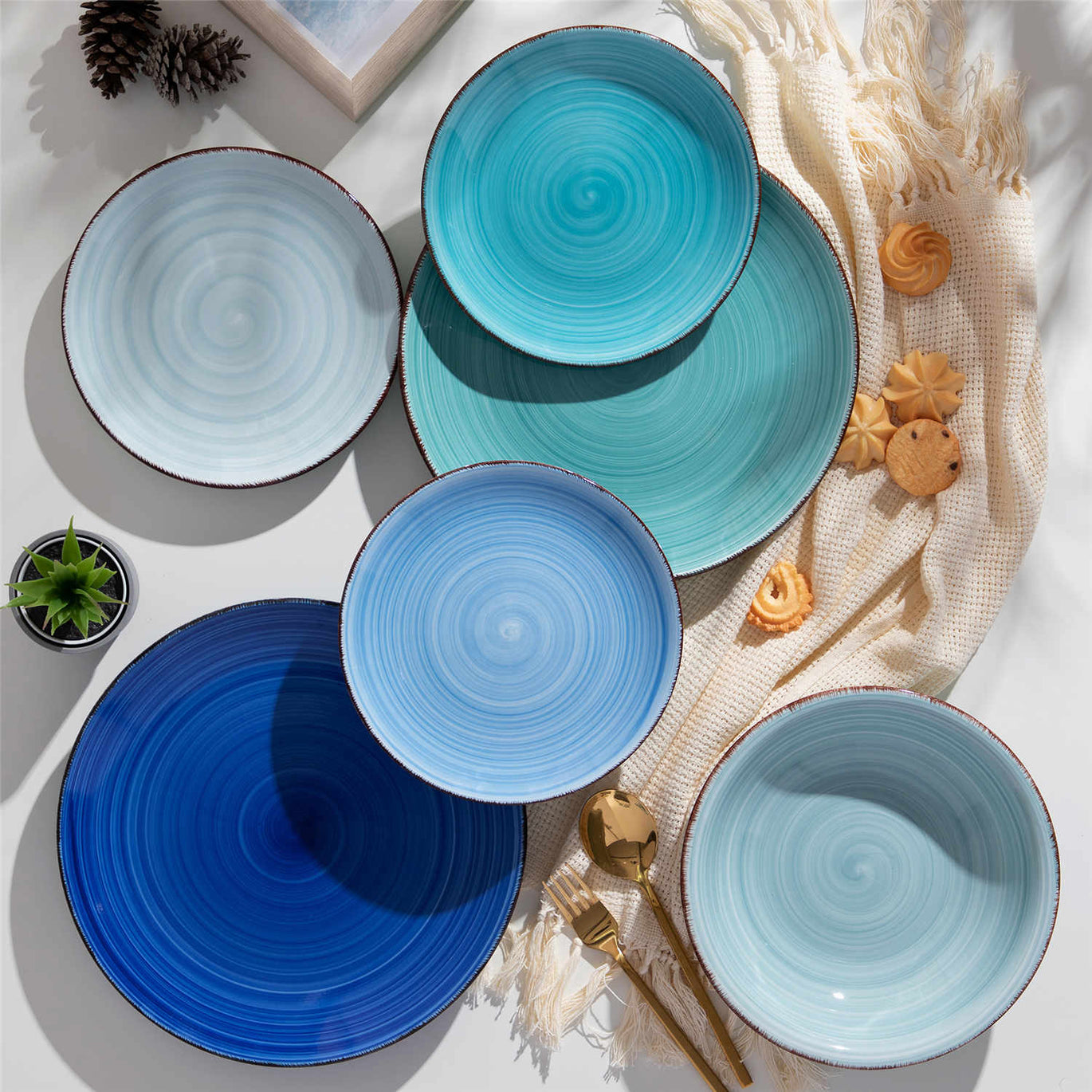


Graphene‑Enhanced Ceramics: Lighter, Thinner—So Why Aren’t They Everywhere on the Table?

If you love the thrill of a wafer‑thin plate that feels like a cloud but shrugs off a bump like a champ, graphene‑enhanced ceramics sound like tabletop magic. Imagine the airy elegance of fine porcelain with a quietly rebellious core: tougher, more chip‑resistant, and intriguingly functional. On paper—and in the lab—this material sings. On the dinner table? Not quite yet. Today, let’s plate up what the science actually shows, why the buzz hasn’t become a full‑on dinner party, and how to shop or spec smart if you’re tempted by the promise of featherlight strength.
The Allure: Featherlight Elegance With Hidden Muscle
Let’s set the table with definitions. Graphene is a single atom‑thick sheet of carbon arranged in a honeycomb lattice, famously strong for its size, conductive, and almost translucent. Graphene oxide (often abbreviated GO) is an oxidized form that disperses in water, making it the practical “sous‑chef” that helps graphene integrate into ceramic slurries before firing. In ceramics, the dream is straightforward: add a dusting of graphene‑family flakes into classic matrices such as alumina or zirconia, then process and densify them so the flakes bridge microcracks, deflect fractures, and subtly fortify the entire body without weighing it down.
Lab results back the dream with head‑turning numbers. A frequently cited case in Ceramics International showed that adding roughly a quarter of a percent by weight of graphene to alumina cut wear by about 50% and nudged friction down by around 10% under dry sliding, while a companion result reported an electrical conductivity boost on the order of one hundred million times versus plain alumina, all without wrecking other core properties. A ten‑year research outlook published by the Royal Society reported large gains in fracture toughness when graphene‑related fillers disperse uniformly—think improvements ranging from roughly half again as tough up to more than double, depending on the base ceramic and test method. In other words, it’s not a fad; the mechanics make sense, and the data are encouraging.

What the Science Actually Shows
When you stir nanoscale flakes into a ceramic, the micro‑story becomes the macro‑experience. Under stress, microcracks form and try to sprint across a plate or bowl. Graphene platelets act like tiny bridge planks and detour signs. They catch a crack, compel it to twist, and force it to spend energy on a longer, more tortuous path. Some flakes pull out, some tug and transfer load, and some simply redirect. The net effect is damage tolerance that feels like calm resilience in your hand.
Two processing themes stand out. First, dispersion is everything. The National University of Singapore, highlighted by Ars Technica, employed ultrasound to spread graphene oxide evenly in ceramic matrices, reducing the clumping that otherwise turns “reinforcement” into “weak spot.” Ultrasonication creates violent micro‑jets in liquid that peel and scatter flakes; when dialed in, it yields more uniform composites. Second, densification and alignment matter. Methods like hot pressing and spark plasma sintering run at high temperatures—on the order of 2,000°F and beyond—under pressure that can subtly orient graphene platelets. Orientation gives you anisotropy, which can be a superpower if managed well, or a headache if not.
Beyond single‑phase bodies, layered and functionally graded designs are having a moment. Work under the Graphene Flagship umbrella explored ceramic “sandwiches” where graphene content changes from layer to layer. One optimal stack with a graphene‑rich core and graphene‑lean skins showed a two‑ to three‑fold mechanical improvement versus the reverse stacking—proof that architecture amplifies ingredients. This is the kind of design thinking that could translate into thinner rims with reinforced shoulders or bases that resist thermal stress while keeping edges delicate.
The Art of Dispersion: The Make‑or‑Break Step
If you’ve ever whisked cocoa into batter, you know clumps are the enemy. Nanofillers behave the same way. ACS Omega guidance emphasizes that ultrasonication is a tightrope act: too gentle, and flakes clump into agglomerates that behave like sand grains; too aggressive, and flakes get shredded, shrinking the very aspect ratio that gives them bridging power. Smart protocols measure energy input per mass of solids, keep slurries cool during sonication, and use just enough chemistry to stabilize flakes without sabotaging firing. Verification becomes a full mise en place: UV–Vis for concentration, Raman spectroscopy for defect tracking, microscopy to check size and thickness distributions, and rheology to forecast casting behavior.
When dispersion lands in the sweet spot, even tiny loadings can matter. The PubMed Central review on ceramic/graphene hybrids notes that single‑digit volume percentages often suffice to move the needle because flakes are so efficient at interacting with cracks and interfaces. That’s good news for designers who want properties without muddying color or transparency. But it sharpens the reproducibility demand: a little variation in flake size, chemistry, or mixing can swing outcomes, which is precisely where commercialization struggles.
How They’re Made—and Why That Matters to Your Kitchen
Graphene‑enhanced ceramic bodies don’t roll off a kiln line the way classic stoneware does. Many research‑grade parts are densified by hot pressing or spark plasma sintering—equipment that runs hot and fast, clamps a green body in a die, and can align flakes perpendicular to the pressing axis. The payoffs include high density, shorter cycles, and tunable microstructures. The tradeoffs include capital expense, tooling limits for complex shapes, and edge finishing challenges when you want that soft lip or delicately flared coupe geometry beloved in modern dining.
There’s also the invisibility question. Unlike a saturated glaze or a variegated slip, graphene’s magic is mostly under the surface. That’s fine for performance, but in a world where color and texture drive desire, aesthetics must remain uncompromised. Encouragingly, graphene can be deployed not only in bulk but also as a protective, transparent barrier layer. Materials researchers—again, see the Ars Technica piece—point to graphene’s strong UV absorption and oxygen and moisture barrier behavior as a protective layer for artworks. It’s not a one‑to‑one leap to dinnerware glazes, but it hints at coatings that could shield color from fading or stains from setting without changing the look.

If It’s So Good, Why Isn’t It Popular Yet?
Every plate on your table is a small business case, and graphene’s business math is still maturing. The PubMed Central review calls out a pair of stubborn bottlenecks. The first is the cost and consistency of graphene‑related materials. Even though doses are small, the supply chain must deliver flake size, oxidation level, and dispersion stability with near‑culinary precision, batch after batch. The second is quality control and standardization. Testing fracture toughness in graphene‑ceramic hybrids isn’t a copy‑paste from traditional standards; anisotropy from platelet alignment can make some quick tests overestimate performance, pushing the field toward more rigorous bend tests and notch preparations to get apples‑to‑apples numbers.
Scale adds a twist. On the electronics side, teams have demonstrated monolayer graphene growth directly on sapphire wafers for memristor devices, a notable manufacturing advance reported in ACS Applied Electronic Materials. That’s terrific for sensors and computing, but it also reminds us that graphene’s processing often lives in high‑skill, high‑capital environments. Translating that discipline into dish‑safe, restaurant‑tough plates at a price you’d comfortably buy in a set of twelve takes time, tooling, and partners who can play at scale.
Finally, there’s the “killer app” question. The literature notes that despite thousands of studies and patents, graphene is still seeking marquee, mass‑market hits outside a few niches. On the coatings front, the American Coatings Association’s magazine chronicles real‑world wins in corrosion barriers and conductivity at low loadings. That traction suggests a near‑term path for tableware via surface engineering: think clear, ultrathin protective layers rather than wholesale body changes. When performance quietly preserves beauty, consumers never need to know the chemistry—only that their favorite cobalt rim still looks perfect by the time pie season arrives.
Practical Guidance for Designers, Buyers, and Curious Hosts
If you’re evaluating a graphene‑enhanced plate, bowl, or serving piece, ask questions that translate lab promise into tabletop peace of mind. Start with how the material is integrated. Bodies with graphene‑related fillers differ from coatings that merely sit on top. For bulk‑reinforced pieces, look for evidence of uniform dispersion, such as a process description that mentions ultrasound‑assisted mixing and downstream checks like Raman or microscopy. For coatings, ask how the layer bonds to the ceramic and whether it remains transparent and color‑true after firing or curing.
Durability data should track to standardized protocols where possible. In structural ceramics, the Royal Society’s guidance points buyers and makers toward bend tests that better reflect real toughness, especially for anisotropic composites. For wear claims, tribometer measurements under dry and lubricated conditions indicate whether an edge resists abrasion and whether a foot ring will scuff on wood or stone. It’s reasonable to ask for high‑temperature and thermal shock testing details; firing and finishing are not the only heat events a plate will see once it meets hot ovens or cold countertops.
If you’re a chef, stylist, or avid home entertainer, handle the piece with the same rituals you use to judge porcelain. Balance it with one hand at the base, feel for a heel that’s finished and kind to linens, and tap for a clear, even ring that implies a uniform body. Graphene‑enhanced or not, the tactile story should delight you. And if a maker claims a clear protective layer inspired by art‑conservation barriers, ask about UV exposure and oxygen‑barrier testing analogous to those used in conservation research; a short note citing peer‑reviewed behavior in other media is reassuring, even if the exact test reprises aren’t one‑to‑one with glazes.

Where Graphene Is Already Winning—and What That Signals
Coatings are a strong hint. The American Coatings Association has profiled graphene’s knack for building labyrinthine pathways that slow the march of oxygen, water, and salts through a film. That barrier effect shows up in thousands of hours of accelerated corrosion tests on metals. Translating this to tableware doesn’t mean we coat plates like ship hulls, but it suggests two attractive possibilities: clear coats that make matte whites more stain‑resistant without looking plastic, and micro‑thin sealants that protect saturated color lines from dulling over time.
Mechanically, the Ceramics International work and related research from Graphenea’s group show how tiny doses can dramatically reduce wear and edge breakdown in alumina. The numbers came from dry sliding tests over long distances with ceramic balls, a well‑known setup in biomedical and materials labs. That’s not the same as a fork scraping or stacking scuffs, but the underlying physics—flake‑bridging and friction moderation—support why a graphene‑tuned foot ring or service‑edge could resist the slow creep of scratch haze.
Functionally graded and layered architectures, as explored by Graphene Flagship partners, also point to designs that feel “thin where you want thin, strong where you need strong.” Think of a coupe plate whose middle stays featherweight while the base gains internal reinforcement for thermal and mechanical shocks. None of this guarantees instant product shelves, but it maps clear trails from papers to plates.
Snapshot Comparison
Property or Consideration |
Traditional Tableware Ceramics |
Graphene‑Enhanced Ceramics (lab and early products) |
Thinness at a given strength |
Thinner forms can chip if pushed too far |
Reported toughness gains can support thinner profiles without as much fragility |
Wear at edges and foot rings |
Susceptible to abrasion haze over time |
Lab tests on alumina show roughly 50% wear reduction at trace loadings |
Fracture behavior |
Brittle crack propagation once a flaw starts |
Platelets bridge and deflect cracks, delaying catastrophic failure |
Electrical/thermal add‑ons |
Electrically insulating; thermal behavior dominated by ceramic |
Can become conductive and tune heat flow; not typically needed in tableware, but relevant for smart/heated service concepts |
Aesthetic impact |
Color and gloss driven by glaze and body |
Filler loadings are small; coatings can be transparent; appearance can remain unchanged if well engineered |
Manufacturing |
Mature workflows; wide geometry freedom |
Often needs tighter QC, specialized densification, or coating steps; scaling shapes and finishes remains a hurdle |
Cost/consistency |
Predictable inputs and yields |
Small flake variations and dispersion quality can swing properties, raising QC costs |
Standardization |
Well‑established tests and specs |
Anisotropy and new mechanisms challenge one‑size‑fits‑all tests; measurement choices matter |
What Could Tip This Into the Mainstream
Progress tends to cascade once a few keystones fall into place. On the materials side, more reliable and cost‑stable graphene‑related inputs—flake size, oxidation level, and dispersions that don’t clump—reduce the risk of bad batches. Ultrasonication and water‑borne routes that researchers advocate, including the ultrasound‑assisted GO dispersion highlighted by Ars Technica from National University of Singapore work, are promising because they target uniform reinforcement and safer processing. On the engineering side, converging on test methods that fairly capture toughness and wear for anisotropic bodies lowers the noise in performance claims and improves trust.
Architecture is the third lever. The Graphene Flagship team’s layered “sandwich” lesson is a design chef’s kiss: put the property where it’s needed and keep the rest pure. Tableware doesn’t have to be graphene‑all‑over to benefit. A graphene‑aided seal where color meets cutlery, a reinforced foot that resists sandpapering on stone tops, or a cautious clear coat that blocks oxygen and UV while staying invisible—these strategic uses can deliver better‑than‑porcelain experiences without gaudy price leaps.
Finally, sometimes the shortest path is sideways. In coatings, the American Coatings Association’s reports show meaningful durability wins at low loadings already in the market. If graphene’s first starring role at the table is as a whisper‑thin clear coat that protects a beloved glaze, that’s still a joyful victory.
Practical, Playful Shopping Script
When you meet a maker promising graphene‑enhanced durability, bring your bright curiosity and a few grounded questions. Ask whether they used a graphene‑related additive in the body or a graphene‑informed coating on the surface. Invite them to share how they ensured uniform dispersion—ultrasound is a good keyword—and how they verified it with tools like Raman or microscopy. Request independent test details for bend toughness and wear that mirror the rigorous standards highlighted in the Royal Society’s guidance and the Ceramics International tribology setups. Finally, hold the piece, feel the edge, and trust your senses; the best design is still the one that makes you smile when you set it down.
Sources Worth Knowing, Briefly
A handful of reputable sources anchor this conversation. Ars Technica covered National University of Singapore work using ultrasound to evenly disperse graphene oxide in ceramic matrices, paired with a museum exhibit of tiles that made the science tactile. ACS Omega and related materials science reviews describe ultrasonication’s fine line between cutting flakes too small and leaving them clumped, and recommend process controls that engineers can actually follow. PubMed Central hosts a comprehensive review of ceramic/graphene composites that charts rapid academic progress alongside sobering notes about quality control and the absence of a single transformative, mass‑market application. The Royal Society’s decade‑long perspective on toughness enhancement clarifies why measurement choices matter, especially when aligned platelets complicate older quick tests. Ceramics International published dry‑sliding results for alumina with trace graphene that halved wear, while company‑led research from Graphenea documented conductivity leaps at similarly low loadings. Outside bodies, the American Coatings Association’s magazine offers a tour of graphene’s barrier wins in paints and primers, helpful when imagining transparent protective layers for color‑rich dinnerware. On the frontier, ACS Applied Electronic Materials reported scalable monolayer graphene grown directly on sapphire wafers for electronic devices, a signal that supply chains are maturing in parallel—even if wafers and dinner plates rarely share an oven.
The Colorful Tabletop Take
Graphene‑enhanced ceramics are a delicious promise: floaty‑light silhouettes that keep their cool and their poise. They haven’t conquered the dinner table yet because dispersion, testing, and scaling are exacting—and because beauty must stay center plate. But the science is sound, the design playbook is getting smarter, and the first wins will likely be quiet, protective, and genuinely helpful. Until then, choose pieces that spark joy in the hand and on the table, and keep an eye out for those whisper‑thin reinforcements that make everyday feasts feel effortless.
References
- https://curf.clemson.edu/technology/graphene-ceramic-composites-for-hydrogen-separation-membranes/
- https://pmc.ncbi.nlm.nih.gov/articles/PMC11500364/
- https://j.uctm.edu/index.php/JCTM/article/view/555/318
- https://pubs.acs.org/doi/10.1021/acsomega.4c05748
- https://ceramics.org/ceramic-tech-today/scalable-fabrication-of-graphene-based-memristors/
- https://royalsocietypublishing.org/doi/10.1098/rsta.2022.0006
- https://www.paint.org/coatingstech-magazine/articles/graphene-in-coatings-overcoming-the-challenges-to-reap-the-benefits/
- https://www.azom.com/article.aspx?ArticleID=16704
- https://www.acsmaterial.com/blog-detail/what-is-graphene-properties-synthesis-applications-and-characteristics.html?srsltid=AfmBOoojvOslNPlXChd085rBzioG1egE8a9Nd6utjfpGrGHR_sxP0h4X
- https://blog.iglcoatings.com/7-key-ceramic-coating-vs-graphene-ceramic-coating/
También te puede interesar
Stern Juego de vajilla de 16 piezas
- Desde £58.00
£77.00- Desde £58.00
- Precio unitario
- por
-
Blue
-
Green
-
Red
-
Grey
Bonita Juego de vajilla de 18 piezas
- Desde £49.00
£61.00- Desde £49.00
- Precio unitario
- por
-
Blue
-
Multicolor
Simi Juego de vajilla de 24 piezas
- £77.00
£104.00- £77.00
- Precio unitario
- por
Starry 16 Piece Juego de vajilla
- £60.00
£70.00- £60.00
- Precio unitario
- por
-
Blue
-
Green
-
Red
-
Gradient Green