



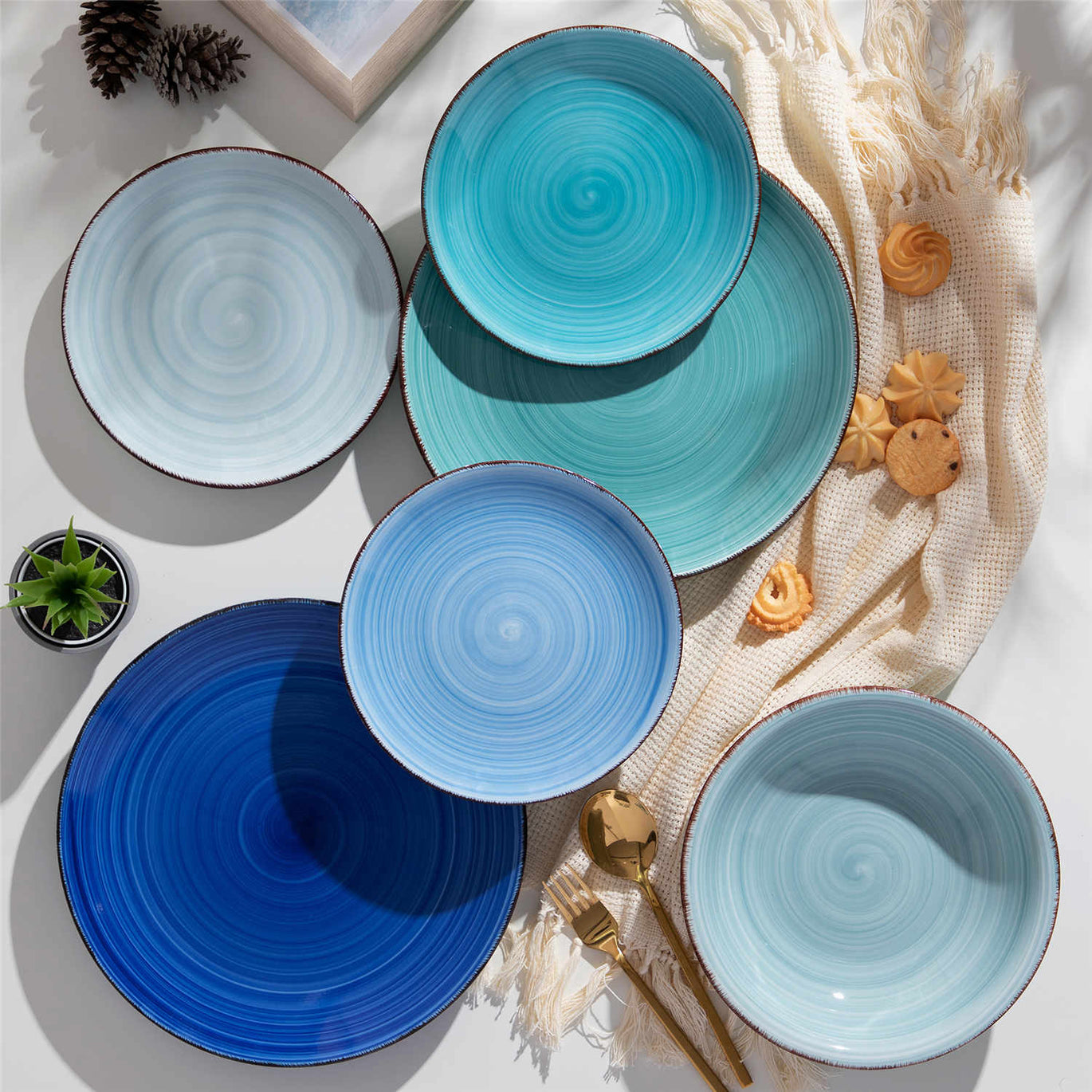


The Benefits of Lightweight Ceramic Dinnerware for Dancers

Picture this: you drop your dance bag by the door, peel off your warmups, and float toward the kitchen. Your muscles are humming from rehearsal, your brain is buzzing through choreography, and your stomach is quietly begging for something satisfying. Now imagine that instead of wrestling heavy, clunky plates, you reach for a slim, colorful ceramic dish that feels almost weightless in your hand. You glide it from cupboard to table without a wince, build a vibrant meal that actually matches your energy needs, and sit down to a plate that looks like a tiny stage set just for you.
That is the everyday magic of lightweight ceramic dinnerware for dancers. This is not just about pretty plates. It is about protecting overworked joints, supporting real-world nutrition, and using design and color to make fueling feel joyful rather than stressful.
In this article, I will walk you through why lightweight ceramic dinnerware is a quietly powerful tool for dancers, what the research says about plate size and portion perception, how to avoid slipping into diet-culture traps, and how to choose pieces that work beautifully in a dancer’s life on and off the stage.
The Dancer’s Body Meets the Dinner Table
Dance is both art and sport. Medical writers for Children’s Hospital Colorado describe dance as a series of high-intensity, often anaerobic bursts layered onto long hours of practice and performance. Their nutrition guidance for dance athletes emphasizes three pillars: enough food, strong bones, and steady hydration. They also highlight a troubling pattern from research: many dancers only eat about seventy to eighty percent of what their bodies actually need. That chronic under-fueling is linked with lower metabolic rate, menstrual disruption, reduced bone mineral density, and higher injury risk.
Other dance-focused nutrition resources, like Dance Nutrition and The Whole Dancer Plate framework, reinforce the same theme. Dancers perform and feel better when they eat consistently throughout the day, build meals with generous portions of carbohydrates, protein, fats, fruits, and vegetables, and treat food as both fuel and pleasure, not just a body-shaping tool.
So where does dinnerware come in? Your plate is the frame around your food. Its weight, size, shape, and color influence how much you serve yourself, how easy it is to eat when you are exhausted, and even how appetizing a nourishing meal looks after a ten-hour rehearsal day. Lightweight ceramic dinnerware can make it simpler to feed yourself well, especially when your body is already carrying a heavy workload.

What Counts as Lightweight Ceramic Dinnerware?
When I say “lightweight ceramic dinnerware,” I am talking about plates, bowls, and mugs made from relatively thin, refined ceramics such as porcelain or similar clays, designed for everyday use. These pieces feel noticeably lighter in the hand than thick stoneware or chunky pottery, while still offering that satisfying ceramic clink and an elevated feel on the table.
Real-world conversations about lightweight dishes show up in home forums all the time. In one discussion on The Well-Trained Mind Community, a poster with arthritis explained that standard stoneware dishes made unloading the dishwasher painful, and they went looking for lighter options. In a separate Houzz conversation, another person asked for lightweight everyday dishes that could survive a “general beating,” work in the microwave and dishwasher, and still feel substantial enough for daily use. They ruled out some popular heavy stoneware ranges as simply too weighty and were wary of certain tempered glass brands that can shatter.
Those threads underline a simple truth: many households are over-served by very heavy plates. If you are a dancer whose hands are already busy with partnering, floor work, or weight-bearing choreography, lighter dinnerware is not a luxury. It is a small act of joint protection.
Testing from Serious Eats on nineteen dinnerware sets adds another dimension. Their reviewers found that porcelain sets generally resisted knife scratches better than stoneware and tended to have a sleeker, less hefty feel, while stoneware delivered a thicker, more casual weight in the hand. Both materials can be microwave- and dishwasher-safe, but if you are chasing that featherier feel, refined porcelain and thin ceramic designs are usually friendlier to tired wrists than big, chunky stoneware chargers.

Benefit One: Gentler on Wrists, Hands, and Studio-Tired Bodies
Think about how many times a day you handle your dishes. You pull plates from an upper shelf, stack bowls into a cabinet, slide dishes into the dishwasher, and carry loaded plates from kitchen to table. Now layer on wrist-heavy choreography, partnering, handstands, or hours on the barre. Even if you do not have diagnosed arthritis, your hands and forearms are working hard.
The Well-Trained Mind poster with arthritis described how heavy stoneware made every dishwashing session hurt. They were already pushing through pain in daily life, and their plates were quietly adding load. For a dancer, the same logic applies. A dinner plate might weigh only a pound or two, but the cumulative effect of stacking, carrying, and scrubbing multiple heavy pieces each day can add up, especially during performance season when fatigue is high.
Lightweight ceramic dinnerware lowers that everyday strain. In my work with dancers and creative households, I have watched people visibly relax when they swap out thick, oversized plates for slimmer porcelain. Carrying a full stack from dishwasher to shelf stops feeling like a micro deadlift. Reaching up into an overhead cabinet after a long rehearsal becomes less of a gamble for your shoulders and wrists.
This is not about fragility. Serious Eats found that even very budget-friendly porcelain sets held up surprisingly well to knife-scratch tests, dishwasher cycles, and stain challenges. That means you can choose plates that are both light and durable enough for everyday use, rather than reserving them “for company” and defaulting to heavier pieces when you actually need the ergonomic benefit.
For dancers who already deal with hypermobility, past wrist injuries, or early arthritis, shaving a few ounces off every plate can translate into less aching at night and fewer “why does my grip feel fried?” moments during class and rehearsal.

Benefit Two: Portion Awareness Without Diet Culture
Here is where things get extra interesting and where the research on plate design really dances with your dinner.
The science of plate illusions
Psychologists and nutrition researchers have spent years exploring how the size and shape of plates and bowls influence how much people serve themselves, often without realizing it.
A classic experiment described by Stanford’s SPARQ program invited eighty-five nutrition experts to an ice-cream social. Participants were randomly given either a large or small bowl and a larger or smaller ice cream scoop. Even these professionals served themselves about thirty percent more when they used the larger bowl. A bigger scoop added another fourteen percent, and the combination of both large bowl and large scoop led to roughly fifty percent more ice cream in the bowl, all while people believed they were serving similar amounts.
This “small plate effect” shows up across many studies. A review summarized in Runner’s World looked at fifty-six experiments on plate size and intake and concluded that, on average, smaller plates led people to serve and eat less, particularly when they served themselves. In that review, cutting the diameter of a plate in half was associated with people eating about one-third less food.
Researchers have also tried more sophisticated designs. A trial published in BMC Obesity tested a custom portion-control plate that used visual illusions and printed serving zones for grains, protein, and fruits or vegetables. The plate had a usable food area of about ten inches in diameter and included wells and shapes that made portions look larger and visually constrained. Participants served themselves less on this plate than on a plain, large, twelve-inch white porcelain plate.
An online image-based study of two hundred three young adults, available via PubMed Central, found that the same calorie-controlled meals photographed on smaller plates were rated as more filling and led to lower intended intake compared with the larger-plate versions. Interestingly, that plate-size effect on planned intake was more pronounced among normal-weight participants than those in the overweight range, suggesting that not everyone responds to visual plate tricks in the same way.
At the same time, a systematic review and meta-analysis of portion-control tools indexed on PubMed reminds us to keep expectations realistic. That analysis pooled results from multiple studies between 2006 and 2020 and found that portion-control tools produced only a small overall reduction in intake. Combinations of smaller bowls and spoons and calibrated tableware had the most meaningful impact. Reduced-size plates by themselves barely changed how much people actually consumed in many experiments.
In other words, plate design can nudge behavior, but it is not magic.
Why dancers need a different lens on portion control
If you are a dancer, you are probably already surrounded by unhelpful messages about eating less. Small plates and dainty bowls often get marketed as weight-loss tools, but that approach clashes with what dance medicine and sports nutrition experts are actually seeing in studios.
Children’s Hospital Colorado highlights that dancers commonly under-eat, landing twenty to thirty percent below their energy needs. Under-fueling is associated with injury, hormonal disruption, and performance decline. The Whole Dancer Plate framework, created specifically for dancers, encourages generous portions of carbohydrates, protein, fats, fruits, vegetables, and what the author calls “joyful flavors,” and warns that rigid tracking can turn into disordered eating surprisingly fast.
So while the general population might use smaller plates to cut back on mindless overeating, many dancers need the opposite: clear visuals that reassure them they are eating enough. Plate illusions and size tricks are still useful, but the goal shifts. Instead of “how can I trick myself into eating less,” the question becomes “how can I make it easier to see when my plate looks truly full and balanced enough to power my body?”
Lightweight ceramic dinnerware is perfect for this, especially when you choose pieces with thoughtful sizing and subtle cues rather than oversized restaurant platters.
Lightweight ceramic as a gentle visual coach
Imagine a ten-inch porcelain dinner plate with a softly sloped rim and a bright color that contrasts with your usual foods. You can borrow ideas from the BMC Obesity portion-control plate and The Whole Dancer Plate without turning your table into a clinical tool.
One evening, you might mentally divide the plate into three equal sections for grains or starchy carbohydrates, protein, and fruits or vegetables. On another day, especially if you have a heavy dance schedule, you might let half the plate be grains or starchy carbs, with a quarter for protein and a quarter for produce. The Whole Dancer Plate suggests rotating between these visual templates based on how you feel and what your body is asking for, and always including fats in the cooking or as toppings.
Using a reasonably sized, lightweight ceramic plate makes those visual proportions easy to see. If your grains barely cover a small island in the middle, it is an instant cue that you might need more carbohydrate for tomorrow’s rehearsal. If vegetables are missing altogether, the empty color block on your plate makes that obvious without a tracking app.
Because lighter plates are easier to move, spin, and tilt, you may also find yourself naturally rearranging food until it looks balanced and inviting. In my own kitchen, I have watched dancers swirl legumes next to roasted vegetables and then add a scoop of whole grains until the plate feels visually “full” in a satisfying way. That is a creative, body-respecting way to use visual psychology, without sliding into restriction.
Benefit Three: Speed, Storage, and Studio Life
Dancers do not live in test kitchens. You live in apartments with tiny dishwashers, shared housing with too few cabinets, or dorm-style rooms that double as costume warehouses. Your dinnerware has to fit the choreography of your space.
Lightweight ceramic pieces stack more easily and put less stress on shelves and cabinet hardware. In the Serious Eats testing, many everyday porcelain sets proved both sturdy and relatively compact, sometimes even at very low price points. Reviewers noted that even an inexpensive all-white porcelain set costing just a couple of dollars per piece was “totally serviceable” for students or small spaces.
For dancers, that translates into a cupboard where a full stack of dinner plates, salad plates, and bowls does not feel like lifting a dumbbell every time you tidy up. It also means you can slide extra plates into a narrow cabinet or stash a couple of bowls in your studio locker without feeling like you are lugging bricks.
Microwave and dishwasher compatibility, commonly found in porcelain and many modern ceramic sets tested by Serious Eats, supports your real life as well. You can reheat pasta between rehearsals, wash everything on a heavy dishwasher cycle after late-night cooking, and trust that your colorful glazes will survive.
When you are juggling rehearsals, cross-training (maybe even time on a vibration plate or recovery tools), and travel, a dinnerware setup that is light, compact, and low-maintenance becomes another quiet support system.
Benefit Four: A Color Story That Encourages Variety
This is where the “Colorful Tabletop” part of my heart goes all in.
Behavioral science does not just look at plate size. It also looks at plate color and design. An article from a weight-loss clinic summarized research showing that when the color of your food closely matches your plate, it becomes harder for your brain to judge how much is there. In a Cornell University study highlighted in that piece, people served themselves roughly twenty to thirty percent more when there was low color contrast between their food and their plates.
For dancers, this color contrast trick can be flipped into a tool for variety and balance rather than just calorie reduction. If you know you tend to skimp on vegetables, choosing a plate color that contrasts with greens and oranges makes those foods pop visually. A dancer’s plate of bright roasted carrots, leafy greens, and golden chicken looks even more enticing on a deep blue or charcoal-toned porcelain dish than on a pale beige one where everything blends.
On the other hand, if you are plating a very energy-dense food that you tend to over-serve—say a rich dessert after a long show—putting it on a smaller plate that contrasts sharply with the color of the treat can help your eyes correctly register a moderate portion without feeling like you are depriving yourself.
The key is to treat your plate like a stage set. You are arranging shapes and colors so that each role in your meal, from grains to vegetables to proteins to joyful extras, gets its moment in the spotlight. Lightweight ceramic dinnerware, especially in bold or deep glazes, lets you dial up that color story without sacrificing everyday practicality.

Choosing Lightweight Ceramic Dinnerware: Practical Guidance
Let us get specific and pragmatic. If you are building or upgrading your dinnerware with a dancer’s body and schedule in mind, there are several features worth considering.
Size, shape, and rim design
Start with plate diameter. The Runner’s World summary of plate-size research suggests that dropping from a very large plate to a more modest one can meaningfully reduce how much people serve themselves, particularly when they are not consciously thinking about it. At the same time, the meta-analysis of portion-control tools shows that plate size alone will not overhaul your eating habits.
For most dancers, a dinner plate in the eight to ten inch range is a sweet spot. It is large enough to hold the kind of full, colorful meals advocated by Dance Nutrition and The Whole Dancer Plate, but small enough to stop you from unconsciously building restaurant-style mountains.
Shape matters too. The Vitality Weight Loss article on plate psychology points out that round plates offer fewer visual boundaries, while square or sectioned plates naturally provide more edges and corners that cue serving sizes. Serious Eats testing adds another layer: plates with wide rims and higher walls reduce the flat usable area but make gripping and centering food easier, while very short, straight walls look modern and maximize surface area but give food more room to slide toward the edge. Gently sloped walls hit a middle ground and often feel friendly to both presentation and practicality.
If your wrists and fingers fatigue easily, you might prefer plates with a slight lip or wall that gives your thumb a place to rest as you carry them. In my experience setting tables for dancers, that tiny design choice can make the difference between a plate that feels secure and one that constantly threatens to somersault to the floor.
Weight, balance, and feel
You can often feel the difference between heavy stoneware and lighter porcelain as soon as you lift two stacked plates. In the Houzz discussion, the poster explicitly wanted lighter dishes than their existing mid-weight pottery because they found heavier pieces difficult to handle. Serious Eats did not chart exact weights, but their descriptions of stoneware as “heftier” and porcelain as glossier and somewhat less weighty line up with what most home cooks feel in the hand.
When you shop, actually pick up a stack of four dinner plates and imagine unloading a dishwasher after a double rehearsal day. If that stack feels like a mini workout, keep looking. Pay attention to balance as well. A plate that is light but extremely wide at the rim may actually feel harder to carry than a slightly smaller plate with more mass in the center.
Durability, microwaves, and dishwashers
Dancers live in the real world of leftover reheats and “I am too tired to hand wash this tonight.” Most porcelain and stoneware sets evaluated by Serious Eats survived harsh dishwasher cycles and microwave heating with minimal issues, though a few bowls ran hot in the microwave.
Look for pieces clearly labeled as microwave- and dishwasher-safe, especially if you tend to warm up food between classes. Pay attention to glaze quality too. Testers noted that almost all of the sets they reviewed came through turmeric oil staining and knife-scratch tests with surfaces essentially spotless or only faintly marked. High-quality glazes are your friend when you are tossing plates into the sink with little mental bandwidth.
Consider the ability to buy individual replacement pieces. Serious Eats recommends sets available both as full place settings and as open-stock pieces, so you can replace just the dishes you break or expand your collection gradually. For dancers on a budget or those constantly on the move, that flexibility matters.
A quick comparison canvas
If you are trying to decide among common materials and design approaches for dancer-friendly plates, it can help to see the big picture. Here is a compact comparison based on the testing, forum experiences, and research notes we have been discussing.
Feature |
Lightweight porcelain / thin ceramic |
Heavy stoneware |
Other lightweight options (tempered glass, non-ceramic) |
Feel in the hand |
Lighter, smoother, often glossier; easier to stack and carry |
Heavier, “heftier” feel; can strain wrists when stacked |
Often light; some families worry about shattering or plastic-like feel |
Durability in tests |
Resisted scratching well in knife and dishwasher tests (Serious Eats) |
Durable but more prone to visible surface marks in some tests |
Varies widely; some tempered glass can shatter dramatically when broken |
Design flexibility |
Wide range of colors, rims, and shapes for visual portion cues |
Often rustic and thick; visually cozy but less nimble for fine cues |
More limited aesthetic options, depending on brand |
Microwave/dishwasher use |
Commonly safe, but always check labels |
Commonly safe, but weight makes handling harder when hot |
Depends on brand; some plastic-like options may not be microwave-safe |
Best fit for dancers |
Excellent balance of lightness, beauty, and practicality |
May work if weight is not an issue; less ideal for wrist or joint strain |
Useful for ultra-light needs, but feel and breakage risk can be a concern |

How to Put Lightweight Ceramic Dinnerware to Work for Your Dancer Life
Choosing plates is only half the dance. The other half is how you use them to support real meals in a life filled with rehearsals, performances, and cross-training. Here are a few scenarios inspired by dance-specific nutrition guidance and pantry staples recommended by a sports dietitian who works with dancers.
Pre-rehearsal lunch: building steady energy
Dance Nutrition and The Whole Dancer Plate both emphasize complex carbohydrates for sustained energy, along with protein, fats, and colorful produce. One practical combination is a bowl or plate of whole grains, legumes, vegetables, and healthy fats.
On a ten-inch lightweight ceramic plate, you might let half the surface be brown rice or quinoa, both highlighted by Dance Nutrition as rich in complex carbohydrates, fiber, and minerals. A generous scoop of beans or lentils can bring plant-based protein plus folate, potassium, and iron. Roasted vegetables or a quick salad add volume and antioxidants. Olive oil, recommended in pantry-staple guidance for its heart-healthy monounsaturated fats and anti-inflammatory properties, can tie everything together as a dressing.
Because the plate is not oversized, the portions visually cover the surface, signaling “this is a real meal,” not a snack. That visual fullness is important in a dancer culture that often normalizes tiny portions. At the same time, the plate is light enough that carrying it from kitchen counter to sofa does not feel like another exercise set.
Between-class snack plate: color, contrast, and convenience
For quick snacks, Dance Nutrition suggests items like nuts and seeds, dried or fresh fruit, yogurt, and shelf-stable options such as jerky or applesauce pouches. A small, lightweight ceramic salad plate or shallow bowl becomes the perfect canvas for a grazing-style spread.
Arrange a small handful of nuts and seeds, perhaps a cluster of dried fruit like raisins or dehydrated berries, and a piece of chocolate, which Dance Nutrition notes can offer energy and flavanols that support blood flow. If you have refrigerator access, add a scoop of yogurt or a slice of cheese.
Here, color contrast does the heavy lifting. On a deep-colored plate, the pale nuts, jewel-toned fruit, and chocolate stand out. That makes the snack feel intentional and sufficient rather than like random grabbing. It also lets you see at a glance whether you have included both carbohydrate and protein, a pairing that supporting resources repeatedly recommend for dancers to maintain energy and fullness between sessions.
Post-performance recovery dinner: a plate that celebrates refueling
After a show, it can be tempting to collapse into bed or graze on whatever is left in the green room. Yet dance medicine and sports nutrition experts tie adequate post-performance fueling tightly to recovery, hormone health, and injury prevention.
The Whole Dancer Plate encourages dancers to “truly fill their plate” and include all major food groups even at night. Lightweight ceramic dinnerware makes that feel celebratory rather than burdensome.
One night you might fill half your plate with a hearty pasta or grain-based dish, such as whole-wheat pasta tossed with olive oil, herbs, and canned tomatoes. Canned tomatoes are praised in pantry-staple guidance for their antioxidant lycopene and vitamin C, which can support iron absorption and immune function. A quarter of the plate might hold grilled chicken or canned fish like tuna or salmon, which Dance Nutrition notes as convenient protein sources rich in omega-3 fats that support joint health. The final quarter can be a mix of steamed or roasted vegetables, making use of frozen or canned options when fresh produce is scarce.
Because the plate is light, you are more willing to go back for seconds if your body is clearly still hungry. In my experience, many dancers hesitate to return for more food not because they are full, but because they feel awkward about asking or physically tired of carrying heavy dishes. Light dinnerware removes one friction point on the path to adequate recovery.

Pros and Cons of Lightweight Ceramic Dinnerware for Dancers
Every design choice has trade-offs, and being honest about them increases trust and helps you buy once, well.
On the plus side, lightweight ceramic dinnerware is kinder to wrists and hands than heavy stoneware, especially when stacking and carrying multiple plates. It integrates beautifully with the visual portion frameworks recommended by dance-specific nutrition educators. It also offers broad design flexibility in color and shape, making it easier to harness plate psychology research for your goals, whether that is adding more vegetables, making carbohydrates visually prominent enough to feel “allowed,” or simply making meals look like tiny pieces of everyday art.
Durability is another major advantage. Testing by Serious Eats shows that many porcelain sets, including very affordable ones, stand up well to knife use, staining agents, and dishwashers. That means you do not have to baby your dishes to enjoy a lighter feel.
On the downside, ceramic, even when relatively light, can still chip or break. If your household is extremely rough on dishes or if you regularly eat outside or on the go, you may still want a few ultra-light, unbreakable options alongside your ceramic set. Lightweight porcelain also lacks the visual heft some people love in thick stoneware. If you associate weight with quality, lighter pieces may initially feel “too delicate,” even if testing suggests otherwise.
Finally, plate psychology research cuts both ways. Smaller plates or clever designs can nudge you to serve slightly less, but dancers who already under-eat need to be careful. A meta-analysis of portion-control tools suggests that reduced-size plates alone are not a powerful weight-loss strategy, especially for people with higher body weights. For dancers at risk of low energy availability, the focus should stay on using plate design to check that meals are complete and generous, not to stealthily shrink portions.

A Few Common Questions
Do dancers need portion-control plates?
Strict “diet plates” are rarely necessary and can be triggering for dancers who already face pressure to be thin. Research on calibrated plates, like the custom design tested in BMC Obesity and some porcelain “lifestyle nutrition guidance” plates sold commercially, suggests they can reduce portion sizes for the general population. However, dance-specific resources caution that many dancers already eat too little.
If you are working with a registered dietitian who specializes in dance or sports, they may recommend a particular visual plate model for you. Outside of that partnership, it is often more helpful to use a flexible plate framework like The Whole Dancer Plate, which focuses on including all major food groups and listening to hunger and satisfaction, than to rely on rigid portion-control markings.
Can lighter plates really change how I eat?
They can, but the effect is subtle and works best as part of a bigger picture. Studies summarized by Runner’s World and SPARQ show that smaller plates and bowls can lower how much people serve themselves, particularly when they are not consciously trying to control portions. Other research compiled in a PubMed-indexed meta-analysis shows that calibrated tableware and combinations of smaller bowls and spoons have a modest but statistically significant impact on intake and weight when used alongside education and behavior change.
For dancers, lightweight ceramic plates are less about willpower hacks and more about creating an environment where it is easy to assemble balanced meals, see when your plate is truly full enough, and enjoy food without pain or clutter getting in the way.
Is this medical or nutrition advice?
No. This is tabletop and lifestyle guidance informed by research in behavioral nutrition and dance-specific nutrition education. For personalized recommendations about your energy needs, weight, or medical concerns, always work directly with a qualified healthcare professional or sports dietitian who understands the demands of dance.
A Colorful Closing Pirouette
When you zoom out, lightweight ceramic dinnerware is a small design choice with surprisingly wide ripples through a dancer’s life. It lightens the load on overworked wrists, frames your food in ways that science shows can nudge your brain toward more mindful portions, and turns every meal into a tiny performance of color, texture, and self-respect. You deserve plates that feel as graceful in your hands as your best port de bras and that quietly cheer for your body to be fully fueled, fully supported, and fully ready to dance.
References
- https://digitalcommons.lesley.edu/cgi/viewcontent.cgi?article=1014&context=expressive_therapies_theses
- https://pubmed.ncbi.nlm.nih.gov/34207492/
- https://thewell.northwell.edu/healthy-living-fitness/vibration-plate-benefits
- https://sparq.stanford.edu/solutions/use-smaller-plates-smaller-waist
- https://fruitsandveggies.org/blog/about-the-buzz-a-smaller-plate-combats-childhood-obesity-2/
- https://www.childrenscolorado.org/just-ask-childrens/articles/dance-nutrition/
- https://www.mayoclinic.org/healthy-lifestyle/weight-loss/in-depth/portion-control/art-20546800
- https://www.seriouseats.com/best-dinnerware-sets-7376024
- https://dancemagazine.com/vibration-machine/
- https://dancenutrition.com/pantry-staples/
También te puede interesar
Stern Juego de vajilla de 16 piezas
- Desde £58.00
£77.00- Desde £58.00
- Precio unitario
- por
-
Blue
-
Green
-
Red
-
Grey
Bonita Juego de vajilla de 18 piezas
- Desde £49.00
£61.00- Desde £49.00
- Precio unitario
- por
-
Blue
-
Multicolor
Simi Juego de vajilla de 24 piezas
- £77.00
£104.00- £77.00
- Precio unitario
- por
Starry 16 Piece Juego de vajilla
- £60.00
£70.00- £60.00
- Precio unitario
- por
-
Blue
-
Green
-
Red
-
Gradient Green