



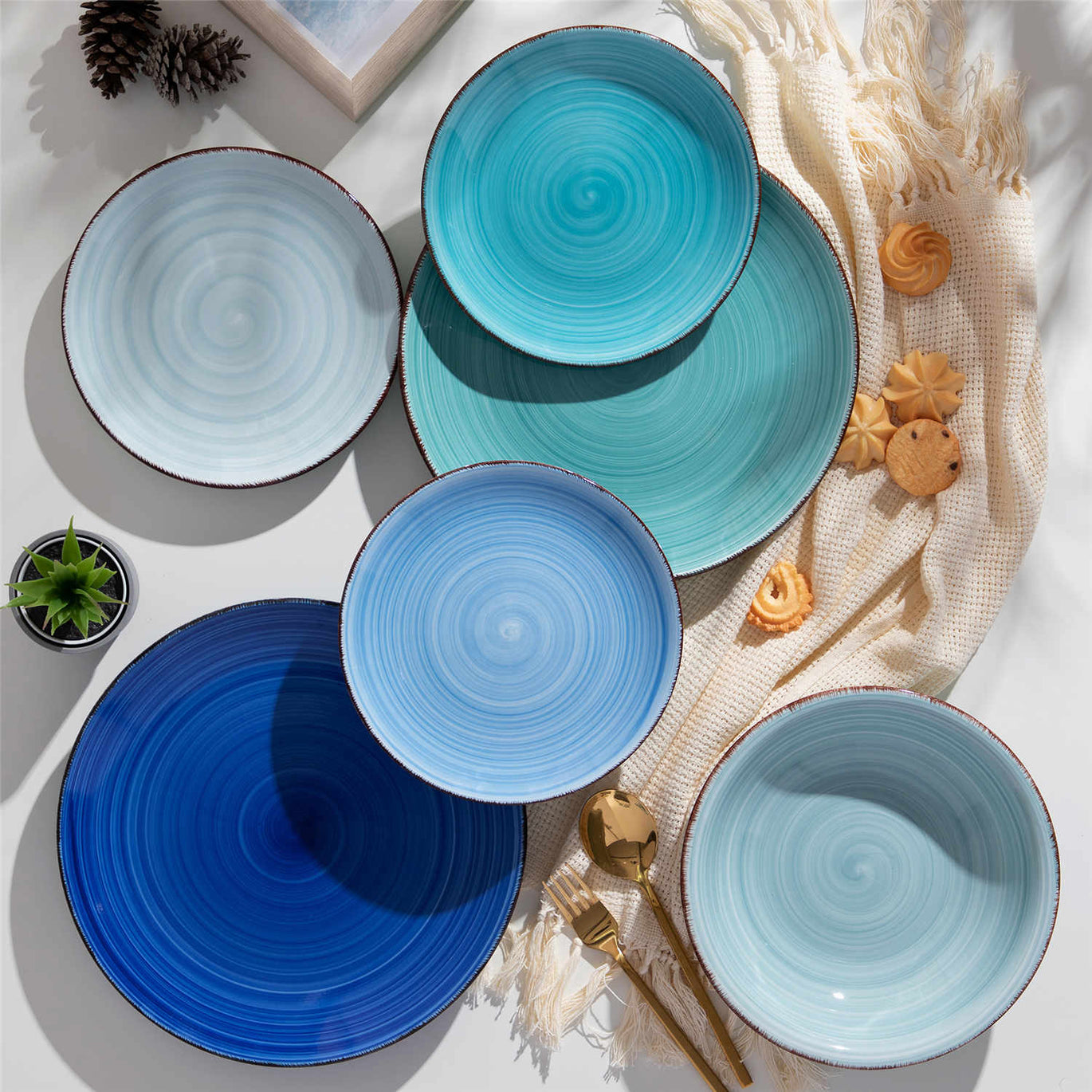


How Live Streaming Is Transforming Marketing in the Ceramic Tableware Industry

The ceramic tableware world has always been about more than plates and mugs. It is about clinks and conversations, glaze drips and Sunday dinners, little rituals repeated thousands of times. Now, there is a new stage for all that everyday magic: live streaming.
In the last few years, live video shopping has gone from novelty to serious revenue driver across e-commerce. At the same time, global ceramic tableware has been growing steadily, with estimates placing the category in the tens of billions of dollars in annual sales and forecasting healthy growth into the 2030s. Reports from groups such as Future Market Insights, Market Growth Reports, and Fortune Business Insights all point to the same pattern: premiumization, sustainability, personalization, and digital channels are reshaping the market.
Put those two stories together and you get a powerful question for every ceramic brand, studio, or factory: how do you use live streaming not just to “show product,” but to turn your tableware into a living, breathing experience people cannot wait to buy into?
Let us set the table and dig in.
A Market Ready For Its Close-Up
Ceramic tableware is no longer a sleepy category. Industry research summarized in the notes shows global ceramic and porcelain tableware alone at roughly $7.4 billion in 2025, projected to reach about $11.3 billion by 2035, while broader ceramic tableware estimates climb from about $40.9 billion in 2025 toward more than $56.5 billion by 2035. Another forecast pegs ceramic tableware and related segments rising from around $102 billion in 2024 to roughly $145.5 billion by 2030.
Behind those big numbers are a few clear demand drivers. People are eating at home more, but they expect restaurant-level experiences at their own tables. They care about aesthetics and social-media-ready presentation. Sustainability and safety matter, so they look for eco-friendly processes, lead-free glazes, and longer-lasting pieces. Personalization is hot, from monogrammed plates to mix-and-match color stories.
On the supply side, the industry is diverse. There are mass producers, who typically operate at net margins of about 5–10% according to profitability analyses, and artisanal or direct-to-consumer brands that can reach 15–25% margins by pairing efficient production with premium branding and higher perceived value. One profitability report notes that online home décor sales have grown by more than 10% in a recent year, and that customers are willing to pay up to a 30% price premium for ceramics that are clearly handcrafted and sustainable.
At the very small scale, handmade ceramics have experienced about 28% sales growth since 2019, according to Craft Industry Alliance, powered by buyers who want visible maker’s marks and pieces that do not feel mass-produced. At the larger scale, the United States alone imports around 214,000 tons of ceramic tableware annually, according to data cited by the USDA Foreign Agricultural Service, which speaks to the sheer baseline volume of plates, bowls, and mugs circulating through homes and hospitality.
In other words, the tableware industry is big, growing, and increasingly design-rich and story-driven. That is exactly the kind of environment where live streaming can thrive.
What Live Shopping Actually Is (And Why It Outperforms Static E‑Commerce)
Live shopping is more than a video call with a “Buy” button. Firework, a live shopping technology provider, describes it as shoppable video streams combined with real-time engagement, creating an interactive, immediate shopping experience that bridges the gap between physical retail and traditional e-commerce.
Traditional e-commerce relies on static product pages: a few photos, a description, maybe a review. Live shopping flips that. A host talks to viewers, answers questions, demonstrates products, and reacts to the chat in real time. It feels less like scrolling a catalog and more like having a friend walk you through their favorite pieces in a boutique.
Firework reports that live shopping frequently delivers conversion rates in the 9–30% range, compared with the 2–3% that is typical for standard e-commerce. In certain sectors such as fashion and beauty, conversion during live events can climb as high as 70%. Live events also increase average order value by about 12–15%, and pairing them with “Buy Now, Pay Later” options can boost order values by roughly 25–30%. Brands also see lower return rates because live demos reduce confusion about color, size, and use.
Here is how that contrast looks in simple terms:
Dimension |
Standard e‑commerce page |
Live-shopping stream (Firework data) |
Conversion rate |
Around 2–3% |
Typically 9–30%; some verticals report up to about 70% |
Average order value |
Baseline |
About 12–15% higher; plus 25–30% uplift with “Buy Now, Pay Later” |
Customer interaction |
One-way (images, text) |
Two-way chat, Q&A, real-time feedback and social proof |
Return rates |
Higher, due to uncertainty |
Lower, thanks to clearer demos and expectations |
Emotional connection |
Limited |
Stronger intimacy and community feeling with host and brand |
When you apply those mechanics to ceramics, which are intensely tactile and visual, live streaming stops being a nice-to-have and starts to look like a core channel.
Why Ceramic Tableware And Live Streaming Belong Together
Ceramics love the camera. Glazes catch the light. Textures invite close-up shots. Pouring coffee into a reactive-glaze mug or plating pasta in an earthy bowl is inherently cinematic.
Trends research from Joyye highlights how much of current tableware design is about visual drama: organic edges, asymmetric shapes, reactive and color-shifting glazes, tactile matte finishes, and bold accent colors like cobalt and charcoal. These pieces are made to be photographed and filmed.
Marketing best practices for ceramicists already lean heavily on visual storytelling. Guides from craft- and marketing-focused publishers recommend professional-level photography with multiple angles and lifestyle scenes, plus a steady stream of social content showing process shots, glazing, and studio life. Social media strategy pieces point to platforms like Instagram, TikTok, and Pinterest as essential for discovery, with more than 4 billion social users worldwide and about 55% of art buyers discovering new artists via social platforms.
Live streaming is the natural next layer. Instead of posting a polished clip of a finished mug, you can:
Describe in real time how that mug elevates morning coffee, while viewers watch the steam rise.
Answer questions about whether the plate is microwave safe or how it stacks in a small kitchen cabinet.
Show how a reactive glaze looks in different lighting, rotating the piece slowly so the colors bloom on screen.
Invite viewers to vote on the next colorway or rim treatment, turning them into co-creators rather than passive shoppers.
This is where live streaming starts to touch something deeper: not just “does this plate look nice,” but “what does this plate say about my rituals, my values, my taste?” That is where psychology and community come in.

The Psychology Behind Live-Streamed Selling: More Than Pretty Pictures
Research on live-streamed selling, summarized in a conceptual article on consumer behavior, breaks down product benefits that drive purchases into three types.
Psychological benefits are about identity, status, satisfaction, even vanity. In ceramics, that might be the joy of setting a table that feels like a boutique restaurant, or the pride of serving guests on hand-painted plates.
Functional benefits are about performance and convenience. For tableware, this covers durability, chip resistance, how well pieces stack in limited cupboard space, or whether they are safe for the dishwasher and oven.
Social benefits come from recognition and praise from others after buying and using a product. That could be compliments on your dinner plates on social media, or friends asking, “Where did you get these bowls?” at a party.
The research argues that these three types of benefits influence consumer psychology by providing emotional value, which in turn triggers purchasing behavior. Live streaming is described as the medium that turns product attributes into perceived benefits. In a live broadcast room, the host can explicitly show and verbalize how a plate satisfies all three dimensions: how it looks on camera, how it performs during use, and how it might impress guests.
Anchors or hosts are framed as core figures in live-stream commerce, with influence along three main dimensions: professionalism, attractiveness, and interactivity. Professionalism covers deep product knowledge and authority. Attractiveness is about personal appeal and charisma. Interactivity is the ability to chat, respond, and structure the live experience with discounts, games, and “welfare” moments.
For ceramic tableware, a professional host might explain the difference between stoneware and porcelain, or why a particular firing temperature yields stronger, more durable plates. An attractive, engaging host brings energy and charm that keeps viewers watching long enough to convert. An interactive host uses real-time polls to let viewers choose which collection to spotlight next, drops surprise bundles, and recognizes returning customers by name.
When those ingredients mix, a live ceramic show becomes less of a sales pitch and more of an event: a cross between a studio visit, a cooking show, and a shopping party.

Social Sharing Value: Building Intimacy Around The Table
A peer-reviewed study in MDPI on restaurant livestreaming introduces the concept of Social Sharing Value, or SSV. It defines SSV through four dimensions: brand intimacy, individual recognition, engagement, and community belonging. The study uses a stimulus–organism–behavior–consequences model to show how livestream stimuli affect internal states like trust and satisfaction, which then influence behavioral intentions and word-of-mouth.
Brand intimacy is about long-term, enjoyment-oriented relationships where frequent and meaningful interactions deepen familiarity and loyalty. Individual recognition is when viewers feel seen as people, not just as metrics. Engagement captures the energy and two-way participation in the live room. Community belonging is the feeling of being part of a brand tribe.
The restaurant study found that when livestreams maximize SSV, viewers are more likely to trust the brand, feel satisfied, intend to repurchase, and recommend the restaurant to others. One striking case shows what can happen at scale: a 19‑hour livestream on a short-video platform featuring prepared dishes drew nearly 95.9 million viewers, sold about 9.56 million units in a single day, and added roughly 3.97 million followers.
Although that example comes from food service, the mechanics map beautifully onto ceramics. A tableware brand that streams regularly can:
Develop intimacy by letting viewers see the same maker at the wheel week after week, building parasocial relationships that feel personal.
Offer recognition by greeting frequent viewers by name, showcasing their table photos, and using their suggestions for new glazes or forms.
Create engagement with live demos, behind-the-scenes studio tours, and Q&A on everything from clay bodies to food safety.
Foster community belonging by giving viewers shared rituals, such as a seasonal “Set the Table Live” event or a yearly limited-edition collection unveiled only in the stream.
Research on bilingual live streaming for intangible cultural heritage adds another layer. A study from an open-access publisher examined bilingual (Chinese and English) live streams promoting traditional crafts, including ceramics, and found that bilingual live streaming could raise interaction rates by around 35% compared with traditional video promotion. By translating cultural symbols and stories into language and references that international audiences understand, these streams turned local heritage products into global cultural and commercial brands.
For ceramic tableware makers rooted in specific regions or traditions, that insight is gold. Live streaming becomes a tool not just to sell plates, but to carry stories of clay, kilns, and community across borders.

Where Live Streaming Fits In The Ceramic Customer Journey
Live streaming is not a replacement for your website, your email list, or your presence on marketplaces. It is a powerful layer that can amplify everything else when placed thoughtfully along the customer journey.
At the awareness stage, social platforms are already key. With more than 4 billion users and millions of art-related posts, platforms like Instagram and TikTok have become major discovery engines. One article notes that about 55% of art buyers discover new artists via social media. Short clips and Reels pull newcomers into your orbit; scheduled live shows turn that casual interest into deeper engagement.
In the consideration stage, live streaming answers the tactile questions static pages cannot. How heavy is that mug in the hand? Does the cereal bowl feel too big or just right? A ceramic brand’s website should still provide zoomable images, precise dimensions, and care instructions, as marketing guides recommend, but a live show lets prospects see motion, scale, and combinations that are hard to convey any other way.
At the purchase stage, live shopping can literally out-perform standard e-commerce on core metrics, as the Firework data indicates. Exclusive live-only bundles, time-limited offers, and chat-driven upsells encourage viewers to add those matching dessert plates or a second mug for a partner.
For retention, live streaming becomes a community engine. Marketing research shows that email can produce an average return of about $42 for every $1 spent, according to the Direct Marketing Association, and that retention-focused programs can generate 20–30% of online revenue. Live streams and email sequences can play together beautifully: email announces the live, live drives excitement and sales, and email follows up with care tips and styling ideas that keep buyers engaged.
For ceramics focused on experiences, such as pottery studios, live streaming is also a bookings driver. One pottery studio marketing plan suggests that consistently posting short process videos three to five times per week can drive 40–50% of booking inquiries. Turning some of that content into structured live classes or Q&A sessions gives prospective students a taste of your teaching style and studio vibe before they ever touch clay.
In larger-scale manufacturing and hospitality-facing brands, live streaming can be a B2B relationship tool. Imagine a virtual showroom tour just for restaurant buyers, where you walk them through a new bone china collection, show chip-resistance tests on camera, and answer chef questions in real time.
Designing High-Converting Ceramic Live Streams
The art of a great ceramic live lies in the fusion of aesthetics and strategy. You want streams that feel warm and spontaneous but are grounded in clear goals and data.
First, define the purpose for each stream. Are you launching a new hand-painted collection, clearing seconds, educating viewers on care and safety, or courting wholesale leads? Tying each live to a specific goal lets you measure success: conversion rate, average order value, email sign-ups, or wholesale inquiries.
Next, choose content formats that play to ceramic strengths. Handmade ceramics marketing guides suggest showing multiple angles, textures, and lifestyle contexts in visuals. Live, that means unboxing finished pieces under different light, doing simple plating demos, or staging “before and after” scenes of a table set with basic dishes versus your collection. Social media strategy resources for ceramicists advocate a mix of finished work, behind-the-scenes footage, and process videos; your live stream is where those threads all meet.
Host selection is crucial. The consumer behavior article on live-streamed selling emphasizes three anchor traits: professionalism, attractiveness, and interactivity. You do not need a celebrity. You need someone who genuinely loves the work, can explain glaze chemistry without jargon overload, smiles easily, and actually enjoys chatting with viewers.
Here is how those traits translate into a ceramic live context:
Anchor trait |
Ceramic-live expression |
Why it matters for sales |
Professionalism |
Explains clay types, firing, food safety, and care clearly and calmly |
Builds trust and justifies premium pricing; reduces confusion and returns |
Attractiveness |
Radiates warmth and confidence on camera; styles tables appealingly |
Keeps viewers watching long enough to reach offers and call-to-action moments |
Interactivity |
Reads chat, answers questions, runs polls, drops surprise offers |
Turns passive viewers into participants, increasing emotional investment and AOV |
Offers must align with your economics. Profitability studies show that a modest 5% price increase on best-sellers can lift net profit by more than 20%, and that bundles often increase transaction value by 50% or more. Instead of deep discounts that train viewers to wait for sales, consider:
Building mix-and-match place setting bundles that gently raise order value while helping viewers imagine a full table.
Offering small live-only add-ons, like a matching spoon rest at a slight discount when someone buys a mug.
Creating limited-edition glaze runs in collaboration with another maker, designer, or chef, drawing on collaboration research that suggests cross-promotion can increase exposure by 30–40%.
Technically, you do not need a studio full of gear to start. The key is clear, natural light on the ware, stable framing, and reliable audio. As your program grows, you can add a second camera to show close-ups of throwing or glazing, or integrate overhead shots for plating demos. Social media management tools mentioned in strategy guides, such as planning apps, help you schedule and repurpose clips from the live into future content.
Finally, measure and refine. Track viewer counts, peak moments, chat engagement, click-throughs, sales, and returns. Compare how a storytelling-heavy stream performs against a more product-focused one. Borrow the mindset from lean manufacturing, where incremental efficiency gains and waste reduction add up to significant margin improvements over time.

Pros And Cons: A Clear-Eyed Look At Live Streaming For Ceramics
Live streaming is powerful, but it is not magic. There are very real upsides and risks for ceramic tableware brands.
On the plus side, live shopping operates on top of digital trends that are already reshaping the category. Reports synthesized in the notes show that online channels now account for roughly 25–35% of ceramic tableware sales in markets such as the United States and globally, with some analyses of ceramic dinnerware putting e-commerce’s share above 40%. Another report focused on hand-painted ceramic tableware notes that online channels already make up about 28% of global ceramic tableware sales and that searches for “hand-painted dinner sets” on a major handmade marketplace grew 35% in 2024. Live streaming rides that digital wave, adding immediacy and personality.
Live also plays beautifully with sustainability and craftsmanship narratives. A market report on hand-painted ceramics notes a 20% year-over-year increase in demand and finds that 78% of surveyed consumers would pay more for ceramics made with eco-friendly processes, such as lead-free glazes and recycled clay. A blockchain-focused dinnerware article highlights how supply-chain transparency and digital product passports can make trust and traceability part of the value proposition. In live streams, you can walk viewers through your water recycling system, talk about energy-efficient kilns, or even show QR-coded plates that link to provenance data.
The downsides are practical. Live streaming takes time and consistent energy. It can be emotionally draining for makers who would rather be at the wheel than on camera. There is also a risk of over-discounting to pump short-term sales, eroding brand equity. Conceptual research on live-streamed selling points to another underexplored downside: negative anchor traits like vague descriptions, overpromising, or procrastinating on shipping can quickly destroy trust and spark backlash.
There is also the operational reality. Ceramics are fragile. Profitability studies point out that a 20% spike in energy prices can erode margins by 5–8%, and firing can account for up to 30% of item cost. If live events suddenly spike demand, can your production and quality control keep up without driving defect rates or breakage sky-high?
The answer is to approach live streaming not as a stunt, but as a considered channel. Start small, keep promises conservative, and scale as you learn what works for your audience and your production constraints.
Future Trends: Live Streaming, Traceability, And The New Trust Equation
Looking toward the next decade, several strands of research converge on a picture of a ceramic tableware industry that is more digital, more transparent, and more story-rich.
Blockchain-focused analysis shows how distributed ledgers can track ceramic products from clay extraction to firing, decoration, packaging, and even end-of-life. Pilot projects in construction ceramics already use blockchain layers integrated with digital product passports to log raw materials, kiln parameters, quality-control tests, and environmental indicators. Studies in computer science indicate that microscopic ceramic “fingerprints” coupled with blockchain can authenticate pieces with more than 99% accuracy.
Policy trends, particularly in the European Union, are moving toward digital product passports for long-lived goods, which could easily include dinnerware. Imagine a plate with a discreet QR code or NFC chip that, when scanned, reveals verified data on material origin, energy use, glaze composition, safety certifications, and care.
In combination with the sustainability expectations highlighted in market research, this adds up to a new trust equation. Buyers want beautiful pieces, but they also want proof of safety, ethics, and sustainability. Live streams are where that proof turns into narrative.
You can show the scan in real time, talk through what each data point means, and connect abstract concepts like “closed-loop water systems” or “recycled content” to the bowl in a viewer’s hands. You can also tie your work to broader cultural and heritage stories, as the bilingual live streaming research suggests, reframing traditional patterns or forms in ways that resonate with global audiences.
In essence, the future tabletop is not just colorful; it is informational. Live streaming is where all of that information becomes emotional.
A Practical Ninety-Day Roadmap To Your First Live Program
If all of this feels big and abstract, bring it back to a simple three-month arc.
In the first month, focus on foundations. Clarify your brand story and audience, leaning on persona and survey tips from handmade ceramics marketing guides. Upgrade your visual basics: clean backgrounds, consistent lighting, and at least one strong hero table setup. Choose one or two social platforms where your ideal customers already spend time and post regular short videos to warm up your on-camera presence.
During the second month, plan and promote your first live. Decide on a clear theme, such as “Spring Breakfast Bowls” or “Seconds Sale Studio Tour.” Set measurable goals, whether that is a dollar amount, a number of orders, or email sign-ups. Promote the event via email, social posts, and marketplace announcements. Prepare your run of show with a loose structure: welcome, story, demos, offers, Q&A, and closing. Keep the tech simple: a phone, a tripod, and a quiet space with good light.
In the third month, iterate. Analyze what happened: viewer peaks, what questions came up, which pieces sold fastest, and whether returns increased or decreased. Adjust your next live based on that feedback. Consider experimenting with bilingual moments if you have an international audience, or inviting a collaborator such as a chef or florist to co-host, drawing on cross-promotion research that suggests collaborations can significantly boost exposure.
By the end of ninety days, you will not just have “tried live streaming.” You will have a repeatable, data-informed live program that reflects your brand and respects your capacity.
FAQ
What if I am a very small maker working alone? Live streaming can actually favor small studios because viewers love visible maker marks and personal stories. Research on handmade ceramics shows that buyers are drawn to authenticity and are willing to pay premiums for handcrafted and sustainable work. Start with short, low-pressure live Q&A sessions from your studio rather than big sales events, then gradually introduce shoppable elements as your comfort and audience grow.
Does live streaming only make sense for trendy, hand-painted designs? Not at all. Market reports show strong demand across price tiers and styles, from earthy, organic looks to minimalist hotelware. Live streaming is especially useful for communicating functional and safety benefits of everyday pieces: chip resistance, ease of cleaning, compatibility with dishwashers and ovens, and how pieces stack or store in small kitchens. You can still bring storytelling energy to classic white plates by focusing on versatility and pairing ideas.
How often should a ceramic brand go live? There is no single magic frequency, but social media strategy guides for artists suggest that consistency beats intensity. For most ceramic businesses, a monthly flagship live show, supported by weekly short-form content, is a realistic starting point. Pottery studios or experience-heavy brands may benefit from more frequent lives tied to class schedules or seasonal events. Let your production capacity and audience engagement data, rather than trend-chasing, set the pace.
What if my live stream flops with very few viewers? Think of early streams as rehearsals with benefits. Even if only a handful of people attend live, you can repurpose segments into Reels, posts, or website clips. Over time, consistent streaming, combined with email reminders and collaborations, tends to build momentum. Research on bilingual live streaming for cultural heritage shows that thoughtful content design and symbol translation, not just raw follower count, drive interaction and acceptance.
Closing Thought
Ceramic tableware was made for the spotlight. When you bring your glazes, textures, and stories into a live stream, you turn a quiet shelf of plates into a shared experience people can feel right through their screens. Set the lights, straighten the table runner, and hit “Go Live.” The world is more than ready to pull up a digital chair at your table.
References
- https://digitalcommons.sia.edu/cgi/viewcontent.cgi?article=1190&context=stu_theses
- https://www.scirp.org/journal/paperinformation?paperid=143056
- https://www.researchgate.net/publication/385093348_The_Impact_of_Live-Streamed_Selling_on_Consumer_Purchasing_Behavior
- https://www.fortunebusinessinsights.com/ceramic-tableware-market-113079
- https://digital.car.chula.ac.th/cgi/viewcontent.cgi?article=12381&context=chulaetd
- https://callin.io/marketing-strategies-for-handmade-ceramics/
- https://ceramamadinnerware.com/Dinner_Plates/What_Livestreaming_Strategies_Work_Best_for_Ceramic_Retailers_Targeting_Online_Shoppers_happygodinne.html
- https://creamik.com/ceramicists-social-media-strategy/?lang=en
- https://firework.com/blog/top-livestream-shopping-statistics-that-you-cant-ignore-for-your-e-commerce-business
- https://www.futuremarketinsights.com/reports/ceramic-and-porcelain-tableware-market
También te puede interesar
Stern Juego de vajilla de 16 piezas
- €84,95
€96,95- €84,95
- Precio unitario
- por
-
Blue
-
Green
-
Red
-
Grey
Simi Juego de vajilla de 24 piezas
- €96,95
€129,95- €96,95
- Precio unitario
- por
Bonita Juego de vajilla de 18 piezas
- Desde €60,95
€74,95- Desde €60,95
- Precio unitario
- por
-
Blue
-
Multicolor
Starry 16 Piece Juego de vajilla
- €84,95
€86,95- €84,95
- Precio unitario
- por
-
Blue
-
Green
-
Red
-
Gradient Green