



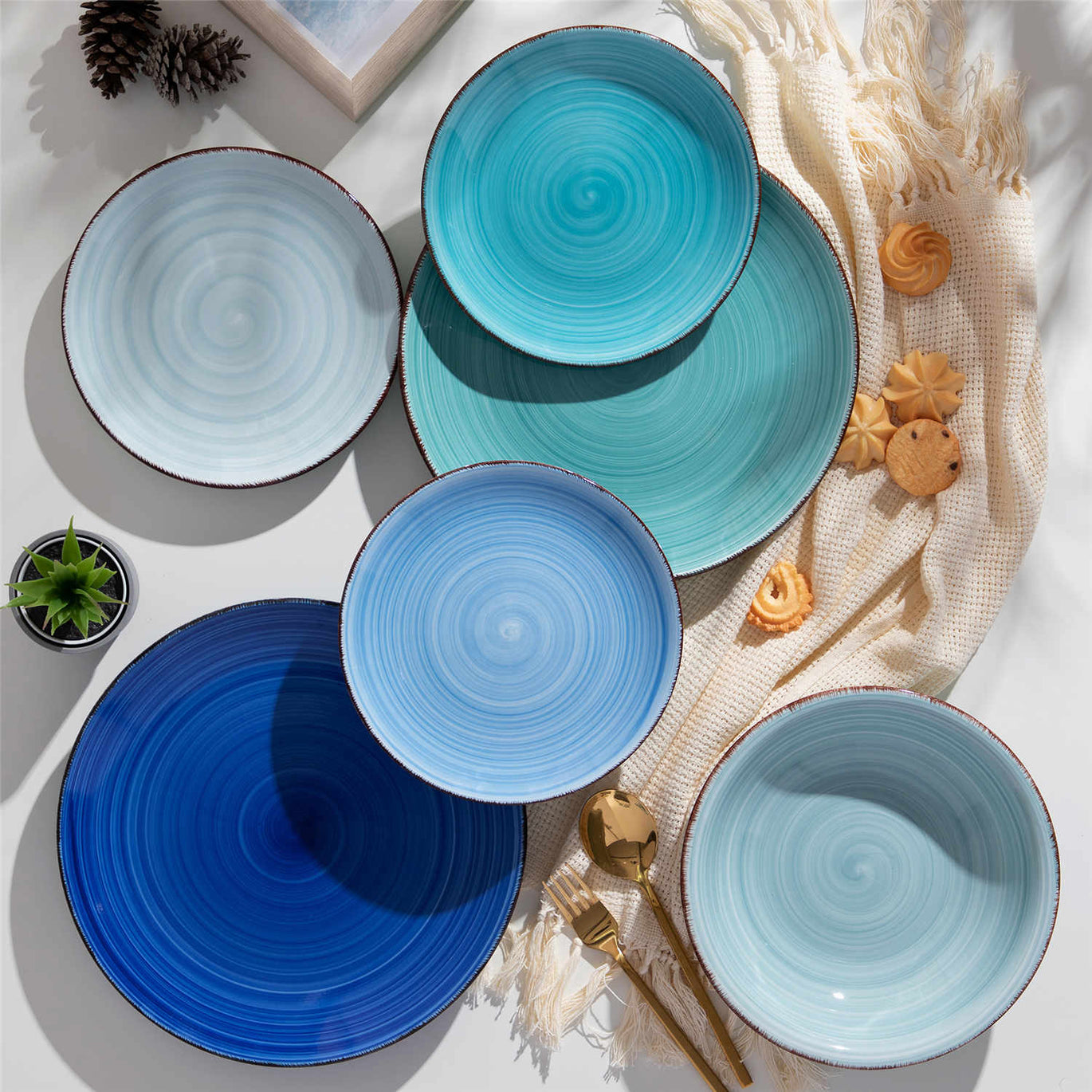


Standardized Ceramic Cupping Bowls: The Silent Standard-Bearers of Coffee Tasting

Coffee may be the headliner at a cupping table, but the bowls are the stage lights, the acoustics, the whole gallery wall behind the art. When you shift from casual sipping to professional tasting, those simple white ceramic bowls stop being background props and become precision tools. Shape, capacity, color, material, even glaze quality quietly influence how aromas rise, how heat dissipates, and how fairly different coffees can be compared.
In professional cupping labs and competitions, there is a reason you see rows of nearly identical ceramic bowls instead of a rainbow riot of mugs. Organizations such as the Specialty Coffee Association treat cupping bowls as standardized instruments so that a coffee evaluated in one lab can be replicated in another with confidence. Articles from Barista Life, Perfect Daily Grind, and Verve Coffee all treat the bowl as part of the protocol, not an afterthought. Think of standardized ceramic bowls as your neutral, repeatable canvas: aesthetically pleasing, but disciplined enough to keep the spotlight on the coffee.
This guide steps right into that intersection of color, craft, and calibration. From capacity and geometry to glaze and heat retention, we will unpack what “standardized ceramic cupping bowl” really means, how it compares to newer materials, and how to choose bowls that keep both your inner scientist and your inner tableware stylist happy.
Why Cupping Bowls Need Standards, Not Just Style
Cupping is the coffee industry’s controlled sensory exam. Perfect Daily Grind describes it as the standard, quantifiable way to evaluate coffee quality across the supply chain, from farmers to roasters. Cuppers taste multiple coffees side by side, following strict recipes and timing so that differences in the cup reflect differences in the coffee, not the equipment.
To make that possible, the vessels must be standardized. Barista Life notes that industry standards, including those from the Specialty Coffee Association, call for cupping bowls with defined capacities and geometry. When every bowl on the table holds roughly the same volume, has similar height and diameter, and is made from the same material, you can keep the coffee-to-water ratio, liquid depth, and thermal behavior consistent. That is the only way scores for sweetness, acidity, and aftertaste are meaningful over time.
Ceramic bowls emerged as the “gold standard” because they balance heat retention, flavor neutrality, and durability, while presenting a clean white or light interior for visual assessment of color and crema. Porcelain—essentially a refined, high-fired ceramic—adds extra smoothness and non-porosity, which helps keep flavors clean and surfaces easy to sanitize, as discussed by Royalware and Curvd. In standardized cupping, the bowl is expected to disappear from the sensory equation, both chemically and visually, even as it performs technical heavy lifting behind the scenes.

What “Standardized” Actually Means for Ceramic Cupping Bowls
The Specialty Coffee Association and cupping-focused sources do not just say “use some bowls.” They point to a specific size range, shape logic, and surface requirements that professional bowls are expected to meet. Even if you never send a score sheet to a buyer, aligning your ceramic bowls with these norms transforms your cupping from charming chaos into repeatable data.
Capacity and Fill Level
Barista Life cites a typical cupping bowl range of about 150 to 220 milliliters, which converts to roughly 5.1 to 7.4 fluid ounces. Several commercial porcelain and glass cupping bowls, such as the seven to eight fluid ounce models offered by CoffeeTec and Showroom Coffee, sit right in this window. CoffeeTec’s tempered glass bowl, for instance, holds seven fluid ounces with a top diameter around three inches and a height just over three inches, giving a standardized volume and depth.
Standardized cupping recipes build on that volume. Barista Life, Ember Coffee, and Perfect Daily Grind all reference the classic ratio of about 8.25 grams of coffee per 150 milliliters of water. Converted to imperial units, that is roughly 0.30 ounces of coffee for about five fluid ounces of water. If your bowl holds around seven fluid ounces, you adjust the dose proportionally but keep the ratio constant. When every bowl is the same size, you can set your scale, grinder, and kettle to that ratio and forget about vessel math.
Shape and Geometry
Cupping bowl geometry is not decorative; it is about controlling extraction, crust formation, and spoon access. Barista Life notes that industry standards define diameter and height relationships to keep the coffee bed depth and surface area predictable. The wide mouth makes it easy to evaluate aroma and visually inspect crust and color, while the depth supports an even immersion layer.
Work on cup geometry from Liberty Beans, Fresh Cup, and Vancasso’s gemologist-style guide reinforces that relationship. Wider openings encourage more volatile aromatic compounds to escape toward your nose, while slightly tapered or tulip-like shapes can concentrate aroma. In cupping bowls, the compromise tends to favor relatively open, gently curved walls. That shape allows the grounds to form a crust during steeping, supports consistent spooning, and gives enough surface area for aroma assessment without cooling the coffee too fast.
Material: Why Ceramic Still Rules
Across materials, Driftaway Coffee, Kopin Tableware, Curvd, Royalware, Qavashop, and Vancasso converge on a clear theme. Ceramic, particularly fully glazed porcelain or high-fired stoneware, is flavor-neutral, non-porous when properly vitrified, and holds heat well without reacting with coffee’s thousand-plus flavor-active compounds. Curvd and Royalware both emphasize that ceramic does not absorb or impart flavors, unlike some plastics and lower-quality metals, and does a better job than glass at keeping coffee in a pleasant temperature band.
For cupping, neutrality is non-negotiable. Vancasso frames fully glazed porcelain or stoneware interiors as a kind of lab-grade environment, similar to a gemologist’s light box, where the vessel is designed not to bias color or aroma. CoffeeTec and Bootlegger Coffee both sell ceramic cupping bowls into professional quality-control workflows precisely because ceramic offers that inert, stable platform.
Porcelain bowls, such as the seven ounce models promoted by Showroom Coffee and CoffeeTec, add the advantage of an ultra-smooth surface and refined rim. That smoothness enhances mouthfeel and makes cleaning easier, reducing the risk of residual oils carrying flavor from one session to the next.
Interior Color and Visual Neutrality
Most standardized cupping bowls are white or very light inside. Barista Life notes that white or light interiors help with visual assessment, while Qavashop and Curvd point to research showing that cup color shapes taste perception. Studies reported through outlets such as the Washington Post found that coffee in white mugs can be perceived as more intense and slightly more bitter than the same coffee in clear glass.
Gemologist-style guidance from Vancasso explains why professional tasters still prefer white interiors despite those psychological shifts. A clean white interior offers maximum contrast for judging clarity, color, and crema, and acts as a neutral background when you are looking for defects or irregularities. The compromise many designers use is a white interior for neutrality with any color you like on the outside for personality, so your tabletop can still feel playful without contaminating your data.
Thermal Mass, Wall Thickness, and Weight
Heat behavior is where standardized ceramic bowls quietly shine and where their limitations are becoming more visible. Liberty Beans Coffee discusses thermal conductivity values and notes that materials with lower thermal conductivity, such as ceramic and glass, hold heat better than metals, all else equal. Ceramic typically sits around one to two watts per meter-kelvin in scientific terms, while stainless steel is closer to sixteen, which explains why bare metal feels colder to the touch and moves heat quickly.
Fresh Cup reports that traditional ceramic cupping bowls weighing around two hundred grams tend to pull about thirteen degrees Celsius from brew water, which is roughly twenty-three degrees Fahrenheit. Newer high-density polyethylene cupping bowls from Barista Hustle Tools and Fellow, at about forty-five grams, pull only around five degrees Celsius, roughly nine degrees Fahrenheit. That difference means the coffee in lighter HDPE bowls can be tasted at brew temperatures around eighteen degrees Fahrenheit hotter than in heavy room-temperature ceramic, which shifts how quickly flavors unfold.
For ceramic bowls, the goal is medium thermal mass. Walls need to be thick enough to keep coffee from crashing through the flavor window too fast, but not so heavy that they steal too much heat upfront. Vancasso suggests that taste clarity often peaks as coffee cools through about 122 to 158 degrees Fahrenheit, while Curvd highlights a hotter optimal drinking zone around 158 to 176 degrees Fahrenheit. Standard ceramic bowls, preheated correctly, help the coffee pass through that range at a manageable pace rather than plunging straight past it.
Consistency Across a Set
Perhaps the most underappreciated “spec” is consistency within a set. Barista Life and CoffeeTec both highlight manufacturing consistency as a key buying criterion for professional bowls. If one porcelain cupping bowl is seven fluid ounces and another in the same box is closer to eight, your carefully weighed doses will produce different depths and cooling curves.
Cup of Excellence competitions, highlighted in Fresh Cup, enforce strict sameness for all equipment on the table, including cupping vessels. The principle is simple: a cupping bowl is not just one object; it is a repeatable template. When you buy ceramic cupping bowls for a lab, you are really buying a matched chorus, not a soloist.
To summarize the main specification themes without slipping into a bullet list, the table below gives a compact overview that links each ceramic bowl attribute to its practical impact.
Bowl Aspect |
Practical Target for Ceramic Cupping Bowls |
Why It Matters for Tasting |
Capacity |
Around 5 to 8 fl oz, with most pro bowls near 7 fl oz |
Supports standard cupping ratios and comparable depth across bowls |
Geometry |
Wide or gently open mouth, moderate depth, straight or soft walls |
Balances crust formation, aroma evaluation, and easy spoon access |
Material |
Fully glazed porcelain or high-fired stoneware |
Delivers flavor neutrality and good heat retention |
Interior color |
White or very light |
Enhances visual assessment and minimizes color bias |
Thermal behavior |
Medium wall thickness, moderate weight, preheat-friendly |
Keeps coffee in a stable sensory window without stealing too much heat |
Set consistency |
Uniform volume, shape, and finish across the whole set |
Keeps water level, extraction, and cooling consistent from cup to cup |

Ceramic Versus Other Cupping Bowl Materials
Ceramic is the default, not the only option. The future of cupping is experimenting with new materials while respecting what ceramic already does well. Understanding those tradeoffs helps you decide when to hold onto ceramic and when to reach for alternatives.
Ceramic and Porcelain
From Kopin Tableware to Curvd, Royalware, Driftaway, and Vancasso, there is strong alignment. High-quality ceramic and porcelain mugs taste “right” because they neither absorb nor impart flavors, retain heat better than glass, and feel pleasantly weighty in hand. Kopin emphasizes that ceramic is solid and neutral, so it does not soak up coffee aromas the way plastic can. Curvd adds that over time, ceramic’s slight porosity can even create a subtle seasoning effect as microscopic traces of coffee oils enrich the surface, which some drinkers interpret as richer flavor.
Royalware, Curvd, and Vancasso all make the case that porcelain, as a refined high-fired ceramic, offers especially smooth, non-reactive surfaces. Porcelain cupping bowls keep coffee’s complex mix of more than a thousand flavor-active compounds from reacting with the vessel, a risk with some metals and plastics. The main downside is fragility and weight. Ceramic bowls can chip or crack if abused, and heavy walls steal more heat than lightweight alternatives until they are preheated.
Glass
Glass cupping bowls, such as those sold by CoffeeTec, offer complete visual transparency and chemical inertness. Driftaway and Curvd agree that glass does not add or absorb flavor, making it “honest” about the coffee inside. Liberty Beans notes that glass has thermal conductivity similar to ceramic, but in practice many glass mugs feel cooler because they are thinner and have less mass.
For serious cupping, glass bowls are a double-edged choice. They are wonderful for visually teaching extraction and clarity, and they can meet standard volumes and shapes. At the same time, they can cool coffee faster than thicker ceramic and are more fragile in busy lab environments unless tempered or double-walled.
Stainless Steel
Stainless steel shows up more often in travel mugs and field gear than in traditional cupping bowls. Driftaway and Kopin both caution that some stainless steel vessels can impart metallic or off notes, especially if finishes wear down or lower-quality alloys are used. Liberty Beans highlights that stainless steel has a much higher thermal conductivity than ceramic, which is why most stainless travel mugs rely on double-walled, vacuum-insulated construction to slow heat loss.
For cupping, stainless steel’s main virtues are durability and temperature stability when properly insulated. Its weaknesses are flavor risk and lack of visual access to the liquid. In a lab where you need to visually evaluate color and clarity and avoid any potential metallic influence on coffee’s delicate aromatics, stainless steel rarely beats porcelain.
Plastics and High-Density Polyethylene
Driftaway and Kopin both describe plastic as a poor choice for flavor-critical coffee drinking. Plastic absorbs odors and tastes over time, which blurs delicate flavor notes and can create off flavors, especially if the same cup is used for multiple beverages. Some plastics can also leach chemicals if exposed to very hot liquids, which is both a sensory and a safety concern.
There is one major exception in the cupping world. Fresh Cup and Barista Hustle Tools describe specialized high-density polyethylene cupping bowls designed to be featherlight, practically unbreakable, and thermally efficient. These bowls weigh only about forty-five grams compared with roughly two hundred grams for typical ceramic cupping bowls and absorb only about nine degrees Fahrenheit from brew water, rather than the twenty-three degrees Fahrenheit a ceramic bowl might steal at room temperature. That allows tasters to access flavor at higher temperatures and can make temperature curves more repeatable.
These HDPE bowls are explicitly framed as a “zero compromise” alternative to ceramic for competition, education, and travel. They stack neatly, survive repeated drops, and are made from food-grade, easily recycled plastic. Even so, for many cuppers they are a complement rather than a full replacement. Ceramic still dominates in fixed labs where flavor neutrality, tradition, and aesthetic cohesion matter, while HDPE shines when you need to pack twenty-four bowls in a backpack and bounce between farms or client meetings.
Heat, Aroma, and the Tasting Window
You can think of a ceramic cupping bowl as a temperature curve sculptor. Its job is to help the coffee glide, not crash, through the range where sweetness, acidity, and aromatics are easiest to read.
Liberty Beans explains thermal conductivity in simple terms: materials with lower conductivity move heat more slowly, which is good for keeping coffee warm. Ceramic and glass sit in that low-conductivity category, while stainless steel is far higher. Vancasso notes that taste clarity often peaks as coffee cools into roughly 122 to 158 degrees Fahrenheit. Curvd extends the window upward, pointing to about 158 to 176 degrees Fahrenheit as a sweet spot where coffee stays hot enough for aromas to bloom but not so hot that harsh acidity dominates.
Cupping protocols from Perfect Daily Grind, Verve Coffee, and Ember Coffee all structure tasting around this cooling arc. They recommend adding water near brewing temperatures around 200 to 203 degrees Fahrenheit, breaking the crust after roughly four minutes, then beginning to taste several minutes later and revisiting as the cups cool. Preheating ceramic bowls with hot water, as recommended by Barista Life, Kopin, Liberty Beans, and Vancasso, reduces thermal shock and slows early heat loss so the coffee does not overshoot the ideal window.
Bowl geometry ties into aroma as well. Liberty Beans and Fresh Cup both emphasize that wider rims increase the surface area exposed to air, which accelerates the release of volatile aromatic compounds. Narrower mouths trap aroma for a more concentrated nose, while wide openings feel more open and can make coffees seem sweeter or more relaxed. Standard cupping bowls choose a moderate width that allows evaluators to lean in, break the crust, and take deep aromatic readings before they ever pick up a spoon.

Choosing Ceramic Cupping Bowls for a Professional or Advanced Home Setup
When you step beyond “any white bowl will do” and treat cupping bowls as instruments, a few practical criteria emerge from the research and from professional practice.
Start with capacity. Aim for bowls around seven fluid ounces if you want to match the many porcelain models from Showroom Coffee, CoffeeTec, and Bootlegger Coffee and stay close to the SCA-oriented range derived from Barista Life’s volume recommendations. That size works cleanly with the classic ratio of about 0.30 ounces of coffee to around five fluid ounces of water, scaled to your exact bowl volume.
Next, look at interior color and finish. Choose bowls with a white or very light interior glaze that is smooth, continuous, and fully vitrified. Vancasso and Royalware both stress the importance of high-fired, lead-free glazes on dense, non-porous ceramic bodies, which resist staining and odor uptake and keep coffee flavors honest. Avoid crazed, chipped, or unfinished interiors; those irregularities can harbor oils and aromas that linger into the next cupping.
Evaluate geometry with your spoon in hand. Pour water to your intended cupping level in a sample bowl and test how easily your cupping spoon can break the crust, skim foam, and reach settled liquid without scraping the bottom. Barista Life and professional labs highlighted by Perfect Daily Grind favor bowls with relatively open mouths and manageable depth so that multiple tasters can work comfortably over the same table.
Finally, check consistency. CoffeeTec explicitly calls out dimensional accuracy and manufacturing consistency as buying criteria. Measure a random sample of bowls from the box to make sure they all hold about the same volume and sit level. If one is significantly larger or shallower, set it aside for casual coffee drinking rather than cupping. Remember that a cupping set is only as standardized as its most irregular bowl.

Caring for Ceramic Cupping Bowls Without Killing the Joy
Ceramic bowls can last for years of daily cupping if you treat them like both lab gear and beloved tableware. Barista Life suggests washing cupping bowls with hot water and neutral detergent, rinsing thoroughly, and letting them air dry completely between sessions. Kopin adds that ceramic’s tactile weight and texture contribute to perceived quality, but only if you keep surfaces clean and free of stale coffee film.
Liberty Beans and Vancasso both dive into glaze durability. High-silica, well-fired glazes are harder and more chemically inert, which makes them less likely to scratch or leach anything into beverages. Matte glazes often feel cozy and look beautiful but can be slightly more porous and stain-prone than glossy ones, so they may demand gentler cleaning. Avoid abrasive scrubbers that can scuff the glaze. For stubborn rings, Kopin and Liberty Beans recommend simple kitchen solutions such as a paste of baking soda and water or a mild vinegar soak rather than harsh chemicals.
Several sources, including Barista Life and Vancasso, also warn against drastic temperature swings. Pouring near-boiling water into a ceramic bowl that just came out of a refrigerator is an invitation to thermal shock and cracking. For cupping, the better ritual is to preheat bowls with hot tap water or kettle water briefly, discard that water, and then dose your coffee and brew water into warmed bowls.
Inspect bowls regularly for chips, cracks, or glaze crazing. Any damaged bowls should be retired from cupping, both for safety and for sensory integrity, since micro-cracks can trap residues and interfere with cleaning. At that point they can graduate into the colorful everyday mug rotation where precision matters less than charm.
Bringing Standard Bowls Into Home Cupping
You do not need a commercial lab or a wall of sample jars to benefit from standardized ceramic cupping bowls at home. Ember Coffee, Cuppers, Perfect Daily Grind, and Verve Coffee all outline home-friendly cupping protocols that mirror professional practice with only modest gear: a burr grinder, a scale, a kettle, and a few matching bowls.
Cuppers distinguishes between cupping, where you evaluate several coffees side by side under strict conditions, and casual tasting, where you simply enjoy a brewed coffee from any favorite mug. If your goal is to train your palate, compare roasts, or taste how processing methods differ, cupping is the tool. Matching ceramic bowls turn your kitchen counter into a small sensory lab.
Using standardized bowls at home lets you follow recipes from Perfect Daily Grind or Verve Coffee closely, adapting their metric doses to your bowl size while keeping the ratio intact. You can grind a fixed weight of coffee, pour a fixed volume of water, and know that variations you taste from bowl to bowl reflect the beans more than your vessels. Over time, those quiet white bowls help you build a flavor memory palace where origin, process, and roast level reveal themselves more clearly.
At the same time, do not underestimate the emotional side of the ritual. Fresh Cup highlights how brands like Loveramics and Umeshiso deliberately design cupping gear to feel inclusive, inviting, and visually joyful, not just technical. Choosing ceramic bowls whose shape and glaze make you smile every time you line them up can make the discipline of cupping feel like a celebration instead of a chore.

FAQ: Common Questions About Standardized Ceramic Cupping Bowls
Do I really need official SCA-branded bowls?
What you truly need are bowls that align with the specification spirit described by Barista Life and the Specialty Coffee Association. That means a capacity in the five to eight fluid ounce range, consistent dimensions across the set, a white or light interior, and a neutral ceramic body. Many porcelain cupping bowls from specialty retailers such as CoffeeTec, Showroom Coffee, and Bootlegger Coffee meet those criteria without official branding. If you ever plan to submit coffees to competitions, it makes sense to own at least one set that closely matches what those events use, but strict SCA logos are far less important than functional equivalence.
Can I just use any white ceramic ramekin or soup bowl?
Many home cuppers start that way, and it can work as a temporary bridge. The risk, as Barista Life and CoffeeTec point out, is inconsistency. If your ramekins vary in volume, height, or interior curve, your brewing depth and cooling behavior will vary too. For casual exploration, that might be acceptable. For serious calibration, purchasing purpose-made ceramic cupping bowls with verified capacities and matched shapes is a relatively small investment that pays off in more trustworthy results.
Why are some professionals switching to plastic cupping bowls if ceramic is so good?
Fresh Cup explains that high-density polyethylene cupping bowls, like the stackable models developed by Barista Hustle Tools and Fellow, address some weaknesses of ceramic: cost, fragility, and thermal mass. At about forty-five grams each and nearly unbreakable, they are easier to ship, easier to carry on origin trips, and less likely to shatter on a concrete floor. They also cool coffee more gently by absorbing only around nine degrees Fahrenheit instead of roughly twenty-three degrees Fahrenheit at the start of a cupping. Even so, these tools are designed to be flavor-neutral, competition-ready instruments, not generic plastic cups. Many cuppers keep both: ceramic bowls in the lab for tradition and aesthetics, HDPE bowls in the field or for large training sessions.
How important is bowl color compared with shape and material?
Color, shape, and material all have measurable effects, but they play different roles. Qavashop and Curvd cite research showing that white cups amplify perceived intensity and bitterness, while other colors can nudge perceptions of sweetness or acidity. Vancasso therefore recommends white interiors to minimize visual bias and allow color evaluations. Shape, as discussed by Liberty Beans, Fresh Cup, and Vancasso, directly controls aroma release and how coffee flows into your mouth. Material, as explored by Driftaway, Kopin, Curvd, and Royalware, governs flavor neutrality and heat retention. For standardized cupping, material and shape come first, interior color follows close behind, and exterior color is your playground.
A Colorful Closing from the Cupping Table
When you line up well-chosen ceramic cupping bowls, you are not just setting glassware on a table; you are curating a tiny gallery where coffees from around the world get a fair, well-lit moment to sing. Standardized specs keep the science honest, while thoughtful choices in porcelain, glaze, and form let your cupping table feel like a joyful, living part of your space. Treat those little white bowls as both instruments and art pieces, and every cupping becomes what it should be: rigorous, repeatable, and quietly, colorfully delightful.
References
- https://baristahustletools.com/products/the-cupping-bowls
- https://www.bootlegger.coffee/products/ceramic-cupping-bowl?srsltid=AfmBOooex7jfCcvvjzm5tvR-7G-3Eo-sXdaP1Py-7zt40hF7Hhccp7_K
- https://caffelab.com/cupping-bowls-professional/
- https://coffeetec.com/products/cupping-bowls?srsltid=AfmBOopZc8FMX-ME4Smi2ROZ6Zx1uL9CKGjgaDrDSGBE-HQa4WM3QXkr
- https://deneenpottery.com/ceramic-mugs-taste-test/
- https://smart.dhgate.com/how-to-choose-the-perfect-ceramic-coffee-cup-for-your-brewing-style-and-taste/
- https://driftaway.coffee/effect-coffee-cup-material-taste-ceramic-vs-stainless-steel-vs-plastic/?srsltid=AfmBOooyKMN8Z-B_1rg3iCt3gMbQBvl1AwcDx2cYPaTo3oP8LWhcWA0M
- https://freshcup.com/the-cup-in-hand-how-shape-and-design-affect-coffee-drinking/
- https://jlceramics.nl/espresso-mug-shape-ceramics/?srsltid=AfmBOoojf96yFEwgXgmDHFtRE4EtyyzCujqZFxPvnxz0qGJs_I1cZQow
- https://www.royalwarechina.com/why-does-coffee-taste-better-in-porcelain-coffee-mugs/
También te puede interesar
Stern Juego de vajilla de 16 piezas
- €87,95
€99,95- €87,95
- Precio unitario
- por
-
Blue
-
Green
-
Red
-
Grey
Simi Juego de vajilla de 24 piezas
- €99,95
€133,95- €99,95
- Precio unitario
- por
Bonita Juego de vajilla de 18 piezas
- Desde €62,95
€77,95- Desde €62,95
- Precio unitario
- por
-
Blue
-
Multicolor
Simi Juego de vajilla de 24 piezas con cuencos de doble cara
- €104,95
€133,95- €104,95
- Precio unitario
- por