





Understanding Historians’ Interest in Collecting Replica Ancient Tableware

Listen to the audio version
Replica ancient tableware is a top choice for historians. Learn about the archaeological ethics, research uses, and cultural preservation behind these beautiful copies.
Why Replica Ancient Tableware Feels So Irresistible
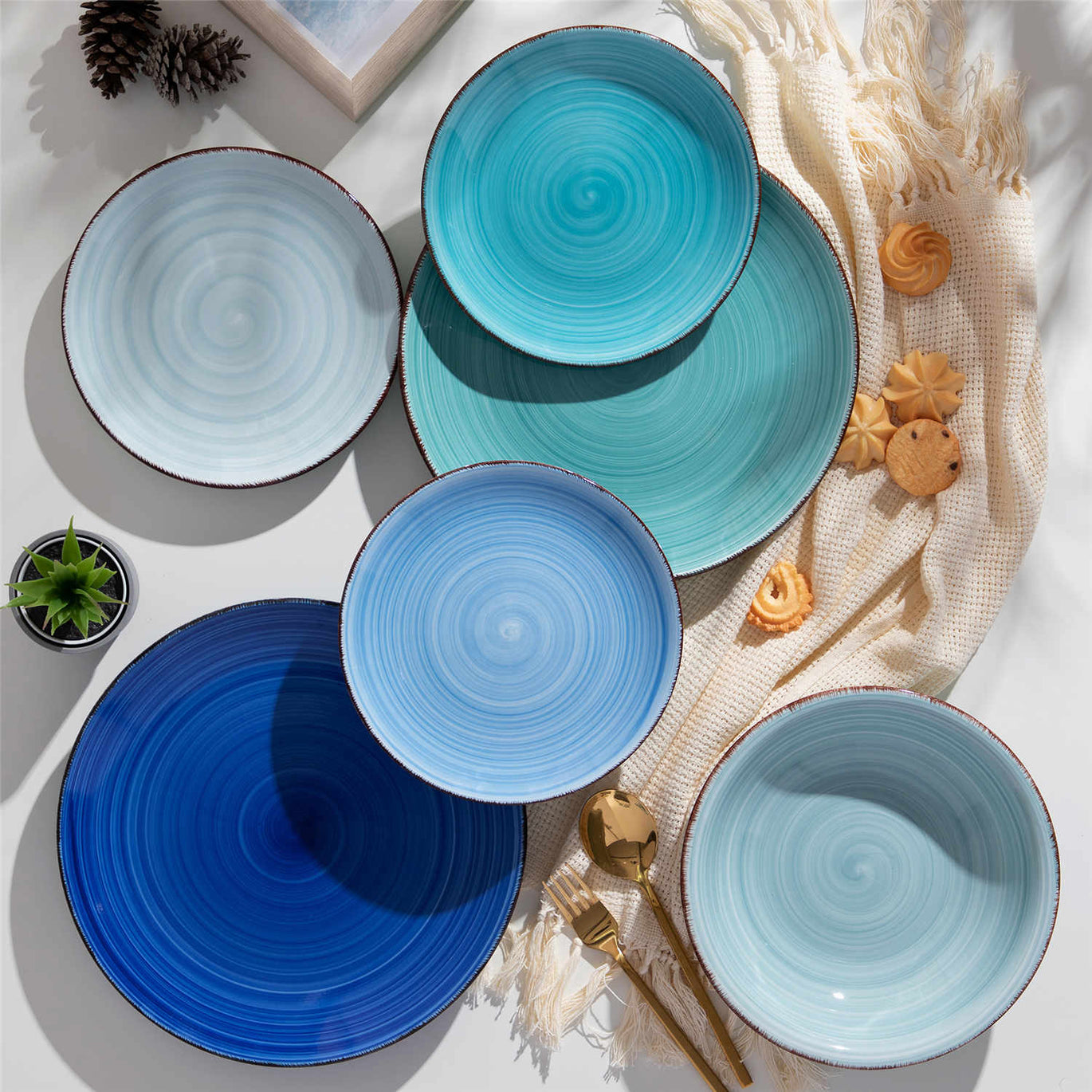
Set a table with a deep blue “Greek” cup, a sand-colored “Anasazi” bowl, and a delicately flared “Cypriot” jug, and the mood in the room shifts. Dinner suddenly feels like a tiny time-travel experiment. That charge of curiosity is exactly why historians, archaeologists, and passionate collectors are increasingly obsessed with replica ancient tableware rather than chasing fragile originals.
Original vessels from long-gone cultures are usually locked behind glass in museums or in carefully controlled storage rooms, for good reason. They have survived fires, burials, floods, and fickle fashion. They carry irreplaceable information about past lives. Taking them out of that protective ecosystem so we can serve salad in them is a risky fantasy.
Replicas, on the other hand, let you invite history right into the dining room without tearing holes in the archaeological record. When they are made with care, rooted in serious research, and used thoughtfully, replica bowls, plates, and cups satisfy three cravings at once: the thrill of beauty, the desire to understand how people actually lived, and the need to protect what little material heritage we have left.
What makes historians so excited is that replica tableware is not just decor. It is a tool: for ethical collecting, for experimental research, for teaching, and for joyful, everyday encounters with the past that do not come at the cost of looted graves or bulldozed ruins.
Replica, Reproduction, Fake: Getting the Language Right
Before we dive into how historians use replica tableware, it helps to untangle a few slippery words. In the world of ancient ceramics, what you call an object shapes how you treat it.
A replica, in the way archaeologists and museum professionals use the term, is a modern object designed to closely imitate a specific ancient type. The article on Ancestral Puebloan (often called Anasazi) pottery describes replicas that echo prehistoric forms, designs, and firing methods using traditional, locally sourced materials from the American Southwest. The goal is not just to get the pattern roughly right. It is to re-create the entire making process: hand-rolled coils instead of extruded tubes, gourd ribs instead of rubber ribs, outdoor firing instead of modern kilns.
A reproduction is often looser. It might be “in the style of” a Minoan cup or a Roman oil lamp, but the maker is comfortable using store-bought clay, electric kilns, or design tweaks that make the piece sturdier or more convenient for modern use. Many colorful tabletop lines sold in stores fall into this category: they borrow motifs from antiquity but are not trying to fool anyone into thinking they are ancient.
A fake or forgery is something entirely different. Here the intent is to deceive. The long, tangled career of Mexican artisan Brigído Lara, discussed in a case study of pre-Columbian ceramics, shows how serious the consequences can be. Lara produced thousands of pre-Columbian–style pieces that entered major museum collections as “authentic” antiquities. His work was so technically and stylistically convincing that some collectors preferred his pieces to genuine artifacts, and his ceramics may have quietly influenced scholarship about what counts as “classic Totonac” style. In this context, the same physical object can be a cherished contemporary artwork or a dangerous forgery, depending entirely on how it is labeled and sold.
Cultural heritage scholars stress that this line between replica and fake is mostly about transparency. A thoughtful essay on high-quality copies emphasizes that replicas are distinguished from fakes by the absence of intent to deceive. If you clearly state that a plate is a replica, it becomes an honest tool for preservation and education. If you imply or allow buyers to assume that it is an ancient original, it becomes part of the fraud-and-looting ecosystem that historians work so hard to dismantle.

Why Historians Are Wary of Buying “Real” Ancient Tableware
The romance of eating from an actual two-thousand-year-old bowl is powerful. The reality behind many “authentic” antiquities on the market is far less charming.
Archaeologists at Old Pueblo Archaeology Center lay out the problem starkly. Any concentration of artifacts where many of the objects are more than about fifty years old is considered an archaeological site under US regulations. Those clusters of broken potsherds, glass, metal, and stone are not just trash; together they represent locations where people cooked, stored food, held ceremonies, buried their dead, or fought battles. When someone pockets a shard for a personal display cabinet, they are not just taking a souvenir. They are removing a piece of evidence from a tightly woven puzzle. The spatial relationships among objects, the layering of soil, and even the tiny chips on a rim tell archaeologists about diet, trade, technology, and belief. Once an artifact is removed without careful recording, that context is gone.
Relic collecting, from casually scooping up a few potsherds to organized “pot hunting,” has been described as one of the most destructive forces decimating cultural heritage worldwide. The Anasazi replica pottery article echoes this: thousands of prehistoric artifacts are stolen each year from public and tribal lands in the American Southwest. Market demand for “authentic” ancient pots, especially when headline-grabbing auctions report multi-million-dollar prices, fuels looting and the bulldozing of fragile sites.
Old Pueblo Archaeology Center notes that legal risks are substantial too. On federal lands and American Indian reservations in the United States, digging in archaeological sites or collecting artifacts without permits is treated as theft of government property and vandalism. Some states also prohibit disturbing ancient burials or collecting grave goods even on private land. Collectors who later acquire artifacts removed from those lands can be prosecuted simply for possession.
Professional organizations such as the Society for American Archaeology and international agreements shaped by UNESCO respond by discouraging monetary appraisals of archaeological artifacts. Appraisals tend to convert cultural heritage into tradeable commodities, encouraging people to collect for profit. Instead, Old Pueblo encourages people who already own collections to donate them to reputable museums so they can be documented and studied, and urges anyone who finds artifacts to record the location and contact archaeologists rather than carrying objects home.
From this perspective, it is easy to see why historians’ eyes light up when the conversation turns to replicas. They offer the sensory and visual excitement of ancient tableware without deepening the global looting problem.
Replicas as Ethical, Living Echoes of the Past
When historians choose to collect replica ancient tableware, they are often making a deliberate ethical statement: we want to live with the past, not strip-mine it.
The Anasazi replica pottery article makes this argument explicitly. Buying authentic ancient pots is not only legally risky, it directly supports grave robbing and site destruction. Replica pots, by contrast, avoid these harms while offering surprising advantages. They are usually in like-new condition instead of being cracked and heavily restored. They are significantly cheaper than relic pieces. Most importantly, buying replicas supports living artists who are reviving and preserving ancient ceramic traditions. The author even calls out pot hunters for showing “gross disregard” for both knowledge and the ancient people who created the originals, and urges buyers to divert their dollars toward contemporary makers instead.
Similar ethics surface in Old Pueblo’s advice to jewelry lovers. Rather than purchasing earrings made from genuine ancient pottery shards or arrowheads, they encourage people to commission modern artisans who produce replicas of ancient pottery and use those in new creations. The catch is that everyone involved must clearly label and explain that these are modern replicas, not fragments of real archaeological sites, to avoid suggesting that looting is acceptable.
Replica makers themselves often see their work as heritage preservation. Potted History, a family-run studio that has been producing historically accurate ceramic replicas for more than twenty-five years, frames its mission as “preserving history one pot at a time.” They hand craft objects spanning from the Paleolithic through the medieval period using tools and techniques that mirror those of original potters. They obsess over details that most casual buyers never notice, such as the exact grit mixed into the clay and how a vessel fractures when dropped. The goal is that their pieces look, feel, and even break like archaeological originals, while remaining fully transparent about being modern creations.
In museums, replicas allow institutions to balance safety and access. A striking case from the Australian Museum involves a large, finely flaked obsidian tool discovered in Papua New Guinea and sent to the National Museum there in line with antiquities laws. Local community members understandably regretted losing physical access to the object, which had turned up in their own backyard. Digital solutions such as 3D scanning proved inadequate because obsidian’s shiny, glassy surface defeated standard scanners. A specialist model maker stepped in, using high-resolution silicone molding and resin casting to capture not just the shape but the “sparkle” and delicate flake scars of the original. The resulting replica allowed the community to keep a tangible, visually convincing link to their heritage without compromising the legal and conservation requirements around the original artifact.
From the crowded halls of blockbuster museums to intimate community displays and home dining tables, this is the sweet spot replicas occupy. They let us handle, admire, and even dine from objects that channel ancient aesthetics, while the originals remain safely conserved for future generations.

How Historians Actually Use Replica Tableware
Replica ancient tableware is not just for Instagram-ready dinner parties. Historians and archaeologists use these pieces in several overlapping ways that go far beyond decoration.
One major domain is experimental archaeology. In the American Southwest, the makers highlighted in the Anasazi replica pottery article—including artists like Andy Ward, Clint Swink, and others—do more than copy designs. They dig local clays, mix in historically appropriate tempers, hand-build using coils and simple tools, and fire pots in outdoor kilns. The point is to reverse-engineer ancient technology. By repeating the old steps with their own bodies and materials, they learn what kinds of firing temperatures are plausible, how smoke and wind affect surface patterns, which shapes behave well when carrying hot liquid, and how much effort it took to produce a single serving bowl. Workshops, books, and gatherings such as the Southwest Kiln Conference become laboratories where replica makers and researchers compare notes and refine their understanding of past techniques.
In Europe, Potted History’s museum commissions serve similar purposes. When a museum displays a faithful replica next to an original, visitors can handle the replica, feel the heft, and examine the profile up close without endangering a fragile artifact. Behind the scenes, curators and conservators sometimes use these replicas to test display methods, mounts, or lighting scenarios before exposing an original to any risk.
Teaching is another powerful arena. The Bridges Archaeology Collection at a university in Scotland uses a “sensory box” of clay replicas—a perfume bottle, oil lamp, spindle whorl, and jug—for hands-on learning. Studies of this program show that different formats change how people think and feel. Adults often assume objects in glass cases are more “authentic” and artistic, while replicas in a box feel more approachable but less prestigious. Yet when participants handle replicas without seeing them, their focus shifts to texture, weight, and possible function, deepening their interpretive engagement. In follow-up studies with a psychologist, direct handling of originals produced the most powerful responses and seemed to boost memory, but replicas and digital models still played important roles in widening access and supporting people living with dementia.
Digital replicas are booming as well. A recent Nature article on ancient ceramics describes an image database built from patterned plates, where researchers captured high-resolution images of blue-and-white porcelain with missing sections. They preprocessed these images, generated masks of damaged areas, and used a combination of generative adversarial networks and diffusion models to predict and digitally reconstruct missing patterns. Augmenting the dataset with rotated images and even “virtual damage” (synthetic cracks and losses) made the models more robust. While this work lives on screens, it still circles back to physical tableware. Digital predictions can guide conservators in planning physical fills, inspire 3D-printed educational replicas, or provide virtual views of what a damaged plate once looked like.
Chinese conservation research on digital restoration of ceramics pushes this further. Scholars describe a four-stage pipeline: capturing 3D data, processing it, analyzing cracks and losses, and generating restoration outputs. They argue that the focus is shifting from simply “restoring the original appearance” toward “extending life” and creating comprehensive digital archives. For historians, that means replica tableware is no longer limited to clay and glaze. It includes virtual vessels you can explore in a headset and digitally “repaired” plates that reveal patterns invisible to the naked eye.
Zooming out, large-scale projects such as the Otsuka Museum’s life-sized ceramic copies of famous paintings and Factum Arte’s full-scale facsimile of Tutankhamen’s tomb show how far replicas can go in alleviating pressure on fragile originals. In these cases, visitors may get clearer, less obstructed views of compositions than they would in overcrowded galleries. The debate about whether such copies dilute the “aura” of original works remains lively, but many historians now see them as complementary tools rather than threats.

Choosing Replica Ancient Tableware for Your Own Colorful Table
So how do you bring this energy home, in a way that would make a curator smile rather than wince? Historians’ buying habits around replica tableware offer a practical roadmap.
When specialists in Ancestral Puebloan pottery talk about highly authentic replicas, they emphasize three things: materials, tools, and firing. The gold standard is a piece made from locally sourced clay and temper, formed by hand without modern shortcuts such as extruders or rubber ribs, and fired outdoors rather than in a modern kiln. These replicas not only look and feel like ancient pots; they embody the same technological constraints and possibilities. Because the maker has gone to such lengths, the price typically reflects the labor and skill involved.
Not every beautiful replica needs to be that strict, though. The same article acknowledges that some pieces use store-bought materials, modern tools, or electric kiln firing. If you love the way a bowl looks and it fits your lifestyle as everyday tableware, there is nothing inherently wrong with embracing those modern conveniences. The key is to recognize that the authenticity is more visual than technological and that the price should be adjusted accordingly.
Studios such as Potted History show what museum-grade authenticity looks like in a broader European context. They sometimes have to build an entire toolkit before touching the clay in order to mirror ancient production. They choose and test grit carefully so that the clay body behaves like the originals. They even consider how their pieces will fracture if dropped, because curators want replicas that break in ways comparable to archaeological ceramics. If you are investing in a showpiece replica for a display cabinet or a ceremonial platter you will use only on special occasions, this is the level of care that attracts historians and curators.
You can think about your options in three broad categories:
|
Piece Type |
Typical Making Approach |
Best Use |
Ethical Focus |
|
Museum-grade archaeological replica |
Traditional tools, local clay, historically accurate firing |
Study, display, occasional gentle use |
Supports research and heritage skills |
|
Contemporary “ancient-inspired” tableware |
Modern materials and kilns, loose historical styling |
Everyday dining and entertaining |
Low risk if not marketed as ancient |
|
Unprovenanced “antique” on the art market |
Unknown, often looted or forged |
Best avoided |
Risks supporting looting and fraud |
When you talk to makers or sellers, questions matter. Historians routinely ask about where the clay comes from, how pieces are formed and fired, and whether designs are based on specific archaeological examples or simply inspired by them. For tableware that might touch food, it is particularly important to ask whether glazes are lead-free and tested for safety, because research on antique ceramics has raised concerns about lead leaching from older glazes. Museums and conservation specialists often recommend limiting food use of vintage dishes whose composition is unclear. For modern replicas, many artists now use food-safe formulations, but you should never assume; ask explicitly.
On the flip side, historians tend to avoid sellers who cannot or will not discuss provenance when claiming a piece is genuinely ancient. The Old Pueblo essay reminds readers that possessing artifacts removed from government land can be prosecutable, and that even on private land, digging without permission or disturbing burials can break state laws. In the case of pre-Columbian art, the Brigído Lara episode shows how weak provenance and a hunger for “authentic” antiquities allowed forgeries to infiltrate major collections. If a dealer cannot explain how an “ancient” plate left its country of origin legally and refuses to document its history, serious collectors increasingly walk away.
The bright, joyful lane for your own table is clear: choose modern replicas and clearly labeled historical reproductions, support artists who are transparent about their methods, and treat any claim of antiquity with curiosity and caution.

Pros and Cons of Living with Replica Ancient Tableware
From the perspective of both historians and home hosts, replica tableware comes with a vibrant mix of benefits and trade-offs.
On the plus side, replicas make ancient aesthetics radically more democratic. Instead of a single fragile kylix locked in a vault, hundreds of people can own and use faithful replicas, spreading awareness and delight. Because replicas usually arrive in perfect condition, they are easier to integrate into colorful, everyday table settings than cracked originals would be. You can layer a blue-and-white replica mandarin-duck plate with modern stoneware, or let a “Roman” bowl star in a salad course, without the anxiety that a slight knock will destroy an irreplaceable artifact.
For historians, collecting replicas also means that research questions do not depend on extracting more objects from the ground. Experimental firing, glaze analysis, and ergonomics studies can be carried out using replica vessels that are deliberately broken, refired, or chemically analyzed, leaving museum originals undisturbed. Projects funded by organizations such as the National Science Foundation, which investigates Attic pottery using advanced X-ray techniques, often include the firing of small replica vessels to reconstruct ancient technologies.
Replicas also help keep the intangible side of heritage alive. Makers in Ancestral Puebloan traditions or long-standing European ceramic centers preserve skills and stories that might otherwise fade. Events such as the Southwest Kiln Conference, where potters share firing techniques and results, form living communities around ancient designs. Buying their work directly supports these cultural ecosystems.
On the downside, replicas do not replace originals. Walter Benjamin’s famous idea of an artwork’s “aura” still resonates; a replica plate, no matter how accurate, does not carry the same historical “time travel” jolt that comes from standing in front of a vessel that truly sat on an ancient hearth. Historians are quick to point out that replicas complement, rather than substitute for, the scientific and emotional value of originals.
There is also a risk of confusion if replicas are not labeled clearly. The Potted History team deliberately designs their pieces to behave like archaeological ceramics, which is wonderful for research but could mislead future archaeologists if broken shards are stripped of context. Likewise, high-quality replicas without clear markings can be laundered into the market as fakes. Scholars writing about Lara’s ceramics suggest that some of his pieces have shaped academic narratives in ways that are still being untangled. The recommendation from both museum studies and cultural heritage essays is consistent: embrace replicas, but always be transparent about what they are.
For everyday hosts and collectors, the main “con” is psychological rather than ethical. Once you realize how much heritage damage the antiquities market can cause, it may become hard to enjoy dining off a mysterious “antique” plate with no paperwork. The good news is that replica tableware, chosen with care, lets you keep the romance and ditch the guilt.
Caring for Replica Ceramics So They Age Gracefully
Replica or original, ceramic is ceramic. The same basic vulnerabilities apply, and historians bring a conservation mindset to their shelves at home.
Guidance from ceramic preservation specialists makes one point loud and clear: handling is risk. The safest plate is the one you do not move. When you do handle replica tableware you cherish, support each piece from the base with both hands rather than grabbing it by handles or rims. Avoid passing a heavy bowl hand-to-hand across a table; instead, set it down on a flat surface and let the next person pick it up. For tall or slightly tippy vases, consider custom stands or ring supports so a curious elbow does not send them flying.
Stacking is the silent enemy of intricate surfaces. Museums generally avoid stacking historic ceramics unless that was part of their original function. In home settings, replica plates may be more robust, but stacking them tightly can still cause abrasion and tiny chips that dull decoration. If you need to stack, slip an inert, soft separator such as a thin foam pad or soft cotton between plates.
Environment matters too. Conservation literature often recommends keeping ceramics in a stable climate, with temperatures around 68°F and relative humidity close to 50 percent, avoiding wide and rapid swings. For everyday homes, this translates into simple habits: do not store your favorite replica bowl right above the stove or next to a frequently opened window. Keep display pieces out of direct sunlight and away from radiators or fireplaces, since UV and heat can fade glazes or stress the clay body.
Cleaning should be gentle. The BlockApps guidance on antique ceramics advises avoiding harsh abrasives, strong acids, and chlorine bleach. A better routine is warm water, a little mild dish soap, and a soft cloth or sponge, especially for pieces with unglazed or low-fired surfaces that can absorb water. For replica tableware that you use with food, rinse soon after meals so staining liquids spend less time on the glaze. If stubborn marks appear, test any cleaning method on an inconspicuous spot first.
For valuable replicas or artist-made pieces, resist the urge to reach for hardware-store adhesives after a break. Conservation specialists prefer reversible, stable materials and often wrap each shard separately in acid-free tissue until a professional can assess the damage. While you may not need museum-level treatment for every chipped mug, it is worth seeking advice before making irreversible repairs on a beloved replica with significant artistic or sentimental value.
Finally, think about long-term display and storage as a lifestyle design choice. A glass-fronted cabinet or open shelving with a shallow lip keeps your “ancient” replicas visible yet protected. Museums and preservation programs emphasize using inert supports and avoiding direct contact with unsealed wood, which can off-gas acids; you can borrow that thinking by lining wooden shelves with a neutral barrier and placing heavy items at waist height rather than near the floor or high overhead.
FAQ
Are replica ancient plates safe to eat from?
Sometimes yes, sometimes no. Many contemporary artists making replica tableware for home use choose modern, food-safe clays and glazes, but museum-grade replicas created for research or display may not be tested for food contact. Because research on antique ceramics has highlighted the risk of lead and other heavy metals leaching from certain glazes, conservation specialists advise caution. When in doubt, ask the maker directly whether a piece is certified food-safe, and if you cannot get a clear answer, treat it as decorative or use it with liners and serving dishes rather than placing hot, acidic foods directly on the surface.
If everyone buys replicas, do originals still matter?
Absolutely. Originals carry the unique physical record of the past: tool marks, wear patterns, soil residues, and microstructures that no replica can fully duplicate. What replicas do is reduce the pressure to handle and travel those originals constantly. Essays on cultural heritage crises argue that high-quality copies, whether physical or digital, expand access and buy time for endangered artifacts and sites. Historians see replica tableware as an ally, not a rival, to the authenticity and scientific value of ancient vessels.
Could my replicas confuse future archaeologists?
In theory, exceptionally faithful replicas discarded without context could puzzle excavators centuries from now. That is one reason studios like Potted History are meticulous about documentation and why cultural heritage scholars urge transparency. In practice, clearly labeling your replicas today, keeping any certificates or maker information with the pieces, and avoiding attempts to “age” or artificially distress them all help ensure they remain honest witnesses of our own era’s fascination with the past rather than impostors.
Setting a Table That Loves the Past Back
Replica ancient tableware is where scholarship, ethics, and everyday pleasure clink together like glasses at a well-set table. When you choose pieces grounded in serious historical knowledge, made by living artists who respect the cultures they reference, and care for them with a conservator’s mindfulness, your colorful place settings become more than a mood. They become a tiny, joyful part of cultural preservation.
So pour something delicious into that “Greek” cup, let your “Anasazi” bowl cradle bright summer fruit, and enjoy the feeling that your table is not just styled, but storied. In choosing replicas over relics, you are not only curating a beautiful meal; you are curating a kinder relationship with history itself.
References
- https://psap.library.illinois.edu/advanced-help/advhelp-ceramics
- https://www.nsf.gov/news/deciphering-elements-iconic-pottery
- https://en.wikipedia.org/wiki/Conservation_and_restoration_of_ceramic_objects
- https://www.thc.texas.gov/public/upload/publications/Basic%20Guidelines%20for%20the%20Preservation%20of%20historic%20artifacts%202013.pdf
- https://replicas.stir.ac.uk/2020/08/21/touching-the-past-the-role-of-physical-and-digital-replicas-in-museums-by-alison-hadfield/
- https://www.jstor.org/stable/43915889
- https://www.oldpueblo.org/artifact-collecting/
- https://www.cabinetmagazine.org/issues/2/lerner.php/1000
- https://blockapps.net/blog/care-and-preservation-of-antique-ceramics/
- https://theconversation.com/imitation-game-how-copies-can-solve-our-cultural-heritage-crises-69346
También te puede interesar
Stern Juego de vajilla de 16 piezas
- Desde €72,95
€96,95- Desde €72,95
- Precio unitario
- por
-
Blue
-
Green
-
Red
-
Grey
Bonita Juego de vajilla de 18 piezas
- Desde €60,95
€74,95- Desde €60,95
- Precio unitario
- por
-
Blue
-
Multicolor
Simi Juego de vajilla de 24 piezas
- €96,95
€129,95- €96,95
- Precio unitario
- por
Starry 16 Piece Juego de vajilla
- €73,95
€86,95- €73,95
- Precio unitario
- por
-
Blue
-
Green
-
Red
-
Gradient Green