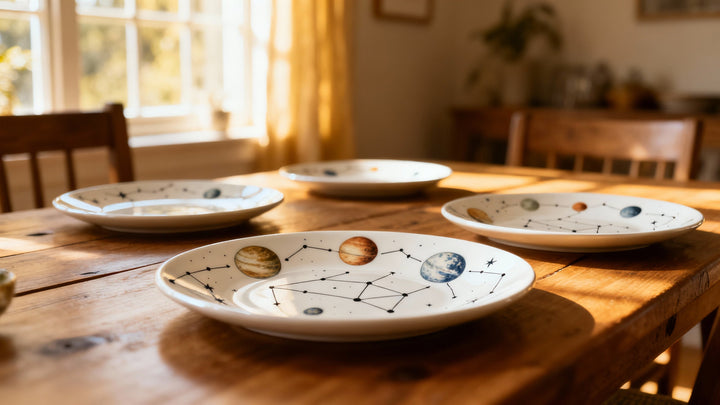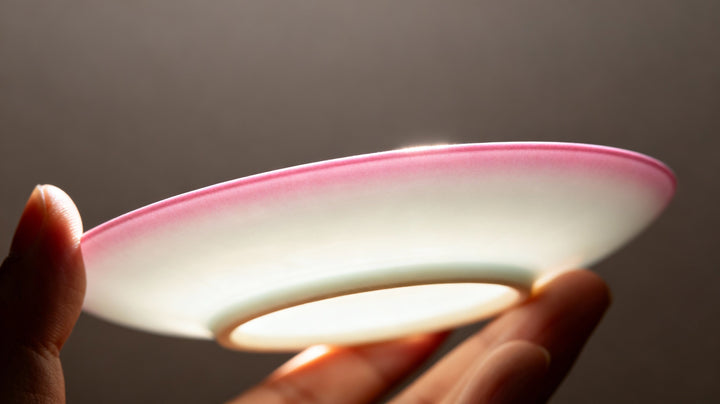


I adore a jubilant porcelain plate. I’ve curated radiant tablescapes where a teal stoneware bowl can change the mood of a meal. But Antarctica—our planet’s wildest deep‑freeze—plays by different rules. Out on the Ice, a delightful mug can become a mischievous stress concentrator, a glaze can turn fragile at the worst moment, and a hairline crack can blossom into a snowstorm of shards. This is the pragmatic, joyful case for why many station managers choose to ban or strongly discourage ceramics in Antarctic research stations—and what to do if your operation thinks an exception is worth the risk.
What a “Ban” Really Protects
A ban in this context isn’t anti‑beauty or anti‑craft. It’s pro‑safety, pro‑uptime, and pro‑science. Field stations juggle heated interiors and bone‑chilling exteriors, abrupt transitions between galley sinks and outdoor loading bays, and an ever‑present dance of humidity, salt, and frost. The calculus is simple: reduce breakage and contamination, simplify logistics and cleaning, and keep field teams safe and focused. When you map that to how ceramics behave in extreme cold and quick temperature swings, the risk column fills fast.

The Polar Physics That Make Ceramics Misbehave
Cold brittleness is real, and ceramics start there
Materials get more brittle as temperature drops. Physicists describe a ductile‑to‑brittle transition where, at low temperatures and higher strain rates, cracks race ahead because defects can’t move fast enough to relieve stress. Ceramics, which are already brittle at room temperature, sit at the painful end of this spectrum. Expert explanations of brittle versus ductile fracture mechanisms show why at subzero conditions even a modest, concentrated impact can make cracks advance instead of blunt, especially when geometry funnels stress to rims or handles. In plain terms: in the cold, a mug is more likely to snap rather than shrug.
Thermal shock turns kitchen moments into fracture tests
Ceramics conduct heat poorly, so when one surface heats or cools fast, steep temperature gradients set up internal stresses. Rapid moves—like carrying a room‑temperature cup into a frigid vestibule, or tossing very hot water into a cold mug—create exactly the kind of uneven expansion and contraction that crack ceramics. Practitioners who work with porcelain and earthenware in winter note that thicker walls moderate gradients, while thin, delicate pieces are the first to ping. Floor‑tile installers warn about the same physics outdoors: moisture, cold, and sudden swings are a cracking cocktail. Antarctic stations multiply these swings every time a door cycles or a pot leaves a warm galley for an unheated annex.
Freeze–thaw plus porosity equals spalling and crumbling
Water expands about 9% as it freezes near 32°F, and that expansion can generate forces that exceed 30,000 psi—enough to outmuscle cast iron. In a porous ceramic, those freeze‑thaw cycles wedge open pore networks and craze lines until the body flakes and the glaze spalls. Ceramic materials specialists define absorption and porosity as the paired villains: if open pores fill with water, ice formation can detach flakes, and repeated cycles create microcracks that slowly turn a once‑lovely surface into a chalky mess. For outdoor‑tolerant bodies, makers target low absorption and lower saturation coefficients; in the field, many conservators and potters treat high‑absorption earthenware as strictly indoor‑only in freeze climates.
Salts and humidity swings amplify damage
Conservators warn that soluble salts migrate with humidity changes, crystallize, and disrupt ceramic bodies and glazes. In stations near the coast, sea‑salt aerosols hitch rides on wind and gear. Inside, heated rooms dry out, flush humid air at meal times, and then swing again when doors open. Museum guidance sets conservative targets of about 59–77°F and roughly 40–60% relative humidity with minimal daily swings; not because ceramics are always hyper‑sensitive, but because extremes and flips in either direction can crack bodies, craze glazes, and stress old repairs. Antarctica is a world built of extremes and flips.
Inside the Station: Where Everyday Rituals Stress Ceramics
Heated air meets snow‑cooled gear. Dishwashers meet vestibule gusts. People carry mugs in gloved hands through corridors that alternately bake and bite. The rhythms of a station conspire against ceramic resilience. A plate warmed under heat lamps can hit a cold prep counter and ping. A bowl carried outside for a quick cool‑down can return to a hot rinse and crack. Repair adhesives—if anyone tried to fix “just that one favorite cup”—can be especially vulnerable; conservation labs note that adhesives are adversely affected by abrupt changes and extremes, meaning a repaired piece is the last thing you want to bet a meal service on. Decorations, gilding, and overglaze enamels are more light‑ and environment‑sensitive than plain bodies, giving the most joyful finishes the least resilience.
Evidence From Practice: What Winter Teaches
Field experience in snowy regions backs the engineering. A sculptor who leaves work outdoors year‑round in Maine reports low‑fire pieces showing glaze flaking after about two winters, while properly fired mid‑ and high‑fire bodies fare better. Conservation guidance echoes that lower‑fired, higher‑absorption bodies are at greater freeze‑thaw risk, and ceramic technologists show that tighter, stronger firing profiles and lower porosity push the odds in your favor. The underlying physics is the same from a New England backyard to McMurdo’s wind‑scoured platforms; the only difference is Antarctic stations string together more severe cycles, faster, and with higher consequences for a bad break.

Risks That Justify a Station‑Wide “No Ceramics” Policy
The strongest reason is injury and contamination. A brittle break produces sharp shards, needle‑fine slivers, and hidden fragments that can lodge in tread patterns or fall into drains. In a research kitchen or lab, that means time lost to deep cleaning and an elevated risk to hands, food, and instruments. The second reason is reliability. Ceramics follow the rules of thermal shock and freeze‑thaw every time; even if a piece survives dozens of cycles, the next one may be the one that propagates a barely visible flaw. The third reason is maintenance overhead. Monitoring for crazing, microcracks, or salt‑driven surface changes adds work and still can’t eliminate surprise failures. And for stations near the coast, salt exposure and humidity swings nudge already brittle bodies closer to the edge.
Pros and Cons in the Polar Context
It’s fair to weigh the charm of a colorful ceramic table against the realities of the Ice. Ceramics bring inexhaustible aesthetic range, a clean, inert eating surface, and a pleasant heft that says “sit, stay, savor.” Those are genuine pros. But in subzero logistics and station life, the cons matter more. Ceramics are brittle to begin with and get effectively more brittle as temperature falls; they dislike fast temperature swings; porous pieces weather under freeze–thaw; glazes can craze; salts and humidity flips push both body and decoration to the brink; and repairs are untrustworthy in extremes. On balance, the risk profile eclipses the delight.

If Exceptions Are Considered: How To Stack the Deck in Your Favor
If an operation decides to pilot limited ceramics for morale, make the choices like a pragmatic materials engineer. Favor dense, low‑absorption porcelain or well‑matured stoneware, not low‑fire earthenware. Ceramic technologists routinely cite porcelain with near‑zero absorption and the lowest freeze‑thaw risk; stoneware can be a solid compromise if fired to full maturity with compatible glazes. Avoid visibly crazed or repaired pieces. Warm and cool gradually rather than shock your tableware. Store indoors in stable conditions around 59–77°F with gentle humidity control to minimize salt crystallization. Clean gently and dry thoroughly; keep hot rinse water away from cold vessels. Expect to cull anything that develops a ping, a hairline, or a suspicious ring.
A Bright Spot From Materials Science
Anti‑icing coatings and ultralight ceramics hint at a friendlier future. Researchers at UCLA and collaborators have reported a sprayable hydrogel that acts on all three stages of ice formation—nucleation, growth, and adhesion—keeping ice at bay down to about −24°F and delaying freezing for more than an hour at about −13°F on plastics, metals, glass, and ceramics. Another team demonstrated a boron nitride ceramic aerogel that endured hundreds of rapid cycles between roughly −324°F and 1,652°F without fracturing, thanks to a clever architecture and unusual deformation behavior. These are not dining‑room fixes today, but they show that “ceramics plus cold” does not always have to mean “crack.” In the meantime, the safest station policy keeps ceramics out of harm’s way.
Quick Comparison: Ceramic Types for Freeze–Thaw and Thermal Shock
Ceramic type |
Typical absorption (by body type) |
Freeze–thaw risk in field use |
Thermal shock tendency |
Practical note for stations |
Earthenware (low‑fire) |
Often high (frequently above 5–10%) |
High; water uptake drives spalling and glaze flake |
Pronounced; thin walls and poor conductivity amplify gradients |
Avoid; highest breakage risk in cold swings |
Stoneware (mid‑fire) |
Moderate (often around 1–4%) |
Moderate; better if fully matured and low absorption |
Better than earthenware; still sensitive to sudden hot–cold moves |
Possible only with strict handling and screening |
Porcelain (high‑fire) |
Very low to near‑zero |
Lowest among common tablewares; still not invulnerable |
Best of the three; gradients still crack thin forms |
Best candidate if any ceramics are allowed, but still risky |
The absorption ranges reflect typical categories reported by ceramic practice and conservation sources. Real performance depends on exact composition, firing maturity, and glaze fit.
Key Definitions (Because Words Matter in the Cold)
Thermal shock is cracking triggered by rapid temperature change that creates uneven expansion or contraction; ceramics are particularly vulnerable because they conduct heat poorly, so stress builds faster than it can dissipate. Absorption is the percentage of water a fired body can take up; it correlates with porosity but is not identical. In freeze–thaw, higher absorption means more water in more places to expand and pry. Freeze–thaw spalling is the flaking and long‑term crumbling that occurs when freezing water in pores expands and detaches the surface or glaze. Crazing is a fine network of cracks in the glaze; it is visually charming in some aesthetics but structurally hazardous in freeze climates because it lets moisture in and doesn’t share loads gracefully. The saturation coefficient, a ratio used in ceramic testing, compares water take‑up in a room‑temperature soak to uptake after boiling; lower ratios indicate less risk under freeze–thaw because the pore network relieves pressure more effectively. The ductile‑to‑brittle transition is the tendency for materials to shift toward brittle fracture as temperature drops or loading speeds up; in practice it explains why impacts that are survivable in a warm mess hall can shatter a cup at the loading dock.

Practical Playbook for Morale Pieces Without Mayhem
If your culture just can’t imagine a winter without a few joyful cups, treat them like scientific instruments. Before deployment, select dense porcelain or fully matured stoneware with the lowest possible absorption and no visible crazing. Field‑test samples through repeated freezes in a household freezer and controlled warmings; discard anything that pings or shows new lines. At station, store and use only indoors in stable, moderate conditions. Keep mugs and bowls away from extreme temperature steps, especially the move from a warm rinse to a cold corridor or vice versa. Dry thoroughly after washing; standing water in any pore is an ice wedge waiting for its moment. Retire any piece that shows a crack, ring tone change, or flake. And never rely on repairs—adhesives dislike the same extremes that ceramics do.
Why “No Ceramics” Still Makes the Most Sense
All of those mitigations help, but they work by narrowing the use window until the pieces act almost like display objects. Stations need workhorses that survive impacts, cold snaps, door cycles, and rinse routines without asking for a second thought. The physics of glassy glazes, porous networks, and brittle fracture don’t bend to charm or tradition. From conservation labs to cold‑region engineering notes and field anecdotes, the message is consistent: in places that freeze and swing, ceramics fail more often and more dramatically. That is not a judgment on beauty; it’s a vote for reliability when reliability is everything.
A Note on Coatings and Future Options
If your station tracks emerging materials, keep an eye on anti‑icing surface research and ceramics with unusual architectures that tolerate massive thermal cycling. Laboratory reports show ice‑resisting hydrogel films functioning across plastics, metals, glass, and ceramics at temperatures that matter for the Antarctic outdoors, and ultralight ceramic aerogels handling extreme cycling without breaking. These advances won’t change tableware policy today, but they will shape equipment housings, handrails, and sensor skins tomorrow. The day may come when “ceramic” in Antarctica means “tough, tuned, and trustworthy.”
Optional FAQ
Can ceramics be used safely in an Antarctic station if we’re careful? They can be used more safely, but “safely enough” is a moving target in a setting that punishes brittle materials. Dense porcelain and fully matured stoneware survive more freeze–thaw and thermal cycling than earthenware, and careful handling helps. Even so, the shard, contamination, and downtime risks remain higher than alternatives.
Do glazes or decorations change in the cold? Decorations and overglaze enamels are more sensitive to environment. Conservation guidance emphasizes stable temperature and humidity and warns against abrupt swings, which can craze glazes and stress repairs. In freeze‑thaw, craze networks can let water in and accelerate damage.
Is there any anti‑icing trick that makes ceramics “Antarctica‑proof”? Research coatings can delay and loosen ice even on ceramics and have set performance records in the lab, and ultralight ceramic structures have withstood astonishing thermal cycling. Those are promising for equipment surfaces, but they aren’t a general passport for tableware in station life yet.

Closing
I’ll always champion a colorful table, but joy on the Ice is practical, not fragile. Keep the color in your parkas and your playlists; keep the ceramics at home, and let your station’s daily rhythm be the beauty that lasts.
References
Canadian Conservation Institute
Western Australian Museum (Conservation and Care of Collections)
Digitalfire (Outdoor Weather‑Resistant Ceramics)
Dartmouth College, Arctica resources on materials in extreme cold
UCLA Samueli School of Engineering; research reported in Matter on anti‑icing hydrogels
ScienceDaily reporting on boron nitride ceramic aerogel thermal cycling
ScienceLearn (Temperature fundamentals and ceramic firing ranges)
Precision Floor ATL (Cold‑weather tile cracking guidance)
QK Crafts (Ceramic cracking in cold overview)
Moana Nursery (Outdoor pottery protection practices)
- https://newsroom.ucla.edu/releases/coating-to-prevent-ice-formation
- https://collections.dartmouth.edu/arctica-beta/html/EA02b-02.html
- https://pmc.ncbi.nlm.nih.gov/articles/PMC5840396/
- https://pubs.aip.org/aip/adv/article/15/9/090701/3361147/Research-development-of-ultra-high-temperature
- https://www.researchgate.net/publication/229409706_Atmospheric_corrosion_of_reference_metals_in_Antarctic_sites
- https://contractlaboratory.com/high-performance-ceramics-in-aerospace-and-automotive-meeting-extreme-demands-with-rigorous-testing/
- https://digitalfire.com/article/outdoor+weather+resistant+ceramics
- https://www.joyye.com/info-detail/temperature-effects-on-ceramic-tableware-quality
- https://www.moananursery.com/protect-your-pottery/
- https://www.sciencelearn.org.nz/image_maps/temperature-the-hot-and-the-cold