



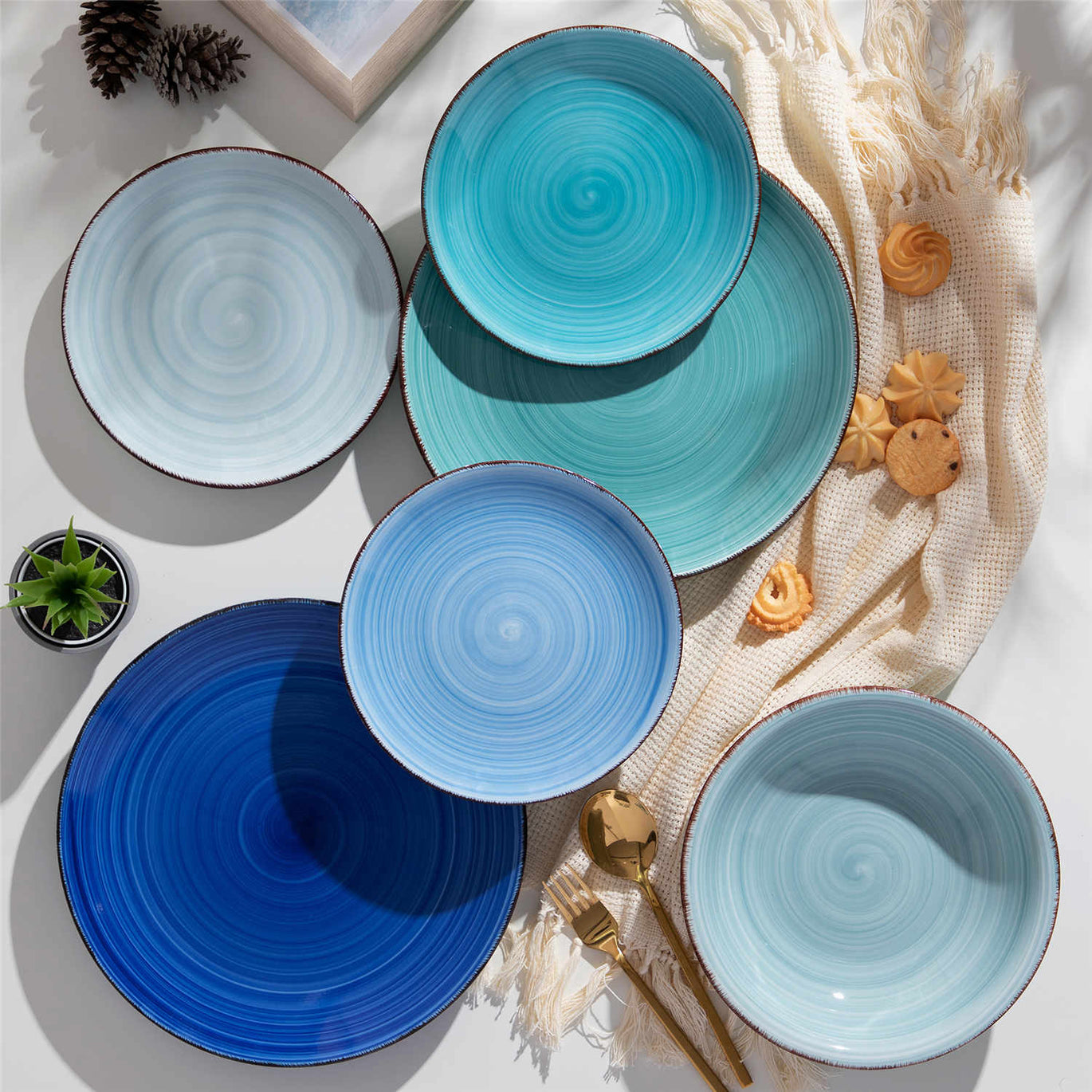


How the Industrial Revolution Made Ceramic Dishware Accessible

Ceramic plates might look calm on your table, but their story is wild. Every stack of dinner plates in a kitchen cabinet, every chipped willow-pattern saucer you find at a flea market, is a tiny monument to noisy kilns, steam engines, global trade routes, and some seriously ambitious potters.
As a color-obsessed tabletop curator, I love pairing a buttery cream earthenware plate with a bold modern mug and then asking a simple question: how did this become normal? How did ordinary families, not just elites, end up eating off fired clay so routinely that we barely notice it?
To answer that, we have to look straight at the Industrial Revolution. Drawing on research from the American Ceramic Society, Chipstone’s work on Anglo‑American ceramic demand, industrial tile and machinery histories, and contemporary sustainability and AI studies, we can see how a very old craft was re‑engineered into an industry that changed everyday dining forever.
And along the way, we’ll make it practical: what this history means for the dishes you choose now, and how to build a joyful, colorful, down‑to‑earth table that honors both craft and industry.
Before Factories: When Ceramic Dishware Was Special, Scarce, and Status‑Heavy
Long before smokestacks and factory whistles, people were already shaping clay into objects that hovered between sacred and practical. Archaeological work cited by the American Ceramic Society points to ceramic figurines from tens of thousands of years ago and some of the earliest pots from East Asia many millennia before written history. That is a very long runway before our weekday pasta bowls.
In early settled farming communities, clay pots were essential tools. They held water, grain, and cooked stews; they also decorated homes and religious sites. According to overviews of European ceramics history, Neolithic vessels across the continent were mostly workhorses, not gallery pieces. They were hand built, dried in the sun or in low‑temperature kilns, and decorated with simple incised lines or painted bands.
Over time, some cultures turned the humble vessel into high art. Ancient Greek potters used black‑figure and red‑figure painting to narrate myths on amphorae and kraters. Under the Roman Empire, finely finished red wares such as terra sigillata were mass produced compared with earlier handwork, but they were still the products of specialized regional centers. Kiln technology improved, but every stage from digging clay to painting details remained labor intensive.
On the other side of Eurasia, Chinese makers achieved something Europeans could only dream about for centuries: true porcelain. Research from the American Ceramic Society notes that by around the early centuries of the Common Era, Chinese kilns were firing specialized kaolin clays at very high temperatures, creating thin, low‑porosity porcelain that dazzled traders across Asia and, eventually, Europe. European collectors nicknamed it “white gold” for a reason.
In Europe, before industrialization, earthenware dominated daily life. Porcelain remained imported, precious, and controlled by wealthy patrons or court manufactories. A Renaissance merchant might afford a few pieces of colorful tin‑glazed majolica from Italy or Iberia as a display of taste, but complete coordinated dinner services were still a luxury. Research on the rise of European ceramics emphasizes that the middle classes were only beginning to fold decorative ceramics into their dining habits during the Renaissance.
In other words, ceramic dishware existed everywhere, but it did not belong to everyone. It was limited by slow hand processes, fragile transport, and the sheer cost of skilled labor. The Industrial Revolution would change all three.

The Industrial Spark: When Technology Met the Dinner Plate
The Industrial Revolution was not a single lightning bolt; it was a chain reaction. In ceramics, that reaction began with hotter kilns, new furnace materials, and a growing appetite for standardized products that could travel long distances without breaking or bankrupting buyers.
Hotter, Tougher, More Predictable
European industry in the fifteenth and sixteenth centuries developed blast furnaces and new refractory materials that could withstand much higher temperatures without collapsing. The American Ceramic Society points out that these advances did not just help with iron; they enabled reliable, high‑temperature melting and firing for glass and ceramics in industrial quantities.
Hotter, more controlled kilns meant more than just nicer glazes. They made it possible to produce consistent ceramic bodies and to fire larger loads with less risk of catastrophic failure. That set the stage for porcelain experiments across Europe and culminated, by the early eighteenth century, in European manufactories such as Meissen finally discovering how to make a local version of the Chinese “white gold.”
At first, this technology served the elite. But the infrastructure behind it—better furnaces, better refractories, better control—was crucial for later mass production of more affordable earthenware and stoneware aimed at everyday households.
From Potter’s Wheel to Production Line
For thousands of years, the potter’s wheel was the star tool. It allowed skilled potters to shape symmetrical vessels far faster than hand building. But it was still human‑powered, human‑paced, and human‑limited.
Industrialization added steam, gearing, and, later, electric power to the mix. Histories of ceramic manufacturing, including work on firms like Wedgwood and Royal Doulton, describe how the nineteenth century introduced mechanized forming equipment, standardized plaster molds, and large continuous kilns. The Industrial Revolution timeline given in modern manufacturing overviews is clear: automated wheels and mass kiln firing allowed factories to produce huge numbers of pieces that matched each other closely.
Pressed and molded wares could be made in shapes and sizes determined by engineers and designers rather than by the day‑to‑day mood of individual throwers. This might sound clinical, but for a family saving for its first full dinner set, it was revolutionary. You could order a dozen plates and reasonably expect them to nest neatly in a cupboard.
Tile production tells a parallel story that spills into dinnerware. Research on British tile manufacturers during the Industrial Revolution highlights the adoption of dust‑pressing methods in the 1840s. Clay dust was compressed into regular, flat tiles that dried and fired more evenly than hand‑cut ones. While that technology was focused on floors and walls, the same obsession with pressing, regularity, and faster drying was spreading across tableware factories in the same regions.
Decorating for the Masses: Transfer Printing and Color
Decoration had always been the bottleneck. A hand‑painted plate could take as long as a thrown one to finish, and the painter’s wage had to be reflected in the selling price. That changed dramatically with printing technologies.
Histories of industrial ceramic tiles explain how transfer printing, developed in northwestern England in the late eighteenth century, allowed engravings on copper plates to be printed onto paper and then transferred onto ceramic surfaces. Later, lithographic printing allowed multiple colors. The same principle was quickly applied to tableware, not just tiles.
Instead of a painter laboring over each scenic plate, factories could print entire batches of landscapes, floral borders, and figurative scenes. The Chipstone Foundation’s detailed study of the Staffordshire firm Cork and Edge shows that by the mid‑nineteenth century, mid‑range manufacturers were selling printed dinner and tea services in patterns with names like “Asian Pheasant,” “Verona,” and “Hong.” These patterns were applied across many shapes, creating coordinated sets at prices ordinary customers could reach.
Printing also carried meaning. Retail orders in the Cork and Edge archives include pieces labeled with local churches, seaside towns, and far‑off places. Dealers ordered “Weymouth Views” jugs, “Blue American Views” ladles, and jugs named after political figures. The Industrial Revolution did not just make more plates; it turned tableware into a printed medium through which people expressed local pride, global curiosity, and personal taste.
Staffordshire Stories: One Region, Many Kitchen Tables
If the Industrial Revolution gave ceramic makers new tools, Staffordshire, in England, is where those tools were pushed hard to throw open the doors to a global market.
By the mid‑nineteenth century, Staffordshire potteries were turning out mountains of everyday earthenware. The Chipstone study of Cork and Edge, a firm with a few hundred workers, shows how a single mid‑range manufacturer supplied an astonishing network of crockery dealers across England, Wales, and Scotland, with dense clusters around cities like Liverpool, Manchester, London, Birmingham, and Edinburgh.
These dealers were not just faceless merchants. Many were women whose names appear in the ledgers: Isabella Johnson, various sisters running shops together, widows keeping family businesses going. They ordered stock, chose patterns, requested specific motifs, and effectively curated what their communities ate from. Through them, industrial ceramics flowed into homes that would never have dealt directly with a grand London showroom or an elite maker.
Cork and Edge’s reach did not stop at the British Isles. The same records show shipments to continental Europe, Canada, the United States, the Caribbean, and South America. Orders went out to places like the Bahamas, Jamaica, and ports in Venezuela, and even an Amsterdam order in the 1860s for a particular printed pattern. This confirms something collectors and historians have long suspected: it was not only famous names like Wedgwood that spread British ceramics worldwide. Mid‑range firms shipped affordable, printed wares everywhere, filling cupboards in boardinghouses, farm kitchens, and city apartments.
Price structures reveal how accessible these items became. While the Chipstone analysis is cautious about comparing across currencies, it highlights that printed “willow” tableware could be as cheap or cheaper than other patterns depending on market, and that utilitarian cream‑colored wares sat at the bottom of the price ladder. The very fact that archives discuss “seconds” and imperfect wares, and note that some customers refused them on grounds of respectability, shows how deep into society ceramic dishware had penetrated. Households could choose between better‑class goods and bargains, not between “some plates” and “no plates.”
Meanwhile, broader histories of ceramic dinnerware point out that by the eighteenth century, and especially into the nineteenth, Staffordshire had become a major production hub offering designs at many price points. Industrialization did not erase luxury; it stacked cheaper options beneath it so a much larger slice of the population could participate in the pleasure of a laid table.
On modern tabletops, those choices still echo. If you compare a dense, mid‑Victorian transfer‑printed plate of the kind Cork and Edge produced with a contemporary machine‑pressed plate from a big‑box store, you feel different priorities: slightly softer rims and bolder patterning in the old piece, almost laser‑regular geometry and minimal decoration in the new. Both are products of industrial thinking, but each reflects its moment’s idea of accessible beauty.

What Accessibility Actually Meant for Everyday Families
Industrialization did not simply flip a switch from “rare” to “common.” It reshaped what families could own, how they signaled respectability, and how they experienced their meals.
Accounts of nineteenth‑century ceramic consumption in Britain and the United States stress that tableware became a key marker of social meaning. Correspondence from crockery dealers shows that buyers of better‑class goods did not want “seconds,” especially in more visible wares like tea services. Designs were ranked in letters with comments about which patterns customers preferred and how older patterns needed to be discounted. This fine‑grained differentiation only happens once ceramics are mainstream enough that many people can choose among multiple lines.
At the same time, historical overviews of ceramic dinnerware emphasize a big structural shift: in the nineteenth century, mass production techniques dramatically increased output, expanded the range of designs, and lowered costs. Ceramic dinnerware moved from a semi‑luxury to a “household staple,” a phrase that appears again and again in modern summaries. By the late nineteenth and early twentieth centuries, studies of European ceramics describe mass‑produced wares as the norm, with studio and artisanal pieces existing alongside them as a more limited, often higher‑priced niche.
You can feel that change in your own kitchen. The fact that you might own eight matching dinner plates, plus side plates, bowls, and maybe even coordinating mugs, is a direct descendant of nineteenth‑century industrial logic. The factory does the matching; you get to focus on the menu.

Industrial Ceramics: Benefits and Trade‑Offs
To really understand how the Industrial Revolution made ceramic dishware accessible, it helps to lay out what changed. The story is not one‑sided. There were major benefits for everyday life and some serious costs beneath the glossy glaze.
Here is a snapshot comparison grounded in historical and contemporary research.
Aspect |
Before industrialization |
After industrialization of ceramics |
Availability |
Limited, often regional, with many pieces made to order |
Mass production; wide ranges sold through national networks |
Price and affordability |
High relative to income; sets were luxury items |
Prices dropped; full dinner services within reach of more households |
Consistency and sizing |
Variability by maker; mismatched sizes common |
Standardized sizes, nesting stacks, coordinated ranges |
Decoration |
Hand painted; slow and expensive |
Transfer printed and later digitally printed; fast and repeatable |
Distribution |
Local markets and elite export channels |
Dense dealer networks and global shipping routes |
Everyday meaning |
Strong status signal reserved for narrower elites |
Respectability tied to pattern choice and condition, not just ownership |
Labor and skills |
Highly artisanal, more local yet limited in scale |
Factory labor, specialized skills, and eventually automation |
Environmental footprint |
Lower total volume but less efficient firing and transport |
Vastly higher volume with energy‑intensive firing and global logistics |
For diners, the upside was clear. Families could buy more durable, attractive, and coordinated dishes. Hospital kitchens, cafes, and restaurants could outfit themselves with sturdy sets. Industrial tile histories even show how ceramic wall and floor tiles became central to new public health regulations, lining kitchens, bathrooms, hospitals, and shops because they were easy to clean and durable. That same hygienic logic applied to plates and cups in commercial settings.
But the table also carried invisible costs. Workers handled lead‑bearing glazes and inhaled dust, leading to respiratory diseases that reformers later fought to reduce. Histories of industrial tile production explicitly mention emphysema and lead poisoning among decorators, many of whom were women performing detailed transfer and glazing work. Those hazards shadowed the lower retail prices enjoyed by customers.

The Human Side: Skills, Work, and What We Almost Lost
The Industrial Revolution did not end with Victorian steam. It continued into the twentieth and twenty‑first centuries, increasingly moving production overseas and automating steps that were once manual. That story shows up starkly in recent research on industrial pottery skills compiled by a heritage organization in the United Kingdom.
A survey of industrial pottery businesses there documents how many practitioners remain for specific skills. The numbers are sobering: only a handful of throwers and turners, almost no traditional flatware pressers, and extremely small numbers of decorators capable of historic techniques such as slip trailing, sgraffito, and pâte‑sur‑pâte. Some processes, like saggar making, are effectively extinct at industrial scale.
Mould making and modelling still exist but are often outsourced to a shrinking pool of freelance specialists, limiting opportunities for apprenticeships. Underglaze and on‑glaze decoration skills such as copperplate engraving, tissue transfer, and gilding concentrate in a small number of older practitioners. Many of these artisans work beyond retirement age, and younger people rarely get chances to learn on a factory floor.
This is the flip side of accessible dishware: as industrial production sought to be faster, cheaper, and more consistent, it squeezed out some of the slower, more tactile skills. Large‑scale production shifted to other countries, leaving behind demonstration pieces for tourists but not always robust, living skill ecosystems.
For a tabletop lover, there is a bittersweet note here. The very plates that democratized dining also helped risk the disappearance of the techniques that made early industrial wares so characterful.

The Environmental Lens: Energy, Emissions, and Ecodesign
Modern sustainability research asks a tougher question: at what environmental cost did all this accessibility arrive? A life‑cycle assessment of ceramic tableware published in the sustainability literature compares several production routes, from ancient‑style pit firing to modern automated factories.
The findings highlight that ceramic bodies and waste themselves are largely inert and non‑toxic. The real issue is energy and emissions. High‑temperature firing and repeated firing cycles consume significant energy and generate combustion emissions. Large industrial factories, especially those producing porcelain, may fire bodies and glazes at temperatures far above what small artisanal kilns need, and they do so at scale.
Ecodesign, as defined in this research, tries to integrate environmental considerations into everything from raw material choice and packaging to firing schedules and product durability. Surveys of ceramic producers in countries like Portugal, Spain, and Greece suggest that many companies see ecodesign as crucial for competitiveness, but they often lack systematic guidance on how to implement it.
Meanwhile, global analyses of the broader ceramic and glass sector project industry values approaching the trillion‑dollar range, underscoring how big the stakes are. Making plates for everyone is not a small environmental side story; it is woven into global energy use.
For our ceramic dishware to stay joyfully accessible in the future, the industrial revolution needs a green sequel.
From Steam to Sensors: Industrial Innovation on Today’s Table
If you tour a modern stoneware or porcelain factory, the spirit of the Industrial Revolution feels familiar, but the tools have leveled up.
Contemporary manufacturing overviews describe forming methods such as slip casting, pressing, and extrusion, all optimized for near‑net shapes that minimize grinding and polishing later. High‑volume producers use multi‑stage quality control, starting with raw materials and continuing through forming, firing, and final inspection, to ensure that stack of plates on your shelf is safe, durable, and food‑grade.
In some plants, cameras and algorithms now stand where inspectors once did. A study of a Portuguese stoneware tableware factory describes installing an industrial camera and lighting system over the line, feeding images into a convolutional neural network. After training and fine‑tuning, the system reached around 98 percent accuracy in distinguishing defective pieces from acceptable ones, in real time. This allows defective items to be pulled earlier, reducing waste and preventing flawed pieces from reaching customers.
Other research on the global ceramic dinnerware market points out how artificial intelligence and automation also support demand forecasting, inventory management, and even market research. Instead of relying solely on slow surveys, manufacturers can analyze social media, reviews, and order data to understand which colors, shapes, and patterns resonate with different regions or demographics.
Supporting all of this is a new generation of machinery: presses, glaze lines, and intelligent handling systems that run around the clock, described in recent industry analyses. Regional clusters that invest in this machinery gain competitive advantages in product quality and delivery speed. Smaller factories can “overtake on a curve” by adopting cost‑effective machinery to compensate for their smaller staff and research budgets.
At the same time, there is a strong push for greener production. Articles on ceramic machinery stress energy management, waste recycling, and exhaust treatment as central design goals. Manufacturers are advised to choose equipment that meets environmental standards and to think beyond purchase price to long‑term energy and maintenance costs.
So the Industrial Revolution did not end; it just swapped steam gauges for data dashboards. Your dishwasher‑safe white dinner plate may be the descendant of centuries of kiln innovation and, now, a flash of machine vision that checked it for pinholes before it left the factory.
Practical Tabletop Choices in an Industrial World
All this history is fascinating, but the real fun starts when you open your cupboard. How can you let this story guide what you actually buy, mix, and enjoy on your table?
First, embrace the power of mass‑made. Historical and modern sources agree that industrial methods have made ceramic dinnerware durable, affordable, and widely available. Contemporary summaries from brands and manufacturers highlight that well‑made ceramic plates are non‑toxic, do not leach harmful substances, and do not affect the taste or smell of food when produced with modern, compliant glazes. This makes them an excellent baseline for everyday dining.
Second, layer in character where it counts. The nineteenth‑century dealer letters that ranked patterns and rejected seconds show that people have always enjoyed using their dishes to express taste. You can mirror that by choosing a reliable, neutral mass‑produced base (for example, plain white or soft gray plates) and then adding a few bolder pieces: a vintage transfer‑printed platter, an artisan‑made serving bowl, or a set of mugs with hand‑painted details. The industrial base keeps things practical; the crafted accents bring the storytelling.
Third, think about longevity. Sustainability research on ceramic tableware suggests that, once you account for the energy used in firing, the best environmental strategy is to keep pieces in use as long as possible. That means choosing shapes you will still like years from now and glazes robust enough to handle the way you actually cook and entertain. A classic coupe dinner plate in a versatile color will carry you through more weeknight pastas and holiday feasts than a novelty shape that feels dated next season.
Fourth, consider where craft and endangered skills matter most to you. Reports on industrial pottery skills show just how close some techniques are to disappearing. If you love the look of hand‑painted details, gilded rims, or sculpted relief work, seeking out a few pieces from studios or heritage‑focused makers can directly support those skills. You do not need a full twelve‑place service; a pair of dessert plates or one dramatic serving piece can showcase human touch at the center of an otherwise industrially produced spread.
Finally, color with intention. Modern industry has given us stable, brilliant pigments and stains that perform well under high firing and heavy use. Studies of pigment development mention refined cobalt‑based blues and other reformulated glazes designed for both beauty and safety. This means you can confidently choose bolder hues without worrying that a vivid turquoise will fade after a few washes. For a playful, approachable tabletop, combine one saturated accent color with a more muted base; your eye will read the whole table as cohesive rather than chaotic.
A Couple of Quick Questions
One common question is whether industrially made ceramic dinnerware is truly safe. Contemporary overviews of ceramic materials emphasize that modern, properly formulated tableware is designed to be non‑toxic and inert in contact with food. Reputable manufacturers subject their products to food‑grade and safety testing, and regulators restrict the use of hazardous glaze ingredients that were once common. If you are unsure about a decorative vintage piece, consider using it for serving dry items or as a display object while relying on newer dishes for everyday meals.
Another frequent question is whether mass‑produced plates can ever feel “special” compared with handmade ones. History suggests that they already do. Nineteenth‑century households took pride in choosing particular printed patterns and in keeping them in good condition as signs of respectability. Today, you can recreate that ritual in a more relaxed way by choosing a pattern or color story that feels like your household’s signature. Industrial processes give you the consistency to build that signature over time; your creativity does the rest.
Closing: Raising a Colorful, Industrially Enabled Toast
The Industrial Revolution did not just fill factories; it filled tables. By combining hotter kilns, smarter machines, printed decoration, global dealer networks, and, eventually, digital sensors and eco‑design, it transformed ceramic dishware from carefully rationed treasure into an everyday canvas for color, comfort, and connection.
Every time you set out a joyful, mismatched spread of bowls and plates, you are quietly collaborating with centuries of innovators, factory workers, and craftspeople. So the next time you hear your plates clink together, let that sound remind you: accessibility can be beautiful, and a thoughtfully curated, industrially enabled tabletop is one of the most delicious proofs.
References
- https://cladistics.coas.missouri.edu/assets/pdf_articles/AAMT11.pdf
- https://pmc.ncbi.nlm.nih.gov/articles/PMC10781230/
- https://www.jstor.org/stable/25616082
- https://ceramics.org/about/what-are-ceramics/a-brief-history-of-ceramics-and-glass/
- https://chipstone.org/article.php/414/Ceramics-in-America-2008/Comparative-Studies-in-Anglo-American-Ceramic-Demand
- https://thebhc.org/sites/default/files/beh/BEHprint/v025n1/p0013-p0018.pdf
- https://kuey.net/index.php/kuey/article/download/8542/6418/16478
- https://www.hommar.com/the-benefits-of-ceramic-press-machines-for-dinner-plate-sets.html
- https://elitepublishing.com.au/ceramic-tile-industrial-revolution/
- https://www.ctcountryantiques.com/post/breakable-treasures-american-ceramics-in-the-19th-century
Tu pourrais aussi aimer
Stern Ensemble de vaisselle 16 pièces
- À partir de £58.00
£77.00- À partir de £58.00
- Unit price
- pour
-
Blue
-
Green
-
Red
-
Grey
Bonita Service de table 18 pièces
- À partir de £49.00
£61.00- À partir de £49.00
- Unit price
- pour
-
Blue
-
Multicolor
Simi Ensemble de vaisselle de 24 pièces
- £77.00
£104.00- £77.00
- Unit price
- pour
Service de vaisselle étoilé 16 pièces
- £60.00
£70.00- £60.00
- Unit price
- pour
-
Blue
-
Green
-
Red
-
Gradient Green