



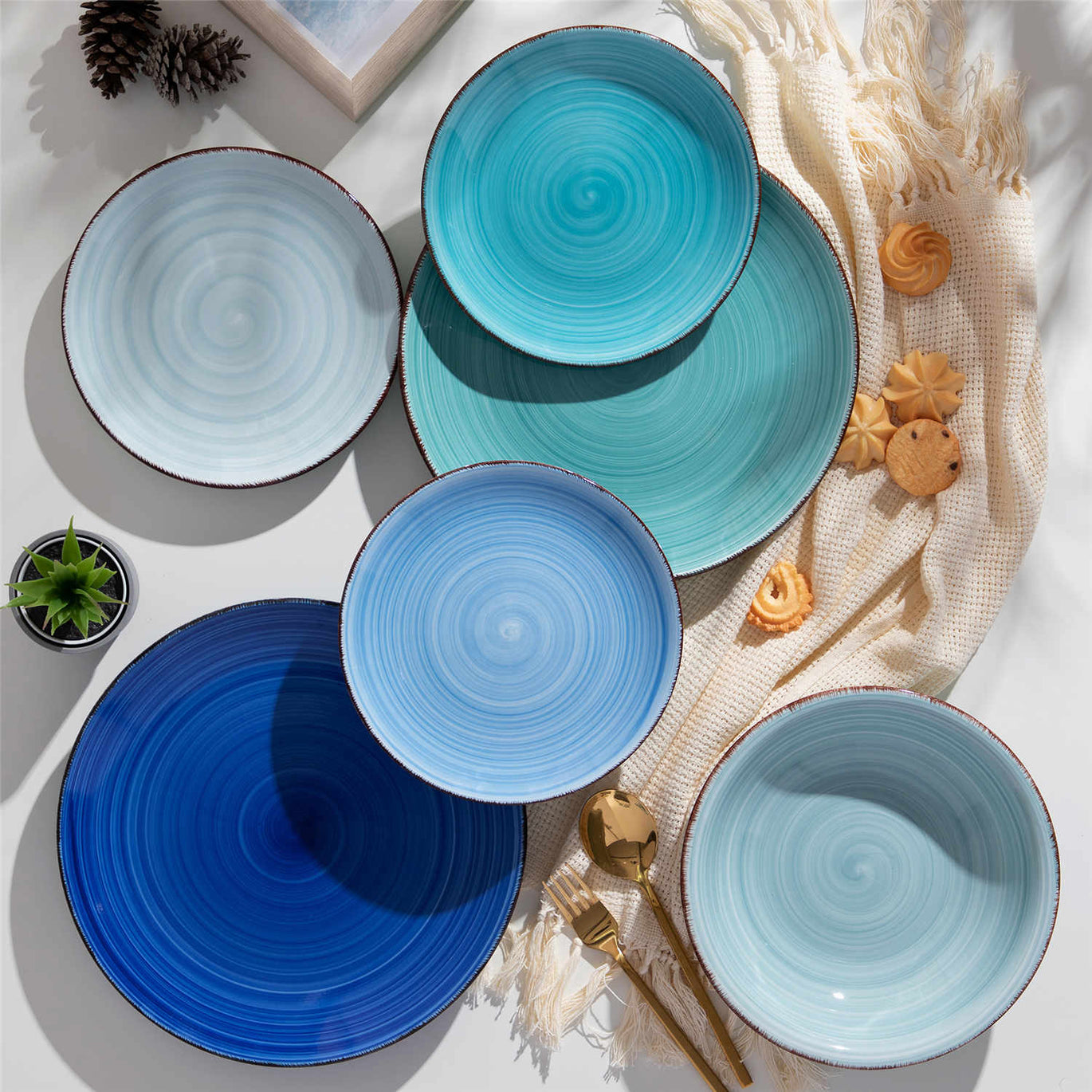


Innovative Quantum Dot Technology in Ceramic Glazes for Anti-Counterfeiting

The dining table is where stories unfold and brands live or die in the details. In an age of copycats, we need security that honors delight. That is exactly where quantum dots, those tiny, brilliantly disciplined color sources from display science, earn a seat at the table. By embedding quantum dots into ceramic glazes and glassy backstamps, we can create covert spectral signatures that are durable, discreet, and verifiable in seconds—no visual clutter, no compromise to beauty. Think sparkling authenticity that only appears under the right light, designed with the same care you bring to plating a vibrant summer salad.
Why the Tabletop Needs Smarter Color Codes
Counterfeiting chips away at trust. For tableware makers and hospitality brands, the goal is to protect identity without shouting. Traditional anti-counterfeiting tricks—holograms, labels, or visible inks—can feel out of place on artful ceramics. Quantum dot signatures solve the mismatch. They remain invisible in daylight, yet spring to life under targeted illumination to broadcast a fingerprint-like spectral code that’s almost impossible to replicate casually. The magic is in their narrow emissions and tunable color, born in the labs of display engineering and now ready for an elegant life in glazes.

A Quick Primer on Quantum Dots That Love Ceramics
Quantum dots are semiconductor nanocrystals generally smaller than ten nanometers whose color is steered by size and composition. Unlike broad, fuzzy glows from conventional phosphors, their emissions can be exceptionally narrow, often under fifty nanometers in full width at half maximum. That tight spectrum enables crisp, repeatable color signatures. As the ACerS Bulletin explains, the display industry’s color standards rely on precise primaries; the Rec.2020 triangle, for instance, specifies red, green, and blue primaries at about 630, 532, and 467 nanometers with stringent purity. That same idea—pinpoint peaks and stable brightness—is exactly what a covert glaze watermark needs.
Chemistry matters. Cadmium-based systems like CdSe with protective shells reach dazzling photoluminescence quantum yields, but regulatory regimes, notably in the EU, push industry toward cadmium-free alternatives. InP-based quantum dots are already commercial mainstays, trading a bit of peak sharpness and process ease for a healthier environmental profile, as described in ACerS Bulletin discussions of RoHS-compliant materials. Perovskite nanocrystals are the free spirits of the group, frequently showing near-unity quantum yield and narrow lines right out of the pot, along with tunability from blue to deep red. However, their ionic nature makes surfaces sensitive; strong encapsulation is the price of admission for perovskites, a theme echoed in sources from Sigma-Aldrich and RSC Nanoscale.
Ligands, the organic “fur coats” that protect colloidal dots in solution, become divas in the kiln. They are sensitive to heat, oxygen, and moisture. That is why ceramic and glass matrices are so appealing. Embedding the dots directly into an inorganic host eliminates fragile organics and unlocks a ceramic-grade toughness. ACerS Bulletin describes quantum-dot-embedded glasses that maintain intensity at about 392°F with no meaningful degradation after roughly two years in ambient air. That is not just display-level stability; it is dinnerware-level stability.
From Displays to Dishes: Embedding Quantum Dots Into Tough, Beautiful Glazes
Quantum-dot-embedded glass, often abbreviated QDEG, is formed by dissolving the right elements into a molten glass and heat-treating to nucleate the nanocrystals inside. ACerS Bulletin details a demonstration in silicate glass that used a melt-quench around 2,462°F followed by a heat treatment near 968°F. The result is a dense, inert host with dots locked inside like tiny gemstones. Because the dots grow in place, there are no fragile ligands to burn off or replace. Adjusting heat-treatment duration and the glass layer’s thickness tunes both hue and brightness, a deliciously ceramic kind of control.
When the process needs to stay cooler, ceramic science offers room-temperature routes. A ScienceDirect report on aerosol deposition describes quantum-dot ceramic films formed without heat or solvents, yielding robust layers that withstand heat and humidity stresses while maintaining color coordinates with minimal shift. In display backlights, those films show high color rendering and notable stability at about 185°F and eighty-five percent relative humidity. That durability speaks our language: dishwashers, serving heat, and the occasional outdoor brunch demand coatings that keep their cool.
Perovskite nanocrystals in glass, often called PNEGs, add another option. ACerS Bulletin has shown that PNEGs can recover after light and heat stress and even tolerate prolonged water exposure with only limited decay in emission intensity when prepared in certain compositions. This resilience, paired with their exceptional tunability, makes them candidates for sophisticated anti-counterfeiting signatures—so long as encapsulation is up to the challenge.

Designing Spectral Watermarks That Verify Without Shouting
Covert marks should be felt, not seen, at the dinner table. The trick is to use spectral fingerprints that normal light ignores and inspection light adores. There are three practical avenues you can mix and match for a signature that is hard to forge but easy to check.
Color coordinates as a signature
Quantum dots shine because they emit in exactly the “right” places. The Rec.2020 primaries around 630, 532, and 467 nanometers offer anchors for dual or tri-peak “constellations.” You can design a glaze that contains two narrow emissions subtly offset from those anchor points, creating a code that looks like a miniature star chart in a portable spectrometer. ACerS Bulletin notes that precise peak placement and narrow bandwidth are essential for color purity in displays; the same requirement makes counterfeiters’ lives hard in ceramics. Core–shell designs and alloyed compositions help squeeze the emission width while improving yield, and quantum-dot-in-glass removes the fragile ligands that otherwise limit heat and humidity performance.
Dual-mode codes using light and heat
Glass-ceramics with PbS quantum dots demonstrate a graceful blue-shift in emission with temperature across everyday ranges. MDPI Nanomaterials and a summary on AZoQuantum report that a PbS glass-ceramic sample optimized at about 500°C for ten hours showed a wavelength sensitivity near 0.21 nanometers per °F, while similar fiber-based sensors reached approximately 0.31 nanometers per °F, with stable, repeatable response up to roughly 410°F. Imagine scanning the same backstamp at room temperature and then after a brief warm-up and seeing the expected tiny, linear shift. That second factor, a thermo-optical signature, sensibly raises the bar for fakers without complicating verification.
Near‑infrared layers that stay invisible until asked
PbS quantum dots emit in the near- to mid-infrared and can be precipitated in glass, according to PubMed Central and AZoQuantum coverage. A thin NIR-coded layer tucked under a clear glaze remains invisible to the eye but pops under a simple NIR check. In mixed systems, you can pair a visible peak for quick checks with a hidden NIR peak for deeper validation. This “two-room password” is particularly useful for brand audit teams working across multiple sites.
Materials Menu: Which Quantum Dots Belong in Dinnerware Glazes
Candidate system |
What it is |
Strengths for anti-counterfeiting |
Main watch-outs |
Noted sources |
CdSe-based core/shell QDs |
II–VI semiconductor dots with protective shells |
High quantum yields and narrow lines for crisp spectral codes; decades of know-how |
Regulatory restrictions on cadmium; design teams often prefer cadmium-free paths |
ACerS Bulletin; Nature overview pieces |
InP-based core/shell QDs |
Cadmium-free III–V dots with multi-shell passivation |
RoHS-friendly with good purity; already used commercially |
Somewhat lower performance than Cd-based; synthesis more complex |
ACerS Bulletin |
Perovskite nanocrystals in glass |
CsPbX3 family embedded in glass matrices |
Near-unity quantum yield; exceptionally narrow lines; room-temperature synthesis possible |
Moisture and ion migration demand strong encapsulation; lead content considerations |
ACerS Bulletin; Sigma-Aldrich; RSC Nanoscale |
PbS QDs in glass-ceramics |
Chalcogenide dots precipitated in glass |
NIR emissions ideal for invisible channels; predictable thermal blue-shift enables dual-mode codes |
Requires careful heat-treatment and optical design to avoid self-absorption; lead content considerations |
MDPI Nanomaterials; AZoQuantum; PubMed Central |
QD-embedded glass (QDEG) |
In-situ grown QDs in silicate glasses |
Ligand-free robustness, thermal and chemical stability; long-term ambient stability demonstrated |
Emission bandwidth can broaden from size distribution; photoluminescence can be lower than best colloids without optimization |
ACerS Bulletin |
QD–ceramic films by aerosol deposition |
Room-temperature ceramic embedding of QDs |
Durable films with minimal chromaticity drift under heat and humidity; solvent-free processing |
Requires ceramic-compatible QD surfaces and careful optical stack design |
ScienceDirect reports |
Making It Stick: Processing Pathways That Respect Both Beauty and Durability
There are three practical ways to bring these materials into ceramic workflows while protecting aesthetics. The most classic approach is melt–quench glass with in‑situ QD nucleation. At furnace temperatures around 2,462°F and follow-on heat treatments near 968°F, you can grow dots within a silicate layer that later becomes part of a backstamp or inlay. ACerS Bulletin reports intensity maintained at about 392°F and long-term ambient stability near two years, reassuring for service conditions from sideboard to service pass.
For cold processing and sensitive substrates, ceramic aerosol deposition becomes a versatile option. ScienceDirect publications show that quantum-dot ceramic films formed at room temperature and humidity‑resistant optical stacks can be stacked onto existing glaze structures. This approach is attractive for last-mile personalization since it decouples patterning from the firing curve of the main piece.
Sol–gel and related low-temperature densification open a third lane. By exchanging native ligands for silane or phosphonate anchors, then co‑condensing in silica-rich networks, you can integrate dots into thin, transparent, ceramic-like coatings without excessive thermal stress. Reviews on quantum dots in ceramic matrices emphasize the importance of interfacial chemistry, refractive index matching, and preventing aggregation to maintain brightness and clarity.
Pros and Cons in the Real World
The upside is compelling. Spectral signatures created with quantum dots are precise, compact, and highly tunable. They can remain visually unobtrusive, living in clear coats that look like any premium backstamp until excited by the right light. QD-embedded glass or ceramic films handle heat, humidity, and oxygen far better than polymer encapsulants, a point the ACerS Bulletin makes with data on high-temperature endurance and multi-year ambient stability. Perovskite nanocrystals expand the palette to luxurious, ultra-narrow hues, and PbS in glass unlocks invisible near-infrared channels and temperature-dependent checks.
Tradeoffs are real and must be managed with intention. Regulatory pressure against cadmium moves many programs toward InP-based systems, which can demand more sophisticated synthesis and sometimes deliver slightly broader lines. Perovskite nanocrystals need stout encapsulation to survive water and heat over time. QD-embedded glass without precise growth control can show broader emission bands or lower quantum yield; techniques like alloyed shells and careful heat schedules, described by ACerS Bulletin, improve both. Room-temperature techniques like aerosol deposition solve thermal stress issues, but surface chemistry and optical stack design remain critical to avoid scattering and pump leakage.
Verification Toolkit and Workflow You Can Adopt Today
Start by sketching the signature you want to protect. Many brands choose two visible peaks that sit near the Rec.2020 primary coordinates so inspectors with pocket spectrometers can verify against a tight pass window. If you want deeper security, add a near-infrared peak placed outside human vision. Perovskite-in-glass or PbS-in-glass layers deliver that third, secret channel. Consider a dual-temperature read for high-value pieces. A brief, controlled warm-up produces a tiny blue shift in PbS glass-ceramic emission; a linear slope near 0.21 nanometers per °F for bulk glass and around 0.31 nanometers per °F for fiber embodiments has been reported in MDPI Nanomaterials and summarized by AZoQuantum, and that predictable change is remarkably hard to counterfeit convincingly.
Next, pair the signature with a process route that fits your production. In a factory setting already comfortable with glass decals and backstamps, a QD-embedded glass frit layer makes sense. Adjust heat-treatment time to nudge color into the target window, then protect with a compatible clear glaze. If last-step personalization is the priority, use room-temperature ceramic films built by aerosol deposition with dots embedded in oxide hosts. For boutique runs or artist studios, sol–gel thin coats that lock to silica-rich glazes can be patterned without heavy capital equipment.
Finally, calibrate and codify inspection. Because quantum dots have narrow emissions, you can set tight tolerances around peak positions and relative intensities that a handheld spectrometer can verify within seconds. Define acceptable drift over service life and record reference spectra by batch. If you choose a temperature‑dependent second check, document the warm-up protocol and acceptance slope in nanometers per °F. Your quality team will appreciate that the test is as satisfying as snapping a sharp mise en place.
Sustainability and Compliance Considerations
Regulatory trends nudge materials choices. ACerS Bulletin notes that cadmium restrictions under EU RoHS have accelerated adoption of InP-based quantum dots, a path that preserves high performance while respecting compliance. Perovskites contain lead but can be encapsulated robustly in glass matrices to reduce exposure, a direction reported in Nanoscale and Nature-style reviews discussing stability improvements through inorganic matrices and surface-state management. Whether you choose InP, optimized perovskites, or PbS-in-glass for near-infrared, your design dossier should pair materials safety with process durability so that security markings live a long, quiet life on the underside of a plate.
Cost and Scale Reality Check
Quantum dots are not niche lab curios anymore. BCC Research has tracked the market’s swift rise, with total revenues growing from hundreds of millions toward multi‑billion levels and production shifting from batch to continuous multi‑kilogram per day processes. Prices that once hovered near five figures per kilogram have trended down aggressively as demand scaled and suppliers matured, with projections falling toward the low hundreds. ACerS Bulletin points to scalable microreactors and continuous synthesis as growth levers, which means anti-counterfeiting programs can evolve from pilot to platform without a costly reinvention at each step.
What Success Looks Like on the Table
A piece passes the candle test. In normal dining light it looks like itself—glossy, crisp, and joyful. Under a handheld check, a pair of narrow peaks lock into place on the screen, perhaps with a whisper of near‑infrared at a second tap and a tiny thermal blue shift when warmed. The signature is elegant, private, and hard to fake. Most importantly, it does not interfere with the dining experience. In the Colorful Tabletop world, that is the holy grail: security that harmonizes with celebration.
Frequently Asked Questions
Will the spectral mark change the color of my glaze in normal light?
Properly designed layers employ low loadings, narrow emissions, and either clear or near‑infrared channels. As demonstrated in ACerS Bulletin discussions of quantum‑dot‑embedded glass and in ScienceDirect reports on ceramic QD films, these systems are engineered to remain visually subtle in ambient light while springing to life under blue or near‑UV excitation. With a clear topcoat and tuned layer thickness, the eye sees the glaze you chose, not the security code beneath.
Can I avoid heavy metals entirely?
InP-based dots are the leading cadmium‑free choice and have already proven commercial viability, according to ACerS Bulletin. Perovskite nanocrystals are cadmium‑free as well, though they contain lead; glass encapsulation and inorganic matrices, as highlighted in Nanoscale and Nature-style reviews, help mitigate exposure and stabilize performance. If you require fully metal‑free optics, some emerging carbon-based approaches exist outside the notes provided here, but they generally lack the narrowband purity that makes quantum dots ideal for covert spectral codes.
How do I ensure long-term stability through cleaning and service heat?
Look to inorganic hosts. ACerS Bulletin reports that quantum‑dot‑embedded glass maintained intensity at about 392°F and showed no meaningful photoluminescence degradation over roughly two years in ambient air. ScienceDirect reports on aerosol‑deposited QD–ceramic films describe minimal chromaticity drift under combined heat and humidity. Perovskite-in-glass systems recover after stress when properly encapsulated. In practice, a layered design that buries the signature under a compatible clear glaze adds a quiet, ceramic-grade shield.
Closing
Authenticity should feel as effortless as a joyful brunch plate. Quantum dots, when paired with ceramic wisdom, give us covert color that is crisp, durable, and wildly expressive without ever upstaging the meal. If you want help sketching a spectral signature that suits your palette and your production line, I’m ready to make it sing.

References
- https://pmc.ncbi.nlm.nih.gov/articles/PMC11124414/
- https://repositories.lib.utexas.edu/bitstreams/53cb6e11-4ff3-474c-be09-4f312e8ae391/download
- https://bulletin.ceramics.org/article/quantum-dots-and-nanocrystal-embedded-glasses-for-display-applications/
- https://pubs.aip.org/aip/apm/article/11/9/091104/2909733/Effect-of-thermocompression-on-properties-of
- https://pubs.rsc.org/en/content/articlehtml/2025/nr/d5nr00440c?page=search
- https://www.researchgate.net/publication/362366326_Quantum_dots_embedded_ceramic_materials-Synthesis_and_application
- https://www.azoquantum.com/News.aspx?newsID=10284
- https://eureka.patsnap.com/report-quantum-dot-stability-in-additive-manufacturing-applications
- https://www.nature.com/articles/s41377-024-01618-8
- https://www.samaterials.com/blog/3-types-of-quantum-dots.html
Tu pourrais aussi aimer
Stern Ensemble de vaisselle 16 pièces
- £68.00
£77.00- £68.00
- Unit price
- pour
-
Blue
-
Green
-
Red
-
Grey
Simi Ensemble de vaisselle de 24 pièces
- £77.00
£104.00- £77.00
- Unit price
- pour
Bonita Service de table 18 pièces
- À partir de £49.00
£61.00- À partir de £49.00
- Unit price
- pour
-
Blue
-
Multicolor
Simi Service de table 24 pièces avec bols double face
- £82.00
£104.00- £82.00
- Unit price
- pour