





Examining Aesthetic Trends in Queer Ceramic Tableware

Queer Ceramics, Everyday Life, and Why the Table Matters
Picture this: a brunch table where striped plates shimmy next to speckled bowls, mugs whispering “genderless” in soft moss and charcoal, and a platter stamped with a wry, queer in-joke that only your people catch. The food smells amazing, but the table is doing its own kind of work. It is signaling: this is a space where binaries loosen, care is intentional, and joy is allowed to be loud.
That is the heart of queer ceramic tableware. It is not just “colorful plates” or “rainbow mugs.” It is ceramics that play with gender norms, tell stories about bodies and desire, and reimagine domestic rituals that were historically scripted as heterosexual and patriarchal.
Contemporary ceramics already sit at a charged intersection. The Northern Clay Center’s exhibition “Sexual Politics: Gender, Sexuality, and Queerness in Contemporary Ceramics,” which ran from March 13 to April 26, 2015, brought together artists who used functional vessels, tiles, and sculpture to tackle sexuality and gender identity with humor, irony, and real tension. Library research guides at Indiana University highlight books on prominent women ceramicists whose work wrestles with gendered expectations in clay. A 2023 reflection from Lagavi on “The Saga of Women in Pottery” reminds us that, for centuries, women were tucked into low-status roles while men were celebrated as the “real” potters, even when women’s labor sustained entire factories.
When we set a table today, we are not starting from neutral. We are arranging objects in a long, political storyline. Queer ceramic tableware is what happens when LGBTQ+ makers, hosts, and guests take that history, knead it like clay, and reshape it into something more fluid, more honest, and a lot more fun.
In this piece, I want to braid together three strands I work with constantly as a colorful tabletop stylist: what the research says about ceramics, what artists and brands are actually making, and what happens in lived, queer, dinner-table moments.

From Margins to Center: Queerness, Gender, and Clay
Women, queerness, and the politics of pottery
Ceramics has long been gendered. Lagavi’s history of women in pottery describes how, by the mid‑1700s, many European factories were run by men while women were relegated to “helping” roles or excluded outright. Even the professionalization of the potter’s wheel entrenched the idea of the male potter as creative genius and the woman as assistant or hobbyist.
Later figures shift that narrative. Clarice Cliff, with her bold, colorful Art Deco “Bizarre” crockery launched in 1927, was one of the first women to sell tableware under her own name. Her expressionistic ceramics, now the subject of a biopic, helped move women from the decorative margins into the center of ceramic authorship. Contemporary artists such as Susan Halls and Liza Lou push clay toward radical, conceptually ambitious territory.
Queer ceramic aesthetics build on that feminist disruption. When the Northern Clay Center brings together artists like Jeremy Brooks, Mark Burns, Ron Geibel, Kathy King, Christina West, and Dustin Yager under the banner of “Sexual Politics,” clay becomes a medium where sexuality and gender are not politely hidden. The work ranges from quiet allusions to overt, confrontational imagery. Humor and irony show up as strategies to acknowledge social change while also “problematizing” how far we have actually come.
Even when pieces do not scream “queer” through explicit iconography, the very act of claiming ceramic space for non‑normative bodies and desires is political. A mug that refuses pink‑for‑her and navy‑for‑him is not just a design decision; it is a small rebellion against years of gender-coded housewares.
Households, domestic space, and the table as archive
Household archaeologists, in work summarized in “Miss Lyon’s Choice: Gender and Ceramic Material Culture,” argue that the home is where cultural consciousness and notions of personhood are first formed. Ceramics left behind in boardinghouses, corporate housing, and family kitchens tell stories of who was allowed to eat where, under what rules, and with what kind of dignity.
In that research, the “household” is not treated as a single, tidy category. Boardinghouses in Lowell, Massachusetts, for example, are described as “corporate households” in which textile companies, boardinghouse keepers, and workers all exert different layers of control. Tableware there is evidence of power, aspiration, and resistance.
Queer tables today function in a similar way. When you swap inherited, hyper-feminine floral china for stoneware that feels gender-neutral and grounded, or when you bring in bright, campy ceramics for a chosen-family dinner, you are rewriting household scripts. You are, in effect, creating a new archive that says, “This table belongs equally to everyone present.”
The Bigger Picture: A Booming Ceramic Culture
Queer ceramics are emerging into a world that is already obsessed with clay. BBC Culture reports that pottery’s boom is tied to its slow, mindful, hands-on nature and notes that membership in the Craft Potters Association in Britain jumped from about 1,000 to 1,800 in a year. Young collectors show up at fairs like Ceramic Art London, and pottery classes that were once mostly attended by women in their fifties and sixties now draw mostly millennials, with gender balance much closer to even.
On the dinnerware side, Joyye’s analysis of consumer preferences in ceramic dinnerware styles tracks serious money and attention moving into this space. The global ceramic dinnerware market is projected to grow from about $12.4 billion in 2024 to $22.2 billion by 2034 at roughly 7 percent compound annual growth. A “sustainable ceramic tableware” segment is forecast to grow from about $102 billion in 2024 to $145.5 billion by 2030, reflecting just how elastic and sometimes overlapping these categories are. North America already holds more than a third of the ceramic dinnerware market.
Joyye points to two particularly relevant drivers. Social media “foodie” culture on platforms like Instagram and TikTok has pushed people to treat tables as backdrops for self-expression as much as for eating. At the same time, post‑pandemic habits of cooking and entertaining at home encourage investment in pieces that feel special but can handle daily use.
When you mix that boom with exhibitions about sexuality and gender in ceramics, feminist histories of pottery, and TikTok accounts explicitly titled “Exploring Gender Identity Through Ceramics,” you get fertile ground for queer aesthetics to flourish on the table.
Aesthetic Directions in Queer Ceramic Tableware
Genderless palettes and inclusive color stories
One of the clearest aesthetic shifts is color. An Architectural Digest piece on gender-neutral kitchenware describes how brands are deliberately shedding overtly masculine or feminine cues in favor of inclusive design. The message from chefs and creators like Woldy Reyes is blunt: the old stigma around men in the kitchen is fading, and binary marketing makes less and less sense.
A LinkedIn essay titled “The Genderless Table: Why Modern Tableware Is Moving Beyond Stereotypical Color Palettes” spells out what that looks like in clay. Instead of pink for softness and navy for strength, contemporary collections lean into shades like sand, stone, moss, charcoal, and ivory. These colors carry warmth and sophistication without assigning gender. The focus is on mood: calm, grounded, quietly luxurious.
At the same time, trend forecasters are not abandoning saturation. Burleigh’s roundup of tableware trends for 2023 highlights Pantone’s Viva Magenta and Digital Lavender as hero shades, and their own lines show how pinks, reds, and purples can be layered without defaulting to “for her” coding. Striped tableware, celebrated in a style feature from The Nod Magazine, is another clever move. Stripes hit that sweet spot between maximalist fun and minimalist clarity and are explicitly described as a more gender-neutral alternative to chintz florals.
For queer tables, these palettes are powerful. You can host a gender-mixed, pronoun-diverse group and have everyone feel visually invited by tones that do not line up in predictable his-and-hers pairs. A row of bowls running from sage to charcoal to creamy ivory reads as fluid rather than binary.
Color direction |
Queer mood it supports |
Practical styling cue |
Neutrals in sand, stone, charcoal |
Inclusive, calm, non-binary |
Use as base set, then layer playful accents |
Earth tones like terracotta and rust |
Grounded, sensual, nature-linked |
Pair with linen napkins and wood for warmth |
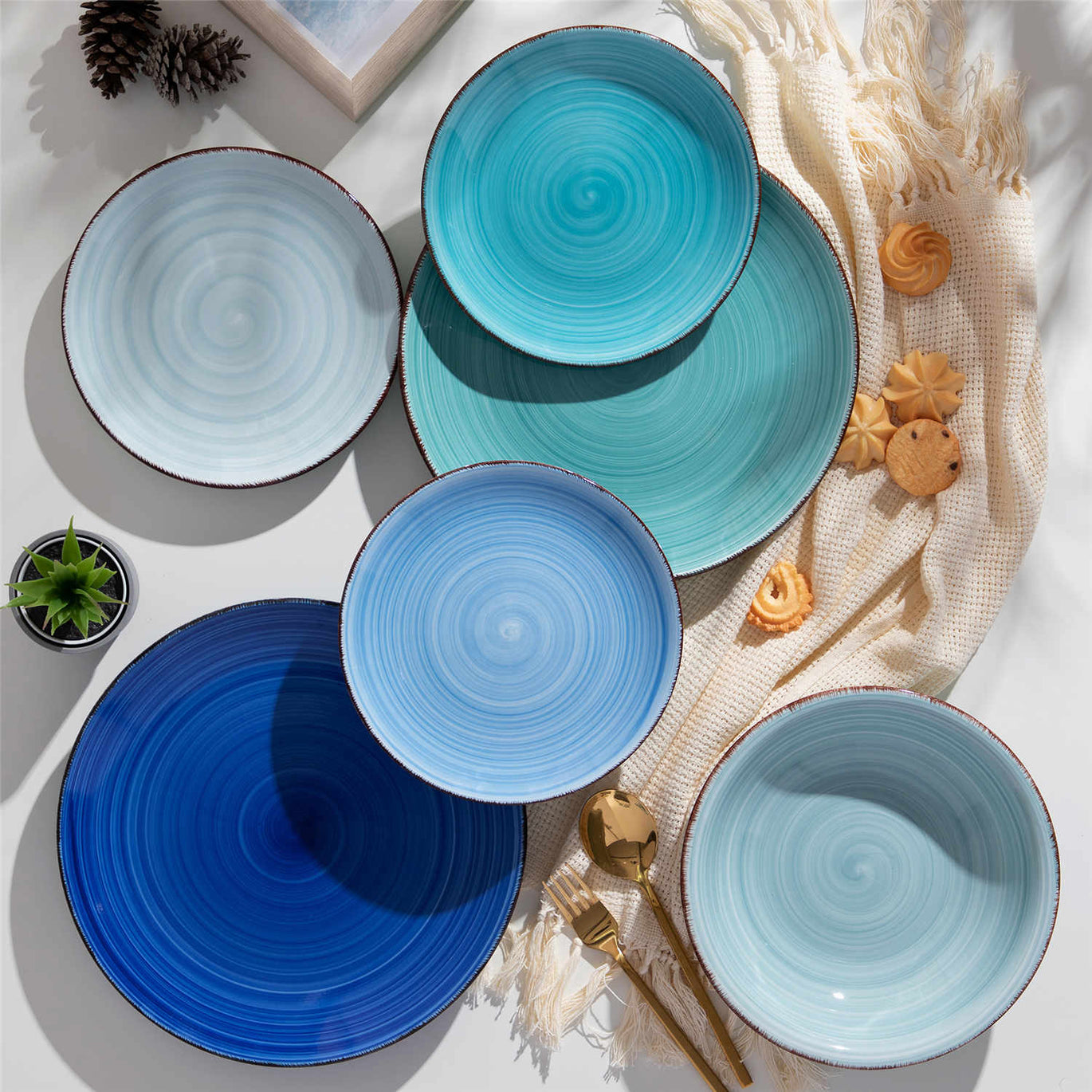
Ocean blues and greens |
Fluid, expansive, cool-headed |
Mix matte and glossy glazes for depth |
Stripes and bold contrasts |
Joyful, energetic, campy |
Let one striped piece star on an otherwise simple table |
Pattern as protest: florals, stripes, and graphic play
Brand storytelling from Catalonia Plates on “Porcelain and Personality” notes that bold patterns and colors often attract people who treat the table as a storytelling stage. Minimal whites say “substance over flash,” while mix-and-match porcelain attracts playful, rule‑breaking hosts.
Queer ceramic tableware leans hard into that expressive lane. The Northern Clay Center’s “Sexual Politics” exhibition included pieces that use erotic imagery, coded symbols, and sly joke text to comment on gender and sexuality. Even when your own dinnerware is more subtle, you are drawing from that lineage when you choose pattern that winks instead of whispers.
The striped tableware trend is particularly queer-friendly. Stripes have a long history in fashion as markers of both conformity and rebellion, and The Nod Magazine points out how candy-cane stripes, barcode-inspired lines, and thin pinstripes all sit within a broad spectrum of possibilities. On the table, that means you can go playful cabana for a Pride-season brunch or keep it tight and monochrome for a moody dinner, all within the same graphic language.
In digital marketplaces, you can already see titles like “Choose Your Own Gender Adventure Ceramic” floating around, and short-form videos tagged as explorations of gender identity through ceramics. Even when the specifics of those pieces vary, the trajectory is clear: pattern and text on clay are being used to prod, tease, and expand gender narratives.
Forms that flow: bodies, curves, and comfort
Color is only half the story. Form has become a major site of queer-coded aesthetics. The “genderless table” essay emphasizes clean curves, soft edges, and asymmetric silhouettes that mimic natural forms rather than rigid geometry. Comfort and ease in the hand matter as much as visual appeal.
Joyye’s survey of popular styles notes a surge in artisanal plates with organic, irregular shapes and visible texture. Hand-thrown forms with slight variations, reactive glazes that vary from plate to plate, and rims that feel more like river stones than machine-cut discs all highlight individuality. These pieces look less like clones, more like a community of related but distinct objects.
As a tabletop stylist, I see guests gravitate toward these forms instinctively. A gently wobbled rim or a mug belly that bulges a little feels more human. On a queer table, that matters. When bodies are policed constantly in the outside world, there is something quietly radical about plates and cups that refuse perfect symmetry and celebrate irregularity.
Domestic textiles, memory, and queer homemaking
Ceramicist Katie Susko, featured in the Northern Illinois Pottery Tour, creates pottery inspired by domestic textiles: wallpaper, garment fabrics, upholstery, and garden imagery. Her pieces blur the line between functional object and decorative surface, translating the language of home onto clay.
Historically, those textile motifs have been tightly knotted to gendered expectations of “good” domesticity. Queer tables can reclaim them. A plate that echoes your grandmother’s wallpaper but appears in rich, gender-neutral greens instead of sugary pastels can be both homage and critique. It acknowledges where you come from and quietly tweaks what that legacy looks like.
Household archaeology’s focus on intimacy, separation, and the poetics of housework is a useful lens here. Bringing intentionally chosen ceramic patterns into your kitchen or dining niche is not trivial décor. It is active storytelling about who is welcome, whose labor is honored, and how family—biological or chosen—is formed around the table.
Material Choices, Safety, and Ethics
Queer aesthetics are not only visual. They are also about how the table cares for bodies and the planet. That is where material choices, toxicity, and sustainability come in.
Advocates of non-toxic dinnerware, from Gurl Gone Green to Elfinview and Miriam’s Earthen Cookware, paint a sobering picture of conventional plates and bowls. Lead and cadmium, used in some bright glazes and decorations, can leach into food when dishes are heated or chipped. The World Health Organization and the US Food and Drug Administration are clear that there is no safe level of lead exposure, especially for children and pregnant people. Elfinview notes that cadmium, often found in vivid reds and yellows, accumulates in the body over time and is hard to identify by sight alone.
Plastics and melamine add another layer of concern. Articles from Elfinview and Gurl Gone Green describe melamine dinnerware that can release melamine and formaldehyde into hot foods, with links to kidney damage and notorious contamination events in pet food and infant formula. BPA and similar chemicals in plastic tableware are tied to endocrine disruption and developmental issues.
Against this backdrop, non-toxic advocates converge on a few safer categories. Lead‑free and cadmium‑free ceramics, borosilicate or tempered glass, stainless steel, and carefully formulated bamboo or wood all show up as better options. LeafScore’s guide to eco-friendly dinnerware points out that many supposedly “green” wheat-straw or bamboo pieces actually contain melamine plastic, which is neither recyclable nor compostable, and warns consumers to read the fine print.
Sustainability adds another dimension. Fable’s “Beautiful Dinnerware Nothing to Hide” story emphasizes recycled clay, a zero-waste Portuguese factory, and recyclable packaging. East Fork, as described by LeafScore, is a B Corporation and Climate Neutral Certified, making stoneware in Asheville with local clay and green energy. Bambu offers certified organic bamboo plates and cutlery that can compost at home in a few months. Public Goods uses high-fire porcelain that is lead-free and shipped in compostable packaging, planting a tree with each order. Conscious Life and Style’s 2025 guide to sustainable dinnerware ties these choices into a wider ethic of “conscious living.”
For queer tables, this is not just lofty eco talk. Many LGBTQ+ communities are sharply aware of health disparities, environmental injustices, and the ways toxic exposures fall unevenly. Choosing ceramics with transparent safety testing and lower-impact production becomes another way to say, “Your body is valued here.”
Understanding stoneware, porcelain, bone china, and earthenware
Different ceramic bodies carry different vibes and practicalities. Joyye and The Good Trade offer aligned definitions that are useful to keep in mind at the queer table.
Material |
Key traits |
Queer-aesthetic sweet spot |
Watch-outs |
Stoneware |
High-fired around 2,100–2,300°F, non-porous, substantial weight, often speckled or textured |
Feels robust and grounded; great for everyday queer households and chosen-family dinners |
Can be heavy; check that glazes are lead- and cadmium-free |
Porcelain |
Fired around 2,300–2,400°F, light, hard, often bright white and slightly translucent |
Works beautifully as a “blank canvas” for bold queer linens, glassware, or centerpieces |
Can read as very formal; pair with playful accent pieces to avoid stiffness |
Bone china |
Porcelain with bone ash, thin yet strong, warm white, long linked to fine dining |
Elevates important rituals such as weddings or milestone transitions with a softer, luminous feel |
Not vegan; historically class-coded, so it may carry baggage in some contexts |
Earthenware |
Lower-fired around 1,950°F, more porous unless heavily glazed |
Lovely for decorative or occasional pieces, rustic queer brunches, or wall plates |
Less durable for daily use with liquids; be extra careful about glaze safety |
Stoneware in particular has been embraced by brands like East Fork and many small studios because it balances durability with a relaxed, contemporary aesthetic. Joyye notes that families with children often prefer stoneware for its chip resistance and heat retention, while frequent entertainers lean toward porcelain or bone china for their refined look. On a queer table, there is no rule that says you cannot mix them. A heavy stoneware dinner plate under a thin porcelain side plate can signal both everyday resilience and delicate celebration.

Curating Your Own Queer Tablescape
Here is where all of this comes to life. Queer ceramic tableware is not about buying a single “Pride” mug and calling it a day. It is about building a small ecosystem of pieces that can adapt to different moods, people, and seasons without losing their values.
When I work with clients or style my own space, I start by naming the feeling we are aiming for. Maybe you want a “genderless sanctuary” vibe for quiet daily meals. In that case, I reach for a base set of stoneware in sand, stone, or soft gray‑green, something that embodies the neutral tones discussed in genderless tableware design. Then I add subtle textural interest: a speckled reactive glaze, a slightly irregular rim, or a mug with a thumbprint in the handle. This keeps the table from becoming flat while staying welcoming to all genders.
If the goal is “joyful queer family,” stripes and brights enter the chat. The trick, drawn straight from striped-tableware styling advice, is to let pattern lead in one zone at a time. Maybe dessert plates have candy stripes, but dinner plates stay solid. Or a striped runner anchors the table, while plates and bowls stay in ocean blues and earth tones that recall coastal and Mediterranean palettes described by Joyye and Burleigh.
Practical constraints are very real, especially in small apartments. Joyye notes that many urban households now buy smaller sets of four to eight place settings rather than twelve and prefer open-stock pieces they can replace individually. That lines up perfectly with a queer, mix-and-match philosophy. Start with four plates and bowls in a neutral, non-toxic stoneware. Add two more in a striking color or pattern. Over time, layer in thrifted or handmade pieces that speak to your story, keeping one eye on material safety and another on emotional resonance.
Pros and cons of popular queer tableware directions
Each aesthetic direction brings both delight and tradeoffs. Naming those helps you curate intentionally rather than impulsively.
Direction |
What it offers |
What to keep in mind |
Genderless neutrals in matte finishes |
Inclusive, calming, easy to style with any food or linen; align with modern hospitality trends toward mood-first design |
Can drift toward bland if you never introduce contrast; consider subtle texture, metallic rims, or seasonal flowers for lift |
Bright, campy stripes and bold colors |
Instant joy, strong visual identity, great for parties and social media moments |
Some saturated glazes historically used heavy metals; choose pieces from brands that explicitly state lead- and cadmium-free testing |
Artisanal, irregular stoneware |
Tactile pleasure, uniqueness, and a strong connection to handmade craft; resonates with pottery’s mindful, wellness-oriented boom |
Often more expensive per piece; weight and storage can be challenging in very small kitchens |
Vintage or heirloom china with a queer twist |
Deep family or cultural continuity, especially when reclaimed by queer hosts; works beautifully for tea rituals or ceremonies |
Older pieces and brightly decorated surfaces may contain lead or cadmium; non-toxic experts recommend testing or reserving them for dry foods |
Hyper-pure, unglazed primary clay |
Very low chemical interaction with food, especially when made from lab-tested primary clay as described by Miriam’s Earthen Cookware |
Astrong visual statement; may not match every aesthetic and might require more care around staining or breakage |

Short FAQ
Is queer ceramic tableware only for LGBTQ+ households?
Absolutely not. Queer in this context describes a set of aesthetics and values: fluid gender expression, inclusivity, playful resistance to rigid norms, and a commitment to care. Anyone can choose gender-neutral palettes, support ceramicists who explore sexuality and identity, or prioritize non-toxic, sustainable materials. At the same time, it matters to recognize that for LGBTQ+ people, these choices can carry an extra layer of safety and self-recognition.
How do I know if my ceramic plates are safe to eat from?
Non-toxic dinnerware guides from sources like Elfinview, Gurl Gone Green, and LeafScore offer practical checks. Look for clear labels that say lead-free and cadmium-free rather than vague “decorative use only” messaging. Be cautious with very bright vintage glazes and unknown imports, especially if there is a California Proposition 65 warning. Avoid using melamine or plastic plates with hot, acidic foods, and consider shifting your everyday tableware toward vetted stoneware, porcelain, glass, or stainless steel from brands that share their testing results and production practices. When in doubt about older pieces you love aesthetically, use them for dry snacks or display rather than hot, saucy meals.

A Colorful, Queer Table Is a Living Artwork
Queer ceramic tableware is not a fixed style; it is an evolving conversation between clay, color, bodies, and histories. Every time you choose a sand-colored bowl over a pink‑blue set, place a striped dessert plate next to a moss-green mug, or serve dinner on stoneware fired in a zero-waste factory, you are casting a vote for the kind of world you want to live in.
So pull those plates out of the cupboard, mix the heirloom with the handmade, the neutral with the electric, the practical with the gloriously unnecessary. Let your table be a small, daily gallery of queer resilience and joy—one meal, one mug, one mischievous little bowl at a time.

References
- https://guides.libraries.indiana.edu/artgender/ceramics
- https://northernclaycenter.org/2015/03/13/sexual-politics-gender-sexuality-and-queerness-in-contemporary-ceramics/
- https://www.researchgate.net/publication/368587461_Miss_Lyon's_Choice_Gender_and_Ceramic_Material_Culture
- https://www.healthierhomes.com/organic-dinnerware?srsltid=AfmBOorPNkiJLTbaeJ3EdySEOPp-p9czFvl7Ef6tJLvOHR3pdfB4jAf_
- https://www.northernilpotterytour.com/bensenville
- https://www.anchenggy.com/blog/best-non-toxic-dinnerware-and-buying-guide.html
- https://www.architecturaldigest.com/story/gender-neutral-kitchenware
- https://www.consciouslifeandstyle.com/ethical-eco-friendly-dinnerware-tableware/
- https://www.elfinview.com/non-toxic-dinnerware/
- https://us.fable.com/pages/beautiful-dinnerware-nothing-to-hide
Tu pourrais aussi aimer
Stern Ensemble de vaisselle 16 pièces
- À partir de £58.00
£77.00- À partir de £58.00
- Unit price
- pour
-
Blue
-
Green
-
Red
-
Grey
Bonita Service de table 18 pièces
- À partir de £49.00
£61.00- À partir de £49.00
- Unit price
- pour
-
Blue
-
Multicolor
Simi Ensemble de vaisselle de 24 pièces
- £77.00
£104.00- £77.00
- Unit price
- pour
Service de vaisselle étoilé 16 pièces
- £60.00
£70.00- £60.00
- Unit price
- pour
-
Blue
-
Green
-
Red
-
Gradient Green