



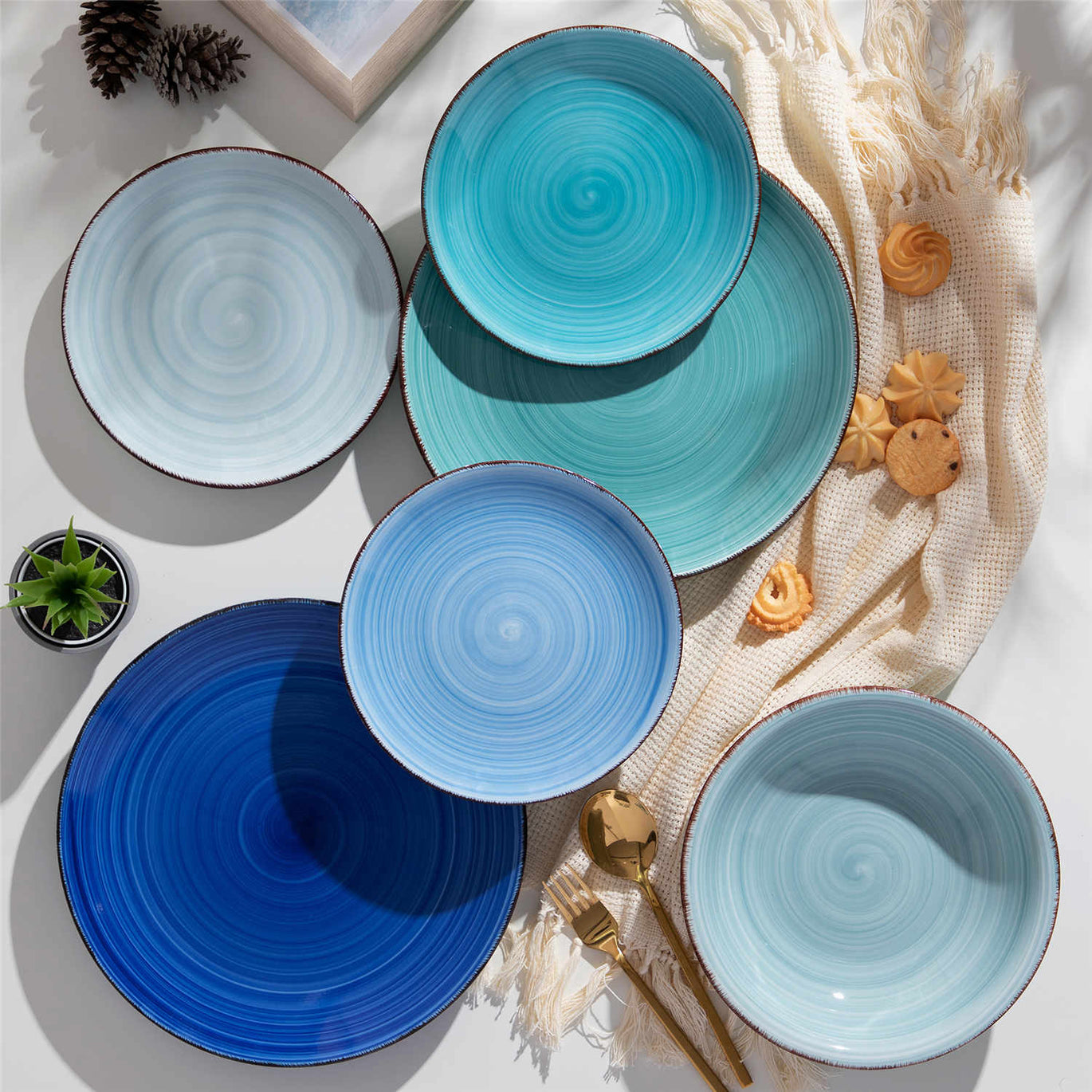


How Web3 Is Transforming Ownership of Ceramic Tableware

When I lay out a table bursting with color—indigo splatter plates, butter-yellow bowls, a sly little speckled espresso cup—the story behind the pieces matters as much as the palette. Who shaped this rim? Which hillside did the clay come from? Is that “lead‑free, sustainable, limited edition” claim something I can actually verify, or just a pretty line on a hangtag?
Web3 is quietly rewiring how we answer those questions. Under the hood, it is pure cryptography, distributed databases, and new business models. On the table, it looks like plates with scannable provenance, bowls that carry their own microscopic “fingerprint,” and collectible ceramics whose digital twins dance across the metaverse while the physical pieces hold court in your dining room.
This is the colorful frontier where clay meets code—and where “ownership” of ceramic tableware starts to mean something much richer than a receipt in a drawer.
From Heirloom Porcelain to Web3 Plates: Why Ownership Needs an Upgrade
Ceramics have always been about more than function. Research summarized by BlockApps Inc. traces ceramic traditions back roughly 20,000 years, from early cooking pots in East Asia to highly refined porcelains in China, Japan, the Islamic world, and Europe. Over centuries, value has clustered around five familiar pillars: authenticity, provenance, condition, rarity, and maker reputation, with manufacturers like Meissen, Wedgwood, Delftware, Sèvres, and others commanding premiums precisely because their stories are so traceable.
The problem is that our ownership tools have not kept up. For many collectible ceramics, provenance still lives in paper certificates, faded dealer records, and easily forged maker’s marks. Even in contemporary production, manufacturers handle complex, global supply chains for clay, glazes, pigments, and energy-intensive firing, yet much of the data about safety and sustainability never makes it to the person who actually puts food on the plate.
At the same time, the ceramic tableware market is growing and getting more sophisticated. A market study summarized by Mordor Intelligence estimates the global ceramic tableware market at about $18.82 billion in 2025, projecting it to reach roughly $26.13 billion by 2030, driven by residential buyers, hospitality recovery, and design-forward, sustainable collections. More money, more makers, more SKUs—and more need for clear, trustworthy information.
Meanwhile, the internet we use to discover, shop, and share our tables has its own ownership problem. Web 2.0 social platforms turned everyday users into content creators, but as the Truffle Suite team notes, data and value tend to accumulate in centralized silos. The reputation you build on one platform does not follow you to another, and the identity data behind your shopping, reviews, and tablescape photos mostly enriches someone else’s balance sheet.
Web3 steps into this tangle with a promise: let’s make both digital and physical ownership more transparent, programmable, and user‑controlled. For ceramic tableware, that promise lands in very tactile ways.

Web3 in Plain English (With a Side of Glaze)
Before we dive into plates on blockchains, let’s demystify the tech.
Writers at Truffle Suite and Birlasoft describe Web3 as the next stage of the internet’s evolution. Web 1.0 was “read‑only”—static sites and banner ads. Web 2.0 is “read‑write”—social platforms, user‑generated content, reviews, and influencer dinner parties. Web3 layers in “read‑write‑own,” powered by blockchains and related technologies.
At its heart, blockchain is a distributed, decentralized digital ledger. Instead of one company holding the master list of transactions, many computers keep identical copies. New entries are grouped into cryptographically linked “blocks,” forming a chain that is extremely difficult to alter without detection. Studies cited by MALACASA highlight three qualities again and again: transparency, traceability, and immutability.
Around this ledger, Web3 adds two important building blocks for identity and reputation, as explained by The Ceramic Blog and the World Wide Web Consortium. Verifiable Credentials are pieces of contextual data—like “this studio fired a plate at a certain temperature” or “this customer attended a specific event”—digitally signed by a trusted issuer so that they are machine‑verifiable and privacy‑respecting. Decentralized Identifiers are unique identifiers controlled by cryptographic keys, capable of linking to multiple wallets and assets across different blockchains.
Combine those with tokenization—the process described by technology writers where rights in an asset become digital tokens on a blockchain—and you get a toolkit for rethinking ownership of everything from art to loyalty points.
For a colorful dinner table, that toolkit translates into a new experience:
Traditional tableware ownership |
Web3‑enabled tableware ownership |
Paper receipts, brand claims, and maybe a stamped maker’s mark that can be forged or lost |
On‑chain records that bind a plate to a studio, a batch, and a safety test in a way that is tamper‑evident |
Your purchase history and reviews locked inside a single retailer or social platform |
Credentials and reputation you can carry across stores and communities, controlled by your own keys |
Certificates of authenticity that can be mislaid or counterfeited |
NFTs and microscopic “fingerprints” that stay linked to a piece for its entire life cycle |
Now let’s bring this down to the butter plate.
Superpower One: Traceability You Can Actually Taste
When you trace a single plate from clay pit to brunch, the journey is more intricate than most hosts realize. There are raw material quarries, blending operations, forming and drying, bisque firing, glazing, final firing often well above 2,500 °F, decoration, packaging, shipping, storage, and finally your kitchen cabinet or a restaurant shelf.
Every one of those steps touches safety, sustainability, and quality. The question is whether anyone can prove it.
MALACASA’s review of blockchain in dinnerware and related sectors echoes a wider body of supply chain research: strategic blockchain use in trade could, according to analysis cited from 101 Blockchains, increase overall trade volume by about fifteen percent and raise U.S. GDP by roughly five percent, thanks to reduced friction and better transparency. In ceramics, European projects such as BLOCH4MAT are already applying blockchain to construction tiles and structural clay products, with the goal of making product information traceable, secure, unambiguous, and non‑falsifiable across the entire life cycle.
The same architecture maps almost perfectly onto tableware. Imagine a plate carrying, in a digital record anchored on a blockchain:
Clay sourcing data, including quarry location and environmental certifications.
Kiln firing profiles for both bisque and glaze firings.
Glaze composition, including specific colorants and verification that they meet strict limits on heavy metals.
Third‑party safety test results and batch numbers.
Packaging materials and recommended end‑of‑life routes, such as repurposing or downcycling.
Policy projects summarized in the TransparencyChain initiative and Digital Product Passport discussions under the European Green Deal point toward exactly this kind of data traveling with long‑lived objects. For a plate or bowl, the story might be accessible via a tiny QR code or NFC chip on the underside. You scan with your cell phone, and instead of vague marketing language, you see a concise, signed passport.
From a very practical perspective, this helps in three ways.
First, it makes safety less mysterious. Reviews of blockchain in food and chemical industries, cited by MALACASA, show that adding verifiable data on origin, processing, and testing can dramatically improve recall management and consumer trust, while analyses in chemicals suggest documentation costs can fall by roughly twenty to thirty percent when ledgers are shared instead of repeatedly rebuilt. Applied to glazes, pigments, and firing batches, that means manufacturers can react quickly if a particular pigment turns out to be problematic, and regulators or buyers can confirm compliance without wading through emailed PDFs.
Second, it connects sustainability claims to real data. As more brands highlight recycled clays, low‑impact firing, and eco‑certified packaging, a blockchain record can distinguish earnest efforts from greenwashing by tying every sustainability badge to a verifiable event in the supply chain.
Third, it opens up richer storytelling at the table. Instead of just saying “stoneware, made somewhere in Europe,” a restaurant can design a tasting menu around a regional clay tradition, then invite guests to scan their plate and see firing temperatures, clay origins, and artisan notes, all backed by a tamper‑resistant ledger. The technology stays invisible; the reassurance and romance come forward.

Superpower Two: Authenticity and Anti‑Counterfeiting for Signature Pieces
If you have ever fallen in love with a limited edition plate, you know the quiet fear: is it real? In the world of collectibles, authenticity can be the difference between a treasured heirloom and an expensive disappointment.
Analyses referenced by MALACASA and other legal and consulting sources estimate that counterfeit goods account for roughly 3.3 percent of global trade and cost the U.S. economy around $600 billion per year. Luxury fashion and electronics often grab headlines, but any product with iconic design and high perceived value—designer porcelain, artist collabs, historically important patterns—is a target.
Two strands of Web3‑adjacent research matter here.
First, microscopic fingerprints. A PeerJ Computer Science study summarized in MALACASA’s article describes using microscopic images of the ceramic matrix—down to air bubbles and microstructure formed during firing—to identify pieces. By combining computer vision techniques such as SIFT, edge detection, and sophisticated matching algorithms, the researchers achieved recognition accuracy above ninety‑nine percent in their tests. The large images themselves are stored off‑chain for cost reasons, but a hashed identifier is anchored on a blockchain.
Translated to the tabletop, this means a limited‑edition platter or tea bowl could be scanned under a microscope during production to create a fingerprint. Years later, a collector, museum, or secondary‑market buyer can re‑scan and compare the pattern against the registered hash. Unlike a serial number or a paper certificate, this identity is part of the piece itself.
Second, NFT‑backed ceramics. MALACASA’s exploration of NFT ceramics and sources such as BlockApps Inc. show how non‑fungible tokens—unique, tamper‑resistant tokens on a blockchain—can serve as certificates of authenticity, digital twins, and programmable keys all at once. In exhibitions and projects cited in their notes, galleries have sold physical ceramics through NFTs that carry media bundles and provenance; Japanese initiatives in traditional crafts use precise 3D scans and long‑term storage to track each piece’s journey from creation to resale.
Compared with traditional certificates of authenticity, NFT‑backed ceramics change the texture of ownership.
Traditional COA for ceramics |
NFT‑backed ceramic ownership |
Paper document that can be forged, lost, or separated from the piece |
Cryptographically signed token that lives on a blockchain ledger, linked directly to the object’s identity and history |
Provenance relies on dealer integrity and a trail of bills and emails |
Every transfer recorded on‑chain, visible as a continuous transfer history |
No built‑in way to route resale value back to the maker |
Smart contracts that can automatically pay a small royalty to the studio each time the piece is resold, if the parties choose |
Limited room for rich media |
Space to attach studio footage, making‑of images, care instructions, and even access passes to future releases or events |
The economic stakes are real. Consulting models cited alongside luxury blockchain consortia such as the initiative by LVMH, Prada, and Cartier suggest that robust product authentication could recapture on the order of two to five percent of revenue for a $1 billion brand—roughly $33 million per year. For high‑end ceramic tableware, where design collaborations and numbered series are common, similar relative gains are plausible.
From the perspective of a joyful table curator, this does not mean every cereal bowl needs a blockchain anchor. It does mean that when you splurge on a numbered run of sculptural chargers or an artist’s porcelain centerpiece, you can demand better tools for proving that your treasure is what it claims to be.

Superpower Three: Programmable Ownership and Social Ceramics
Web3 is not just about tracking objects; it is about re‑shaping how value flows around them.
Technology analysts writing on tokenization describe three broad types of tokens. Fungible tokens work like interchangeable units—think cryptocurrencies or branded utility points. Non‑fungible tokens are unique and indivisible, suited for individual works or specific items like a particular salad plate in a numbered series. Security tokens represent regulated slices of financial assets and can support fractional ownership.
Put these together with the Web3 loyalty and business model ideas explored by PwC and Birlasoft, and new possibilities appear around the dinner table.
A designer tableware brand, for instance, could issue tokenized loyalty rewards where customers actually own their rewards as digital assets rather than merely accumulating centrally controlled points. Those tokens might be traded or combined, or used to unlock early access to limited edition drops. Because tokens are programmable, the brand could attach voting rights to certain tiers, letting top collectors influence future glaze palettes or form factors.
For physical‑digital hybrids, NFTs become the bridge. MALACASA’s article on NFT ceramics emphasizes that a token can act simultaneously as:
A cryptographic certificate of authenticity for the physical piece.
A digital twin—a high‑fidelity render or scan usable in virtual reality galleries or metaverse dining experiences.
A key that unlocks extras such as studio videos, deep care instructions, or future companion pieces tied to the same collection.
In social commerce, J.P. Morgan’s analysis of Web3 and identity points out that most friction in online shopping journeys stems from how user data is collected and shared. By connecting Web3 identity standards such as Decentralized Identifiers and Verifiable Credentials, as explored on The Ceramic Blog, with tokenized tableware collections, a future restaurant or retailer could treat your ownership of certain pieces as a portable credential: proof that you love bold brushwork, say, or that you have taken part in reusable plate programs. You retain control of that data, but you can choose to share it in exchange for relevant experiences.
All of this gets interesting only if we keep one foot firmly on the rug of real life. Tokens and NFTs should add a layer of meaning and flexibility, not turn every dinner into a speculative frenzy. Used thoughtfully, they can make your favorite mug the first chapter of a long, co‑authored story between you, the maker, and your communities.
What Changes for Different Ceramic Lovers
The beauty of Web3 is that it is not one monolithic upgrade; it manifests differently for collectors, artisans, brands, restaurants, and everyday hosts.
For collectors and museums, the combination of microscopic fingerprints and NFT provenance offers a sturdier foundation for serious acquisitions. Instead of relying solely on expertise and paperwork, a curator could verify that a rare plate’s microscopic matrix and blockchain record line up, and review an unbroken on‑chain trail of ownership and exhibition history. This does not replace connoisseurship, but it makes forgery more expensive and less attractive.
For independent studios and traditional craftspeople, the upside is particularly poignant. Research on the European crafts sector cited by MALACASA notes more than 500,000 craft jobs in Italy alone and a crafts market of around €50 billion, yet artisans often operate in fragmented systems with limited digital tools, making them vulnerable to copycats. Studies on handcrafted cultural products in tourism propose “Blockchain of Things” architectures that combine sensors and ledgers to authenticate handcrafted goods and track their lifecycle. For a small pottery workshop, that could mean tagging limited runs with secure identifiers, anchoring proof of origin on a blockchain, and making it much harder for mass‑produced imitators to masquerade as the real thing.
For industrial manufacturers and global brands, Web3‑style traceability is as much about risk management and compliance as romance. Projects like BLOCH4MAT and policy initiatives around Digital Product Passports show that regulators are moving toward long‑lived, accessible data records. Reviews of blockchain in food and chemical chains highlight better recall performance and lower administrative overhead when verifiable data flows along with the product instead of being re‑keyed at each step. In dinnerware, that can translate into fewer blanket recalls, faster root‑cause analysis, and genuinely evidence‑based sustainability narratives.
For restaurants and hospitality venues, the gains sit at the intersection of story, safety, and sharing. Imagine a chef designing a regional menu served on plates whose clay and glaze are intimately tied to the featured ingredients. Diners browse a digital menu, tap a code on the plate, and see not just the dish description but the plate’s material story, backed by blockchain. At the operational level, hotels and restaurant groups might use blockchain records to manage shared fleets of durable, vitrified tableware, tracking service life and loss in large pooling schemes without drowning in spreadsheets.
For everyday hosts—the color‑loving, tablescape‑curious home cooks—Web3 can become a quiet layer of confidence. Maybe you scan a platter in a boutique to see its firing profile and glaze safety tests. Maybe your heirloom set sits in a digital registry that will outlive any paper certificate, giving your grandchildren a way to prove its story even after multiple moves. Maybe a favorite artist mug comes with a token that later unlocks an invitation‑only glaze drop.
Ownership becomes less about the receipt and more about the ongoing relationship.
Pros, Cons, and Cautions: A Candid Look
It is tempting to glaze Web3 in a glossy coat of techno‑utopian optimism. But serious research warns against uncritical adoption.
An MDPI paper on blockchain and Web3 adoption in sectors such as central bank digital currencies and healthcare points out that blockchain can be slow, complex, and costly, and that in many cases mature relational databases do the job more efficiently. Industry experts quoted there argue that if decision‑makers cannot clearly articulate why they need a blockchain, they likely do not need one. The same caution should apply to dinnerware: not every plate deserves a token.
Scalability and interoperability remain challenges. Web3 credentials and identity systems, as discussed by The Ceramic Blog, rely on many moving parts—wallets, keys, standards for Decentralized Identifiers and Verifiable Credentials, and off‑chain storage. Poorly designed systems can increase rather than reduce the attack surface, from vulnerable smart contracts to compromised wallets.
Regulation is another open question. Tokenization of assets, especially when it touches securities law, still has uneven guidance across jurisdictions. Security token offerings for fractional ownership of ceramics or token‑based revenue shares will need careful legal design.
And user experience may be the most overlooked barrier for the joyful table. Wallet seed phrases, gas fees, and signature prompts are nobody’s idea of a relaxing dinner party. If we want Web3 plates to feel elegant rather than exhausting, brands and platforms need to abstract away complexity so that, for most people, “blockchain” becomes a quiet assurance rather than a chore.
A pragmatic approach—endorsed by the MDPI article as an “option‑based strategy”—is to keep the option alive without overcommitting. That means piloting limited collections, anchoring critical safety and provenance data on a blockchain while still keeping comfortable web and database systems around them, and regularly reassessing whether the additional complexity is earning its place.
How to Start Playing with Web3 Tableware (Without Losing the Joy)
If you love a vibrant place setting but do not spend your weekends reading whitepapers, how do you actually engage with this shift?
As a buyer or host, you can start by treating traceability as a design feature rather than a technical novelty. When a brand or studio claims blockchain‑backed provenance, ask what information is recorded, who is allowed to write to that record, and how you can read it. A simple, well‑designed interface that shows firing temperatures, glaze safety tests, and studio details is a good sign. A vague promise with no way to verify it is not.
For collectible or high‑value pieces, look for projects that combine strong physical identifiers—such as microscopic fingerprints or robust tamper‑evident tags—with on‑chain records. That pairing makes it harder for someone to mint an NFT claiming to represent a piece they never touched.
If you are an artisan or small studio, think in terms of layers. You do not need to become a blockchain engineer to benefit. Partner with platforms or cooperatives that handle the technical plumbing while you focus on telling your story and choosing which aspects of your process you want to immortalize. A small pilot run—say, one numbered series with digital passports and carefully explained benefits—is usually a wiser first step than tokenizing your entire back catalog overnight.
For manufacturers and hospitality groups, the most powerful early wins may come from simply cleaning up internal data flows using shared ledgers or blockchain‑like systems, inspired by the case studies in construction, chemicals, and food. Once you are reliably capturing batch information, test results, and movement events in a consistent format, anchoring selected hashes on a public blockchain becomes a natural extension rather than a leap into the unknown.
Throughout all of this, keep the tabletop itself as your guiding star. The best Web3 ceramics experiences make the meal feel more grounded, more storied, and more trustworthy—never more stressful.
Short FAQ
What exactly is an “NFT plate,” and do I have to display it in a metaverse gallery?
An NFT plate is simply a physical plate whose authenticity and digital life are tied to a non‑fungible token on a blockchain. The token may serve as a certificate of authenticity, a digital twin for virtual displays, and a key for extras such as studio videos or future releases. You can enjoy the physical piece on your actual table and never open a virtual gallery if that is not your style; the NFT just gives you additional verification and optional experiences.
Does blockchain make every ceramic safer to eat from?
Not by itself. Blockchain is a record‑keeping tool, not a magic filter. Its value lies in how it captures and shares information—such as glaze composition and test results—in a tamper‑evident way. If a manufacturer does not perform good testing or uses poor materials, putting those facts on a blockchain does not fix the underlying problem. The power comes when responsible makers use blockchain to prove their standards and when regulators and buyers can audit those proofs efficiently.
Will my grandmother’s vintage plates ever be on a blockchain?
They can be, but they do not need to be. You or a specialist could create a digital record for an heirloom set, including high‑quality photographs, expert appraisal notes, and perhaps even microscopic fingerprints that anchor to a blockchain hash. That can help preserve provenance for future generations and resale. However, the sentimental and cultural value of heirloom pieces will always depend partly on stories passed around the table, not only on digital records.
When you zoom out, Web3 is not about turning your dining room into a trading floor. It is about making the stories your plates already carry—about safety, origin, artistry, and care—more visible, verifiable, and shareable. If we get it right, the next time you set a riotously colorful table, you will not just be curating glazes and shapes; you will be curating trust. And that, in its own quiet way, might be the most delicious layer of all.
References
- https://www.researchgate.net/publication/288245989_Strategies_to_realize_decentralized_manufacture_through_hybrid_manufacturing_platforms
- https://blockapps.net/blog/the-world-of-collectible-ceramics-and-porcelain/
- https://www.agne-k.com/projects
- https://www.birlasoft.com/articles/web3.0-industries-disruptive-business-models
- https://blog.ceramic.network/how-web3-apps-are-building-composable-trust/
- https://www.gminsights.com/industry-analysis/ceramic-tableware-market
- https://www.linkceramics.com/chaozhou-ceramics-industry-analysis/
- https://www.linkedin.com/pulse/how-tokenization-changing-digital-ownership-vasundhara-infotech-bjnzf
- https://www.mordorintelligence.com/industry-reports/ceramic-tableware-market
- https://uk.finance.yahoo.com/news/medium-temperature-ceramic-tableware-global-160600600.html
Tu pourrais aussi aimer
Stern Ensemble de vaisselle 16 pièces
- À partir de £58.00
£77.00- À partir de £58.00
- Unit price
- pour
-
Blue
-
Green
-
Red
-
Grey
Bonita Service de table 18 pièces
- À partir de £49.00
£61.00- À partir de £49.00
- Unit price
- pour
-
Blue
-
Multicolor
Simi Ensemble de vaisselle de 24 pièces
- £77.00
£104.00- £77.00
- Unit price
- pour
Service de vaisselle étoilé 16 pièces
- £60.00
£70.00- £60.00
- Unit price
- pour
-
Blue
-
Green
-
Red
-
Gradient Green