



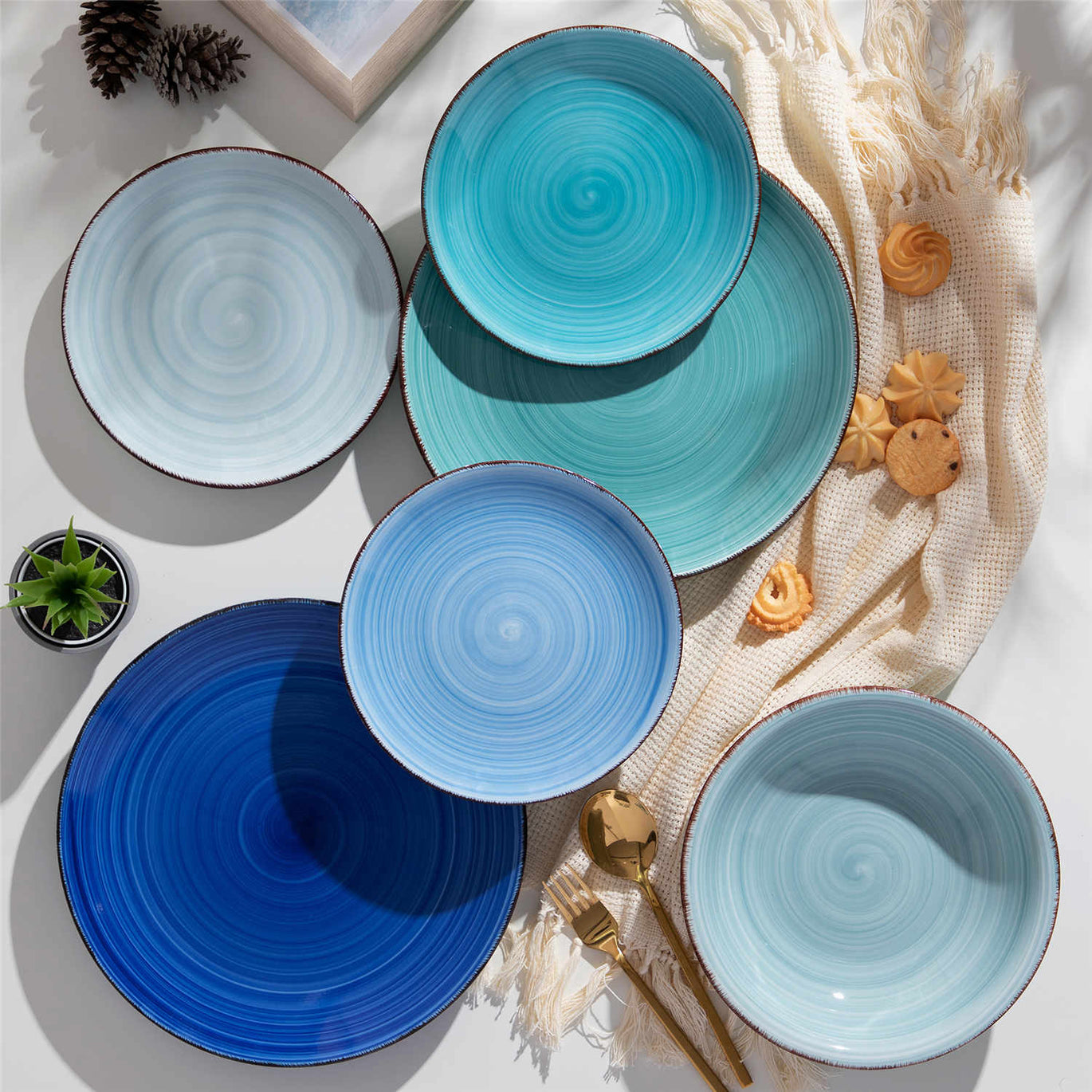


How Extreme Weather Disrupts Ceramic Tableware Logistics and Supply Chains

When you set a rainbow of plates on the table, you are also setting down an invisible story of clay pits, roaring kilns, container ships, warehouses, and delivery trucks. Lately, that story has started to read more like a disaster novel.
Extreme weather is no longer an occasional villain. Economist Impact reports that billion‑dollar weather disasters now hit roughly every three weeks, compared with about every four months four decades ago. Analyses for global trade put climate‑related supply chain risks in the tens of billions of dollars annually, and projections that factor in knock‑on effects in industry and consumption push that figure well over $100 billion.
For colorful ceramic tableware, this is not abstract. Ceramics are energy‑intensive to manufacture, heavy to move, fragile to store, and deeply tied to global shipping routes. When heatwaves bend rails, floods close ports, or drought shrinks canals, the ripple eventually shows up at your brunch as backordered plates, mismatched bowls, or higher prices.
In this article, written from the perspective of a Colorful Tabletop Creative & Pragmatic Joy Curator, we will walk through how extreme weather tangles ceramic tableware supply chains, what the research says about ceramics and climate, and how brands, retailers, hospitality teams, and home hosts can build resilience without losing the joy and artistry of the table.
Ceramics, Climate, and Why Logistics Matter So Much
Ceramic tableware sits at the intersection of art and heavy industry. Behind every airy pastel plate is a surprisingly intense footprint of heat, fuel, and freight.
What the science says about ceramic production and climate
Studies on ceramic tiles, which share many processes with tableware, show just how energy‑hungry ceramics can be. A review in an applied ceramics journal notes that producing ceramic tiles involves raw‑material preparation, forming, drying, glazing, and high‑temperature firing. One life cycle study found that making roughly 11 square feet of glazed tile can require around 221 megajoules of energy and generate about 14.4 kilograms of carbon‑dioxide equivalent, with about 90 percent of the energy tied up in thermal steps like drying and firing. Most of that thermal energy comes from burning fossil fuels, primarily natural gas.
A European industry review estimated about 19 million tons of carbon‑dioxide emissions per year from ceramic tiles alone, roughly 1 percent of the industrial emissions covered by the European Union’s emissions trading system. Policy frameworks such as the European Green Deal and the European Climate Law push this sector toward decarbonization, with goals to cut greenhouse gas emissions by at least 55 percent by 2030 and reach climate neutrality by 2050.
A life cycle assessment from Sri Lanka, published in a built‑environment journal, analyzed glazed ceramic tiles from raw materials to factory gate. Using standard life cycle methods, researchers identified kiln firing and drying, fossil‑fuel‑based electricity, and water use as key environmental hotspots. They tested eco‑innovation scenarios like integrating solar photovoltaic power, recovering heat from kilns, substituting industrial waste (fly ash) for virgin feldspar, and harvesting rainwater. The most ambitious combined scenario cut global warming impact by just over 20 percent and reduced several other pollution categories by similar margins, mainly by cleaning up energy inputs.
Technical appendices from a UK decarbonization roadmap for ceramics echo this pattern. They show that:
- Energy efficiency remains the fastest near‑term lever, through better process control, automation, and heat recovery.
- The sector is heavily reliant on natural gas, with hydrogen and electrification viewed as future options but hampered by infrastructure, cost, and technology constraints.
- Carbon capture is promising for the largest installations but challenging for the many small, dispersed ceramic sites with dilute gas streams.
All of this tells us that ceramic production is both a climate problem and a climate‑exposed process. It depends on reliable supplies of gas and electricity, stable grid infrastructure, and smooth logistics for heavy raw materials and products. That makes it highly sensitive to the very extreme weather that climate change is amplifying.
Extreme weather is changing the operating baseline
The World Meteorological Organization has warned that there is about an 86 percent chance that at least one year between 2025 and 2029 will be more than roughly 2.5 degrees Fahrenheit warmer than pre‑industrial levels, raising the odds of heatwaves, heavy rainfall, and drought. The World Economic Forum’s Global Risks Report ranks extreme weather as one of the most likely triggers of global crises in the near term.
In the United States, analysis by a sustainability consultancy counted 27 billion‑dollar weather disasters in a single recent year, with damages estimated around $182 billion. Another advisory firm reports global catastrophe losses in the first half of the following year already in the hundreds of billions of dollars. Separate work on domestic food supply chains in a leading scientific journal shows how drought in key agricultural states reduced interstate exports by roughly half a percent to seven‑tenths of a percent for each 1 percent increase in drought intensity, with ripple effects on manufacturing output nationwide.
Those same dynamics—local shock, national and global ripples—are exactly what ceramic tableware supply chains are living through.

How Extreme Weather Disrupts the Ceramic Tableware Journey
Think of a single plate’s journey in three acts. First, clay and minerals are extracted and blended. Second, the plate is formed, dried, fired, glazed, and refired. Third, it is packaged and shipped through a web of trucks, ships, rail, and warehouses. Extreme weather can trip that journey in every act.
Raw materials: drought, deluge, and disrupted quarries
Ceramic bodies and glazes draw on clays, feldspars, silica sand, carbonates, and various fluxes. Reviews of global ceramic production point out that these are often non‑renewable, geographically concentrated resources.
When extreme weather hits these upstream locations, several things can happen.
Heavy rain and flooding can turn open‑pit quarries into lakes, stall excavation, and damage access roads. Landslide risk increases in steep terrain. On the other side of the spectrum, drought can lead to dustier conditions and stricter water‑use rules, complicating wet processing steps like milling and spray drying that rely on stable water quality and volume.
A life cycle study from India on vitrified floor tiles found that raw‑material extraction contributed strongly to resource depletion and that long‑distance truck transport from quarries to factories was a major driver of climate and air‑quality impacts. When floods wash out roads or bridge approaches, that flow of heavy raw material simply pauses. For tableware that shares suppliers with tile or sanitaryware plants, a flooded clay pit or inaccessible feldspar mine can cascade into production delays weeks or months later.
Hot kilns in a hotter world
Inside the factory, weather shows up mainly as energy and infrastructure risk. Tile studies describe firing temperatures exceeding roughly 2,200 degrees Fahrenheit, with dryers and kilns consuming the vast majority of thermal energy. Because much of that energy comes from natural gas and coal‑based electricity, facilities are exposed on several fronts.
Extreme heat waves increase cooling loads on buildings and equipment, raise worker heat‑stress risk, and can force production cuts or schedule shifts. A manufacturing‑risk article focused on climate found that heat waves raise energy costs, depress labor productivity, and can shorten the lifespan of equipment. Power grids strained by heat or storms are more prone to brownouts and blackouts, which can be catastrophic when digital kilns and conveyor lines trip mid‑cycle, spoiling product and damaging machinery.
Floods and storm surges create their own choreography of chaos. A review on atmospheric deterioration of ceramic construction materials notes how moisture, contaminants, and freeze–thaw cycles damage porous materials over time. In a factory, floodwater can ruin stored powders and glazes, corrode motors, and contaminate process water. The British Columbia floods and major flooding in European manufacturing regions in recent years forced plants to shut down entirely, with knock‑on disruptions across supply chains.
A system‑dynamics study of a ceramic manufacturer in Egypt used climate and operations data to simulate extreme‑weather scenarios. The model showed that when heatwaves, floods, or storms disrupted facilities or logistics, inventory levels dropped, production rates fell, orders were lost, and total sales declined. The authors emphasized that extreme weather needs to be treated as a core business risk, not background noise.
Warehouses, ports, and canals: where storms and drought bite hard
Ceramic tableware is dense and fragile, which makes ocean freight and inland waterways particularly attractive. That also makes it vulnerable when water behaves strangely.
Economist Impact describes how drought lowered water levels on key arteries like the Mississippi and Rhine rivers, as well as in the Panama Canal, which carries about 5 percent of world trade by volume. Low water means ships and barges must lighten loads, transit slots shrink, and some routes become temporarily uneconomical. For a container of heavy stoneware, that can mean days or weeks of delay, rerouting via longer paths, or sharply higher freight rates.
Port infrastructure is equally exposed to storms. A logistics‑safety analysis explains how tropical storms and hurricanes bring sustained winds above 39 miles per hour, with hurricanes crossing 74 miles per hour and sometimes far more. Recent storms like Hurricane Helene, which made landfall in northwestern Florida as a powerful Category 4, illustrate how ports close preemptively, ship movements halt, containers stack up, and nearby warehouses grapple with floodwater and wind damage.
An article on severe weather and logistics notes that 83 percent of power outages in some regions are weather‑related, citing energy‑sector data. When distribution centers lose power, they lose more than lighting. Warehouse management systems, scanners, conveyor belts, dock lifts, and climate control all go offline. For ceramic tableware, that can mean containers sitting at port, pallets stranded in dark warehouses, and truck appointments missed.
The Business Continuity Institute’s supply chain resilience report gives a vivid example. Catastrophic floods in eastern and southern Spain dropped more than a year’s worth of rain in about eight hours, collapsing highways, closing high‑speed rail, and shutting critical ports in a region dense with warehousing, automotive, agricultural, and manufacturing activity. Flood‑damaged logistics hubs ripple into stockouts and delays across Europe.
Trucks, rails, and last‑mile color
Even once your platter is in the same country as your kitchen, the weather still has a say.
Heatwaves can warp rail tracks and degrade road surfaces. Logistics insights from large carriers highlight that extreme heat slows or halts trains, forces speed restrictions, and increases vehicle breakdowns. Winter storms bring ice and snow that turn highways into parking lots, as seen in events like Texas’s Winter Storm Uri. Flooded or debris‑strewn roads strand trucks or force long detours.
A mid‑sized logistics provider points out that certain goods—perishables, temperature‑sensitive pharmaceuticals, and time‑critical shipments—are especially vulnerable. Fragile ceramics are less time‑sensitive than fresh berries, but they do not bounce. When trucks rush to beat storms or reroute on rougher roads, breakage rates climb unless packaging and handling are robust.
At the same time, demand does not sit politely and wait. Severe‑weather analyses show that pre‑storm panic buying spikes orders for many categories. For tableware, that can mean restaurants and retailers trying to rush replenishment before a predicted hurricane or fire season, straining already fragile networks and human crews.
Why Ceramic Tableware Supply Chains Are Especially Climate‑Sensitive
While all manufactured goods feel climate shocks, colorful ceramic tableware has some unique sensitivities that make extreme weather particularly disruptive.
Ceramics combine high mass with high fragility. A dinner plate may look delicate, but pallets of plates pack a huge amount of weight. Studies on tile supply chains show that truck transport over long distances is a dominant source of climate and air‑quality impacts. The same physics apply to plates: when fuel prices spike after storms, or when low river levels force barges to carry less, heavy goods become more expensive and slower to move.
Ceramic manufacturing is also capital‑intensive and continuous. Kilns and dryers prefer steady operation. Sudden shutdowns from storms or blackouts waste energy, create scrap, and can damage equipment. Because many plants run near capacity during peak seasons, losing even a few days in the run‑up to holidays like Thanksgiving or Christmas can create shortages that ripple to the table.
Packaging is another under‑appreciated piece. The Indian tile life cycle study found that corrugated cardboard boxes and plastic films used for packaging were major contributors to human‑toxicity and other impact categories, partly because damaged tiles or plates mean extra waste. When extreme weather raises humidity or triggers rougher handling, weak packaging fails more often. That forces either higher protective packaging (with its own environmental cost) or higher breakage.
Finally, ceramic tableware often rides on lean, globalized supply chains. Production clusters in parts of Europe, South Asia, and East Asia feed markets around the world. Advisory work on climate and supply chains stresses that climate risk is systemic: multiple regions can be hit at once, and events can coincide with other shocks such as geopolitical tension or pandemics. Just‑in‑time strategies that once minimized inventory now amplify vulnerability.
Designing Weather‑Resilient Ceramic Tableware Supply Chains
The good news: the same research that maps these vulnerabilities also points toward practical ways to future‑proof your favorite plates and bowls. The trick is to stay playful about color and form while being almost boringly rigorous about climate risk.
Rethinking sourcing and supplier mix
Work on extreme weather and the US domestic food supply chain, published in a leading proceedings journal, shows how states maintained food manufacturing during the severe 2012 drought. Even when some producers saw grain output drop by 16 percent, major manufacturing states preserved production by dynamically shifting where they sourced inputs. Texas, for example, compensated for plummeting grain shipments from some traditional supplier states by sharply increasing imports from others.
That same logic applies beautifully to ceramics. Instead of relying on a single region or even a single country for signature lines, brands can:
Blend suppliers across different climate zones, so that a flood in one cluster does not halt all deliveries.
Support “just‑enough quality” products from a broader set of factories. Review work on tile classification notes that some mid‑tier categories, which do not carry the luxury “porcelain” label but still meet robust mechanical performance, can use more varied raw‑material sources and production routes. Similarly, a well‑designed mid‑market plate may be easier to source flexibly than an ultra‑specialized, extremely thick showpiece.
Bring some production closer to key markets where feasible, not to eliminate global trade but to mix in shorter, potentially more controllable routes.
The trade‑off is that diversification can dilute volumes at any one plant, potentially reducing economies of scale. It also demands more careful quality management and color matching across multiple factories. The creative challenge is to design collections and glazes that can travel across different production lines without losing their visual poetry.
Hardening manufacturing and energy against storms and heat
The LCA work from Sri Lanka and the UK decarbonization roadmap agree on one thing: cleaning up and stabilizing energy supply has outsized benefits. For manufacturers of tableware, that translates into several moves.
Invest in energy‑efficiency and heat‑recovery. Studies show that heat‑recovery from kiln flue gases, used to preheat combustion air or feed dryers, can significantly cut fuel use and associated emissions. An eco‑scenario in Sri Lanka that integrated heat‑recovery with renewable power and water management delivered notable reductions across global warming, air‑pollution, and resource‑use indicators.
Add on‑site or contracted renewable electricity where grid constraints allow. Replacing even a fraction of coal‑based grid electricity with solar or other renewables can dramatically cut the environmental footprint per plate while also providing some resilience against grid volatility. One scenario in the Sri Lankan tile study, where about 39 percent of grid demand was supplied by a solar photovoltaic system, reduced global warming potential by just over 20 percent compared with conventional production.
Plan for backup power and controlled shutdowns. Climate‑risk guidance for manufacturers recommends mapping which lines and kilns must be kept running at all costs and which can be idled gracefully. That makes it possible to design backup power for critical controls and to script shutdown procedures that protect both people and product when a storm hits.
The pros of this path are cleaner product stories, lower medium‑term energy costs in many markets, and less vulnerability to fuel shocks. The cons are high up‑front capital, complex grid interconnection, and, for small producers, the need for technical support and financing.
Weather‑smart logistics, visibility, and inventory
On the logistics side, several independent sources converge on a similar playbook.
The Business Continuity Institute’s supply chain resilience report finds that almost 80 percent of organizations cite productivity loss as the main consequence of disruptions, with service interruption and customer complaints close behind. Yet more than a third of respondents do not yet analyze climate risk in their supply chains. Maersk’s Logistics Trend Map survey shows that 65 percent of logistics decision‑makers see extreme weather as the biggest driver for improving supply chain visibility, and 85 percent rate Internet‑of‑Things technology as important for that visibility.
Logistics think pieces and case‑studies add further color: real‑time weather data, satellite imagery, and predictive analytics help companies reroute truckloads before roads close, shift modes when rivers run low, and pre‑position inventory ahead of storms. For ceramic tableware, that means:
Using predictive weather and river‑level data to decide whether to route a container through a canal or an alternative path.
Staging inventory across multiple warehouses in different regions rather than concentrating all stock near one vulnerable port or river.
Carrying slightly more safety stock for hero items—timeless white dinner plates, neutral serving bowls—so that a storm does not wipe out core offerings.
The following table summarizes some common resilience moves for ceramic tableware logistics.
Strategy |
Pros |
Trade‑offs and watch‑outs |
Multi‑region warehousing |
Reduces risk of one flood or storm halting all shipments |
Higher total inventory and storage costs |
Dual‑sourcing key shapes and glazes |
Maintains supply when one plant is disrupted |
Requires strict quality control to keep colors and shapes aligned |
Weather‑linked safety‑stock policies |
Buffers hero SKUs before high‑risk seasons |
Ties up working capital; needs good demand forecasting |
Integrated data with logistics partners |
Faster rerouting and ETA updates during extreme weather |
Requires IT investment and careful data‑sharing agreements |
The goal is not to hoard plates but to be very intentional about where and how risk is absorbed: in inventory, in route flexibility, or in supplier diversity.
Packaging that survives storms and rough rides
The Indian ceramic tile LCA found that packaging materials—especially corrugated cardboard and plastic film—were surprisingly large contributors to environmental impacts and that damage during transport compounded the problem. The authors proposed stronger corner protection systems that could reduce breakage and allow some plastic film to be eliminated.
For tableware, the same logic applies with an extra twist of aesthetics. Thoughtful packaging design can both protect and decarbonize.
Denser, well‑engineered inner packs keep plates from chipping when trucks hit potholes on storm‑damaged roads. Moisture‑resistant outer cartons matter when pallets might sit in humid or partially flooded docks. Modular, reusable display crates make it easier for retailers to move stock quickly before or after a weather event without constantly reboxing fragile items.
The pros are lower damage rates, fewer urgent re‑shipments, and a better environmental profile per delivered piece. The cons are higher packaging design and testing costs, plus potential weight increases if materials are over‑specified. Drawing on LCA insight helps hit the sweet spot between “wrapped in bubble‑wrap guilt” and “arrives in shards.”
For retailers, restaurateurs, and home hosts
At the joyful end of the chain, you still have levers to pull.
Retailers can ask suppliers frank questions about climate risk: how do you map weather exposure in your supply chain, what redundancy exists in production and warehousing, and how do you handle storm‑season surges? They can also vary assortments so that if a particular pattern is delayed, complementary pieces from another producer can step in.
Restaurants and hotels that depend on signature tableware can schedule replenishment earlier ahead of storm or wildfire seasons and keep a back‑up layer of versatile, neutral pieces ready to mix in if a custom line is delayed. Many already plan menu ingredients with climate risk in mind; plates deserve the same love.
For home hosts, the most practical move is psychological: expect some delays, especially in years with record heat or storm forecasts, and treat your table not as a fragile, fixed picture but as a living collage. Mixing a new artisan salad plate in with older pieces can look intentional and stylish while you wait for a full restock.

Weather Hazards and Ceramic Tableware: A Quick Comparison
To bring it all together, here is a snapshot of how different weather hazards typically intersect with ceramic tableware logistics.
Weather hazard |
Typical impact on ceramic tableware logistics |
What you might notice at the table |
River and canal drought |
Reduced ship and barge capacity, rerouting via longer paths, higher freight costs |
Longer lead times, higher prices for imported lines |
Coastal floods and storms |
Port closures, damaged warehouses, power outages, halted truck flows |
Sudden stockouts of specific colors or collections |
Heatwaves |
Grid stress, factory slowdowns, rail and road speed restrictions |
Delayed launches, smaller first drops of new seasonal designs |
Winter storms and blizzards |
Road closures, last‑mile delivery disruptions, regional warehouse shutdowns |
Rescheduled deliveries, substitutions in holiday tableware |

FAQ: Climate, Ceramics, and Your Dinner Table
Will extreme weather make ceramic tableware more expensive or harder to find?
Research on climate and global supply chains suggests that more frequent extreme weather leads to longer delivery times, higher logistics costs, and lower output in affected sectors. Analyses for global trade estimate climate‑related risks to trade in the tens of billions of dollars per year even before indirect effects are counted. For ceramics specifically, studies on tile and other manufactured products show that energy‑intensive, globally traded goods are among the most exposed.
In practical terms, that does not mean shelves will be empty, but it does mean more volatility. Prices for lines that depend on a few distant plants or ports may swing more, and lead times may stretch unexpectedly after major storms, floods, or drought‑driven shipping restrictions. Brands that diversify suppliers and invest in resilience will likely see more stable costs than those that do not.
Are ceramic factories themselves safe in a future of more extreme weather?
Ceramic factories are vulnerable but not helpless. The Egyptian system‑dynamics study on ceramic manufacturing under extreme weather found that unprepared plants saw dips in inventory, production, orders, and sales under storm and heat scenarios. At the same time, technical roadmaps and life cycle studies show that plants can improve resilience through energy‑efficiency measures, partial shifts toward renewable power, robust maintenance, and better water management.
Policy frameworks and industry initiatives in Europe, Sri Lanka, and the United Kingdom are already pushing ceramics toward cleaner and more flexible technologies. The challenge is making sure smaller and medium‑sized tableware producers have the finance and technical support to adopt those tools, not just the largest tile or sanitaryware producers.
As a buyer or host, what is the single most helpful question I can ask a tableware brand?
Ask some version of this: “How are you planning for extreme weather in your supply chain?” A brand that can answer with specifics—such as diversified factories, integrated logistics data, climate‑aware inventory planning, and ongoing work with suppliers on energy and water—signals that your future plates are less likely to be disrupted by the next storm season.
If the answer is vague, you can still enjoy their designs, but you might want to be flexible on timing and consider mixing their pieces with more locally sourced or regionally produced lines.
Ceramic tableware will always be about joy: the clink of cups at brunch, the shimmer of a glazed platter at a holiday feast, the comforting weight of a favorite mug on a chilly morning. The emerging reality is that keeping that joy flowing requires as much creativity in logistics and climate planning as in color palettes and form.
The more we weave climate resilience into the quiet backstage work of clay, kilns, and containers, the more confidently we can keep setting vivid, generous tables—no matter what the weather is doing outside.
References
- https://ui.adsabs.harvard.edu/abs/2022REnvS...700049F/abstract
- https://pmc.ncbi.nlm.nih.gov/articles/PMC10133669/
- https://sustainability.tufts.edu/wp-content/uploads/LifeCycleAnalysisPlasticPlatevsCeramic.pdf
- https://research.fit.edu/media/site-specific/researchfitedu/coast-climate-adaptation-library/asia-amp-indian-ocean/southeast-asia-amp-philippines/APAN.--2015.--CC-Adaptation-Asia-Pacific-Region.pdf
- https://digital.library.unt.edu/ark:/67531/metadc501489/m2/1/high_res_d/China's%20Policies%20and%20Actions%20on%20Climate%20Change%202014.pdf
- https://www.ceramics-uk.org/knowledge-1/decarbonisation-roadmap-appendix
- https://www.thebci.org/news/climate-challenges-enhancing-supply-chain-resilience-to-weather-events.html
- https://www.bsr.org/en/blog/extreme-heat-floods-and-supply-chain-shocks-how-to-future-proof-your-manufacturing-operations
- https://ceramics.org/ceramic-tech-today/ceramics-continue-to-reduce-ais-effect-on-global-warming/
- https://www.pnas.org/doi/10.1073/pnas.2424715122
Potrebbe piacerti anche
Stern Set di stoviglie da 16 pezzi
- Da €69,95
€92,95- Da €69,95
- Prezzo unitario
- per
-
Blue
-
Green
-
Red
-
Grey
Bonita Set di stoviglie da 18 pezzi
- Da €58,95
€71,95- Da €58,95
- Prezzo unitario
- per
-
Blue
-
Multicolor
Simi Set di stoviglie 24 pezzi
- €92,95
€124,95- €92,95
- Prezzo unitario
- per
Set di stoviglie stellate da 16 pezzi
- €70,95
€82,95- €70,95
- Prezzo unitario
- per
-
Blue
-
Green
-
Red
-
Gradient Green